Lynn Amber - Travel & Photography
sharing my thoughts through words and images
Photo of the Day: 4.23.20
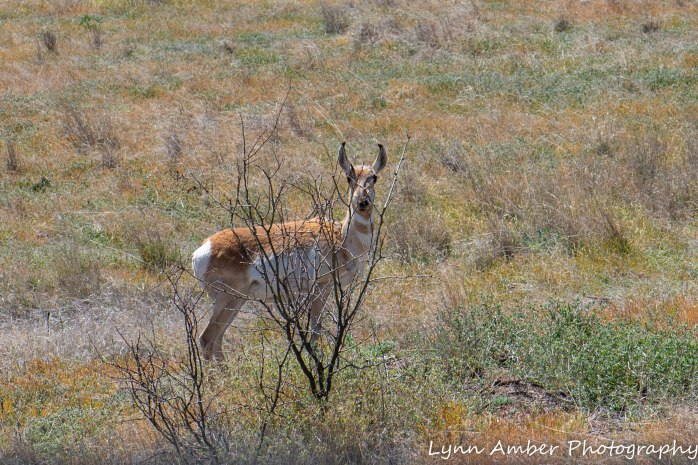
On our way out this morning to fill our fresh water tank and dump our other tanks, we came upon some pronghorns along the Empire Ranch Road. Usually, they are much further away in the grassland making a photograph impossible. Jim stopped the truck so I could scramble out for a quick shot. They were not as skittish as usual and I was able to get some shots. I still had to crop the photo significantly but happy to have finally captured them on “film.”
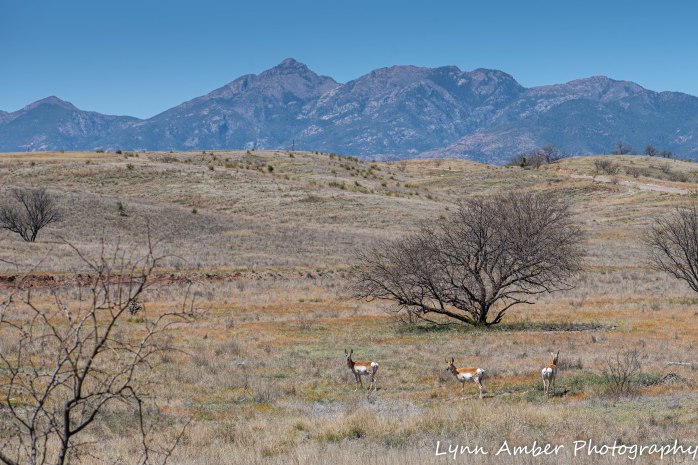
Photo of the Day 4.22.20
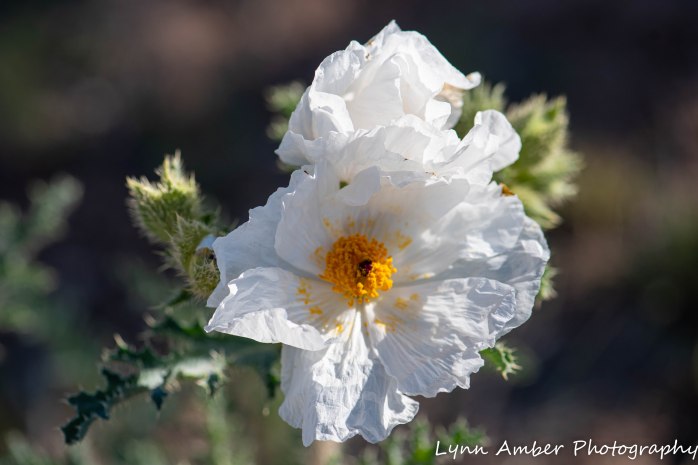
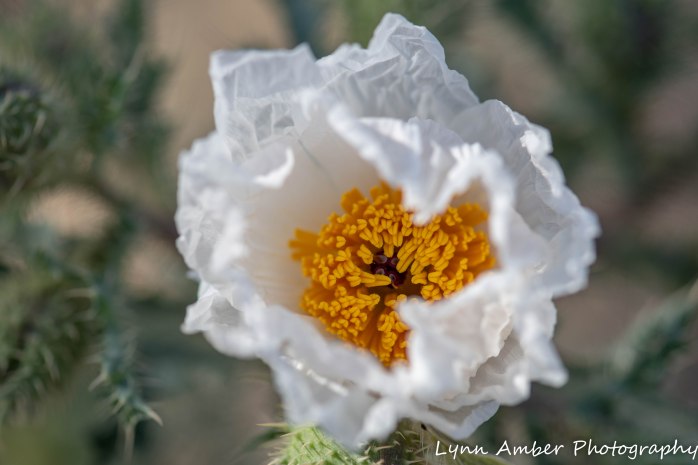
Happy Earth Day!! My Earth Day morning started with a walk towards Cottonwood Pond. Along the way, I found some new discoveries! The prickly poppies are starting to bloom. I believe this one is Argemone platyceras – the one more commonly found in the Sonoran Desert region. The prickly poppy genus is found throughout the United States and all parts contain alkaloids that are poisonous. Apparently, even cattle will not touch it! The last time I saw this plant in bloom was in Big Bend NP in Texas several years ago.
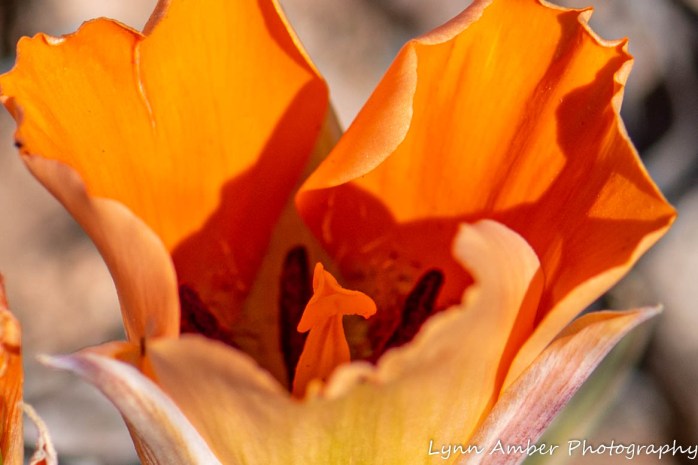
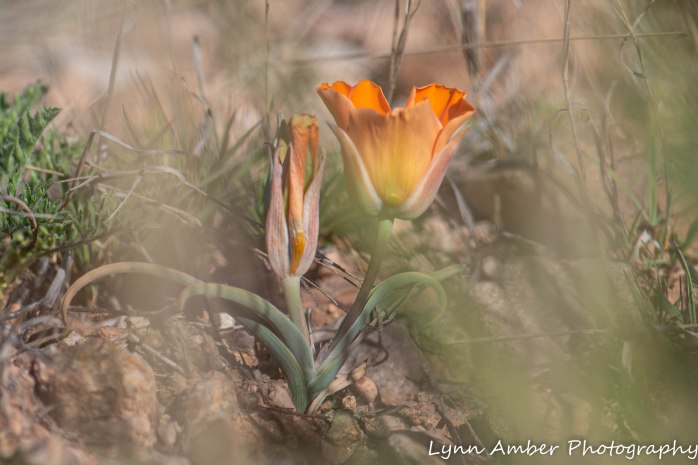
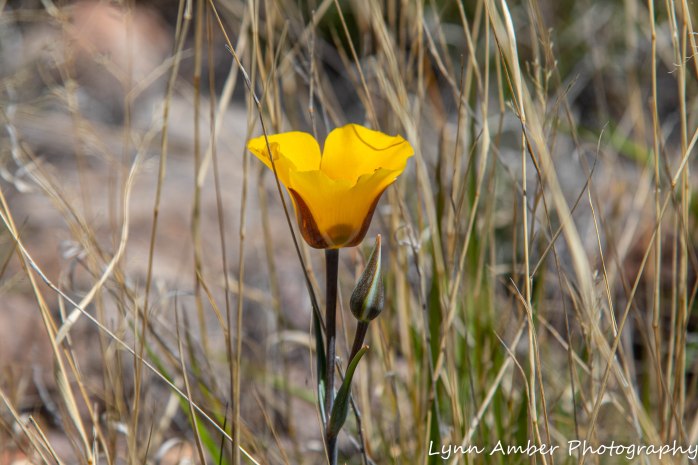
My other discovery of importance is the red-orange Mariposa lily now blooming on the bank along the road leading to the pond. It’s the first one I’ve seen that is not exhibiting the yellow color variation. When I started looking deeper into this species I found that the yellow variety is known as Calochortus kennedyi var. munzii and the red/orange variety is Calochortus kennedyi Porter or Calochortus kennedyi Porter var. kennedyi. I’ve been using several websites to verify botanical names and identifications. Below are a few that I’m recording here for my benefit as well as yours if you are interested! 🙂
USDA Plants Database: https://plants.usda.gov/
Flora of North America: www.efloras.org
Integrarted Taxonomic Information System: https://www.itis.gov
Encyclopedia of Life: https://eol.org/ – hosted by the National Museum of Natural History
DesertUSA: https://www.desertusa.com
SEInet: http://swbiodiversity.org/
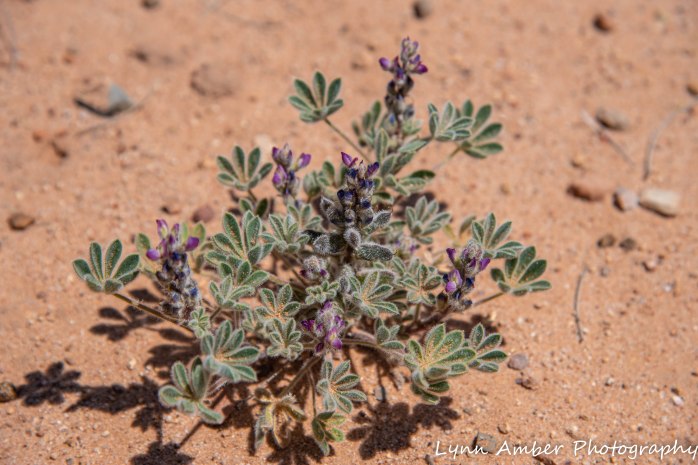
On my way back, I decided to walk up the wash that leads to the backside of our campsite. This tiny little lupine was blooming.
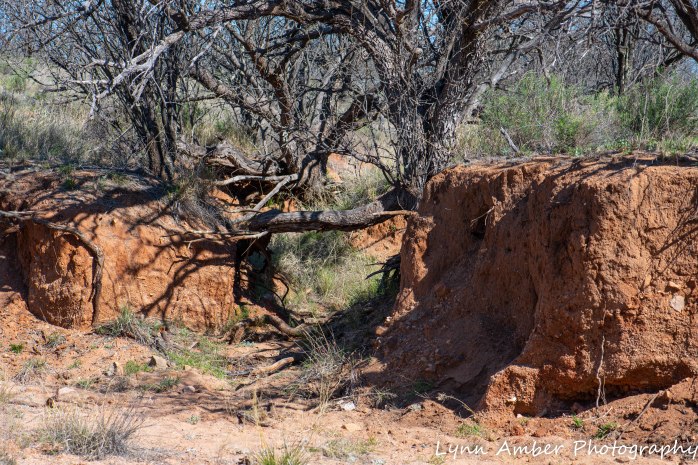
The wash is an interesting ecosystem. I noticed coyote tracks and scat mixed in with the cattle prints as I walked. The coyote are very vocal in the early evening as the sun is setting. I can just picture them prowling the wash stealthily looking for prey!
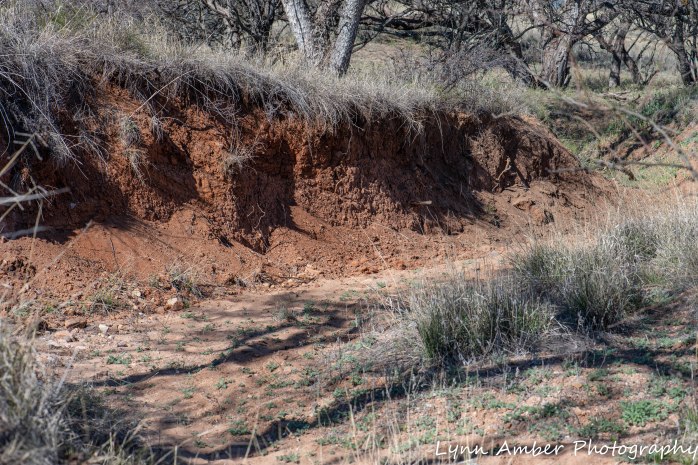
This was the first morning that I did not make it all the way to the pond to check out my feathered friends. The last time I was there, I saw a Bullock’s Oriole and I was hoping to catch another glimpse of him. Just before reaching the pond, there were three VERY LARGE bulls lounging right in the road – one with some serious horns. I was not inclined to walk past them!! I waited from a distance hoping they would move off into the grass but they were not accommodating me. So, I detoured back home through the wash 🙂
Photo of the Day 4.21.20
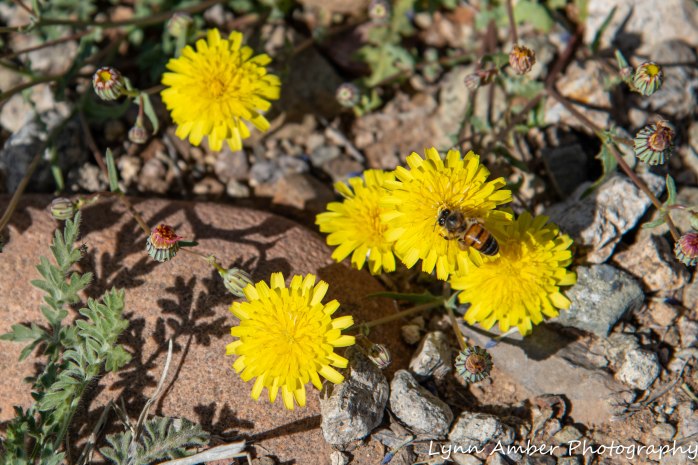
On a recent bike ride I got very excited to see this yellow flower carpeting the desert floor! 🙂 It’s a dandelion – but oh so pretty!! There has been so little in the way of flowering plants here this spring that even this “weedy” plant has merit!!
Photo of the Day 4.20.20
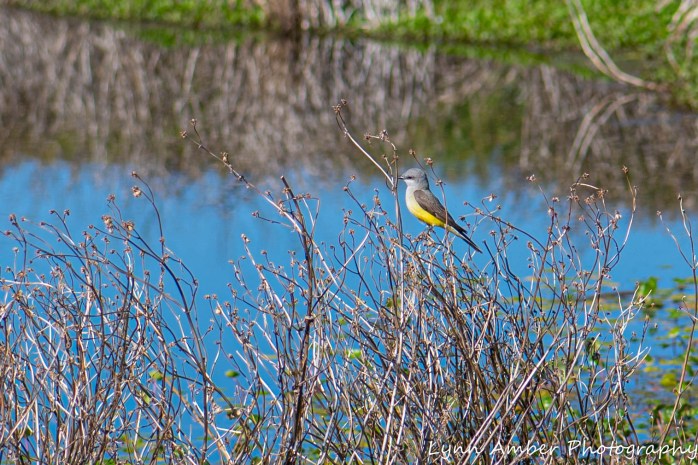
I’ve made a few new friends here on the ranch. The birds that frequent Cottonwood Pond have become very familiar with me. The Western Kingbird is ever present – perching on Mesquite branches surrounding the pond and occasionally on the shrubby vegetation along the shore. I love watching them take off and hover in the air – catching insects, I presume – and then, returning to perch.
I’ve been trying to learn more bird songs and calls as well as identifying my feathered friends by their markings. I feel challenged but it’s so rewarding! I have a mobile app supported by the National Audubon Society that I use as a reference and it has been very helpful in conjunction with a Southwestern guide book. The mobile app has bird calls and songs that I can listen to while in the field. So much fun!
The National Audubon Society has a nice, short list of key attributes to pay attention to when trying to identify an unfamiliar bird. (And, many are unfamiliar to me unless it’s the obvious Robin, Bluebird, Cardinal, etc!! You get the point!)
The Cornell Lab also has a short guide on how to start building your skills as a birder. They list 4 key areas to focus on for visual identification with links from each to a detailed discussion of the skill. They also offer online courses.
Some other birds I commonly see at the Cottonwood Pond include: Red-winged Blackbirds, Wilson’s Warbler, Vermillion Flycatcher, Northern Rough-winged Swallow, Western Meadowlark, Chipping Sparrow, Great Egret, Phainopepla, and Red-tailed Hawks. Of course, ravens are also abundant.
Photo of the Day 4.19.20
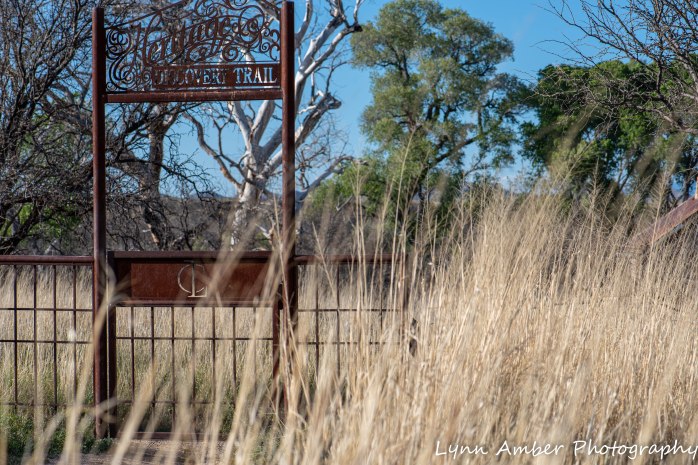
Signage in this area of Southern Arizona is unique. The ironwork is amazing and very intricate at times. I’m not sure who the artist is – or maybe it is multiple artists – but I love the detail and also the simplicity. The gate above is located at the Empire Ranch historic site and marks the entrance to a short trail that travels through the Empire Gulch.
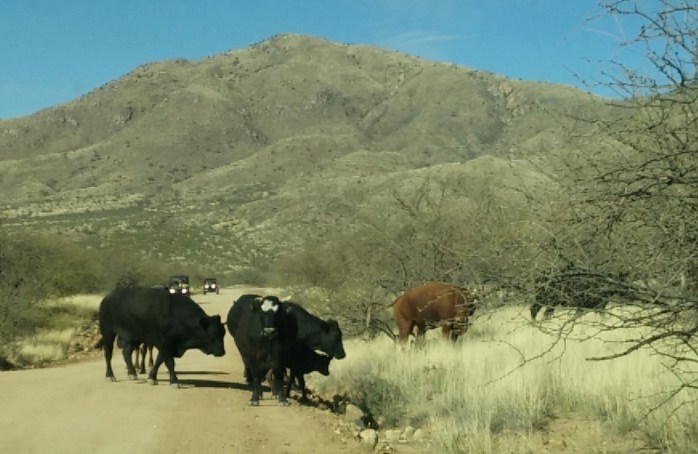
Yesterday, we embarked on a road trip because the wind was pretty intense to the point there were red flag warnings in effect. We made a big loop traveling through the bohemian town of Patagonia, skirting around Nogales and heading north to Green Valley. At this point, we veered off I-19 and headed towards the mountains. We made a quick drive-by through the Madera Canyon area. Although beautiful, it was so crowded that we just drove to the end of the road and returned back to take the Box Canyon Road to Rt. 83. This route ended up being 14 miles of dirt road through a pretty cool canyon. There is about 6 miles of single-land road with no guard rails – that was interesting – especially when there was traffic coming in the opposite direction. We shared the road that day with dirt bikes, ATV’s, pick-up trucks and cars – and a few cattle!
A road sign was posted as we started on the dirt road indicating that the road was impassable for tractor-trailers for the next 5 miles. But then we came to THIS additional sign. So, I guess if you were driving a tractor-trailer and ignored the first sign – this was your final warning!? There was literally no where you could possibly turn a tractor-trailer around here!! Too funny!!

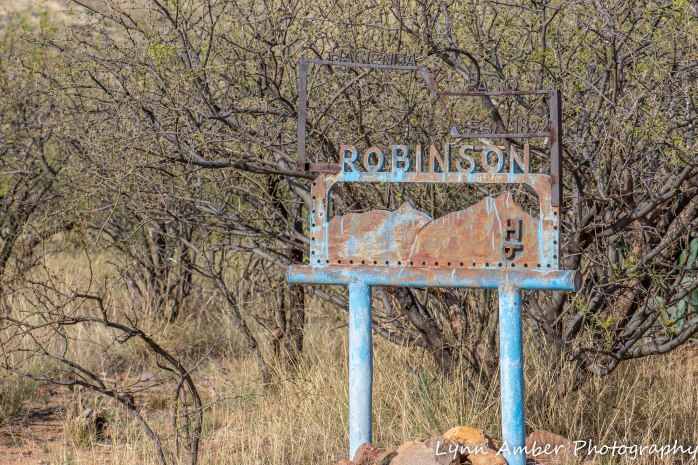
There was a cool, old ranch sign along the road that I just had to photograph. At the top, the words “Hacienda Al Paso” caught my eye. I’m guessing it loosely translates to “Ranch at the Pass.”
It was hard to capture a photograph of the canyon with so many twists and turns of the road, plus much of it was single-lane. It was hard to find a spot to pull over so we were not blocking the road. You can get an idea of the passage from this shot.

Photo of the Day 4.18.20

Cottonwood Pond
Mourning doves cooing
Red-tailed Hawks guarding their nest
Mesquite wind silent.
The incessant wind we have been experiencing over the past several days reminds me of my quiet morning walk earlier in the week! On that particular morning, the wind was silent. An anomaly here in the grassland! The doves were vocal as I neared the pond and the hawks were hanging by their nest in the cottonwood trees. I wrestled with a haiku composition as I walked, settling upon the version above.
I’m posting a photo from several days ago as I don’t anticipate fighting the wind today!! Although, Jim came back from his morning walk in the wash and exclaimed that I had to bring my camera down and take pictures of the Mariposa Lilies he saw – sooooooo……maybe the camera will get some action today! 🙂
Photo of the Day 4.17.20
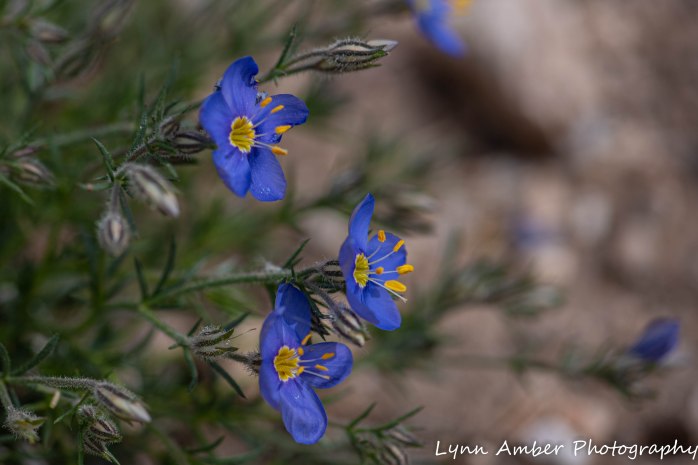
Today we ventured over to another part of the conservation area that borders Arizona state fish and game lands. We hiked a dirt road through the grasslands that rose up into the foothills of the Mustang Mountains. (I love that name!) Once we started up the road, it was amazing to spot a great variety of wildflowers growing among the grasses. This blue/purple flower really stood out with its deep blue color and dark green leaves. Since it is not listed in the two print plant references I have, it took some online work to figure out the species. I believe I’ve got the identification down correctly. It’s a member of the Phlox family and this plant is common in grassland environments.
One of the websites that I’ve found useful (among others) is the Plants of the West and Southwest. Of course, another great site is the USDA Natural Resources Conservation Service’s plant database. I’ve still much to learn as I get familiar with the plants growing here in the southwest. It’s a lot of fun to investigate these new plants (to me) and keeps me out of trouble! 🙂
Photo of the Day 4.16.20
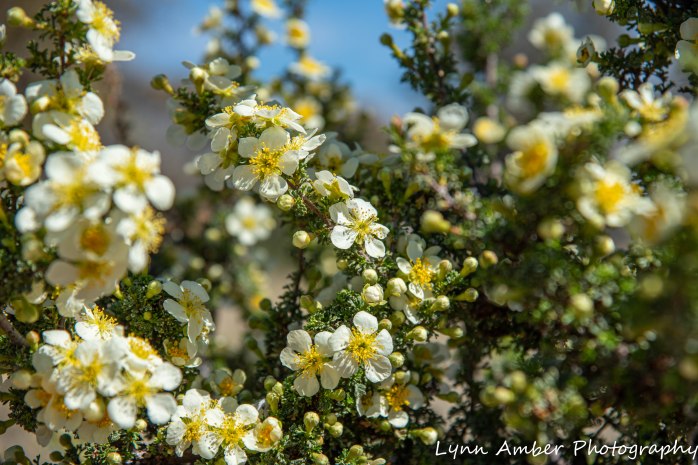
We embarked a road trip today along some back country dirt roads in and around the town of Sonoita. At one point, we found ourselves at a dead end and proceeded down a U.S. Forest Service road. (Noticed an awesome boondocking spot off the beaten path!) I saw these shrubs growing abundantly along the dirt road and had to get out of the truck to get a photo. The fragrance of the blossoms permeated the air as I exited the vehicle. These shrubs are not growing in the grassland where we are camped. As I look around, I noticed a decided change in the soil structure here where they are growing. Instead of the usual red clay soil we’re used to seeing, this area’s soil was more prominently white and calcic in nature. I read where the Fernbush and Cliff Rose both prefer to grow in limestone-rich soils. Hence, the reason why these shrubs are so localized to this location in the foothills. An interesting and somewhat technical explanation regarding desert soils of Arizona can be found here. The reading is a bit dense but if you plod through it – very interesting!
I have altered my original identification of this shrub. It’s more likely to be a cliff rose. A friend with extensive knowledge of the Arizona flora mentioned that it was probably either Apache plume or cliff rose. The habit is more in line with cliff rose – the fruit once it appears will decide! These flowers are born very close to the stem while the Apache Plume flowers appear on longer stalks. Fernbush is also in the rose family but the guide I was using seems to be inaccurate in its description. Thanks Kate for forcing me to take a closer look!
In my research to get a proper identification, I read there is an endangered species of cliff rose called Purshia subintegra or Arizona Cliffrose. Apparently, it does not grow in the national forest here in southern Arizona but is found sparingly in the Tonto National Forest and the Coconino National Forest.
Photo of the Day 4.15.20

Our evening walk to the Cottonwood Pond was very fruitful. As I spend more time at the pond, I’ve become more attuned to the feathered friend population. Our main objective this evening was to catch a glimpse of the red-tailed hawks that are nesting in the tall Cottonwood tree across from the pond. We did not see any activity there tonight so we turned our attention to the pond.
I’ve been seeing flashes of yellow dashing and darting among the mesquite trees for days but the bird has not settled down long enough for me to get a closer look. Tonight, I was rewarded! I believe this is a Wilson’s Warbler – correct me if I’m wrong my birder friends! He kept moving around in this mesquite and I had to try and get a shot through the dense branches. So surprised this turned out as good as it did!
The egret I photographed a couple of weeks ago and, have not seen since, made a return visit tonight! I managed to see him well before we reached the pond so I was able to sneak up on him and prevent spooking him. Later in the evening when we returned to our campsite, we saw him fly overhead in the directions of the Empire Mountains. I wonder where he was going?

We also watched the antics of a flock of female red-winged blackbirds. (Again, I’m pretty sure I’ve identified them correctly) They were perching in the mesquite along the pond and dropping down to the water to clean themselves and drink – then, returning to the trees to preen and dry. They were very entertaining!!

Photo of the Day 4.14.20
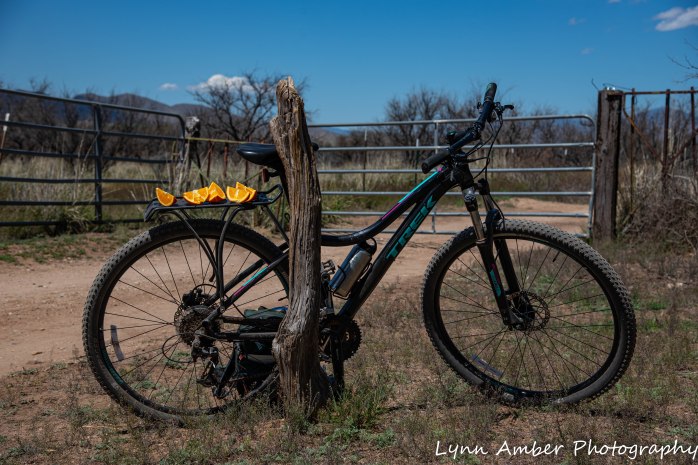
Today we completed our longest bike ride here on the ranch – taking a route that created an 18-mile loop through the conservation area. The photo above pretty much sums up our routine when we ride – stop half-way and have lunch! Lunch always ends with a naval orange – such a refreshing finale to a meal!! This time Jim made sure he grabbed his Swiss Army knife off the back of the bike before I took off! 🙂
One of the most exciting parts of the ride today was our encounter with a herd of cattle shepherding along their calves. For some unexplained reason, they were especially nervous and we could hear them bellowing from a distance and moving quickly through the mesquite. When we came upon them, they started running en masse! It was the closest I’ve been to a mini-stampede. We’re not sure what spooked them – coyote perhaps – but we kept our distance and let them cross the path in front of us. Eventually, they settled down and we went on our way. Lots of calves in the herds this time of year!
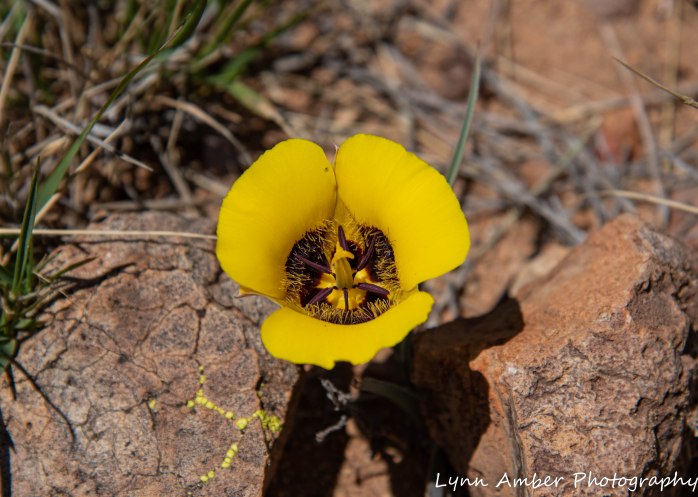
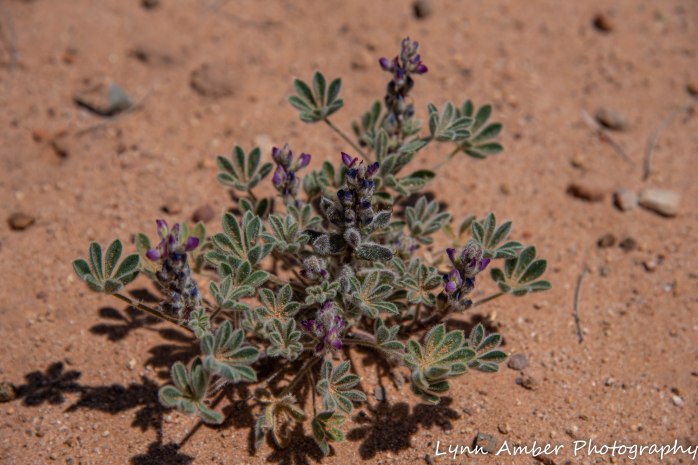
On some of the rocky hillsides along our route, more of the Desert Mariposa Lilies were blooming as well as a delightful little lupine called Shortstem Lupine.
 Lynn Amber - Travel & Photography