Lynn Amber - Travel & Photography
sharing my thoughts through words and images
Photo of the Day 7.6.20 Clematis
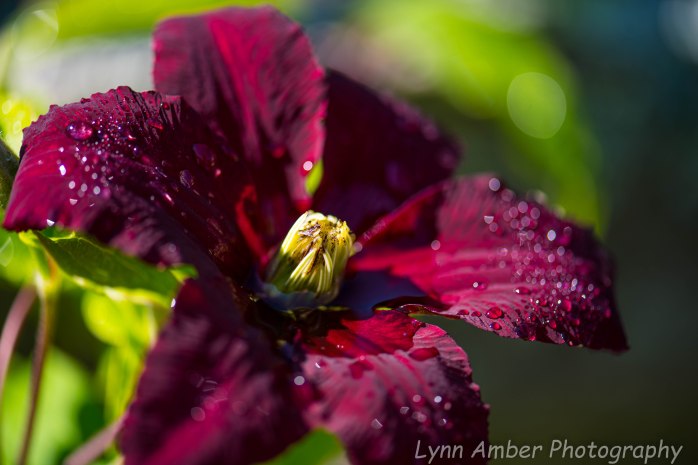
My clematis vine has started to bloom! I have not seen this plant in bloom for 4 years -since I’ve been away from Vermont traveling and workamping during the high summer months. I have no recollection of where I purchased this plant or even what variety it is. My attempt to google burgundy/maroon clematis yielded far too many choices for me to make an educated guess. All I know is that it continues to thrive year after year with little fuss on my part. I attribute this to our moderate Vermont summers.
This morning the dew was incredibly heavy. As I was sipping my morning coffee on the porch, I saw the dewdrops reflecting off the newly emerging clematis flower and knew this would be my photo of the day. 🙂
I never had much luck growing clematis when we lived in the hot, humid conditions of southeastern Pennsylvania. I painstakingly followed all the recommended rules for growing clematis – including the tried and true “cool shade on the roots and full sun on the foliage” advice. Every attempt ended in failure. I finally settled on Sweet Autumn Clematis – the only variety I was able to keep alive in PA. We all know how easy and invasive that plant can be! It was not my green thumb that contributed to that successful endeavor!
Perhaps it’s time to shop for a new clematis variety. My burgundy mystery plant could use some company! Yeah – maybe I’ll do that! 🙂
Photo of the Day 7.5.20 Summer Blooms and Shoo-fly Pie
Today, Jim and I decided to spend the late afternoon relaxing back by the pond. He launched the new raft yesterday and I can’t wait to try it out! In preparation for a relaxing evening, I devised a meal plan.
While Jim was putting up some more garage siding, I kept busy in the kitchen. With basil and beet greens from the garden, I experimented with a pesto recipe using a combination of both leaves for the base. Since I did not have pine nuts or walnuts, cashews became the “nut” of choice. Flexibility when cooking is a good trait! The pesto will be the base for a homemade pizza made with a sourdough crust.
After the pizza crust was set for rising and the pesto made and refrigerated, I scanned the pantry shelves for some dessert ideas. That jar of molasses practically jumped off the shelf into my hands! Shoo-fly Pie it is!
Family gatherings during the holidays always included an insane selection of pies from women who had perfected the art of pie-making. My great-grandmother Mary Dougherty Buffet, who lived to be 98 years old, taught me how to prepare and bake pies. At one point in her life, she was the pie maker for the old Avondale Diner in Avondale, PA. I remember that she insisted on always using Esskay lard. It had to be that brand. Just for fun, I looked it up online and apparently it is still made and produced in Baltimore, MD and available in grocery stores throughout the mid-Atlantic. I used to follow her pie crust recipe precisely. But, as I gained confidence in my baking skills over the years, I’ve adapted the ingredients and now use a recipe unique to me. I choose not to use lard anymore and have substituted milk for the water. I must say that I do make a pretty mean pie crust! 🙂
At some point, I inherited an old, thin paperback cookbook called The Dutch Cookbook. It contains the recipe for Shoo-fly Pie that I use and have adapted over the years. My infatuation with Shoo-fly Pie started with the Sunday afternoon road trips I was invited to share with my grandparents. My grandfather loved to travel the countryside in his big old Pontiac with my grandmother aboard. I remember Pontiacs were his automobile of choice and he purchased them exclusively from McCord’s Pontiac Auto Sales in Kennett Square, PA. He was certainly loyal to that dealership!
Many of those long-ago road trips were to neighboring Lancaster County and I was privileged to be able to tag along on many occasions. I have such fond memories of riding along in the back seat of that enormous Pontiac gazing out at the landscape – totally content to be the main focus of my grandparents attention. They had a way of making me feel very special. Each road trip was designed with a restaurant destination in mind. My grandmother loved to eat out. Our lunch spots were usually diner-type establishments. I recall the Conowingo Diner as a favorite port of call. After some type of sandwich, my dessert choice would always be a piece of shoo-fly pie – heated up and often with a scoop of vanilla ice cream on the side. I still have a vivid memory of one occasion sitting in the Bird-In-Hand Diner in Intercourse, PA with a luscious piece of real Pennsylvania Dutch shoo-fly pie at my disposal!
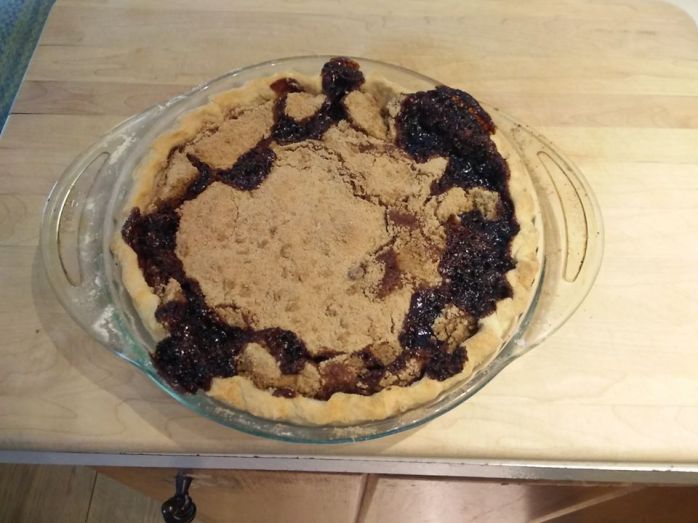
It was inevitable that I would learn how to make my own shoo-fly pie. I think it’s a family favorite to this day.
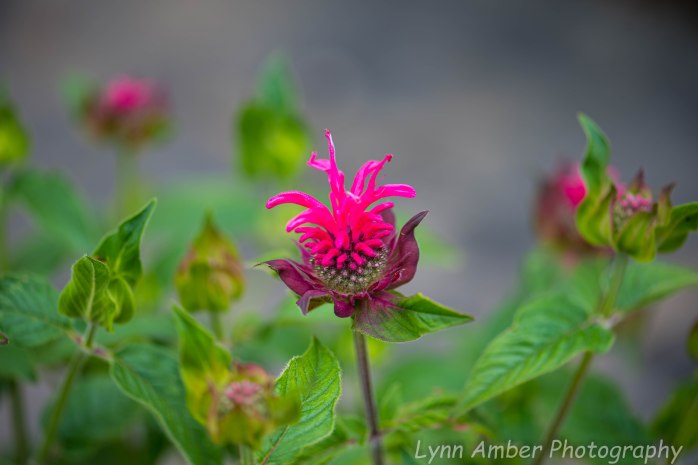

Photo of the Day 7.4.20 Red, White and Blue
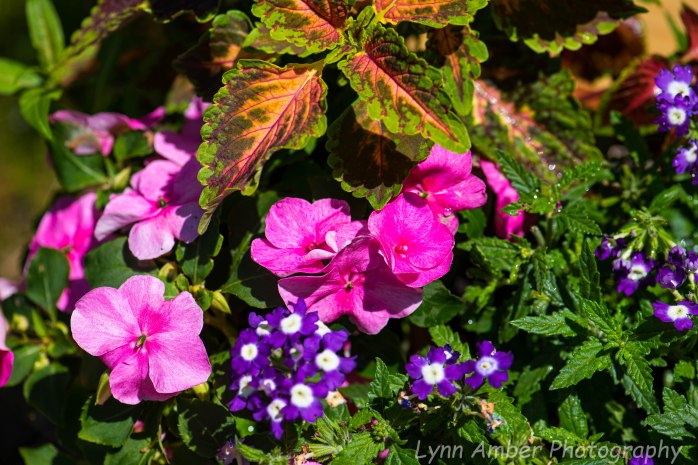
Since it’s the 4th of July, I tried to get a picture that “somewhat” depicted the spirit of the day – blue and white verbena, deep pink impatiens (closest I have to red!) and coleus with a hint of red in the foliage.
I’ve always considered holidays a time to spend with family. I remember when I was young, the Dougherty branch of our family often had reunions and picnics on long summer holidays. The usual comfort food was in great abundance – macaroni salad, baked beans, potato salad, hotdogs, hamburgers, iced tea, lemonade and an endless variety of pies and cakes. As an introvert, I usually faded into the background at these affairs but that never meant that I did not enjoy them. To the contrary, I relished sitting quietly and listening attentively to the stories my elderly relatives recounted about growing up in Chester County, Pennsylvania – as survivors of two world wars and the Great Depression. I did not converse much then – and quite frankly – still tend to be on the quiet side. But, make no mistake, we introverts still like being in the company of others!
Our large family gatherings are a thing of the past. The generation that prompted those reunions long gone. Funny how times change. Today, my own immediate family is celebrating the holiday elsewhere. It feels lonely without their presence but we are heading to a good friend’s house for a late afternoon visit – and that will be just fine 🙂
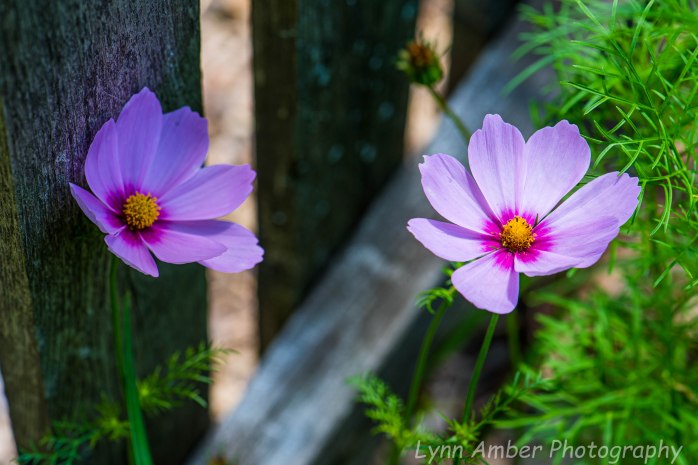
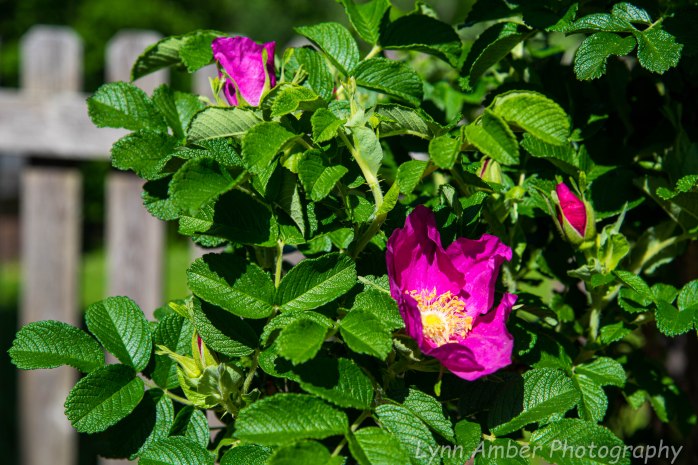
Photo of the Day 7.3.20 Picket Fence Rose
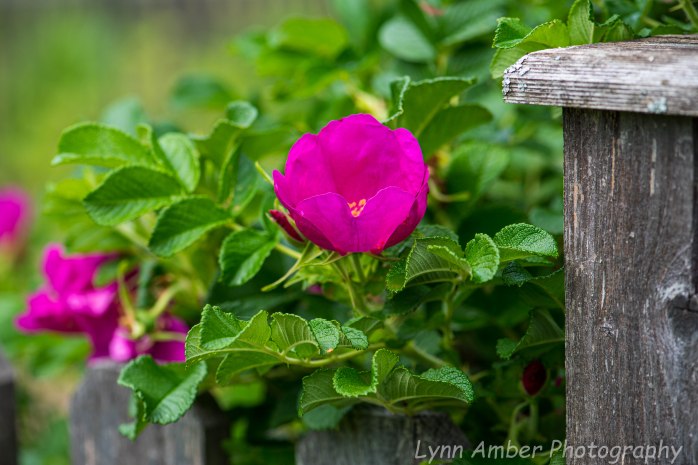
Our bedroom window faces the front of the house and the patio garden. This morning as I gazed out the window, I noticed this new rugosa rose blossom starting to unfurl and cascade over the picket fence. I immediately starting thinking about how I might frame a photograph of the rose that also captured the wonderful patina of the aging cedar picket fence!
Photo of the Day 7.2.20 Nutritious Nasturtium

This summer, I’m growing nasturtium in a large clay pot that sits on my porch. I love the curvy, variegated leaves of this species and the yellow, orange and red flowers. The vivid warm colors stand out against the deep green foliage perfectly! So interesting that this plant is also edible – leaves and flowers both. High in vitamin C as well as manganese, iron, and beta carotene, it has been used in traditional medicine for years. So, the next time you make a salad, throw a few nasturtium petals on top – pretty and nutritional!
Photo of the Day 7.1.20 Rainy Day Daylily

I’m kicking off July with another Photo of the Day Challenge to myself. I’m getting stir crazy staying at home and this will motivate me to get out and about! There are several patches of what I call “roadside daylilies” scattered around our property. These daylilies were planted by the previous owner and, to be honest, I’ve never really paid them much attention. They have just started to bloom amid several days of scattered showers and thunderstorms. I ran out in between raindrops today to shoot some flowers and this was my best effort before being chased back inside 🙂
Around the Farm….
We’ve been busy tackling our to-do list of projects and I’m happy to report some good progress. All the lawn area that needed regrading and rejuvenating has been complete and the new seed is germinating and loving this much needed rain.
The pond work is complete and a new raft is ready for launching! Jim did most of the cutting and fitting and I manned the drill – screwing the boards into place (carefully making sure I did not puncture a barrel)!


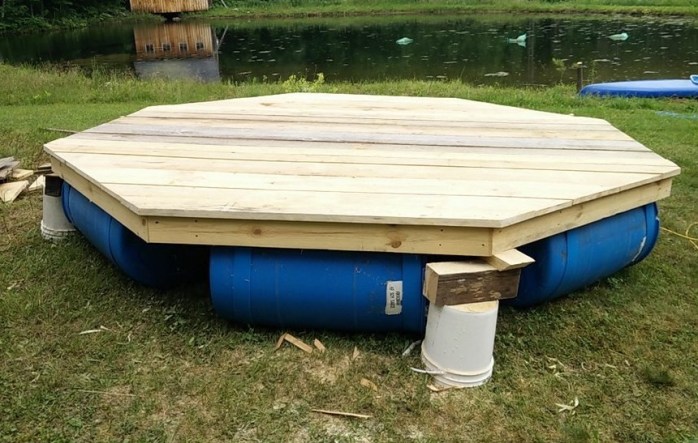
Now that the raft is complete, we are moving to our next agenda item – finishing the siding on the detached garage! I’ve been busy staining the red pine siding with our Harvest Gold solid color stain. We have a staging area in the upstairs of the garage so that I can paint regardless of the weather. With enough boards completed over the past few days, we can now start nailing it up! The second story of the garage has been a storage area for lumber, so this siding project is solving two problems. We are completing the exterior of the garage AND cleaning out the upstairs! A good bit of this stored lumber also went to building the raft. As the lumber piles dwindle, my mind has been wandering to thoughts on how we should finish off the garage second floor now that it is being cleared out. 🙂
The garden is growing well and happily enjoying all this soaking rain. And, some new annuals and perennials are coming into bloom in the patio garden.


Vermont Summer Series 6.15.20

Kneeling in the tall grass on our ponds edge fervently cutting back the overgrown, volunteer shrubs that have taken root over the past few years, my mind wandered back to a bygone era when it seemed our whole life revolved around the pond.
Over the past 4 summers, our pond has been sadly neglected due to our extensive travels and working out of state. Invasive shrubs and cattails have set up residence along the shoreline closing in the boundaries of our once open view. In reality, the pond was starting to show signs of inattention even before we started our nomadic lifestyle. As the boys graduated from high school and moved on to college, life evolved and other priorities took control. But the time has come to breathe new life into our beautiful water feature!
We purchased our property back in 1999. One of the features of this land that attracted us was the presence of a boggy area along the back property line. On the edge of this wetland, where the meadow began, was an wide open spot just begging to be transformed into a pond. It was an ideal setting – plenty of sun and very private. We were excited about the possibilities and started construction within a couple of years. A local contractor, known for his ability to work miracles with an excavator, carved and shaped the clay soil below the wetland and our pond was born.
Little did we realize then how much the pond would became the center of our life over the next few years – the projects and recreational activities changing with the seasons. Many lazy summer days were spent cooling off in the water – diving and playing from our homemade octagonal raft. Summer evenings were spent sinking down into an Adirondack chair, enjoying a glass of wine at ponds edge, watching the bats emerge at dusk and basking in the solitude of the private setting.
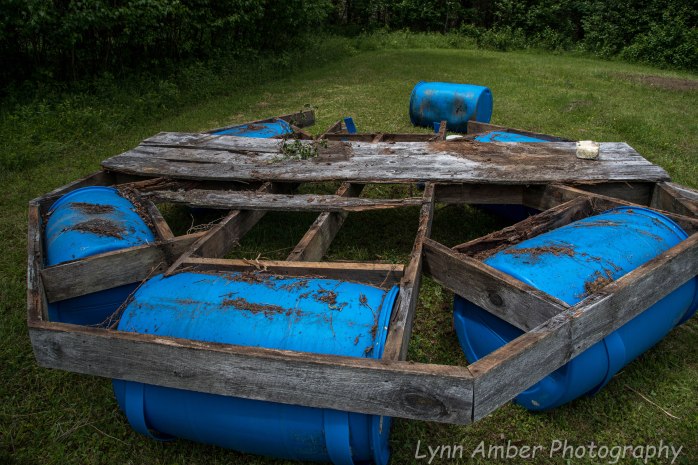

Projects developed by Jim and the boys during that time were often centered around and incorporated the pond. After helping a friend for several years with his sugaring operation, Jim and the boys designed and built our own sugar house spanning the spillway of the pond and we invested in an small evaporator. The boys learned the process of sugaring from our friend Bill who still makes and sells syrup from his sugar bush using a team of horses to gather the sap. Spring became synonymous with sugaring time. We tapped our 60 plus maple trees and boiled sap. More often than not, we gathered sap after school let out for the day. This meant firing up the evaporator and boiling well into the night. I can still remember the quiet evenings when we all congregated in the sugar house – the air inside the building thick with steam rising off the evaporator. My sons took their jobs seriously – loading the firebox, testing the sugar level of the sap, pouring off and jarring up the syrup – everyone participated in the process. Conversation and laughter intermixed with periods of silent meditation. The topics discussed while waiting for the sap to turn to syrup were numerous and varied – from friendly banter to solving the world’s problems! I treasure those memories. Often times, I would step out of the warm, cozy sugar house into the snow covered landscape to gaze up at the stars and watch the sparks emerging from the smokestack – mesmerized by the silent beauty.
Winter was all about skating and playing hockey. Endless hours were spent clearing the ice for pick-up hockey games throughout the season. For a few years, we hosted an early morning hockey game on Christmas Day and a late afternoon pot luck and hockey game on New Year’s Eve. It was a nice tradition that brought both family and friends together. There were times when we entertained the notion of figuring out how to put up lights around the pond so we could play hockey at night! But, our efforts were instead transferred to the town hockey rink since it was more accessible to everyone and more inclusive of the whole town community. Hockey was our winter time obsession!
At some point during middle school years, our family caught the “apple cider” bug. With a homemade cider press, we began collecting apples from all over the countryside. The press was set up in the sugar house and we used the pond to wash the apples. Various attempts were made to automate the grinding process which was labor-intensive and required a certain degree of strength and endurance. One idea put to the test involved connecting a bicycle to the grinder so our stronger leg muscles could be employed. That bicycle still sits in the loft of the sugar house where it was last used. I guess you could say our sugar house is enjoying a state of “arrested decay!” We put up many ½ gallon Mason jars of cider. Jim even delved into the “hard cider” business investing in several carboys and learning the technique of turning apple cider into alcohol. We had hard cider in different stages of fermentation in our basement for several years!
Restoring the pond to its former glory is rewarding on two fronts. I love seeing the landscape surrounding the pond transformed, cleaned up and rejuvenated. Even more, I relish the flood of memories that cascade through my thoughts as I work.
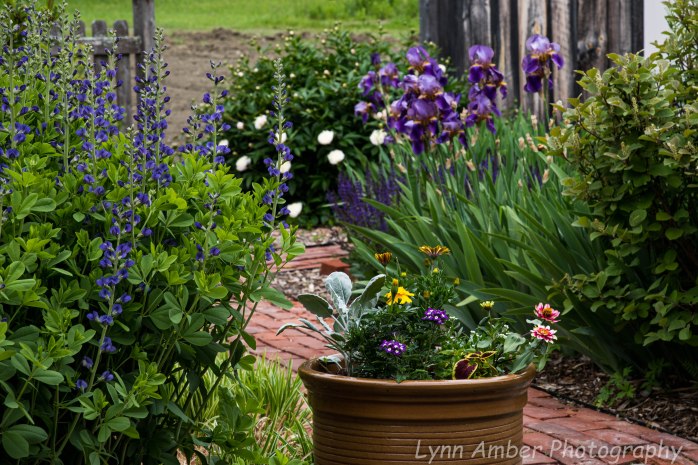
Meanwhile – back at the house, our front garden continues to change with different perennials coming in and out of bloom!


Vermont Summer Series: 6.8.20
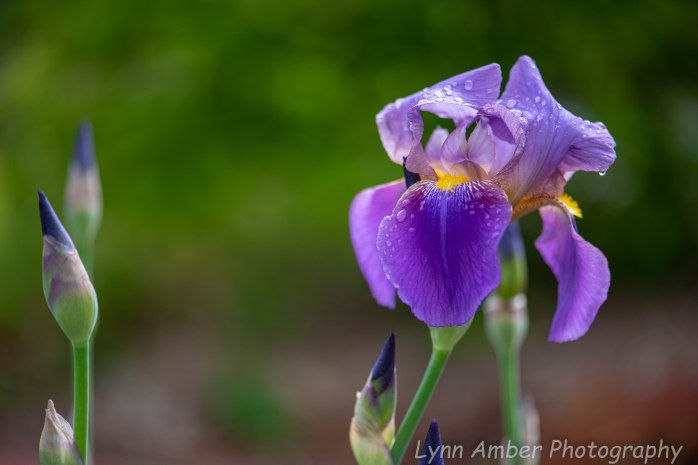
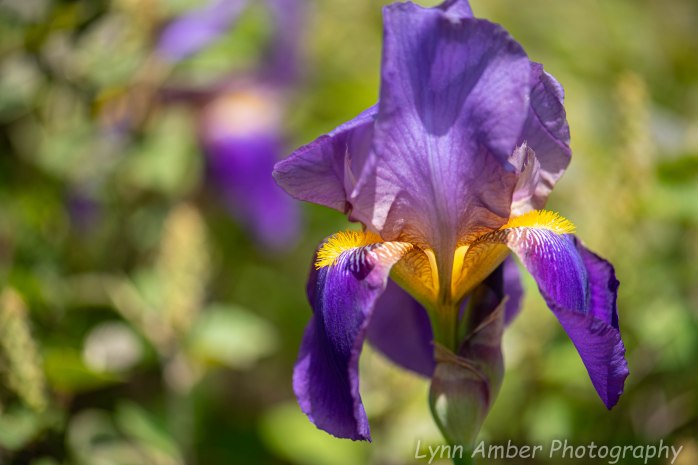
The blooming of my bearded iris signifies for me the true onset of summer! 🙂 Have you ever looked really, really closely at an iris flower? Truly amazing anatomy! Some fun facts that I’ve compiled:
Historically, the origin of iris flowers can be traced to ancient times. The word iris has an interesting etymology. In Greek mythology, Eiris was the goddess of the rainbow and a messenger for the Gods. She was the communication channel between the Gods and humanity, transporting herself between heaven and earth – using rainbows as her bridge between the two worlds. Now, every time I see a rainbow, I will imagine Eiris descending to earth with a message for humanity! 😉
In some Asian cultures, the iris has different associations. Some believe the iris to have purifying effects that can ward off evil. It is also considered the harbinger and essence of summer. The latter aligning with my own perspective on what the iris symbolizes!
On a more serious note:
Iris flowers convey different meanings or virtues depending on cultural associations and flower color. The most prominent of these are: faith, hope, trust, wisdom and courage. These meanings hit home with me today as we wade through these recent turbulent waters. Let these virtues of the iris flower guide us in these disturbing times.
I recently posted a message on my Facebook page as my show of support for the demonstrations happening around the globe – which I’ll share here. My message is simple – as a nation and a world, we need to move towards – unity, not division – advocate for peace, not violence- support human rights, not anarchy – sow the seeds of respect, not hate – and educate, not inflame. Today, I’m choosing the iris as my personal symbol of hope for our troubled world!
Vermont Summer Series 6.1.20
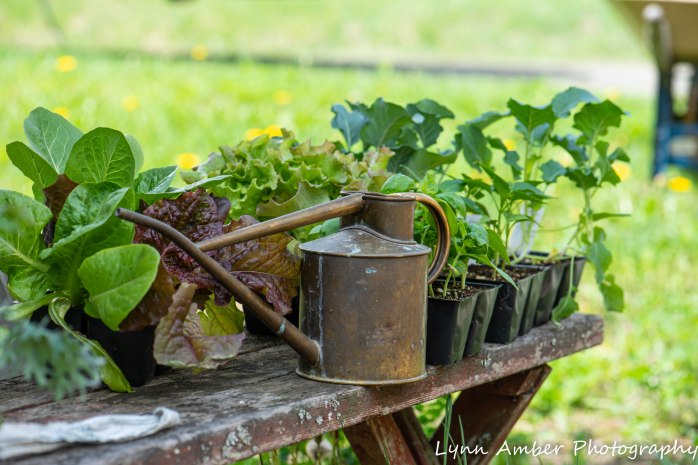
This past week we have been totally focused on completing the rejuvenation of our two raised beds located just outside our picket fence. Jim pulled up the old rotted boards and we commenced to cultivating and weeding the beds before lining them out for new boards. Once the new pine boards were in place, we mixed in a bale of “enhanced” peat moss and a sprinkling of garden fertilizer. Let the planting commence!!
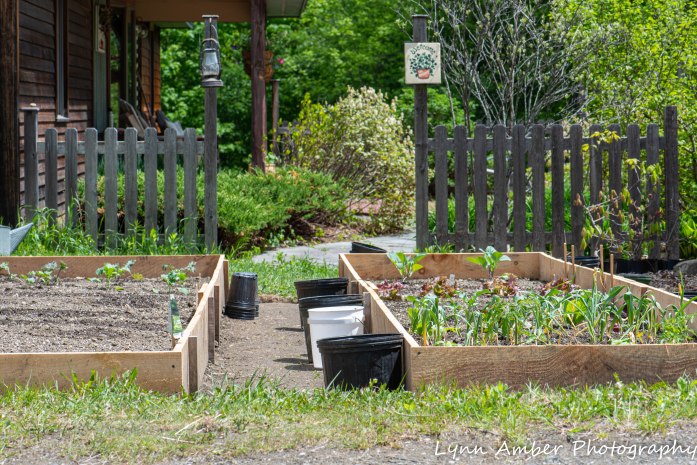
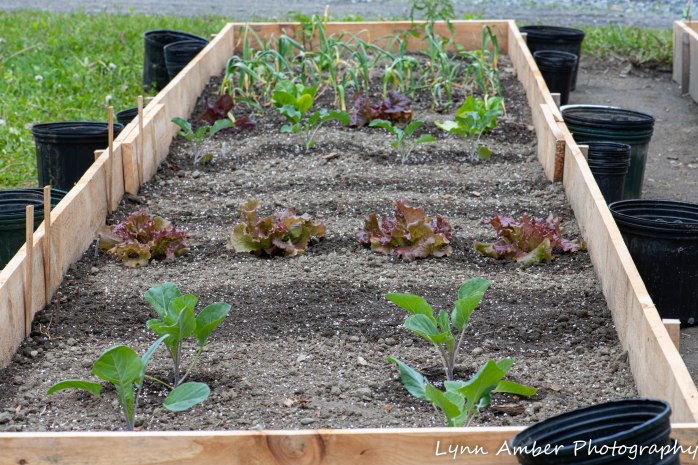
Last night, with temperatures dipping down into the low 30’s, we were forced to dig out some old plastic pots and provide a little frost protection! I’m happy to report that all plants weathered the chilly temperatures!
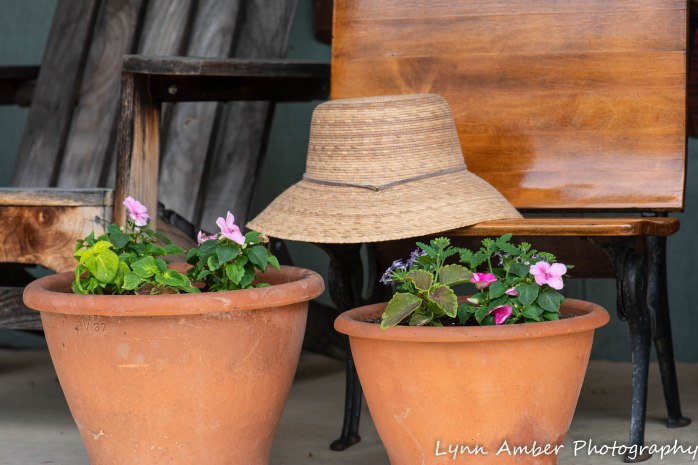
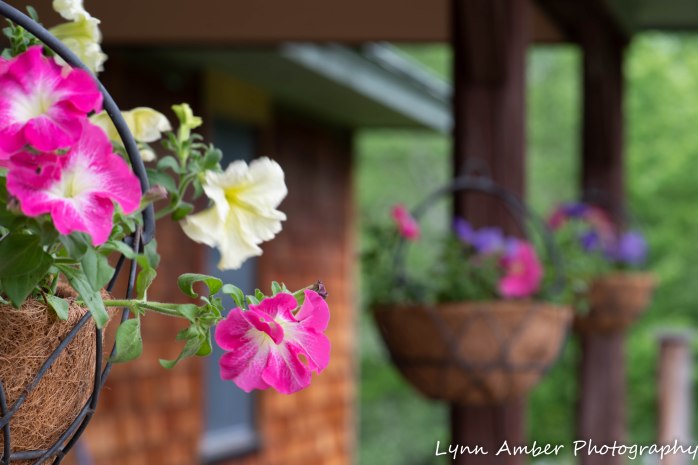
I also managed to pot up my clay plant containers and iron hanging baskets with an assortment of annuals. With a healthy dose of fertilizer and unusually warm temperatures, the flowers are growing nicely!!
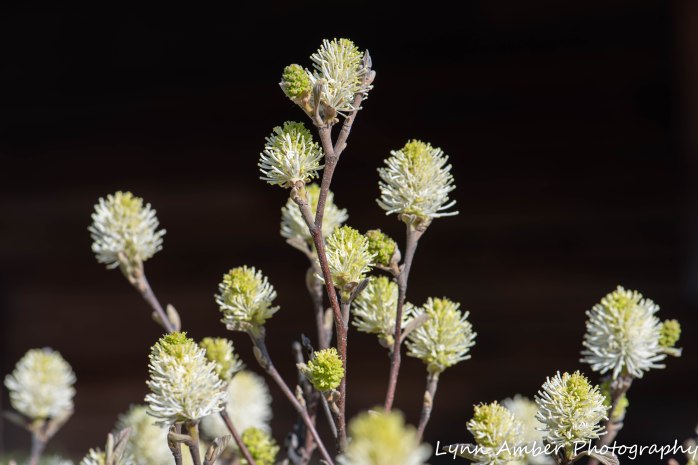
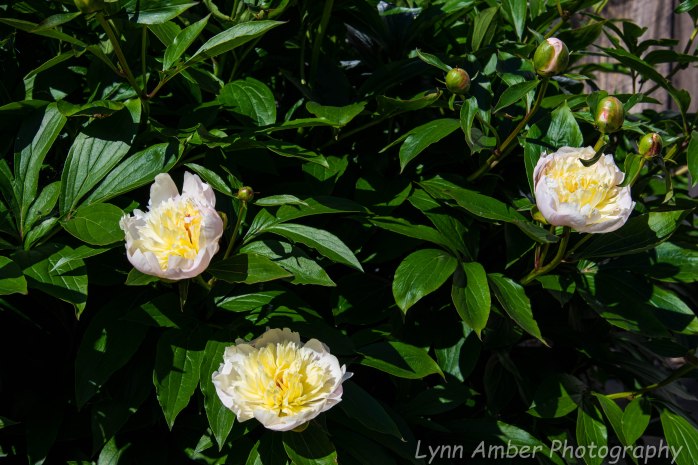
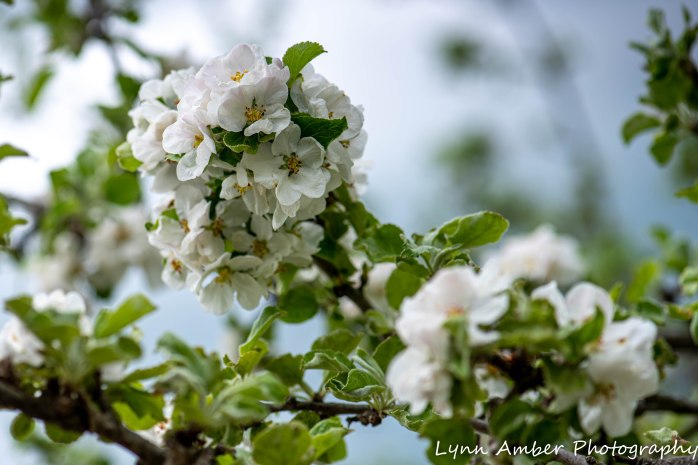
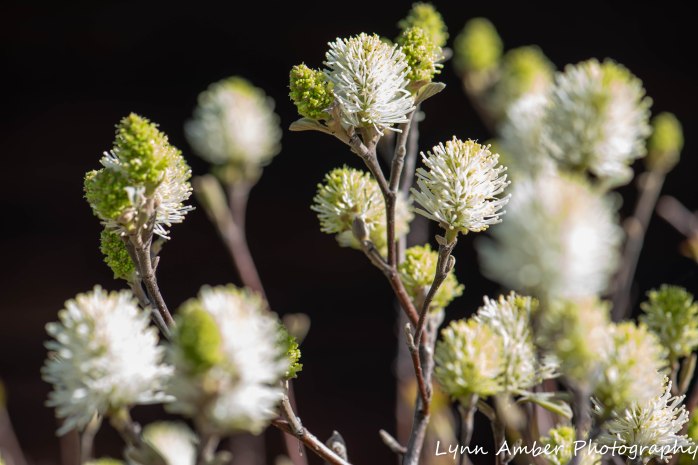
In a few days, my peony will be blooming along side my clumps of iris, blue salvia, yarrow and baptisia. I can hardly wait!! In the meantime, the fothergilla continued with its showy display, my crabapple burst into flower and the blueberries brought forth their bell-shaped flowers in conjunction with the bright green witchhazel leaves expanding. I spent a considerable amount of time weeding, cultivating and fertilizing the blueberry bushes this past week and they look happy for the attention!!
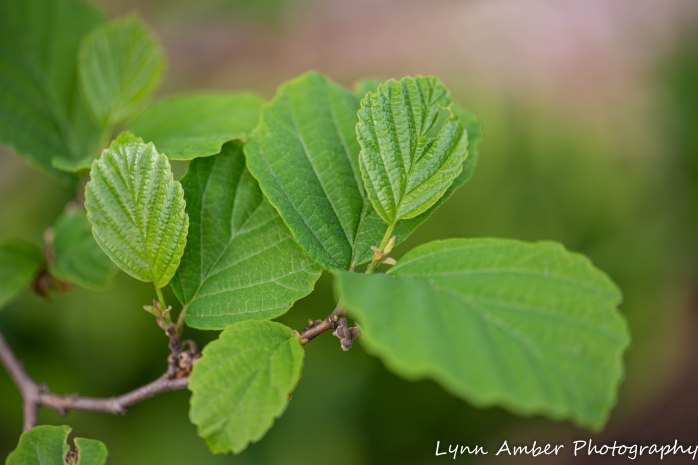


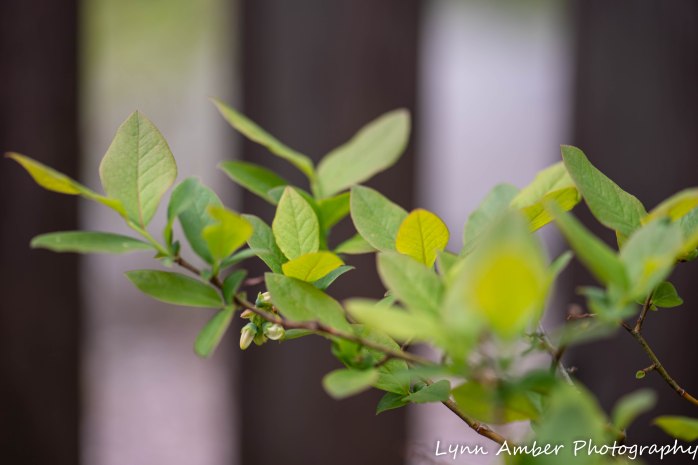
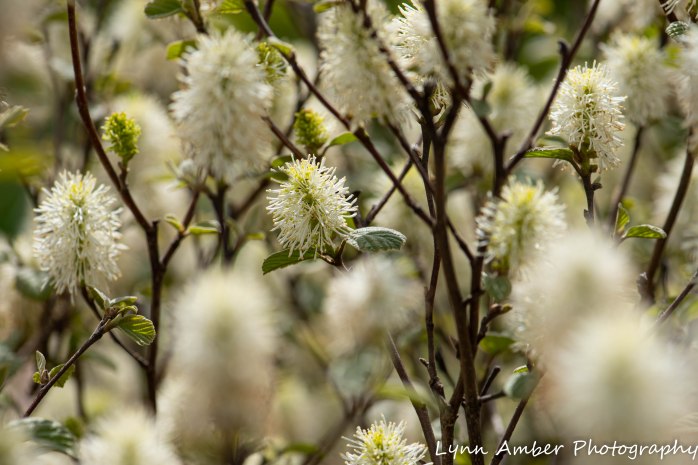
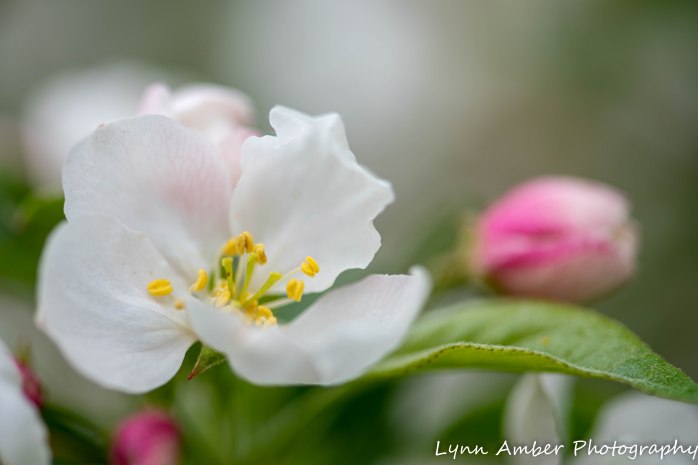
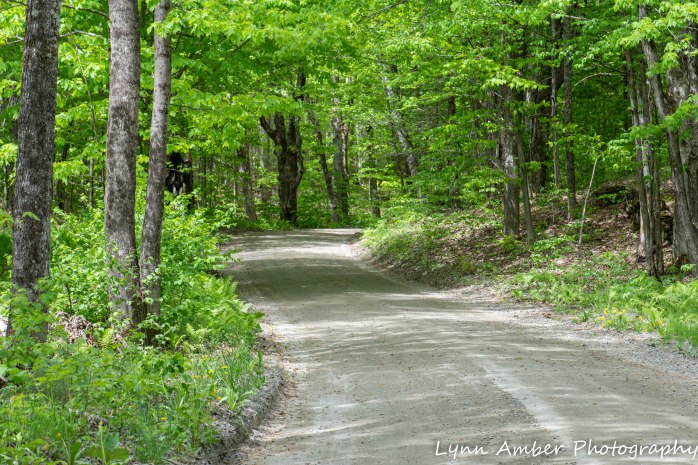
Since arriving back in Vermont, I’ve witnessed the slow emergence of spring. My 4-mile loop walk along our neighborhood dirt roads has transformed into a bright, green jungle!!
We experienced a little oddity (to us) that occurred this past week. For several days in a row, we noticed a bat flying around the outside of house and outbuildings during mid-day. When we first moved to Vermont in the late 1990’s, we regularly watched bats emerging just after dusk – entertained by their erratic flapping wings and haphazard search for insects – their presence appreciated due to their unique role in our ecosystem. Did you know that one bat can eat thousands of mosquitoes in one night of feeding!? With the recent decline of bats in Vermont due to the White-nose Syndrome disease, we have not seen them in years. In fact, the Vermont F&WD explains that we have lost almost 90% of our bat population. So, we were so excited to see this bat! But, I was also a tad concerned that it was flying during the day.
I accessed the Vermont Fish and Wildlife Department website and conducted a search for “bats” to find any information I could about why this bat might be flying during the day. I noticed an online form to report “sick acting bats” – (the form noted that “flying during the day” could be a sign of a sick bat.) I filled out the form and sent it off into cyberspace. I received a reply with 2 hours from a state biologist! I was happy to learn that this bat is not necessarily sick. Often times with very hot weather, the roosting spot a bat has chosen the night before becomes too hot and they are forced to “move” to a cooler location during the day. Since this behavior coincided with our record high temperatures last week, it explains why this bat was behaving out of the ordinary. I love learning new tidbits of information like this!
Happy First of June!!
Vermont Summer Series 5.26.20
The month of May has been unusually dry, sunny and warm here in Vermont. I’m not complaining since my body is used to the heat of the Southwest! I’ve spent the past several days engrossed in completing an intensive weeding of my front garden area. This effort included mending part of the cedar picket fence damaged due to snow load in the winter, trimming dead wood from shrubs and removing “volunteer” plants that have been allowed to take root over the last couple of years!
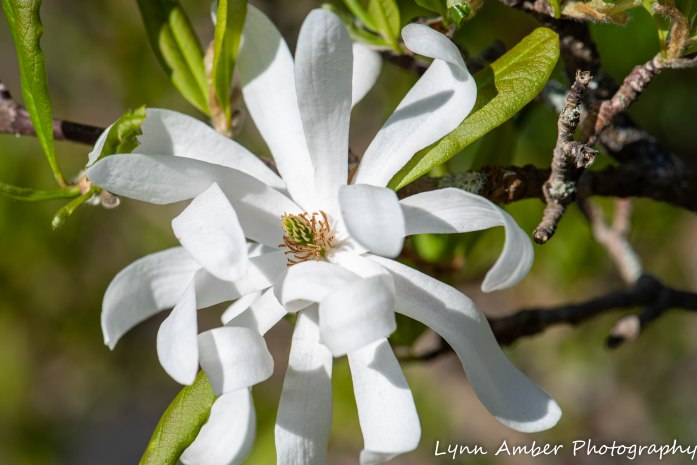
My Star Magnolia rebounded from a hard frost that damaged some of the early blossoms and produced a second round of beautiful white flowers – this time with a back drop of fresh, new leaves.
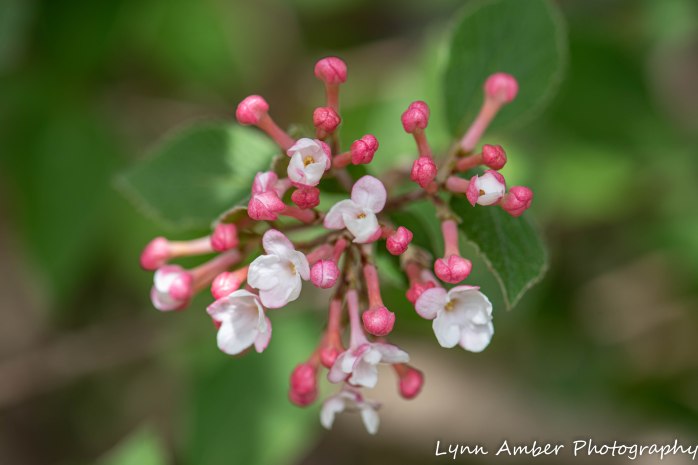
The Viburnum “Burkwoodii” that I planted near the garage door many years ago also graced me with flowers this week. The deep pink buds open white with fringed in light pink – and the contrast is stunning!!
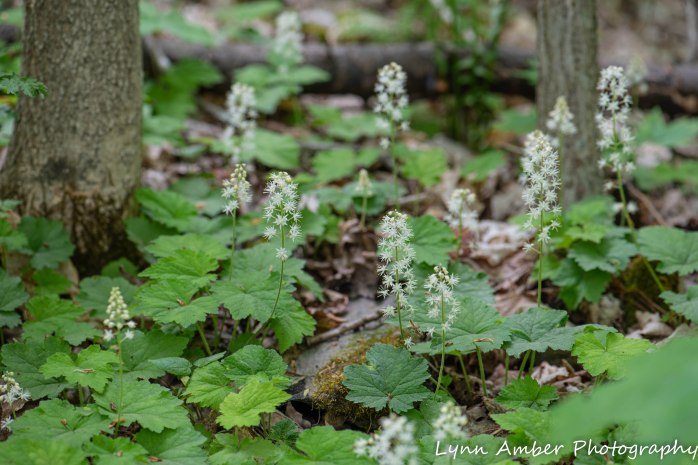
In the woods, Jack-in-the-Pulpit (Arisaema triphyllum) has emerged. It is pollinated by small flies and produces red berries in the fall that are favored by birds and rodents alike. I love the curves and lines of this unique woodland plant and am always so excited to see it emerge every spring.

In the morning, I sit on my front porch sipping my coffee and watching the world come alive. I’m entertained by robins, thrashers, catbirds, red-winged blackbirds and hummingbirds on any given morning.
Jim and I decided several weeks ago to finally cut down the remaining trunk of the old birch tree that has been a fixture in our front yard since we bought the property. It was originally a triple-trunked birch (a favorite with landscapers!) – with the other two parts blowing down over the years. The tree is suffering with age and looking rather ratty – with dead branches throughout. The problem is that over the past week I’ve noticed a hummingbird perching on one of the dead branches at the top of the tree. He has chosen this spot to sit, reflect and observe. I see him every morning now – and evening – on the same branch. He has made his point with me. Needless to say, we will not be cutting down the tree until after the hummingbirds migrate south this Fall!! 🙂