Lynn Amber - Travel & Photography
sharing my thoughts through words and images
Acadia Awakening

Acadian Walk
Rocky root-filled trail
Winds through the silent forest
Peace infuses the air. ~Lynn Thomas Amber
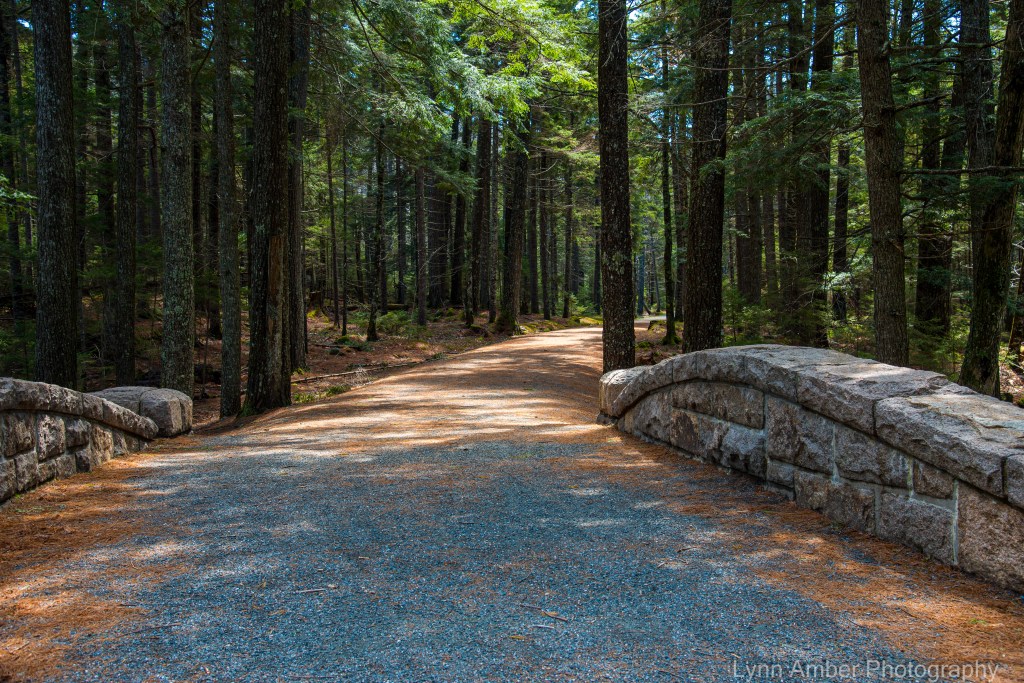
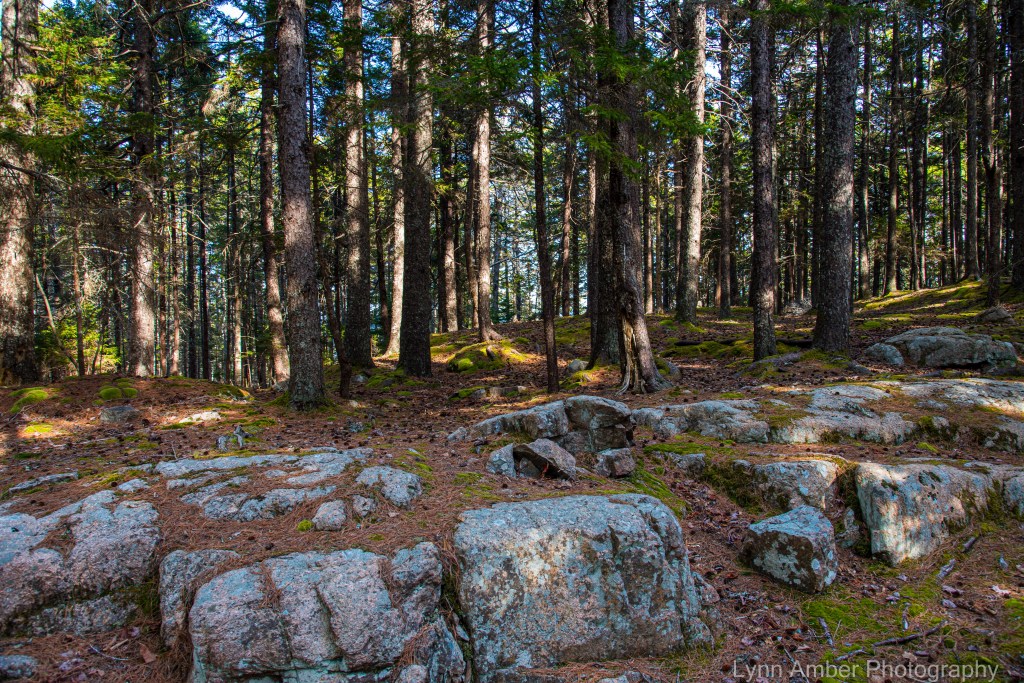
I’m back! It’s been three weeks since I once again landed on Mount Desert Island for my summer gig in Acadia National Park. It’s been a busy time getting back into a work routine and, as a result, I’ve not posted in awhile. Yesterday, as I hiked the Day Mountain trail, the haiku above popped into my head. For those who know Acadia’s trails – rocks and roots define the experience!
As I ease myself back into island life, I have managed to spend some time exploring old favorite haunts and capturing the landscape as it makes the transition from winter to spring. Finally – I have some time to share some of my initial photographs! 🙂


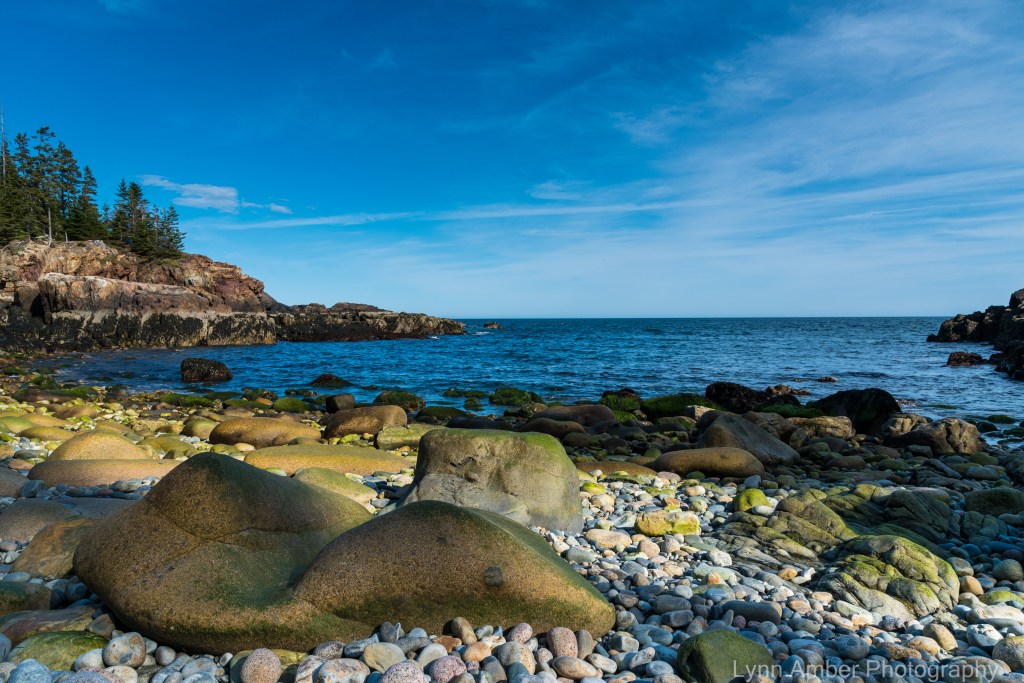

When I arrived the end of April, there was very little evidence that spring was upon us. Over the last 3 weeks, the vegetation within and around Acadia has started to wake up and early spring flowering plants are blooming. The landscape is glowing with the fresh, new, bright green leaves of the deciduous trees, shrubs and perennial plants.


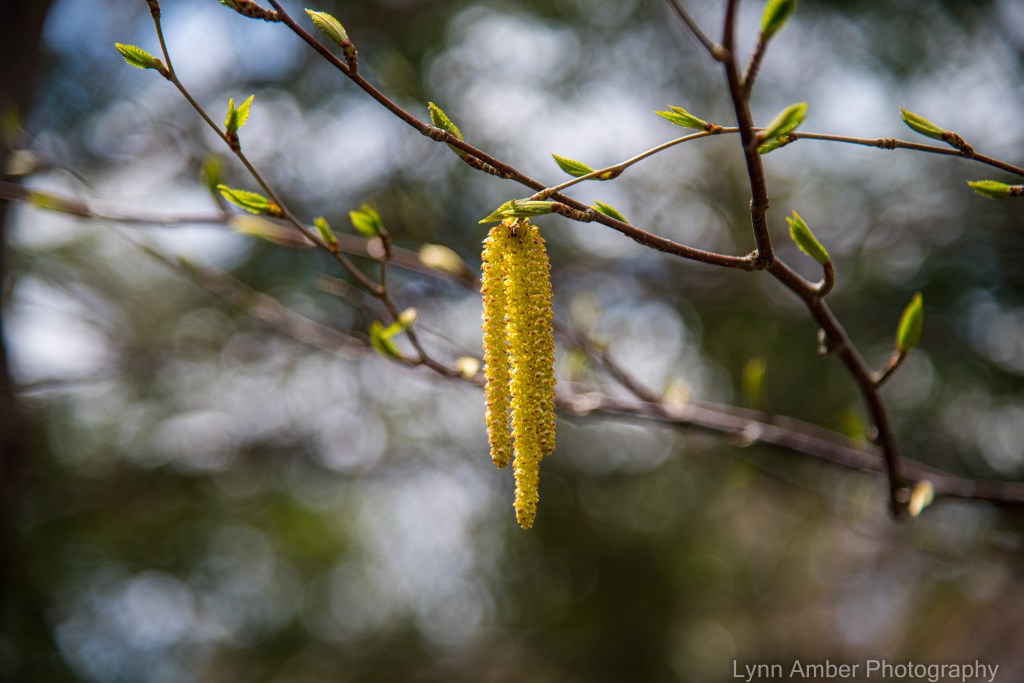


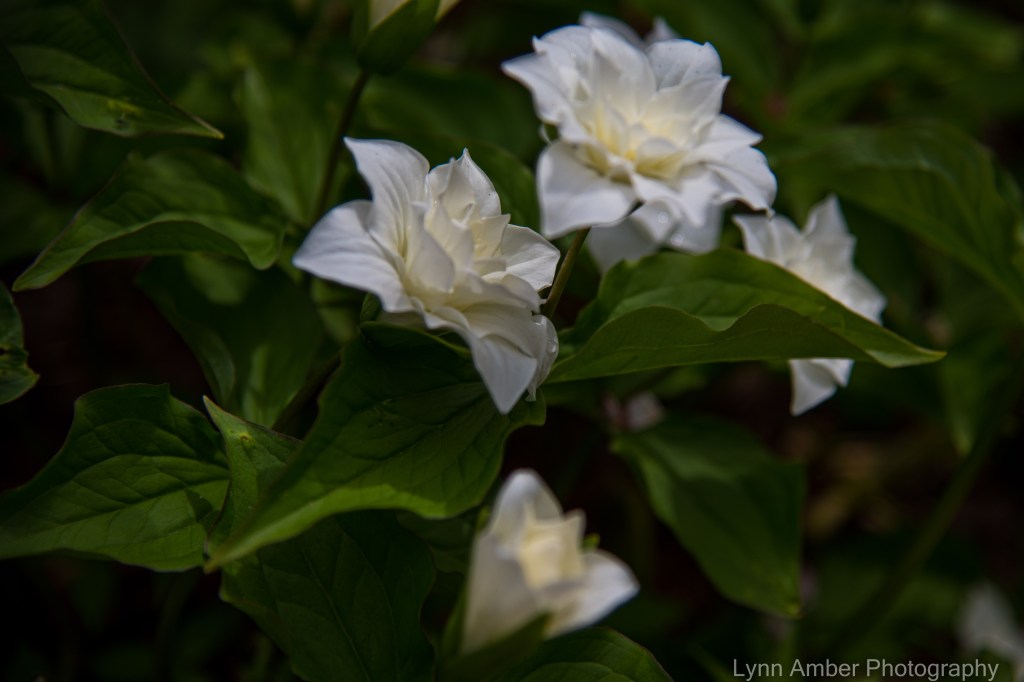
I am fascinated by the emerging leaves and flowers of the Moosewood Maple. I’m not sure why but the way the leaves catch the light through the forest canopy is awe-inspiring. Since arriving in Acadia, I’ve watched the new leaves emerge and expand, and the flowers start to form. Lovely!


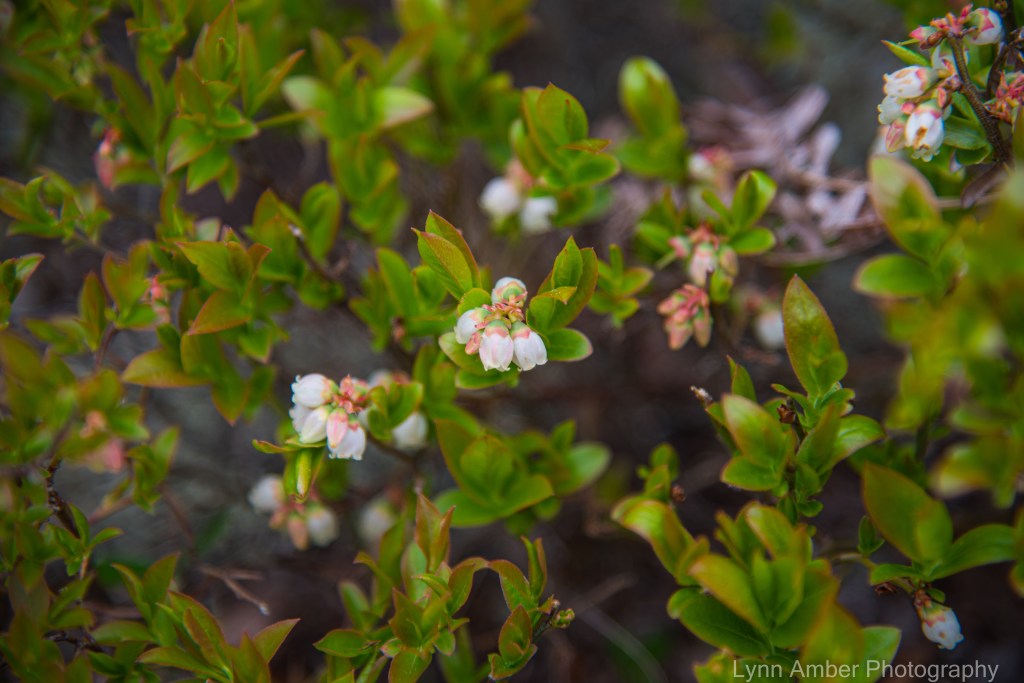
Spring has arrived in Acadia and the trails, forests and carriage roads are beckoning! It’s good to be back enjoying this island paradise.
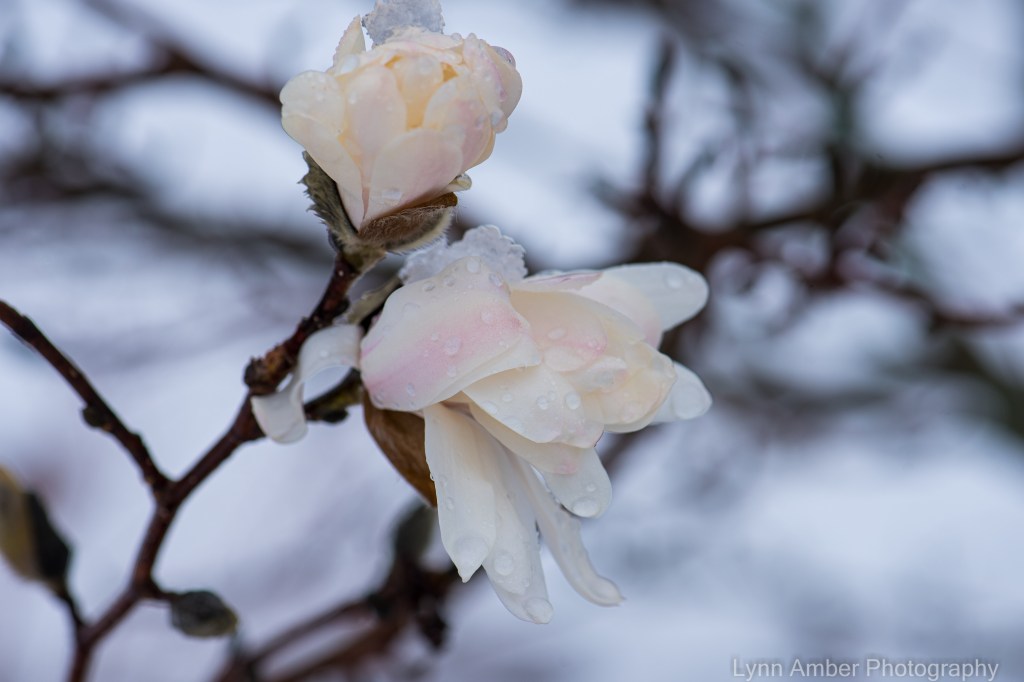
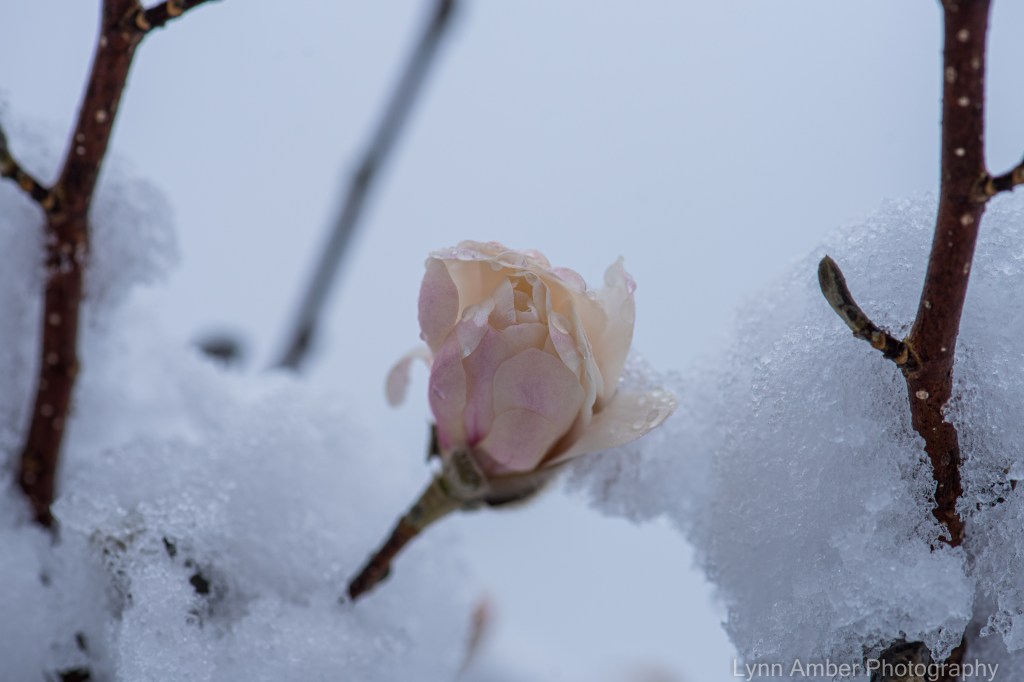
Snow Magnolia
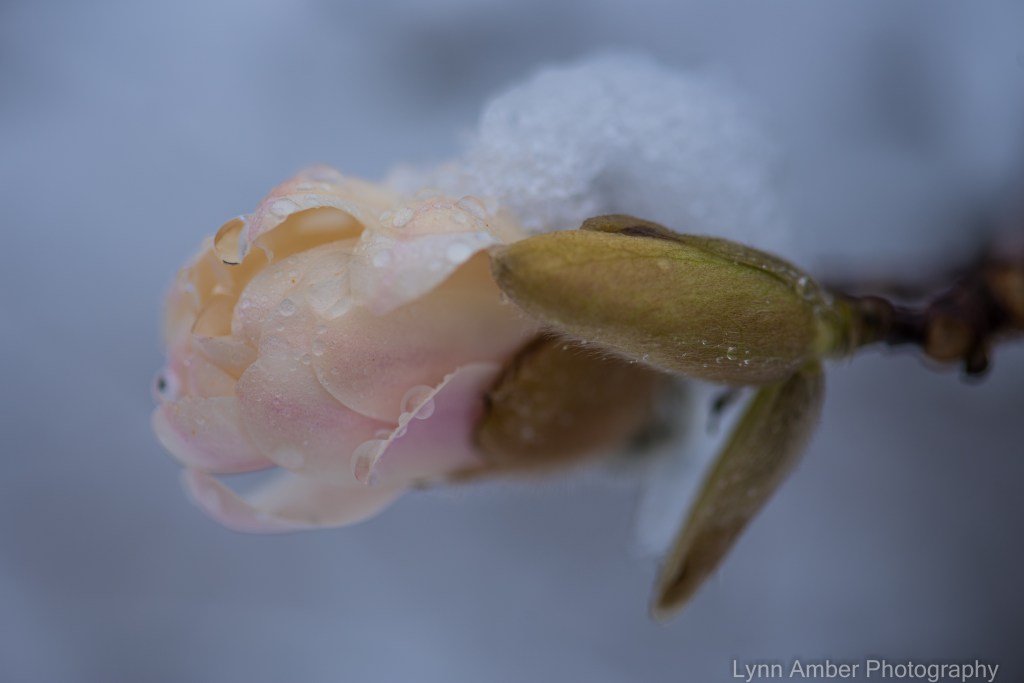
Shivering blossom
Under a snowy blanket
Longing for sunshine. ~ Lynn Thomas Amber
I believe a more appropriate common name for the Star Magnolia should be Snow Magnolia! Here in the north where this magnolia reaches its hardiness limit, the opening blossoms often endure late cold snaps and snowstorms that damage its buds and discolor flowers. Thankfully, our mid-April snowstorm yesterday did not bring freezing temperatures and I believe the flowers and buds survived with minimal injury. I found the snow-covered branches and flowers to be photo-worthy and managed to snap a few pictures before the snow melted.

Trip Down Memory Lane Part I

My love affair with Longwood Gardens began in infancy. For the first 11 years of my life, I was fortunate to live right on the grounds of this renowned public garden in Kennett Square, PA. It was my backyard playground. Many happy hours were spent with family and friends roaming the gardens accessed from the Red Lion Row complex that once housed Longwood employees and their families.
I have an intimate relationship with the gardens that few people would understand. And, although I’ve witnessed some drastic changes over the years, I choose to embrace these modifications and the positive effects they have generated on the garden and the community. Change is inevitable after all.
Last week, we made an unexpected trip to southeastern Pennsylvania to visit family and friends. I never miss an opportunity to visit Longwood when in the area. And, while the weather was not ideal the day we visited, there were still many spring plants and bulbs blooming. Considering I was coming from central Vermont, this was a welcome sight!! 🙂
After getting “scanned” in at the visitor center, we strolled through the underground tunnel and made a right hand turn towards the formal “flower garden walk” with its mass plantings of tulips.


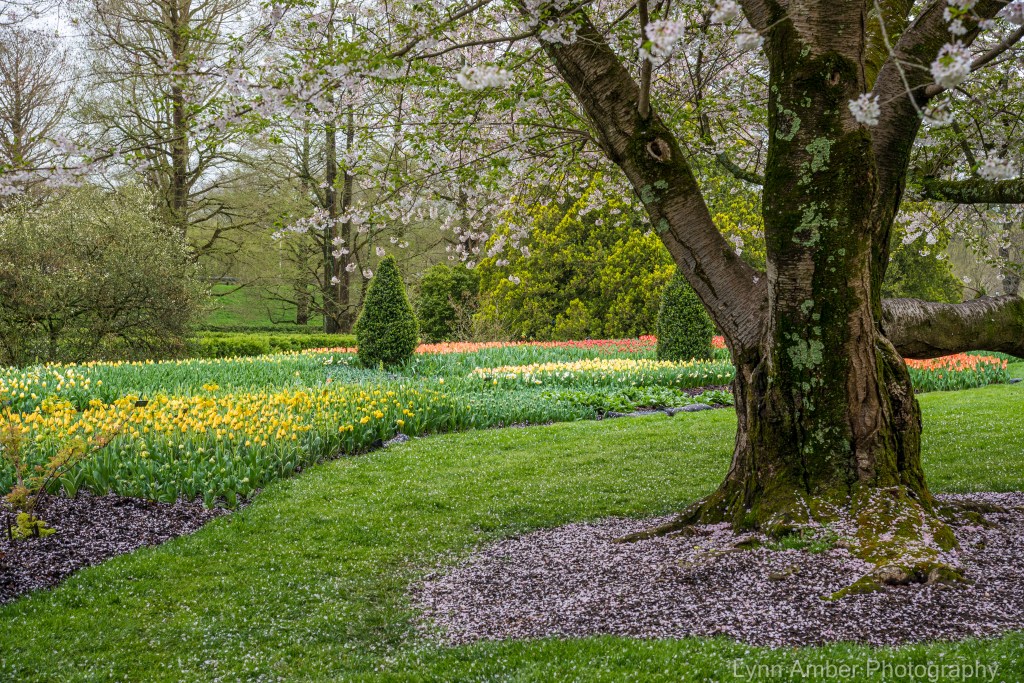


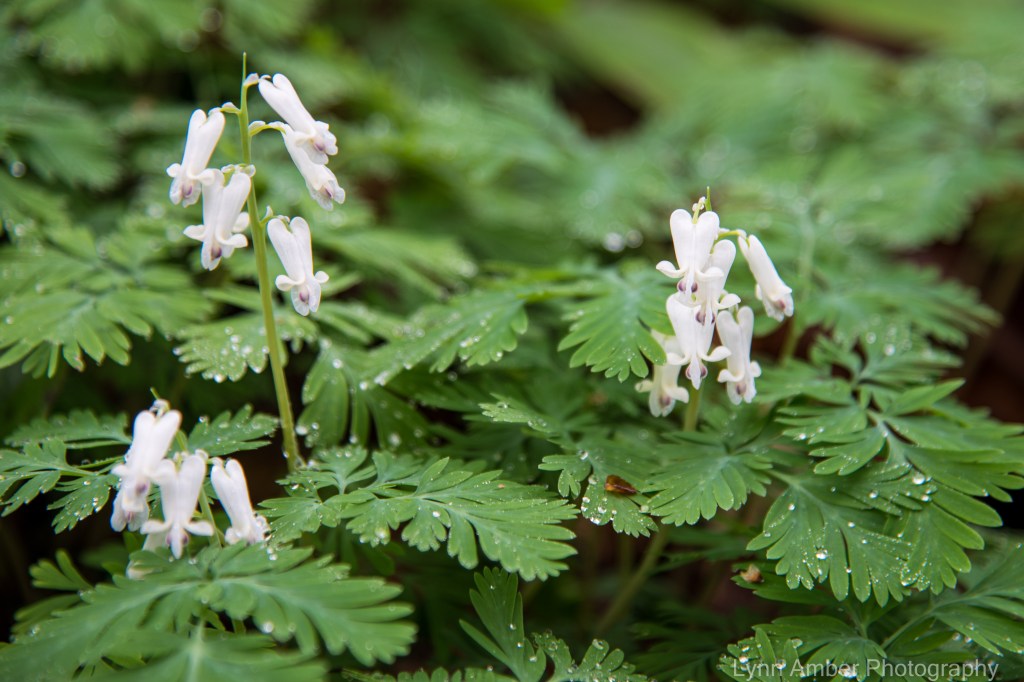
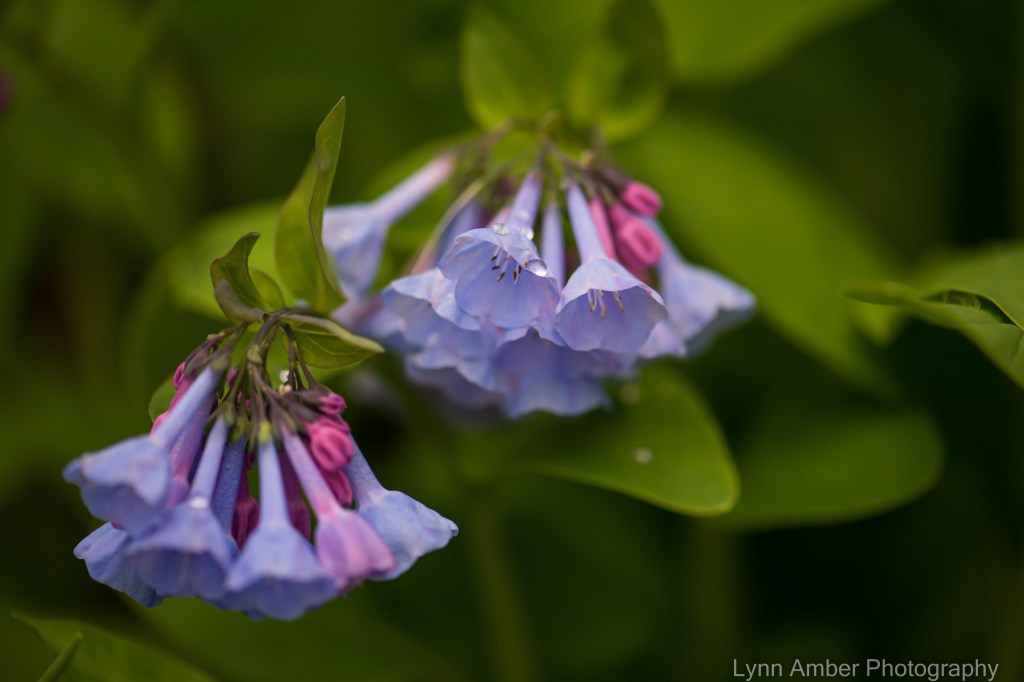
After meandering along the Flower Garden Walk, we headed on down through the woods and towards the Italian Garden area. Under the canopy of the trees in Pierce’s Woods, some early wildflowers were starting to bloom.


After walking about outside and around the historic Pierce-du Pont house and Pierce’s Woods, we ventured into the Main Conservatory to get warm. Construction has begun for the new Longwood Reimagined: A New Garden Experience renovation project. Over the next 3 years, 17 acres of land including parts of the conservatory and grounds will be transformed and updated. While under construction, the main area of the conservatory and the east conservatory will remain open.
Stepping inside a warm conservatory overflowing with flowers on a cold day always reminds me of a page from one of my favorite children’s books – Miss Rumphius, by Barbara Cooney. I relate to Miss Rumphius – a librarian (like me) – who set out to do 3 things in her life – visit faraway places (like me) , live by the sea (like me) and make the world more beautiful (I’m still striving to do that!) I love the line from the book that describes stepping into a conservatory on a wintry day – “the warm, moist air wrapped itself around her, and the sweet smell of jasmine filled the air.”


The Orangery was filled with a display of lilies, poppies and hanging baskets of daisies.


In the East Conservatory, I was drawn to the fountains – always trying to capture cascading water droplets!


At the far end of the East Conservatory, the staff is using this area to highlight some of the greenhouse collections that are no longer accessible during the renovations. The day we were there they had some of the bonsai plants on display – always a favorite of ours.

We exited the main conservatory and walked down to investigate the main fountain area. Several years ago, this area was completely renovated and I had not seen it up close and personal. Some of the fountains were flowing – much to my delight!


Some of the detail of the restoration of the back wall of the fountain display. The stone and masonry work in this area had deteriorated over the years and enjoyed a complete makeover.

From the main fountain garden, we enjoyed a brief respite at the Terrace Restaurant where I thoroughly enjoyed sipping on a hot chocolate laced with Bailey’s Irish Cream. It definitely took the chill off! After our hot beverage, we continued to the Chimes Tower and the Hillside Garden area.
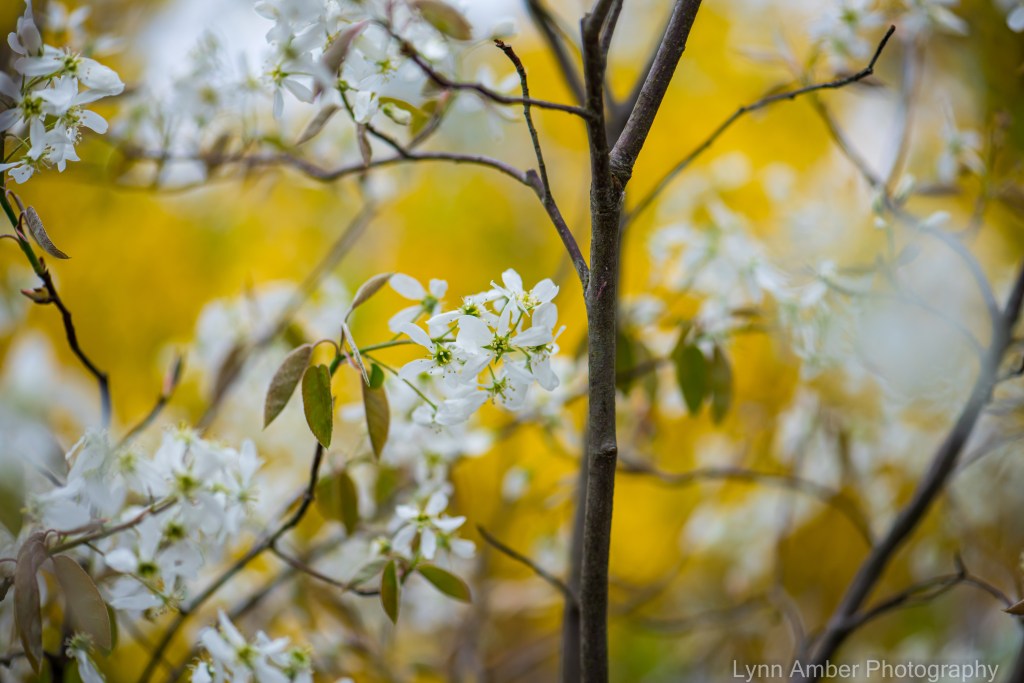

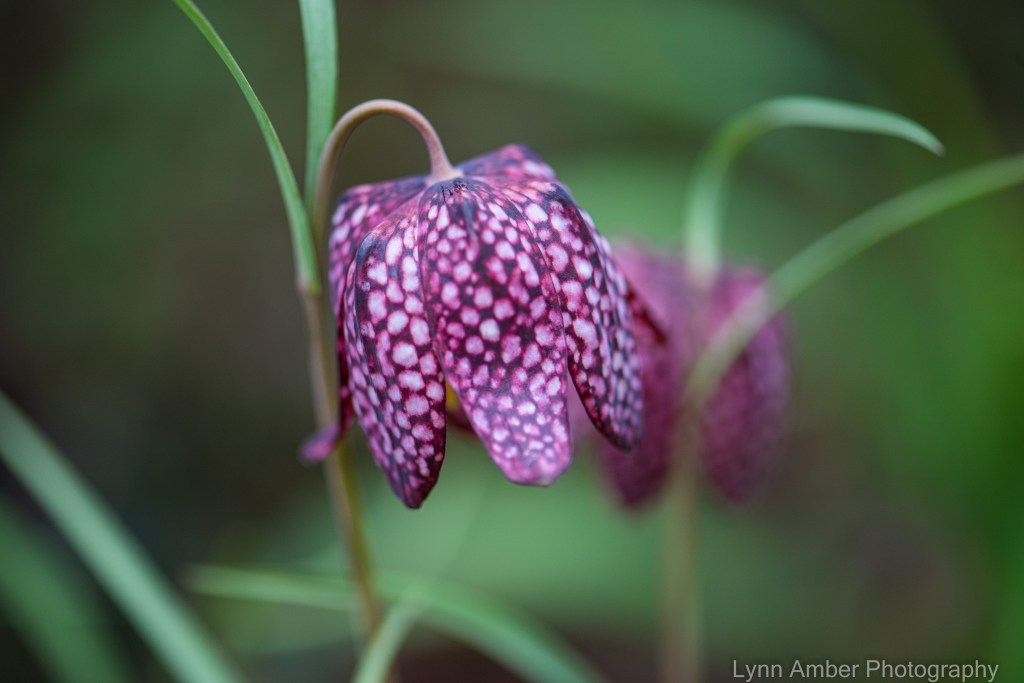
Throughout the Hillside Garden, there were wildflowers and shrubs blooming.


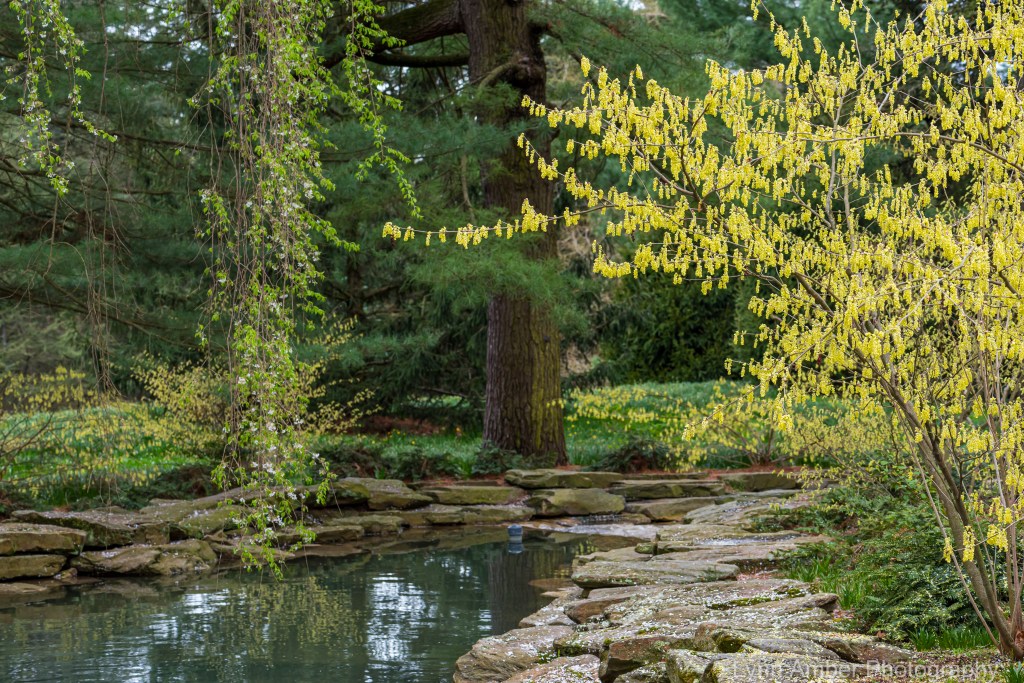
And lots of species of Winter-Hazel in bloom.

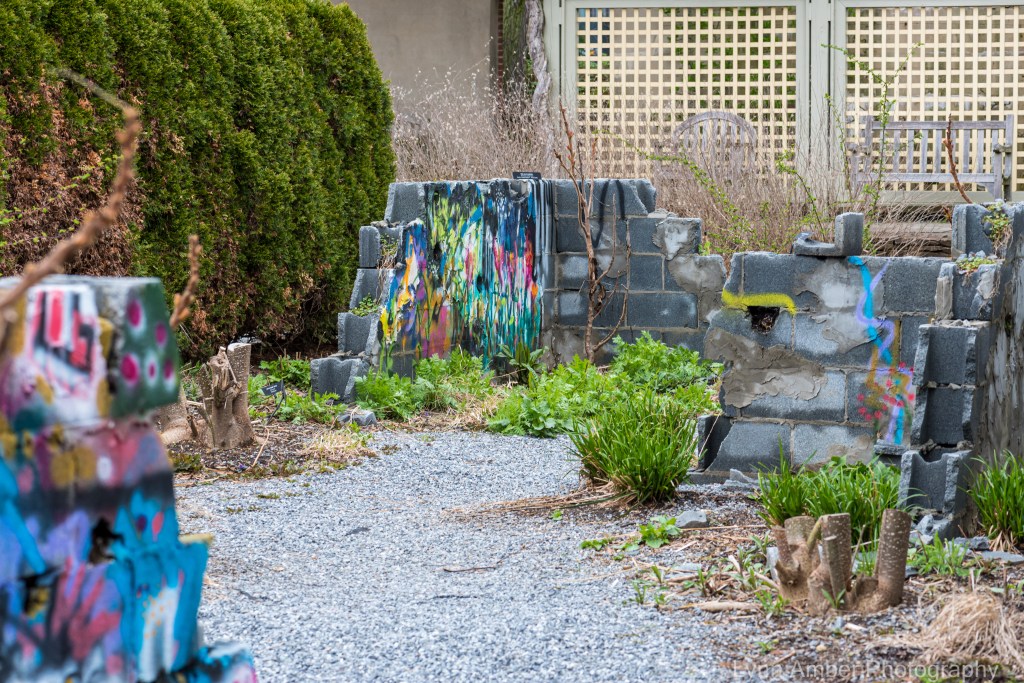
Finally, one last photo – from an area in the Idea Garden. There was no explanation for this section of the garden or the “artistry” that is represented here. A plaque stated that it was developed in collaboration with a local artist and teacher. I imagine that it represents an “urban” space gone wild – with a representation of the types of plants that will self-sow in such an environment if left unchecked. Thoughts anyone??
Airstream Fun!

Spring has begun here in Vermont with the arrival of some feathered friends. In the past several days, I’ve listened to the melody of a song sparrow, heard the musical trill of Red-winged Blackbirds adjacent to the ponds up the road, watched an Eastern Phoebe characteristically flicking its tail while perched on a branch in our white oak and welcomed the true sign of spring – a yard full of robins looking for worms. The twin ponds near us are coming to life with the return of a pair of Canadian Geese, a Mallard Duck couple and a pair of Mergansers. I was also treated to an otter sighting on one of the ponds! He was swimming, diving and playing in the middle of the pond on a recent walk. Last fall there were 3 otters on the pond. I’m curious if his other two friends are also in the area.
My last blog post about springtime preparation of our Airstream was two years ago in April – as I was getting ready to return to my workamping position with the park service at Acadia National Park. Well, here we are again!
Now that the weather has warmed our focus has shifted to getting the Airstream ready for travel. I am once again returning to Acadia National Park this year. It will be my third season. After being stuck at home during Covid summer, it feels good to be going back to work in a place I love so much. As much as I would prefer to travel out west, it just seemed smarter to stay closer to home this season. During the winter, I was busy with some projects for the Airstream and researching some changes I wanted to make to the interior.
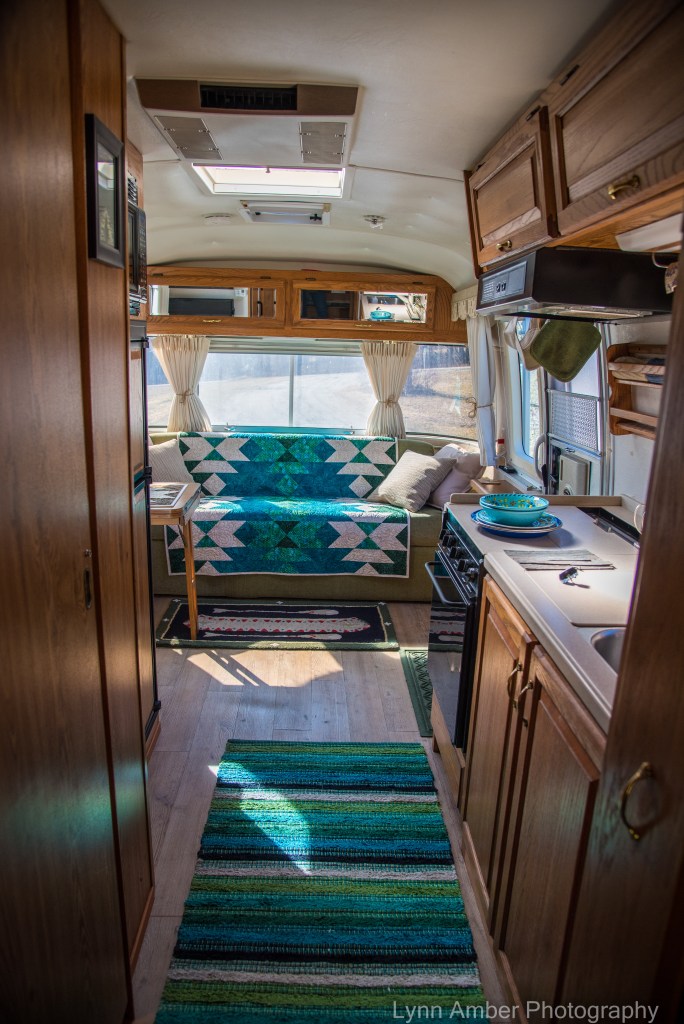
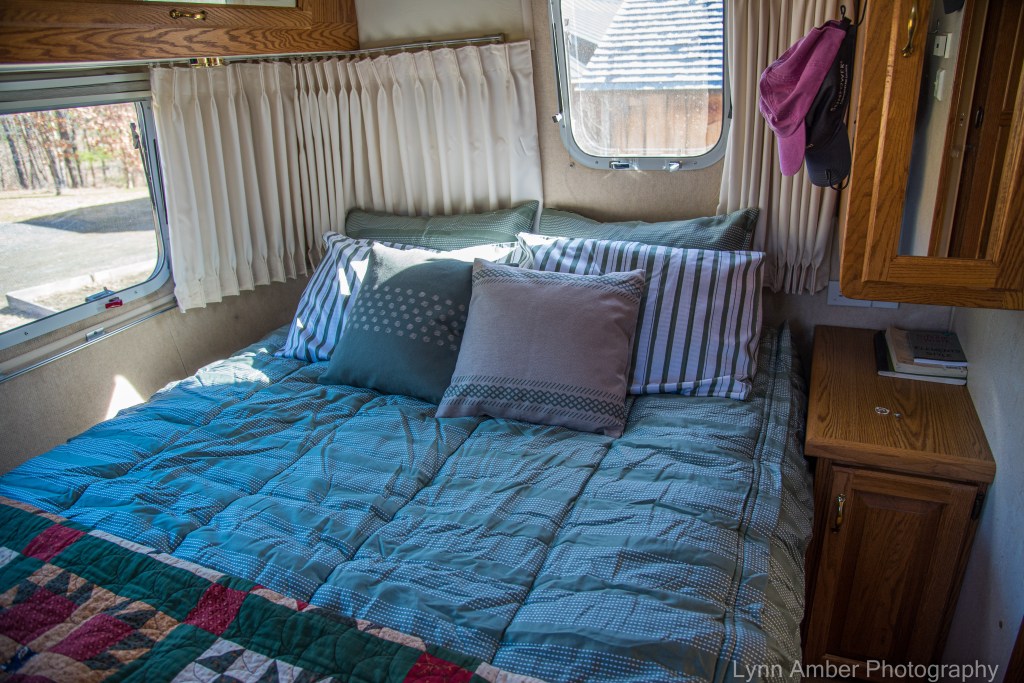
I spent about a week designing and sewing a new quilt throw for the front sofa. I chose colors that I love (teal blues and greens) and a pattern that was easy to work with. Of course, that also meant investing in a new runner rug that matched the quilt! A day trip last month to the Homeport store on Church Street in Burlington was a success and I scored the perfect rug for the galley area. The change has the desired effect – brightening up the interior.

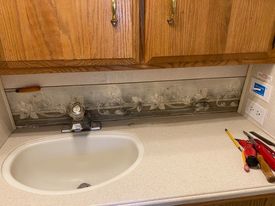
I also wanted to make a change to the backsplash in the bathroom. The existing backsplash was “original” and included a wallpaper strip that was outdated and definitely not my style! After researching options, I settled on a “peel and stick” weathered quartz panel. The panel consists of real quartz veneer adhered to a sticky backing. I like the natural look of the stone. We needed about 4 panels to complete the job, trimming the panels to size with tin snips as recommended. We opted to also use beads of construction glue on the backing as added insurance that the panels would stay in place. It was a little tricky getting the panels in place while also making sure the adhesive did not touch the wall until it was lined up perfectly. I can verify the adhesive is indeed very powerful! We will see how it holds up! I am making these decorative changes a little bit at a time and hope to continue to embellish the interior over time. I’ve been enjoying membership in a Facebook group called Airstream Interior Ideas. It’s amazing to see the transformations that people have made to their Airstream walls, lay-outs and countertops to customize the space. I’m a bit more timid than most when it comes to change, so I’ll continue to approach interior design alterations slowly and thoughtfully.

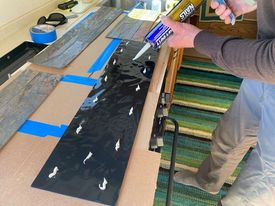

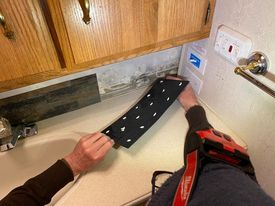
Jim did a great job negotiating the panels onto the wall while dealing with the very sticky adhesive!! If it sticks before you have the panel properly placed, there is no turning back! I guess that’s a good sign that it will remain in place!

One really exciting idea that I gleaned from Airstream Interior Ideas is Beddy’s RV bedding ensembles. I’ve been using traditional queen size sheets and comforters on our Airstream mattress and they don’t fit well due to the shape of the mattress. They also interfere with access to the built-in pull-out drawers and storage area under the bed. It’s been a constant struggle. I learned about Beddy’s on the Facebook group and investigated. It took me a couple of months (and a request on the FB group to share pictures the Beddy’s used on my specific mattress) before I took the plunge and ordered. I have no regrets! I am so happy with the way it fits and no more wrestling with sheets and blankets getting caught in the drawers!!

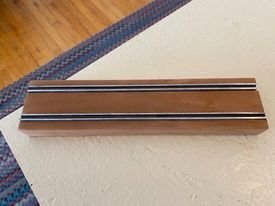
One other functional as well as cosmetic change that we are in the process of completing is the alteration of the magnetic knife rack that was screwed into the wall beside the kitchen sink. It was functional but not pretty – black plastic with metal/magnet strips that were starting to rust. It was also 18″ long extending all the way across the wall and interfering with my paper towel holder and cutting board storage. I literally have two, maybe three knives that I hang on the rack so I wanted a smaller one that was no more than 9″ long. As I researched ideas on the internet, I saw some unique knife racks made with wood and an idea began to form! If you have not noticed to date, I am the idea person in this couple, and Jim is the laborer – actually transforming my thoughts into reality. I designed a knife rack using a piece of cherry wood we had lying around thinking that we could remove the magnets from the old rack, cut them in half and route out two channels in the cherry strip to glue the magnets into – thereby creating a new, more decorative knife rack. Jim experimented with this and it was easy peasy! He has prepared the cherry wood and glued the magnets in place. One more step to tidy up the ends then I can put a finish on the wood and we can install it in the trailer. 🙂
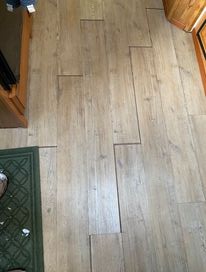
Every year after the Airstream has been in storage, we do an initial inspection to see what, if any, issues might have materialized due to the winter and cold temperatures. Unfortunately, we did have a major issue with the cork/vinyl click-lock floating floor that we installed 5 years ago. This is the first winter we have had the trailer in Vermont for the entire season and the cold temperatures caused the flooring to contract excessively and curl. We waited until temperatures started to moderate to fix the problem. I researched other flooring options extensively using Airstream Forums and corresponding directly with the Airstream company, but ultimately we decided that we did not want to do a major overhaul to the floor this year. Jim came up with the idea to “epoxy” together the sections that came apart as a temporary “not-so-quick” fix – giving us time to weigh the pros and cons of various other flooring options. The pictures are blurry due to my poor cell phone and cropping – but you get the idea. Sadly, this flooring was recommended to us by a flooring specialty shop knowing we were installing it in an RV. Live and learn!

The other issue we had with the trailer was actually something we noticed while traveling back to Vermont last spring from the southwest. Back in 2019, while checking all the water faucets for leaks during spring preparation, we noticed a leak where the water line enters the shower. This connection is a little funky and, over time, with road vibration it works itself loose. Jim tightened up the fitting from the bathroom cabinet side and that seemed to work. But, traveling across country this past year, we noticed that whenever we stopped and turned the water pump on, the shower faucet would be on and start leaking water. The vibration caused by traveling down the road was forcing the shower faucet out from the wall and turning it on. This was a new problem! When Jim investigated further, he realized that between the shower wall and the bathroom wall was a gap and the plumbing valve mechanism behind the wall was not well supported. It allowed for too much movement causing the shower faucet to “turn on” when the trailer was in motion. In the process of trying to trouble-shoot the problem, Jim managed to crimp the original escutcheon that surrounds the faucet and covers up the plumbing. My job was to find and order a new escutcheon – which I did – and Jim worked on crafting a custom wood block that would fit in the wall space and support the plumbing valve better. As usual, it was a longer, more involved repair but it worked! Hopefully, that problem is now permanently fixed and we’ll experience no more leaks around the shower! (Knock on Wood) 🙂
As with any older model trailer, things start to break over time and need to be replaced. In 2019, it was the Dometic refrigerator – BIG ticket item! In March of 2020, we were forced to replace the water pump during our boon-docking stay in southern Arizona. Luckily, we found an RV dealership and parts shop in a nearby town who were extremely helpful. And, replacing the water pump was way less painful from a cost perspective than the refrigerator!
Today, with the weather forecast indicating above freezing temperatures for the foreseeable future, we started the process of sanitizing the fresh water tank and water lines. We fill the 55-gallon fresh water tank – mixing in 8 oz. of chlorine – and run the water through the faucets until the chlorine smell permeates the air. This is the time when we also check for leaks around all faucets and water connections. We’ll let that chlorine water sit in the tanks and lines for a minimum of 4 hours before draining and filling back up to flush out the chlorine.
It feels so good to be starting this process! Before long, I’ll be hearing the sweet, meditative sound of the buoy bells coming from the ocean off the coast of Maine!
NO Mud!

The exceedingly warm temperatures this week meant that we were all on high alert for the roads to break up and revert to mudslides. Surprisingly, the roads remain relatively dry and hard-packed. It’s been an unusual spring mud season or lack thereof! I’m not complaining! Although the roads remain passable, our driveway is thawing and seems bent on giving us a mini-mud season display. Last week, our fuel oil company made an unexpected delivery and backed into the driveway, almost “sliding” into our Airstream travel trailer and causing deep ruts that my husband had to fix. So much for our phone call to them in early March asking them to hold off on delivery!
Yesterday morning, as I was chatting with my mom on the phone, I glimpsed the propane fuel truck heading up our road to turn around at the “Y” so he could back into our driveway. I quickly ended our conversation and headed out to intercept him before he pulled in. This young man was a tad more alert to potential mud hazards than the fuel oil guy and had already parked the truck on the road and was walking into the driveway to assess the situation. Since we only use propane for cooking, he felt confident that we could wait until after mud season for a refill. He was not anxious to navigate the mud in our driveway. We checked the fuel level and his intuition was correct. Another potential maintenance issue for Jim to fix was averted!! 🙂 I have a confession to make. After the fuel oil incident last week, I was tasked with calling the propane folks to ask them to hold off on delivery and I forgot to make this call. Since Jim was not home for this near miss, he will never know how close he came to spending another day rearranging mud! 🙂
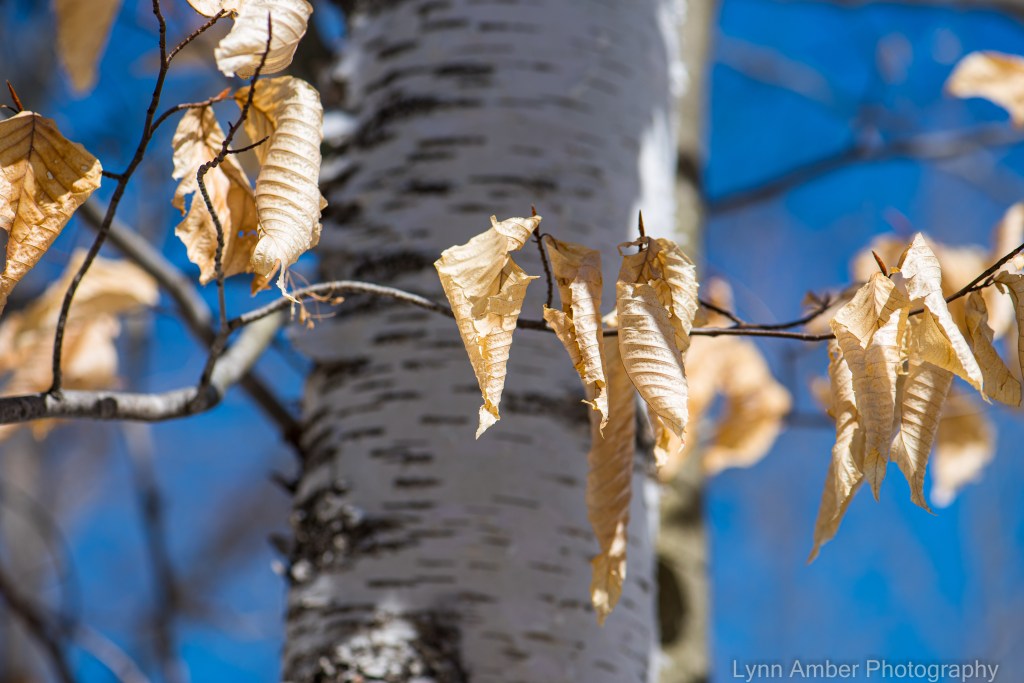
During my long walk yesterday, the birch trees stood out against the deep blue sky and intermingled among them were beech tree stems – making it appear that they emanated from the birch trees. I just loved the contrast.
As I walked, I scanned the forest floor where the snow has receded looking for signs of life and this bright green patch of clubmoss (Lycopodiaceae family) caught my eye. I’m not entirely sure I want to hazard a guess as to the genus of this plant since it resembles a couple different possibilities. My research indicates that it is likely Bristly Clubmoss (Spinulum annotinum) or Shining Clubmoss (Huperzia lucidula) due to analysis of some distribution maps. Perhaps one of my naturalist readers can correct me if I’m wrong. 🙂 Clubmosses are among the most ancient of the vascular plants! Just goes to show you how adaptive they are! They have been used for medicinal purposes and as a dyeing agent for fabrics. One very interesting fact is that the spores of the plant are highly flammable due to a high oil content. The spores were traditionally used in Native American ceremonies involving fire and, more recently, in the production of fireworks. Cool!

As I was nearing the end of my walk yesterday the sun was starting to set and I noticed increased bird activity at dusk. It appears the robins have made their spring arrival and were dotting the field to my left. I heard the distinctive call of a red-winged blackbird and watched him as he perched on a tree branch along the road. The Journey North has commenced.
Sounds of Spring
Sights and Sounds of Spring
Meltwater trickles
Along the mud-covered road
A burbling river. ~ Lynn Thomas Amber
Yesterday, the sun was shining brightly, warming the spring air and lighting up the forest. I found that I had a little extra bounce in my step, and a wider curl to my smile as I soaked up the rays of sunlight on my daily walk. I was also feeling much lighter – sans long underwear and heavy sweater for the first time all winter! I altered my routine – choosing to walk in the early morning before the frosty roads broke loose from the warm temperatures and penetrating sunshine. By the time I returned home, the rivulets of meltwater were already running down the sides of the roads – a sure sign of spring.
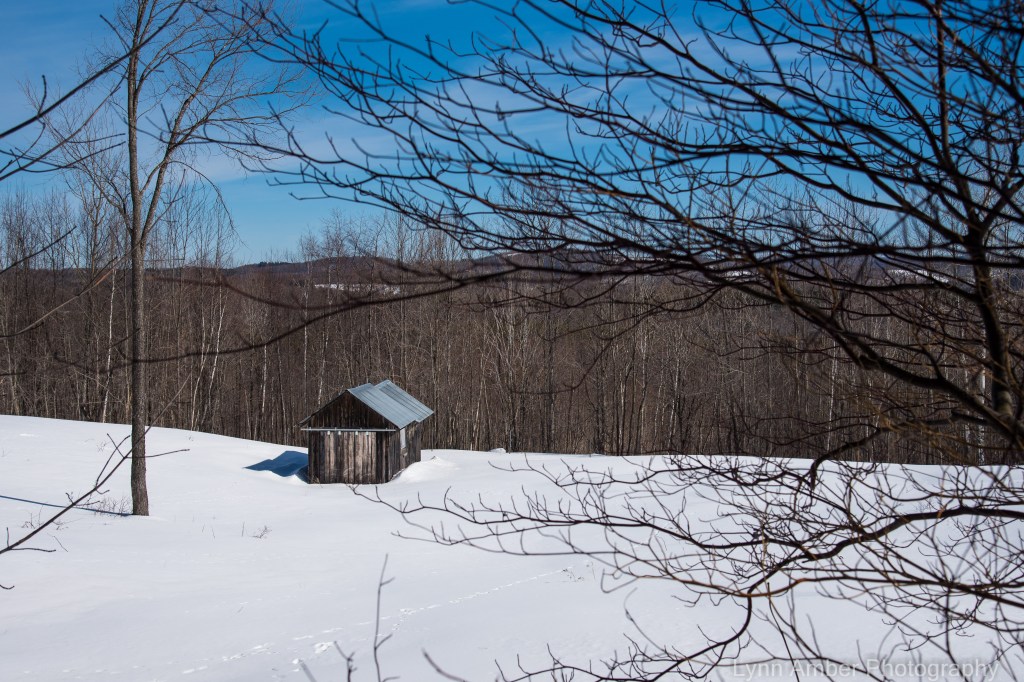
I’ve been attracted to this small clump of Cornus alternifolia (Pagoda Dogwood) growing naturally along the road and examine it regularly on my walks. The reddish-purple branches stretching horizontally from the trunk are quite attractive in the winter. I wanted to capture the habit of the branching structure in the foreground of this shot – not entirely happy with this angle – still needs some work – so I’ll keep trying!

A new owner on the property around the corner from us installed this post and rail fence around their perimeter last summer. It meant that the VAST snowmobile trail that used to bisect the property had to be re-routed onto the narrow yet travelled road for a small distance before rejoining the trail on the other side of the property. I have mixed feelings about that. Most of the snowmobilers have observed the “stop” signs before entering the road, but I have noticed a few who have just shot out onto the road with little regard to checking for cars. Hoping the warning signs along the road are adequate to alert cars to the possible snow machine traffic.
Another warm day – everything seems to be coming back to life even though we have a long way to go until true spring. I fear I may be walking in mud today – oh well! 🙂
Sleigh ride
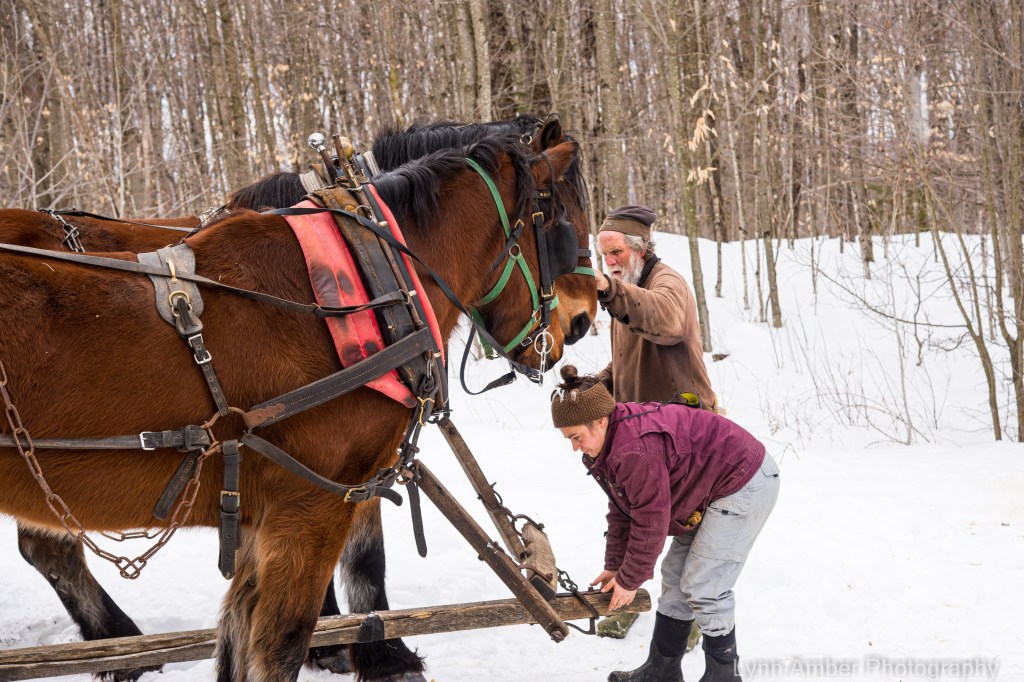
Recently, we’ve been getting eggs from our good friend Bill – whose chickens have returned to a more regular laying schedule. Since we were down to 1 egg in the refrigerator this morning, Jim called Bill to see if we could swing by and pick up a couple dozen eggs. Bill suggested we come around about noon. His new, young apprentice would be there to continue her horse team “driving” lessons and he wanted us to meet her. I was pretty sure this also meant we would be invited along for a sleigh ride through his sugarbush and I grabbed my camera on our way out the door! 🙂
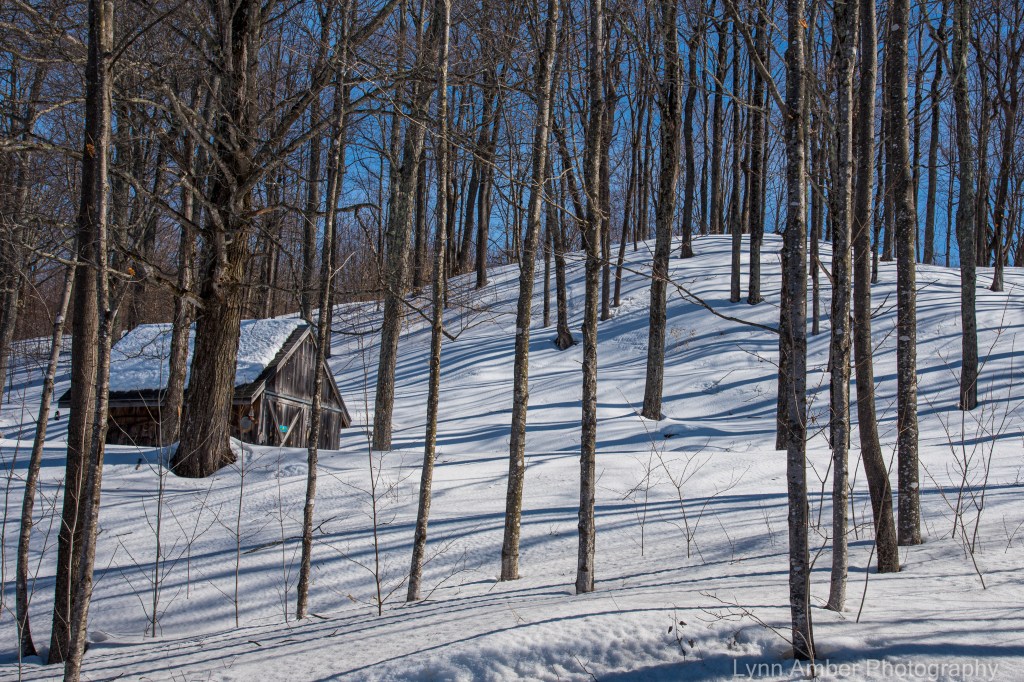
Bill’s getting prepped for the annual maple sugar season when he taps between 800 and 1000 trees – selling his syrup at local coops throughout the year. He sugars the old-fashioned way using a team of horses to gather the sap that is collected from buckets hanging from taps drilled into trees. He has quite possibly the prettiest sugarbush I have ever seen. He’s been lovingly caring for these woods for over 35 years and it shows. I love wandering through his forested land – especially when being pulled by the horses in the sleigh!
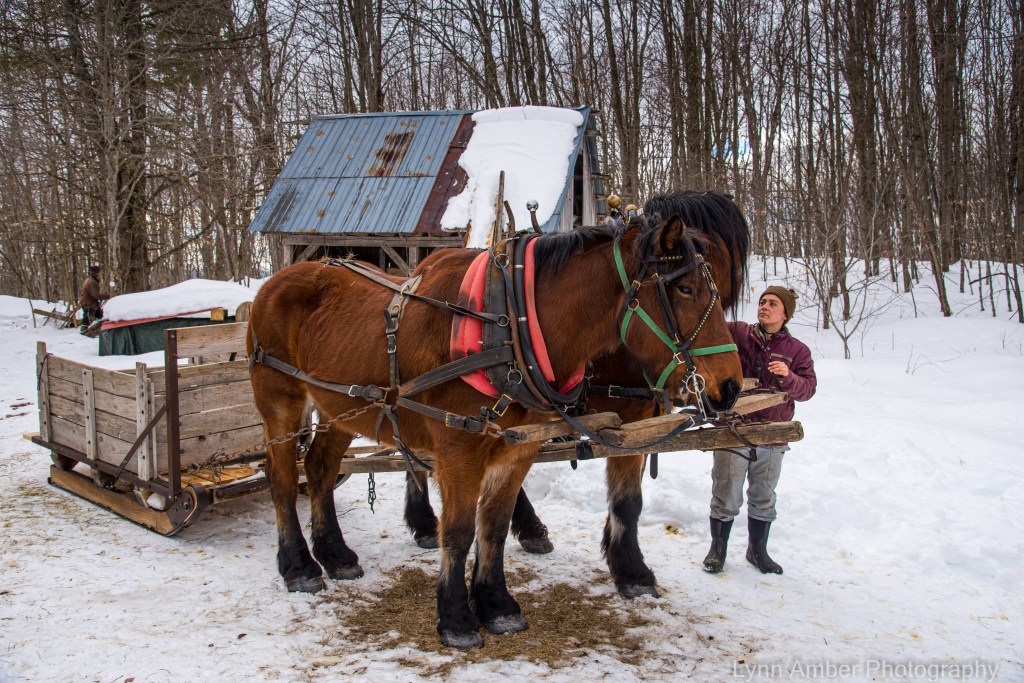
We’ve had a pretty good snow pack this year and he has been taking his team of horses out regularly to pack the trails through the woods. This year, he is training a young girl from a neighboring town to drive the horses during gathering season. Once the saps starts to run, Bill is busy boiling in the sugar house and he enlists competent helpers to drive the horses and collect the sap. Ella has proven to be a quick study and is driving the horses during our jaunt around the woods today, with teacher Bill along for moral support. She has such an air of competence about her that I feel totally comfortable with her at the reins.
While we waited for Bill and Ella to get the horses harnessed and ready to be hitched to the sleigh, Jim and I entertained ourselves watching the chickadees swooping down to feed on the sunflower seeds that Bill provides for them.
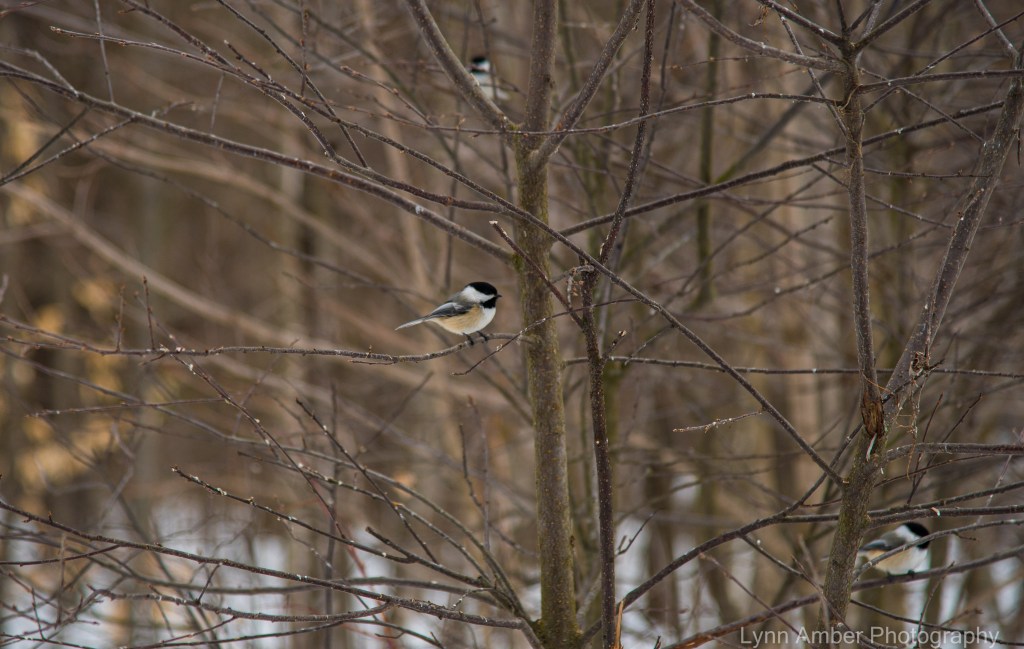
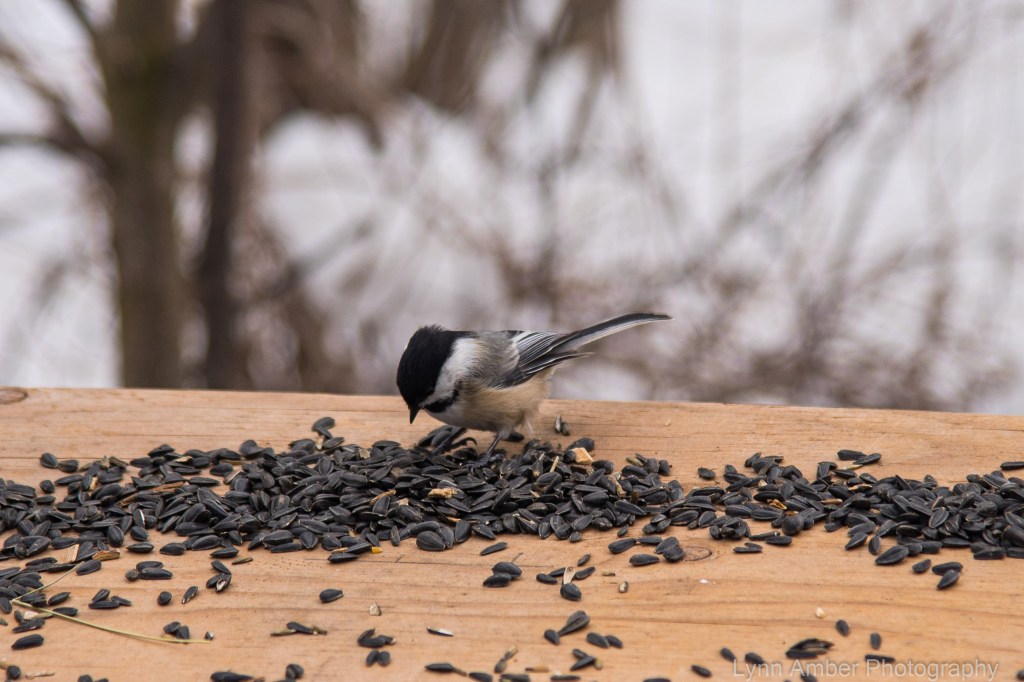
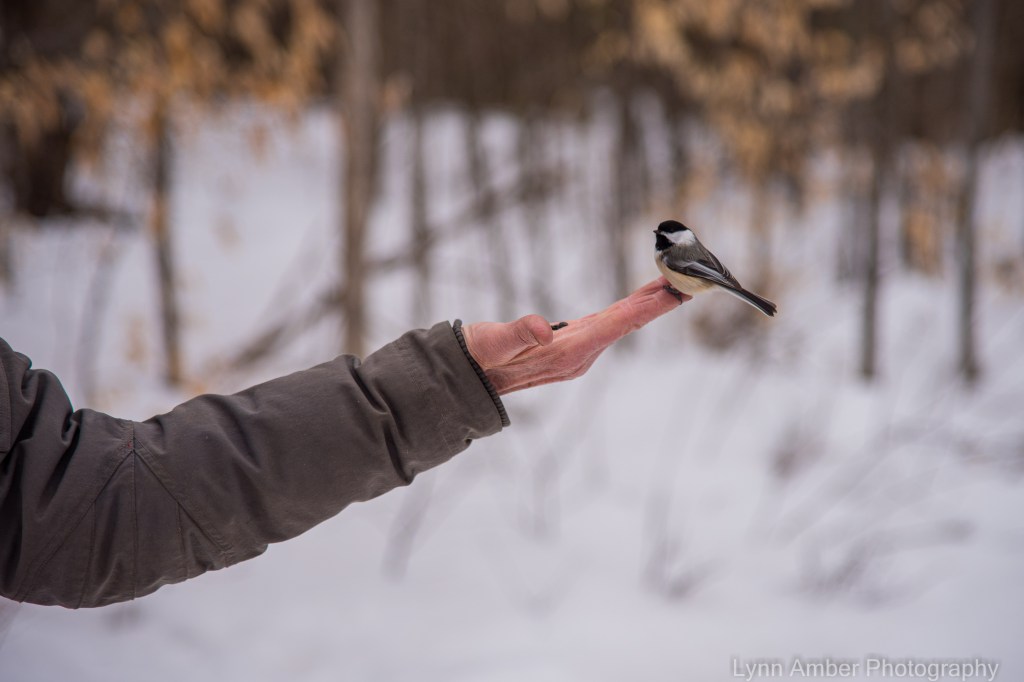
With the horses harnessed, Bill walks them up to the sleigh.
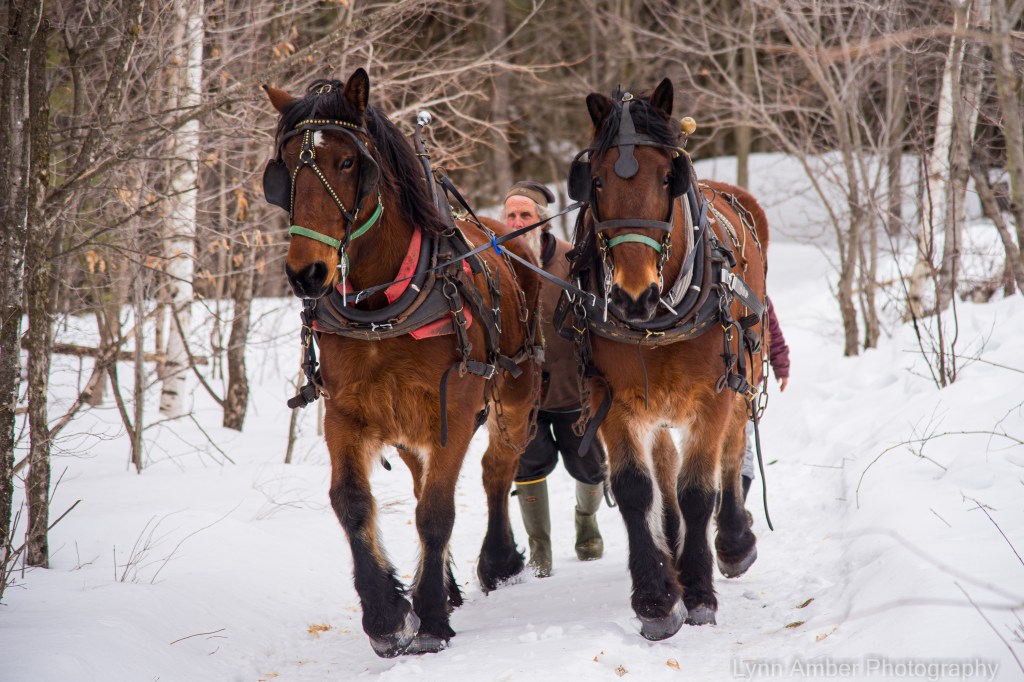
And, once in position behind the sleigh – they get all hitched up and are ready to take a spin through the sugarbush. I’m always amazed how incredibly strong these horses are and, even with the soft and slippery snow, they manage the ups and downs and twists and turns of the trail with relative ease.
Scenes from the Woods
The horses are guided through the sugarbush following a maze of trails so that they get used to the route and continue to pack the snow. Bill tells us that Huck and Hazel are being particularly well-behaved today and suggests they are showing off for us! Ella nods in agreement. I’ve been observing the two horses as we traverse the woods and notice that Huck seems much more interested in us and his surroundings than Hazel. Often turning his head around to check us out. They definitely have very distinct and unique personalities.
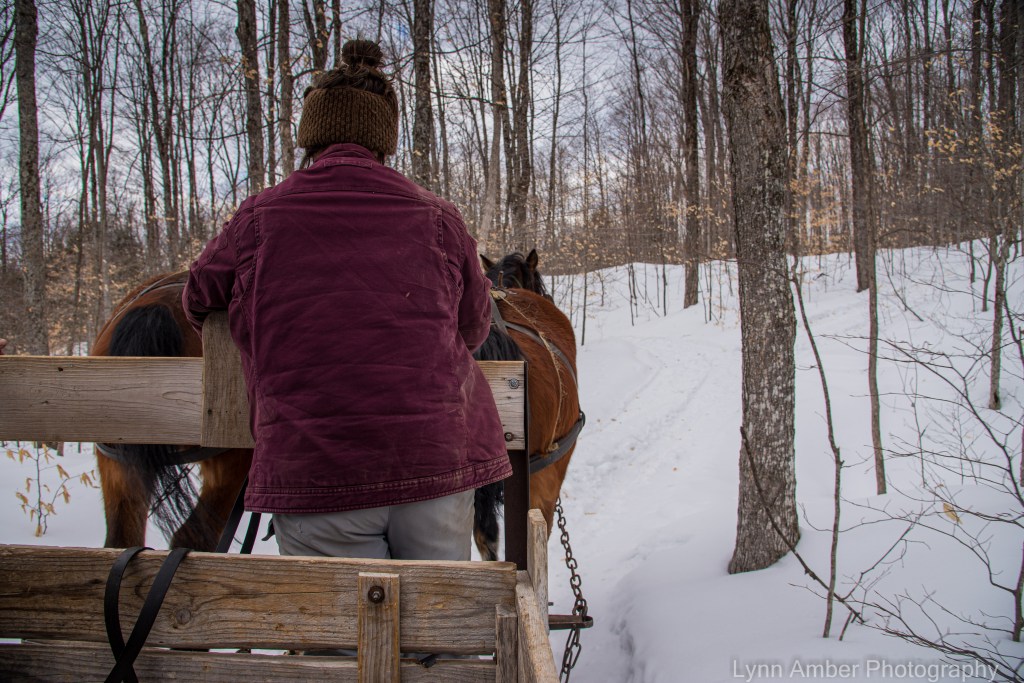
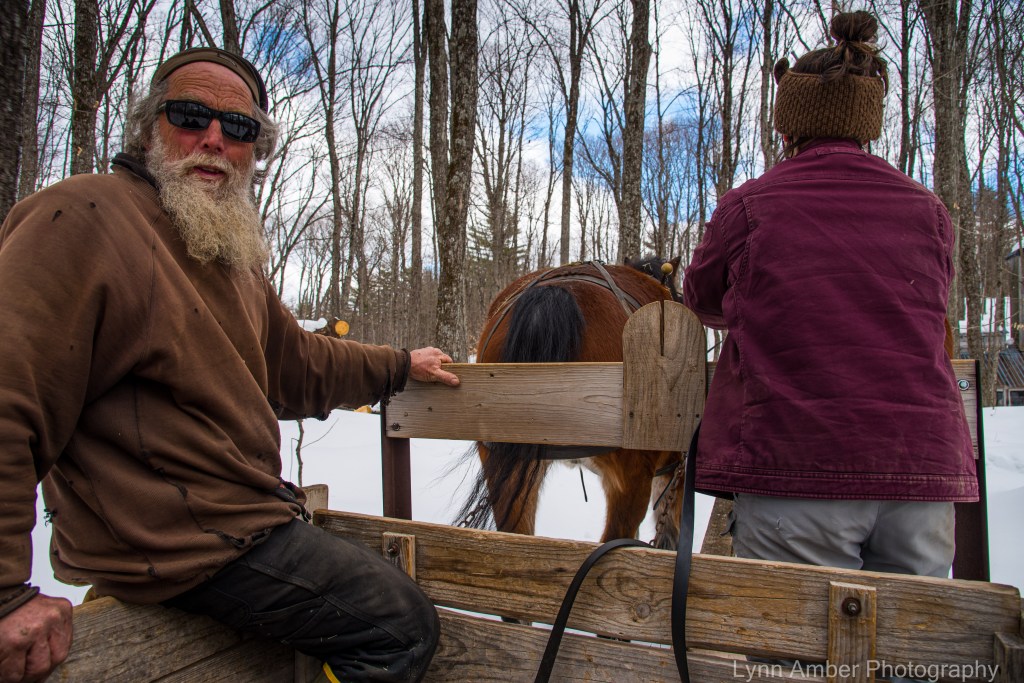
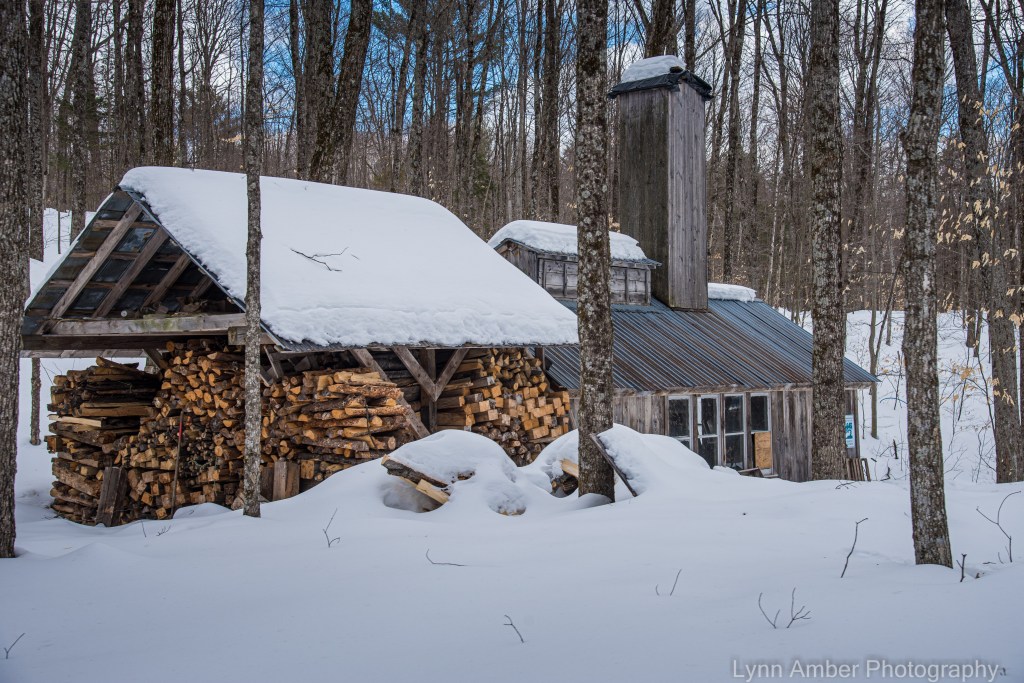
Coming up the trail above the sugar house, we stop and give the horses a break at the location where they will eventually be stationary to unload sap from the tank in the sleigh into the storage tanks below the trail. From the storage tanks, the sap runs into the evaporator in the sugar house.
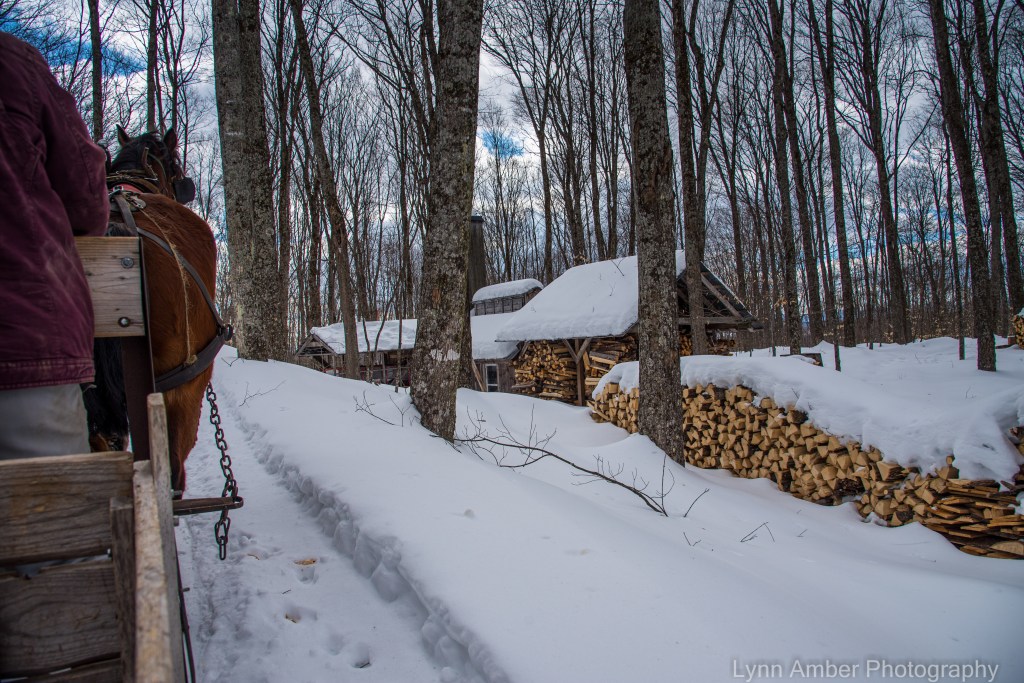
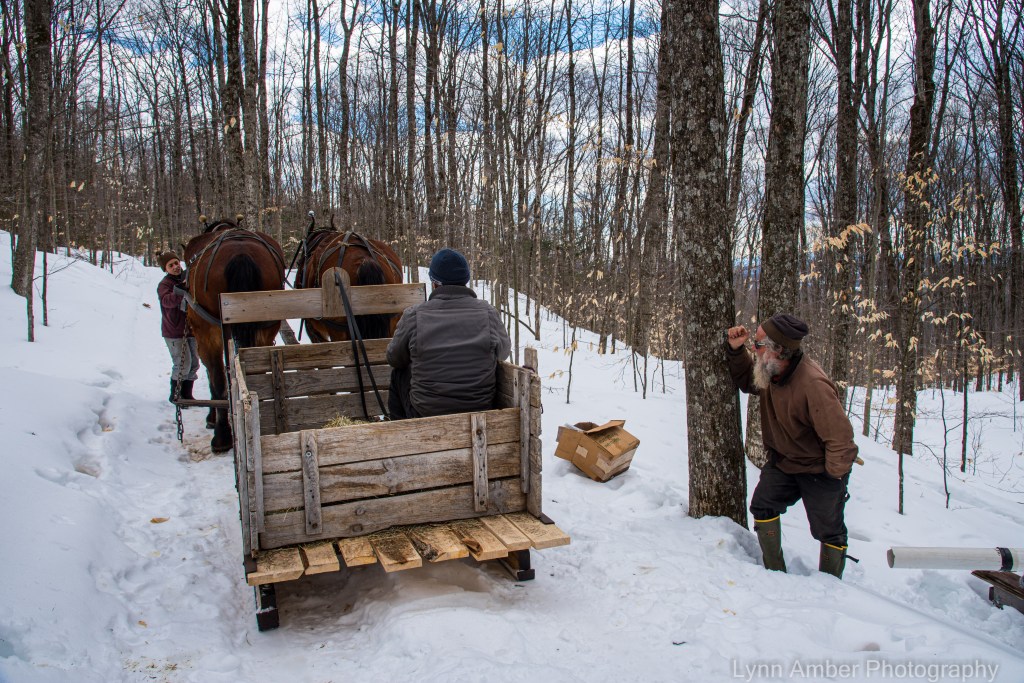
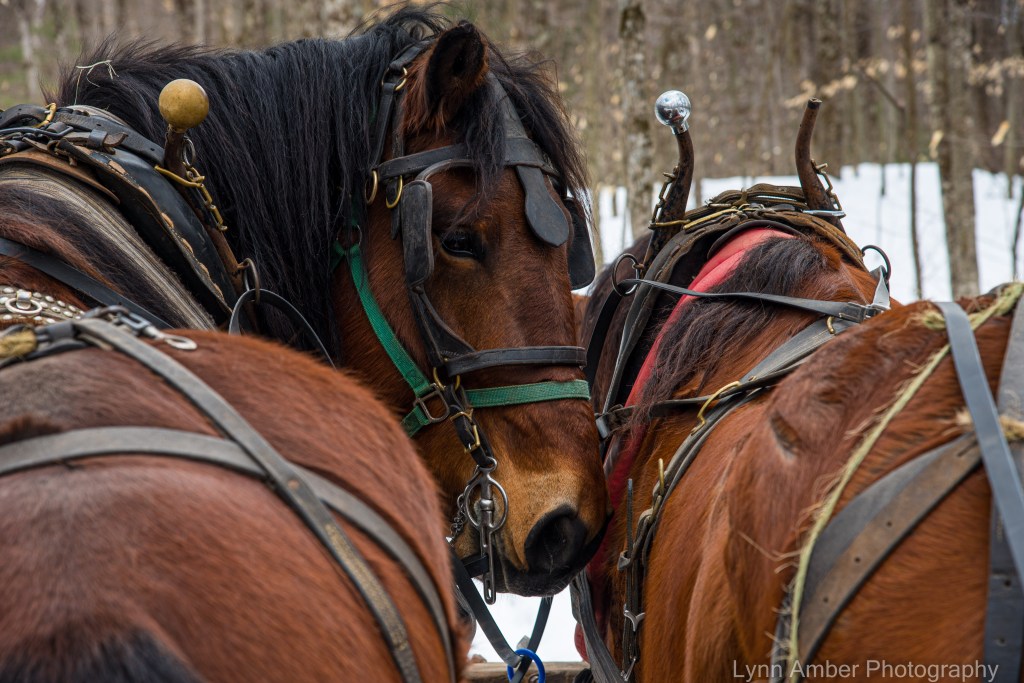
After a break at the sugar house, we head back to the barn to grab our eggs and haul a couple of boards out to our truck – to store in our basement to dry out a bit for Bill.
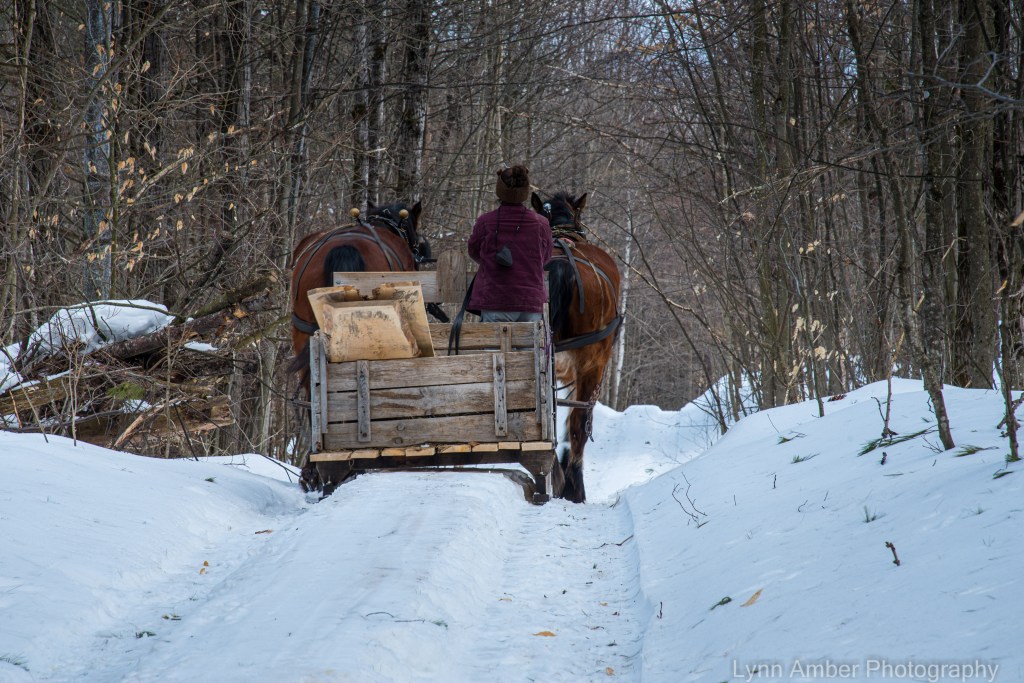
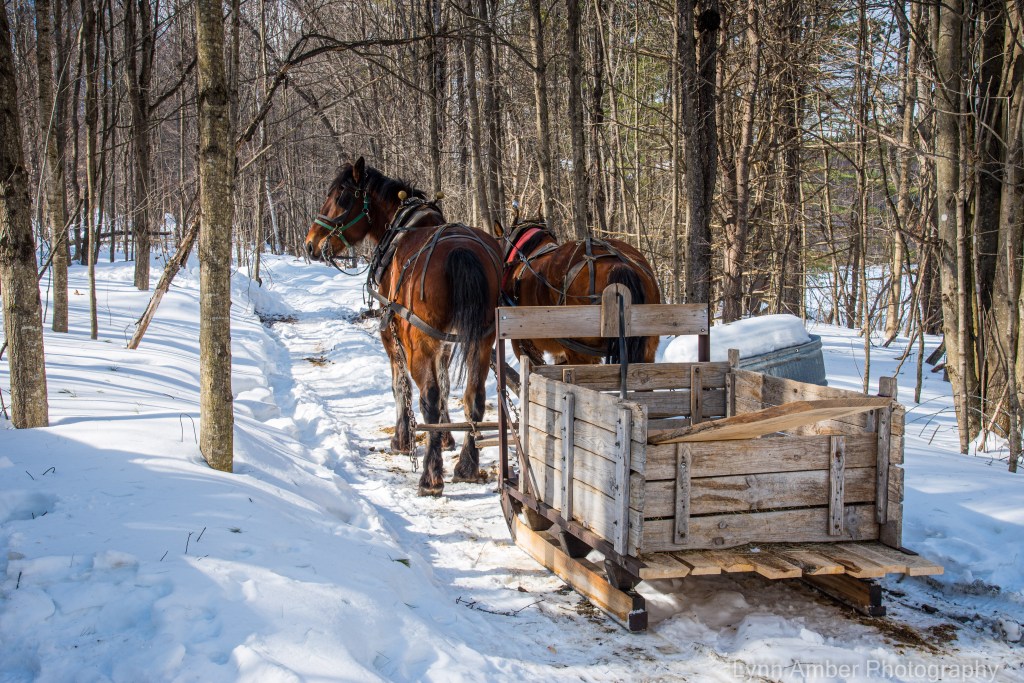
I cannot think of a better way to spend a couple of hours on a sunny, “warm” afternoon in the middle of March in Vermont…I feel so privileged!
March in Vermont

A week into March here in Vermont and I’m feeling hopeful! 🙂 I get this adrenaline rush every year about this time after a long winter of snow and cold temperatures. This year, the long winter included isolation due to the pandemic – so the recent infusion of energy is even more satisfying.
I spent the first 40 years of my life in southeastern Pennsylvania. The signs of Spring in the mid-Atantic area are much different than here. As March approached in Pennsylvania, I looked forward to early bulbs such as crocus and daffodils blooming, grasses and fields starting to green up and wildflowers such as bloodroot, hepatica, spring beauties and buttercups beginning to emerge. Certain trees and shrubs started to come alive as well – their buds swelling with the promise of April blossoms – star magnolia, willows, maples, serviceberry and redbud.
Here in Vermont, we still have a substantial snow cover as evidenced by the 3 foot mounds of packed white stuff that continues to circle my house. The signs of Spring are determined by other events that trigger in us a sense that winter has finally started to recede. In a typical year, Town Meeting Day in early March is a time when Vermonter’s congregate and talk about the long Winter and the promise of Spring. It signifies that Spring is indeed on the horizon. The town ice rink that has been meticulously maintained all winter has finally started to melt – ending a popular winter past time and we look forward to spring sports. As temperatures rise above freezing during the day in mid-to-late March, the maple sap starts to flow and the familiar wisps of steam emanating from countless sugar houses across the state reassure us that warmer days are indeed ahead.
It’s also the time when we prepare for another Vermont tradition that takes hold in late March and April. Mud season. The roads start to break up from the brutal winter freeze and we embrace the challenge of navigating slimy, muddy, deeply rutted back roads. Speculation abounds each year as to just how severe the road conditions will be and what determines a bad year. Weather always factors in. Snow depth and timing? Fall and early winter temperatures? Heavy spring rains? Debate also circulates around road maintenance. Grading done properly? Culverts and ditches correctly placed? Just when you think you’ve figured it out, you are fooled.
I remember one mud season when my boys were in elementary school. We left school in our Mercury Villager van and headed home. We had come down the road earlier in the day when it was still frozen so I did not know what to expect. We live a mile up the gravel road – and I do mean “up”. It is a steady climb to our driveway. The van was not an ideal vehicle for rural Vermont but it is what we had when we moved here from Pennsylvania. We outfitted it with studded tires all around and, with front-wheel drive, it did okay. This particular year was one of the worst mud seasons we’ve had in our 20+ years as Vermont residents. Everyone has their own unique technique for driving in mud. Some drivers prefer the “gun it from the bottom of the hill” approach and use speed to power through. Others (like me) opt for a more subtle, slow approach. As I started up our hill that day, it soon became apparent that this was going to be an adventure in maneuverability. I directed my sons to exit the van and navigate me through the ruts and ridges. They ran uphill along the side of the road, directing me – left, right or stay straight – and with their guidance we made it without incident. I can still picture them so serious in their mission – and it makes me smile.
It is a badge of honor to survive mud season and our reward is – finally – true Spring. Until then, I’m enjoying the blossoms on my two flowering orchids, watching the snow melt slowly from the yard and trying to time my walks so I avoid sinking into inches of mud along the roadway. 🙂


Cabin Fever Excursions
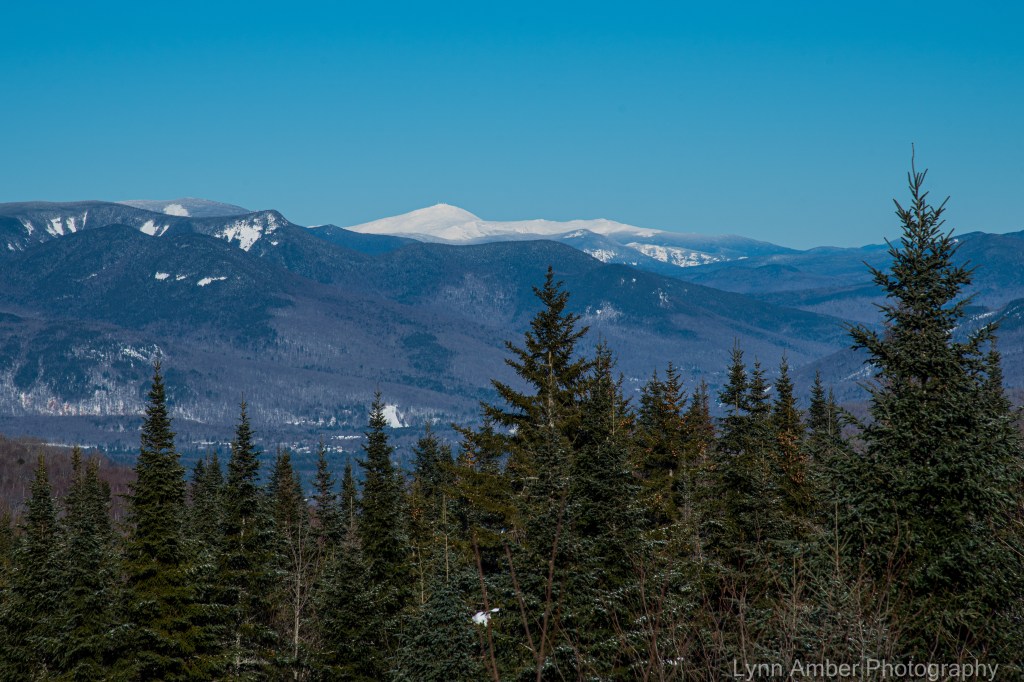
As we approach the end of February, my cabin fever temperature continues to rise! To lower my homebound temperature and raise my spirits, we embarked on two road trips this past week. The first adventure was a true road excursion (with a short snowshoe part way through) on some scenic byways in New Hampshire.
New Hampshire Road Trip
We headed east on Vt Route 302 and crossed the Connecticut River into New Hampshire. Taking NH-112 east of Woodsville towards Lincoln, we left all traffic behind! The road winds through the beautiful White Mountain National Forest and parallel’s the Ammonoosuc River valley for a spell before starting to climb in elevation. When we reached the Beaver Brook Trailhead parking lot, we decided to park the truck and snowshoe part of the Appalachian Trail. The trail crosses the road here after its descent from the summit of Mt. Moosilauke. Mt. Moosilauke is one of my favorite mountains to hike in New Hampshire. I’ve always accessed the summit from the other side of the mountain via Ravine Road off of NH-118. This is the location of the Moosilauke Ravine Lodge operated by the Dartmouth College Outing Club.
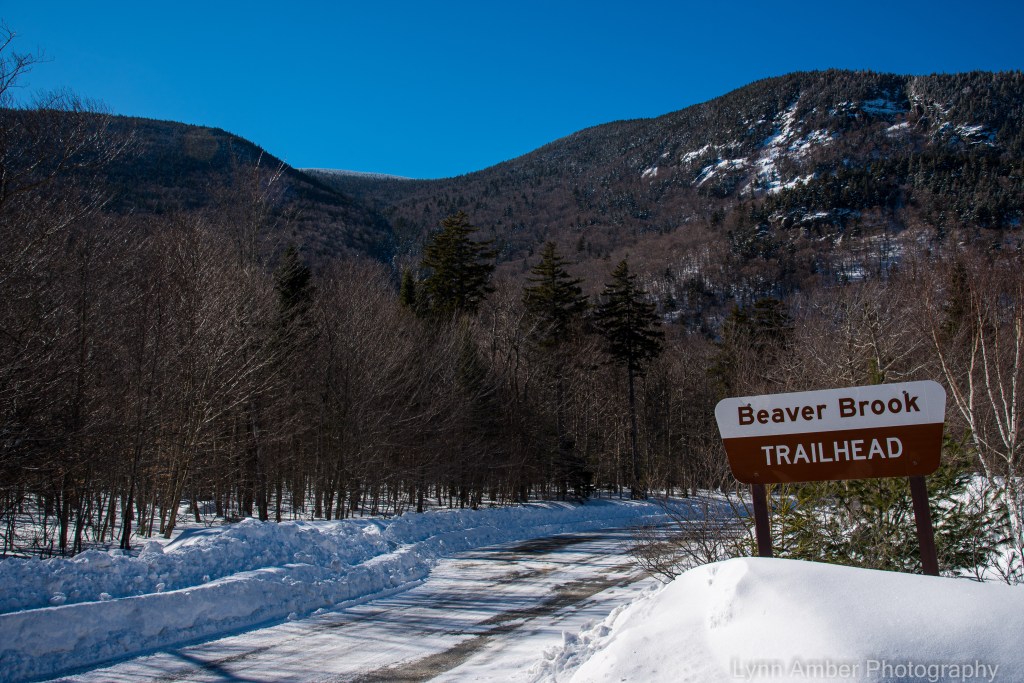
Judging by the contour lines on the map, the Beaver Brook Trail approach to the summit of Mt. Moosilauke looks to be a steeper climb than the trails ascending from Ravine Road. We had no illusions about reaching the summit the day we were here, or even the shelter that is located 1.5 miles up the trail. It was too late in the day and bitter, bitter cold. We just wanted to exercise our legs a tad from sitting in the truck, get some fresh air and enjoy some of the natural landscape.
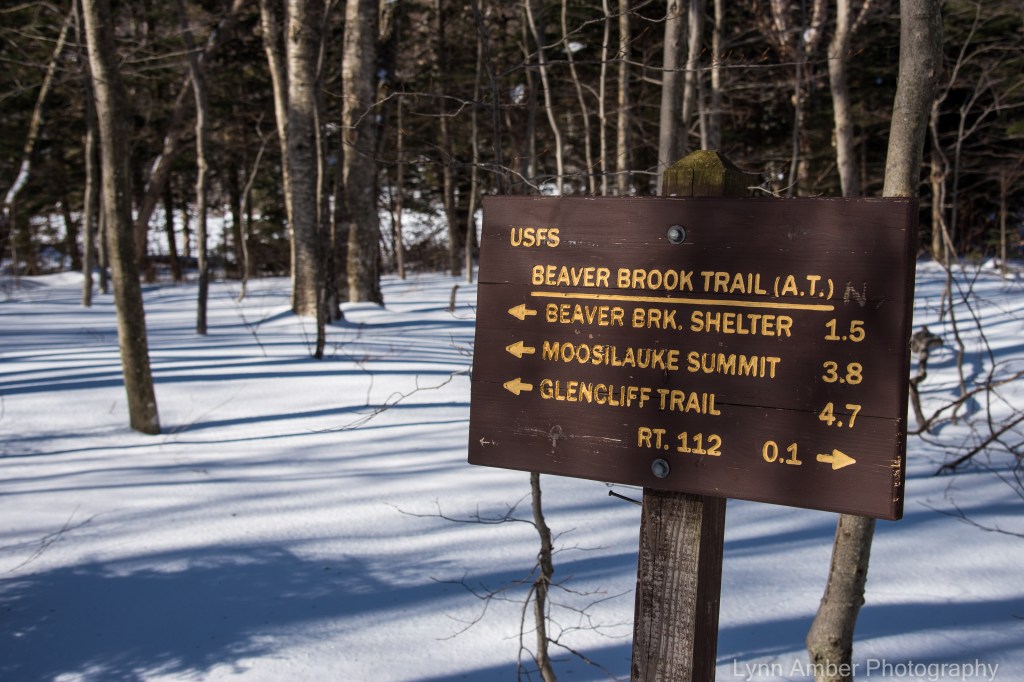
We headed out along the trail and snowshoed until the trail started to narrow considerably and ascend rather steeply. At that point, the snow conditions were icy and the trail dropped off sharply on one side. Common sense told us to turn around before we were faced with a back country winter rescue situation!

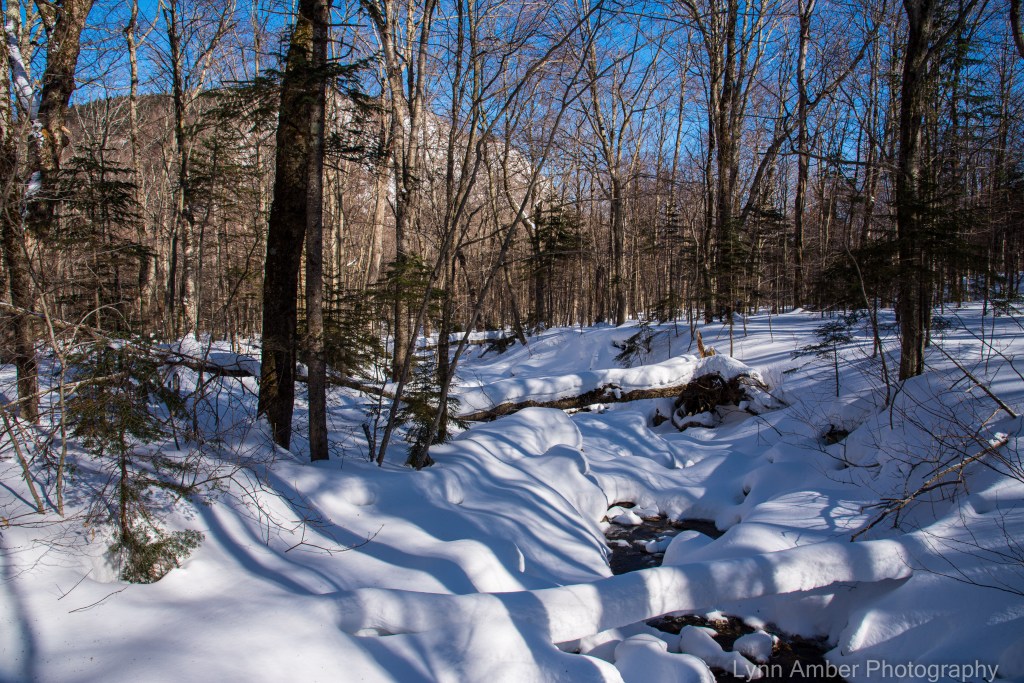
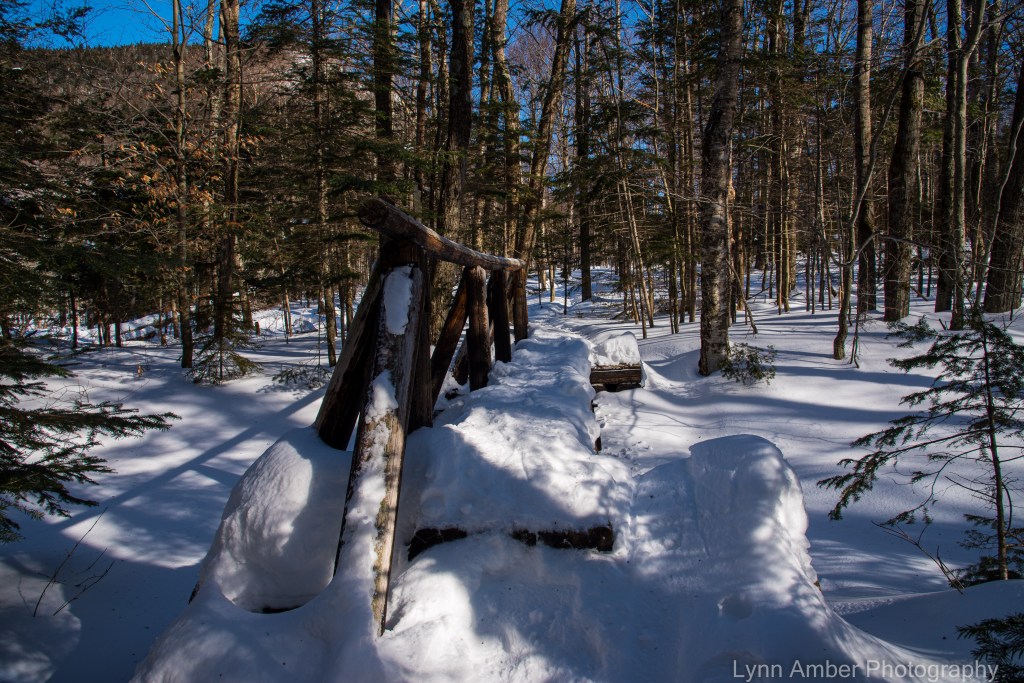

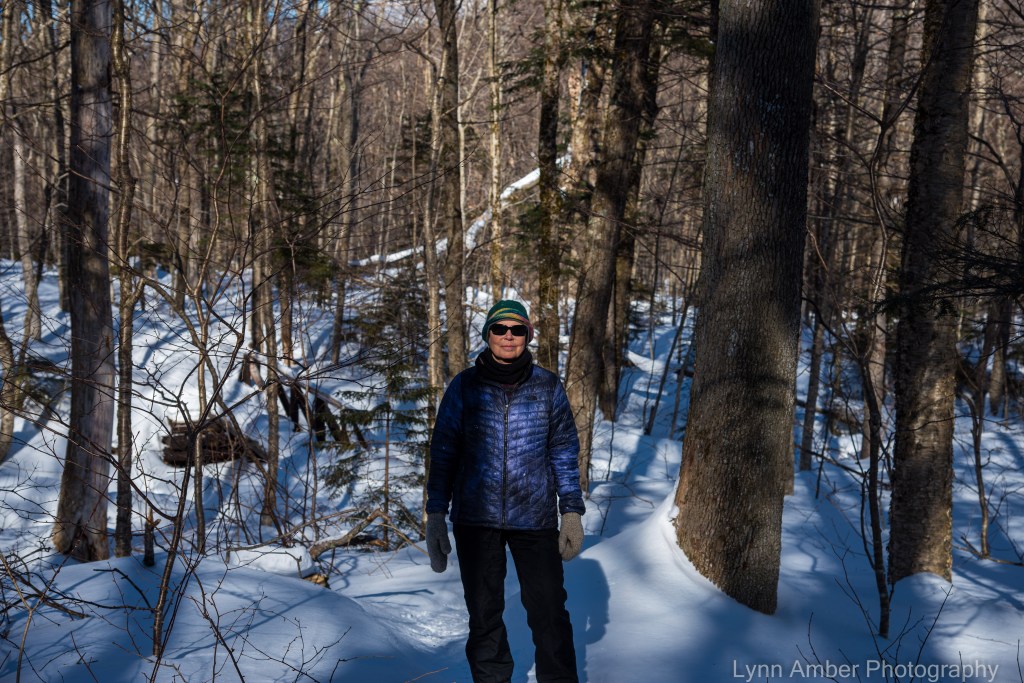
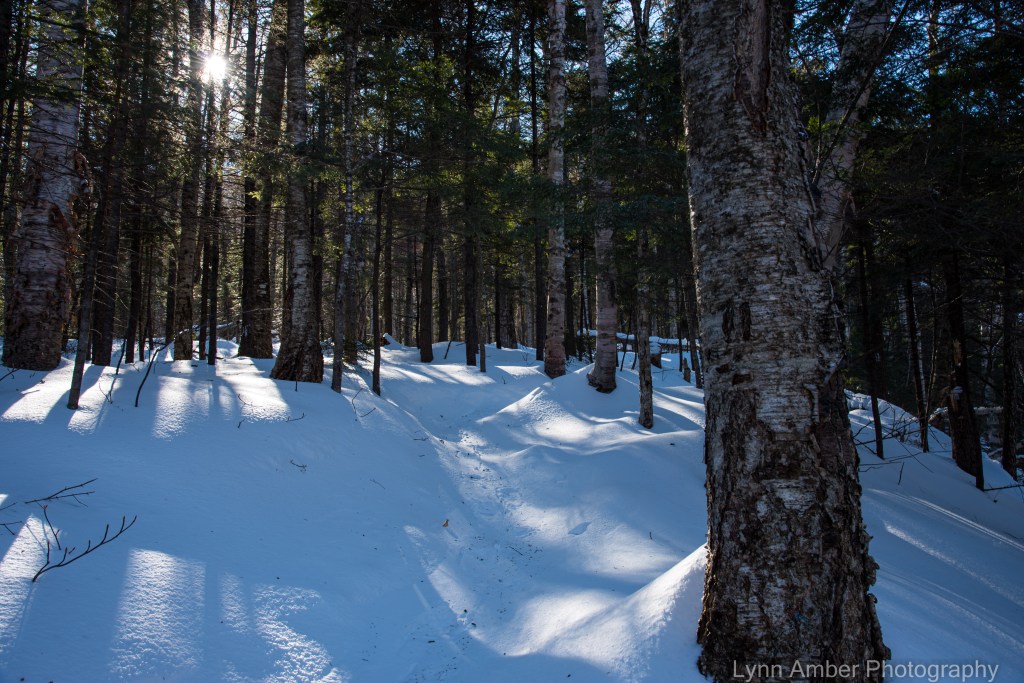
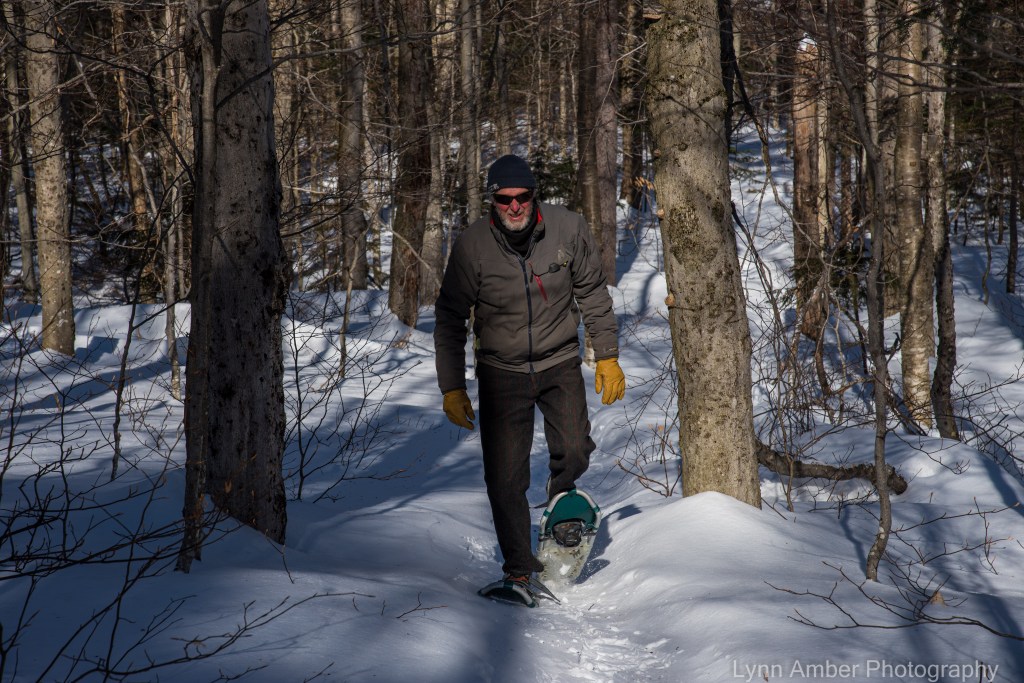
We backtracked away from impending disaster, bushwhacked toward the nearby pond and then back to the parking lot. That was enough for Jim! He had not come prepared for the windy, brutal temperatures and was happy to get back in the truck and turn the heater on!!
We continued along NH-112 until we hit the junction with NH-118. Taking a right, we drove along NH-118 – which basically meant we were circumnavigating the greater Mt. Moosilauke area on our way back to Vermont. The road climbs steadily and at the top we were rewarded with a great view of the White Mountains to the east.
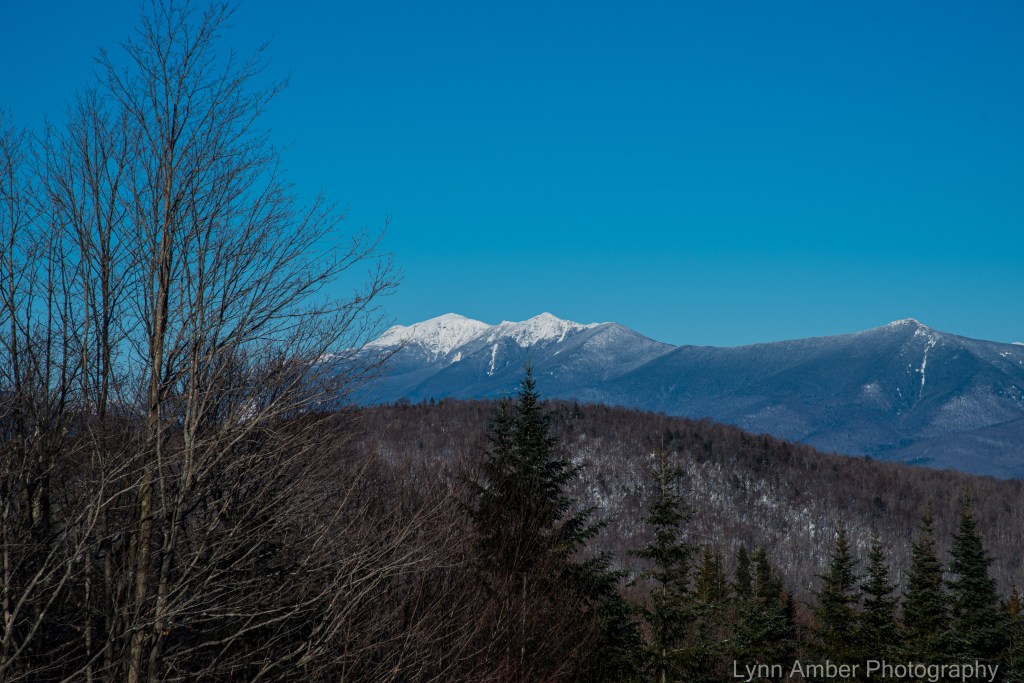
Just to the right of the photo above, in the far distance, we could just barely make out the towers on top of Mt. Washington. That’s the first photograph I posted at the top of this blog post.
Marsh-Billings-Rockefeller National Historic Park
A few days later, on our second sunny day of the week, we headed down to Marsh-Billings-Rockefeller National Historic Park. We have been intending to get down there and snowshoe this winter and, somehow, had neglected this promise we made to ourselves back in the Fall. Some of the carriage roads in the park are groomed and tracks are set for cross-country skiing. Some trails are designated as multi-use and because they are groomed, there are many hikers walking the trails with just boots and – perhaps – slip-on grippers for better traction.
We veered off of the groomed trail quickly and onto the less maintained snowshoe trails and were rewarded with quiet, solitude and the beauty of the forest blanketed in snow.
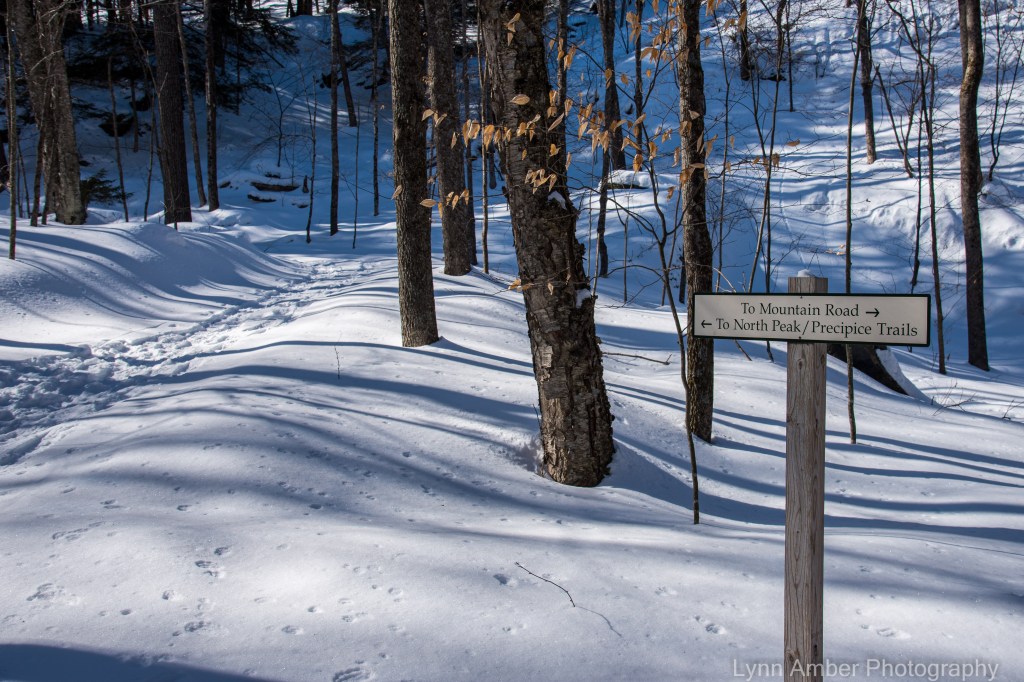

The trails at the park are very nicely marked. The ski trail signs also have difficulty ratings. Below, the One Less Travelled trail is rated as intermediate level for skiers.

I am generally a faster hiker than Jim and often get far ahead and wait for him to catch up – which is the reason I have so many pictures of him approaching the camera! He was walking slower than usual this day due to issues he was having with his snowshoes. He swears that the boot strap area is twisted – therefore making it difficult to “walk” correctly. We stopped to enjoy the view and Jim examined his “defective” snowshoe.

Some of the groomed trails are strictly for use by skiers and snowshoers. These trails are a bit narrower than the multi-use trails and I think the idea is to keep the trails from getting messed up by heavy foot traffic. The trail below (Summer Pasture Road) is for use by skiers and snowshoers only. One side of the trail is set for traditional skiers and the rest of the trail groomed for ski skaters. We snowshoed this trail until it intersected with the Spring Lot trail and then veered off that onto the Pogue Brook Trail – which took us back to the Mountain Road.


As the name suggests, the Pogue Brook Trail follows the brook that flows out of The Pogue. We had the trail all to ourselves! Once we connected back to the Mountain Road, we headed back down to the parking lot. Along the way, we noticed the grooming machine parked by the Forest Center. Jim just had to take a closer look at this highly specialized piece of equipment. We speculated on how much this must have cost the park service! I was pretty sure that this was not a park service investment. Some quick research when I got home led me to the private company – the Woodstock Resort Corporation. They have an easement to operate and maintain the park trails for winter use. They groom over 12 miles of trails within the park boundary. I guess that explains the fancy equipment! The multi-use trails can be used free-of-charge but all other trails require a ski pass.
It was an absolutely perfect day for a hike – even with Jim’s unruly snowshoes! 🙂

Re-imagining Images
When I started getting more serious about my photography, I decided to invest in photo editing software. Initially, I used a free software product that was very limited. When it was no longer being supported, I started researching other options. At that point, interest in expanding my photography skills led me to a more robust photo editing software system.
In 2018, I decided to subscribe to the Creative Cloud suite of products for a fee of $9.99 per month. I primarily use the Adobe Lightroom Classic application on a daily basis now for all my images. At this low monthly fee, I feel as though I am definitely getting my money’s worth. My knowledge of the software application continues to grow and I’m constantly experimenting with it and learning new features. I have worked through a couple of online classes specific to Lightroom since 2018. It’s been helpful to view several Lightroom tutorials presented by different professional photographers. I was able to observe their unique methods of importing, organizing, editing and exporting images and modify them to create my own individual workflow style.

The reasons I chose Lightroom are fairly straightforward. It was relatively easy to learn with the help of some very basic tutorials and is well-supported. It is defined as an image management tool more than strictly a photo editing tool such as Adobe Photoshop. And, Lightroom does not alter the original photograph when you start the editing process.
As a former librarian, I was drawn to the image management aspect of this software. It acts like a digital “library catalog” for photographs. Within Lightroom, images are imported, arranged into files and folders, and can be sorted and organized much like a traditional library catalog. Images can be tagged with keywords, flagged and given star ratings – rendering it a fantastic tool for organizing and retrieving photographs. Metadata is exported with each photograph as well. While the editing capabilities are not as robust as Photoshop, I have found them to be adequate for me at this point in my photographic journey.
The other nice feature of Lightroom is the way the software is set up to be “non-destructive” to the original photograph. When a photograph is imported into Lightroom and edited there, the original photograph remains untouched. Additionally, at any point in the editing, the image can always be reset back to the original exposure. From what I’ve read, this is not the case with Photoshop. I love that I can experiment with the extensive editing tools and, if I don’t care for the result, just reset it and start over. I house my original photographs on separate hard drives for back-up purposes and use one external drive specifically for my Lightroom imports.

Since Adobe Photoshop is included in my subscription, I am sure my curiosity will get the better of me and I will begin the process of learning how to use this application. I know many photographers use Lightroom in combination with Photoshop to enhance a particular photograph with some of the more powerful editing features of Photoshop. I can see myself moving in this direction eventually.
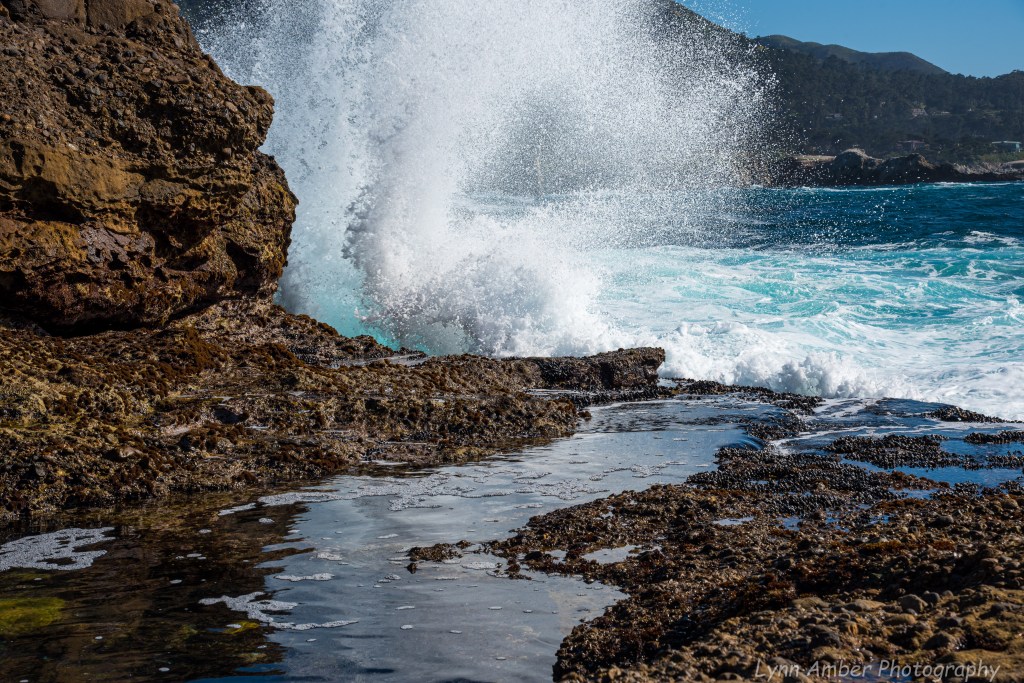
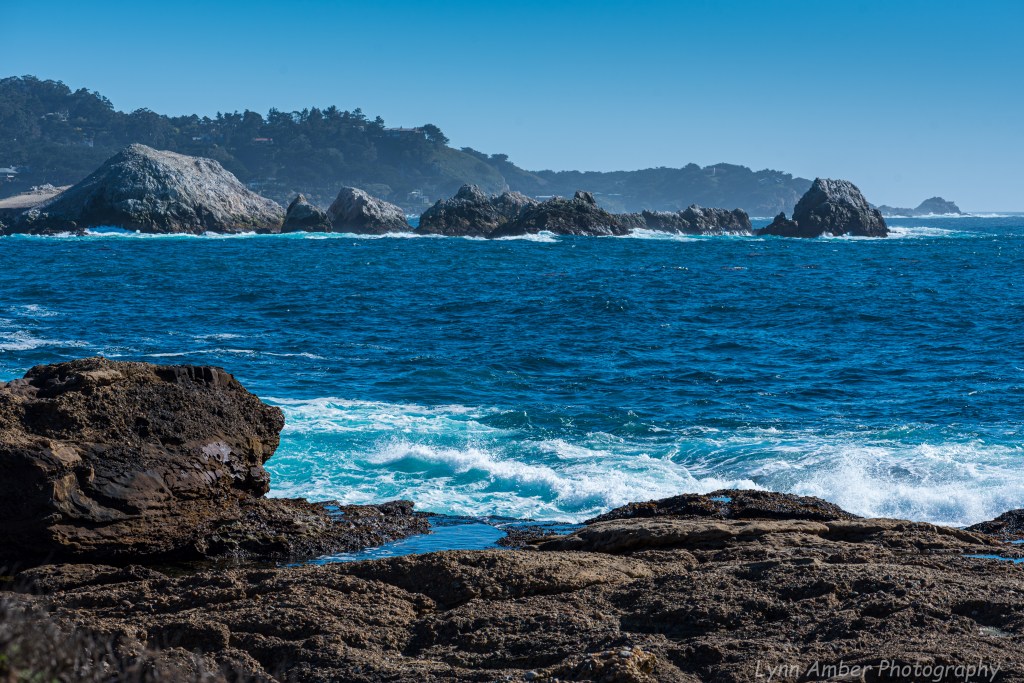
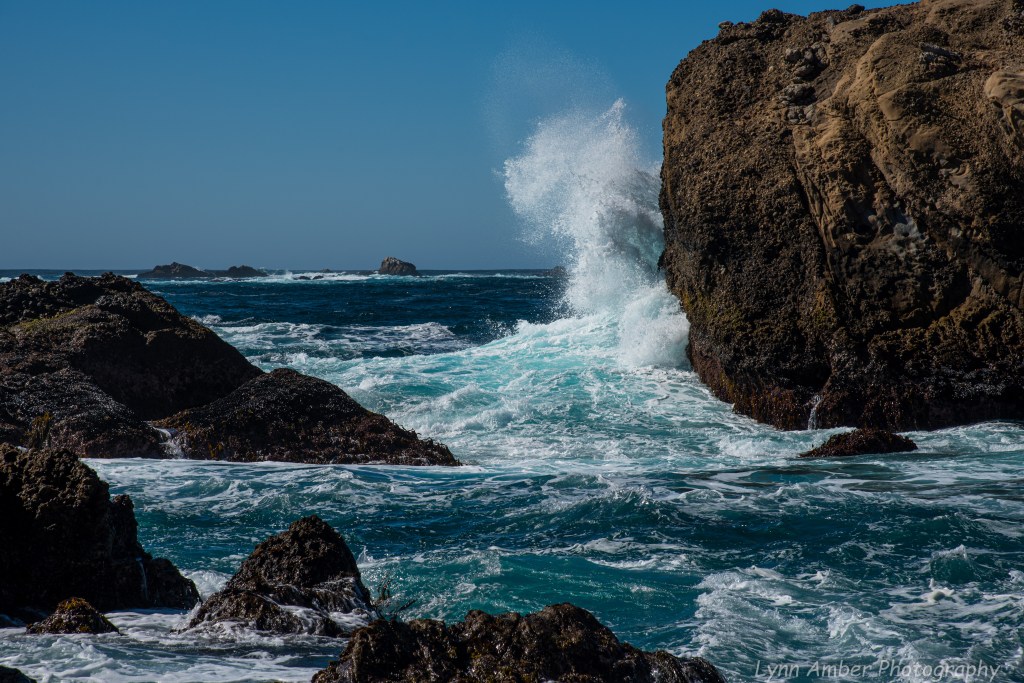
Since I’ve been stationary for so long due to the pandemic, I’ve started reviewing previous images from photography sessions at various locations throughout the past several years. Last winter, we spent some time in central California around the bay area and enjoyed a day trip to the Point Lobos State Natural Reserve. I did an extensive blog post about this adventure last year. It was interesting to go back and revisit the 500+ images I shot from that day. In addition to the images I had edited for my previous blog post, I took a look at other photos I had bypassed for editing and re-imagined them. It was a great exercise and one I will continue doing when time allows. The photos in this posting from Point Lobos are some of the images that did not make the first cut. Not bad, eh??



 Lynn Amber - Travel & Photography