Lynn Amber - Travel & Photography
sharing my thoughts through words and images
Photo of the Day 3.26.20
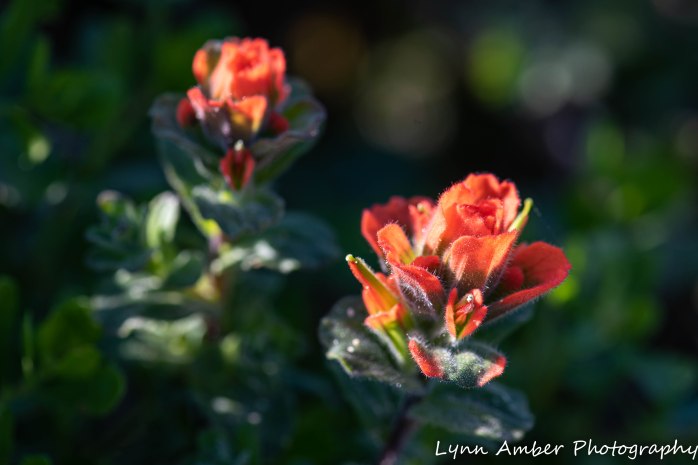
It was a cool, windy and cloudy day in the Arizona desert so I spent some time processing photographs. I have a backlog of pictures to edit since beginning our winter journey throughout the Southwest and California. And, today seemed like a perfect time to put my feet up on the sofa and work in Lightroom! I chose to upload and edit the photographs I captured at Point Lobos State Natural Reserve. The setting could not be more different than where we are currently camped! It was fun to review these seaside snapshots and reminisce about our beautiful day there walking along the high cliffs overlooking the Pacific Ocean.
There were many flowers blooming at Point Lobos. My next blog posting will explore our day trip there on March 2, 2020. But for now, enjoy this precious little wildflower nodding towards the sun on the cliffs high above the roaring ocean. The Seaside Painted Cup apparently grows along the California coast between Point Reyes and Big Sur. It is found right on the coast often growing in sand dunes and coastal shrub communities. When I first noticed it blooming, the flower reminded me of Indian Paintbrush. In fact, it is indeed a species of this plant. Another common name for the plant is Monterey Indian Paintbrush.
Photo of the Day 3.25.20
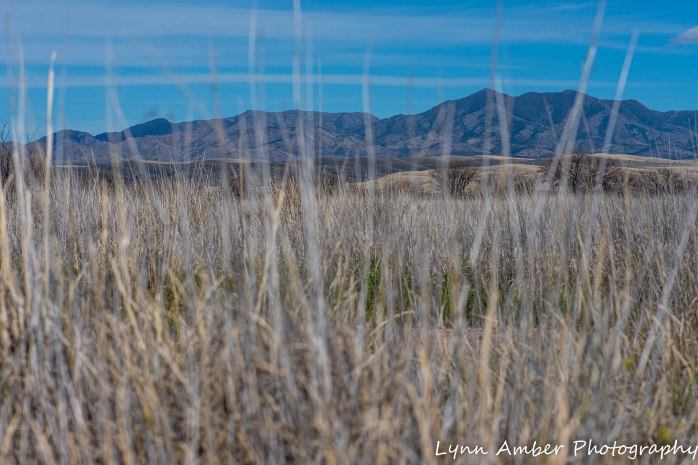
On our bike ride today, we came upon an area with taller grass than what we have seen near our campsite. An interpretive sign indicated we were in the Sacaton Flats. The giant sacaton grass (Sporobolus wrightii) is an important native species in the area that helps this harsh ecosystem in several ways – it provides an absorption mechanism during flood flows, aids in erosion control and traps and holds soils in place. Without this grass, wind and water erosion cause soil depletion, dust and increased silt in area streams. The grass also contributes food and habitat for both native and introduced wildlife. Efforts have been underway here in Las Cienegas NCA to replant sacaton grass in places where it has been lost or is threatened. Who would have thought that this native grass could be so important for the local environment? I love finding out about these obscure, yet vital pieces of our natural world.
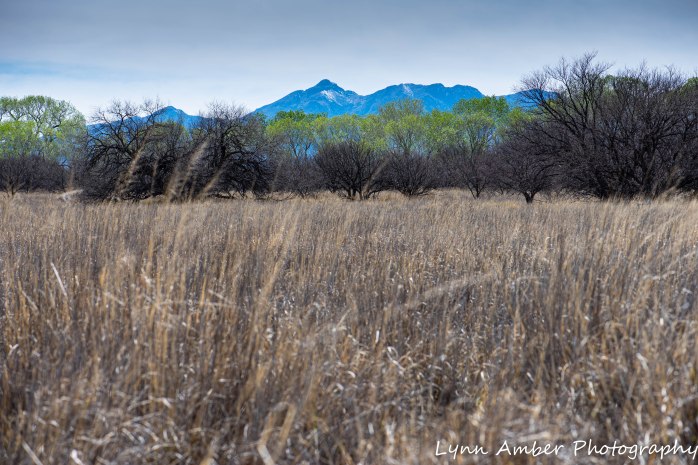
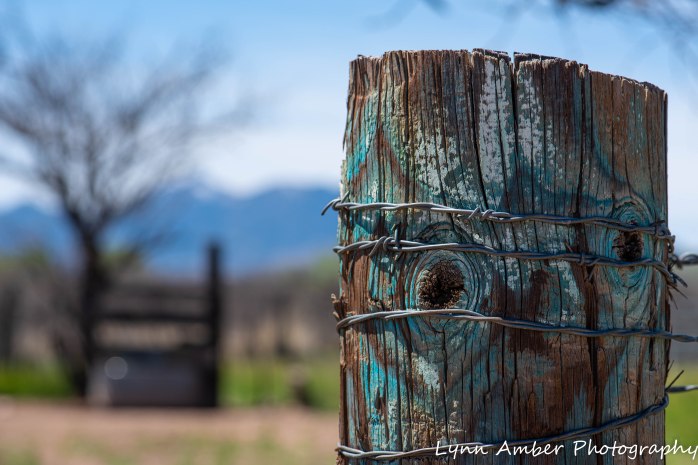
The environment here at Las Cienegas NCA is so very different from the mountainous canyon lands to the north of Phoenix. While there was so much in bloom along the Apache Trail, here at 5000′ in the southern high plains the land is still relatively dormant. I’m enjoying the contrast but, at the same time, feel challenged with finding good photographic subjects!! Some other interesting photos of the day:
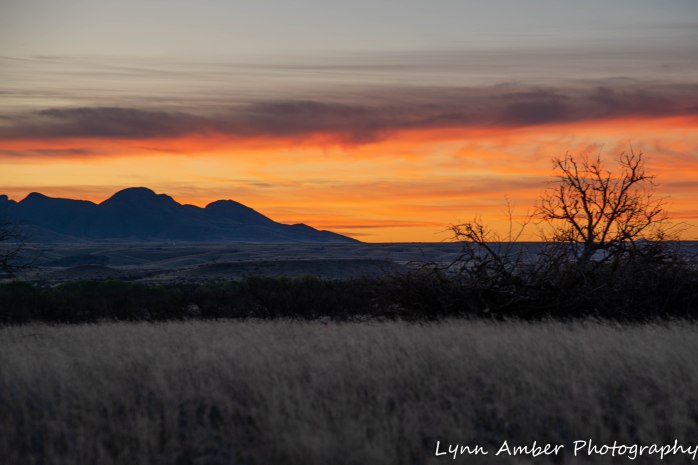
A fellow blogger and Vermonter shared with me the following quote after my last post. I am familiar with this verse and have fond memories of time spent at the Laurance S. Rockefeller Preserve in the Tetons. Thanks, Stewart, for reminding me of this quote – it is so very true and I’m sharing it here:
“In the midst of the complexities of modern life, with all its pressures, the spirit of man needs to refresh itself by communion with unspoiled nature. In such surroundings- occasional as our visits may be- we can achieve that kind of physical and spiritual renewal that comes alone from the wonder of the natural world.”
― Laurance S. Rockefeller
In search of Dripping Springs….
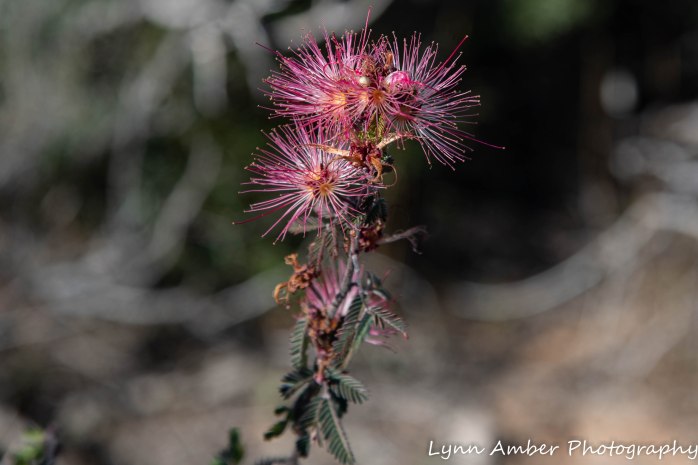
I‘m back to sharing the adventures we launched from our dispersed camping site at La Posa South BLM in Quartzsite, AZ! On February 12, we decided to go on a road trip to visit the Dripping Springs site located high up in the hills to the east of us. I read about this area in the 2020 Quartzsite Visitor Guide. The description indicated there were hundreds of petroglyphs to be seen at Dripping Springs and that was all I needed to spark my curiosity!
Dripping Springs gets its name from a spring that originates in a cave here providing a year-round water source – and apparently if you enter the cave you can hear the water “dripping.” Remnants of an old stone cabin and arrastra can also be observed here. I was not familiar with the term “arrastra” so I looked it up! It’s a “primitive mill for grinding and pulverizing gold or silver ore.” Well, that certainly fits with the mining history of the area.
Most people access this area riding an ATV utilizing the various BLM dirt roads that criss-cross this vast land. I started asking around for information on the best way to approach the area via a 4-wheel drive truck. I received various responses ranging from “you cannot get there with a pick-up truck as the wheel base is not short enough” to “you can get within a mile on the dirt roads off Gold Nugget Mine Road.”
One thing was clear. We needed a map. I purchased a La Posa Travel Management Map published by the BLM that covered the area in question. It listed all the primitive roads by number and would serve as a guide for us. I also stopped in to the local Chamber of Commerce and verified the information we had received. Whether we could get to within a mile of Dripping Springs by vehicle was still questionable, but the woman at the Chamber of Commerce was very nice and printed off some maps from the Quartzsite Off-Road Atlas to supplement our BLM map.
Armed with our navigation aids, we set about to access Dripping Springs from the north. We traveled east on I-10, exited at Gold Nugget Mine Road and followed the directions to the primitive road # 0065 that we needed to start our ascent into Dripping Springs. We promptly got lost since the iron road signs were very confusing. We dead-ended at a working mine and had to backtrack to our starting point. It was at this time that we met the Quebecois who was traveling in his old Westfalia and had pulled over along the dirt road to camp for the night. We chatted with him for awhile since he is basically our “neighbor” to the north and then went on to find our route.
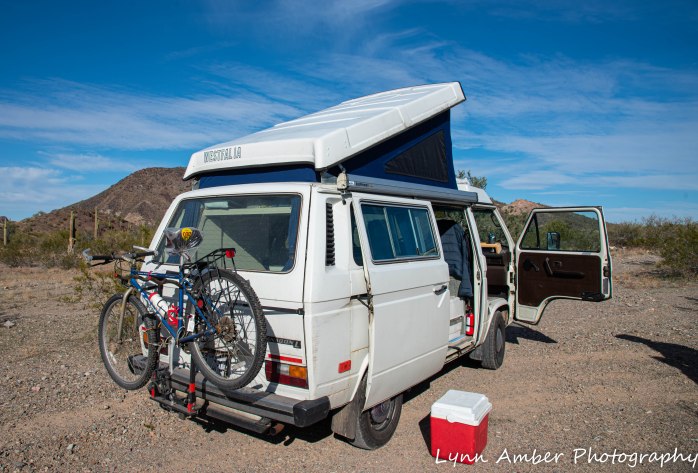
We found road #0065 again and drove a short distance only to realize that it was going to be a little sketchy whether we could actually continue given the road conditions. We parked the truck and decided to hike into the spring estimating that it might not be that far.

As we started our hike, we heard a voice yelling to us. It was the Quebecois who we had met earlier. He ran up to us and asked if we minded if he joined us on the hike. He was alone and wanted to explore but was hesitant to do so without a map or a companion. We enthusiastically said “Yes!” and we enjoyed a nice walk and great conversation with our new friend. His English was excellent and he was impressed by my knowledge of the local plant material – so he was okay with me! He had just retired, experienced a recent health scare and decided to travel before it was too late. Driving straight through from Quebec to Arizona – his only goal was to see the desert. His wife was to be joining him in a few days and he was going to rendezvous with her in Las Vegas.


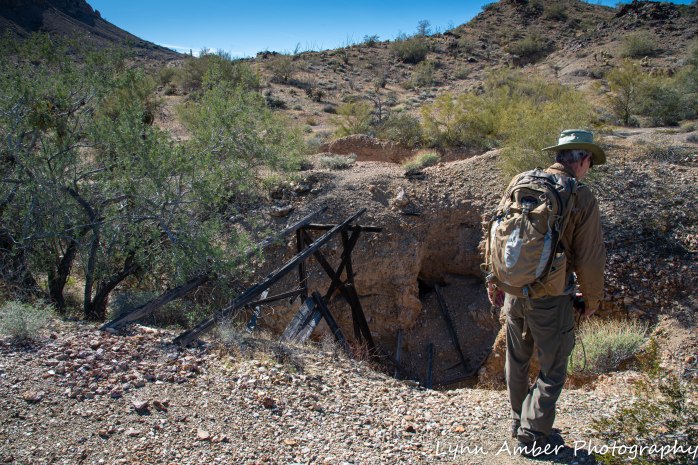
We never made it to Dripping Springs although we did make it to what I think was the Dos Picachos Mine just a mile before the steep ascent to the spring.
SOME OF THE MINE SHAFTS WE SAW



DESERT ART
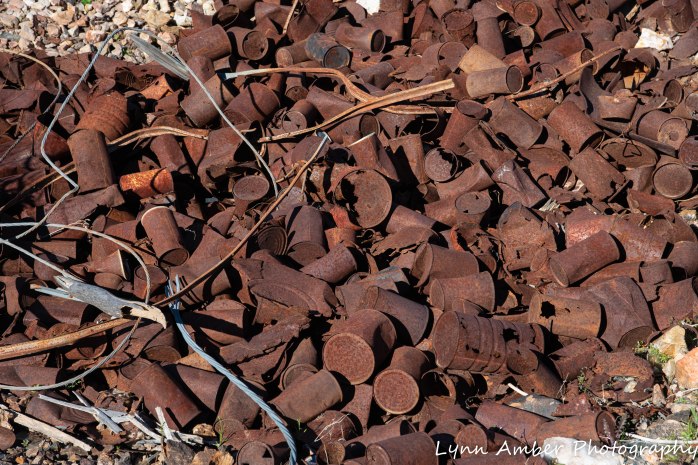


It was getting late in the day and we needed to turn around. We parted company with our French friend once we reached our truck and wished him well.
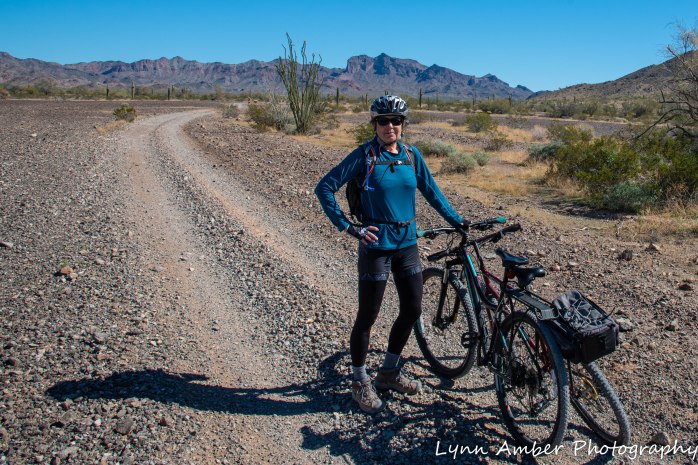
Our second attempt to reach Dripping Springs was the very next day, February 13. Reviewing the maps, it appeared that we could ride our bikes directly from La Posa South along several primitive roads to reach the spring. If we took road #0059 from the end of the dispersed camping area and then followed #0058 and 0058B, we would be within hiking distance again. I would not be robbed of my chance to see these petroglyphs!!
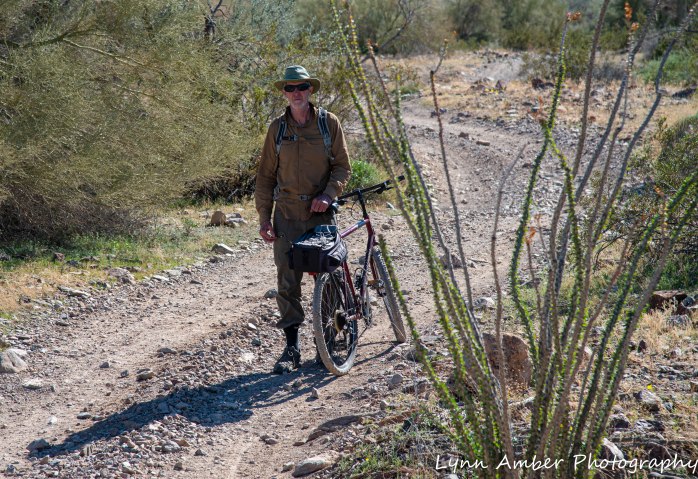
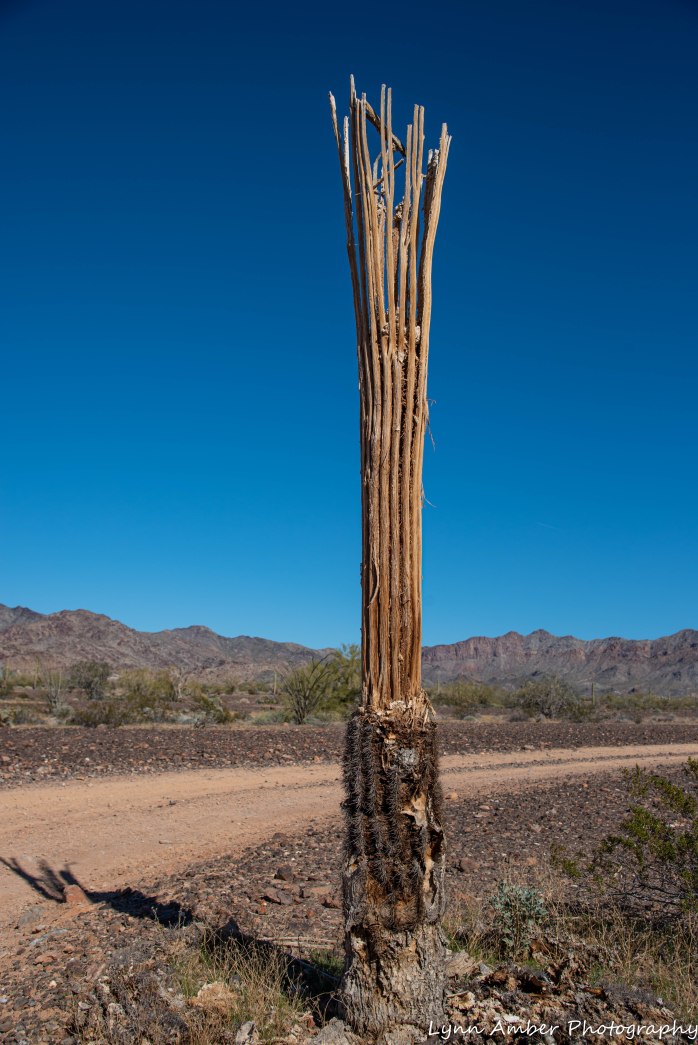
PLANTS ARE STARTING TO BLOOM IN THE DESERT



It was a great bike ride for me, however, since Jim’s old mountain bike has no front shocks , he was not comfortable. We managed to make it onto road #0058B before turning around and heading back. We rarely saw or heard any ATV’s during our jaunt and the scenery was beautiful. I was disappointed that we never made it to Dripping Springs but the bike ride was awesome.
As Ralph Waldo Emerson said, “Its the not the Destination, It’s the Journey!”
Photo a Day 3.24.20

I’ve been on an emotional roller coaster the last couple of days – as I’m sure many people have whose jobs are up in the air as we work through these interesting times. After an entire evening of sulking and feeling sorry for myself, I woke up the next morning and, with camera, coffee and a stroopie in hand, I walked and walked – and walked some more. I came across this little pond and watched this Great Egret preening itself perched in this tree. Nothing like a good walk and a little nature to set things back on a more positive track. I’m not totally there yet – but at least I’m on my way.
I’ve decided to just focus on photography for while – it always brings me joy – and see what unfolds in the days and weeks ahead . I’ll be posting a photo a day until the crisis subsides…..
The Apache Trail

Since I’m so far behind on my blog posts, I decided to alter my plan and post some more recent adventures interspersed with the earlier travels this winter. I’m so excited about the area we are exploring right now that I cannot wait to write about it and share my photos. Between my computer crashing and our days camped without service, it’s been a challenge to keep current!
At the moment, we are located along the historic Apache Trail in Arizona. We found a comfortable spot in a national forest service campground that is quiet and beautiful! We are in Tortilla Campground in Tortilla Flats, Arizona. The campground is operated by several volunteer hosts and each site has water and sewer hook-ups along with a fire pit and picnic table. The sites are very generously sized and beautifully maintained by the friendly hosts. With a senior discount, we are paying the large sum of $10 per night.


As the name suggests, the Apache Trail originated as a migratory route for Native Americans from their winter camps in the low lying desert to their summer homes in the higher elevations of the central mountains of Arizona. Original inhabitants were the Salado, a name given to this Native American group by archaeologists. The name is adapted from the Spanish name Rio Salado – or Salt River – which is the river flowing through the Tonto Basin. The Salado were cliff dwellers and some of their dwellings are now preserved at the Tonto National Monument along the Apache Trail. They occupied the area somewhere between 700 C.E. and 1450 C.E. and were farmers, hunters and gatherers. Their migration from the area is thought to have happened due to changing climate conditions making life along the once lush basin more difficult as droughts became more common. It remains a mystery what happened to them after they left the area. I learned the above information from the national monument website. Please take a look at their page – interesting reading. I was hoping to travel to the monument after we leave the western part of the Apache Trail however I just read that they have closed the facility until further notice due to the coronavirus.
According to the historical account on the website of the Apache Junction Public Library, when the white man settled the area and established Fort McDowell, things began to change. Of course! Local native American tribes such as the Apache and Yavapais conflicted with the U.S. military occupation and, eventually, lost the battle for the area when Geronimo surrendered in 1886. With the increasing settler population, the Tonto Basin and Salt River became an area of interest for construction of a dam that would serve as a water supply and flood control for the communities of Mesa and surrounding area. In the early 1900’s, construction commenced on the Roosevelt dam which included a more accessible road from the valley to reach the dam. It was called the Tonto Wagon Road and, after the dam was complete, the road became a popular tourist attraction. Called the Apache Trail today, the route extends along Rt. 88 from Apache Junction through the Tonto Basin to east of Miami, Arizona. That concludes my very shortened version of the history of the road!
It is reported to be one of the most scenic routes in Arizona and is popular with motorcycle enthusiasts and automobile day-trippers. The road is steep and winding with drop-offs not protected with guardrails. Driving the Airstream up the 15 miles of road to the campground was slow-going but fairly safe. The road is paved for 9 miles past the Tortilla National Forest campground. I’m not sure I would want to navigate the road with a much bigger rig, however!
At the moment, due to flood damage, the section of the road from Fish Creek Hill through Fish Creek Canyon is closed. So, it is not possible to travel the entire distance until the road is repaired.
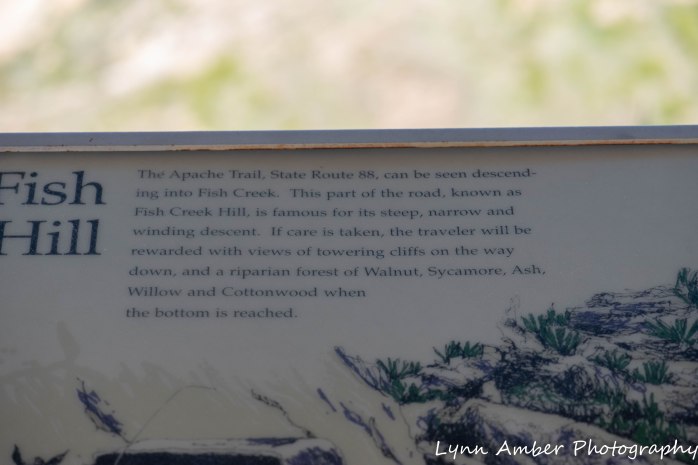
We have explored the road from Apache Junction to the Fish Creek Hill rest area and I can personally attest to beauty of the scenery along the trail. It is one of the most scenic roads I’ve traveled. According to the National Park Service website:
“The Tonto Basin is a large inter-mountain basin rich in natural resources. The broad valley floor and steep mountains contain several different micro-environments, producing a wide range of resources within a small geographic area. Thick stands of mesquite, walnut, and sycamore grow near water. Saguaro, cholla, prickly pear, jojoba, and other species that produce edible buds and fruits grow on the slopes and mesas. At higher elevations, the pinyon-juniper belt is rich in game and edible fruits and nuts.”
The diversity of this area will blow your mind away. During our explorations, I have seen a wide range of plant material and wildlife and witnessed the unique and varied geology of the area – from valley floors to steep canyon walls. The Sonoran desert here is greening up with recent rains and plants are starting to bloom.
In the few days that we have camped along the trail, we have done some hiking and canoeing. We have also just chilled out around the campfire and enjoyed a great visit with Mike and Amy – some old boy-scout parent friends from Vermont – who were traveling through the area.
I hope you enjoy the following inspirational photo journey through the Tonto National Forest and the Superstition Wilderness!!
ON LAND
Our first full day in the national forest, we thought we might canoe on Canyon Lake. It is just 2 miles down the road from the campground and we have not had the canoe off the truck since we left Vermont! We went down to the lake to scope things out but were quickly discouraged by the crowds. It was Sunday and the lake was teeming with boats and people. As we drove around to the different boat launch areas looking for a spot to put the canoe in, we decided that we did not want to canoe in a crowd! Before we headed back to the campground to re-assess our day, I was able to capture some birds enjoying the day in and around Canyon Lake.

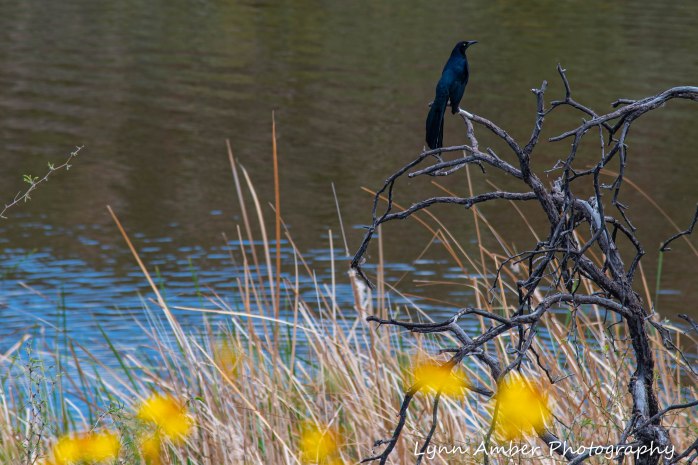
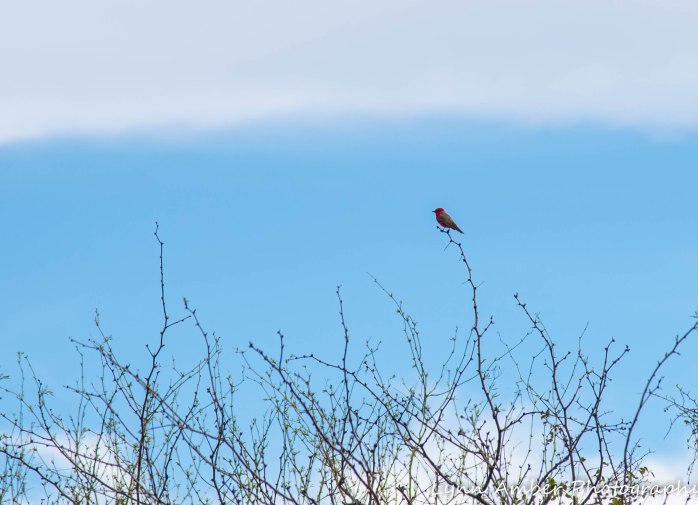
After abandoning the canoe idea, we went back to the campground and decided to go in search of firewood so we could have a campfire that night. We asked the camp hosts and found out that you are allowed to scavenge for dead wood along the wash below the campground.
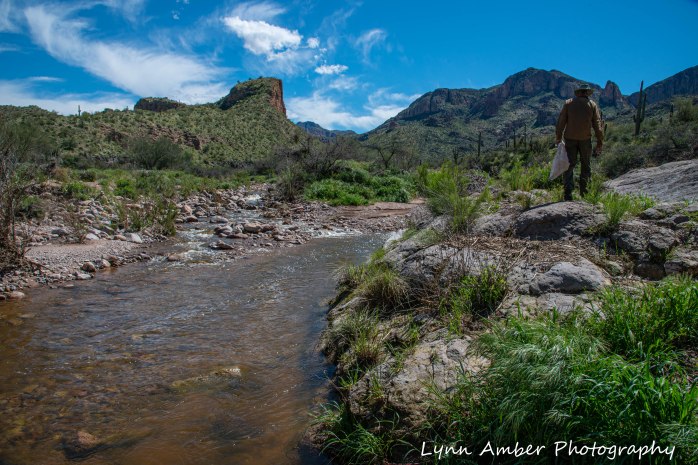
After getting some wood for the night’s campfire, we decided to drive up the road and find a place to take a short hike and get some exercise.
Our first hike in the area was on what is called the Mesquite Flat and it was a short walk on an old, unimproved dirt road. The route took us into a canyon and dead-ended at a washed out bridge that spanned the canyon. Perhaps this was an old mining road or an access road to a long-ago ranch?? It was a 3-mile round-trip hike and there were many interesting plants along the way.

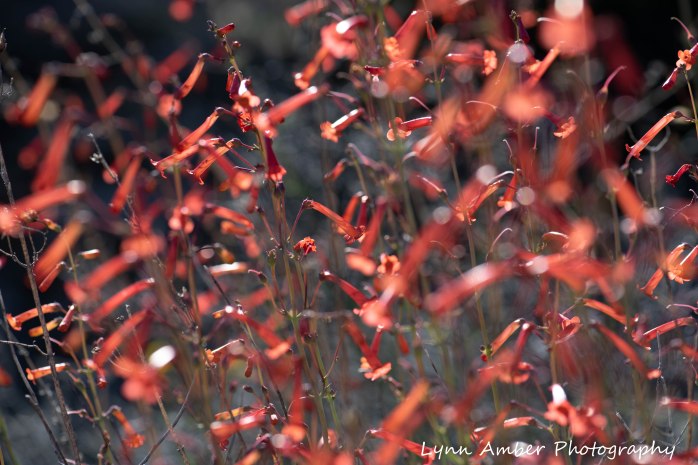


At the end of the day, our Vermont friends, Mike and Amy, arrived and set up their tent on our site. We enjoyed a great campfire and some good conversation and, while cooking dinner, we were treated to a magnificent sunset.
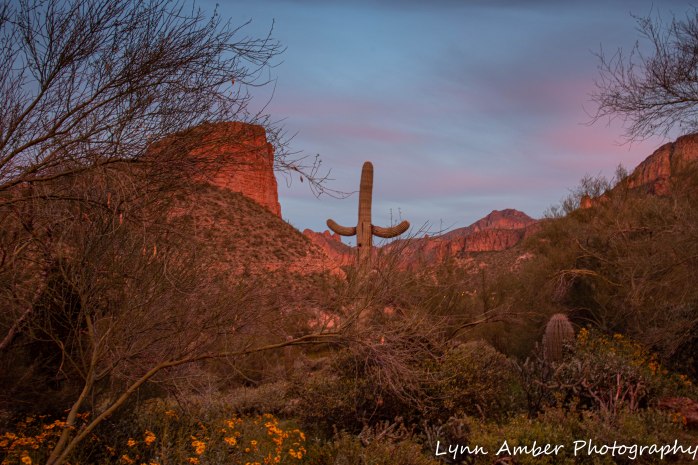

ON WATER
The next day, we headed off to canoe Canyon Lake. It was Monday and we thought things would have cleared out on the lake. We were wrong. Due to the coronavirus, Phoenix areas schools are closed and so there were still many families enjoying the outdoors and day off. We decided to put the boat in anyway and deal with it! We launched at the Acacia Recreation Area and headed straight across the lake for the finger of water that headed upstream into the canyon.

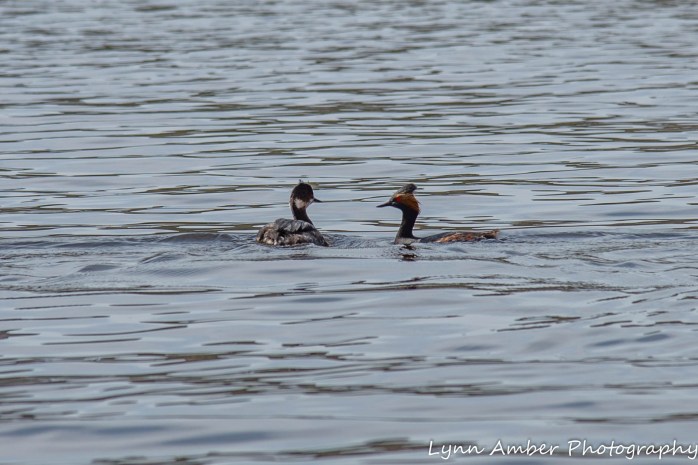
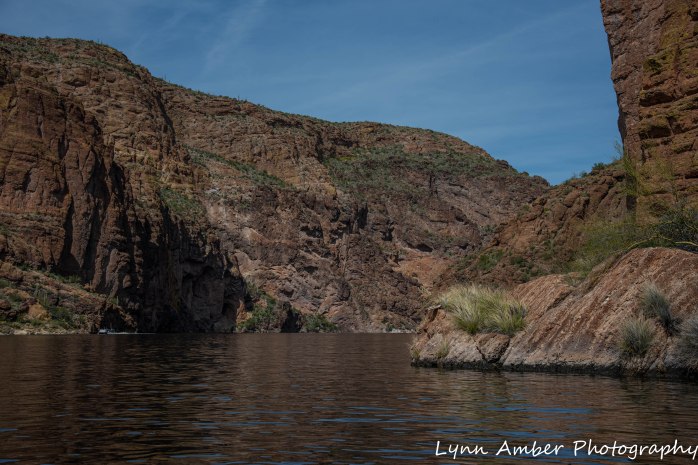
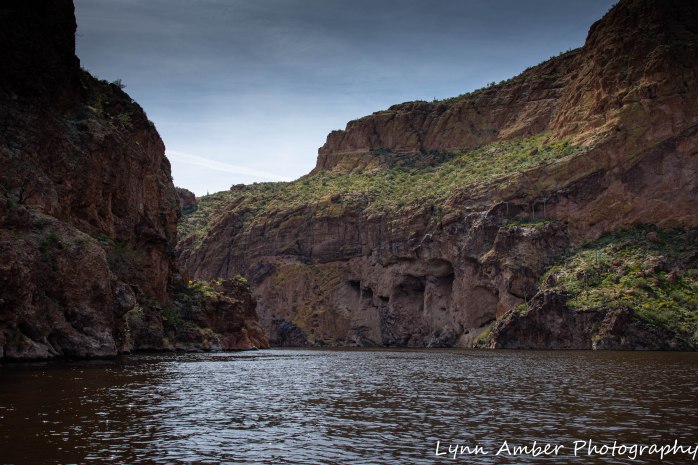
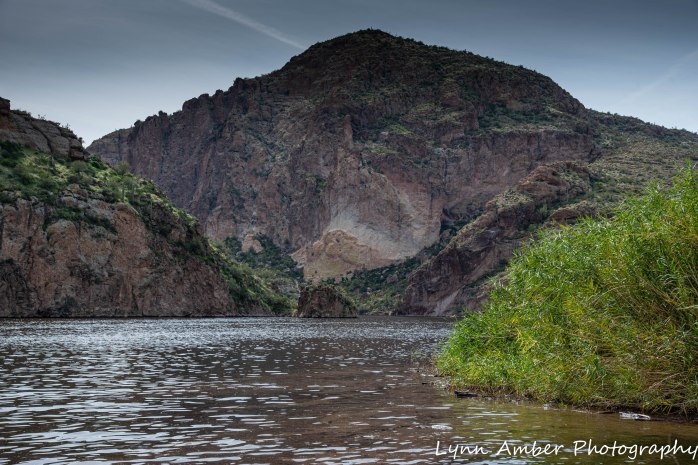
As we headed into the narrow section of the lake, the scenery was breathtaking with the sheer canyon walls and steep, sloping areas covered in thick vegetation. We even saw some Big Horn Sheep up looking up into one of the narrow canyons.

There is a substantial commercial operation at Canyon Lake that includes a restaurant, campground, gift store and, of course, boat tours!! The Dolly is a replica paddle-wheel boat that takes people up into the lake. I’m not sure it is an authentic paddle-wheel but I did just hear today that it may be suspending operation due to the coronavirus.

We found a nice spot to pull over and eat some lunch before heading back to the launch site.


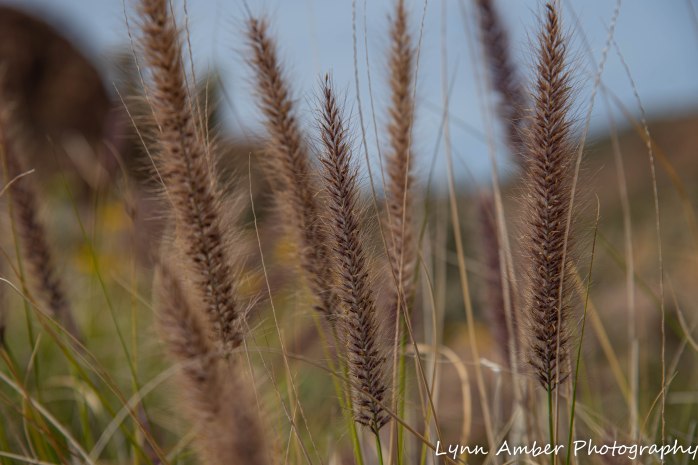
While we were canoeing, Amy and Mike embraced my recommendation to take the drive past the campground to the Fish Creek Hill rest area and do some short hikes along the way. They said it was awesome and that there were many flowers blooming along the Tortilla Trail. They left the following morning to rendezvous with relatives in Tucson, so Jim and I decided to follow in their footsteps and hike the Tortilla Trail since they gave it such rave reviews.
BACK ON LAND
The Tortilla Trailhead starts just a mile from where the road ends on this side of the Apache Trail. There is an alternate starting point on the other side of the basin. It is about 3.2 miles to hike to the other trailhead from where we started – making it a 6.5-mile roundtrip hike. We only went about 2 miles and turned around given the time of day and the fact that we also wanted to continue to the Fish Creek Hill rest area after the hike and see that canyon. The Tortilla Trail traverses an old road that is supposedly open to 4WD vehicles. It is very rough – and seems more like a very wide hiking trail. We certainly did not see any 4WD vehicles – or any other people for that matter!! I’ve seen some pretty amazing territory over the years and the scenery along here was mind-boggling!! My focus on this hike was photographing flowers so I had my macro-lens on – but I still got some landscape shots with it as well.

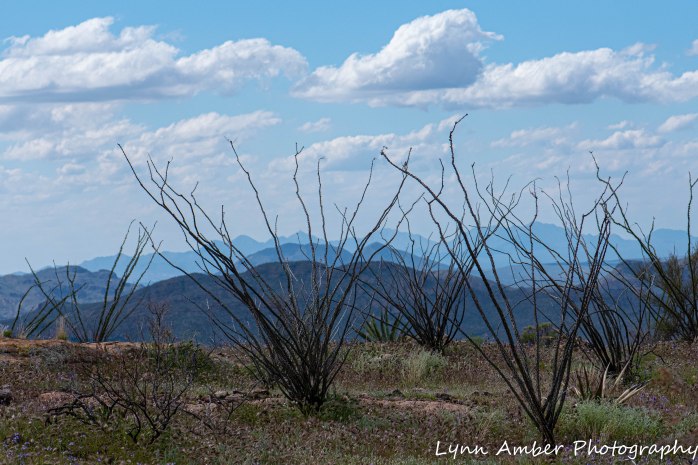

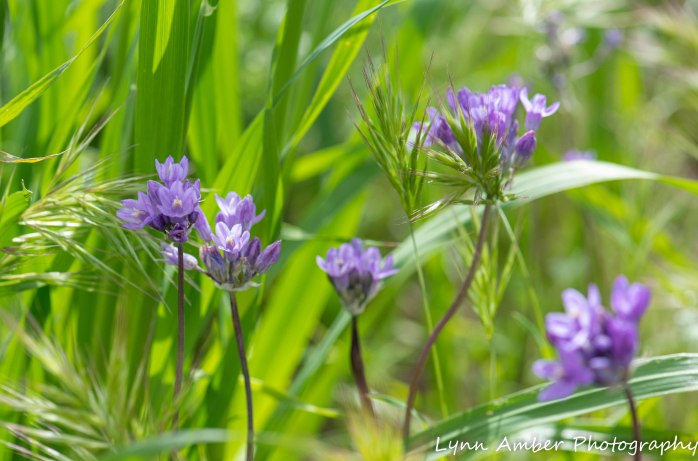
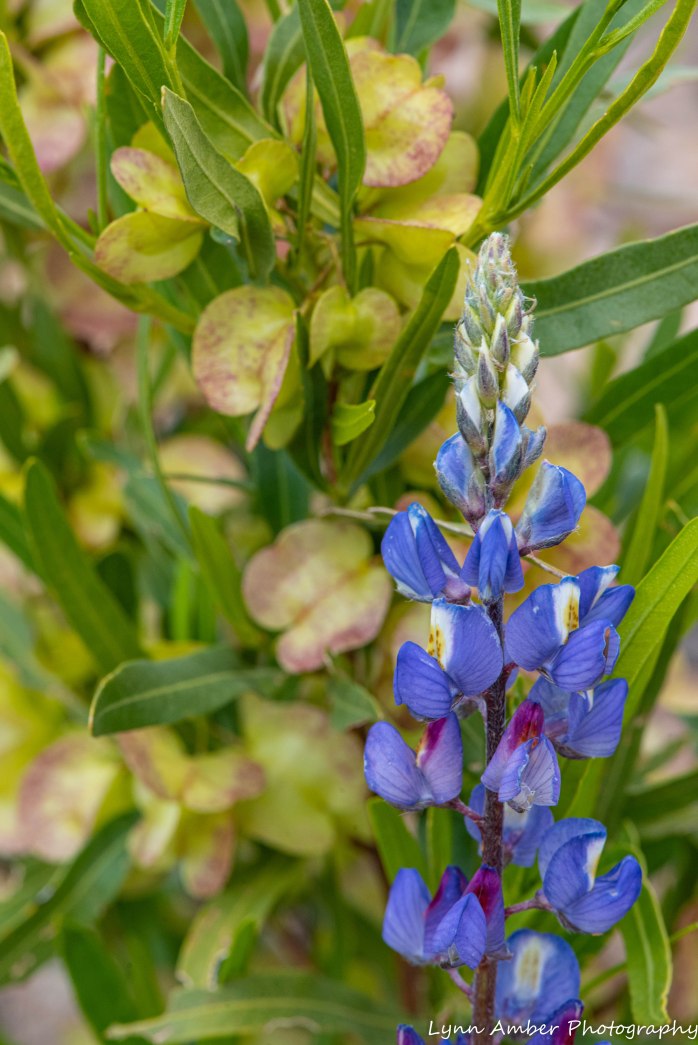
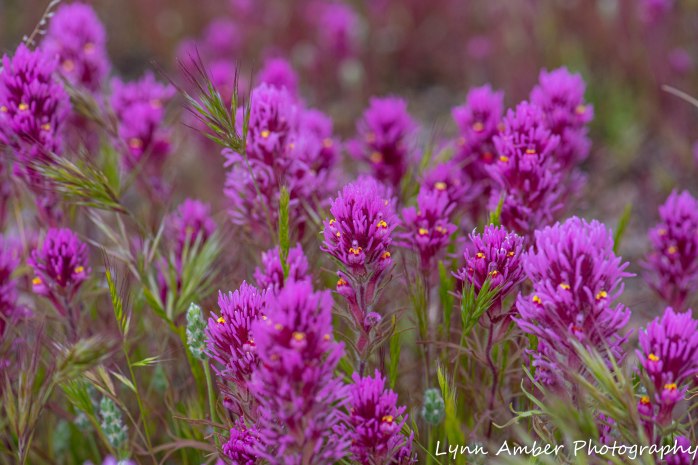
I tried to capture some of the amazing scenery along the trail with my 105mm lens – here goes!
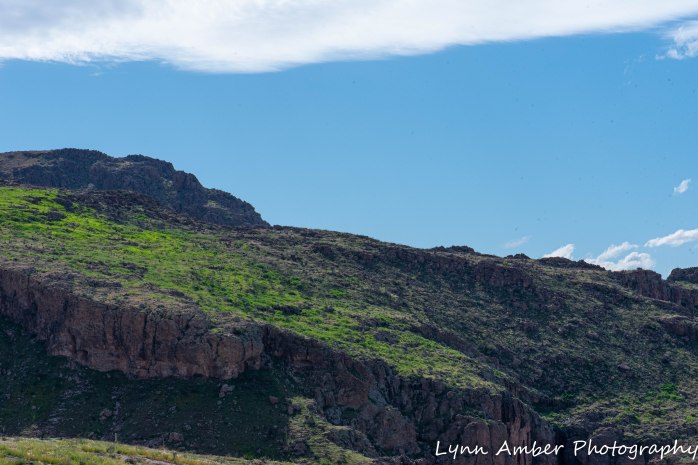
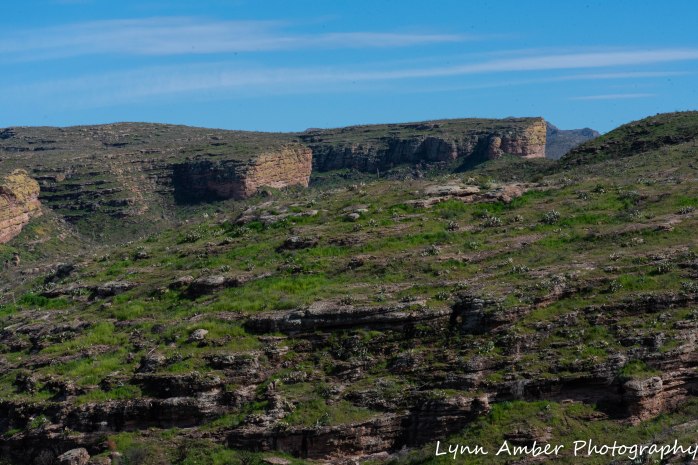
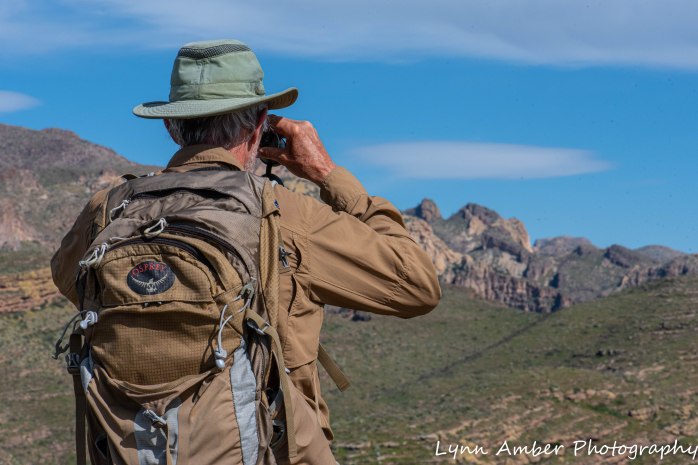
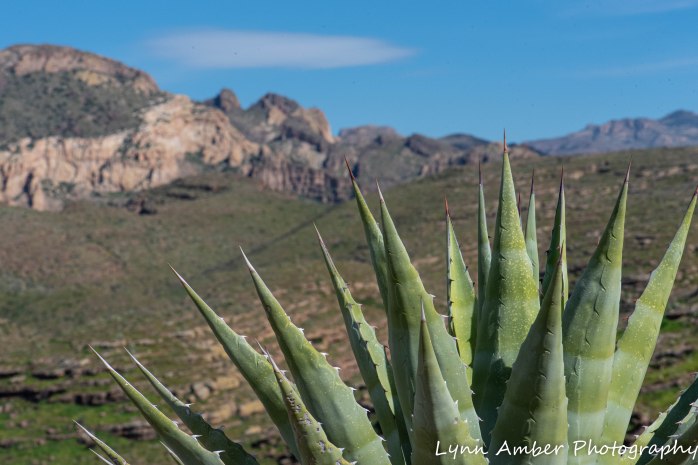

More plants along the way…..
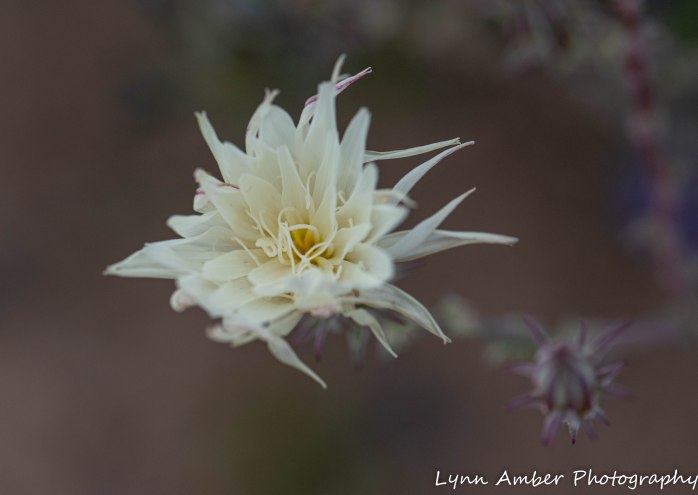


We left the Tortilla Trail and followed the dirt road up to the Fish Creek Hill rest area – the end of the line for this section of the Apache Trail. There is a paved, accessible walkway here with a dirt trail extension that overlooks the canyon.
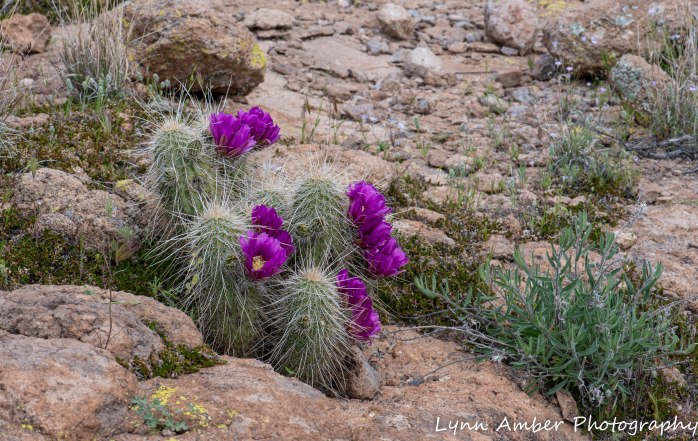
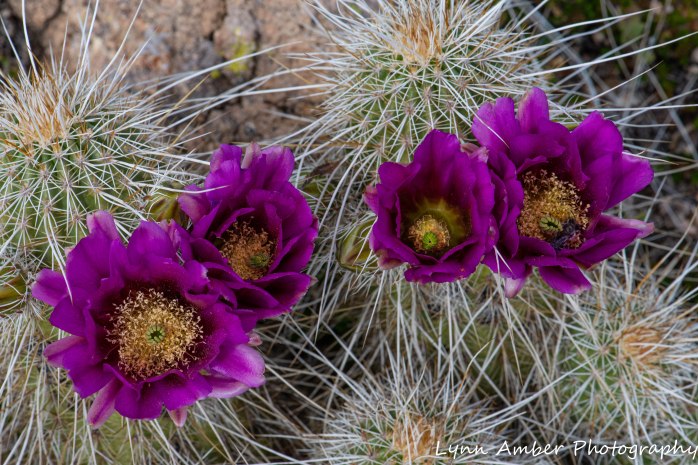


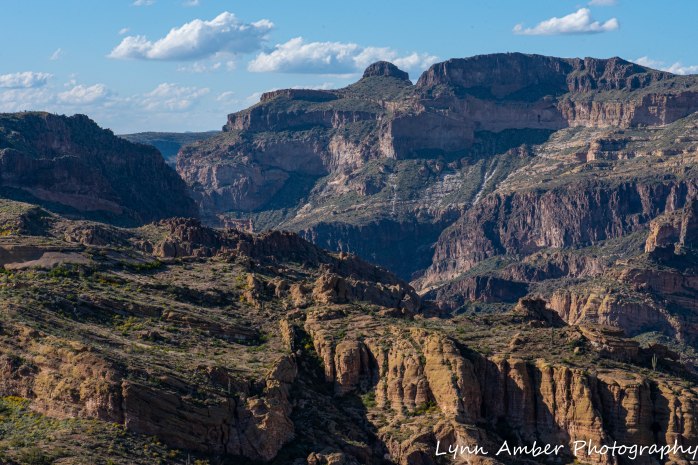
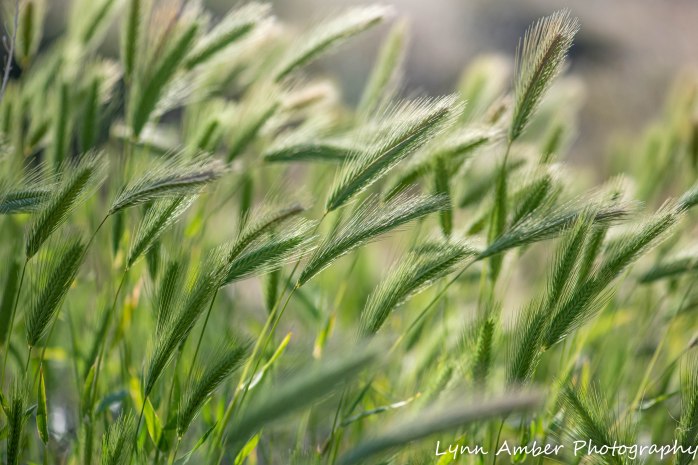
A relaxing, beautiful sunny day in the Tonto National Forest ended with a perfect campfire and another gorgeous sunset. Jim is known for his talent with a campfire. He never disappoints!!


The “Nellie E. Saloon” Desert Bar

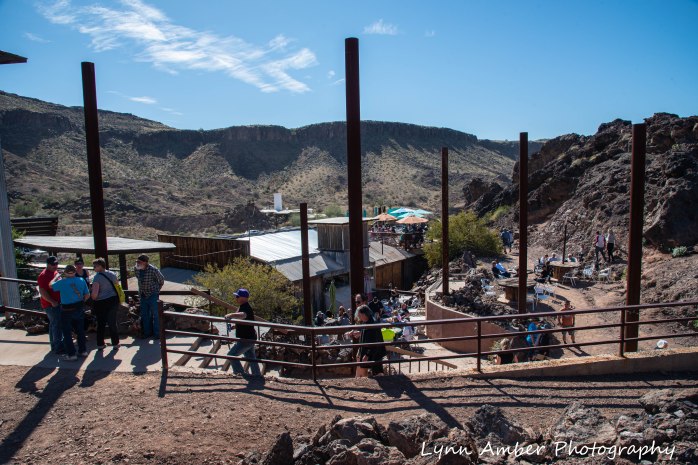
The “Nellie E Saloon” Desert Bar is certainly one of the most unique places to hold a music venue! Located outside of Parker, AZ, the bar is accessed via Cienega Springs Road – a 5-mile drive on a very unimproved, narrow dirt and gravel road with some precarious drop-offs! On Sunday February 9th, we decided to take a ride from Quartzsite and listen to some good, live music. My brother-in-law drove us there in his Chevy truck with dual wheels and it was slow going. On a previous visit, he experienced a flat tire when he veered to far off the side of the road. Knowing this, and the trepidation of my sister, I am grateful to them for offering to drive us there to experience this one-of-a-kind place. We were joined by friends of theirs from Canada who were also camped at La Posa South – Steve and Dianne, and Dave and Leslie.
According to their website, the Desert Bar sits on ground where an old copper mine operated. The owner, “Ken”, purchased the land in 1975 and the idea of a “bar in the desert” was born. He officially opened for business in 1983 in a small, original structure and over the years has expanded to what you see now.
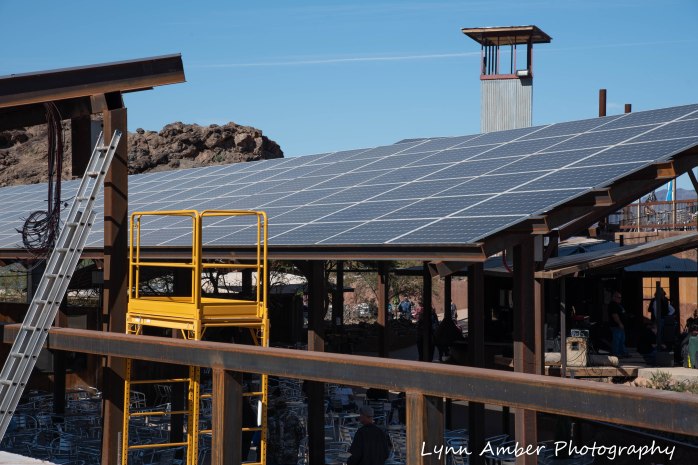
The whole place operates via solar energy with panels on all the roofs and a bank of batteries for storage. According to the website, improvements are made each year and his latest brainstorm is to create a small town on site! That’s enticing enough to draw people back next year to see the progress made and/or latest project completed.
Walking down to the venue, you get a bird’s eye view of the solar array – quite impressive!!
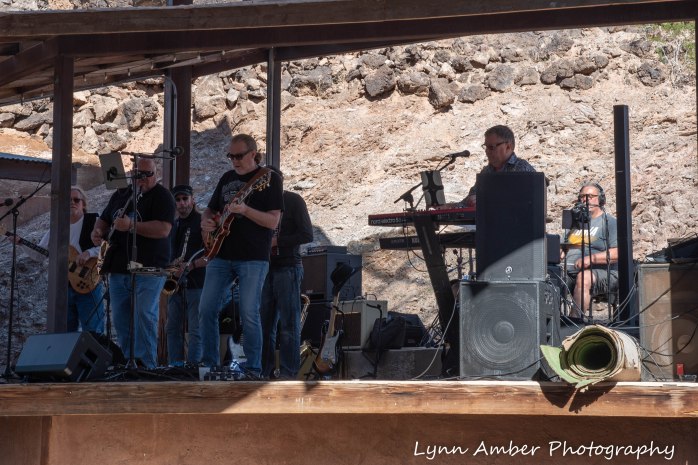
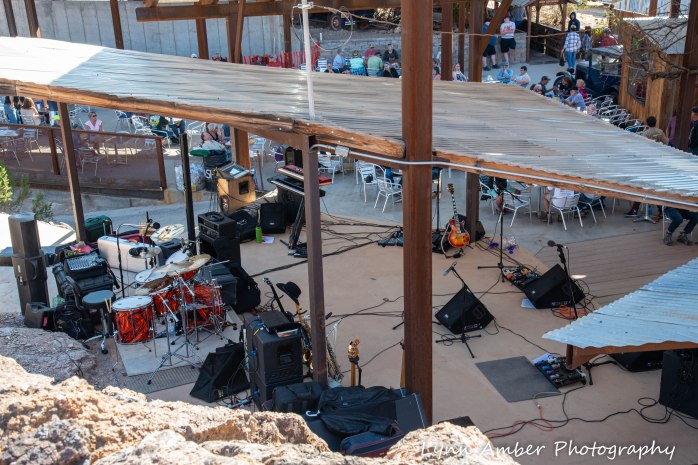
The band, Ripple Effect, was already playing when we arrived. Their music was definitely geared to the older generation – with songs from the rock n’ roll era of the sixties and seventies. Their repertoire included tunes from the Eagles, Bob Seger, Eric Clapton, John Denver, Johnny Cash, Led Zeppelin and on and on…….it was a treat to hear these old familiar songs!!
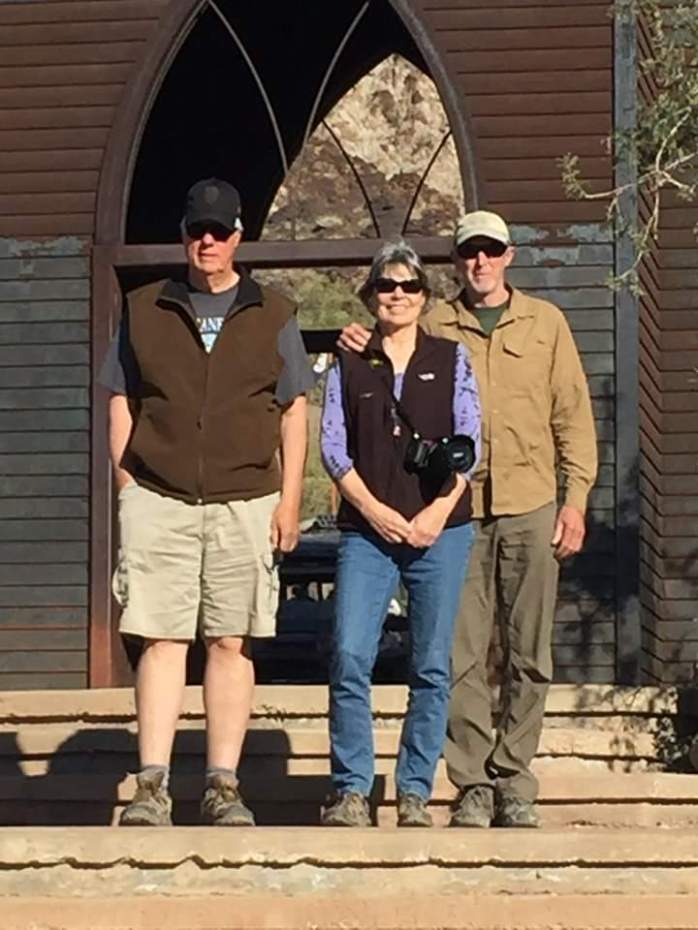
 Steve and Diane and Dave and Leslie arrived ahead of us and grabbed a good table – arriving early is advisable!! The venue operates on Saturday and Sundays from 12noon – 6pm. Our crew – from left to right, counterclockwise – Harry, Vicki, Dianne, Steve, Dave, Leslie, Lynn and Jim
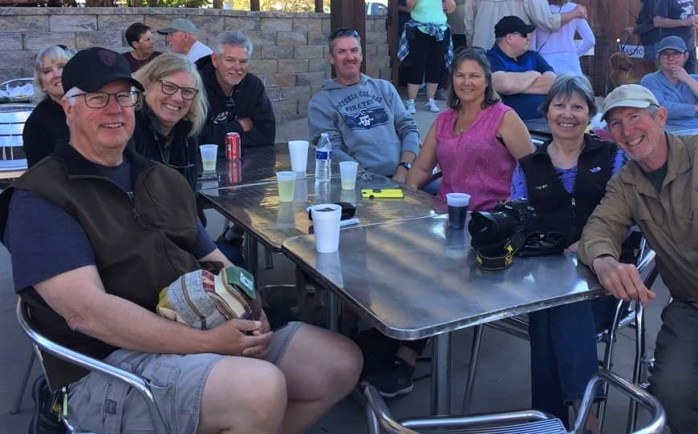
There’s food for sale as well as beverages ranging from Coca Cola to beer and wine and mixed drinks. All cash transactions – so be prepared! The prices were reasonable which I did not expect!
The atmosphere is very relaxed and, after a while sitting at the table, Jim and I decided to get up and walk around. There’s a trail behind the venue that leads up to a knoll above the compound. It was fun to get that perspective!


Vicki and Harry joined us on the hike up to the top of the mountain

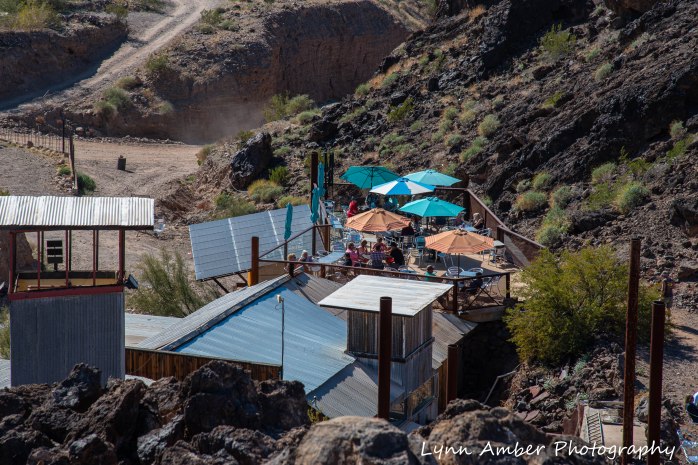

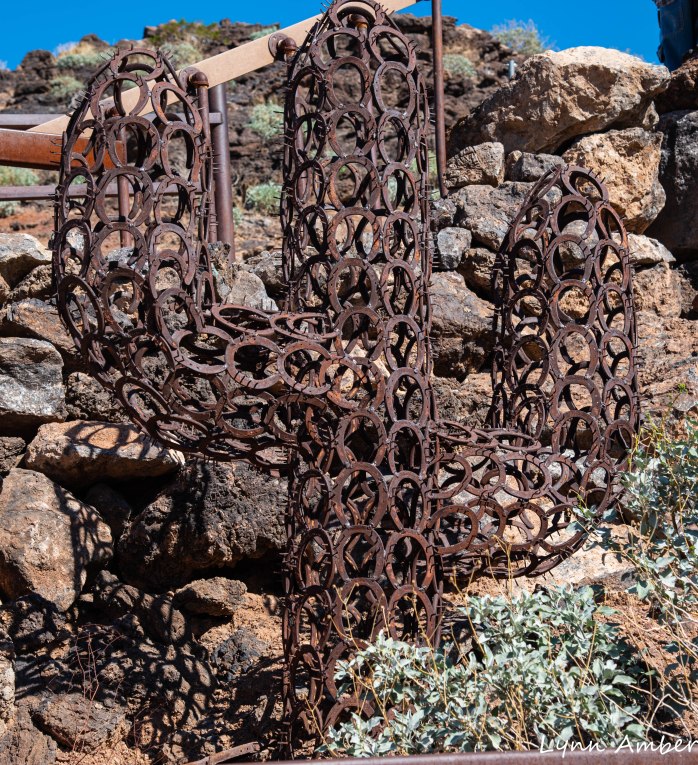
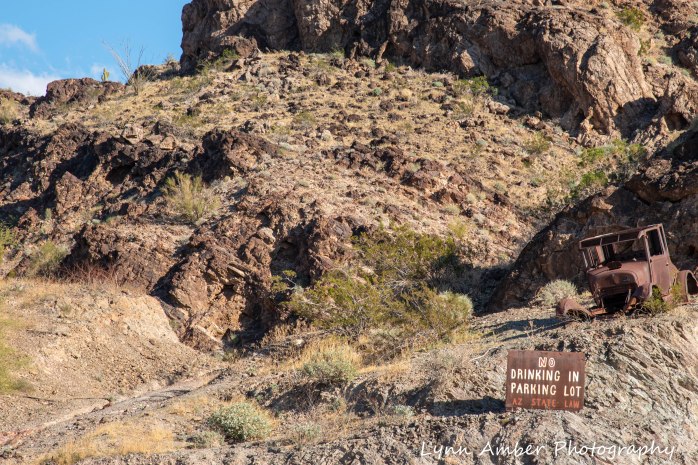
I loved the “art” that was interspersed around the property 🙂

One curiosity was the church on the property – it’s not an original structure but was built in 1996 as one of Ken’s projects. A great photo-op place!!
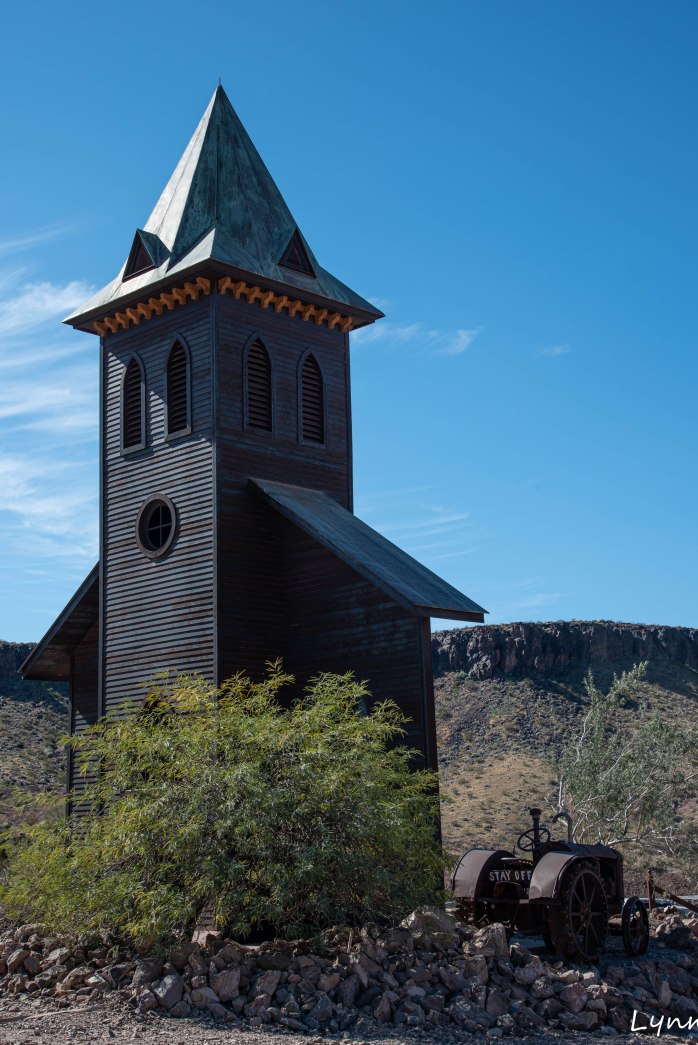
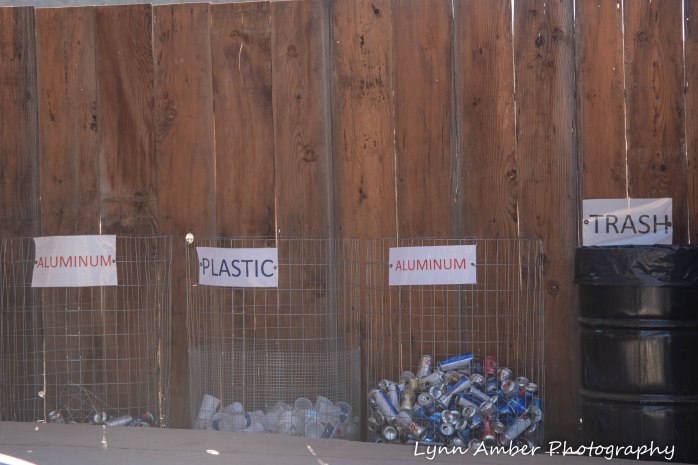
One of the most impressive parts of the venue was the effort made to encourage recycling! What a novel idea to make the recycling bins transparent so that it makes it really easy to see what should be deposited there!! Good job, Ken!!!! 🙂
More images and scenery!!


This was an absolutely beautiful, warm and sunny day and could not have been a more perfect choice for a Sunday afternoon. If you are ever in the Parker, AZ area during the winter months – take the time to experience the Desert Bar. You will not be disappointed.
Cibola National Wildlife Refuge
On February 8th, my sister and brother-in-law suggested a field trip to the Cibola National Wildlife Refuge and I enthusiastically accepted! There are nine different wildlife refuges in Arizona and we were close to several of those while in the Quartzsite area.
Cibola NWR includes an area of 8,444 acres surrounding the floodplain region of the lower Colorado River. It was established in 1964 in order to repair and recreate habitat from damage done to the marshes and backwaters of the area due to flood prevention measures. The refuge seeks to simulate the original habitat and has reestablished wintering grounds for many migratory waterfowl and other wildlife.
I’m always interested in the origin of names. The name Cibola was given to the area by Spanish explorers to the region and rumor has it that the name originated from the legend of the Seven Golden Cities of Cibola. Early explorers believed that these legendary cities existed somewhere in the Southwest. Cibola was also the ancestral home of some of the Native American tribes of the region including the Mohave and Quechan. They farmed in the rich floodplain soil during the dry season and migrated to the desert uplands to hunt and gather during flood season.
The town of Cibola has a history as a farming community since the late 1800’s and there is a historical marker in the area with the following inscription:
“Gold and silver strikes in the 1860’s created growth in the area. It is said Wyatt Earp served as sheriff of Cibola for one year in the 1890’s. The town of Cibola formed in 1898 and construction began on a 16 mile canal to bring water from the river to the town. A post office operated here from 1903 to 1933, serving the farms, but the irrigation project failed. Floods were a yearly event until dams were built on the Colorado River. All the remnants of Cibola are now located on nearby private property.”
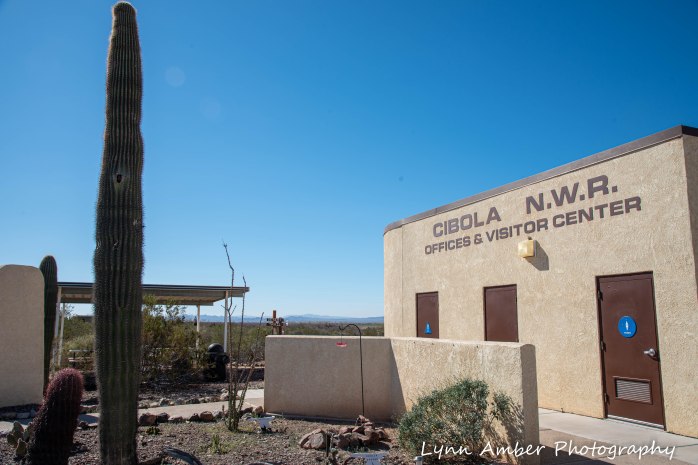
The Cibola NWR visitor center is open during the winter season daily from November through the middle of March. Visitors can stop in and view the small exhibit area and get information on activities within the refuge. There are several short trails for hiking and an auto tour road around the refuge. The refuge is also open to hunting and fishing opportunities. Volunteers staff the visitor center and live on site in employee RV sites. There are opportunities in many NWR’s to do this type of volunteer work. I would love to be in a position some day to volunteer at one of our nation’s many refuges. For more information on these opportunities, visit the Fish and Wildlife Service website. The woman who we chatted with in the visitor center was volunteering at Cibola for the first time. She spends her summer’s working in the Grand Canyon. I also found out she was from a town in Colorado close to where I will be working this summer at Great Sand Dunes National Park. She gave me some good tips on places to visit and, most importantly, which grocery store was best in Alamosa!
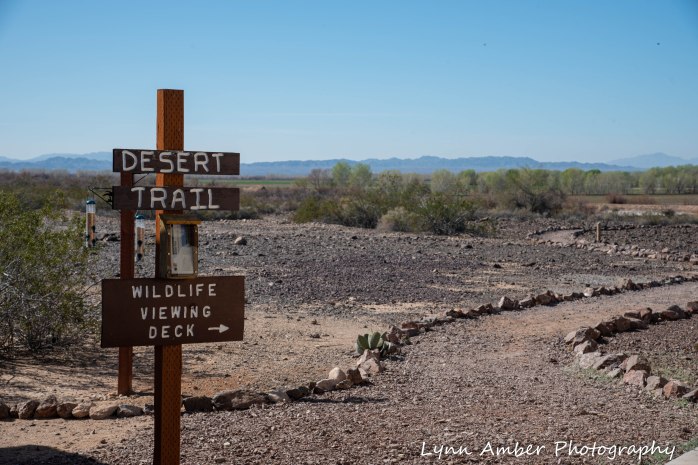
We opted to walk two of the short interpretive trails – the Desert Trail and the Nature Trail. We also rode the short 3-mile auto loop road near the visitor center and then explored the southern part of the refuge by vehicle. This involved following some improved dirt roads along levees and through marshes and wetlands. We traveled through the Hart Mine Marsh Unit and along some of the levees.
THE DESERT TRAIL
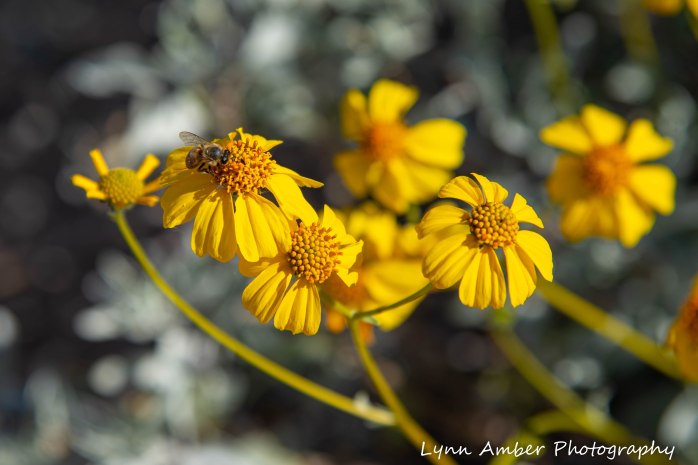
The Desert Trail is adjacent to the visitor center and was constructed in 1996 by the Youth Conservation Corps. There are numbered posts throughout the walk that match information in an interpretive brochure that can be picked up at the visitor center.

THE NATURE TRAIL
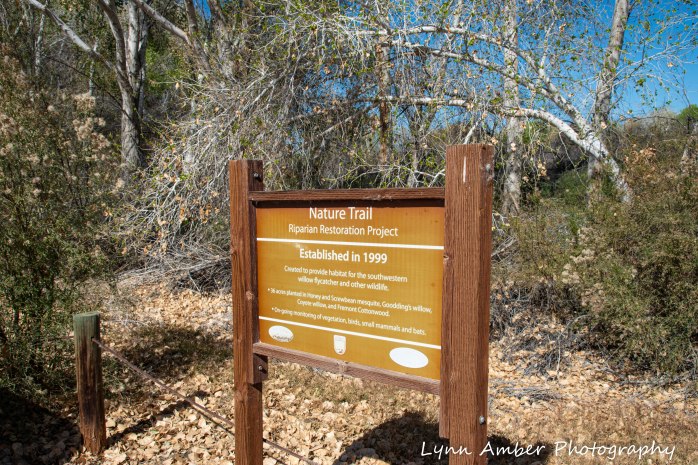
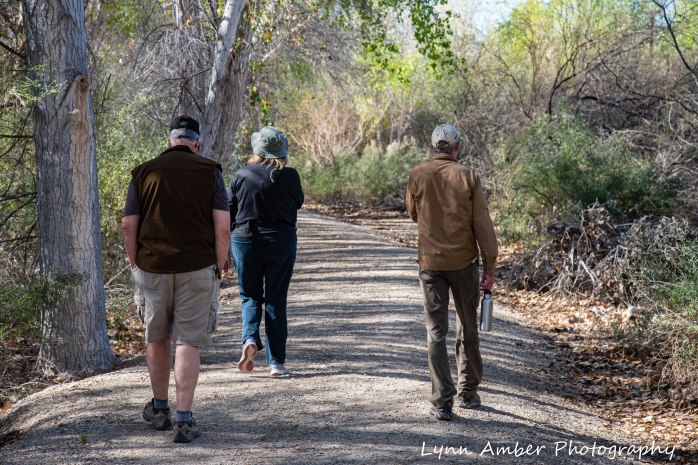
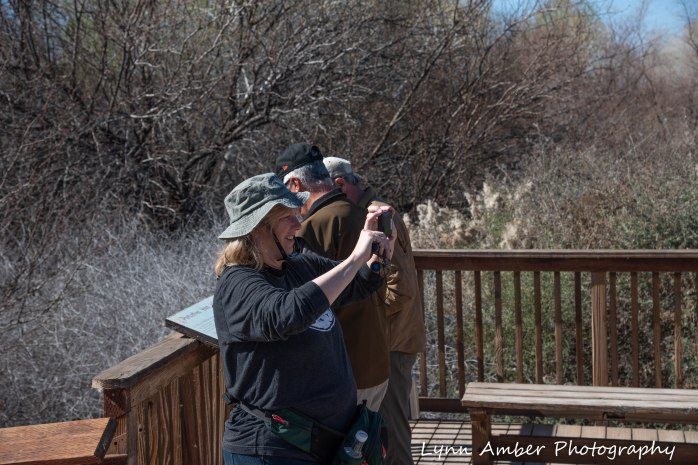
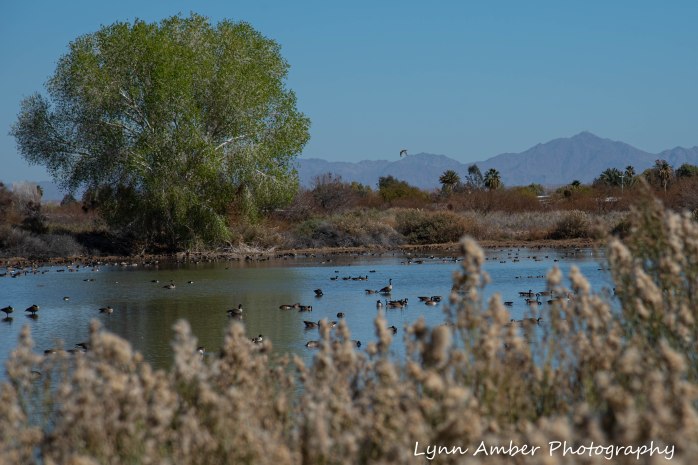
The Nature Trail starts at a small parking lot along the Goose Loop Auto Tour. It’s a short 1-mile walk through a “restored riparian forest and mesquite bosque.” (from the Goose Loop brochure) This habitat of mesquite, cottonwood and willow supports many wildlife species including bobcat, mule deer, coyote and the rare Colorado River cotton rat. I learned that the mesquite tree cannot germinate and therefore spread unless the seed is eaten. Coyotes play an important role in this process – eating the seeds and spreading it around after digestion and elimination. Fascinating!! There is a wildlife viewing deck half-way through the hike that overlooks a pond teeming with overwintering waterfowl.
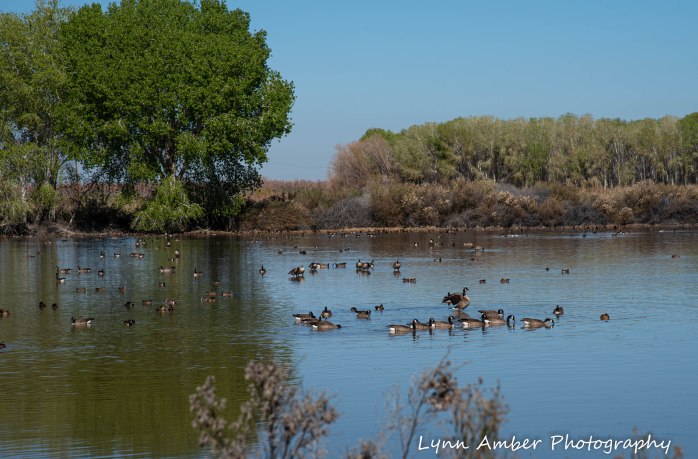
THE GOOSE LOOP AUTO TOUR
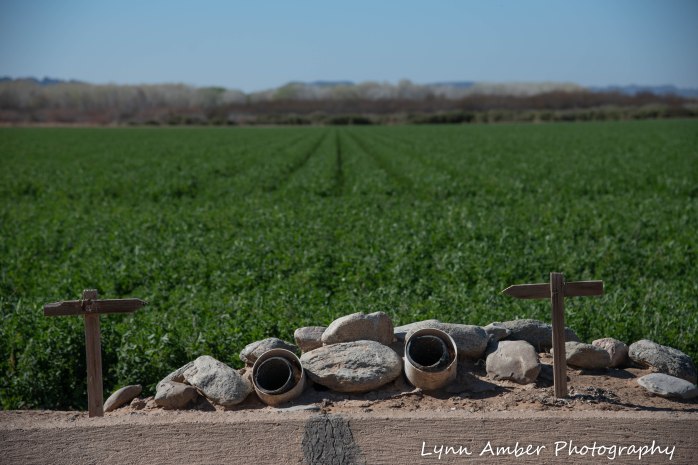
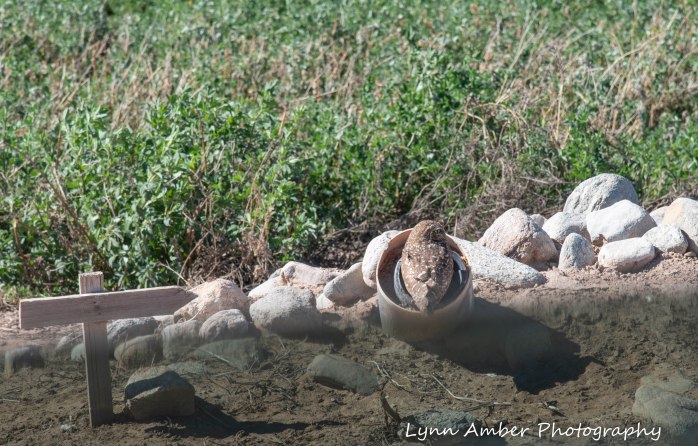
This auto tour is a 3-mile loop that takes you through part of the refuge. It is advised to remain in your vehicle so that the wildlife is not disturbed – with the exception of the Nature Trail walk. The loop traverses some cultivated corn and alfalfa fields and along Long Pond.
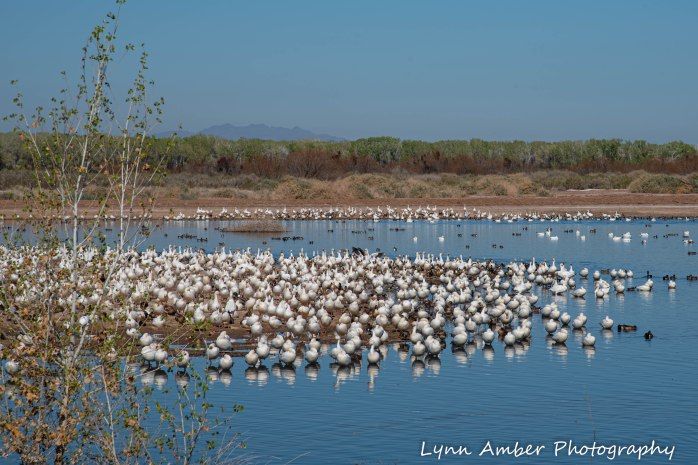

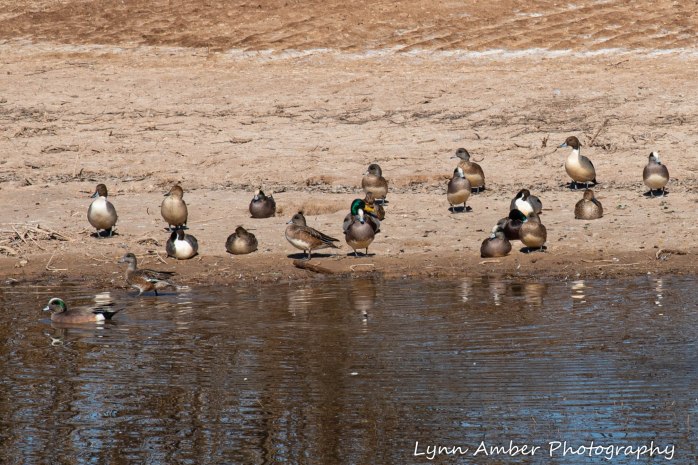
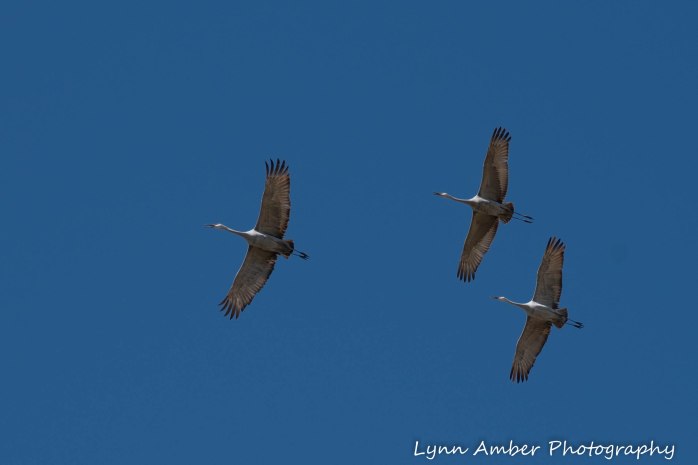
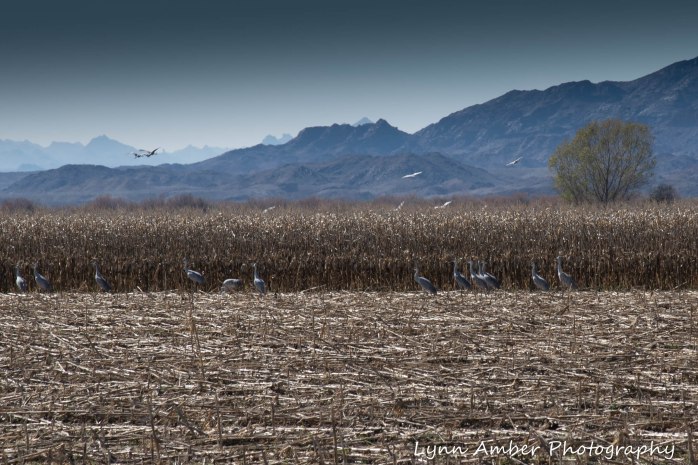
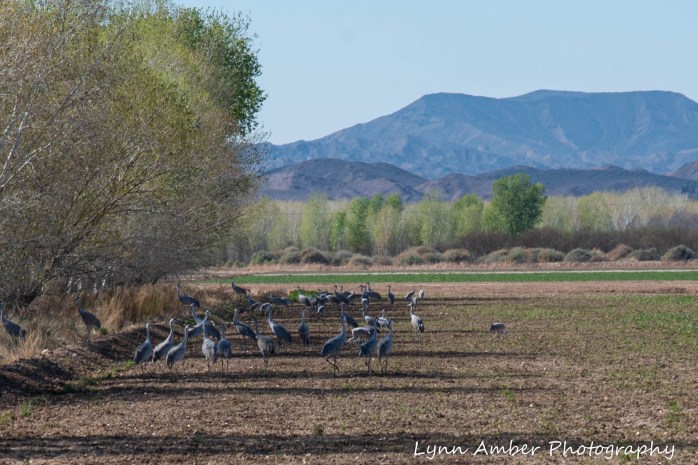
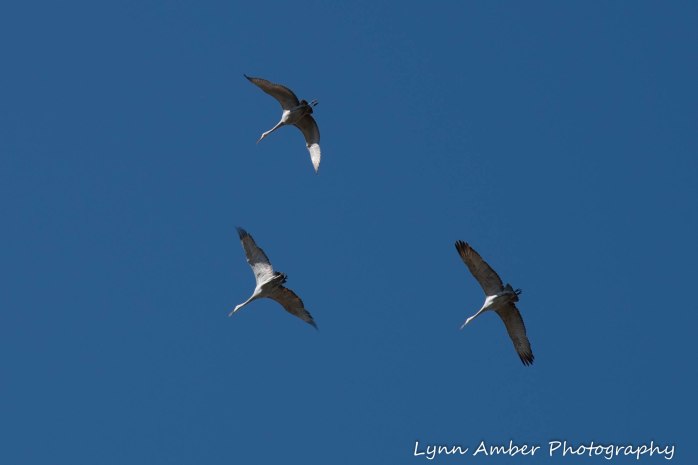
Along the drive, Farm Unit 1 includes cultivated crops that provide foraging opportunities for overwintering wildlife. We were able to view masses of Sandhill Cranes in the cornfields and saw a coyote hunting in the alfalfa fields!
HART MINE ROAD UNIT AREA
Leaving the Goose Loop Auto Tour, we proceeded south deeper into the refuge and traveled some of the dirt roads through the Hart Mine Unit area. This route took us along some of the levees and also along the Colorado River. We passed by some small marshes and ponds along the way as well.


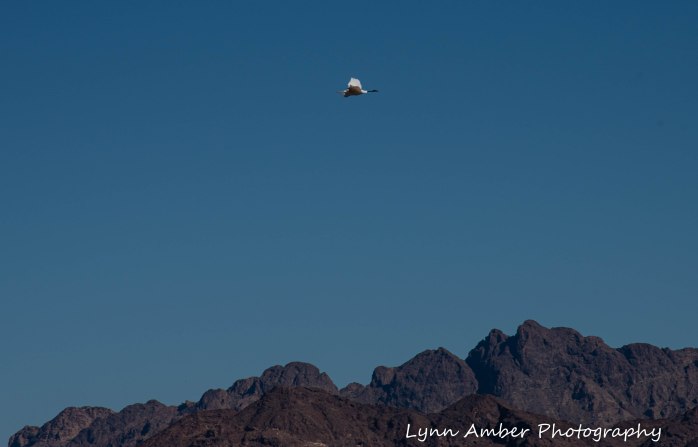
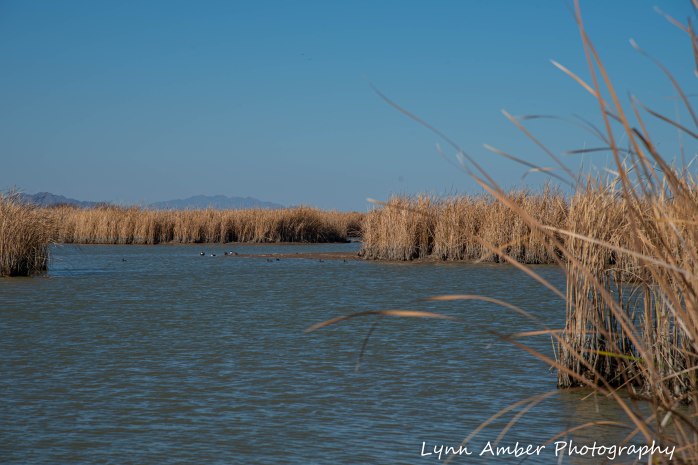
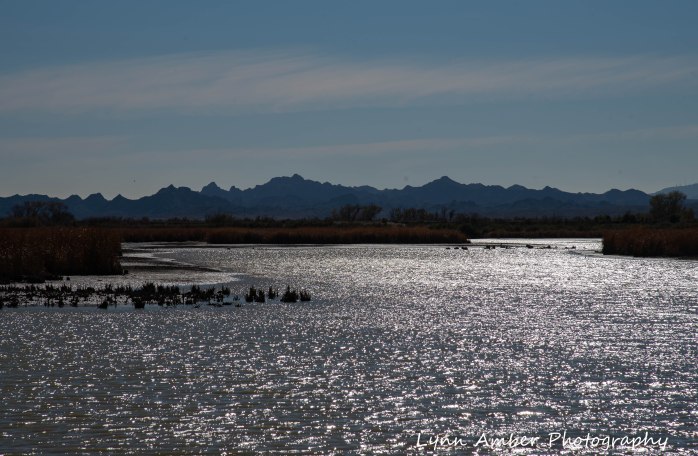
Many thanks to my sister for recommending this day trip. We have not seen each other very much over the past few years – sometimes going more than a year without being in the same neck of the woods – and I learn something new about her every time we visit. I learned that she shares my enthusiasm for learning about wildlife and nature – such fun!!
Somewhere in the Mojave…..
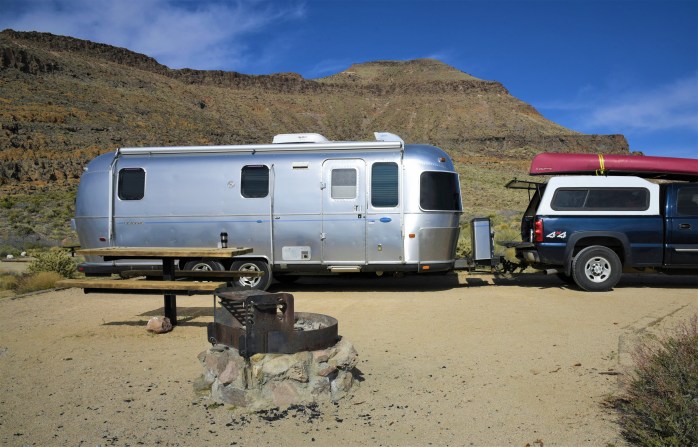
Sitting in the middle of the Mojave Desert, I realized I have been terribly remiss with my blog writing! The trouble is I find it hard to write at times while traveling with my husband. I don’t have a handle on exactly why that is – too distracting perhaps or feeling guilty for retreating to my solitary world of writing in his presence? For whatever reason, it just seems unfair to ignore him while I write. We are traveling companions and as such have a certain obligation to keep each other company, right? I have come to the realization that I just have to be more disciplined and take advantage of times when I can write without interruption or guilt – perhaps rising earlier in the morning when he is still sleeping is the answer!! 🙂 I will need to figure out how to manage but for now, I’m going to make an effort to get caught up!
It’s been a few weeks since we left Guadalupe NP and we have been on the move and busy exploring new places. Our next destination was the Long Term Visitor Area – La Posa South BLM outside of Quartzsite, Arizona. We were joining my sister and her husband there for a short visit. They spend anywhere from one to two months hanging out near Quartzsite every winter with friends and we wanted to finally experience the “Q” lifestyle and spend some quality time with my relatives.
It’s a 2-day drive from Guadalupe NP to Quartzsite so we made an overnight stop at the Saguaro Escapees Co-op in Benson, AZ where we dry camped for one night. If you are not familiar with Escapees, it is an RV club that caters to full-time Rver’s. For a nominal annual membership, we can stay at any of there numerous RV co-ops. Additional membership perks include a quarterly magazine chock full of RV maintenance advice and tips, engaging articles on places of interest and life on the road and a domicile mailing service if you need it. I have written several articles that have been published in the Escapees magazine. They have been very receptive to me which I very much appreciate! We have stayed at the Saguaro Co-op in Benson, AZ a couple of times in the past and find it accessible and comfortable for an overnight stay. For more information on the Escapees Club and the Co-ops, visit their extensive website.
The following day, we stocked up on food in Benson at the local Safeway before heading west to Quartzsite. We also topped off our propane tanks and found that we needed to have them re-certified. Luckily, this particular propane filling station had the credentials to do this. Without an up-to-date sticker, most places will not fill the tanks. We arrived in Quartzsite late afternoon on February 5th and my brother-in-law and sister met us at the fresh water station that sits about a mile into the LTVA to show us the ropes and help us navigate through the maze of RV’s to their location. We quickly learned that even though we filtered the fresh water into our tank most people do not use it for drinking. Apparently, it has a high concentration of salt. Drinking water – that is put through the process of reverse osmosis to purify – is purchased in town for a 25 cent/per gallon fee. Temporarily, my brother-in-law had a 5-gallon jug of “good” water for us to use until we could fill up our own container in town.
We timed our arrival so that it coincided with my sister’s arranged time-off from her workplace. She continues to work remotely while they travel full-time in their RV. So, we had 4 days to spend with them as our guide before we were left on our own to explore!
How best to describe Quartzsite?? It’s a winter haven for many snowbirds, an ATVer’s dream location, a gathering place for friends – a lifestyle in and of itself. At first, Jim and I were a little overwhelmed. We are used to boondocking in more remote places with very few neighbors. The long term visitor areas around Quartzsite are the RV-version of a suburban neighborhood with acres upon acres of desert dotted with an smorgasbord of accommodations – tents, small vans, converted Bluebird buses, trailers, fifth-wheels and motor-homes. It is possible to find a more private spot the further into the LTVA you travel.
The establishment of the La Posa Long Term Visitor Area (or LTVA) on Bureau of Land Management property has an interesting history. The LTVA’s were established in the early 1980’s as a way to manage the growing influx of winter visitors to the area in a way that serves both their needs and protects the ecosystem of the surrounding desert. For a seasonal or bi-weekly fee, visitors can camp within the LTVA boundaries and enjoy the convenience of having a dump station and fresh water station at their disposal. In addition, there are stations for trash and garbage collection and a few pit toilet facilities interspersed throughout the area. I was amazed to read that the whole LTVA (broken up into 4 separate areas) totals over 11,000 acres! Many people who return for the season year after year appreciate the accessibility of the LTVA to town, the endless miles of ATV trails throughout the region and the facilities offered within each area that allow them to boon-dock in relative comfort and ease.
Initially, upon arrival, I wondered what in the world we were going to do to occupy ourselves for two weeks – the duration we had decided upon and paid for at the bargain rate of $40.00 for 14 days. The area seemed to cater to the off-road crowd and we definitely did not fit that scene. We relied on my relatives to develop our social calendar for the first few days since they are so familiar with the area and also do not operate ATV’s. I quickly realized the area does have a lot to offer other than 4-wheeling – hiking, biking, wildlife refuge exploring, local historical places of interest and entertainment – and we managed to experience quite a bit in our short time here! There are some “must-dos” for anyone visiting the area and my relatives insured that we hit most of them! I’ll re-count our two weeks in chronological order – with short photo essays and multiple posts. Our current location is short on cell service accessibility and I have to dole this out in short snippets!
February 6, 2020 – Field Trip to Palm Canyon and Yuma, AZ
Palm Canyon
Our first adventure took us to Palm Canyon in the KOFA Wildlife Refuge – a short distance down the road from La Posa South LTVA. We turned off of Highway 95 at Palm Canyon Road and drove the 7+ miles back the dirt road to the trailhead. Along the road back to the canyon is also a popular spot for free boondocking – none of the amenities of the LTVA’s but less crowded.
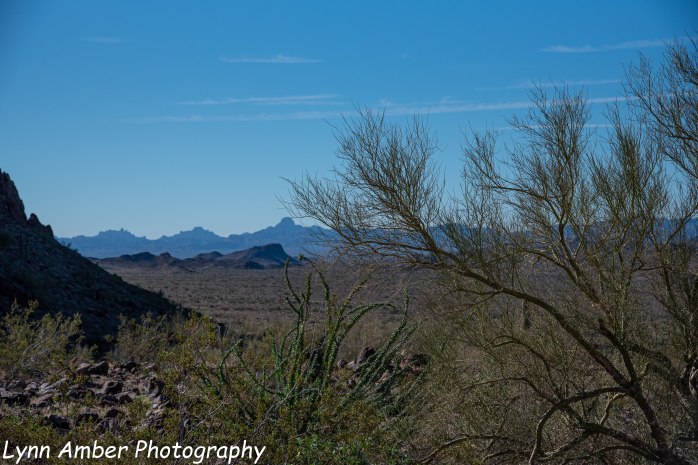
The short trail leads to the interior of the canyon and a glimpse at some rare native California Fan Palm trees that grow in the narrow canyon. It was amazing to see these trees growing in such a harsh environment! It’s hard to spot the palm trees in the pictures – give it a try! 😉


Yuma and the Territorial Prison State Historical Park
After leaving Palm Canyon, we continued on down to Yuma, AZ to visit the Yuma Territorial Prison State Historical Park and grab a bite to eat.
Before hitting the state park, we dropped into the aptly named Prison Hill Brewing Company to enjoy a good meal and quench our thirst!

Walking through parts of downtown Yuma, I was fascinated with some of the colorful wall murals.


The Yuma Prison State Historical Park has an interesting history. It was built in 1875 to house prisoners within the territory and operated until the early 1900’s. The prison housed both male and female prisoners with infractions that ranged from simple assault to embezzlement, robbery and murder. It was a model prison for the time period and the prisoners enjoyed comforts not available to many townsfolk.

The superintendent Frank Ingalls and his wife, Madora Ingalls, were progressive in their approach to prison reform and made continuous efforts to improve the lives of the prisoners. Madora Ingalls established a prison library that housed over 1,000 books!
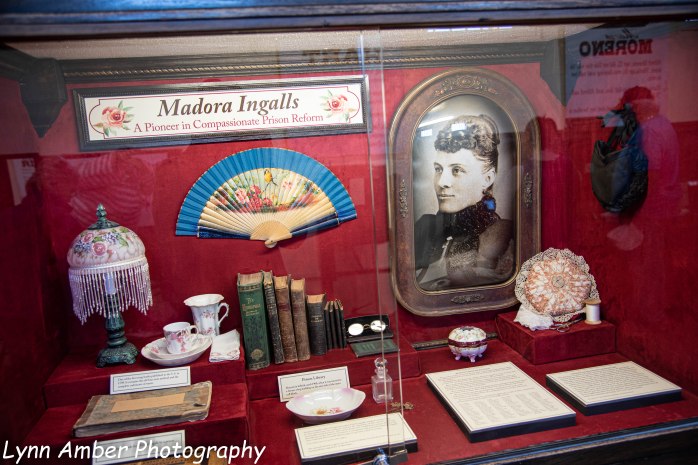
She was greatly admired by the prisoners and upon her departure, they honored her with a signed resolution thanking her for her work on their behalf. It was printed in the Arizona Sentinel on April 10, 1886:
“The inmates of the Territorial Prison held a meeting last Monday, at which the following resolution was proposed and unanimously adopted and signed by 104 prisoners.
WHEREAS, the departure of Mrs. Frank S. Ingalls is near at hand, and we owe her our thanks for the good work done on our behalf,
Be it resolved, that we, the prisoners confined in this prison, attest our thanks and sincere appreciation for the establishment of a Library which has proven a great source of enjoyment, and has also tended to improve us morally and intellectually, and further,
Be it resolved, that we thank and appreciate her attitude towards those whom she endeavored to cheer and comfort while sick and in distress, and further,
Be it resolved, that the good influence instilled by her kind work shall prove to us, in the future, as a stepping stone to society and good citizenship, and further,
Be it resolved, that by unanimous approval, a copy of these resolutions be handed to the lady in token of our high esteem.”
Some of the remaining buildings on the prison site:


I was particularly intrigued by the women prisoners! They were a formidable group!
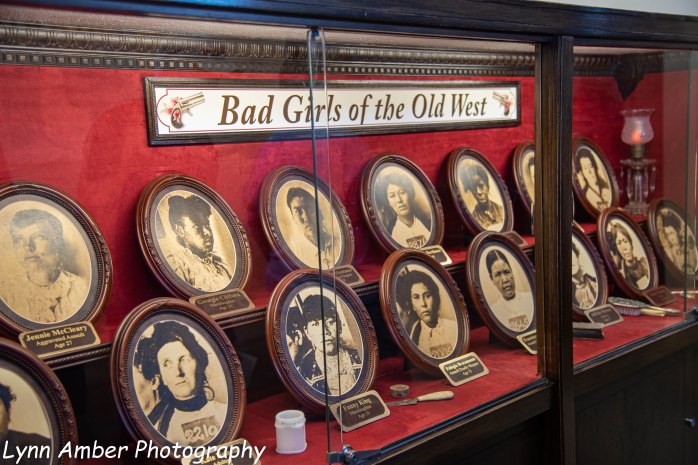


My next post will take us to a national wildlife refuge! Stay tuned!
2 Days, 2 Parks – Guadalupe NP
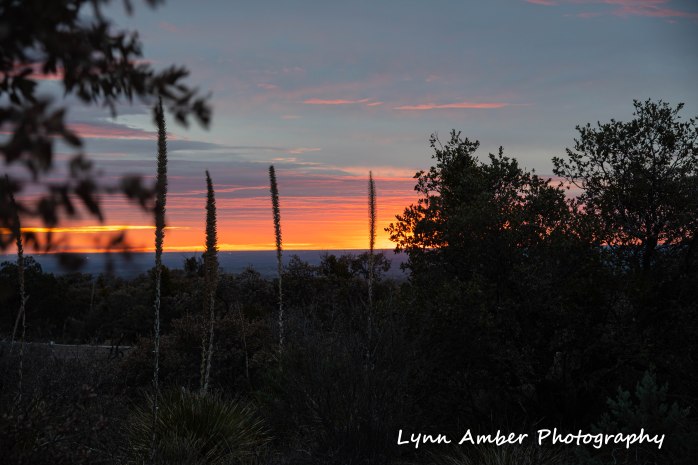
Part 2 of our travels through Carlsbad Caverns and Guadalupe area:
We moved to the Pine Springs Campground in Guadalupe National Park after our long day in Carlsbad Caverns. This was not by choice (that’s another story!) but it ended up being extremely convenient and an okay place to spend a couple of nights in Guadalupe NP. There were high wind advisories for the area which is common here and we debated whether we should stay another night or move on. In the end, we decided it was better to hang out here for another night rather than risk traveling and fighting high winds on the road. Our decision proved wise as we did not experience winds as high as predicted and we enjoyed a really nice hike that day.
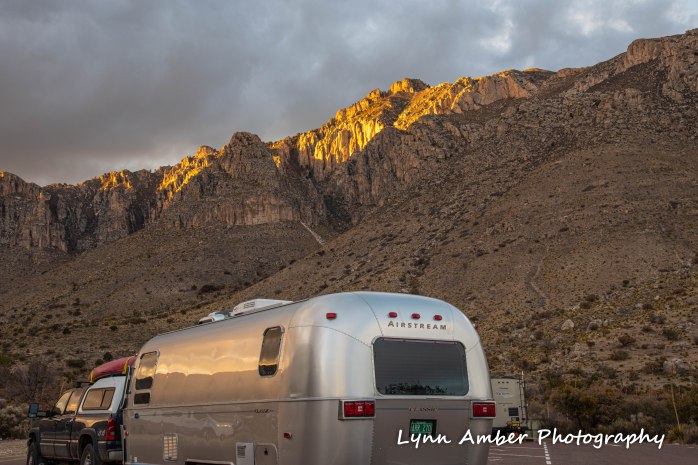
The RV section of the campground is really just a big parking lot with long pull-through spaces. There are some limited back-in spaces along the perimeter of the lot for smaller trailers and camper vans. While not very private, the space we pulled in to was level and we could just stay hooked up to the truck. There are several hiking trails that originate from the campground so we did not have to drive anywhere.
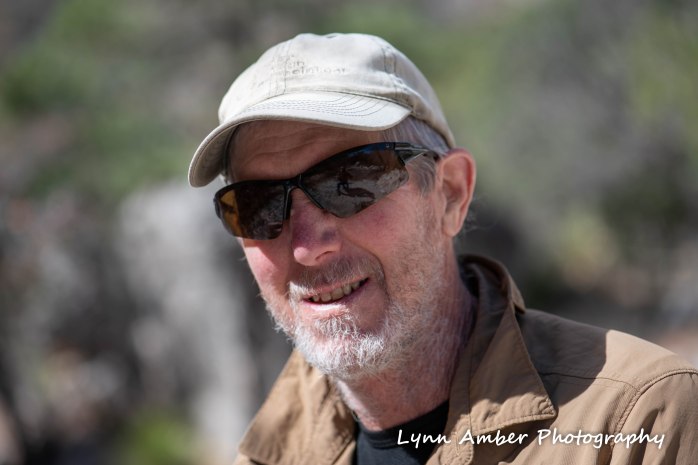
Our first priority in the morning was to walk the short trail to the visitor center and get some hiking information (and my passbook stamp and NP patch!). We settled on a nice 4.5-mile round-trip hike to Devil’s Hall which descends into Pine Springs Canyon rather than try a “summit” hike. This was due mainly to the high winds. Again, we made the right choice as the canyon was somewhat sheltered and it was a peaceful, warm and windless hike!!
Guadalupe NP is similar to Carlsbad Caverns in its geologic history – both having been formed as a result of the inland sea that existed here millions of years ago. It is one of the most important examples of a marine fossil reef in the world. The history of the area is rich with evidence of Native American habitation from the Nde (Mescalero Apache), and subsequent populations of pioneers, explorers, ranchers and, eventually, conservationists. Unfortunately, when the Nde were faced with the growing population of foreigners invading the region, they did not welcome them and there was a period of intense conflict with the U.S. Army. The Nde tribes were eventually driven from the area. The transcontinental Butterfield Stage mail route traveled through this area as well. We have seen evidence of this stagecoach route throughout the west including our visit to Fort Bowie several years ago. There is a colorful history connected to this mail route that would be fun to explore more in depth!
Devil’s Hall Hike
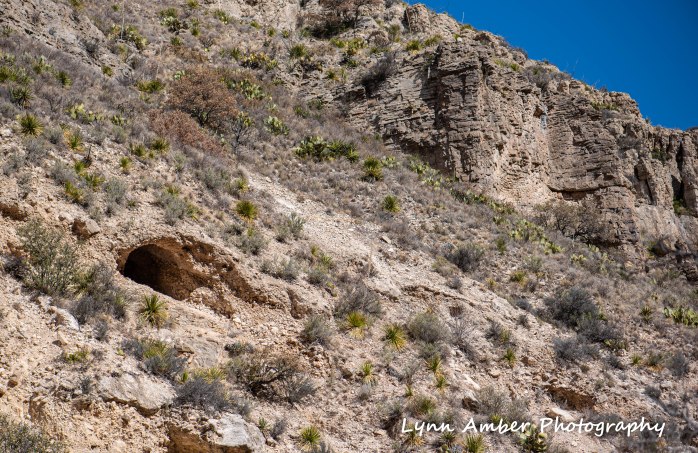
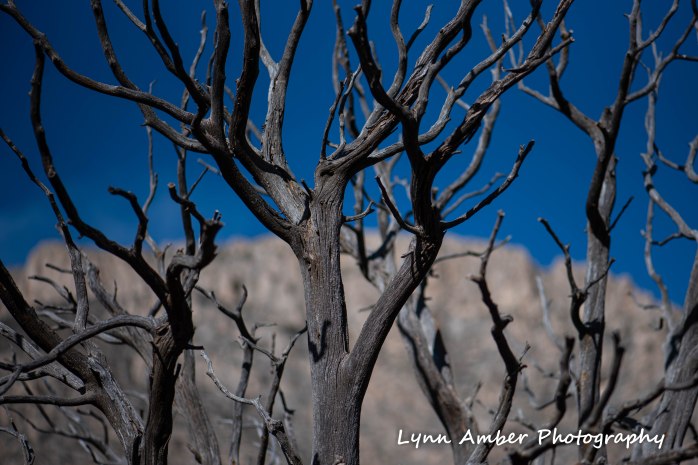
This hike travels back into the Pine Springs Canyon to a couple of interesting geologic formations – Hiker’s Staircase and Devil’s Hall. The “staircase” is carved out of a rock formation and is the entrance through two large rock outgrowths that signal the entrance to Devil’s Hall. It really does look like something out of Lord of the Rings! Very impressive!
It was a moderate hike with beautiful scenery along the way. We even saw a deer along the trail as well as much more of that danged Ringtail scat – but the Ringtail was elusive!






ONWARD to QUARTZSITE AND VISITING WITH FAMILY!!
2 Days, 2 Parks
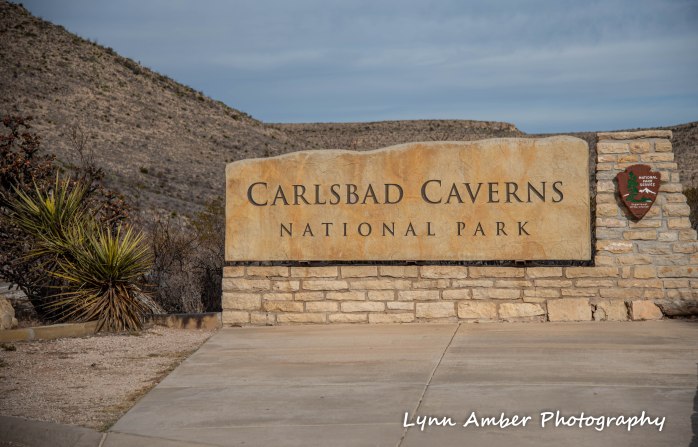
When Jim and I explored the southwest during the winter of 2017, we bypassed Carlsbad Caverns and Guadalupe National Parks twice! On both occasions, the weather forecast called for cold temperatures (sub-freezing) and high winds. As we headed west this winter, I kept tracking the weather and noticed a “sweet spot” in the weather around Carlsbad and Guadalupe. So, we took a chance and altered our route from I-40 by dropping down towards Carlsbad – taking Rt. 60 near Amarillo, Texas.
I was so excited to finally tour both of these unique parks! Our first day in the area, we chose to visit Carlsbad Caverns NP.
Day 1 -Carlsbad Caverns NP
The geologic history of the cave formation here is fascinating! The short and sweet version is as follows: About 286 million years ago there was an inland sea called the Delaware Basin covered much of the region around Carlsbad and Guadalupe. A limestone-rich reef formed on the perimeter of the basin and is known today as the Capitan Reef. Over time the inland sea started to recede leaving behind salt deposits in the basin that acted as a preservative for the reef area. About 65 million years ago, tectonic activity in the region started to create an uplifting of the terrain and eventually resulted in the reef being raised – forming the mountain ranges that exist here today including the Guadalupe Mts.

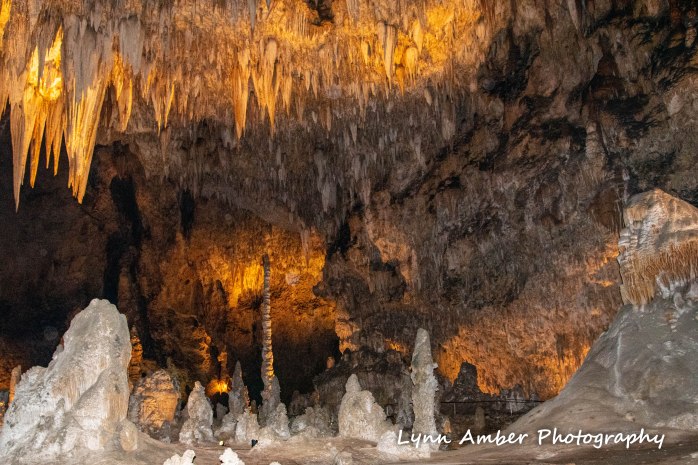
The formation of the Carlsbad Caverns is unique due to a major ingredient in their formation – sulfuric acid. The large amount of oil deposits in the region provided hydrogen sulfide which in turn reacted with oxygen and produced sulfuric acid – that contributed to the dissolution of the limestone rock. With the active tectonic faults came changes in the topography that allowed for the underground water table to drop leaving huge, underground passageways that are relatively dry. Gypsum is a by-product of the sulfuric acid reacting with the limestone and there are large deposits of this in the caves. In more recent times, erosion has allowed water to penetrate the caves. As a result, the speleothems we enjoy today started to form and continue to evolve and decorate the caverns today!
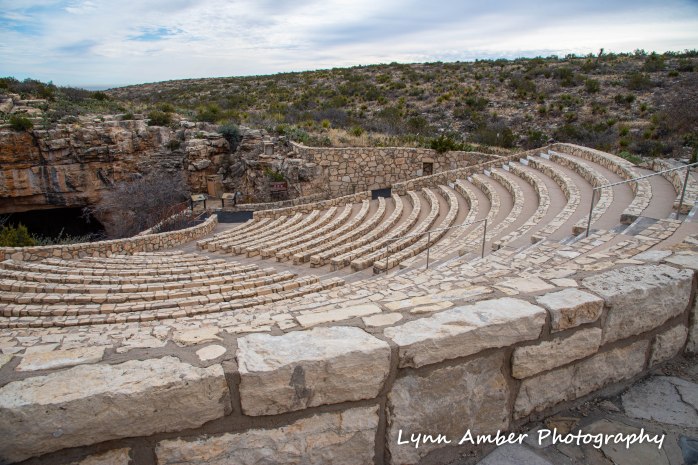
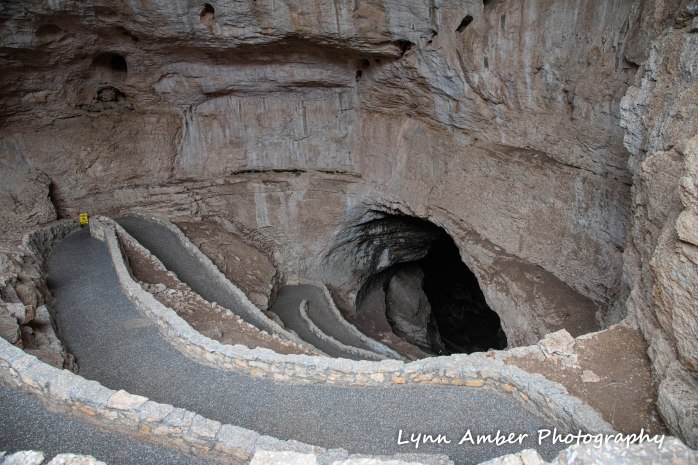
There are two ways to get down to the caverns which are over 700 feet underground. Visitors can choose to walk down through the “natural” entrance – the 1.25-mile steep trail – to the Big Room or take the elevator from the visitor center. The walk down goes from the Natural Entrance through the Main Corridor and connects with the loop around the Big Room – which is an additional 1.5 mile and a fairly level hike. The return to the top of the cavern is via elevator from the Rest Area and Lunchroom. We walked down from the Natural Entrance and came back via elevator.

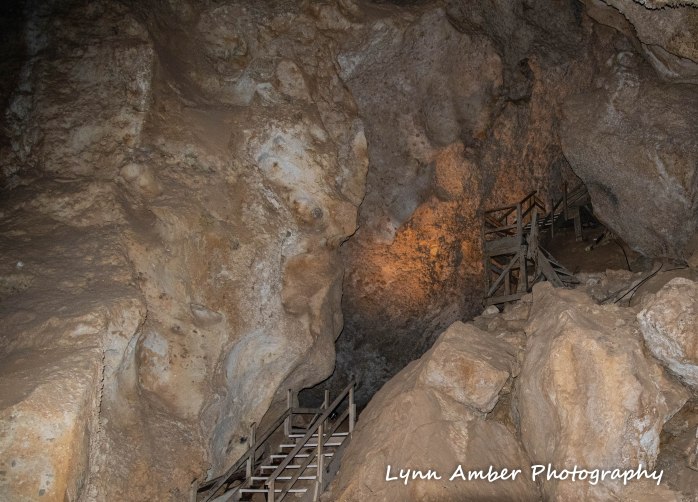
Throughout the walk, we marveled at the endless formations of stalactites, stalagmites, draperies, soda straws, flowstones and “popcorn” aragonite. Photography is permitted and flash is allowed.




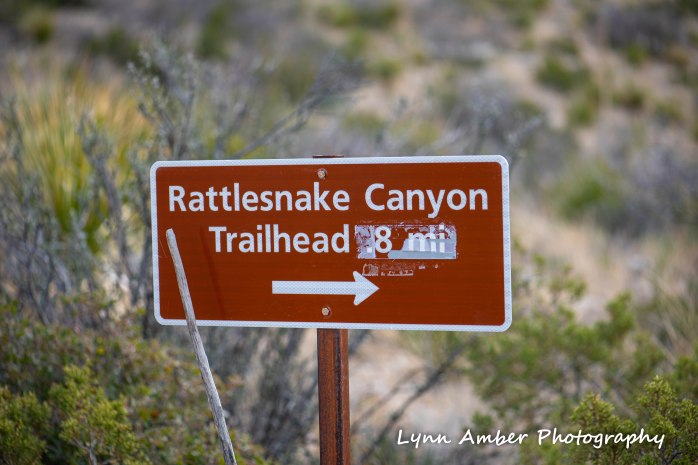
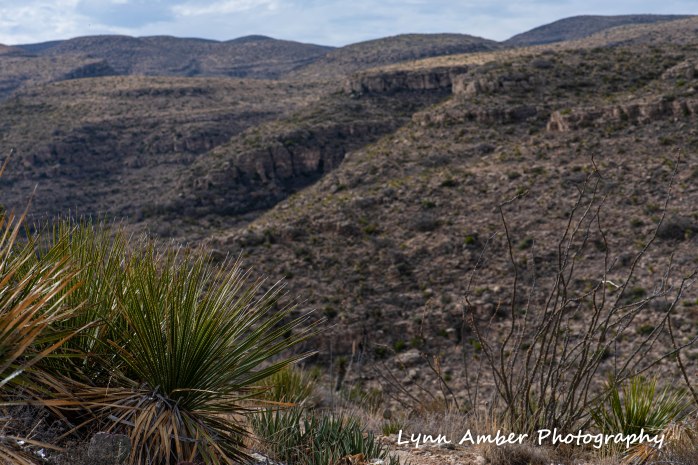
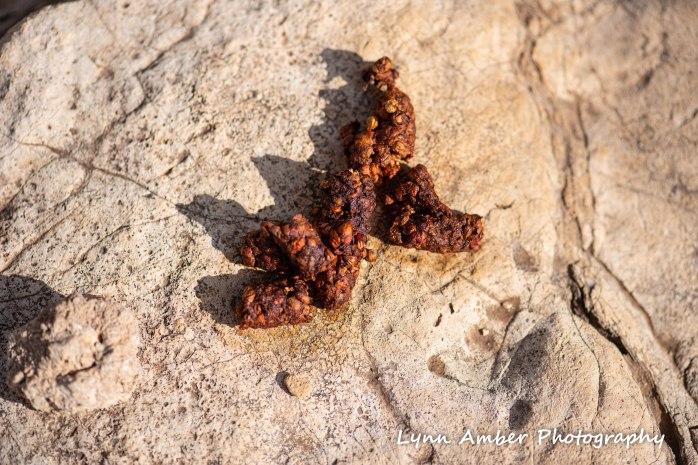
After touring the caverns, we drove the 9.5-mile Desert Loop Road through the park itself and stopped for a quick hike on the Rattlesnake Canyon Trail. It was nice to get out on a trail after so many days of driving from the northeast!! We saw an abundance of scat on the trail that we later learned was from the Ringtail (Bassariscus astutus), an omnivore closely related to coati and raccoons. But, alas – no rattlesnakes!!!




 Lynn Amber - Travel & Photography