Lynn Amber - Travel & Photography
sharing my thoughts through words and images
Mandeville Bike Ride

On Christmas Eve day, we decided to ride the Tammany Trace bike path towards the small lakefront town of Mandeville, Louisiana. The ride from Fontainebleau State Park to the center of the village was only 2.77 miles one way. It is a fairly level ride and we wanted to have plenty of time to leisurely explore the town and the waterfront.
Mandeville has an interesting history. The town was founded by Bernard Xavier de Marigny de Mandeville in 1834. His family originally came from French nobility and were very influential in Louisiana – owning almost 1/3 of the city of New Orleans at one point in time. Inheriting a fortune worth nearly 7 million dollars from his father, Bernard began delving into real estate and started purchasing land on the shore of Lake Pontchartrain across from New Orleans. He purchased some tracts of land in St. Tammany that he developed into a rich and profitable plantation – the site of the current Fontainebleau State Park. He continued to acquire land including about 5,000 acres west of Bayou Castine. It was on this tract that he began to plan and develop what is now the town of Mandeville. While Bernard’s fortunes eventually took a tumble due to his passion for gambling, the town of Mandeville prospered. Along Lakeshore Drive are many historic homes built during the early days of the town. Mandeville became a summer resort for wealthy, prominent New Orleans residents with a ferry boat established across the lake to transport residents between the resort town and New Orleans.
One of the stipulations in the original layout of the town was that the land between Lakeshore Drive and Lake Pontchartrain would always be a public green space for free community use. Along Lakeshore Drive are many historic homes built during the early days of the town. I read about some historic sites that were worth visiting so we stopped to see some of these sites along our bike ride.
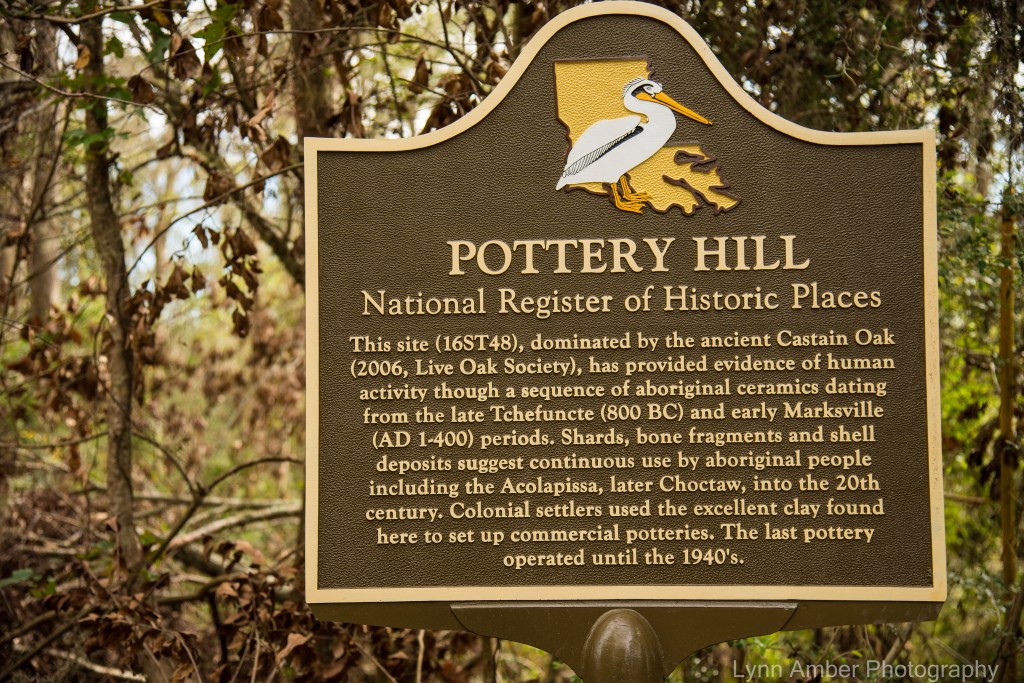
Pottery Hill is on the national register of historic places for its importance as an archeological site that gives insight into the native American activity that took place here many years ago.
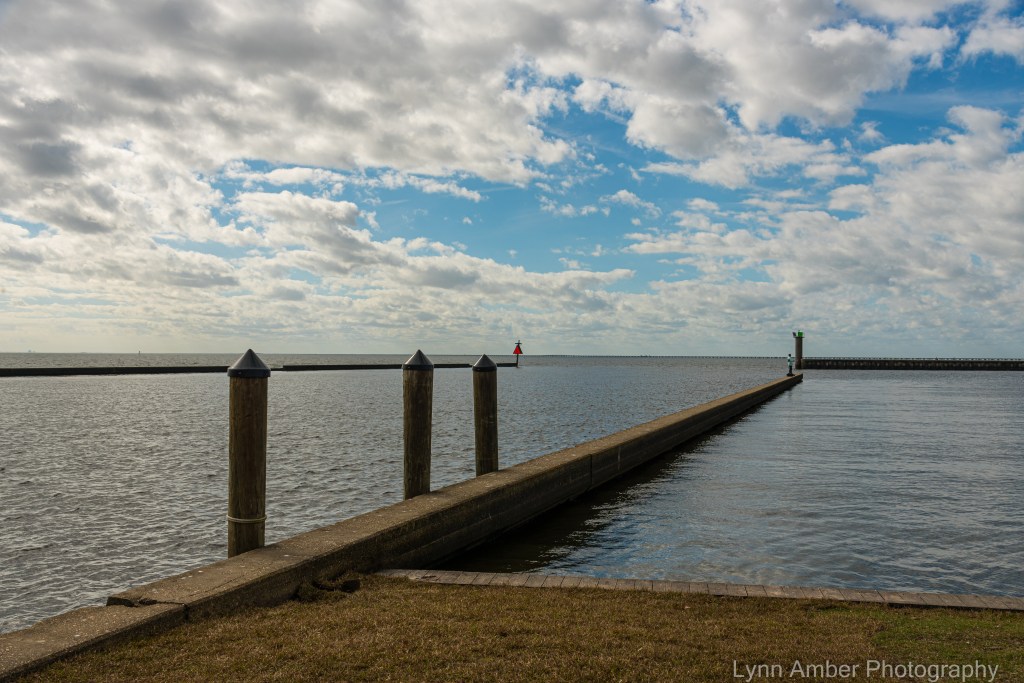
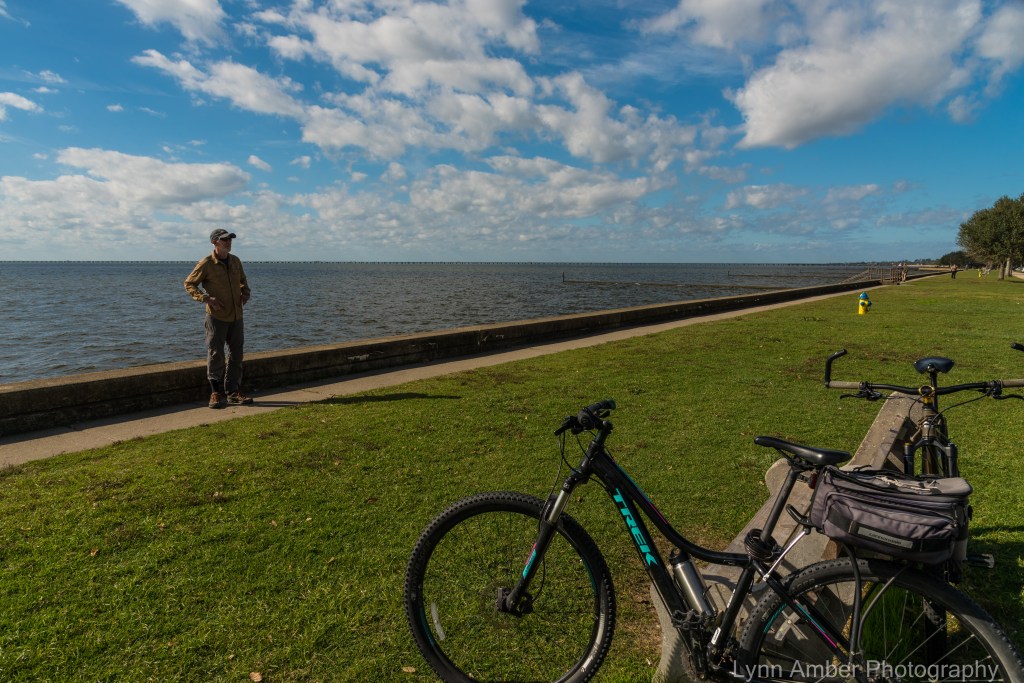
Continuing onto some of the side streets in town, we came to the beginning of the lakefront walking/biking trail and enjoyed riding the length of the special green space along the lake. It was a beautiful, warm day and the green way was busy with people out enjoying the weather.
I read that an historic old oak tree inhabits a patch of this green space and we kept our eyes out for this landmark. It was labeled and had the help of several props to keep it from falling over!


The park was a mixture of open green space, fountains and beautiful oak tree groves.


One particular oak tree was much more impressive than the 200-year-old tree. It was situated in among a large grove of trees and its massive size captured our attention. The photograph at the top of the blog depicts this cool tree! It had some side limbs that reached out and touched the ground. We spent a lot of time just marveling at the pure beauty of this tree!

At the end of the paved hiking/biking trail along the lake, we sat and rested and watched some entertaining pelicans as they fished for food – one of my favorite birds!
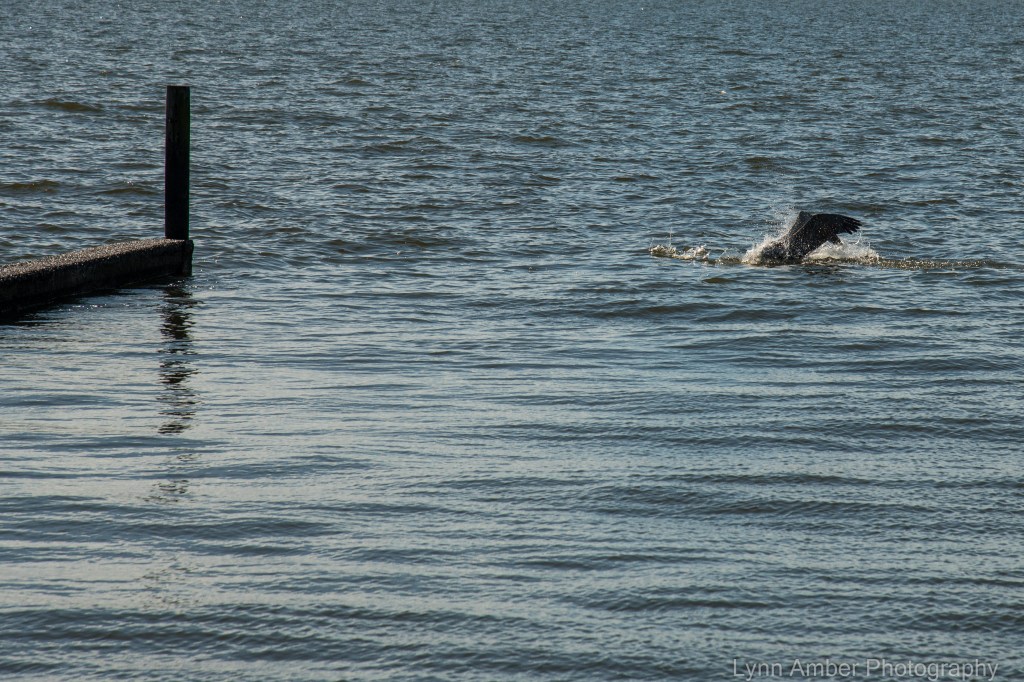
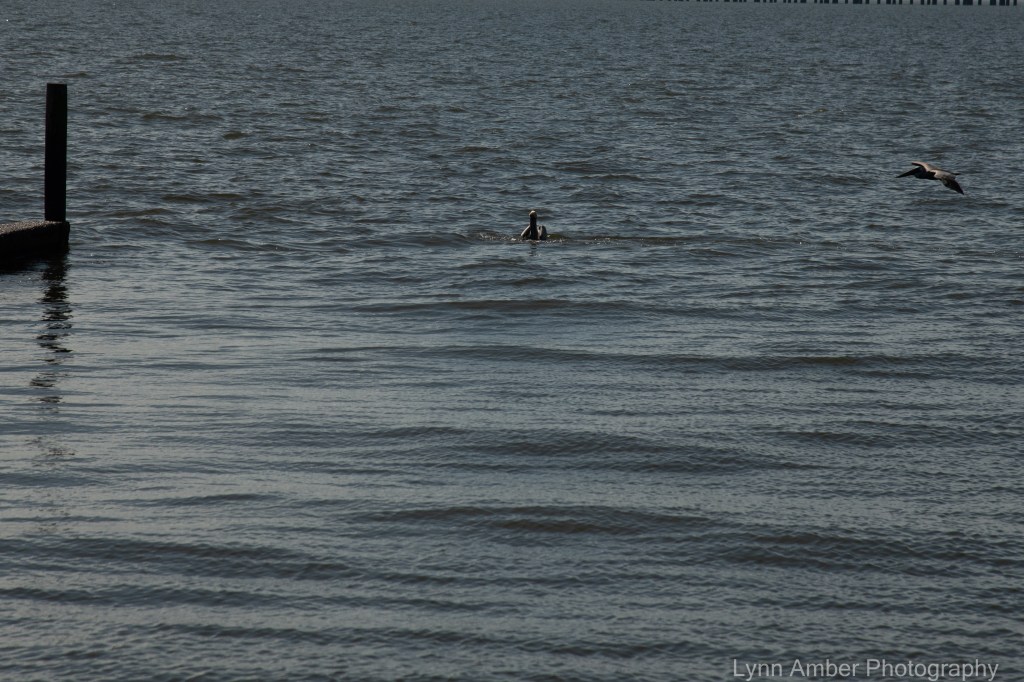
There was an inlet here bordered by a grove of trees and we noticed a bald eagle landing in one of the tree tops. I’m not surprised to see him as we noticed quite a few fish jumping while we sat on the lakeshore wall looking out over the water.


After enjoying the lakefront landscape, we rode on into the town proper in search of lunch. We found a nice brewery – Old Rail Brewing Company – conveniently situated right on the Tammany Trace bike path. We devoured some good pub food and a couple of craft beers then headed over to the historic Mandeville Train Station which also serves as the spot where the bike path trailhead is accessed from town. There were some nice historic exhibits here and apparently there is a weekly farmers market on the premises as well.
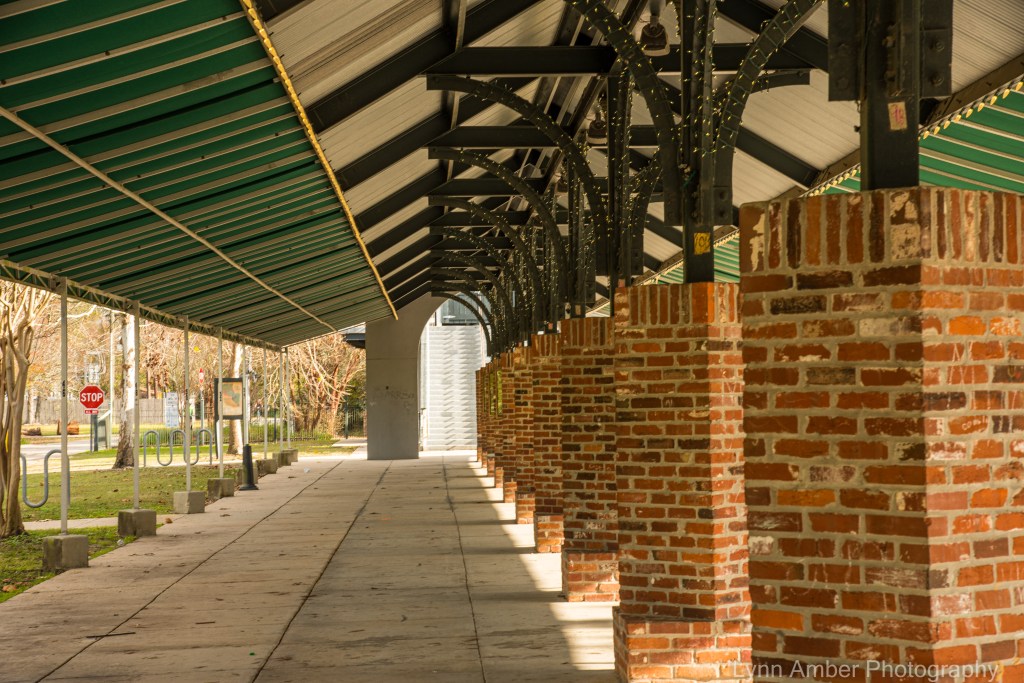

What a sweet little town!! We returned to Fontainebleau State Park in time to take a walk down to the waterfront for a peek at the sunset. Nice end to a relaxing day of exploration!

New Orleans in a Day

Our original itinerary for this current road trip did not include a visit to New Orleans. I was planning on spending a few days at a Florida national seashore and then heading west on I-10 driving straight through the city of New Orleans without stopping. I’m not really a “city person” but since our plans were turned upside down I found an available campsite for a few nights at Fontainebleau State Park and took my son Luke’s advice. He was adamant from the beginning that we could not just bypass New Orleans and Fontainebleau State Park is a short drive into the city.
Luke had been to the city a few months ago to attend a friend’s wedding and told us we had to experience the city since we would be so close. He helped us develop a plan for “New Orleans in a Day” and I’m so glad we listened to him! It ended up being a totally fun-filled day and we decided we may even come back when we can spend the night in the city!!
Our first and biggest dilemma was figuring out where to park. Our parking concerns were threefold: cost of all-day parking, possibility of theft, and maneuvering a large truck in a small city parking lot. We thought about trying Uber but the cost for a ride into the city from the state park was too expensive. Our son, Luke, had the perfect solution. When he visited the city, he discovered there is free parking at City Park. He also encouraged us to take in the New Orleans Botanical Garden located in City Park. One of the main agenda items I wanted to check off my list was a visit to Cafe du Monde for their famous beignets. He informed us there is a location right in City Park and it is much less crowded than the Cafe du Monde in the French Quarter!
City Park is a 1,300 oasis of green right in the middle of the city. I was surprised to learn it is 50% bigger than Central Park in New York. According to the website, “The Park is home to the New Orleans Botanical Garden, Couturie Forest and Arboretum, the New Orleans Museum of Art, the Louisiana Children’s Museum, and the largest grove of mature live oaks in the world, some of which are nearly 800 years old.” Definitely worth a stop to check out this massive cultural and natural resources hotspot!
Our ride into the city over the 24-mile bridge that spans Lake Pontchartrain was uneventful and the parking at City Park was easy and safe. We actually parked right up next to the police station in the park! Who’s going to break into cars right under the surveillance of the city police, right?? Since we left the campground early and before breakfast, the first order of business was to hit up Cafe du Monde which we could see from our parking spot. It’s a cool building and there was no line when we arrived. We grabbed two orders of Cafe au Lait and Beignets and found a sunny spot near a rose garden to enjoy the puffed pastries and coffee laced with chicory and milk. Words cannot adequately describe the pure joy that is gained from feasting on these delectable treats!! 🙂

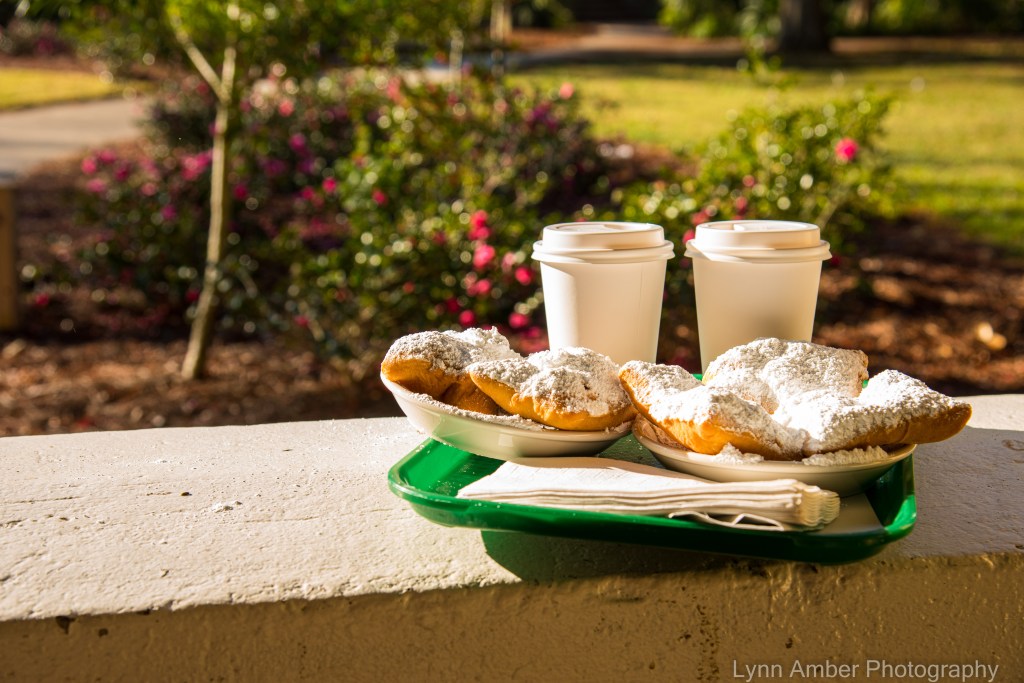
After eating, we embarked on the short walk over to the New Orleans Botanical Garden. We were a tad early for their opening time so we hung out at the fountain at the top of the Goldring/Woldenberg Great Lawn. Nice little formal design and flower garden!

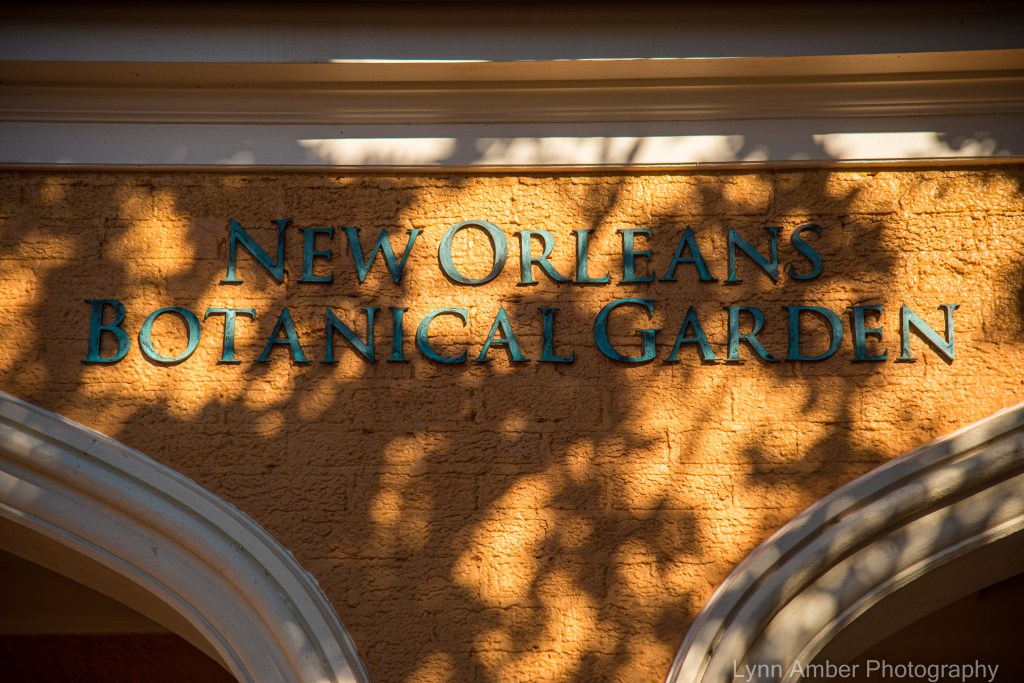
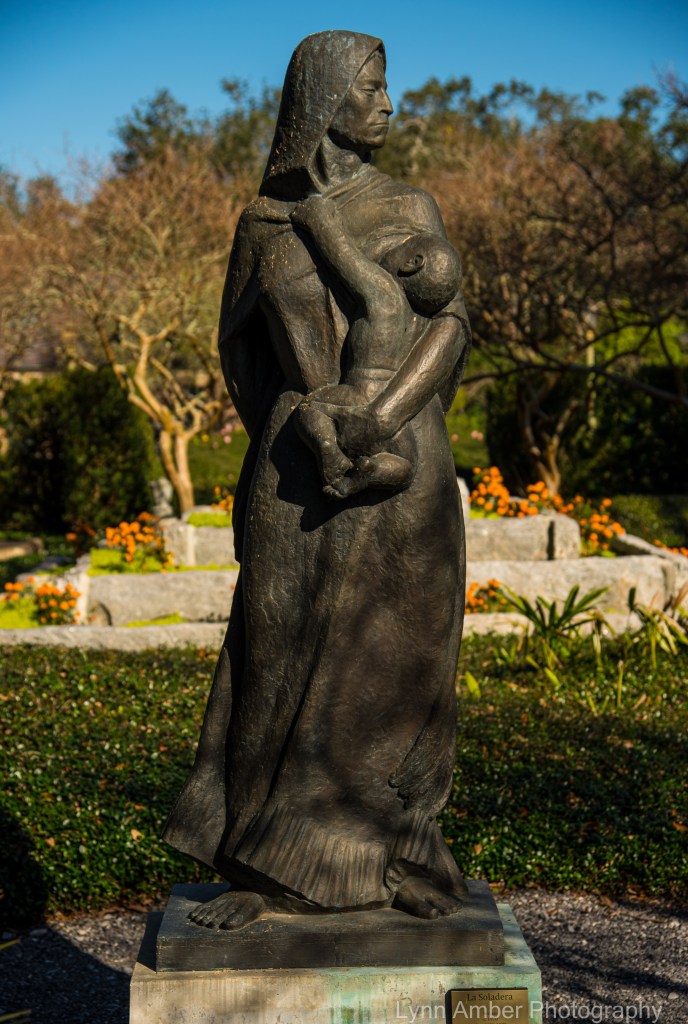
It’s not really the season when things are in bloom, but it was enjoyable walking around the grounds. The sculpture garden honoring Enrique Alferez was definitely a highlight. It was interesting to read about this Mexican sculptor who made New Orleans his home. He created sculptures for the botanical garden and the city park from the 1930’s to 1990’s working in bronze, cast stone and metal. I love the quote by Alferez that is written on one of the display panels. Reflecting on New Orleans, he says “I love New Orleans. The place is a good place. But I have had a hell of a lot of difficulties because of ignorance. It’s not New Orleans, though. Ignorance with power is everywhere.” Such a true statement. As you enter the sculpture garden, the following piece of art welcomes visitors to the exhibit.
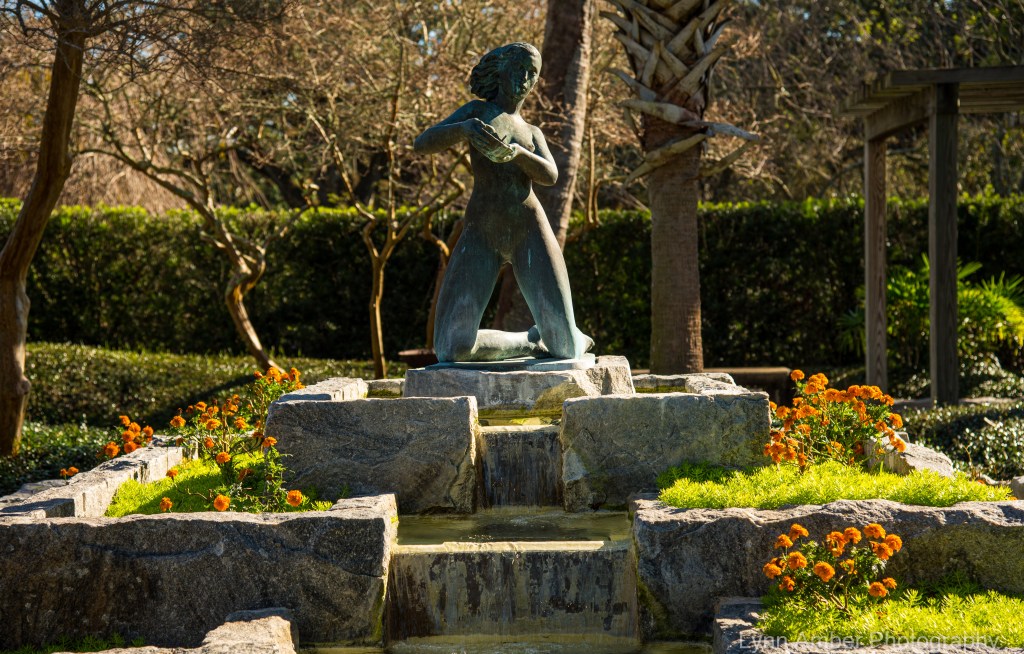
I was particularly taken with the following two sculptures.

When we entered the Conservatory, we started talking with a gentleman who was volunteering at the garden – doing odd jobs like weeding, deadheading, etc. We asked him if he had ever been to Longwood Gardens (since that is where I grew up). I measure the quality of all public gardens against my beloved Longwood! He said, in fact, that he had just returned from a visit there to see the annual Holiday display! I went on to relay my experience growing up on the grounds of Longwood and, to my surprise, he indicated that he had been a horticulture student there 55 years ago and lived in quarters behind the DuPont house. Turns out we were actually there at the same time! Small world! He returned to New Orleans after his internship at Longwood and started a successful nursery specializing in water plants, retiring just a year ago.
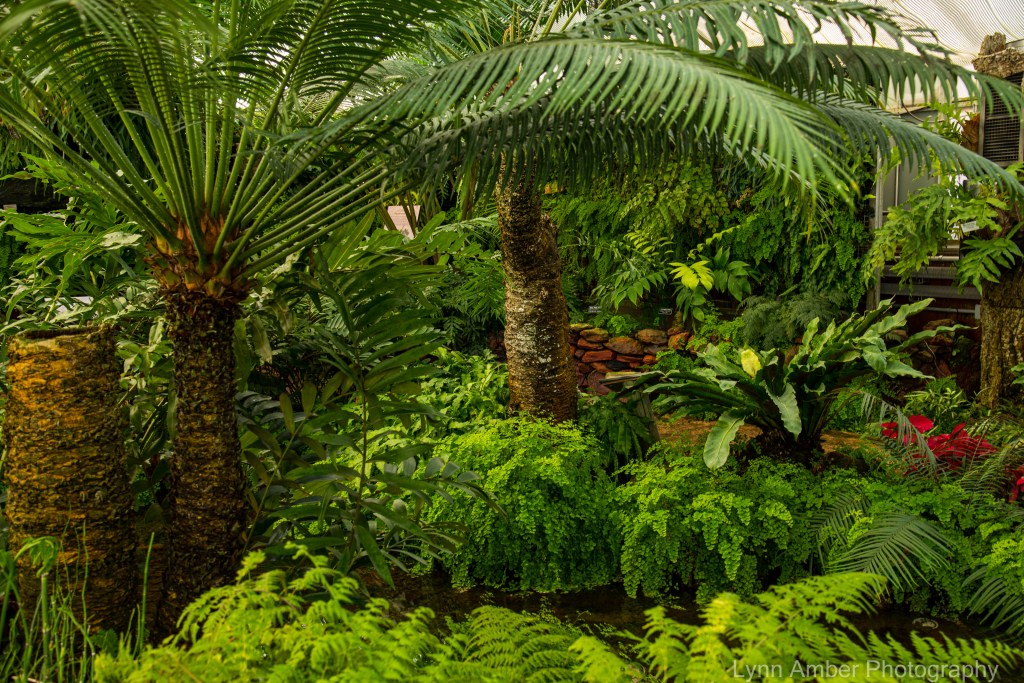
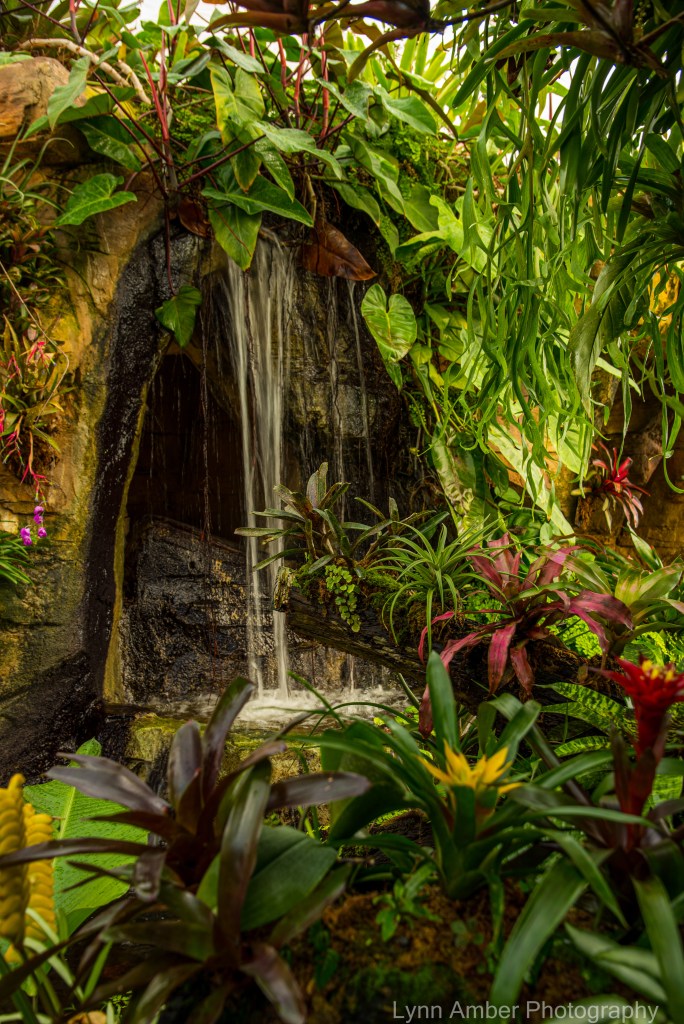
After walking through the sculpture garden, we followed the recommended route through the garden to the Pavilion of the Two Sisters – a special events venue for the city. What a place to throw a party!! 🙂
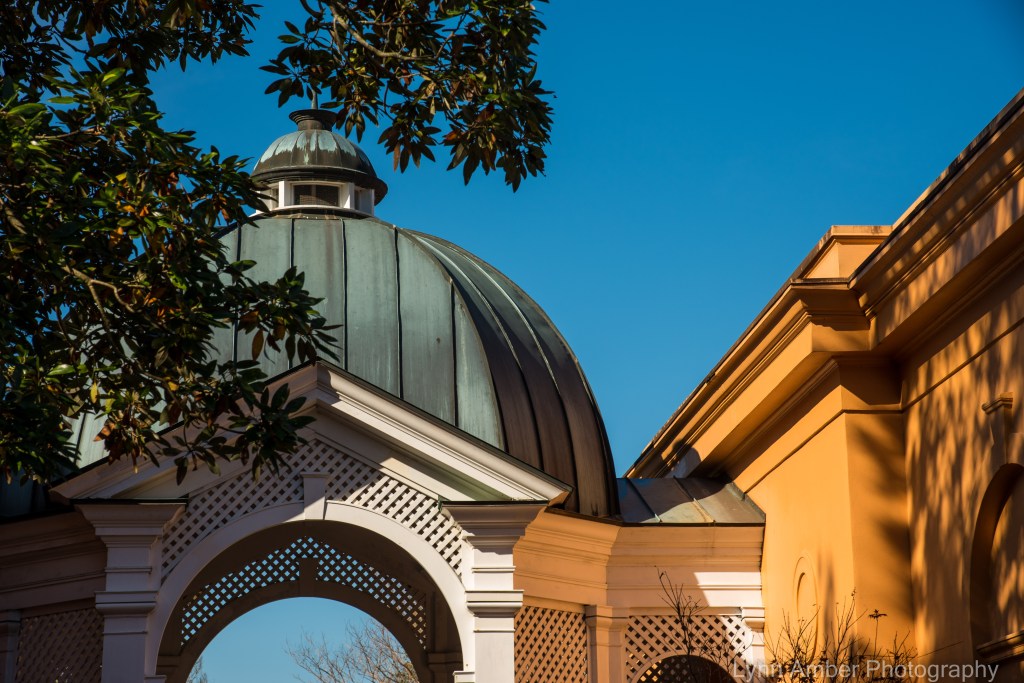

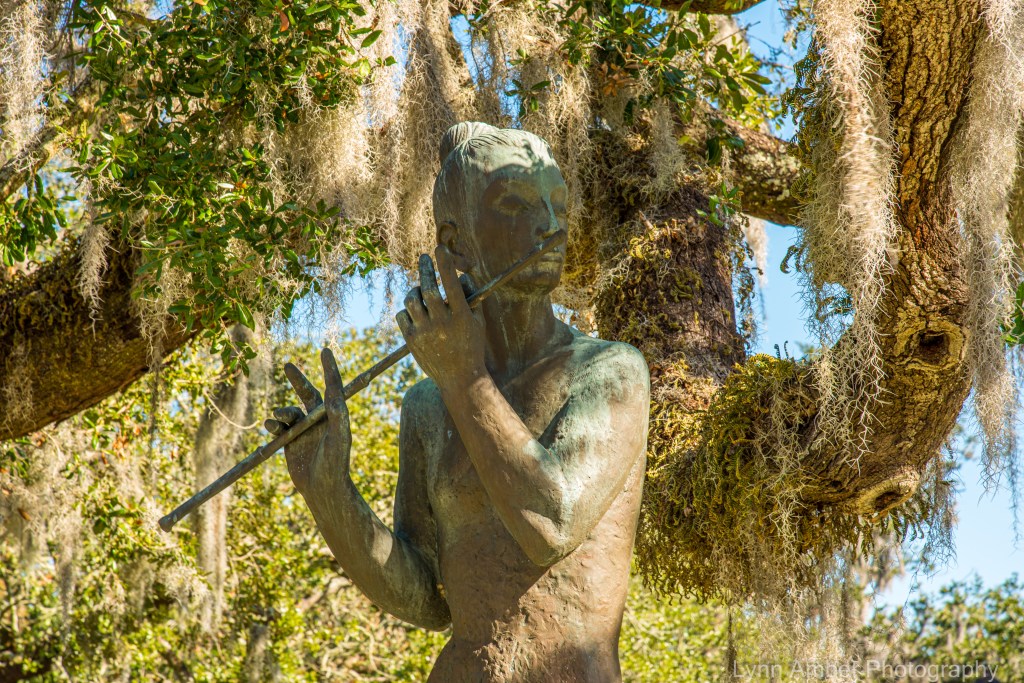
Another sculpture by Enrique Alferez in located in front of the pavilion.
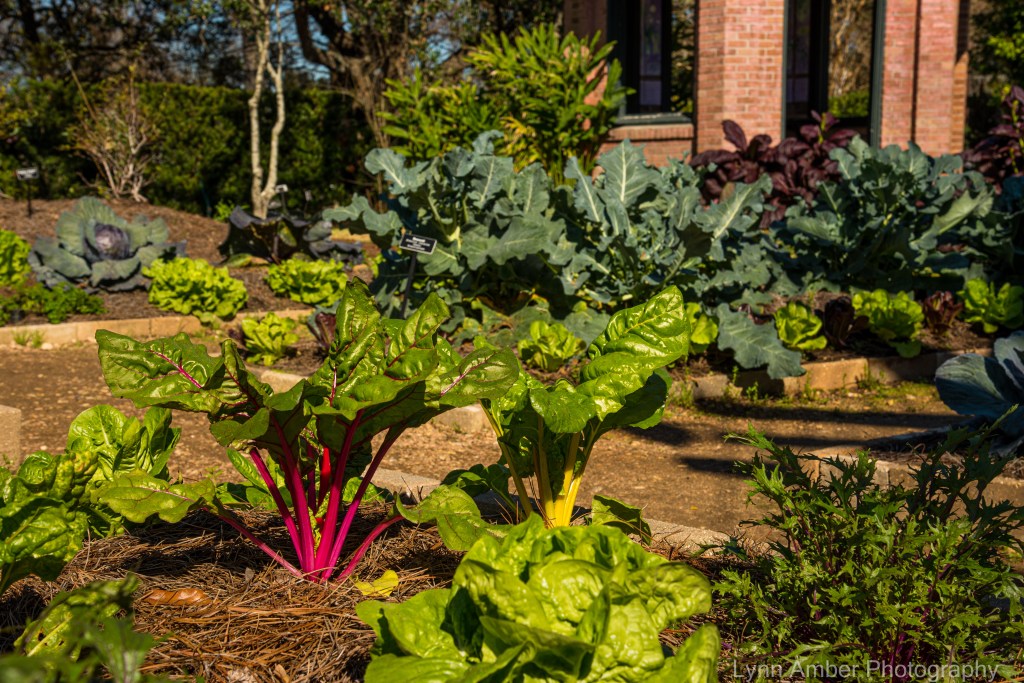
Our final stop in the garden was the vegetable display garden. Now this is my idea of a cool vegetable garden – both functional and aesthetic!!

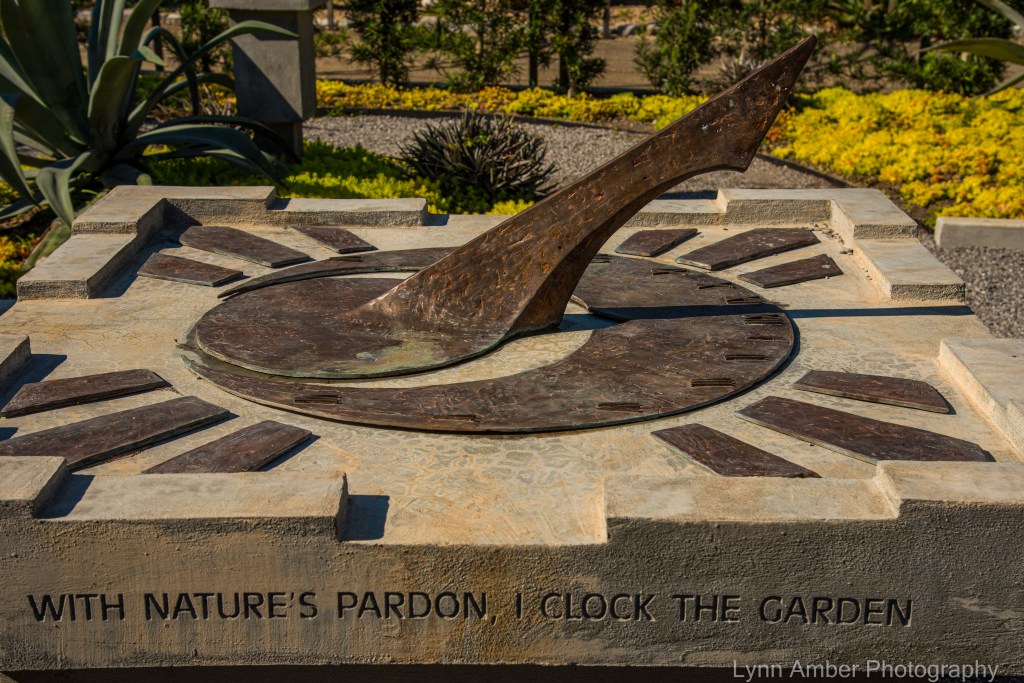
Our second dilemma was how to get from City Park to the French Quarter of New Orleans. My other goal was simply to see the French Quarter and find a good restaurant for lunch. Again, we considered Uber. But, in looking at public transportation options, I found there is a street car line that runs between City Park and the French Quarter – the Canal Street line. And, it’s only $1.00 per person to ride! It was fun riding the historic street car and we got to see some of the city along the way!
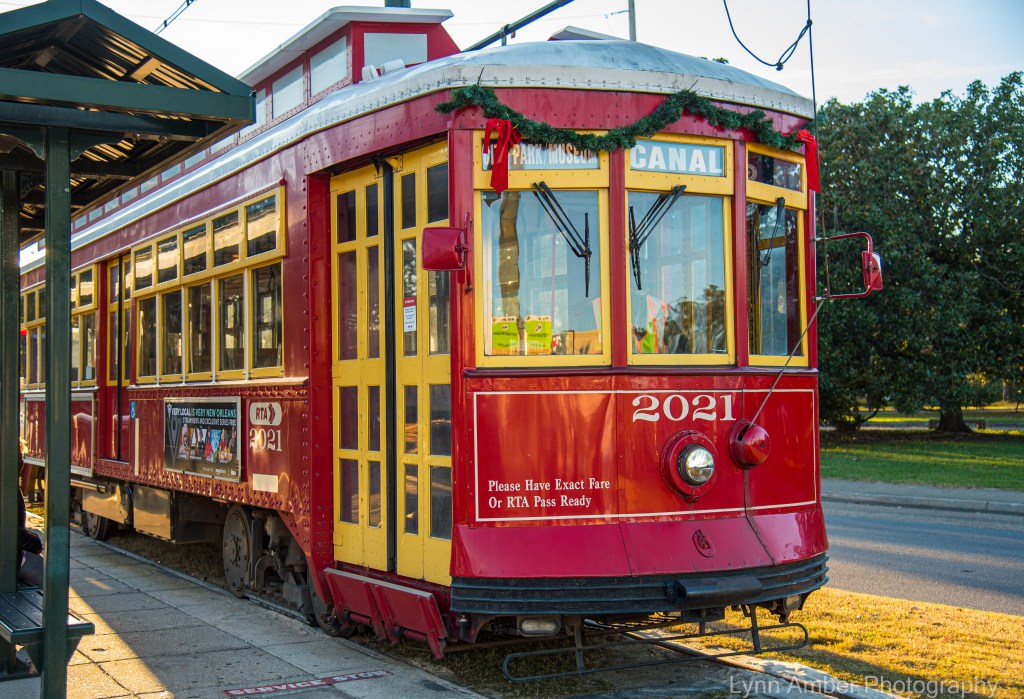
Once reaching the French Quarter, we disembarked and worked our way over to Jackson Square. I thought this seemed like a good spot to start our walking tour. It was fun to observe the street vendors and musicians along the streets.

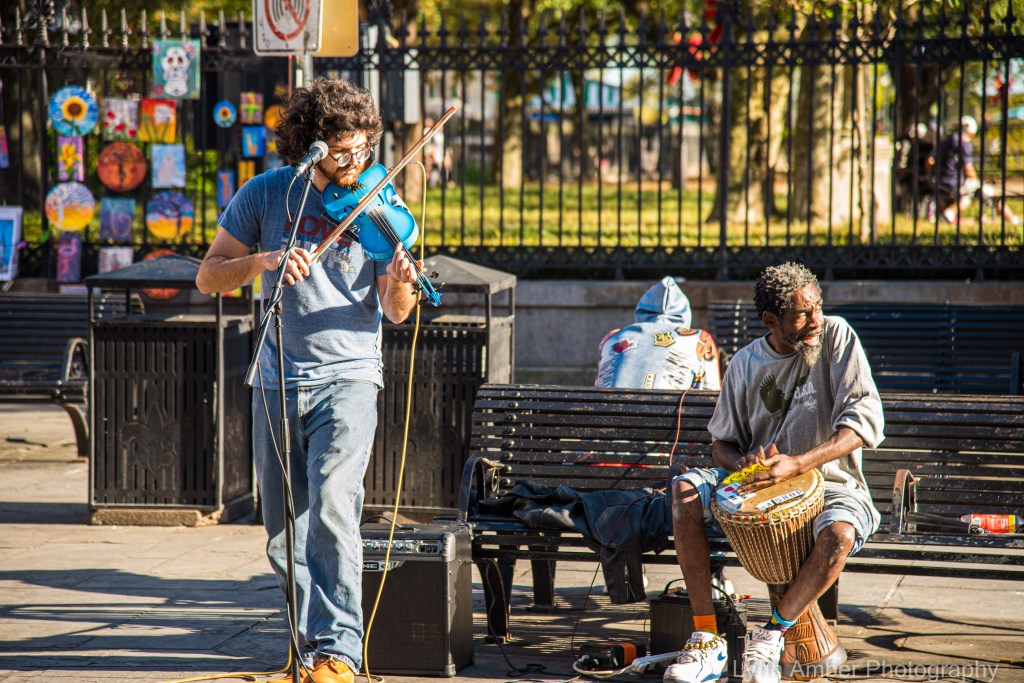
We were starving by the time we got to the French Quarter so our first priority was to find a restaurant for lunch. This lunch was somewhat special as it was intended to be our celebration of our 40th wedding anniversary. Again, our son Luke had suggested a cafe he had seen while exploring the French Quarter. He had not eaten there but thought it looked like a cool place with a cozy courtyard for outdoor dining. We decided to immediately navigate through the streets towards Cafe Amelie and enjoy the sights along the way. Located on Royal Street, we arrived to find some more musicians entertaining the crowd waiting for a table! I enjoyed a spectacular meal starting off with the Beet, Pear and Goat Cheese Salad followed by a plate of Shrimp and Grits. My husband ordered a bowl of the Gumbo Soup and finished with the Collard’s and Eggs dish! We toasted our anniversary with a phenomenal glass of red wine. Perfect!!

After our relaxing meal, we wandered through some of the residential area of the French Quarter on our way to see the Louis Armstrong Park. And, of course, we had to at least take a peek at Bourbon Street!
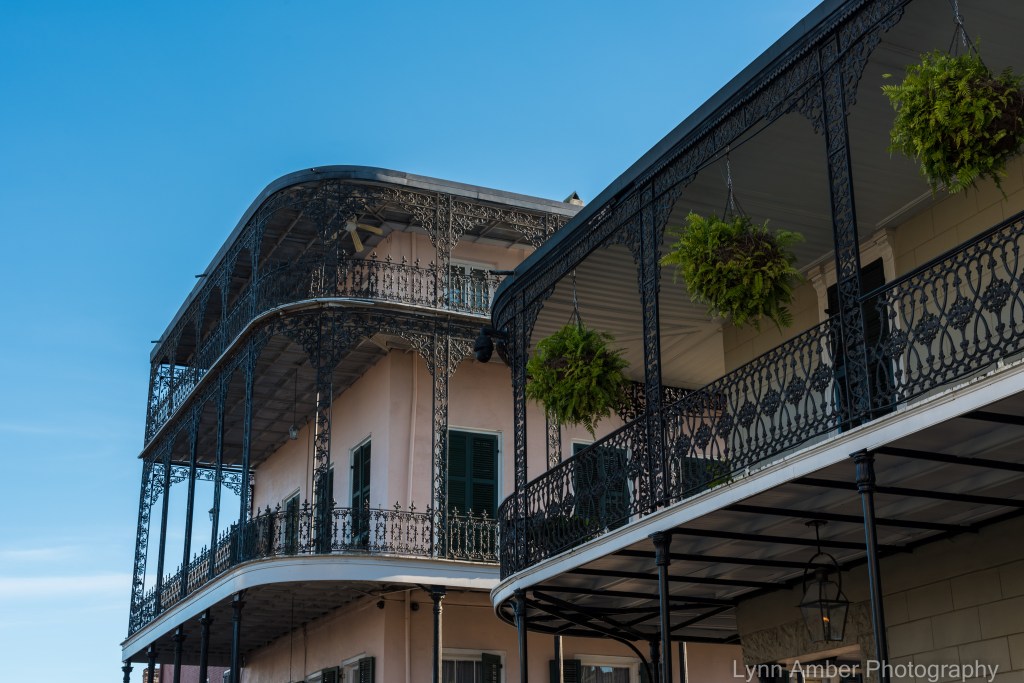
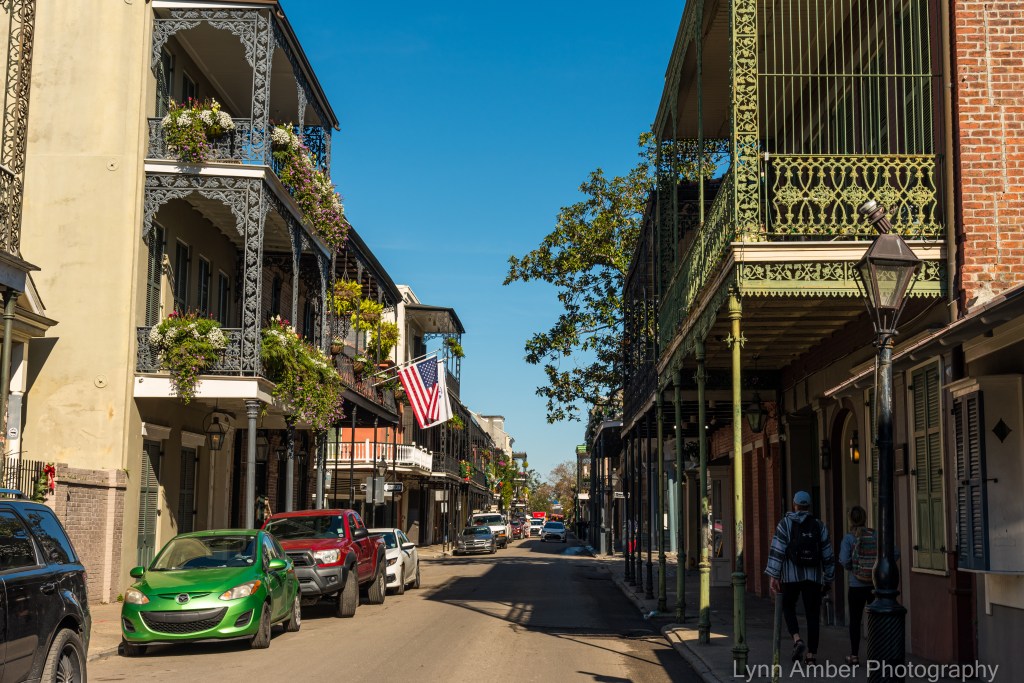
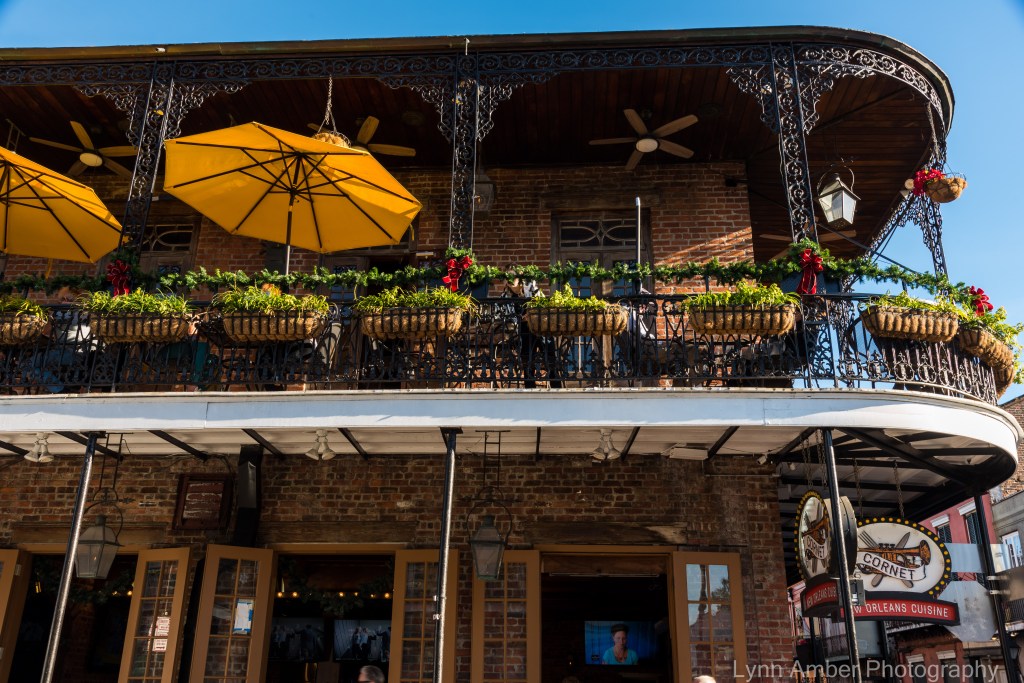
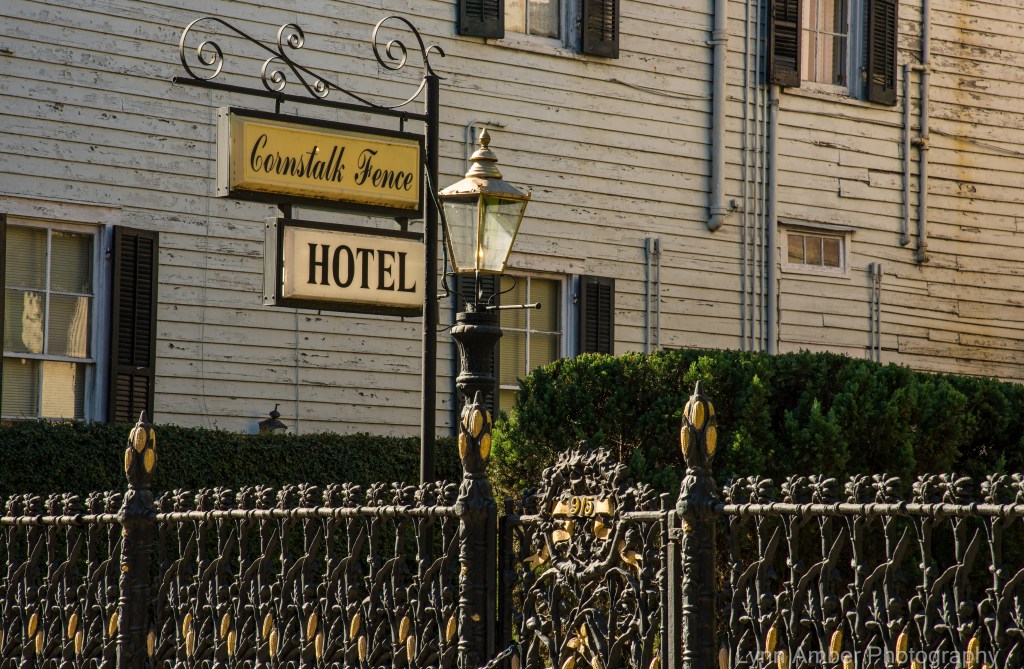
We walked through part of the Louis Armstrong Park on our way back to catch the street car back to City Park and our vehicle.
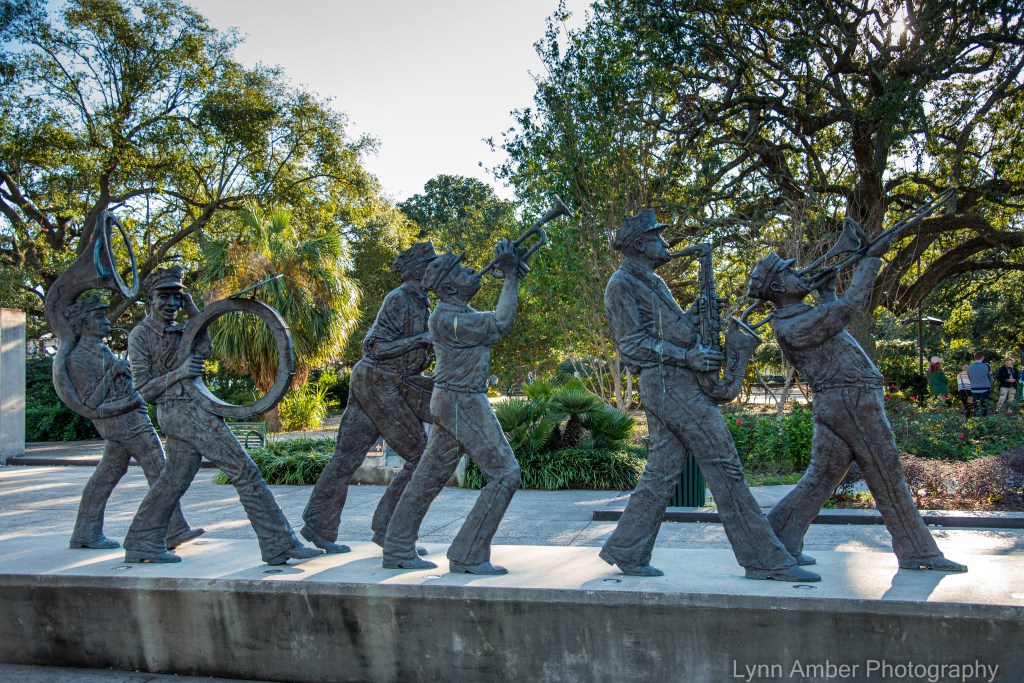
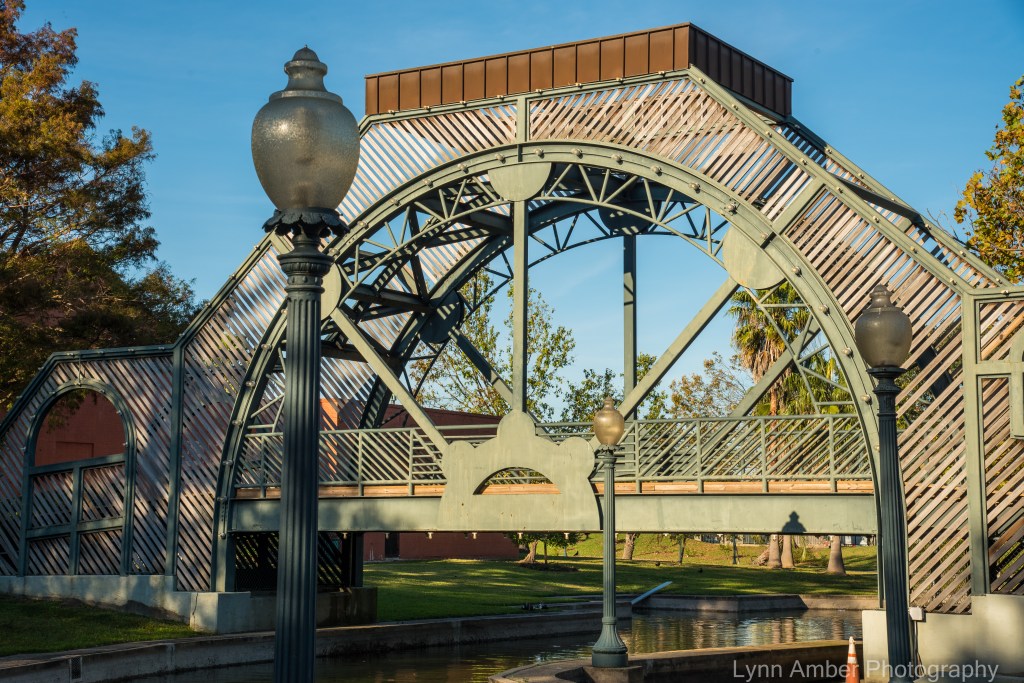

It was an absolutely great experience visiting New Orleans! We felt proud that us country folk were able to navigate our way the big city! 🙂

Please forgive any grammatical errors! I’m in a local library in West Texas and it’s getting busy with school children – time to go! I’ll edit later!!
My posts may be sporadic as well travel through some remote areas over the next couple of weeks.
Tammany Trace
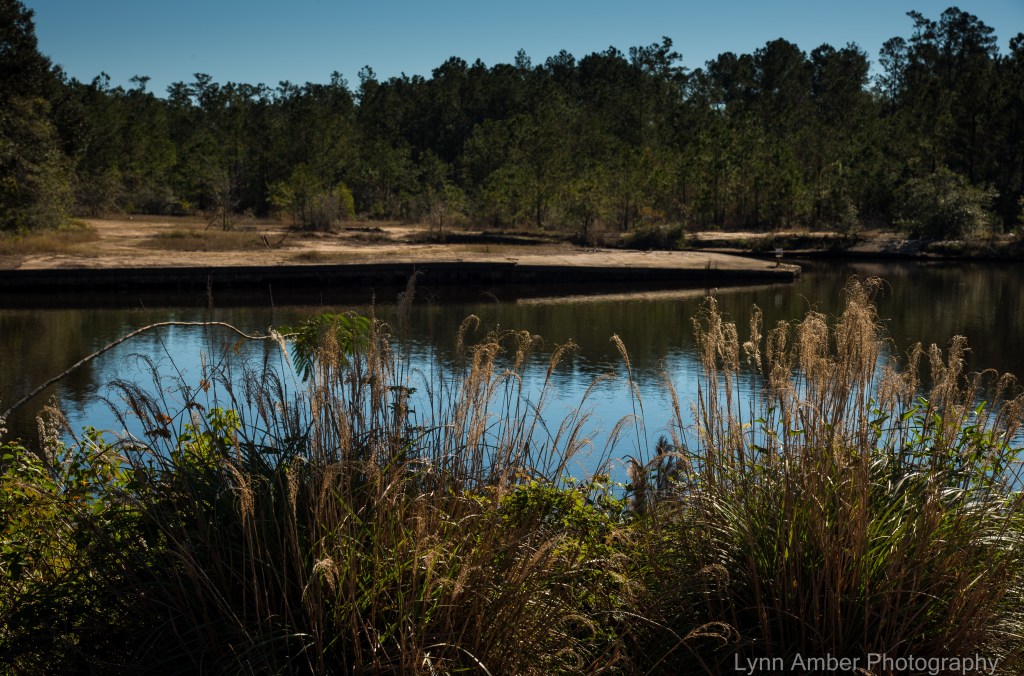
After driving for five straight days from our starting point in Vermont, we landed at Fontainebleau State Park in Mandeville, Louisiana on December 21st. It was such a relief to be stationary for a few days! What attracted me to this state park was, first of all, it’s proximity to New Orleans. We have never visited the Crescent City and decided it was about time! The other bonus is a rail trail that runs through the park and continues in both directions for a total of about 30 miles. Our first full day in the park, we opted to ride our bikes on the Tammany Trace rail-to-trail system heading east.
The Tammany Trace follows the old rail corridor for the Illinois Central Railroad. The bike/hike trail is paved and extends from the town of Covington to the town of Slidell – passing through Abita Springs, Mandeville and Lacombe along the way. Our ride took us close to the terminus of the trail near Slidell and proved to be a 20-mile round trip affair! After 5 days of sitting in the truck, the exercise was welcome albeit tiresome! Our legs were screaming at us by the time we returned to our campsite!
It’s a pleasant, relatively flat ride through the low country along the coast of Lake Pontchartrain. We stopped for a snack at the bridge that spans the Bayou Lacombe and I took the opportunity to shoot some photographs.

Adjacent to the Bayou Lacombe Bridge is a very nicely maintained restroom and picnic shelter. The volunteers who patrol and maintain the Tammany Trace also have an office here. It was nice to see that the trace is monitored for both safety and for cleanliness.

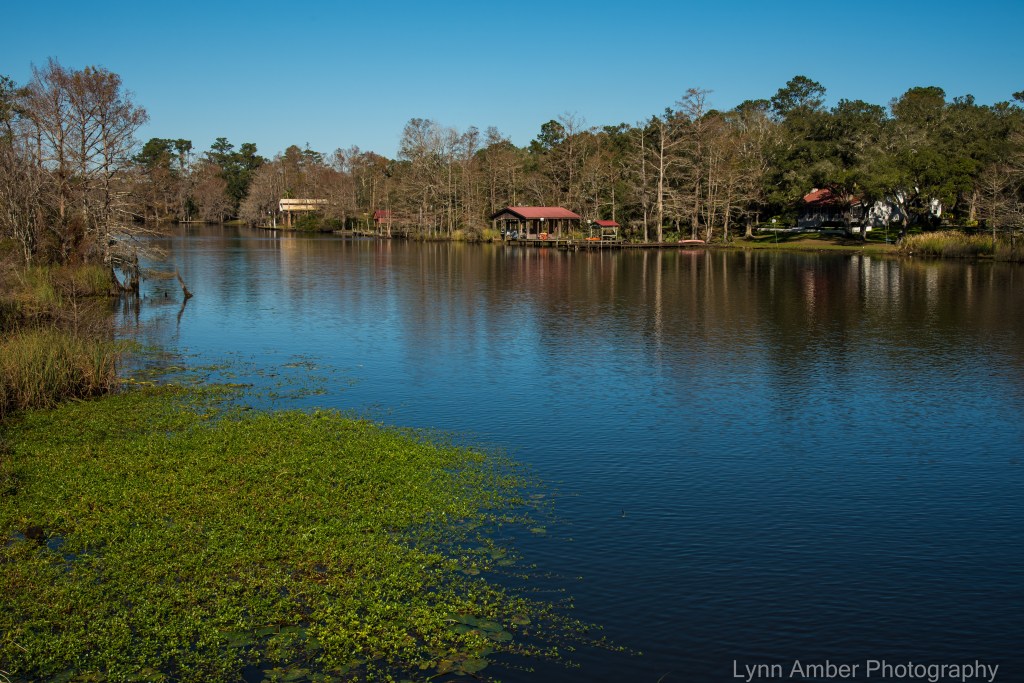

After returning from our bike ride, we spent the evening planning out our day in New Orleans! Stay tuned for the adventures of a couple of country folk in the big city! 🙂
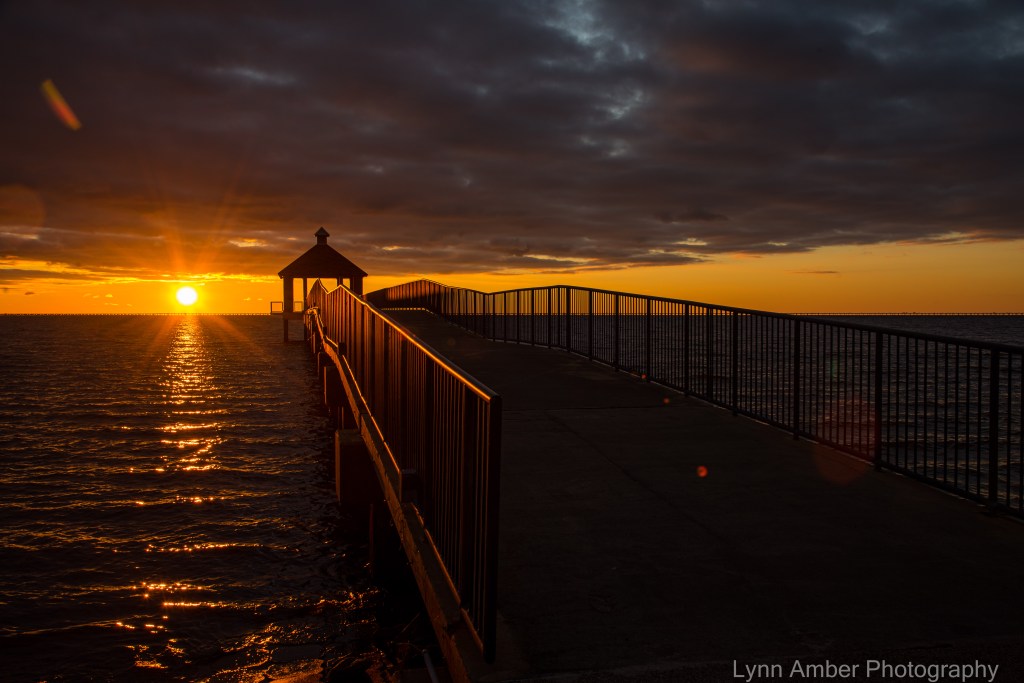
A Christmas Night Blessing
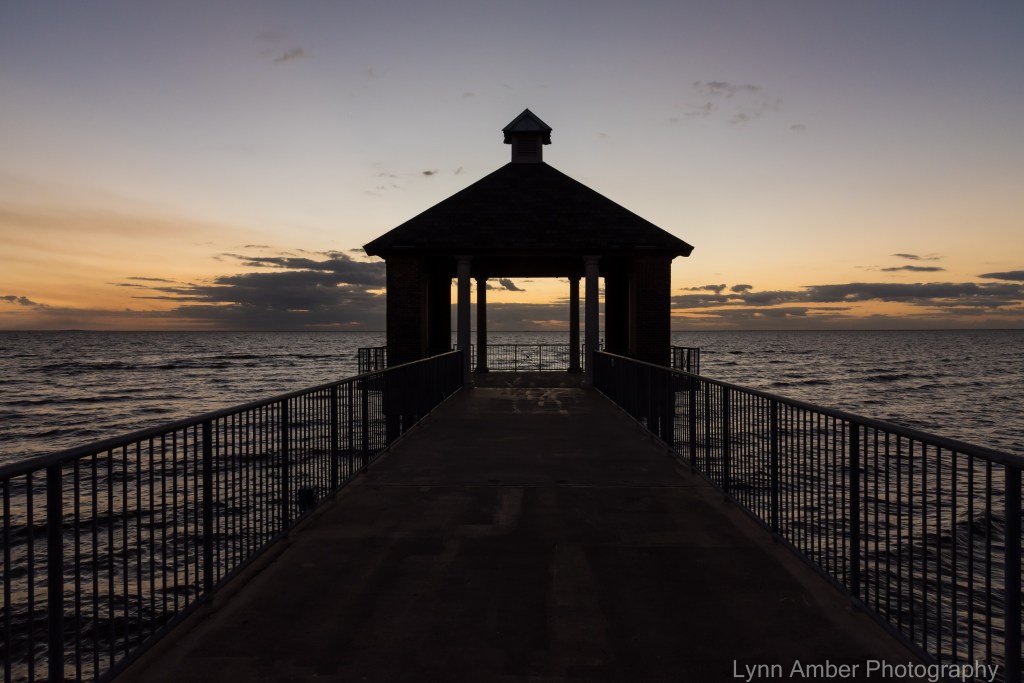
May your life be like a
wildflower,
growing freely in the
beauty
and joy of each day.
— Native American Proverb
This blessing is one of a collection of poems and sayings included in a book I purchased many years ago when my sons were small – A Grateful Heart: Daily Blessings for the Evening Meal from Buddha to the Beatles. There was a time when we would randomly choose a blessing from this book to say before our evening meal. It was my way of trying to bring some sense of spirituality into our lives even though we were not part of a specific religious community.
Peace be with you….
On the Road Again – 12/25/21
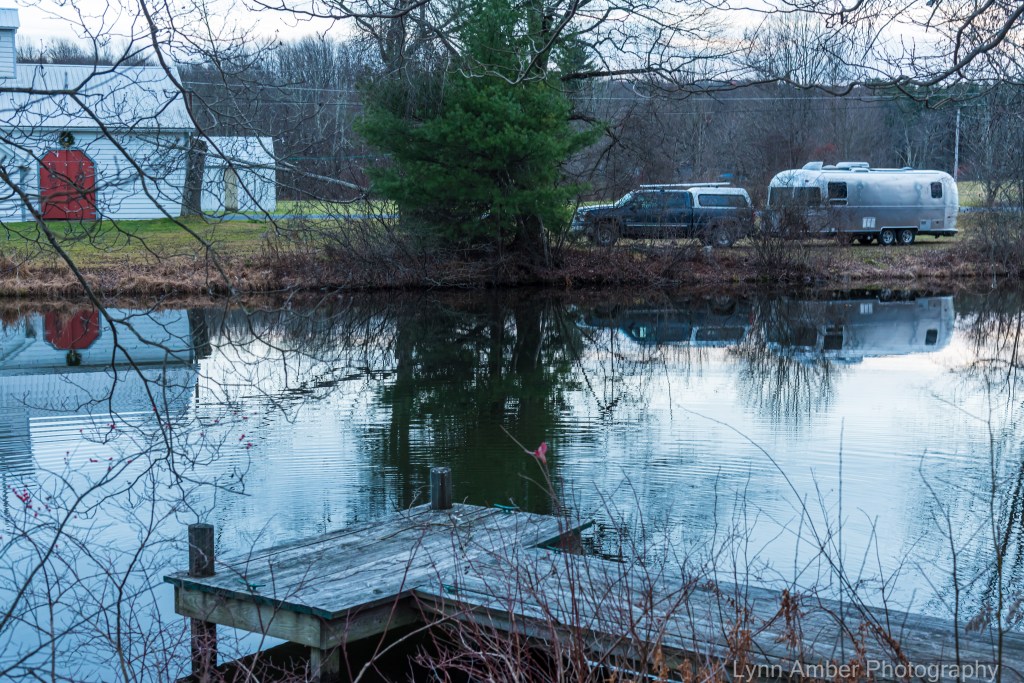
After a number of delays, we finally embarked on our ambitious Winter 21/22 road trip! We left on December 17th and headed SOUTH! As we discussed travel plans, one important priority was to keep the primary driver happy! To accomplish this, our strategy included several key elements.
We decided to limit our travel distance each day to approximately 300 miles. Averaging around 50 miles per hour driving time (with stops for fuel factored in), this calculates to around 6 hours on the road. The plan was to rise each morning at 6am and fortify ourselves with coffee and a decent breakfast and leave each site by 8am at the latest. With the shorter days this time of year, we could reach our nightly destinations mid-afternoon and have time to relax, stretch our legs and explore our surroundings a bit.
Our second key requirement is limiting the number of consecutive days devoted to just driving choose interesting destinations along the way to hang out for several days to a week and rest. Our initial stretch of driving will be the longest simply because its winter in the North Country and we wanted to get somewhere warm fast!
Our final major strategic goal involved our overnight stays during our “travel” days. We’ve been members of Harvest Host since 2016 and, while we’ve used this exceptional service on occasion, we have not really taken as much advantage as we could have. This trip I’ve made it a priority to elect to stay in as many Harvest Host sites as possible – and choose different types of venues.
Harvest Host is a membership program designed for Rvers looking for unique overnight stays while traveling from place to place across the country. Under new management since 2018, the site has grown to include over 2,965 locations nationwide. Initially, the venues were predominately wineries. Now, the locales have expanded to include businesses such as breweries, distilleries, farms, museums, restaurants and other roadside attractions. For an additional fee, members also have access to a number of golf courses throughout the country.
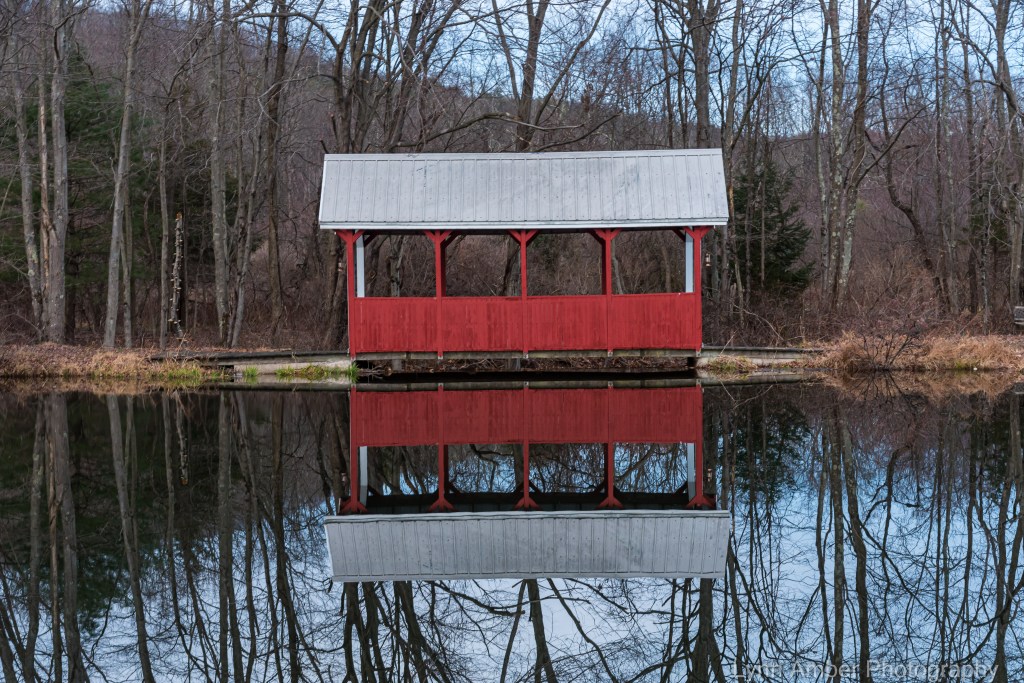
The rules are simple and there is a Code of Conduct outlined on the website that members are required to follow. In most cases, stays must be limited to one night only and requests to stay should be arranged at least 24 hours in advance. RV units must be self-contained – no tents or pop-up trailers permitted. Sites are usually free (unless substantial hook-ups are provided) and the Code of Conduct encourages visitors to support the host by making a purchase – bottle of wine, fresh produce – whatever the venue offers!
Members have access to a robust online search engine to find locations along their route. Each location includes descriptions of the site, maximum rig size and any amenities included with the site. Most locations require that Rvers boondock but some do offer electric hook-up and/or water. Included with the site descriptions are reviews from fellow Rvers to help when deciding if a particular venue will meet your needs. The Harvest Host site now offers online “request-a-stay” in most cases with approvals coming back from the hosts via email fairly quickly. In some cases, a host is not set up with the online request system in which case overnight stays are arranged via phone.
As we embarked on our trip this winter, we would be traveling five straight days (4 nights) until we stopped for an extended stay at a campground near New Orleans. Three of these four nights I found Harvest Host sites along our route that were spaced about 300 miles apart. And, in keeping with my goal, they represented 3 different types of venues!
Stone Lake Winery
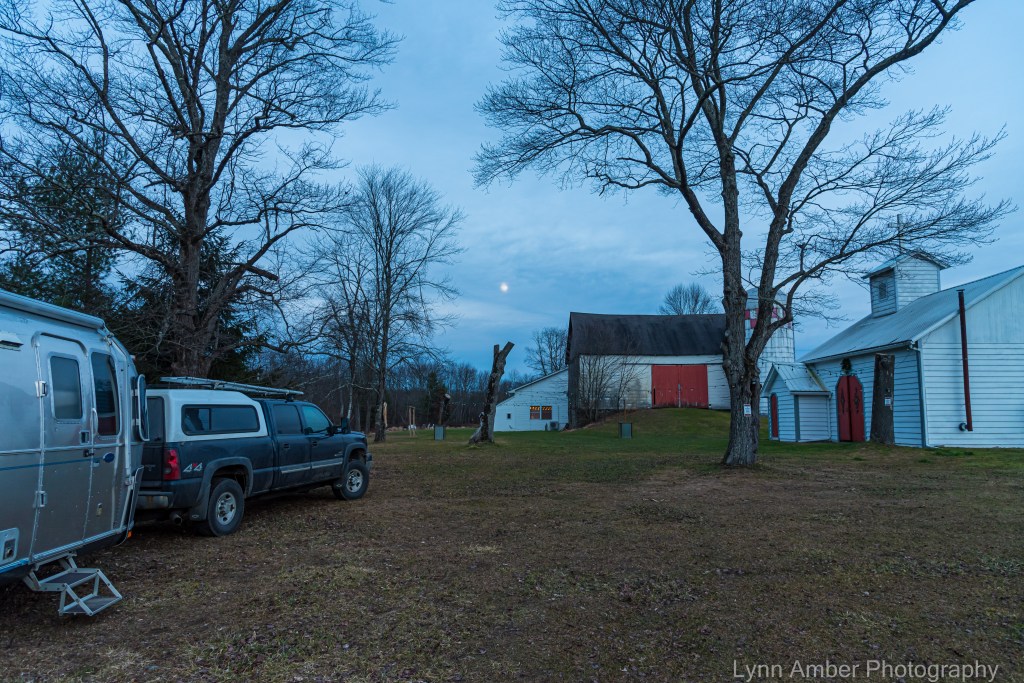
Our first destination fit within our 300-mile driving range. Stone Lake Winery sits outside of Saylorsburg, Pennsylvania and was a short drive off I-33 in northeastern PA. The host, Scott, met us upon our arrival and escorted us to our parking site in a large field adjacent to a cute white chapel. While not the site of the actual winery, this is their bed and breakfast location as well as a place where they hold private venues in the large barn on the property. The night we stayed Scott was setting up for a local business’ holiday party. It was a peaceful, country atmosphere and being native Pennsylvanians we were more than at home in this familiar-looking territory! Scott was an excellent host and we enjoyed a bottle of their pinot noir that evening!!
Shenandoah Heritage Market
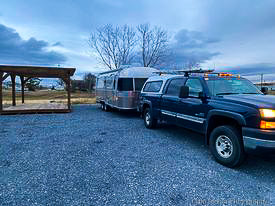
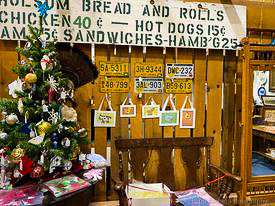
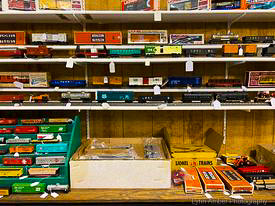
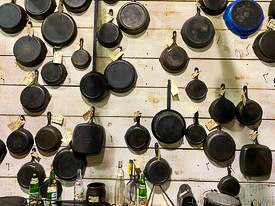
The Shenandoah Heritage Market was a very convenient stop just off Interstate 81 near Harrisonburg, Virginia. I would describe this venue as an indoor/outdoor farmers market complete with local shops offering food, crafts, antiques, toys and much more. In the warmer months, the outdoor portion features local produce and farm products. I apologize for the cell phone photographs as they did not upload nicely – but I did not take my camera out while at this stop. After backing up into the designated RV area, we ventured into the market to get something to eat and browse the shops. We had fun chatting with the model train club members who had a nice electric train exhibit set up as you enter the market. Our son was a Lionel train set fanatic in his elementary school years and had an extensive display set up in our basement. We are therefore always drawn to these shows.
We also talked with a very nice gentleman who was at the market shopping with his wife. He noticed our Airstream and came over to ask about our travels. He and his wife are contemplating RV travel when they retire and we were happy to share with him our thoughts. If you found my blog online and are reading this, I wish you both lots of luck in your research regarding the RV lifestyle! Maybe we’ll see you on the road someday!
Even though this venue was adjacent to I-81, we spent a peaceful and surprisingly quiet night in the parking lot.
McMillan Horse Farm
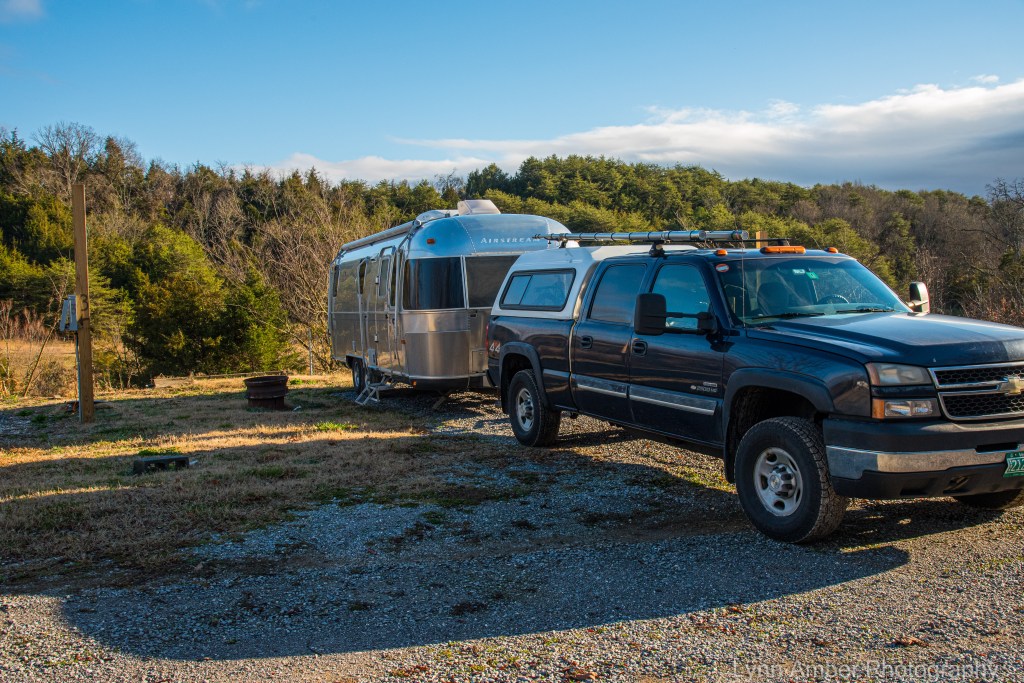
Our final Harvest Host spot on this leg of our journey was near Mosheim, Tennessee and had the added bonus of offering full-hookups for a fee. After three days on the road with minimal water in our fresh water tank, it was a welcome treat to take showers, enjoy shore power and dump our gray and black water tanks. This locale is definitely a “work-in-progress” but the host was friendly, it was a short drive off the interstate and there was ample space to stretch our legs and take a walk.
Below our campsite, there are a series of ponds where the owners raise catfish. We explored these ponds before settling down for the night. After dark, another RVer from Oregon came rolling in and set up beside us. They were traveling in a brand new Oliver travel trailer. They had just picked it up at the Oliver factory in western Tennessee. Their previous RV had been an Airstream that had not held up to the salt air of the Pacific coast where they live. I wish them luck with the Oliver – they are impressive trailers and have a good reputation for quality.


Our winter 21/22 trip is off to a good start – looking forward to discovering what’s around the next corner!!
Happy Holidays to everyone!
December Photos B/W 12.11.21

I’ve taken many photographs of this bluebird house over the years. It sits in a hedgerow by the edge of the dirt road a couple of miles out along my walking route. Something about the positioning and the way it reflects the afternoon light always catches my eye.
Lately, the weather in Vermont has given rise to a landscape that lends itself to black and white photography. Adequate amounts of white snow against a countryside filled with silhouettes of dark tree trunks and branches creates an opportunity for some nice contrasts.
As I sit here writing, the temperature has climbed to above 40 degrees and we’re experiencing a moderate rain that is drenching the 4 inches of snow that fell a couple of days ago. The warm air temperature and cool ground temperature are conspiring together to create a nice, thick fog that is descending over the hills. Lovely! 🙂
December Photos B/W 12.6.21

In my first and only pre-digital photography class back in the early 1980’s, we were instructed to shoot only with black and white film and developed our own negatives and prints. I set up my tiny bathroom as a darkroom where I could transfer the negatives from my camera to the developing tank sans light. My recollection is that I used a small stainless steel developing tank where the reel onto which I had wound the negative roll was deposited. All print developing was done at the college photography workshop. I loved the entire process! I still have my portfolio from that class long ago. My grade was an “A” – 99%. The professor wrote on my evaluation “excellent work, stay with it, you have a good eye!” Whenever I feel my photography is becoming stagnant – I pull out this portfolio and read that comment!
I continued to take photographs through the years but they mostly fell into the realm of family pictures – vacations, birthdays, holidays, etc. Never with a keen artistic focus – just a recording of our lives.
It was many years later that I once again took up the art of photography with a more critical, technical intent. I enjoy the challenge and am always quick to critique my work and eager to improve. The above photograph, for example, is horribly out of focus! 🙂 I was hiking at Marsh-Billings-Rockefeller National Historic Park yesterday and I was unprepared for the icy carriage roads. I did think to bring my Yaktraks but left them in the car when I noticed joggers in sneakers coming down the carriage road at a good clip. I figured the trails were just fine. Wrong! I still can’t figure out how they managed to run down that trail without slipping! I trudged on up the hill, too lazy to return to my car and get the grippers. So, for most of the hike, my focus was concentrated on staying upright rather taking photographs.
Partway up the Mountain Road leading to the Pogue, I detoured onto the Pogue Brook Trail because it was less travelled and therefore not as icy. A wise choice! As I was crossing the brook at one point, I noticed the icicles and ice forming along the edges of the brook and snapped a quick picture. It was in the forest and the light was not strong so I had to use a slow shutter speed and did not bother to check for focus. It’s okay though – I still like the photo!
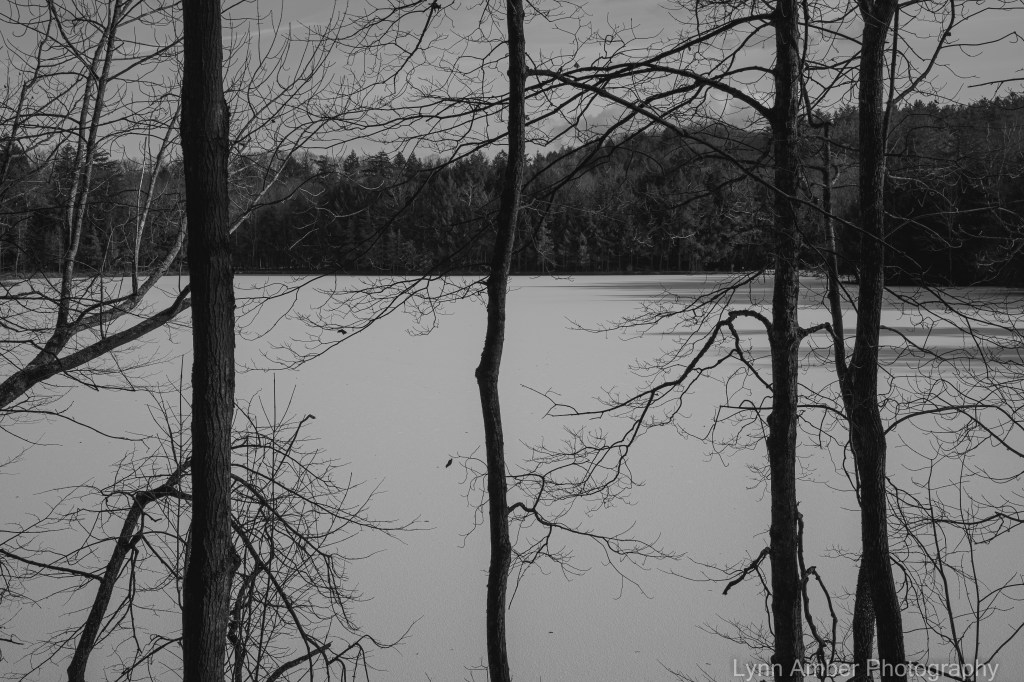
Once I reached the Pogue, I took the loop trail around the lake and, for the most part, it was clear. Heading back down the Mountain Road, I stayed to the edges of the carriage road walking just off trail where the snow was still crunchy and not packed down and glazed over with ice. Upon reaching the intersection where the Upper Mountain Road turns right, I headed in that direction once again hoping for a less slippery surface. Another wise decision!!
My motto for the week: When life throws you a curve ball, sometimes you just have to adjust your swing….it’s taking me a tad longer than usual to get the correct angle so I can hit that curve ball out of the park but I’m getting there. 🙂
I thought I would be enjoying the sunshine and warmish waters of the Gulf Coast right now, but with travel plans on hold, I’m trying to embrace the bleak, cold, snowy, icy, wet days of winter in Vermont. I think I need to find some alternative adjectives that describe my location in a more positive light! I’ll work on that!
For now, a walk in the rain, a hike on icy trails….and sometimes like today, an afternoon spent indoors quilting!
November Poetry Share 11.24.21

The Peace of Wild Things
When despair for the world grows in me
and I wake in the night at the least sound
in fear of what my life and my children’s lives may be,
I go and lie down where the wood drake
rests in his beauty on the water, and the great heron feeds.
I come into the peace of wild things
who do not tax their lives with forethought
of grief. I come into the presence of still water.
And I feel above me the day-blind stars
waiting with their light. For a time
I rest in the grace of the world, and am free.
~by Wendell Berry
I came across this poem the other day and it resonated with me deeply in these troubled times. I’m hoping to share more poetry – committing at least once a month to seek out a poem that has personal meaning and also embellishes my photography.
May your Thanksgiving holiday be filled with the presence of love, family, friends and peace.
November Edisto Beach Trip III

My last full day on Edisto Beach was a busy one indeed. I embarked on my now regular sunrise walk noticing the very subdued colors this morning. There was a thick cloud cover as I started out but eventually the sun broke through the clouds and created some awesome reflections on the water.
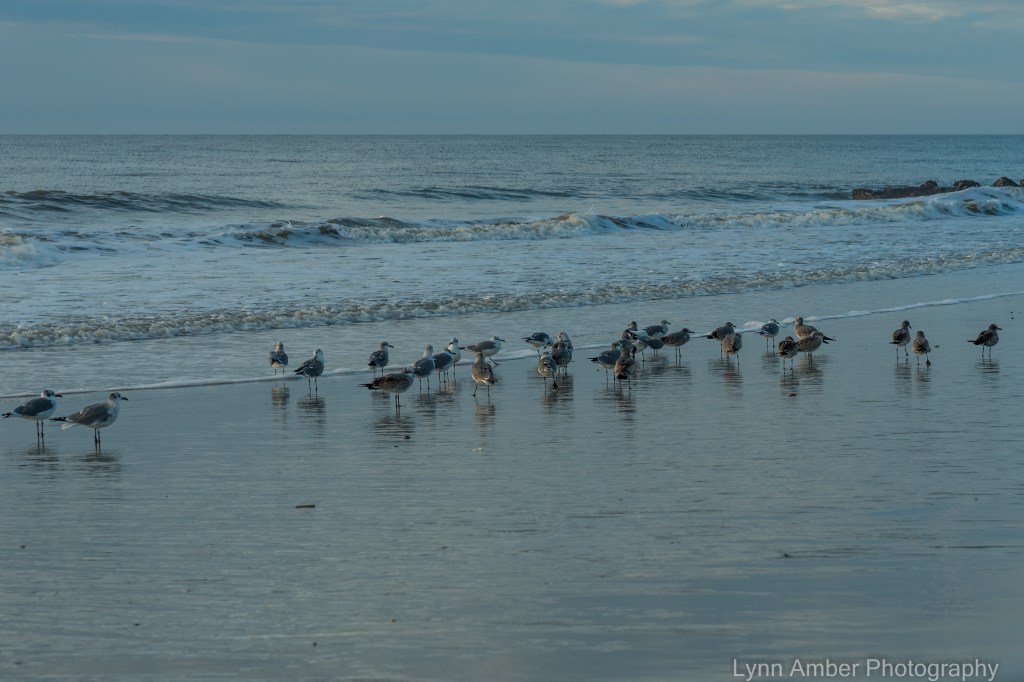

After my morning stroll along the shoreline, my sister, cousin, nephew and I rode over to a local eatery called the Sea Cow for breakfast. It’s a funky, little establishment that is extremely popular with locals and tourists alike serving up an excellent breakfast. I enjoyed a perfectly cooked two-egg cheese and spinach omelet embellished with fresh, homemade biscuits and the best southern-style grits I’ve ever tasted! Yum, yum!! 🙂
We returned to the beach house after breakfast to visit with my niece and her two young boys before she returned home for their afternoon naps. My plan for the afternoon was to explore the Edisto Beach State Park. No one else was interested in hiking through the park, so I got dropped off at the entrance to the park by my sister and cousin – who decided to do a little shopping and also taxi my nephew to a disc golf park.

I stopped in at the park ranger station before wandering off so I could get a map of the trails and some information. The two women in the office were so nice! One woman highlighted several places of interest and explained that all trails were open with the exception of a portion of the Scott Trail. In all, there are probably only 5-6 miles of trails and they are all level, hard-packed and easy on the feet. Good thing because I had arrived in sandals – not exactly good hiking shoes! After chatting with these park employees, I decided on a route and phoned my sister to let her know when and where they could pick me up later.
My hike started at the beginning of the Spanish Mount Trail. This trail is a one-way 1.7-mile hike out to the marsh and ends at an interesting archeological site. The trail winds through the maritime forest of South Carolina coast.
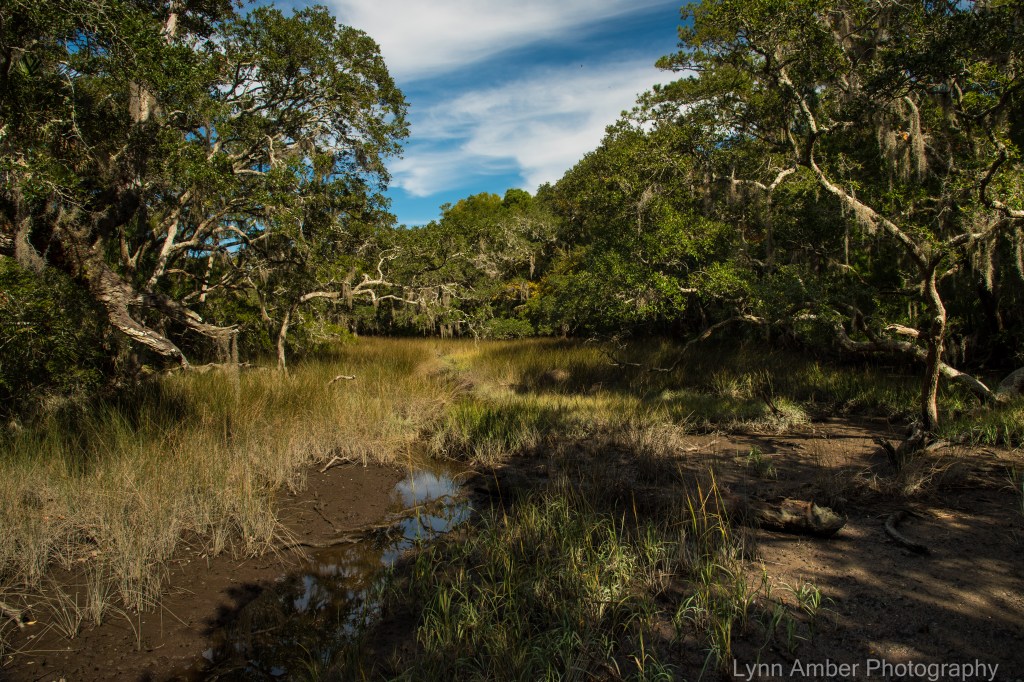
The maritime forest is a unique ecosystem that is extremely important to preserve and protect. This natural environment serves as a protective shield for the coastline and salt marches – helping to stabilize the shoreline, provide storm protection and conserve groundwater while supporting a diverse plant and animal population. The plants growing in the maritime forest are adapted to this harsh environment – tolerating the dry, sandy soils and salt spray. I love exploring ecosystems that are foreign to me having grown up in the northeast. There is so much beauty in nature! Plants common to this area include the majestic live oak, laurel oak, palmetto, loblolly and slash pine and red cedar.

The Spanish Mount Trail ends at an open water section of the salt marsh along a bank that holds a important Native American archeological site . At this location is an ancient shell midden (aka trash heap) created by the Edisto native Americans somewhere around 2,000 BC.
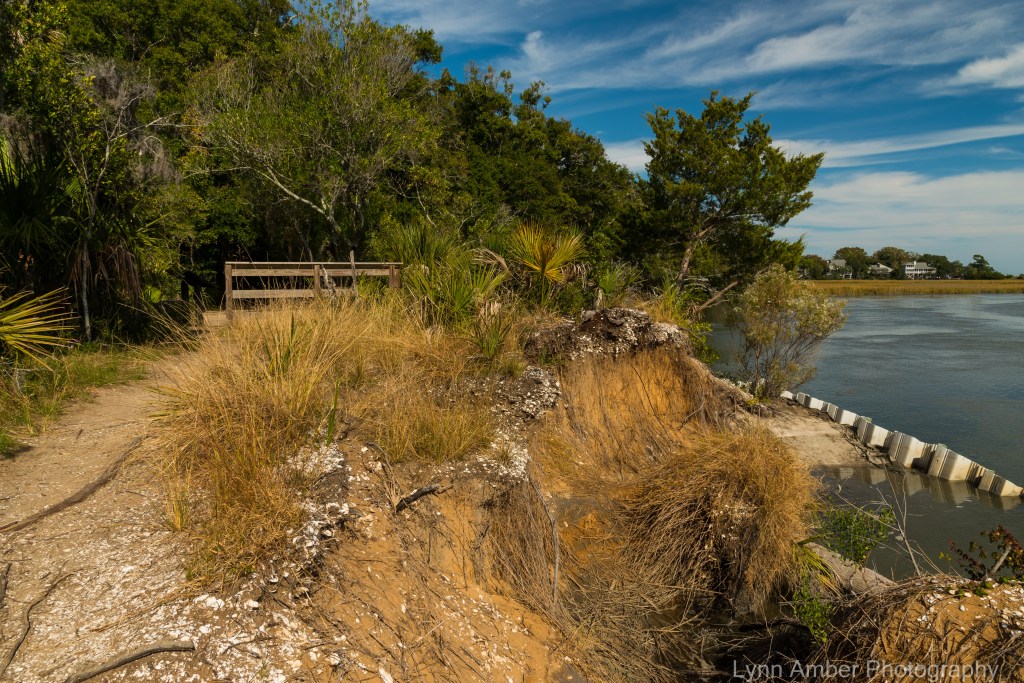


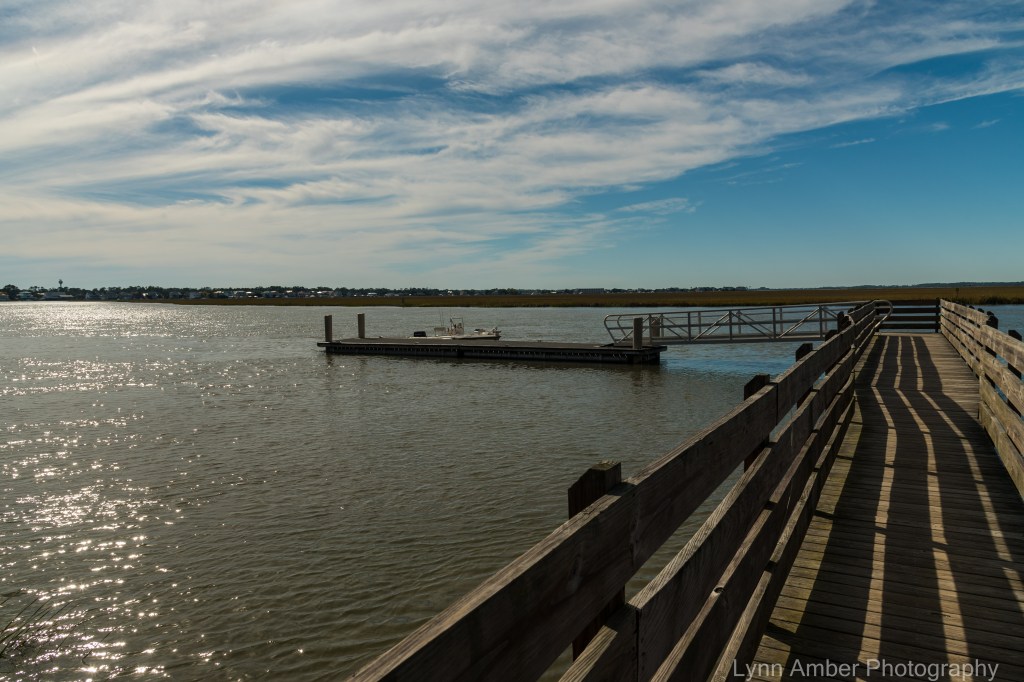
After wandering around the shell midden and conversing with a couple of fishermen who were in a small boat just off-shore there, I followed the .4-mile Big Bay Trail that leads from the terminus of the Spanish Mount Trail to the Environmental Learning Center. Before reaching the environmental center, the trail passes through the public boat launch area that provides access to the waters of the salt marsh. From the dock, there’s a great view over to Edisto Beach.
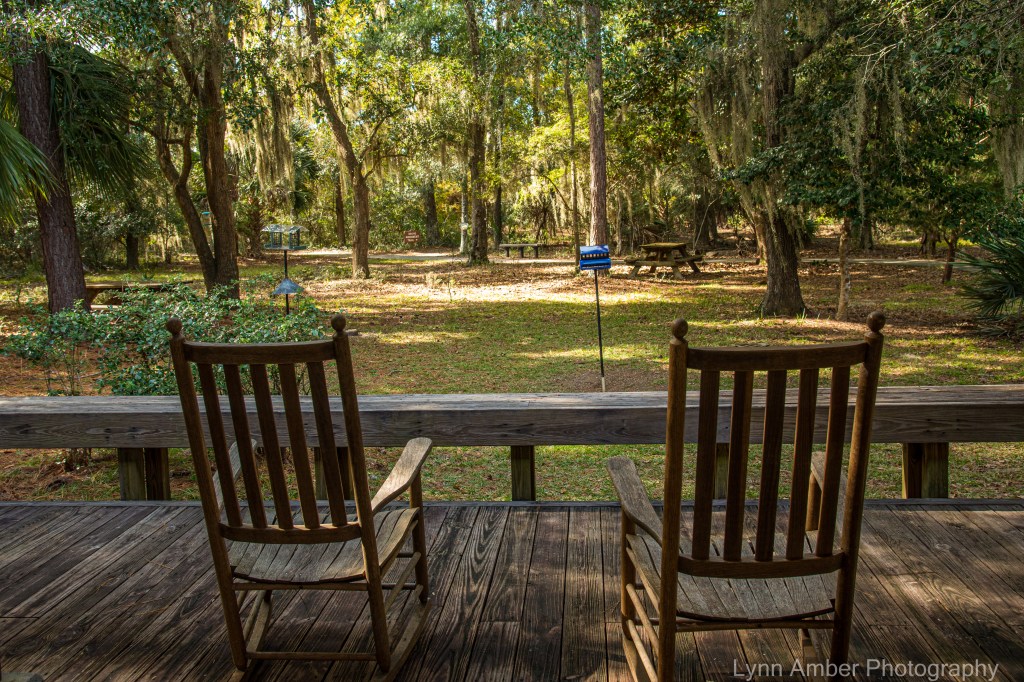
The Environmental Learning Center is located in a “green” building and serves as the educational and outreach center for the park. The center offers programs for all age groups with a focus on the unique aspects of the ACE Basin and the responsible management of coastal resources. An interpretive exhibit in the main building emphasizes the importance of the natural history of the area and the ACE Basin – which is the largest estuarine reserve on the East Coast. I learned that ACE stands for the Ashepoo, Combahee, and Edisto Rivers whose waters form the estuary that comprises over 350,000 acres. I found the exhibit on the loggerhead turtles that nest on the island particularly interesting!
The Bache Monument Trail is a short, easy .2-mile walk that leads from the learning center to the Bache Monument. Alexander Bache was a scientist and surveyor in the mid-1850’s who was instrumental in completing a mapping of the entire coastline during his tenure as superintendent of the US Coast Survey. He was the great-grandson of Benjamin Franklin and obviously inherited the “inventive” gene. Bache developed a tool known as the “Bar of Invariable Length” that was used for this survey that culminated in measuring the entire eastern US coastline. Two of the baseline markers for this survey are on Edisto Island.
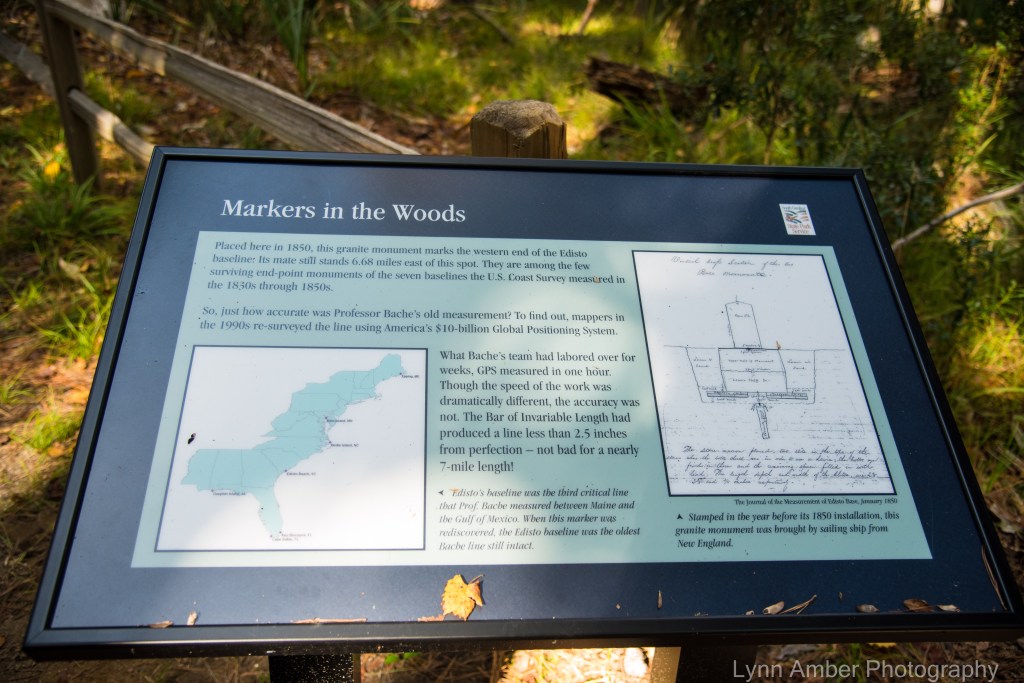
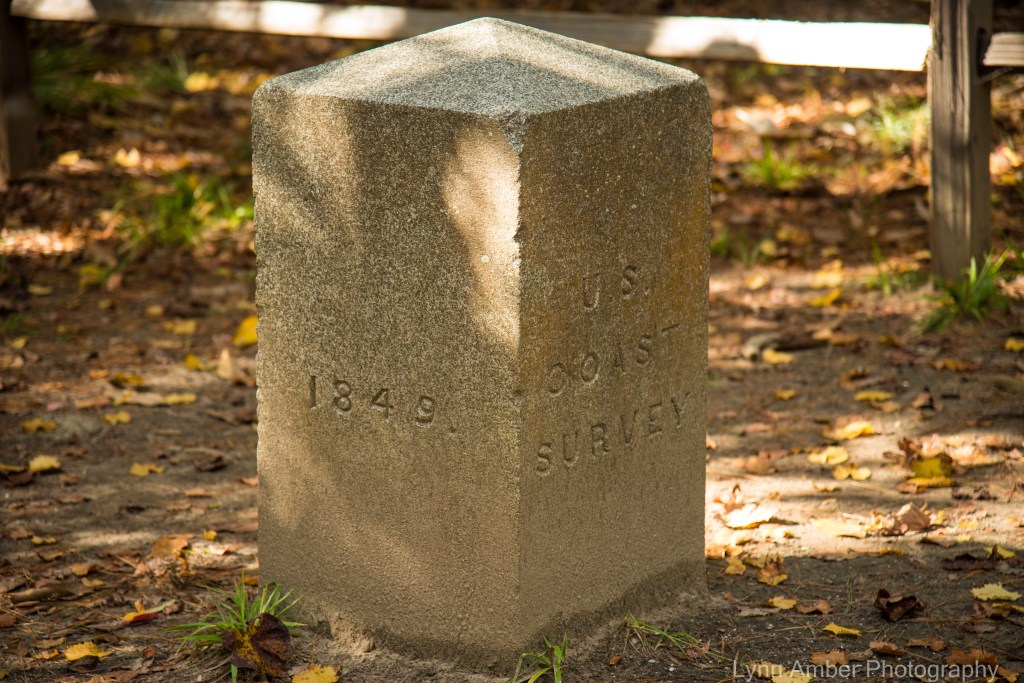

While waiting for my ride, I walked down to the fishing pier near the learning center to take another peek at the waterway winding through the salt marsh.
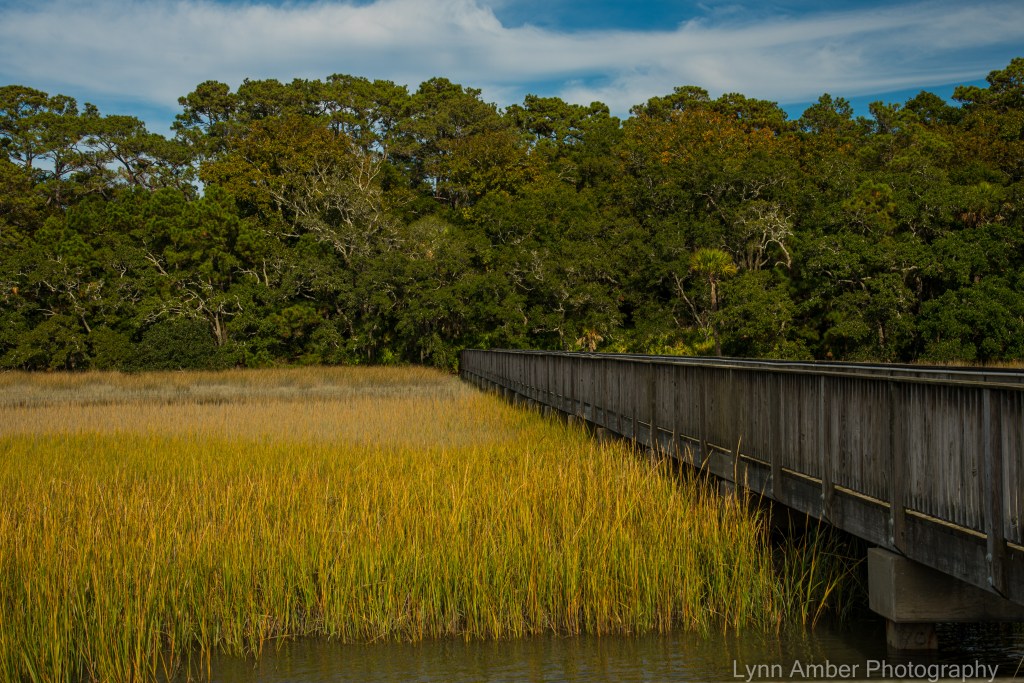

Exploring the maritime forest and coastal waters was so much fun! Overall, I hiked about 6 miles in the park and learned a lot about this diverse, ecologically important area. I highly recommend spending time hiking or biking these trails and enjoying the serenity and charm of the South Carolina low-country. Later that day, we drove over to my brother’s house for a low-country boil which is a regional delight! The dish consists of shrimp, pork sausage, corn on the cob, and potatoes all boiled in a large stockpot outdoors – with a special seasoning. It’s a great meal to feed a crowd!
A nice finale to a wonderful week at Edisto Beach! 🙂
November Photo of the Day 11.18.21
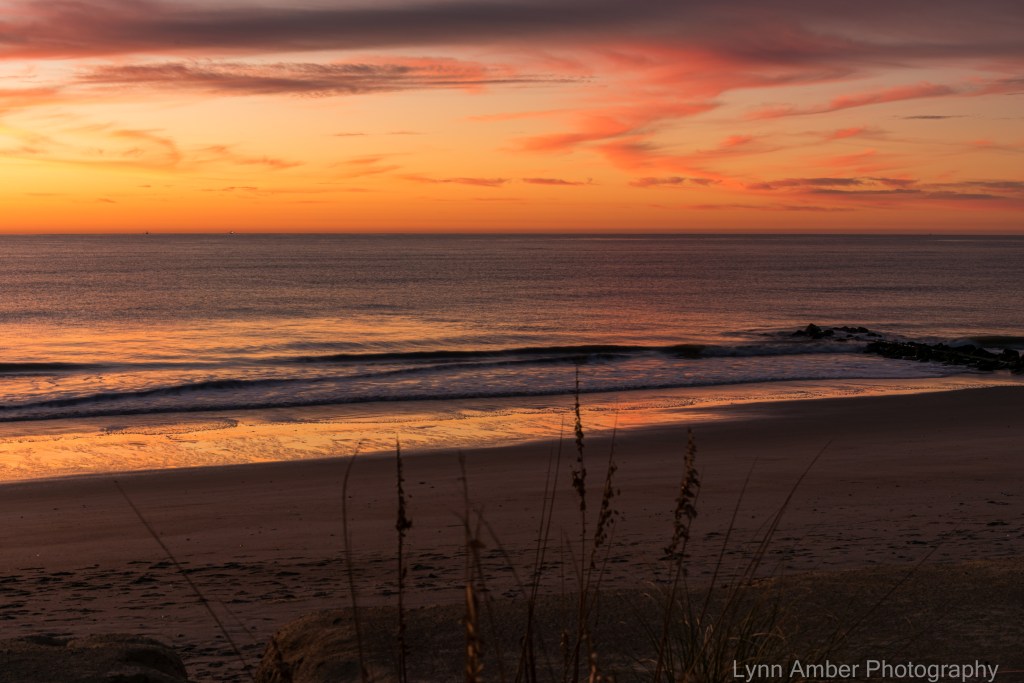
On our third day at Edisto Beach, the clouds started rolling in which created some interesting sky patterns at day break. Just a quick photo today as I’ve been busy with other tasks! Tomorrow I’ll share thoughts and photos on my solo trek through the maritime forest in Edisto Beach State Park. Cheers for today! 🙂
 Lynn Amber - Travel & Photography