Lynn Amber - Travel & Photography
sharing my thoughts through words and images
In Search of a Rare Orchid

A Lady with Style
Concealed in the fen
The regal pink and white queen
Nods her head at us.
~Lynn Amber
Showy Lady’s Slipper is a rare orchid that inhabits wetland areas whose soil and water lean towards the limy side of neutral. A neighbor and friend here in Vermont has a unique “fen” on his property where these precious orchids thrive. It’s been years since I visited this site. When I knew I would be in Vermont at the time they bloom this year, I asked him to take me back to see them. It’s a trek through his sugarbush forest along well-worn horse trails and then a bit of bushwhacking to reach the bog.
I am amazed at the blossoms we see immediately upon entering the wetland. What a treat for the eyes to behold!
Crabapple Magic

I bought this crabapple for my husband as a birthday gift many years ago. After it almost died from fire blight, it came back strong and has matured into a beautiful tree. Love the deep pink buds that open to a papery white flower. It makes a striking contrast against the deep green foliage.
Baptisia in Bloom
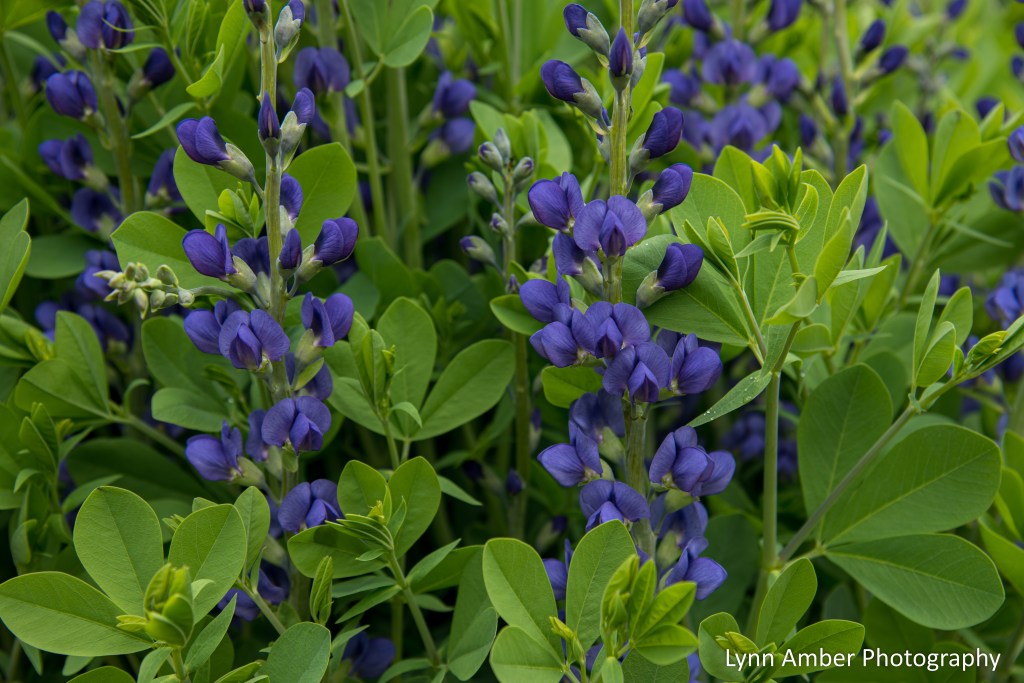
In between my Camino posts, I’ll try and post random photographs that I’m taking – from my garden, my local walks – and ease back into a more daily blog routine.
After being away from Vermont for over a year, I’m trying to get my flower garden back in shape. One plant that needs little attention and never disappoints me is my Baptisia australis. A true gem!!
On the other hand, after years of neglect, my bearded Iris is letting me know that I need to pay it some attention. I have very little blooms on the Iris this year and it’s way overdue for some serious maintenance. I will be digging it all up and dividing it come July and August. Here’s one of the few blossoms with some rain drops still hanging on – gorgeous!

Le Puy Camino – via Podiensis: Final Days in Le Puy-en-Velay, Part Two
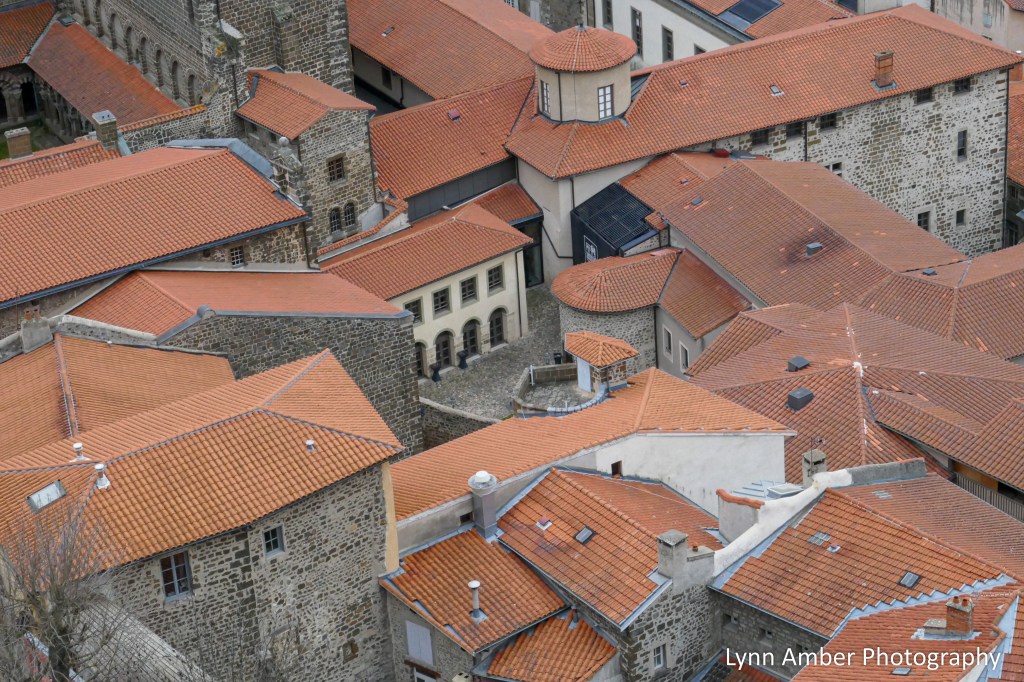
March 29 – 30, 2023
On Wednesday morning, March 29th, we packed up our belongings to make our final accommodation change while in Le Puy-en-Velay. The Gîte d’étape Accueil chrétien Saint François was established in 1994 and is operated through a joint venture between the Sisters of Saint François of Assisi and local community members. Located in a 15th century building within minutes of the cathedral, the gîte offers accommodations at a more reasonable price for pilgrims in a dormitory-style atmosphere. According to their website, the “house “was designed as a family place where everyone can “put down their suitcases”, a place of social diversity and meeting where volunteers, nuns meet , employees in integration, permanent employees and residents.”
We stayed here for two nights. The accommodation is typical of many gîtes along the Way that offer more affordable rates with less amenities. Most do offer demi-pension (petit dejeuner and repas du soir) as an option but also provide kitchen space where thrifty pilgrims can cook their own meals to save money. Also, we found that most of the dormitory-style hostels provide disposable bed covers (bottom sheet and pillow cover) with a blanket and you are required to use your own towel in shared shower/bathroom spaces. We had our own room with twin beds here while many other low-cost gîtes along the walk offer only large rooms with up to 15 beds.
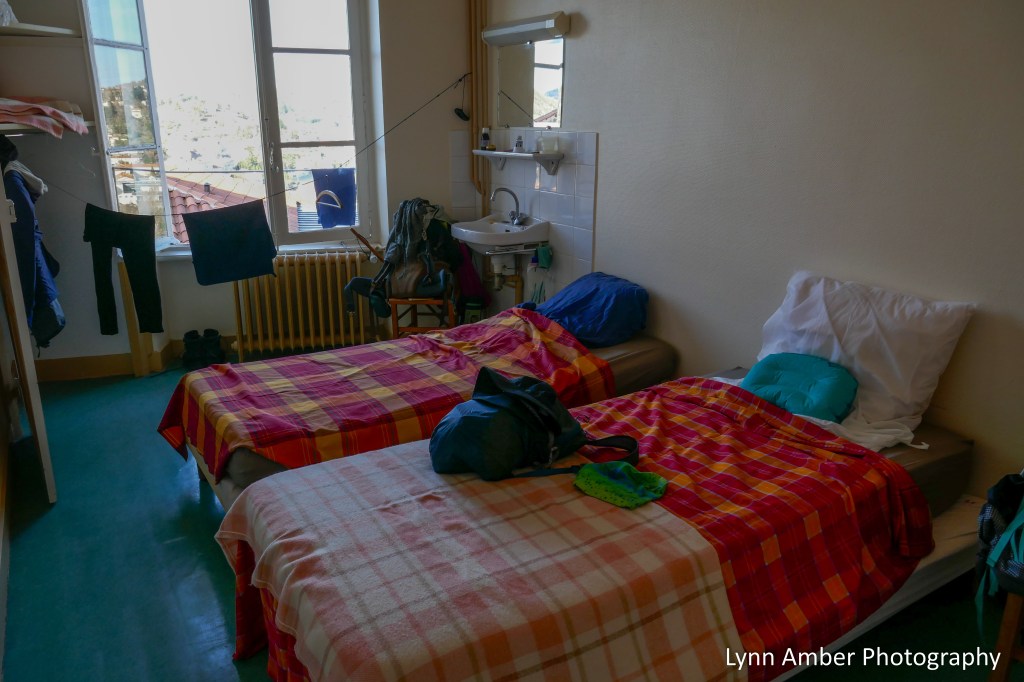


The continental breakfast was set up as “self-serve” each morning. It was early in the season so there were not many people staying here. One other group we met at dinner indicated they were a walking club from Northern France. When I went down for breakfast in the morning I had the place all to myself! Enjoyed my coffee in a chair by the window gazing out at the rooftops!

For the next two days, we did some more tourist-type activities and I continued to walk the GR65 so I could keep up my fitness level!
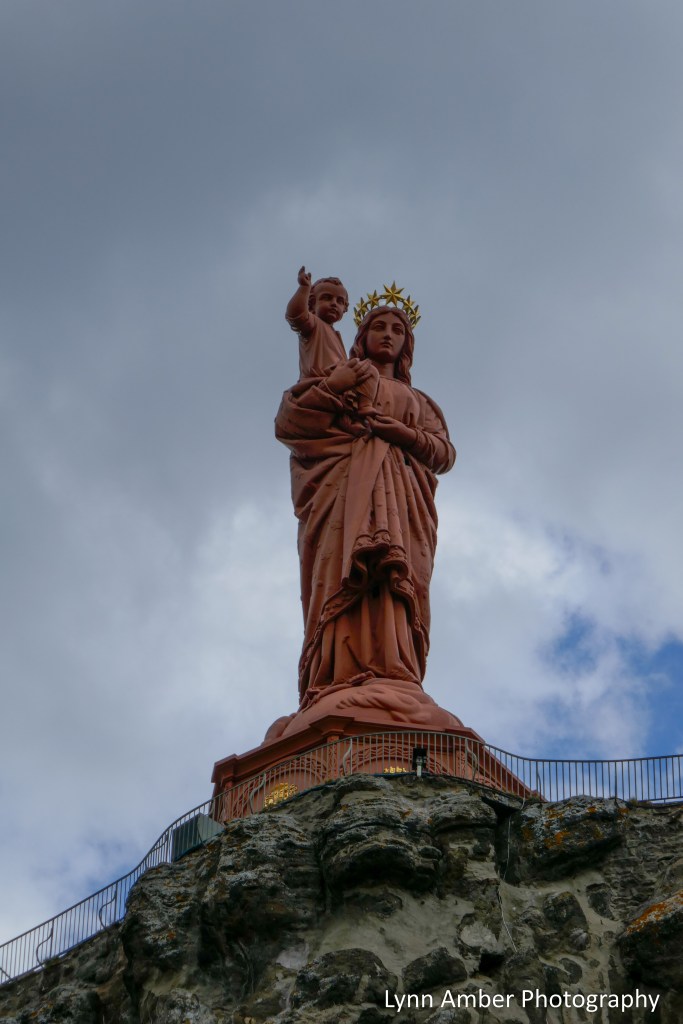
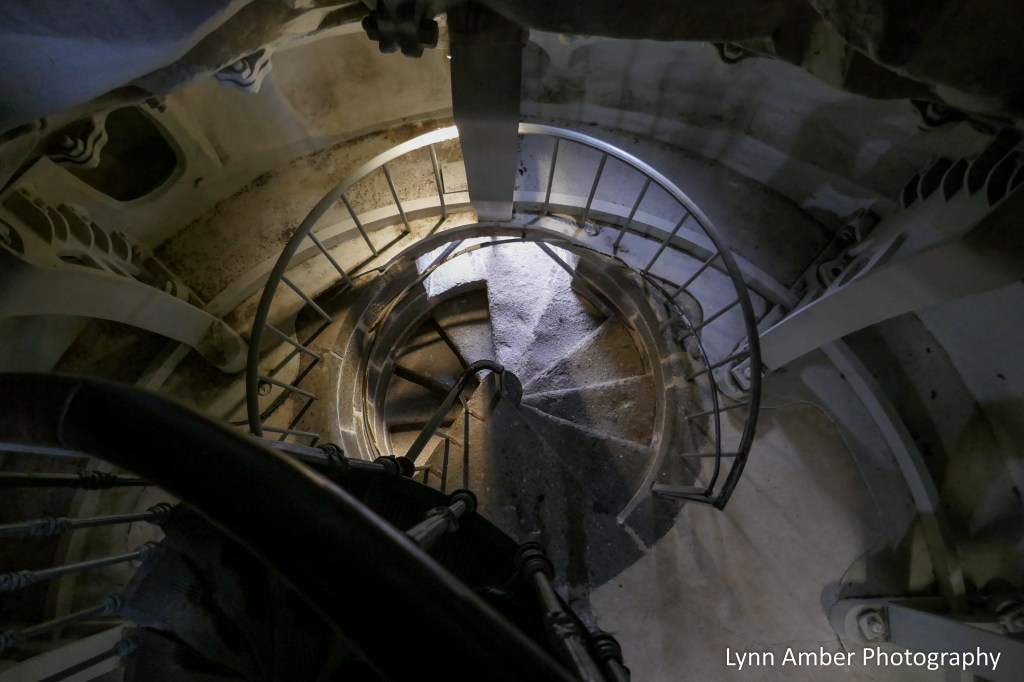
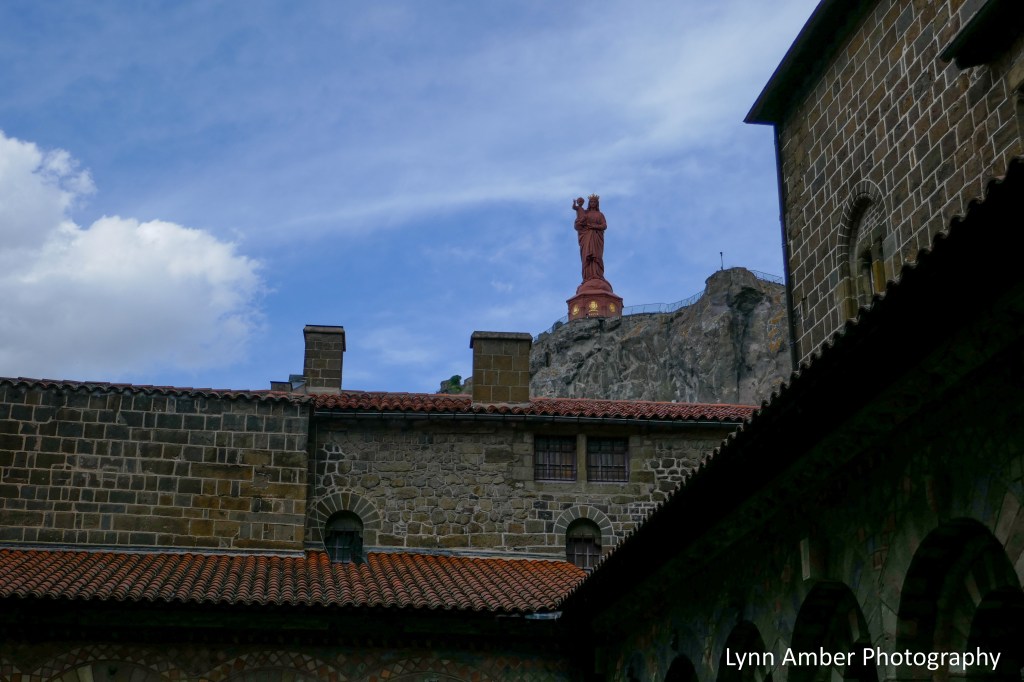
One of the most prominent structures dominating the skyline in Le Puy-en-Velay is La Statue de Notre-Dame de France. Built in the 19th century, it has the distinction of being made with the metal from 213 cannons that were confiscated after the seige of Sevastopol during the Crimean War. The statue was created by Jean-Marie Bonnassieux and built on the highest point in the city. The statue is hollow and there is a cast iron circular staircase that leads up the center of the statue to the crown. There are viewpoints along the way that look out over the city.

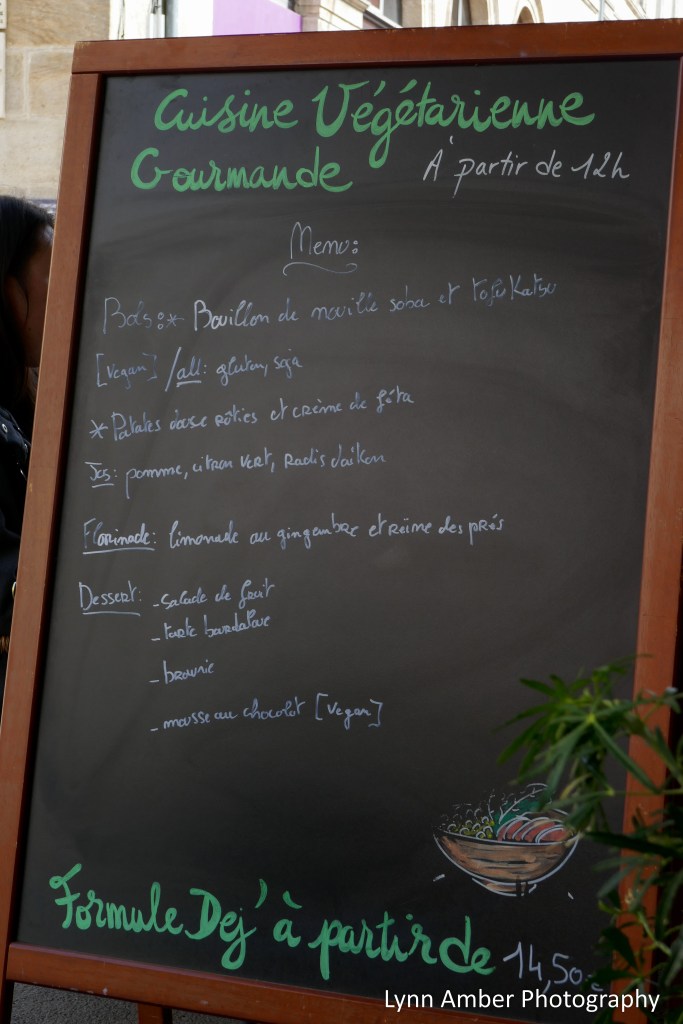
We made reservations for lunch at the popular vegetarian restaurant Caulet-Flori located in the quaint Place du Plot. It was another fantastic meal complete with dessert – all for the low price of 18 euros. Dinner on Wednesday was at the accommodation. Planning Tip: Get used to eating dinner later on at night in France. I am used to eating around 6pm here in the US and it took me awhile to adjust to an evening meal starting at 7:30pm. Dinner was usually a multi-course affair and considered a social event. It could easily take up to an hour to complete. We would basically eat dinner and go right to bed since we were getting up early to continue our walk the next day. By the time dinner was over we were exhausted and not just from walking all day but also because we had to try and converse with our French dinner mates. It took all my concentration to understand the conversation and try to partake. I would collapse into bed each night physically and mentally exhausted! But – it was a good kind of exhaustion! 🙂 Oddly, I did finally adjust to eating a late meal and going right to bed. But, I will happily revert to my US schedule after the trip!
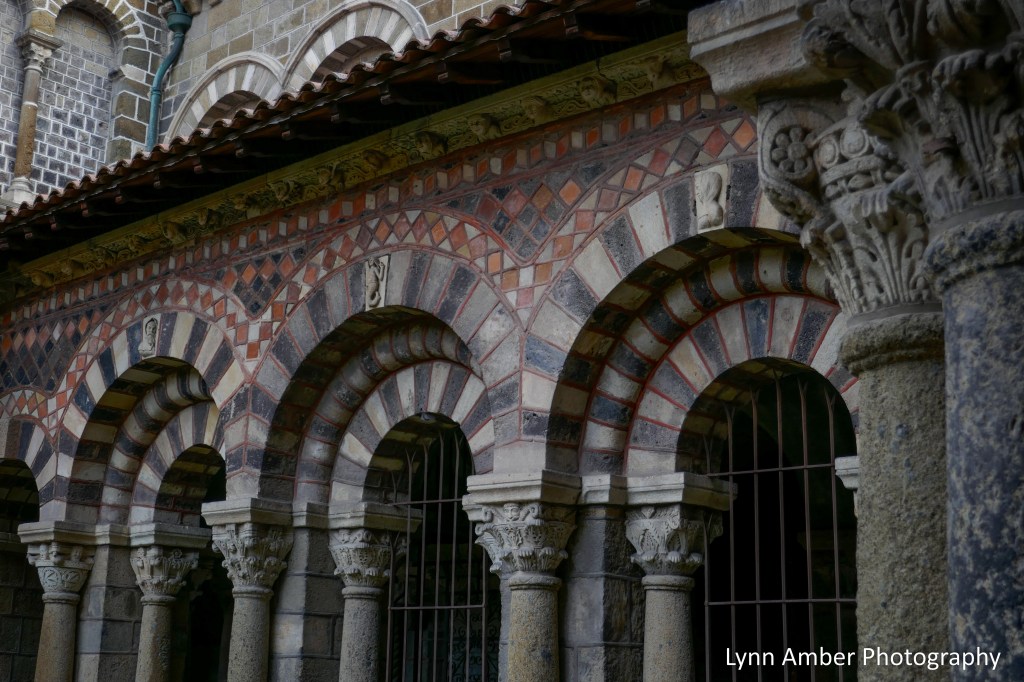
On Thursday, March 30, we took care of some last minute details and ate a lunch of leftovers at the gîte. We took some time in the afternoon to go over our packs and then decided to head out for another walk about town. As we were descending into the historic part of town, we encountered a gentleman named Laurent who stopped and chatted with us. He seemed to be an “unofficial” ambassador of Le Puy! He suggested that we should visit the Cloître de la Cathédrale du Puy-en-Velay that dates back to the 12th century. Now a museum, it also houses the Cathedral Treasury. The Treasury contains an amazing collection of treasures including embroidered ceremonial robes and clothes and ornaments used for ceremonies.
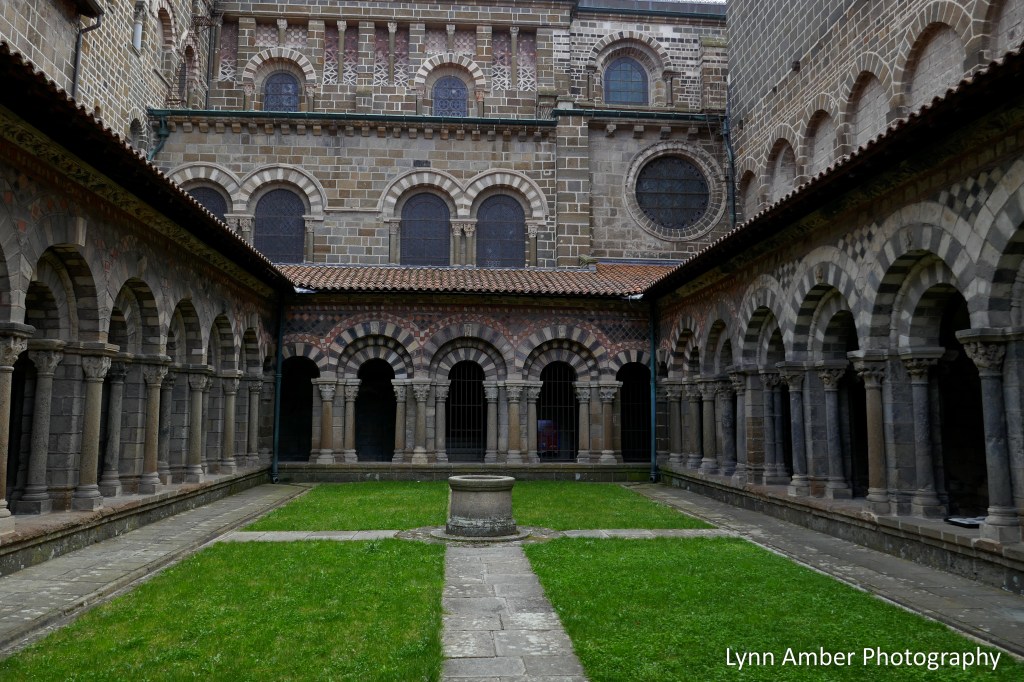


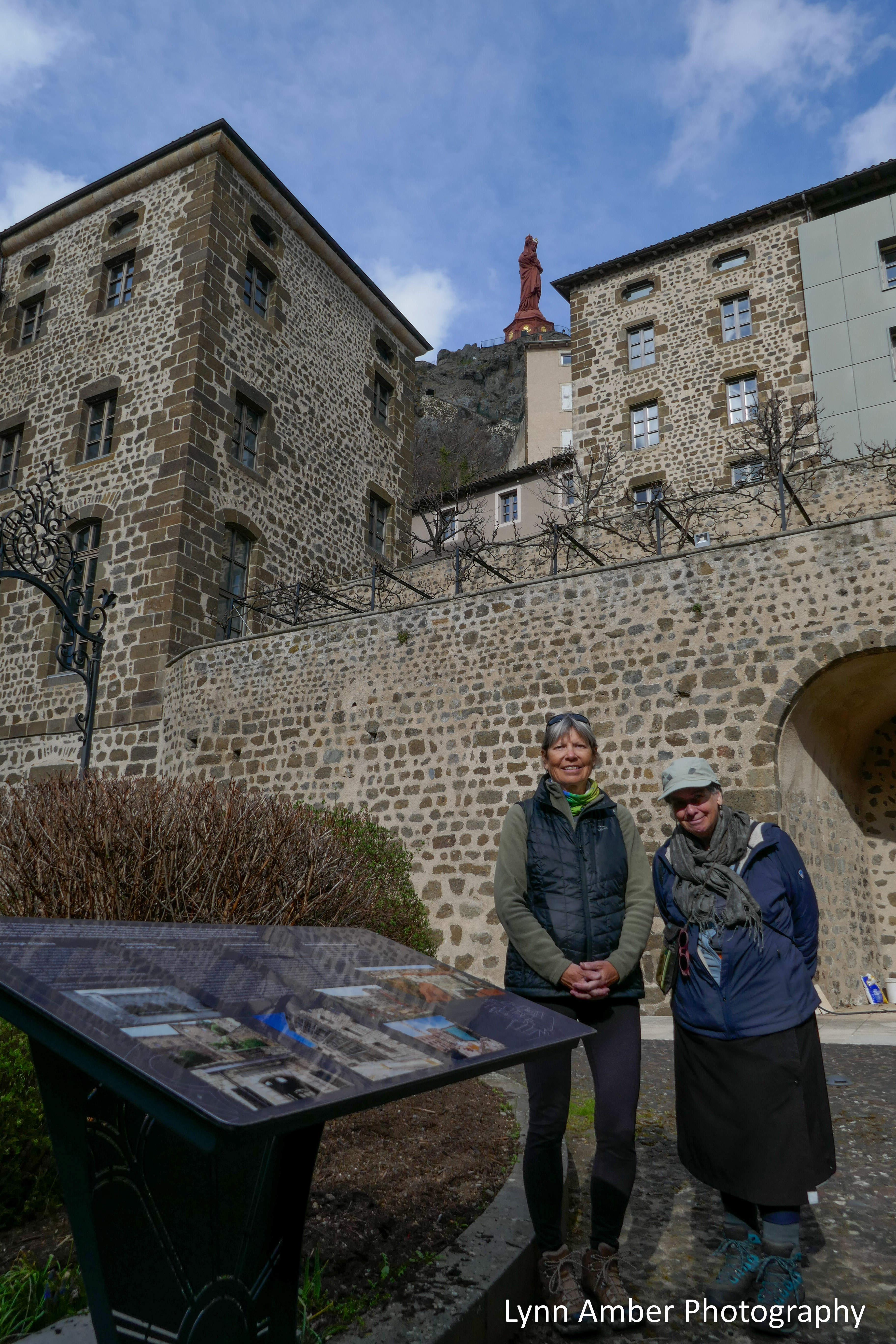
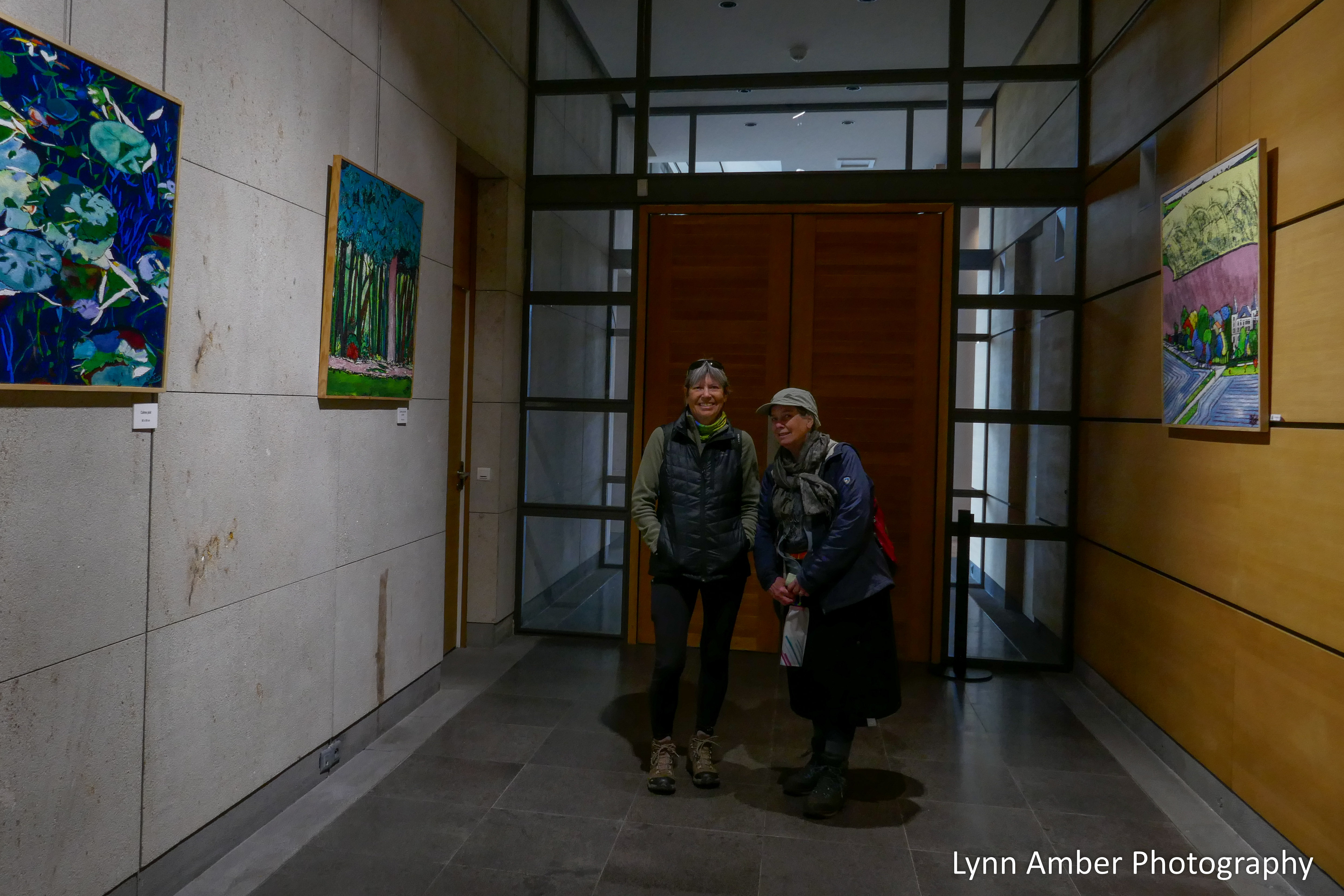
Laurent was waiting for us as we exited the Cloister and walked us over to another building that appeared to be a government building I later identified as the Conseil Départemental de la Haute-Loire. He wanted to show us some local artwork inside this building and also some photographs on an outside wall depicting places of interest in the surrounding countryside. He offered to take some photographs of us and was quite professional about it! The first photo below was taken in the courtyard outside the building and the second photo was taken inside the building in the art gallery. Before we parted ways with Laurent, he even offered to loan us his car the next day so we could explore the countryside. Since this was our last day in Le Puy, we politely declined but it was such a nice gesture of kindness.
Walking back towards town, there was a great view of the Rocher Saint-Michel d’Aiguilhe. It still holds the honor of being my favorite place in Le Puy.

We still had some time before heading back to the gîte for dinner so we wandered around town. In addition to being known for its green lentils, Le Puy is also famous for its lace. The art of lace-making in Le Puy dates back to the Middle Ages. The technique is called bobbin lace and it has its origins in Le Puy. In days gone by, Couviges (groups of women who are lacemakers) would convene along the cobblestone streets in Le Puy in the afternoons to work with their bobbin lace cushions. I imagine it must have also been a major social event for the women – chatting to the rhythm of the bobbins as they weaved the lace.
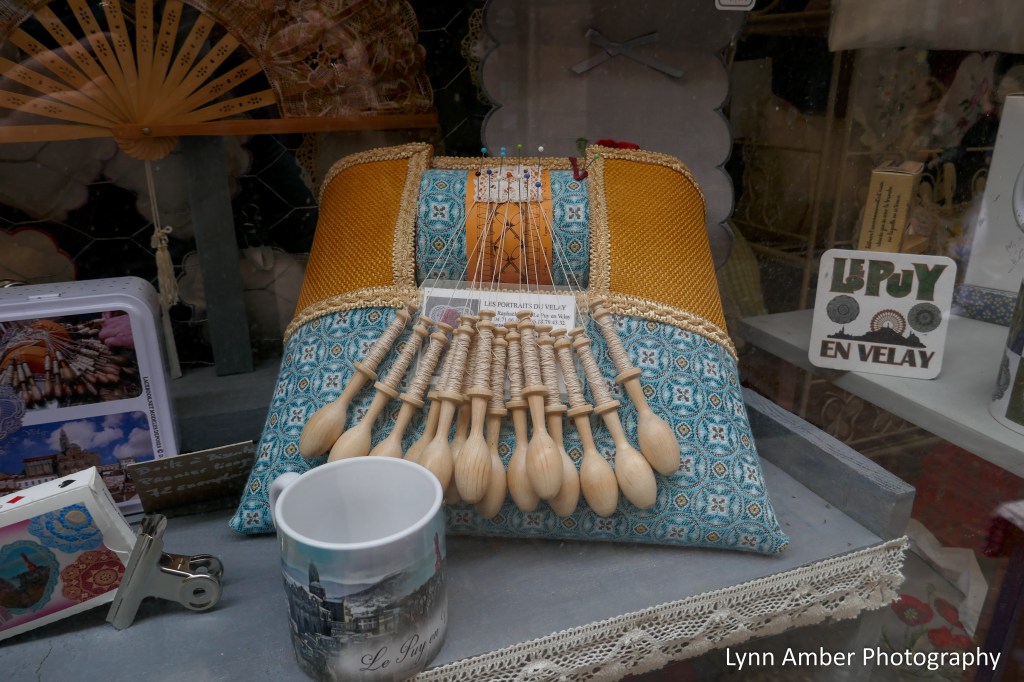
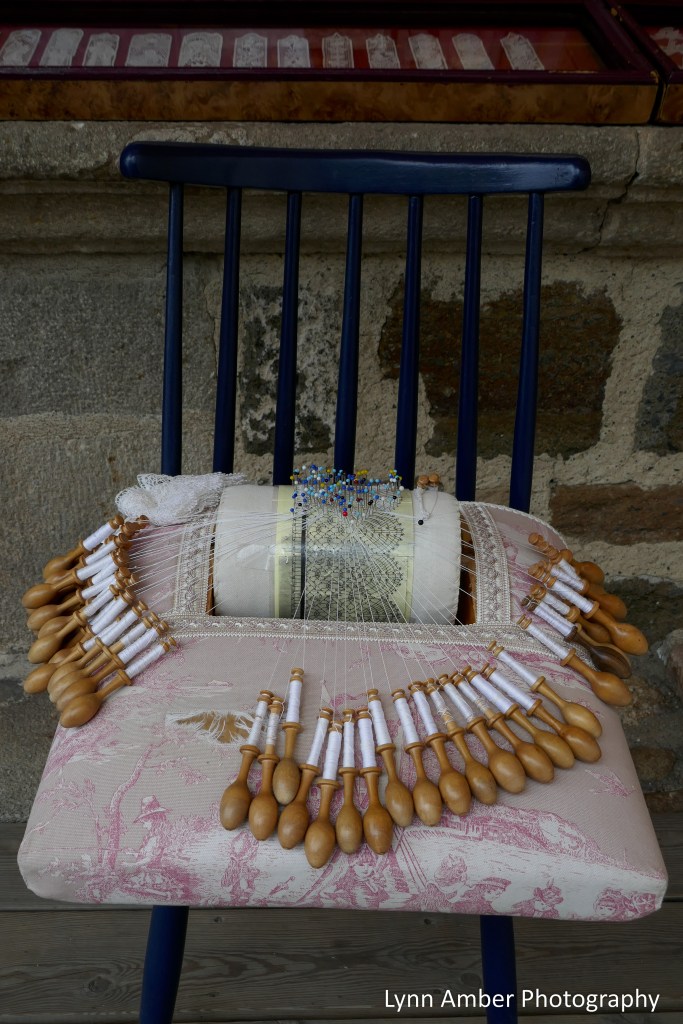

My sister-in-law and I both thought it would be cool to take home a piece of Le Puy lace but we did not want to carry extra items and assumed we could pick some up in Saint-Jean-Pied-du-Port. All along our walk, it was common to see lace curtains in all the windows so my thought was to purchase a set of curtains. But, alas, there was no lace to be found in Saint-Jean! Oh well – there’s always the internet!
The next day we were to start our long walk to Saint-Jean-Pied-du-Port along the Chemin de Saint-Jacques. I’m not sure I got much sleep the night before! Next time – our first day on the trail! 🙂
Le Puy Camino – via Podiensis: Final Days in Le Puy-en-Velay, Part One

March 27 – 28
Over the next 4 days, I spent time continuing our preparations for the chemin interspersed with sightseeing, shopping, eating (delicious French food!) and getting some hiking time in on the GR 65.
On Monday, we visited the pilgrim office to pick up a hiking guide and our pilgrim credentials. There are numerous walking guides for both the Chemin de Saint-Jacques du-Puy that follows the GR 65 walking path in France and the more popular section – the Camino Francis – that takes pilgrims through Spain. Before leaving the U.S., I had ordered one recommended guide published by the Fédération Française de la Randonnée Pédestre, an organization that oversees maintaining all the walking paths in France. Their guides are called TopoGuides and include topographic maps for each section of the walking path along with historical and geographical information, accommodations, restaurants and services available in each town and walking notes with distances and time approximations. The section we were hiking was divided up into 3 separate guides.

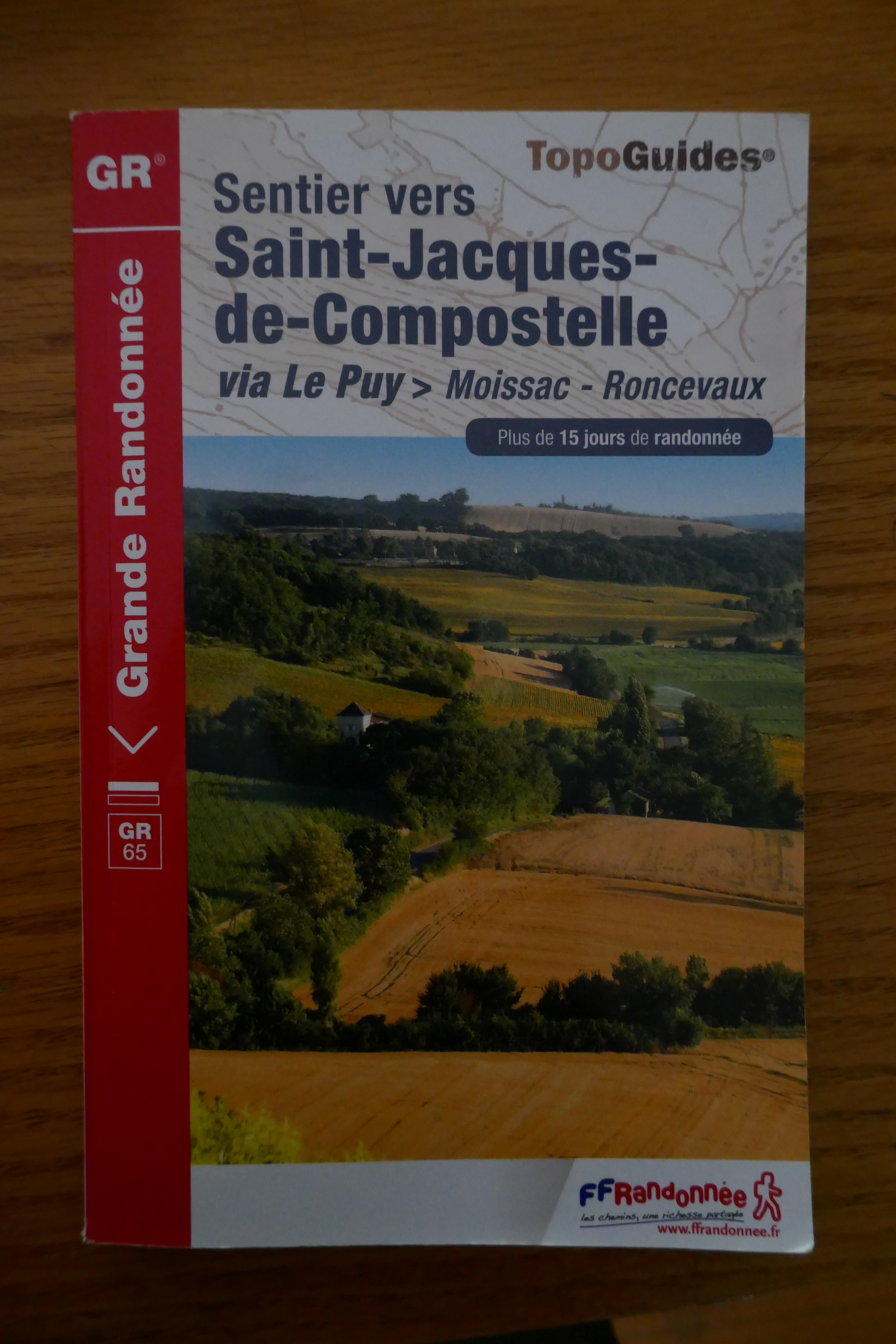
While in Le Puy-en-Velay, I bought another guide at the pilgrim office called the Miam Miam Dodo. It contains approximately the same information as the TopoGuide but is less cluttered and the map was easier to read. Accommodations were listed with much more information than the TopoGuide that included price with or without demi-pension, # of beds, street address, phone # and email address as well as check-in time. I found this useful. If you are interested in more extensive historical and landscape information, you will not find that in the Miam Miam Dodo. This guide is obtained via the publishers website or in pilgrim offices and tourist centers in each major town.
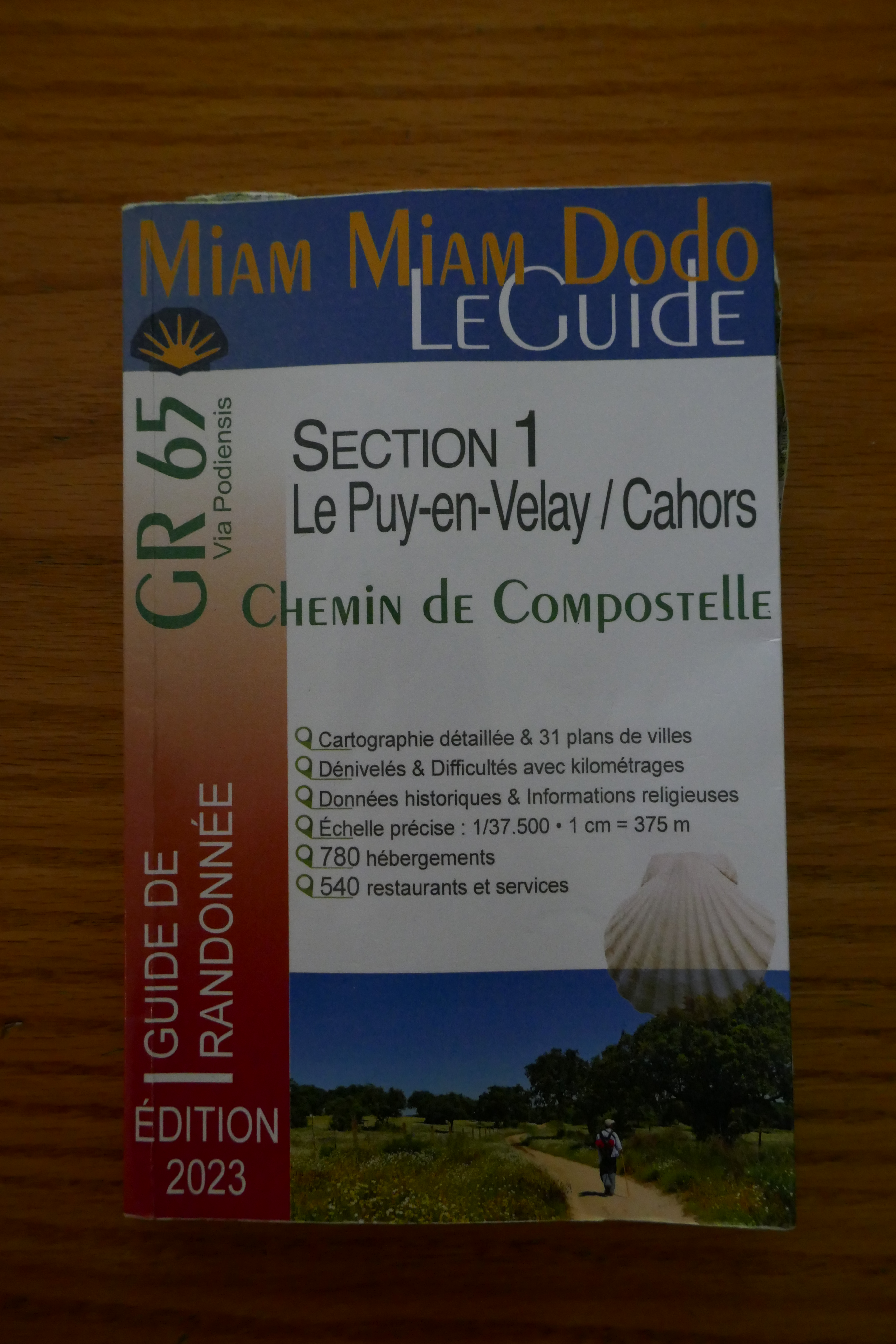

Both guides above are written in French and there is no English translation. I did not find this to be a problem with the Miam Miam Dodo as there was less text and I quickly became accustomed to the French words. I ended up using the Miam Miam Dodo almost exclusively. The TopoGuide was relegated to a place in the extra luggage bag so I could access it if I wanted in the evening. But, I rarely did.
The other print guide we had along with us is a book written by Dave Whitson called Walking the Camino de Santiago – Via Podiensis, Le Puy to the Pyrenees on the GR65. He is a high school teacher from Oregon and has walked numerous Camino routes over the years. He publishes his guides through the Cicerone Press in the UK. The nice thing about this guide is that it is written in English. The guide contains much the same information as the above books. We did not carry this with us during the day but delegated this book to the extra luggage bag as well. Occasionally, I did pull it out at night to read some descriptions of upcoming trail sections in English. I also had a downloaded excel file on my phone that Dave Whitson produces with a comprehensive list of accommodations. Unfortunately, since we were limited to the accommodations listed in the Miam Miam (due to the baggage company requirements), I did not end up using this along the way. But, if not using luggage transport, it would have been invaluable.

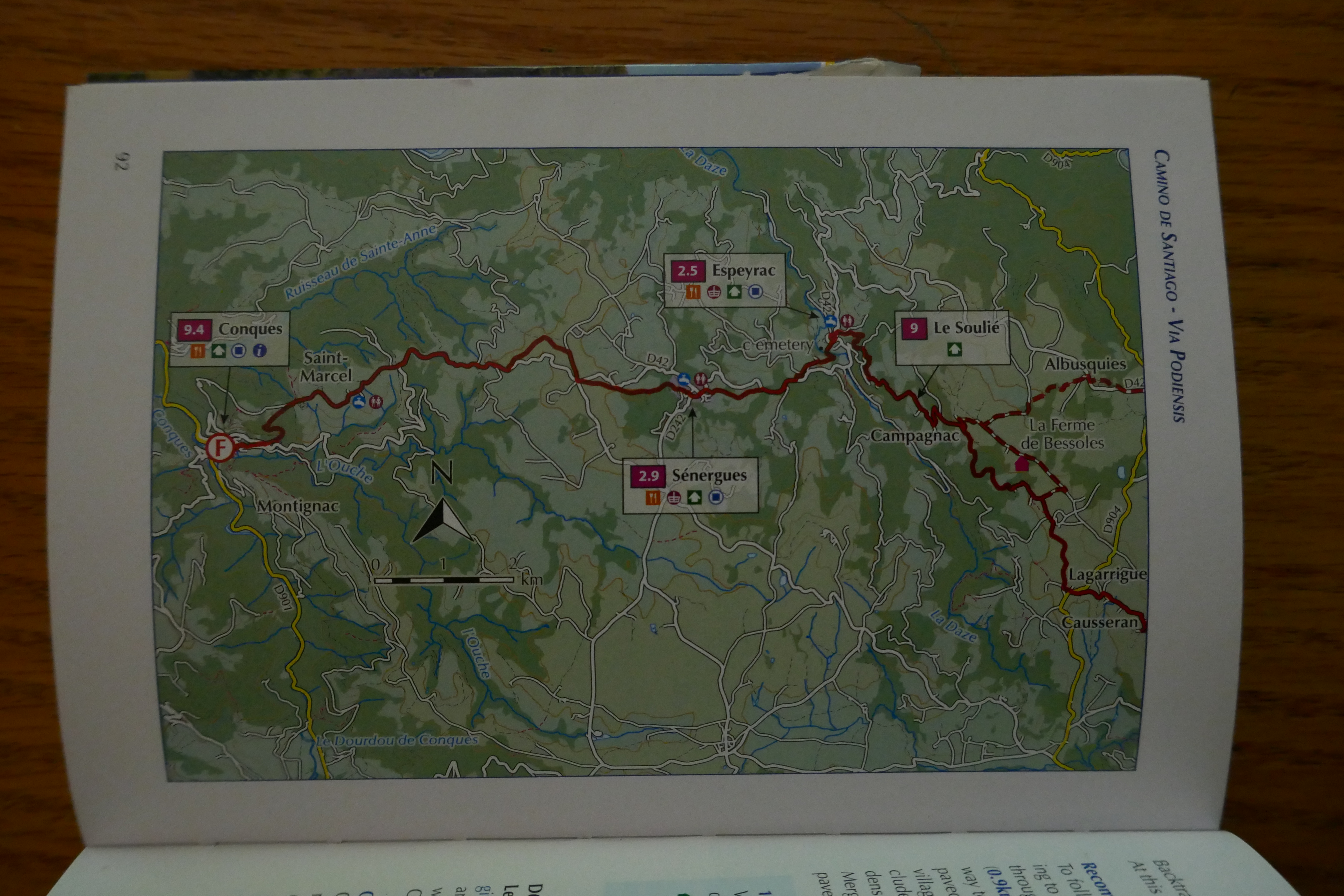
The other resource I had at my disposal was digital. I purchased PDF files from a woman who maintains a website called I Love Walking in France. I had these files downloaded to my phone and could access them along the trail. She has numerous digital guidebooks for many established walking routes in France. I find them to be full of useful information.
The guidebook that you choose to use along the chemin is a personal choice based on your specific needs. Planning Tip: No matter what guide you decide on, make sure that it is the updated version. They are all updated annually during the off-season months of January and February. Many things change from year to year – accommodations come and go – and at times, the actual walking path changes course. It is important to have the most up-to-date information.
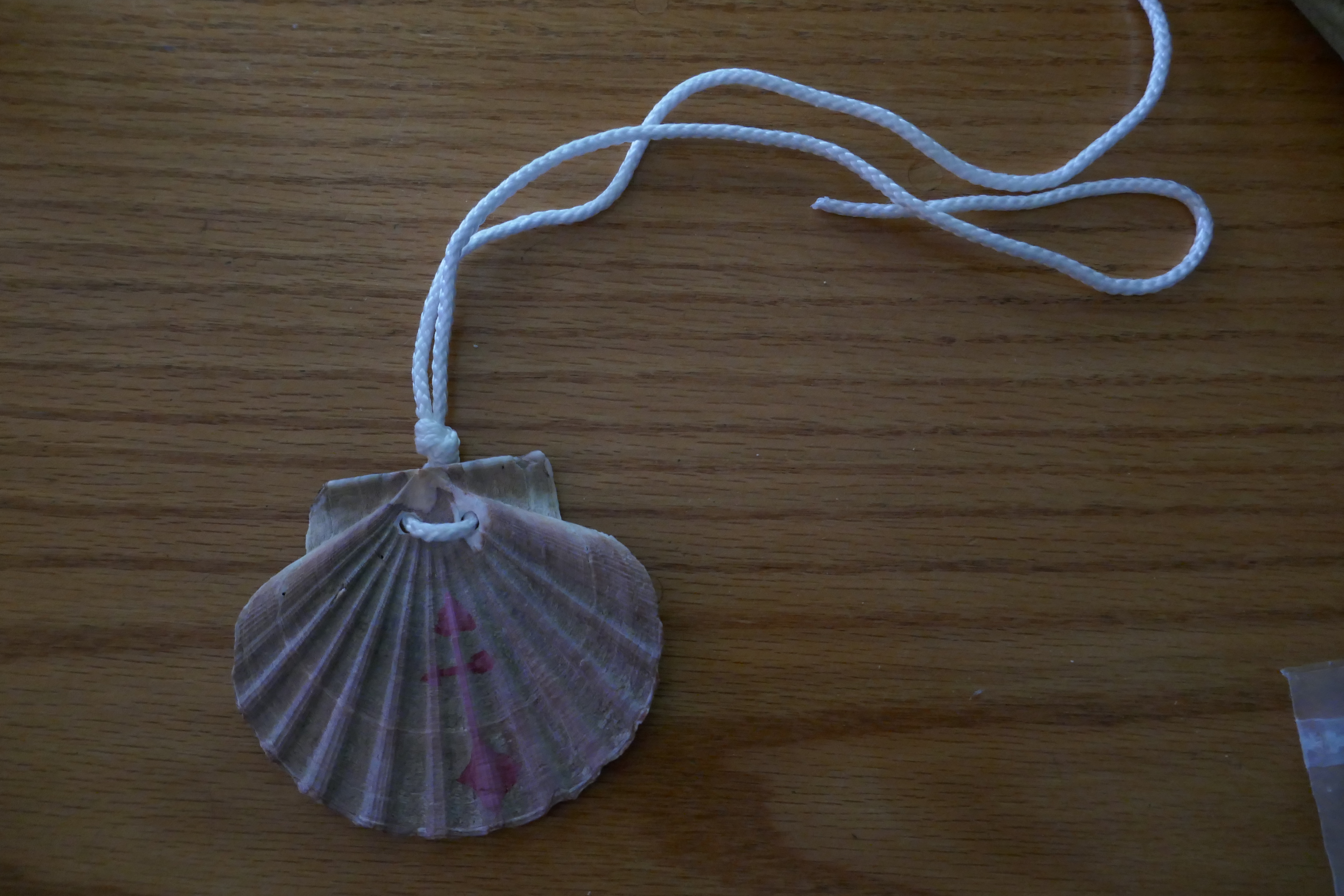
After choosing the Miam Miam Dodo for the first half of the walk, we also purchased our pilgrim credentials from the pilgrim office located in the cathedral. The pilgrim credential is a small booklet used to collect “stamps” along the chemin – mostly from accommodations where you stay but also from some churches and historical landmarks and places. In order to receive an official certificate of completion for the Camino de Santiago de Compostela, you must present this credential as proof that you walked the distance required. It also makes a pretty cool souvenir! Along with the credential, I bought a scallop shell to carry on my backpack. It is the symbol of the Camino and identifies one as a pilgrim. Again, a great souvenir! Below is a peek at part of my pilgrim credential marked with some of the colorful stamps I collected along the way and my seashell that I attached to the outside of my pack. Hopefully, I will be able to return to Europe and walk one of the Spanish Camino routes that lead to Santiago de Compostela and receive the coveted certificate.

After the pilgrim office, we stopped in at La Malle Postale transportation office and arranged our first few days of luggage transport. They agreed to accommodate us on March 31st so that would be our official start day for the chemin! We found the post office so that I could purchase some international stamps for sending postcards back home and ate lunch at Gabriel’s restaurant where they served up some outstanding pizza!
My sister-in-law and I parted ways for the afternoon and I decided I needed to go for a short walk. I followed the Chemin du Saint-Jacques (GR65) out of town and into the countryside. It is the route we will take on Friday and I wanted to get a feel for what to expect. It’s a steep climb up out of Le Puy-en-Velay and levels off after about a mile.
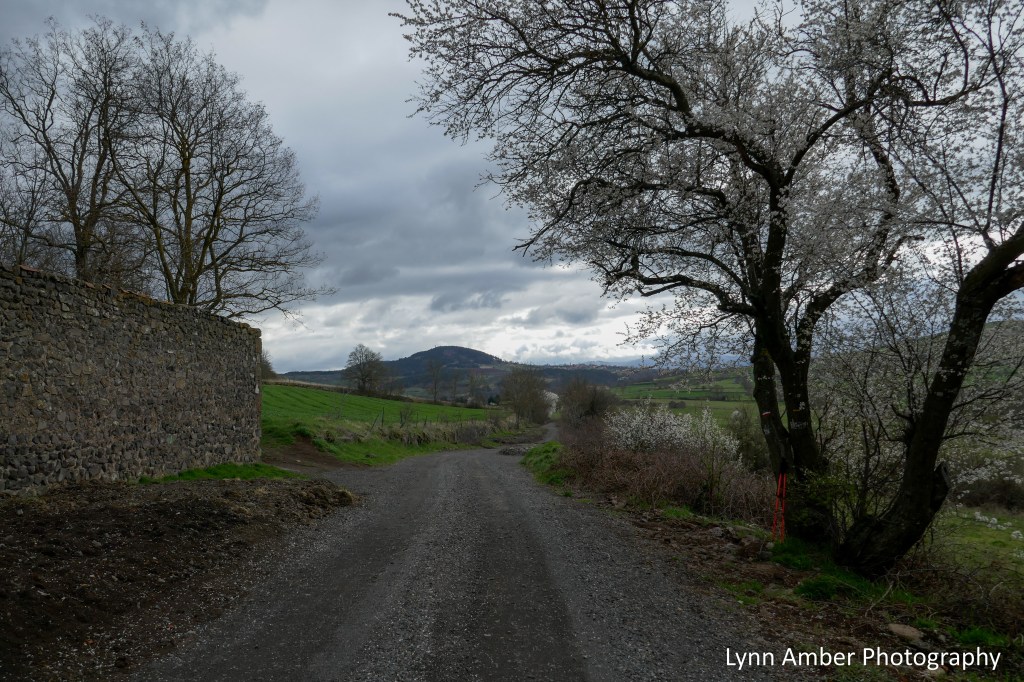
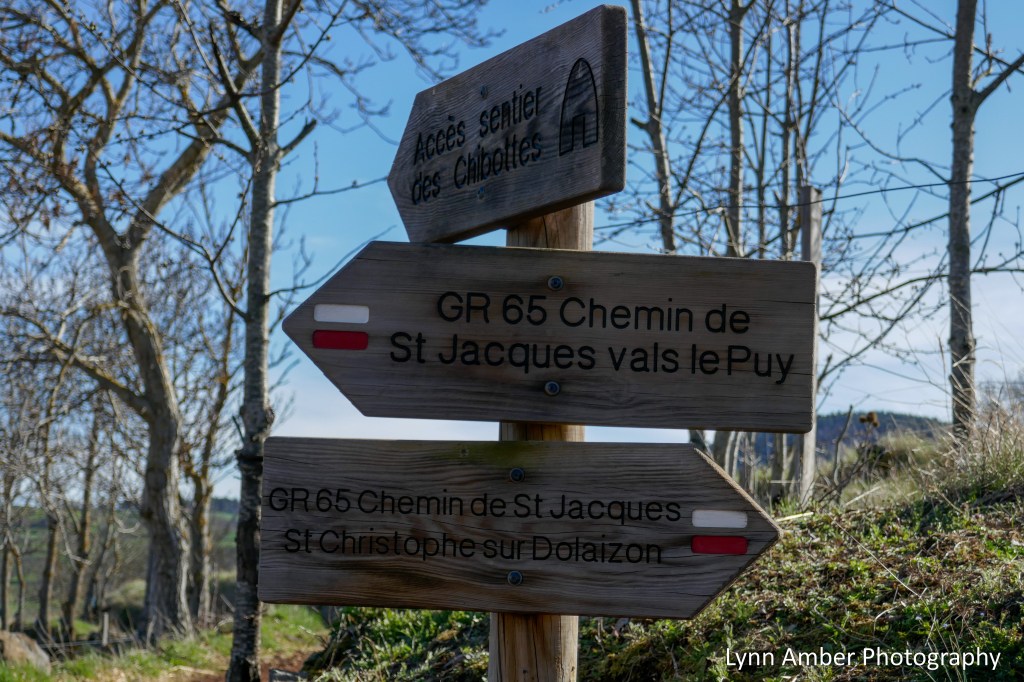
It was a good trial run and I got my first introduction into the way markers that I would be focusing on for the next 6 weeks. The Way of St. James (Chemin du Saint-Jacques) follows a pathway called the GR65 in France. It is marked with two painted lines – a white stripe and a red stripe. The mark is found on sign posts, trees, stones, fence posts, walls and even buildings along the trail. Below is an example of a sign post that is common where the trail meets local paths and other trail junctions.

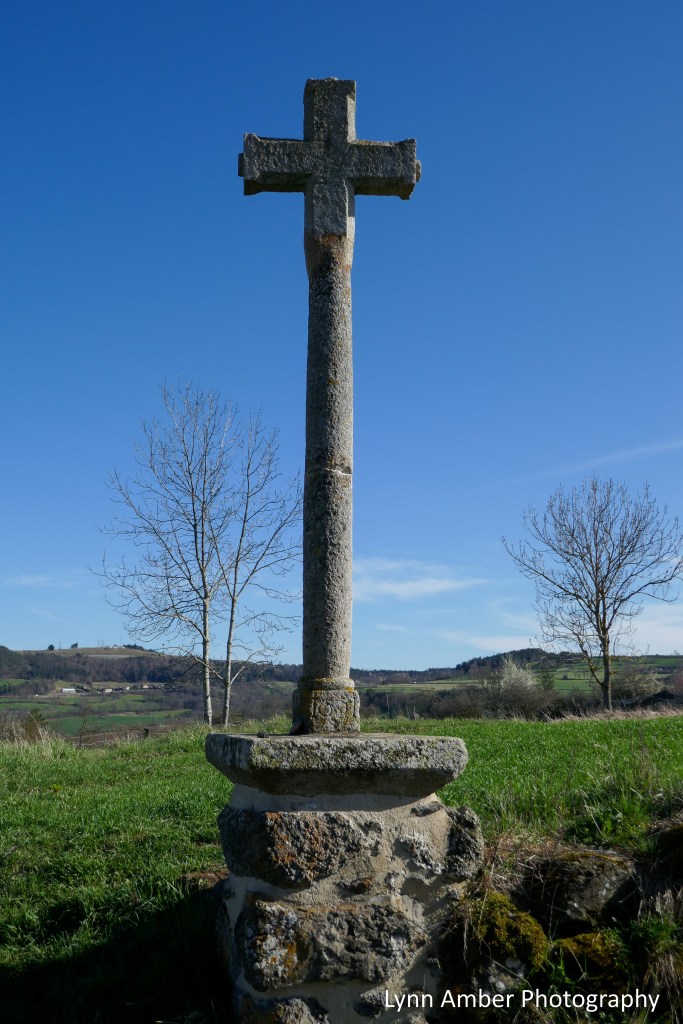
I turned around at the 2-mile mark and headed back to town. As I approached the descent into town, I encountered Michael, who was a German guy also staying at our accommodation La Maison du Loup. Funny – I’m in a town in France taking a walk and actually run into someone I know! He was a very interesting fellow.
He’s a long-distance runner and has traveled all over the world running marathons. He had just completed one and was heading to Italy from Le Puy to compete in another one. Along the way, he was visiting many Catholic religious sights – Le Puy being one of them. We had breakfast with him two mornings at La Maison du Loup and his knowledge of the Catholic faith and, in particular, of a renowned female German philosopher named Edith Stein was notable. She was from Germany and converted from Judaism to Catholicism in 1922. In 1935, she joined the Discalced Carmelite monastery in Cologne and took the name “Teresia Benedicta a Cruce” – receiving her perpetual vows in 1938. Due to her Jewish heritage, she got caught up in the Nazi invasion when she was located at the Carmelite monastery in the Netherlands. She was sent to Auschwitz along with other baptized Catholics of Jewish origin where she died in the gas chamber. She was beatified as a martyr by Pope John Paul II in 1987 and later canonized by him in 1998.
My sister-in-law, who is a member of a secular Carmelite order, is well-versed in regards to Edith Stein so it was quite a coincidence and thrill for her to meet someone who is also an admirer of Edith Stein. As a non-Catholic, I was fascinated with their conversation at the breakfast table and learned a great deal about this remarkable woman.
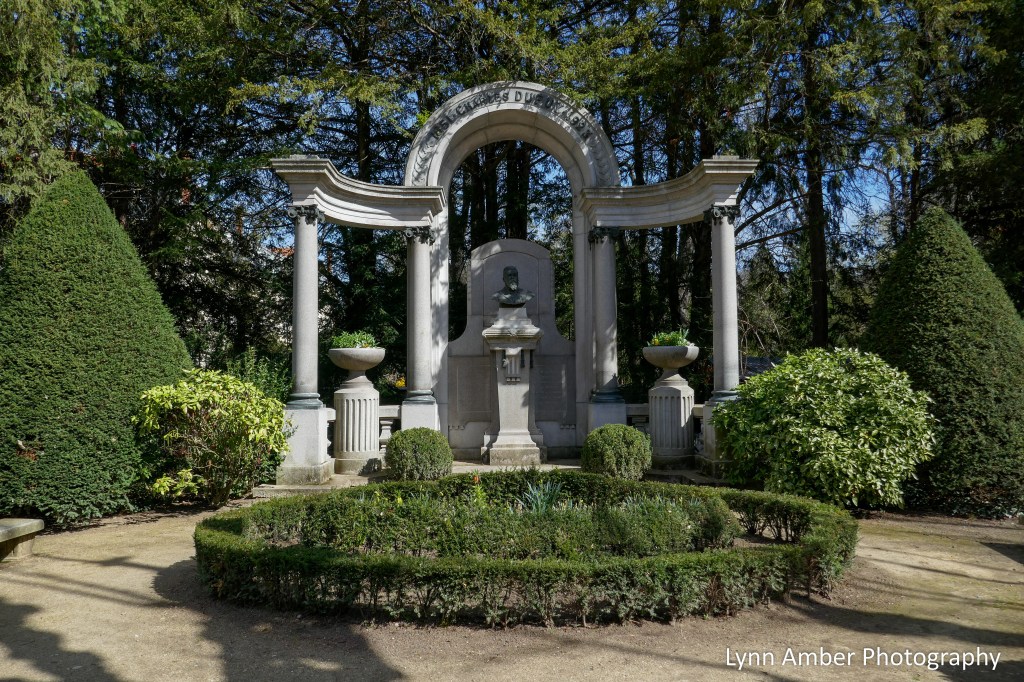
The next day (Tuesday March 28) I spent some time exploring a city park in Le Puy-en-Velay called the Jardin Henri Vinay. It is located between the Prefecture de la Haute-Loire government building and the Musee Crozatier. It was a beautiful day to explore this green space!


While wandering around town after the park, I stopped into an outdoor store and purchased an extra layer of clothing for the walk. The weather in Le Puy was cool and I was just not sure I had enough layers. I found a great 40% off deal on a Mammut zip-up hooded light jacket. Of course, I had buyer’s remorse later on that day but in hindsight it was a good move! The jacket ended up being my go-to layer once we started the walk!
Lunch that day was an economical meal consisting of a tart embellished with green lentils. Le Puy and the surrounding area is known for its production of a particular variety of green lentils. It is a staple in this area and was presented to us on numerous occasions as part of the evening meal in the gites. The Le Puy green lentils are special due to the fact they are grown in the rich volcanic soil predominant in this region of France. The lentils were served to us in many different ways over the next couple of weeks and, while I enjoyed them immensely, I admit I did get a tad weary of them after awhile!
Tomorrow (Wednesday) we will make one more accommodation changed before leaving Le Puy. I’ll cover our last two days in the next post! 🙂
Le Puy Camino – via Podiensis: First Few Days in Le Puy-en-Velay

March 25 – 26, 2023
After our first night’s sleep in Le Puy, we had some decisions to make first thing Saturday morning. We only had a one night stay in the current lodging and needed to make a plan. Since we arrived in Le Puy earlier than expected, we needed to alter some previous reservations. My sister-in-law had secured lodging in another chambre d-hôtes but we needed to alter the dates since we had bypassed Paris. Luckily, we were able to change our arrival date at Chambre d-hôtes La Maison du Loup and – a bonus – they would allow us to drop our packs there until check-in time later in the day so we would not have to walk around all day with loaded backpacks. After breakfast at Chambre d-hôtes La Prévôté, we got ready for the move.
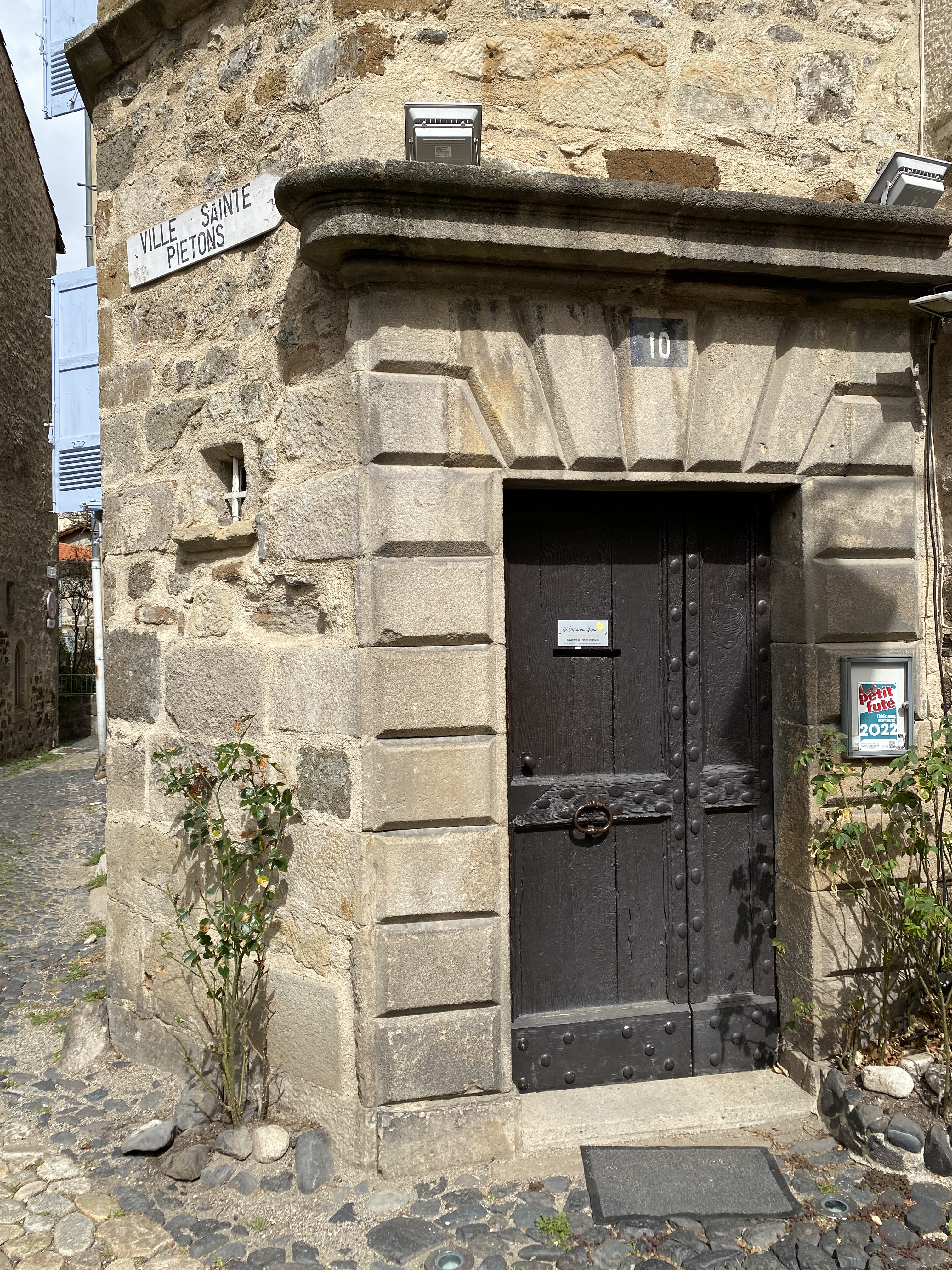

The Chambre d-hôtes La Maison du Loup is located in a 16th century building within the historic district of Le Puy and a short walk to all amenities.
Along with arranging accommodations for our stay in Le Puy, we also had some logistical items to cross off our list. We both had some additional supplies that we needed for the walk, and I needed to find an ATM so that I could start the walk with some euros in my possession. I determined the best way to access cash along the chemin was to set up a debit card account and use ATM machines that are prevalent in the larger towns. I was nervous about doing this as I’ve never used a debit card before! It was a tad unnerving the first time I inserted the card. I had visions of the 24-hour ATM machine eating my card but all fears were laid to rest and I found it incredibly easy to manage my money this way throughout the whole trip. Planning Tip: Most of the gîtes and chambre d-hôtes along the chemin only accept cash (or an ANCV Cheques-vacances – which is a paper checkbook for use in the European Union). I found it only necessary to carry a few days worth of cash to pay for accommodations and lunch food. It was important to be aware when and where the next ATM machine was located.
After attending mass at the Cathedral Notre-Dame, we headed off in the direction of the historic shopping district to get our bearings and shop. Since I was limiting my luggage to carry-on items only, I could not bring my hiking poles on the plane from Montreal to Paris. I found a cheap pair of poles in a tourist shop that would serve me well for the walk. I also wanted to get a small Swiss Army pocket knife with scissors to carry along with me for lunch and first aid needs. It took awhile to find but eventually I located a shop that had just what I wanted.
We ended up eating lunch on Saturday at the same restaurant where we had eaten dinner the previous night. Our dinner had been a true multi-course culinary delight so we felt sure lunch would be just as awesome! Comme A la Maison is a French restaurant that I highly recommend if you find yourself in Le Puy-en-Velay.
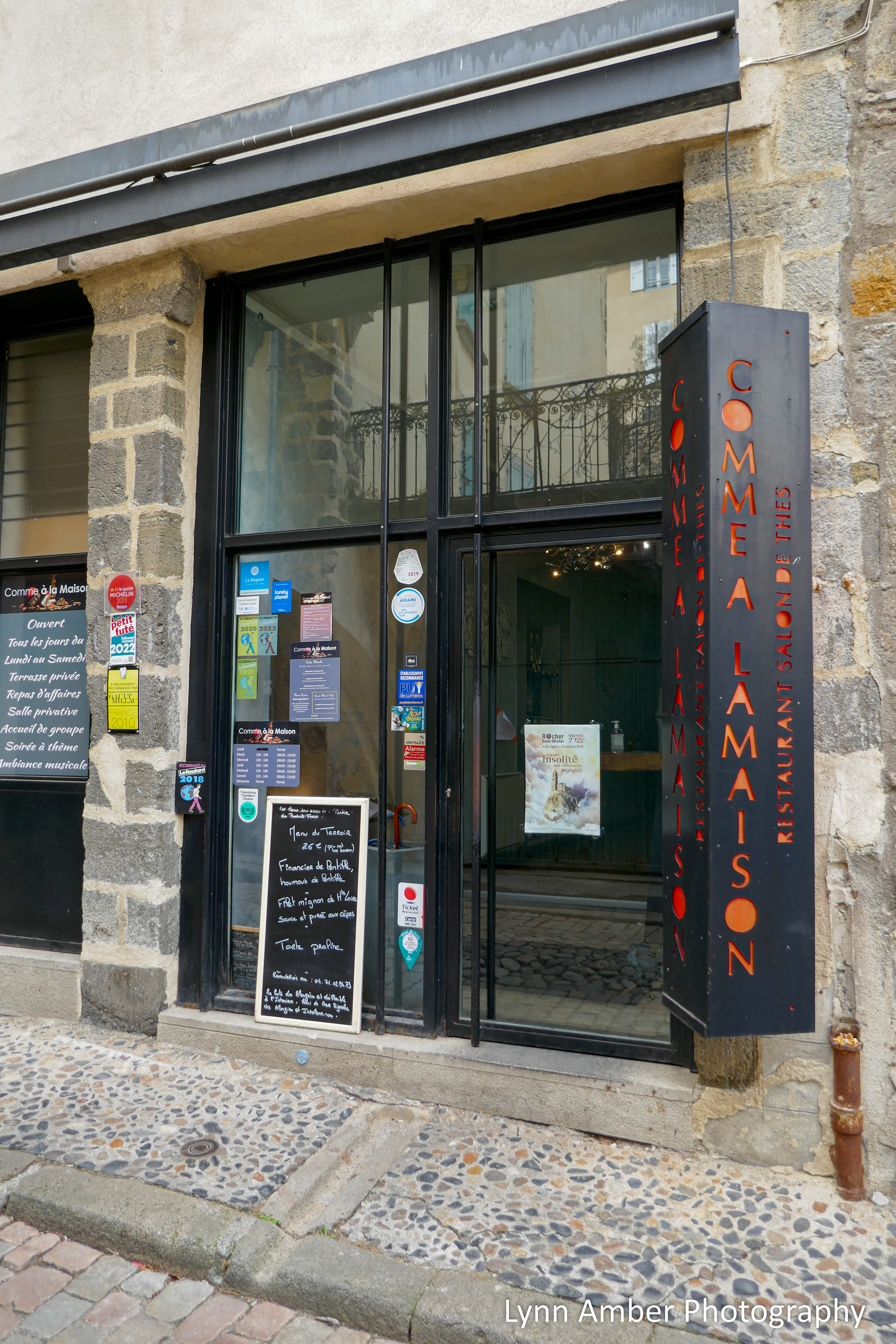

After spending time wandering the cobblestone streets of the historic district, it was time to head back up the hill to our accommodation so we could check-in and get settled.
Ascending yet another stone spiral staircase to our room at La Maison du Loup, we noticed a small staircase leading up another small flight of stairs to a common room in the “tower” that afforded a terrific view of the town. If you look closely, just below the tower window is a “wolf” (or le loup, in French) protruding from the stone. Our host told the us that it seems likely one of the original owners of the building was a wolf hunter by profession. Common prior to the 19th century, wolf hunters belonged to a special corps called the “louveterie.” They protected livestock and people from wolves and by the 20th century wolves were completely eradicated from France. There is evidence that wolves are making a come-back now due to their protected status in modern times.


After settling in to our room, we went back into the historic shopping district in search of dinner. We landed at Aux Beaux Thés du Monde, a small crêperie that proved to be excellent food at an incredibly reasonable price. Planning Tip: We quickly learned that “tipping” in restaurants is not common or expected. I actually loved this concept! It kept things much simpler. We also realized that waiters do not bring a check to the table. When you are done with your meal and ready to leave, you simply go to the register counter and pay for your meal.
The next day (Sunday), I spent a leisurely morning figuring out how to arrange accommodations each night for when we start walking. I wanted to have a least the first few days of accommodations reserved. Everyone approaches this differently. Some pilgrims choose not to reserve in advance so they have the flexibility to walk further if they feel okay or stop earlier if they are struggling. Others reserve their entire walk in advance. Then, there are those like us who were choosing to reserve just a few days in advance. I was using a spreadsheet that I secured from a website maintained by an American school teacher who has done may Camino trips. It quickly became clear that we would not be able to start our walk until March 31st for two reasons.
It was early in the season – really still the shoulder season – and many gîtes and chambre d-hôtes were not open yet. Some were set to open on April 1st and others, not until April 15th. The second reason that delayed our departure day was the availability of luggage transport. My sister-in-law wanted to have one small duffle bag that would be transported each day from one accommodation to the next by a luggage transportation company so that she could lighten the backpack she would be carrying every day. Many people carry everything they need in their backpack. Most recommendations are to carry no more than 10% of your body weight. That is ideal for walking extensively over many weeks.
Since most people are using gîtes and chambre d-hôtes for lodging, there is no need to carry a tent, sleeping bag and multiple days worth of food. I was able to limit my pack to around 15 lbs. – which was close to the weight recommendation. Since my sister-in-law was going to use a luggage transport company, I agreed to share the cost and put a ziplock bag of some of my extra clothes in the duffle. It was nice to utilize this service but not necessary for me. We used a company called La Malle Postale. We showed up at their office in Le Puy make arrangements and found out that they did not start transport until April 1st. I had already made reservations for March 31st but they kindly agreed to start a day early for us. It also became clear that they only transport luggage to accommodations listed in a particular guidebook (that we had not purchased yet). Since one of the accommodations on the spreadsheet was not in that guidebook, I was already altering reservations! Planning Tip: For subsequent walking trips, I would not use a luggage transport company. They were great to deal with – this is not a reflection on them. For those who just cannot walk with a burdensome pack, it is a great service. It makes the pilgrimage more accessible to more people. But, using them limited where we could stay and also limited our flexibility. I think it best – if you are fit and able – to make sure your pack weighs what you can carry and avoid the limitations placed on you by a luggage transport company.
After countless hours of planning, I was ready for a break! It was time to get some exercise and see some sights! Rising up high from the top of a rock outcropping, I had been seeing the Chapel Saint-Michel d’Aiguilhe from a distance and was eager to make the steep climb to view it up close and personal. It was built in the 10th century on top of a “volcanic plug.” I was so impressed with the chapel that I visited it twice while in Le Puy. It became my favorite spot in the city. The chapel was built by Bishop Godescalc of Le Puy-en-Velay in celebration of his return from his own pilgrimage on the Way of Saint James. The chapel is named after Archangel Michael.

As I started to climb the 268 steps, there was a sweet, small little chapel near the base that I detoured to first.

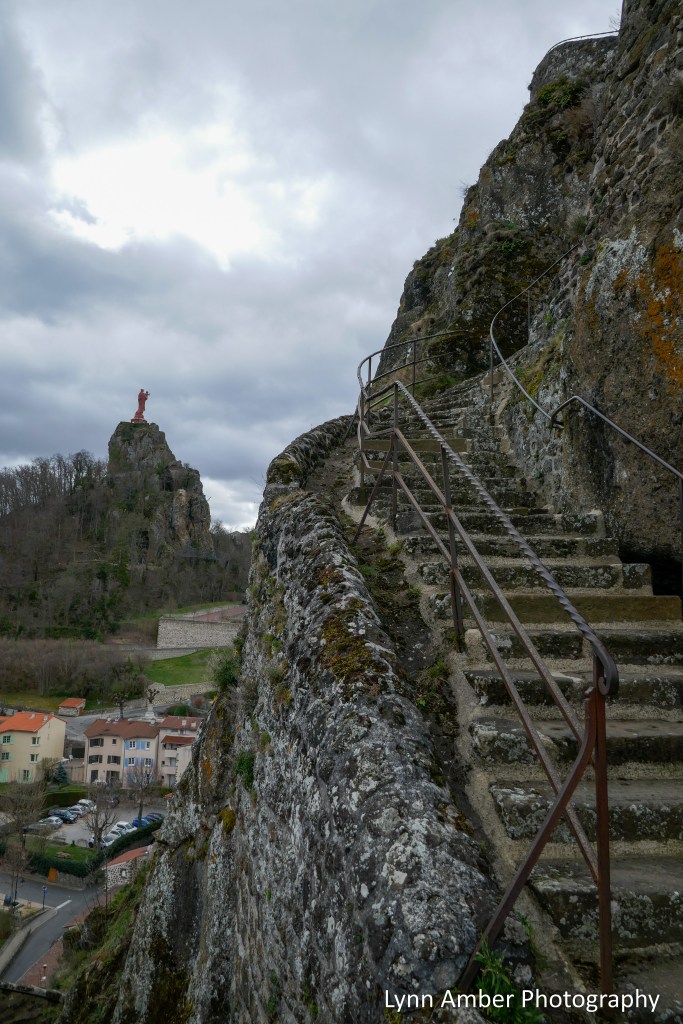
Some of the 268 steps leading to the Chapel Saint-Michel with a view of the Statue of Notre-Dame of France off in the distance. The inside of the chapel was simply furnished and so peaceful. The ancient frescoes on the ceiling and walls were spectacular – as were the stained glass windows. I sat on a bench inside the chapel quietly for a long time – taking in the incredible beauty of this place.
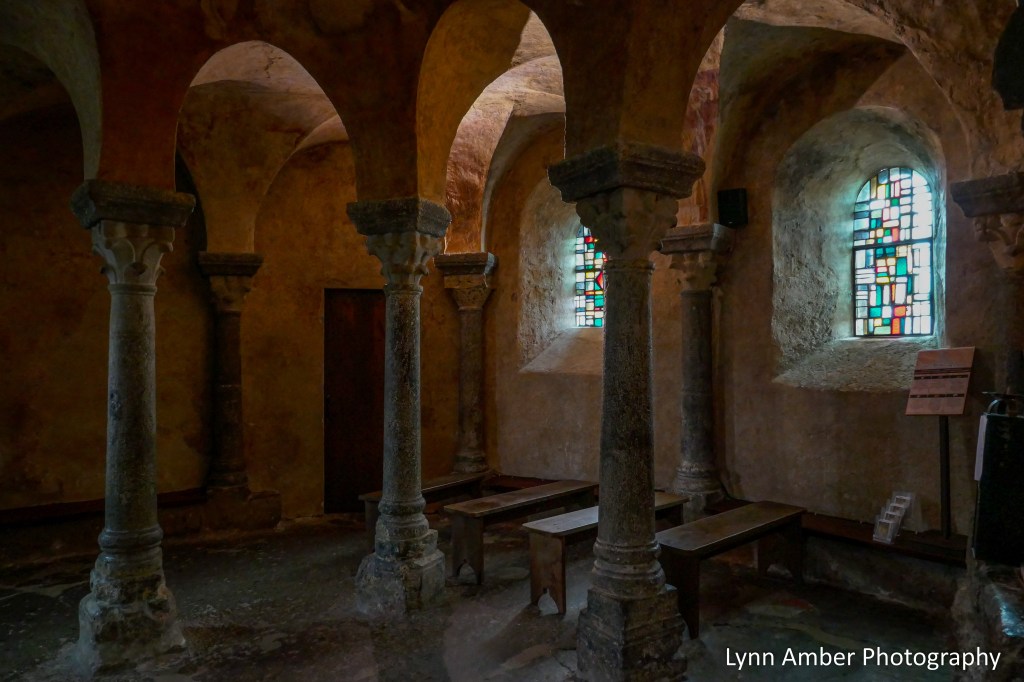

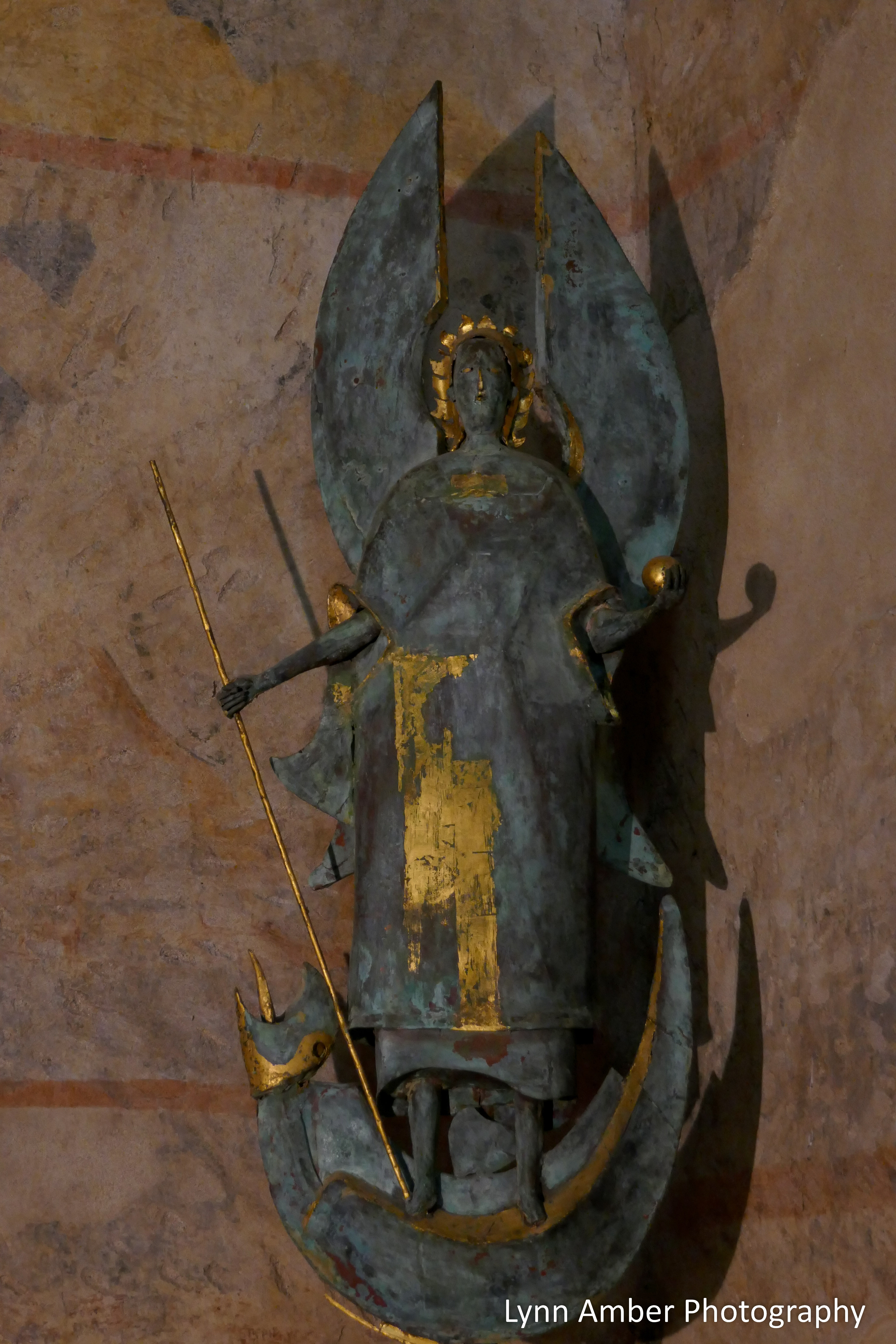


I had read that there was a fresco of a hand above the door to the chapel that many believe represents a blessing for pilgrims as they exit the chapel. It actually took me awhile to find it!
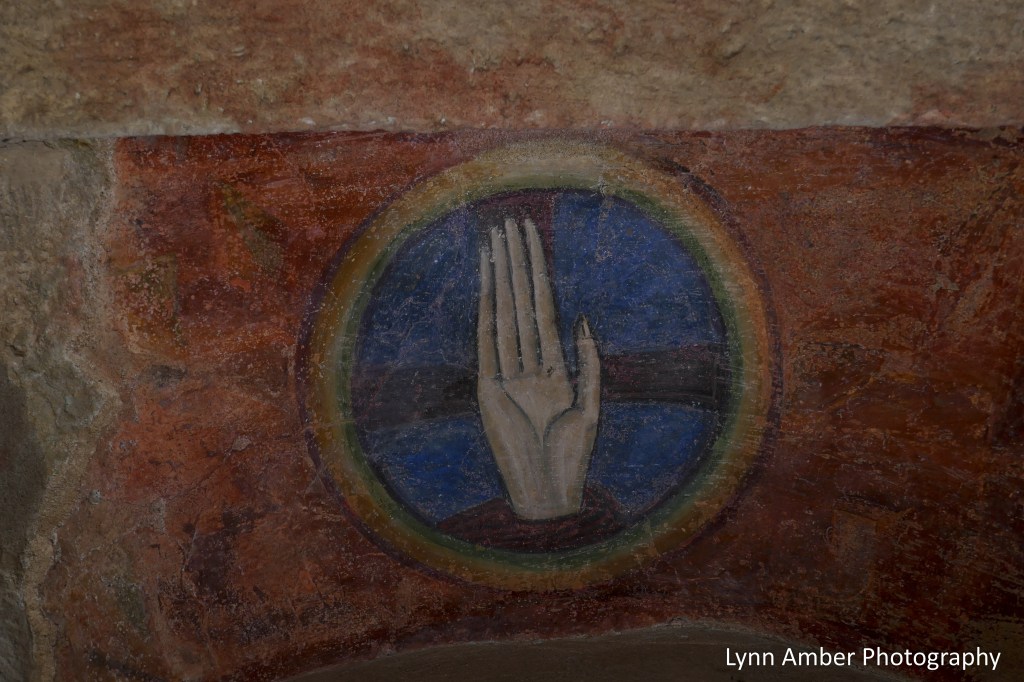
Below are some close-ups of the artwork in the chapel. Stunning!

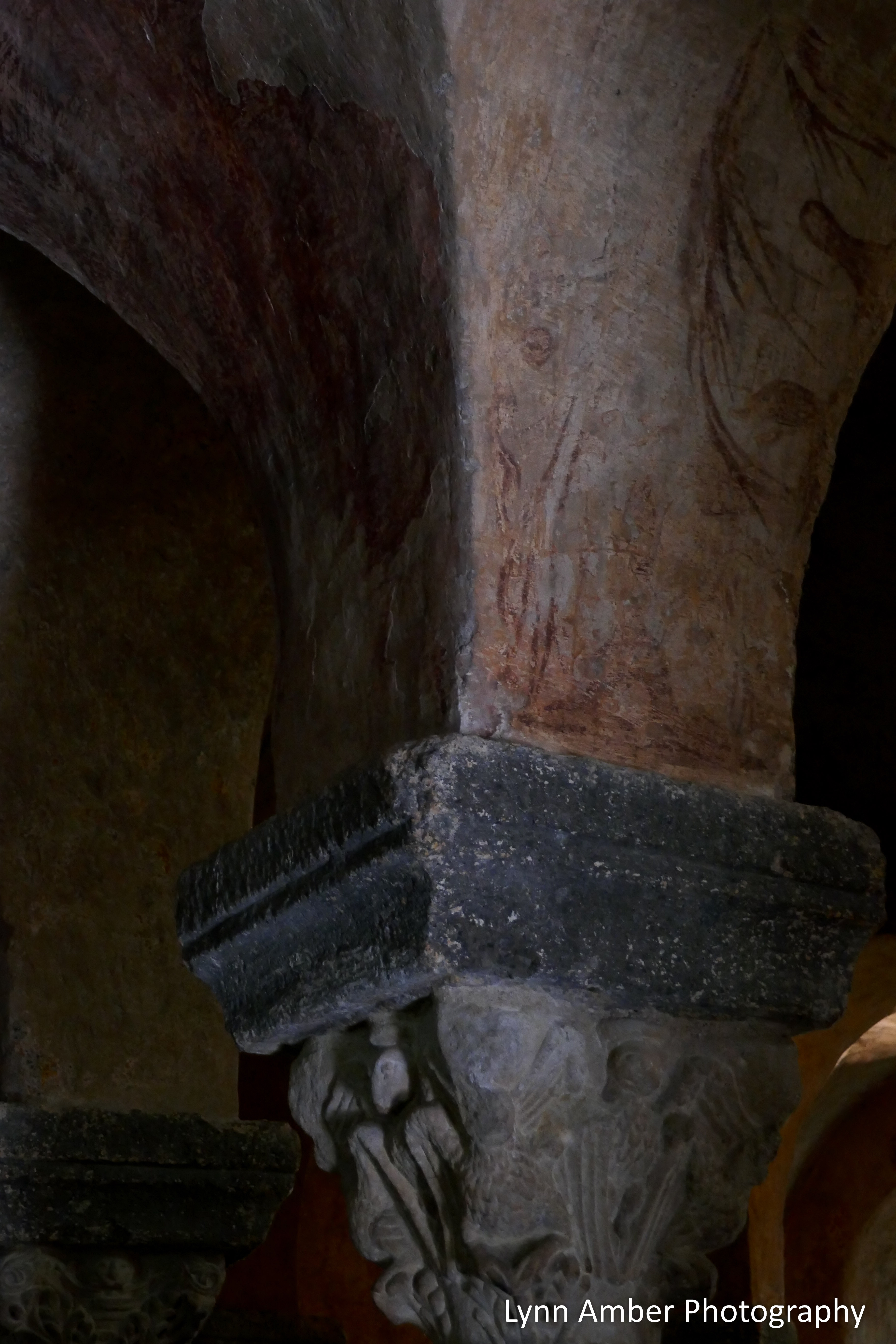

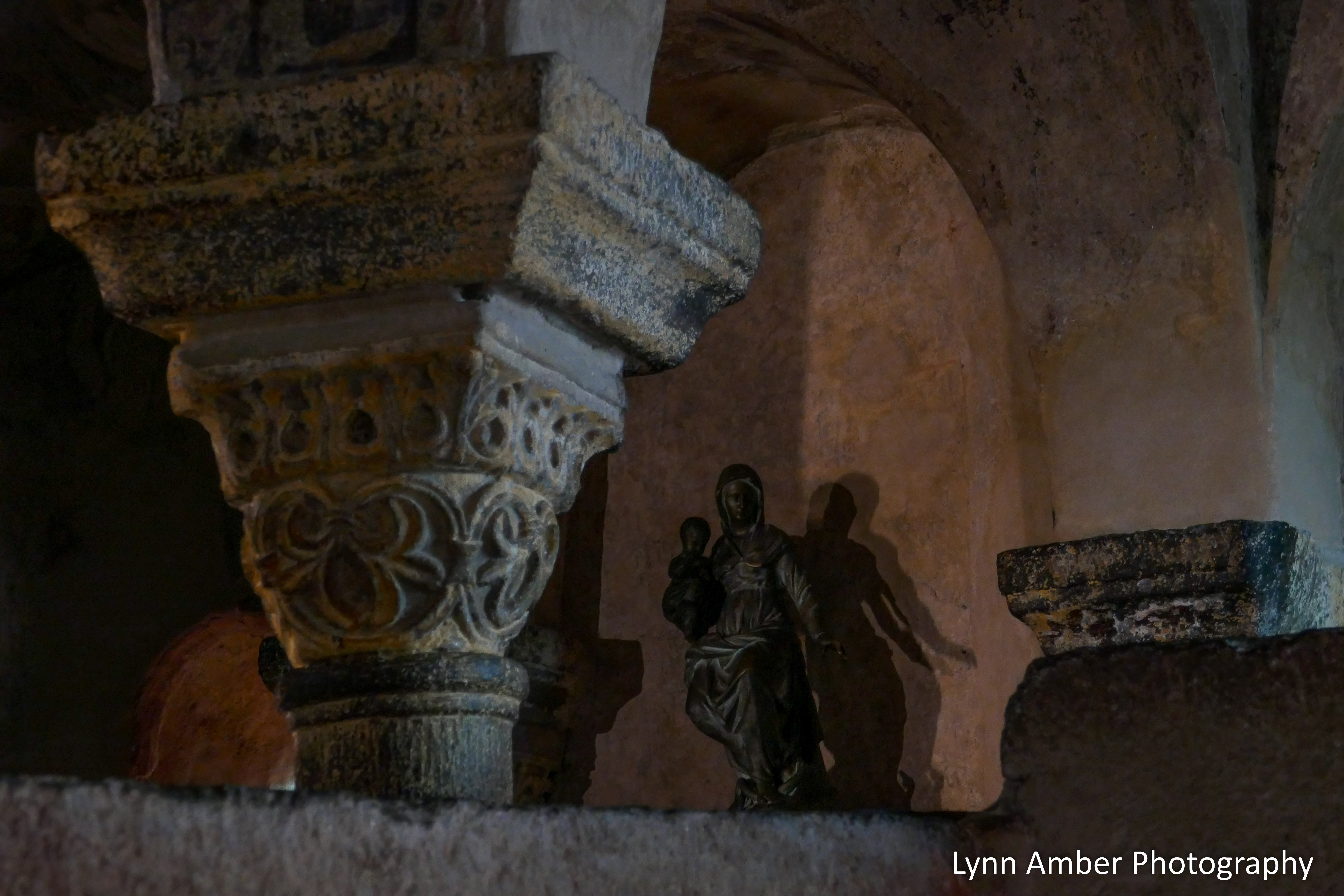
Until next time….final preparations and our jumping off day!!
Le Puy Camino – Via Podiensis: The Start of My Journey

March 22-24, 2023
After months of preparation, it was hard to believe that the day of departure for this incredible journey was upon me. Walking for six weeks in rural France along an ancient pilgrimage route was a dream come true.

The first leg of my journey started with a Greyhound bus ride from Montpelier, Vermont to Montreal, Quebec, Canada where I would hook up with a traveling companion (my sister-in-law) who was flying in from Vancouver, Canada.
We spent a night and a partial day in Montreal waiting for our overnight flight to Paris. It was fun to explore part of the old city, enjoy a fantastic lunch at Chez Suzette and get used to hearing French spoken all around us! Now that I’ve spent 6 weeks immersed in the French language, I see more visits to my northern neighbor, Quebec, in my future as a good way to practice my new language skills.

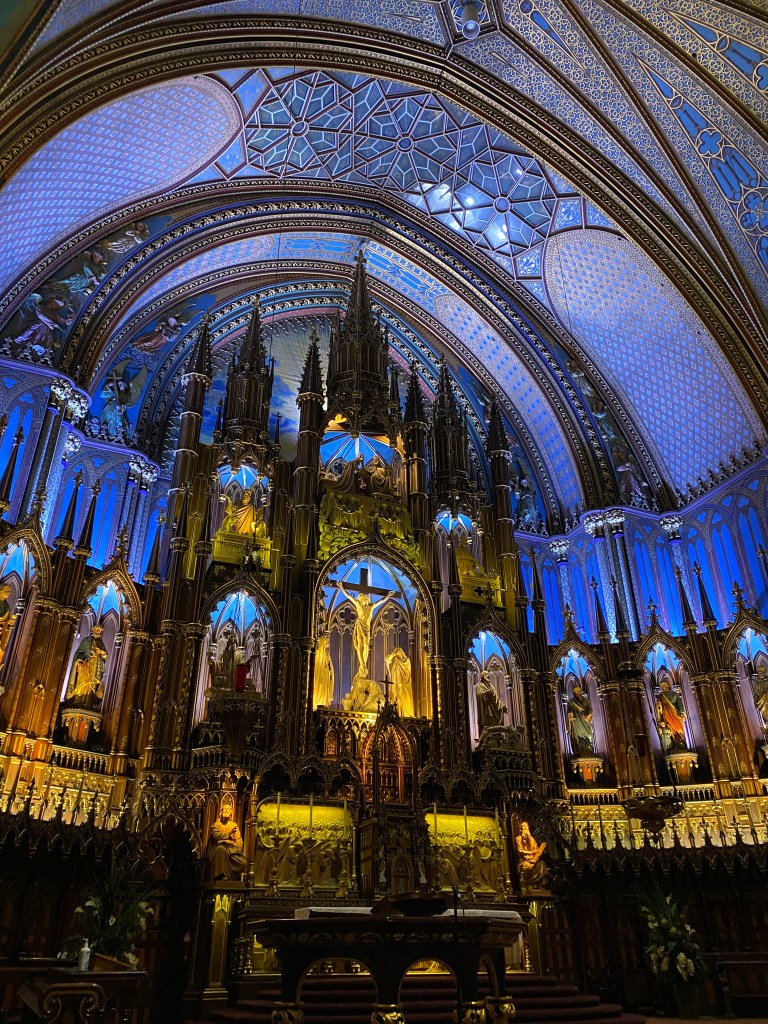
From Montreal, we boarded an Air Canada flight to Paris. Due to the political upheaval in France and the protests and strikes plaguing Paris, we opted to cancel our plans to spend 4 days in Paris. Instead, we reserved train tickets from the Charles de Gaulle Airport train station directly to Le Puy-en-Velay – where we would ultimately commence our walk. As it turned out, the train we were to board was cancelled due to the strike but, luckily, we were able to catch another train departing that same day with available space. Whew! We were on our way!
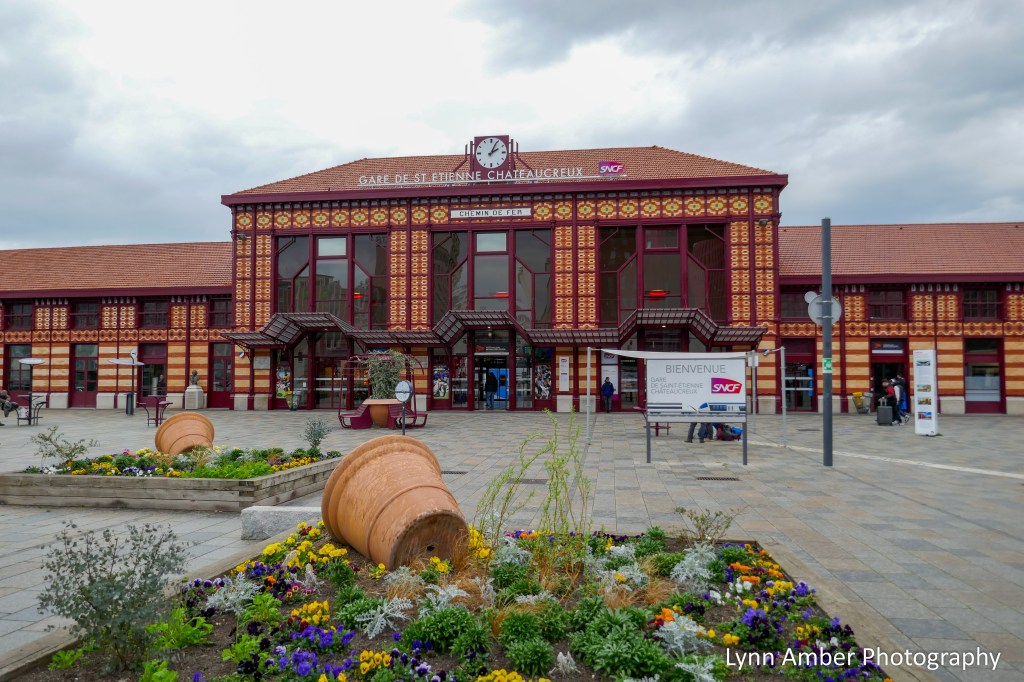
It is not a straight forward train ride from Paris to Le Puy. We had to change trains in Lyon and then switch to a bus in the town of St. Etienne. At one point, we disembarked the train at the wrong stop (blaming it on the language barrier!) and almost made a costly mistake. We realized our error just in time to hop back through the train doors before they closed! After more than 24 hours of travel via air, train and bus, we arrived in Le Puy-en-Velay early evening on March 24. During the train ride, we arranged accommodations for our first night in Le Puy at the Chambre-d’hôtes La Prévôté – one of many options within the village.
Housed in a stone building converted from an ancient convent, the lodging proved very nice and we quickly got a lesson in protocol that would be repeated numerous times over the course of 6 weeks. Because of the number of pilgrims and walkers who pass through this region, certain procedures have been adopted to minimize the onset of the dreaded “bed bugs” issue commonly found in shared housing along the Camino routes. All backpacks and shoes were left in a communal area of the accommodation. We were issued plastic tubs to put items in that we would need and we carried only that tub to our bedroom. Everything else was to remain with the backpacks. While inconvenient at times (there was always that one item left in the pack that I needed!), I was happy to comply if it meant avoiding those pesky little critters!

Our first night accommodation ended up being directly behind the Cathédrale Notre-Dame du Puy. Sebastian was an excellent host and a typical French continental breakfast is included with the cost of the room. Our stay here represented what I would categorize as typical lodging for us along the Le Puy Camino with the exception being we usually paid extra for an evening meal to be included – referred to as a demi-pension.

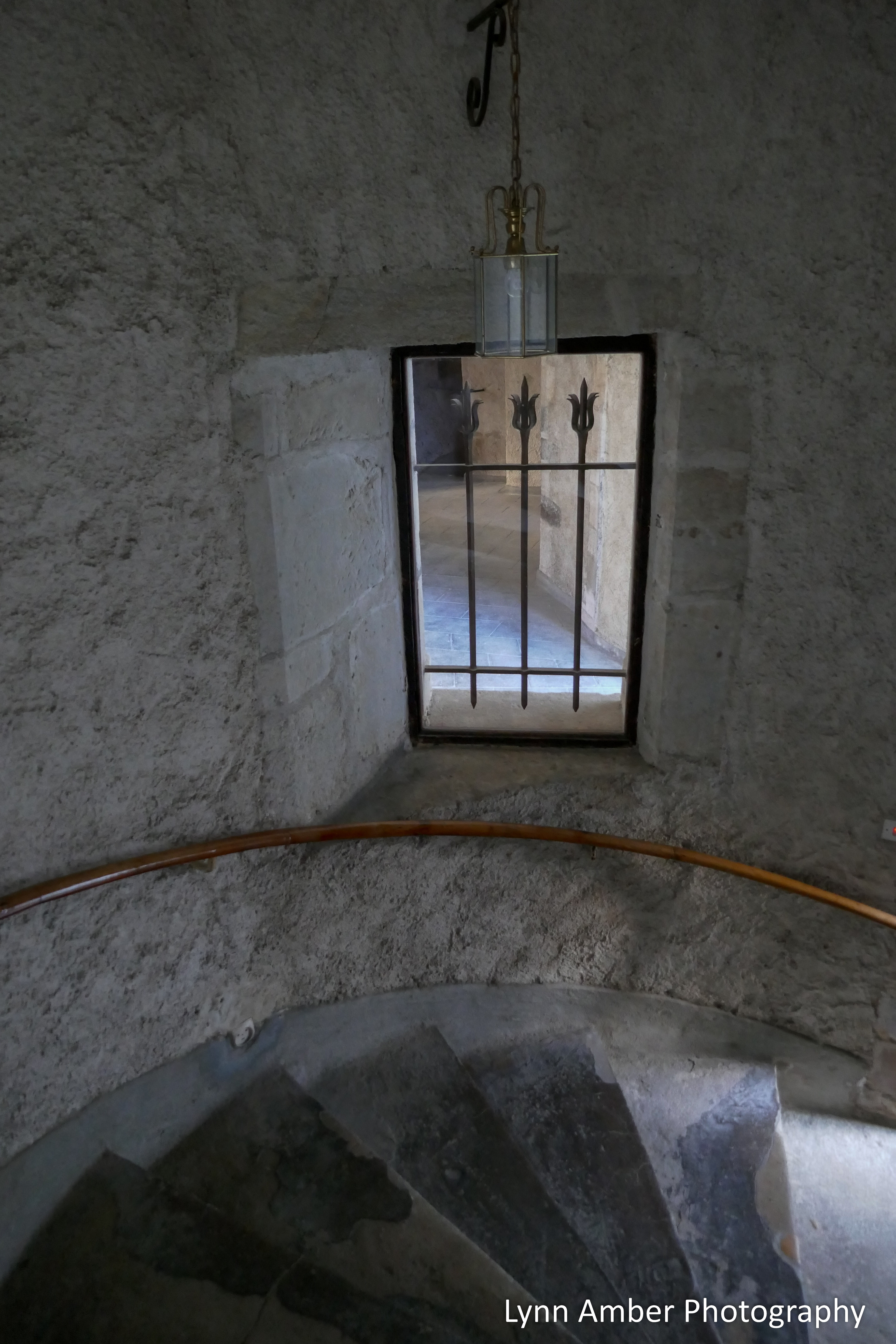
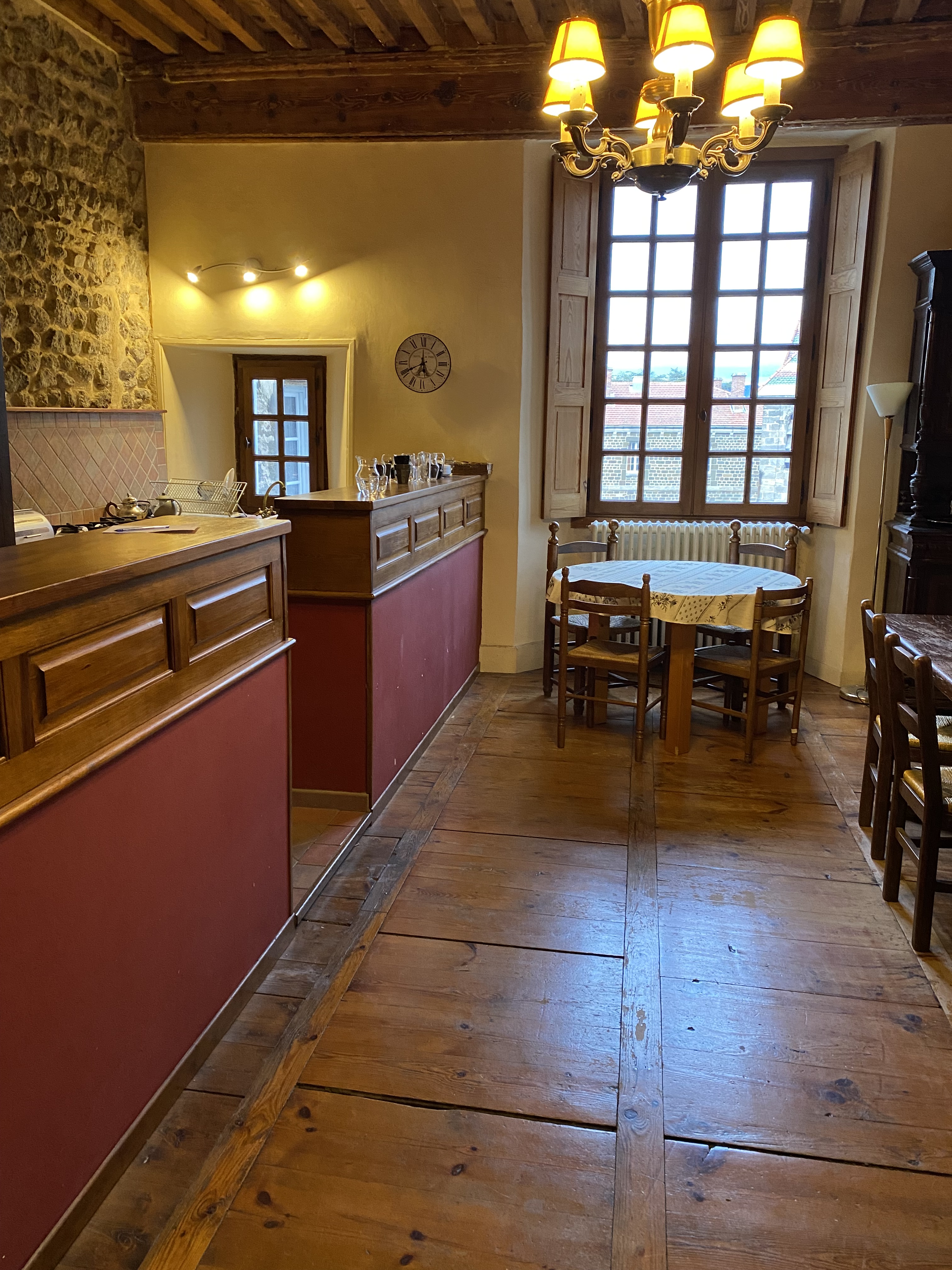
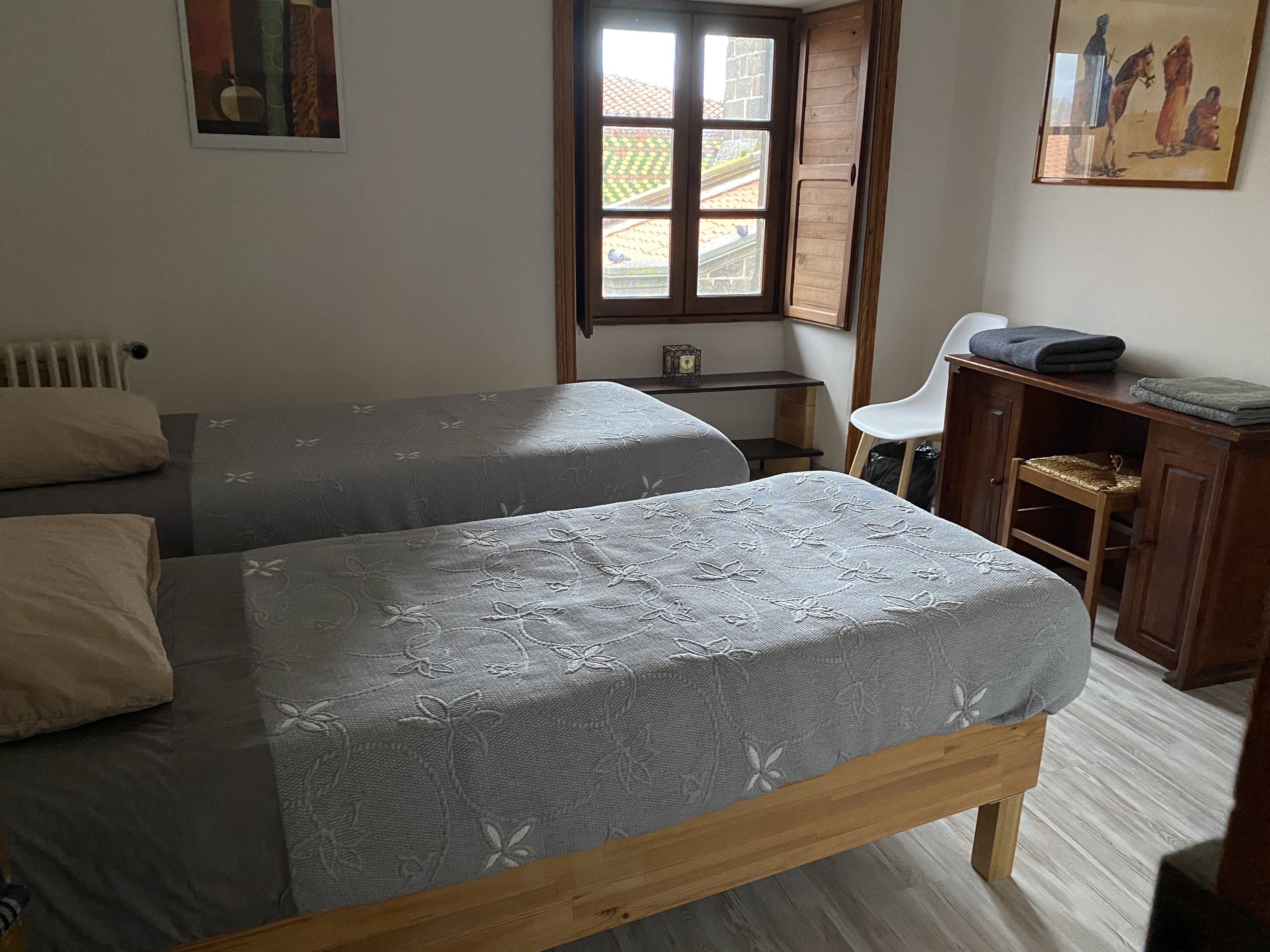
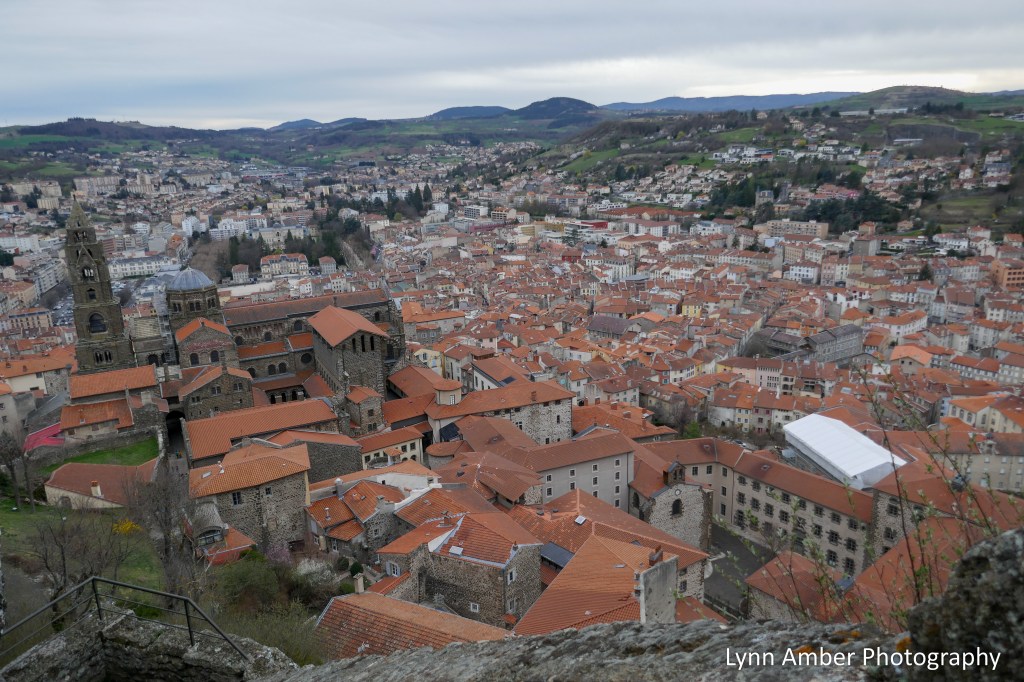
There was an ancient stone spiral staircase that led to the accommodations – very cool! I felt like I had stepped back in time! The rooms were simply furnished but clean, bright and inviting. Below is the common room where breakfast was served and our bedroom – where we happily collapsed that night after so many hours of travel. The first photograph on this post was actually the rooftop view out our bedroom window!
A little history….
Le Puy-en-Velay is the capital of the Haute-Loire department in the Auvergne-Rhône-Alpes région of south-central France. The town has its origins in medieval times and was a major diocese of the Catholic church. Le Puy has been considered a major starting point for the pilgrim route to Santiago de Compostella since before the 10th century. The Cathédrale Notre-Dame du Puy was constructed between the 5th and 15th centuries and is located on the highest point in the town. It is a UNESCO World Heritage Site along with many other historic sites along the Camino route.
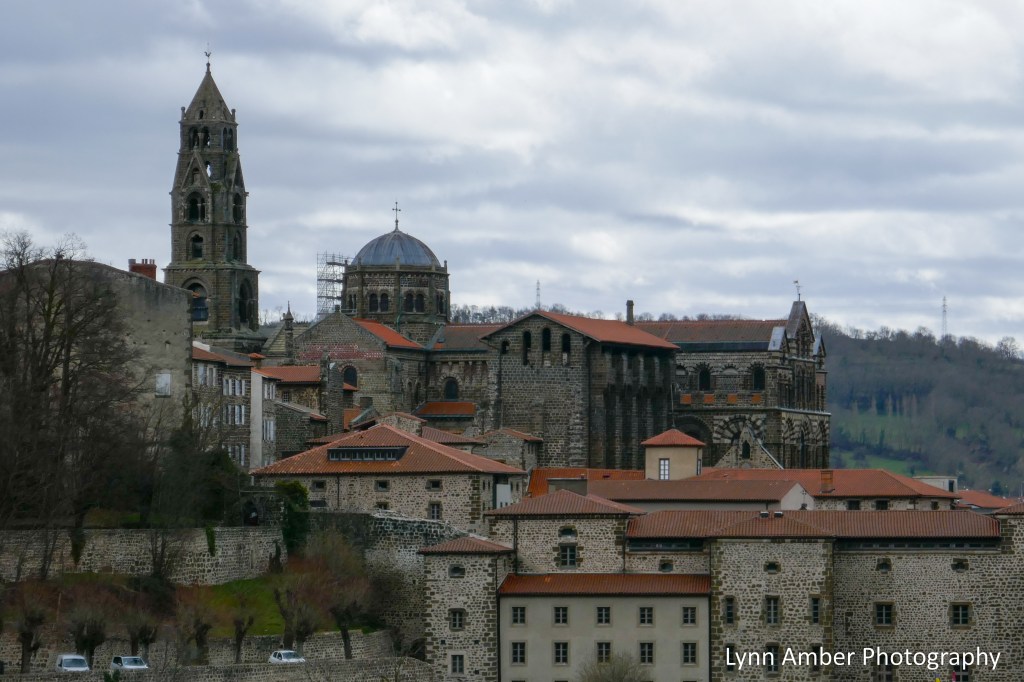

It is the jumping off point for the Le Puy Camino. Each morning, a pilgrim mass is conducted in the church followed by a special blessing. Pilgrims then descend a hidden staircase from inside the church down to the cathedral steps to start the walk towards Santiago de Compostella – a distance of over 1500 kilometers. We would be executing this rite of passage in a few days and I could not wait to begin the journey!
In the meantime, we had several days in Le Puy to sightsee, do a final shake-down and pick up any additional items we might need for the walk. Next up – our fun-filled days in Le Puy-en-Velay…..
Big Bend Hikes: Long Chisos Basin Loop
My last hike before ending my season at Big Bend had to be one more walk in the Chisos Basin. Since I’m in training for a long walk in France, I chose to do the long loop around the top of the basin – going up the Laguna Meadow Trail and connecting to the Pinnacles Trail via the Colima and Boot Canyon Trails. The weather was ideal with temperatures just right for the 11-mile hike! Love these mountains so much!
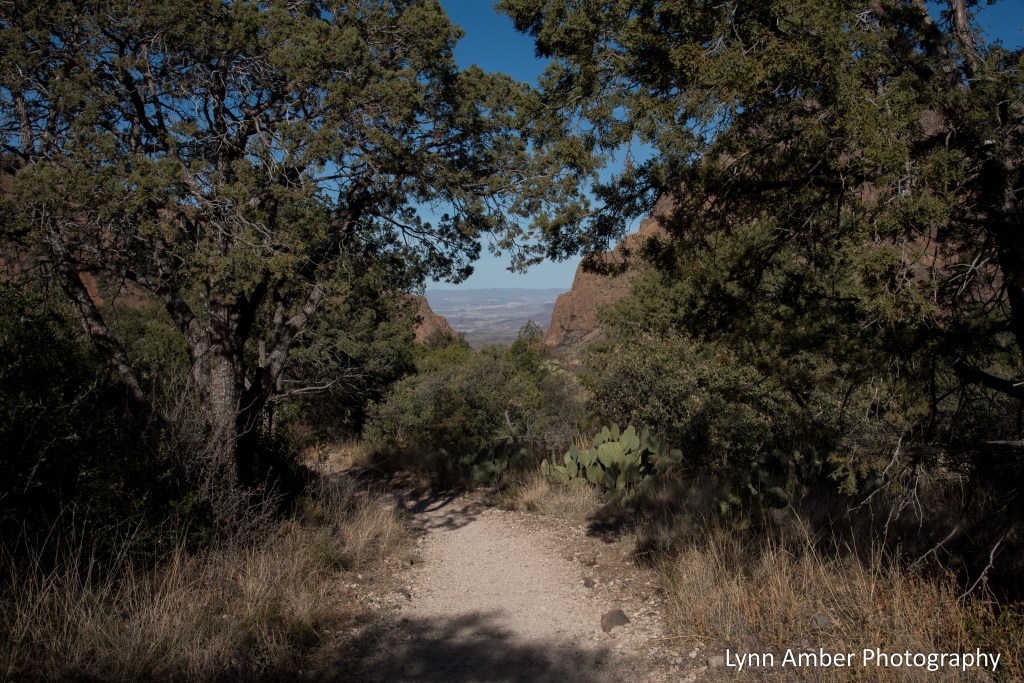
We decided to do the long loop in a counter-clockwise direction. The Laguna Meadows Trail is a more gradual ascent and we followed this trail to its junction with the South Rim and Colima Trails. Along the way, I grabbed some pictures of some of the plants I love that inhabit this mountain environment.

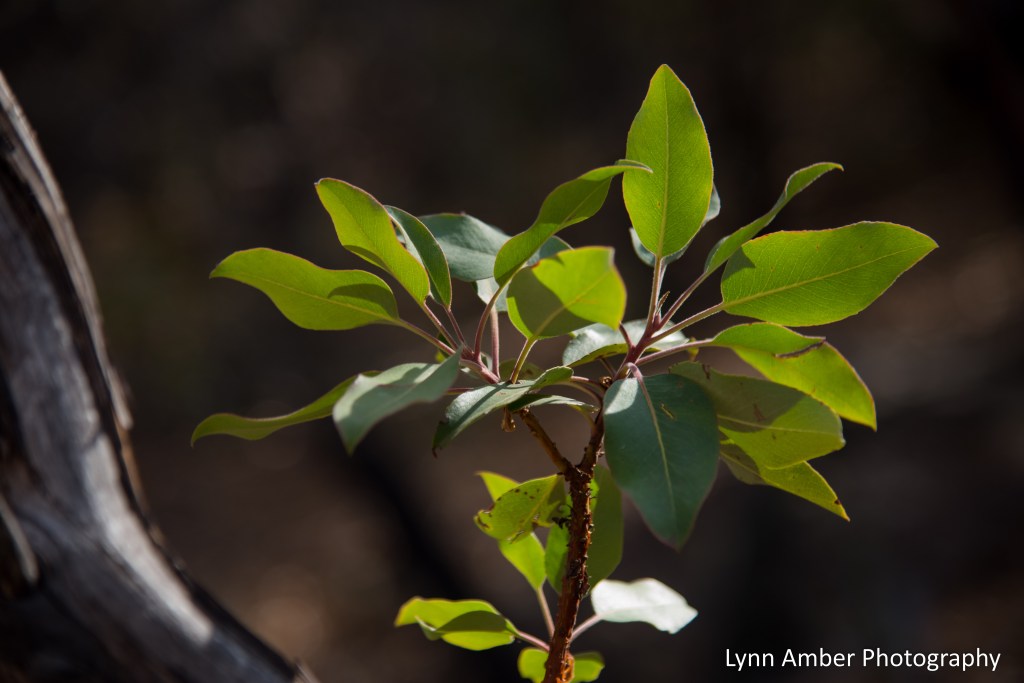
After about 4.5 miles, we came to the junction of the Blue Creek Trail which descends steeply towards the Homer Wilson Ranch and is part of the Outer Mountain Loop. The Outer Mountain Loop is a popular 3-day backpacking route that skirts the base of the Chisos Mountains and climbs into the mountains. At some point, it would be fun to try completing this difficult hike. When Jim and I reached the Blue Creek Trail, we came across a couple eating lunch who were just starting their Outer Mountain Loop backpack trip and getting ready to head down the Blue Creek Trail. We spent some time chatting with them and talking about their other backpacking experiences. The woman shared that she has hiked the Appalachian Trail a section at a time and still has to complete the Vermont leg of the trail near us.
After leaving those folks, we forged on to the end of the Laguna Meadows Trail where it meets two trails – the South Rim Trail and the Colima Trail. Although I would have liked to hike out to the South Rim, it would have added 4 miles to the distance and meant getting done near dark. I was content with just viewing the South Rim from the Laguna Meadow Trail! 🙂

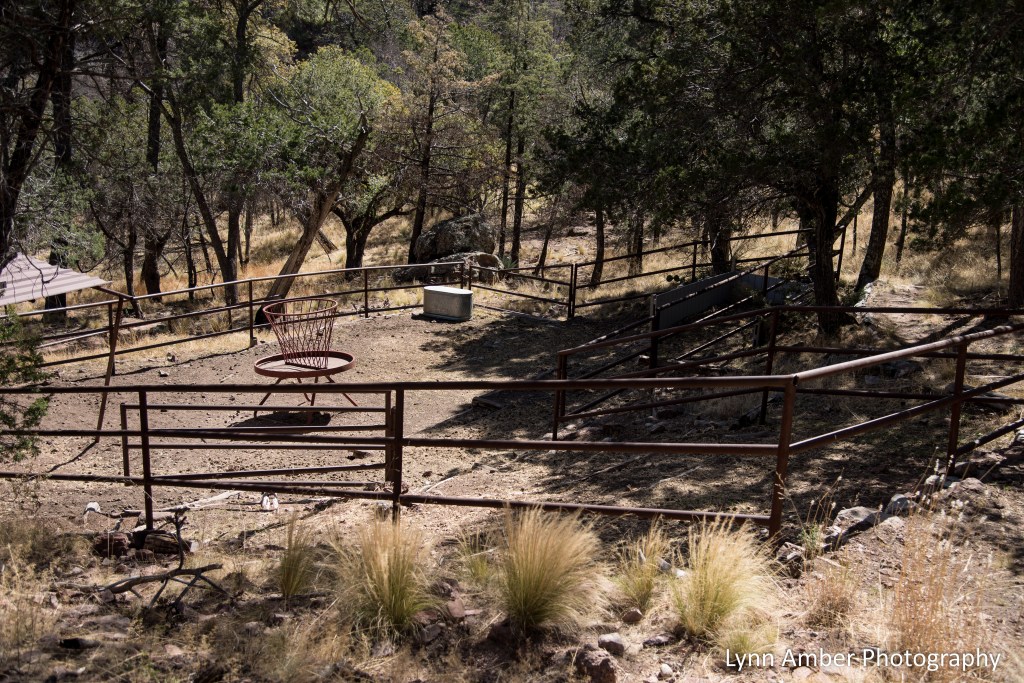
The Colima Trail is a connector trail that leads to the Boot Canyon Trail and the East Rim Trail system. In this area, there is a corral and cabin used by the park trail crew. We noticed the corral just off the trail and could not resist checking it out.
The short mile-long Colima Trail brought us to the Boot Canyon Trail. We hiked this same loop a number of years ago and I was reminded how much I loved this part of the hike through the magnificent canyon terrain with sweeping views of the desert and Sierra del Carmen range in the distance.
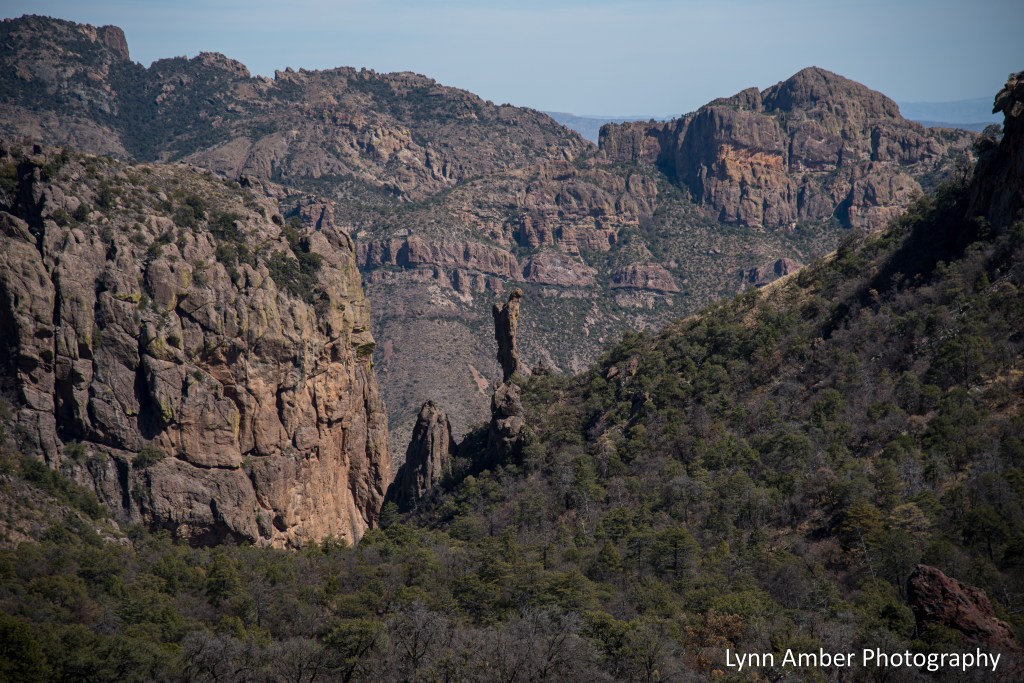
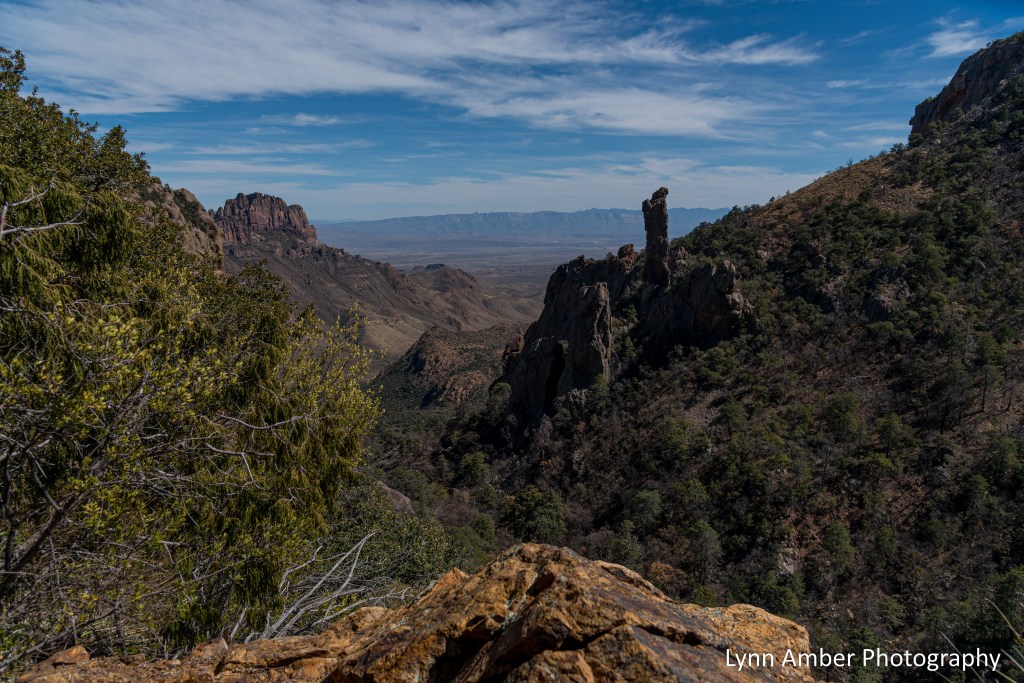

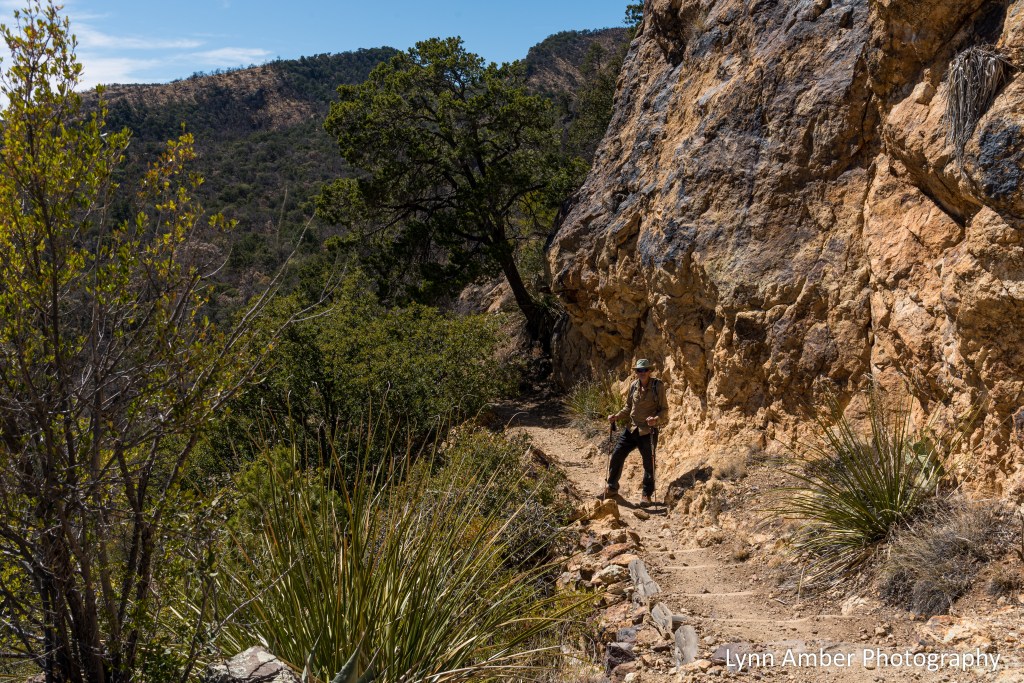
The Boot Canyon Trail is dramatic and breathtaking – a highlight of the hike for me! It winds around Emory Peak and through the canyon with some short, steep climbs and drop-offs punctuated with amazing views.
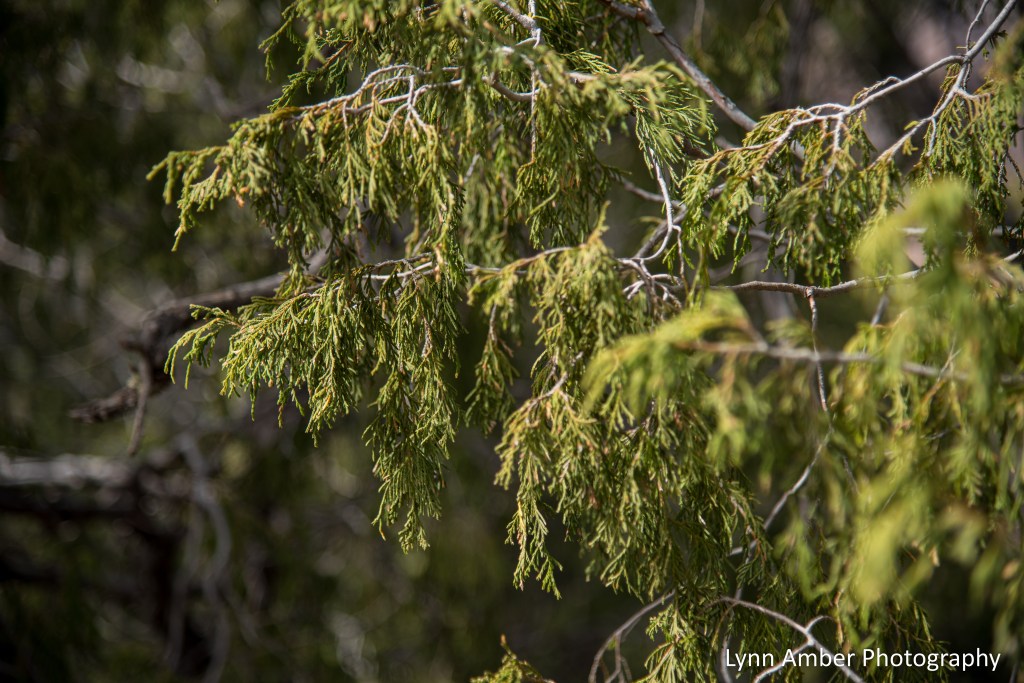
Along with Texas Madrone, the Chisos high country is peppered with several varieties of Oaks, Pinon Pines and Juniper trees. There is an incredible diversity of plant material here. It has taken me a few years to really learn and appreciate this unique plant life.

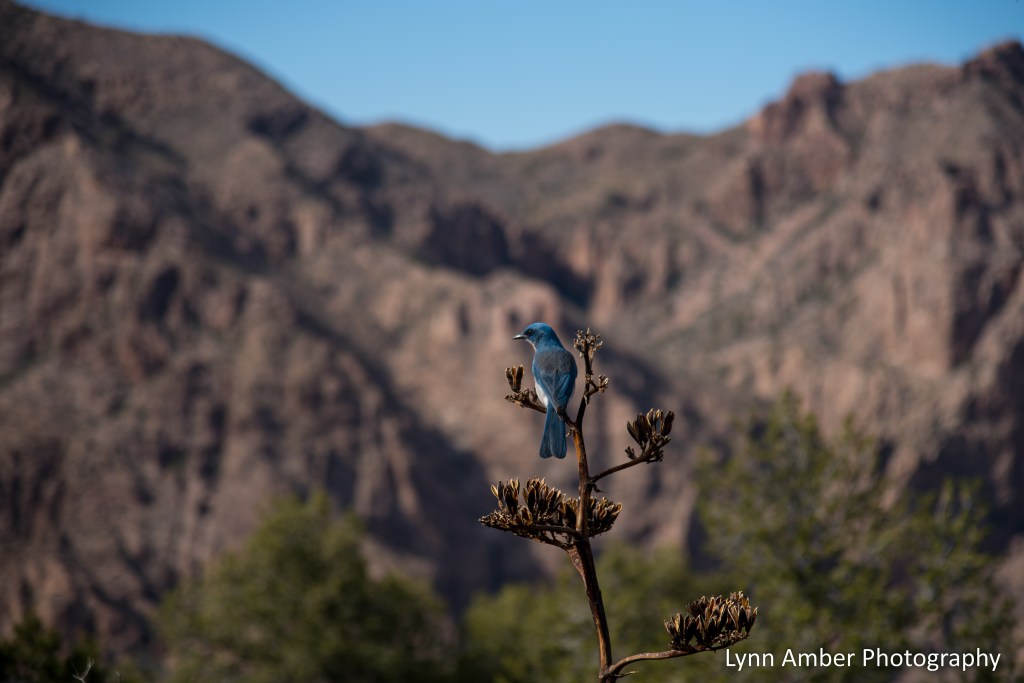
Once we reached the junction with the Pinnacles Trail, we were well past the half-way mark of the hike and had just the 3.5-mile descent to go. I always feel like descending is easier but, honestly, the Pinnacles Trail loses elevation steeply and really does wear on the legs!! Thank goodness for hiking poles! We stopped for a few breaks along the way and I got side-tracked with trying to capture a photo of the Mexican Blue Jay that was taunting us on our descent!


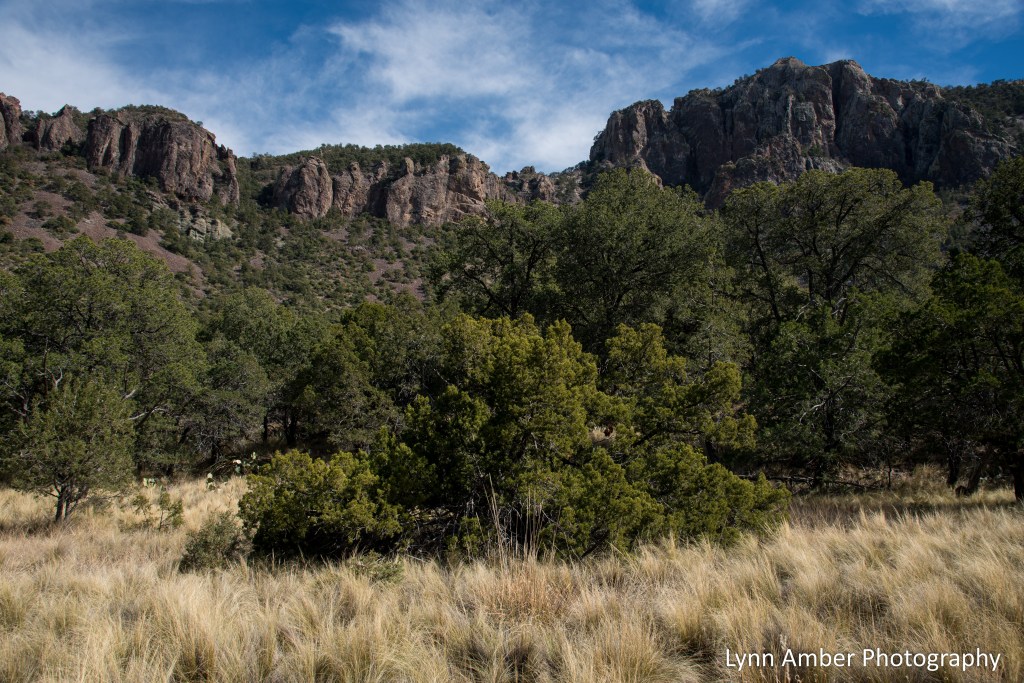
The Juniper Flats area along the Pinnacles Trail is really pretty and there are several back-country campsites here. Next trip to Big Bend, we decided that we would spend a couple nights up here. It is a short hike from the parking area with a backpack and I can imagine the night sky must be spectacular!


This Mexican Blue Jay was following us down the trail – looking for a hand-out I assume! Every time I would get close to snapping a good photo, he would take off before I could get focused! Finally, towards the end of the hike, he perched on this agave flower stem and stayed put – allowing me to capture him up close and personal. Such a tease!

I have much more to post regarding our 5-month stay in Big Bend and will continue as I find the time. I am somewhat pre-occupied with planning for an upcoming spring trip to France and the start of an adventurous trek along the Way of St. James – Le Puy. I purchased a lighter weight travel camera for this 460-mile walk and hope to be able to document my journey! Au revoir, à bientôt….
Big Bend Hikes – Blue Creek Trail
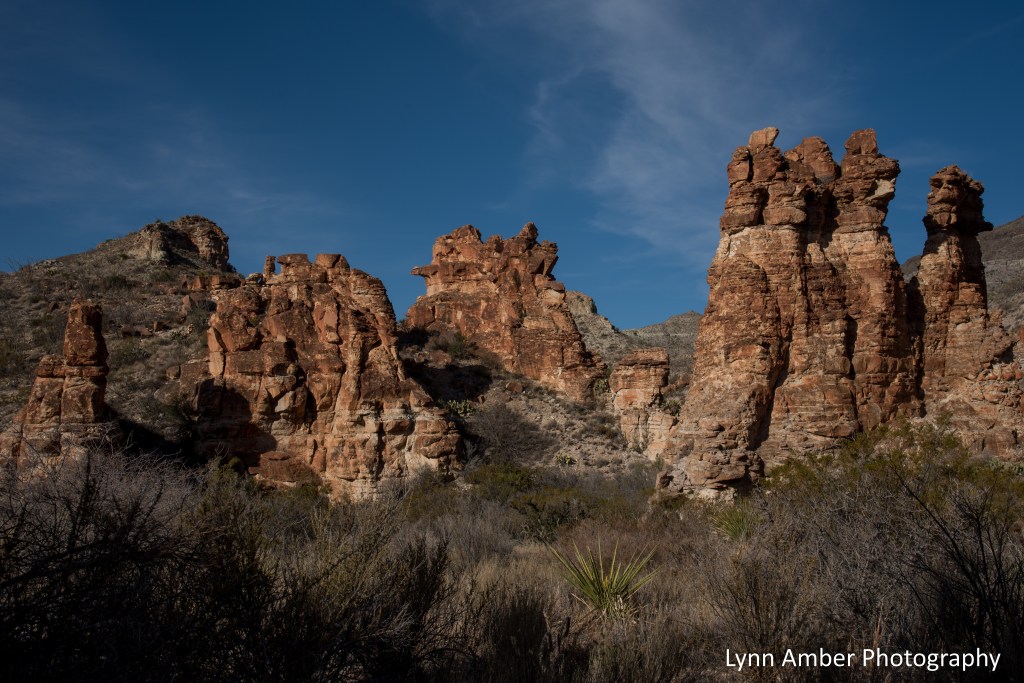
If you’re looking for something a little different and less travelled, the Blue Creek Trail has a lot to offer. The trail starts in the Blue Creek wash near the Homer Wilson Ranch ruins and climbs up into the Chisos Mountains – from desert floor to mountain vistas all in one hike! The round-trip hike is about 11 miles.
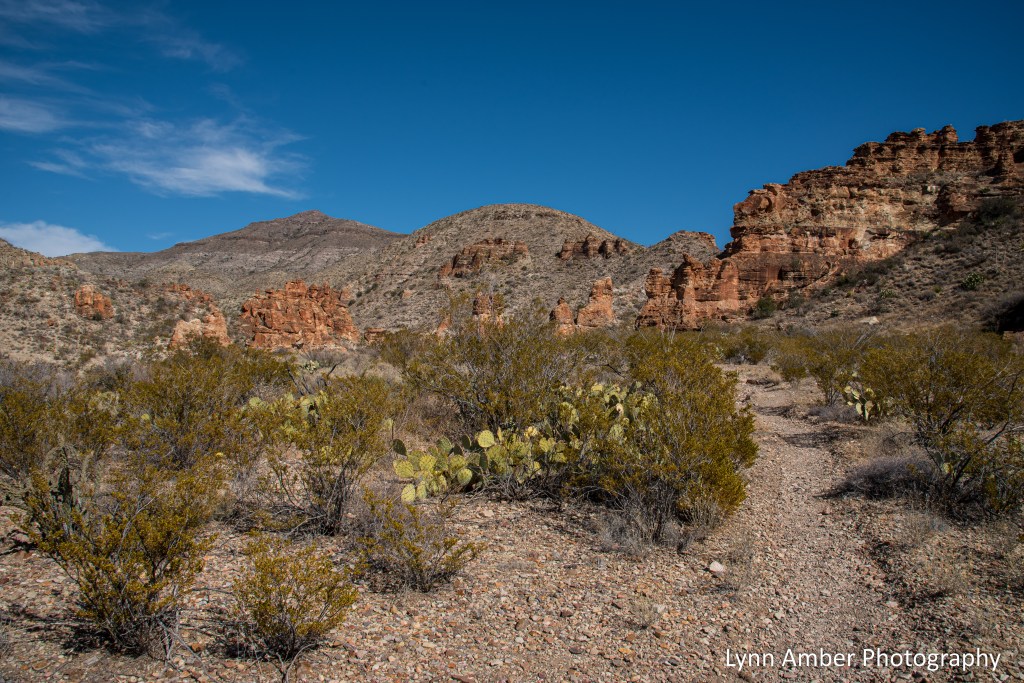
We got a late start on the day we hiked the trail, and chose to do a 6-mile hike which would take us past the red rock hoodoos and into the foothills leading to the mountains. If you want to just get a look at the red rock formations, then you can shorten the roundtrip walk to 3 miles.
Heading into the arroyo near the ranch, the trail follows the wash winding past impressive, stories high red rock formations.
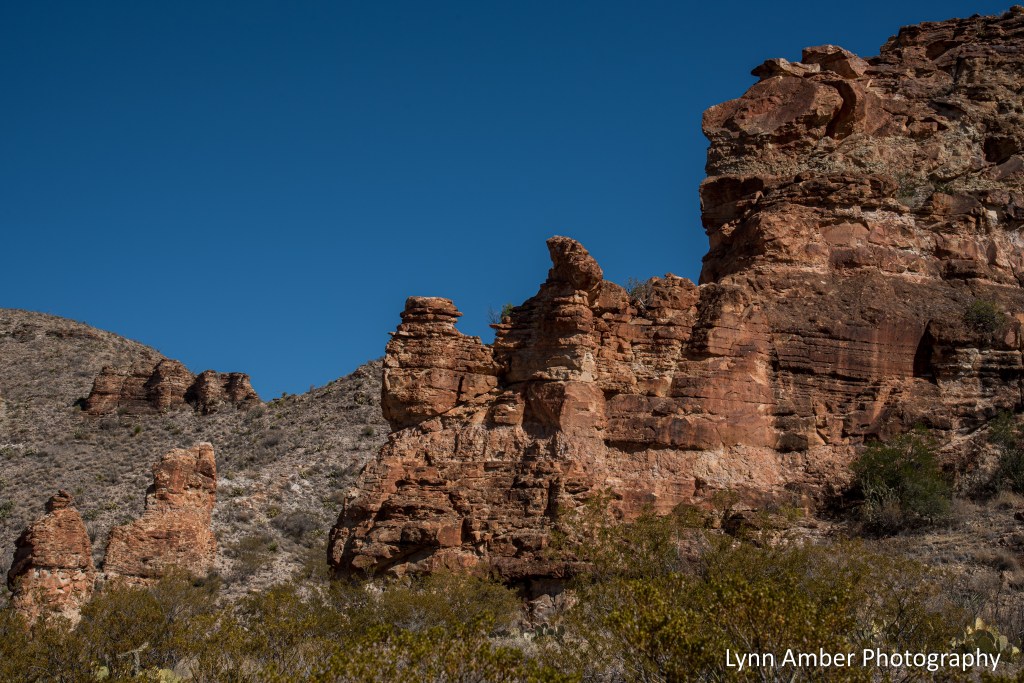
After leaving the red rocks behind, the trail climbs up out of the wash and starts its ascent to the intersection with the Laguna Meadows Trail high in the Chisos. If you take the trail all the way to its terminus, it would be about a 2600+ elevation change. We hiked well into the foothills before turning around.

Our return trip towards late afternoon offered some beautiful vistas looking out towards the Rio Grande River valley and the cliffs that line the river.

The late afternoon light was really illuminating the red rocks on our descent and casting interesting shadows. I was amazed at the plant life that survives on the steep cliff walls!

Back at the start of the trailhead, we wandered around the historic ranch ruins admiring the architecture of the buildings – including the artistically laid flagstone floor in the house. The house and buildings in this location were used by a foreman named Lott Felts. The main house for the ranch was located a few miles away in Oak Canyon. I had the pleasure of talking with a descendant of Homer Wilson a couple of weeks ago. He mentioned that Homer Wilson was his grandfather and he was headed to Oak Canyon to visit the site of his ranch. I love it when people with real connections to the park come back and tell me stories about their ancestors. Pretty cool!! 🙂

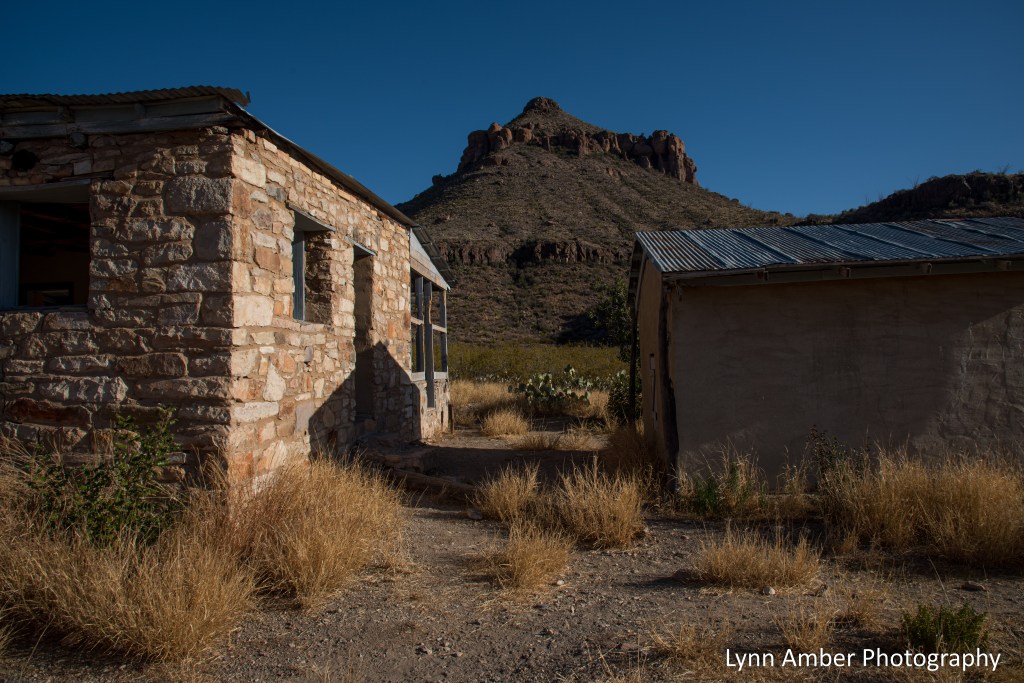
What a wonderfully peaceful and picturesque spot! Can you imagine living here?
Big Bend Flowers

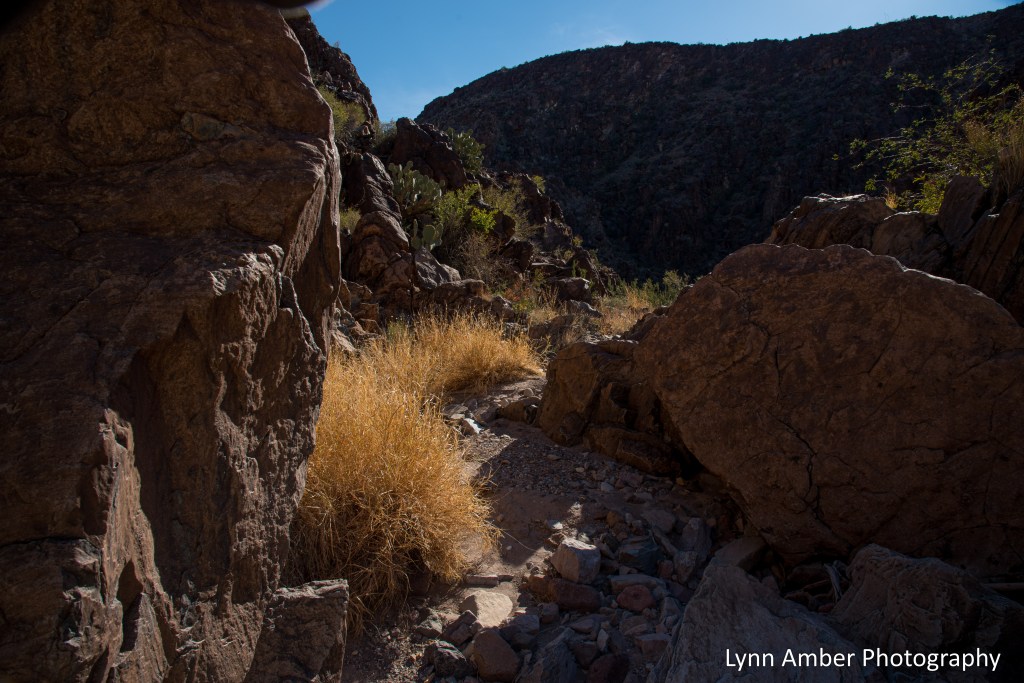
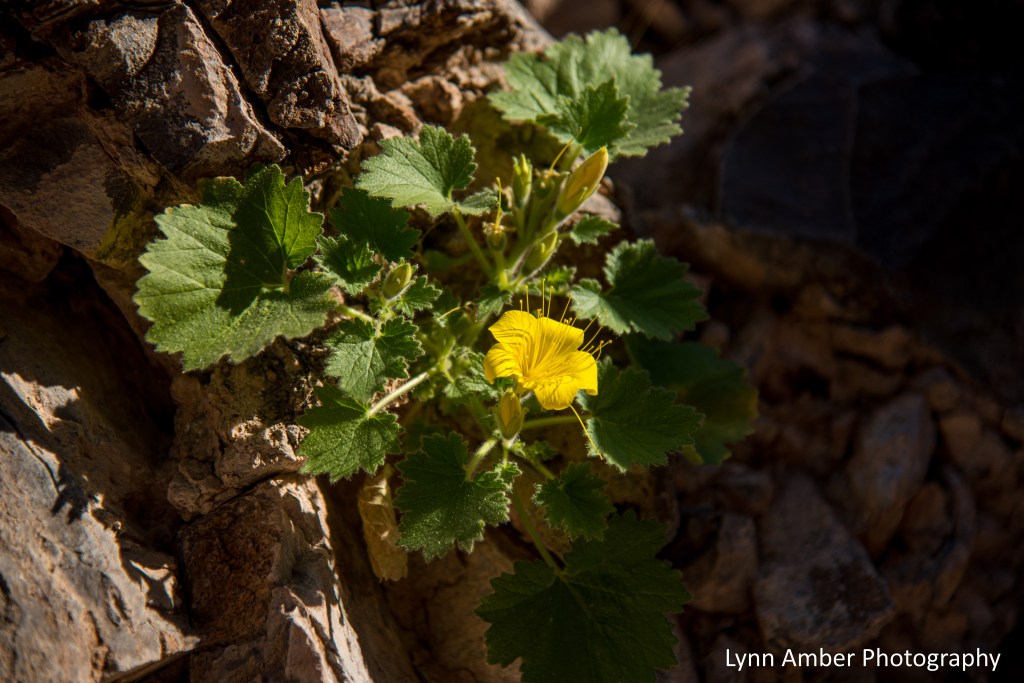
Towards the end of January, we drove to a small parking area along the Ross Maxwell Scenic Drive to hike down the wash that leads to Horseshoe Canyon. I was so surprised to find some plants in bloom!! The above rock nettle was cascading down the canyon walls in drifts!
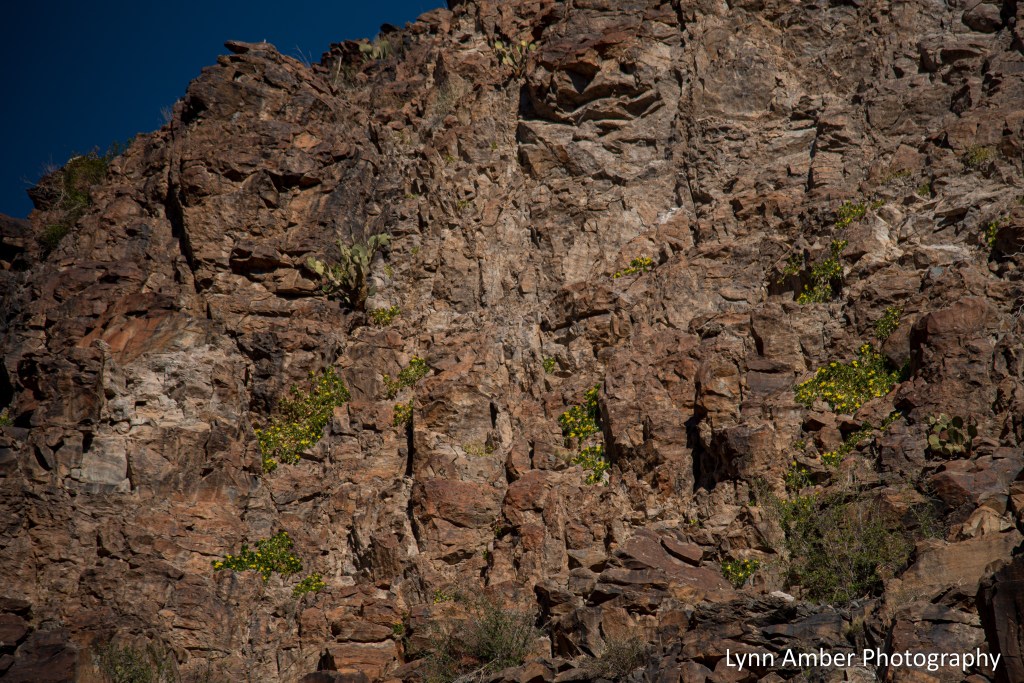
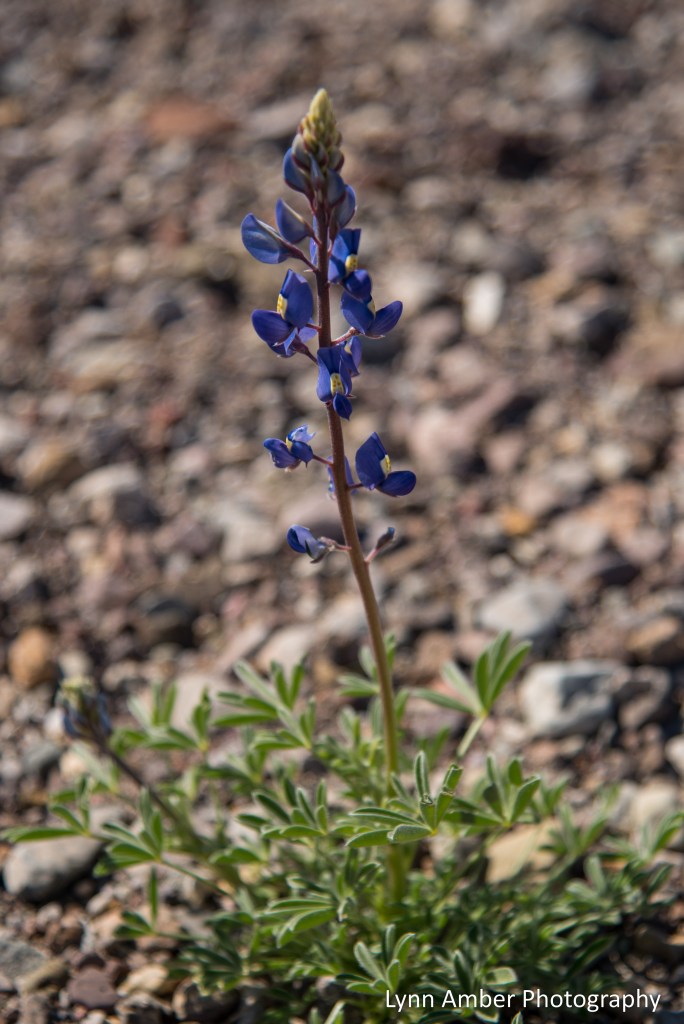
Of course, perhaps the most famous flowering perennial in Big Bend National Park is the Big Bend Bluebonnet – a common name for the plant Lupinus harvardii. Towards the end of January after some rain, this perennial started blooming in some warmer microclimates throughout the park.

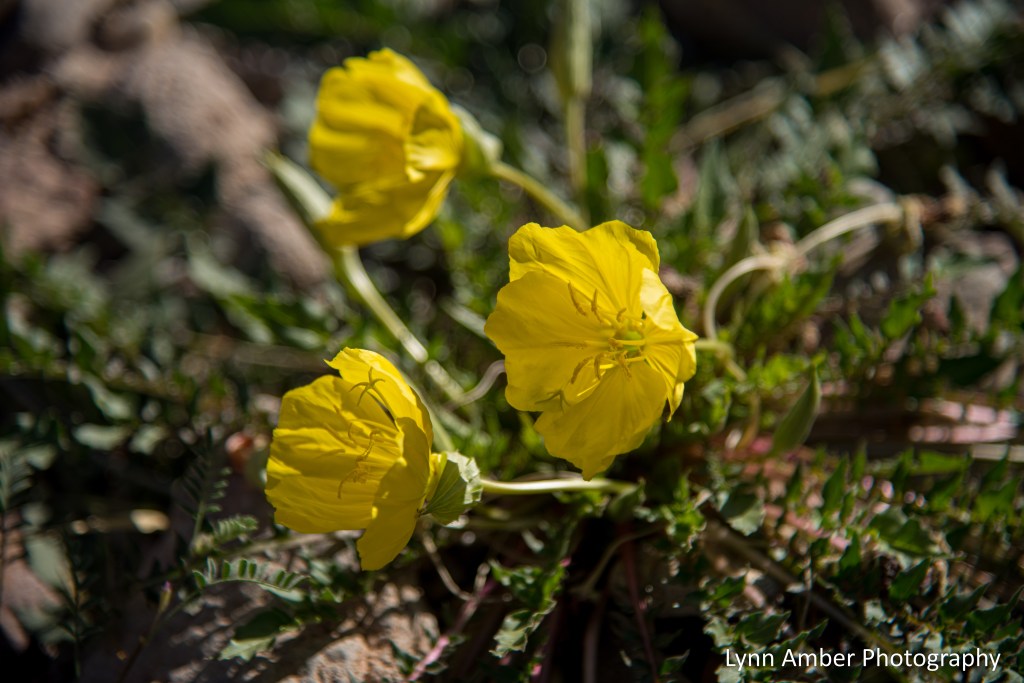
Along the wash mixed in with the blue bonnets were numerous Desert Evening Primroses – Oenothera primiveris.
It was a sweet little walk along an unmarked trail. The canyon was unique with its unusually rough rock surface. We will need to go back and explore deeper into the canyon on another day! 🙂