Lynn Amber - Travel & Photography
sharing my thoughts through words and images
Le Puy Camino – via Podiensis: Saugues to Chanaleilles

April 3 , 2023
After getting all settled in at the Gîte d’étape Le Par’ici, my sister-in-law and I took another stroll around town to find the church and maybe a little café to enjoy a snack and a glass of wine.
Saugues is a commune located in the Haute-Loire department of Southern France. It is also in this area where the renowned Beast of Gévaudan terrorized the countryside in the 1760’s. There is a museum in Saugues called the Museum of the Beast of Gévaudan devoted to the history surrounding this beast. Legend states that over a hundred people were killed by this wolf-like beast until a local farmer managed to destroy it. I wish that I known about the museum when I was in the town. I might have chosen to stop in. Next time!
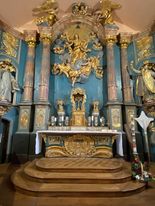
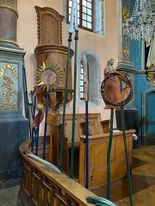
We stopped in to see the church and also a small chapel called the Chapelle des Pénitents. It is one of the few remaining chapels of penitents remaining in this region. The Penitent Christian movement dates back to the 4th century. Apparently, these chapels were built by penitents – those who confessed to serious crimes and were offered redemption upon the completion of a penance. Many of the brotherhoods of penitents constructed or repaired churches. The original chapel here was built in 1681 by the Brotherhood of White Penitents. The Chapelle des Pénitents in Saugues was quite ornate! Please excuse the iPhone photos – not sure why they are showing up blurry here but not on my phone!

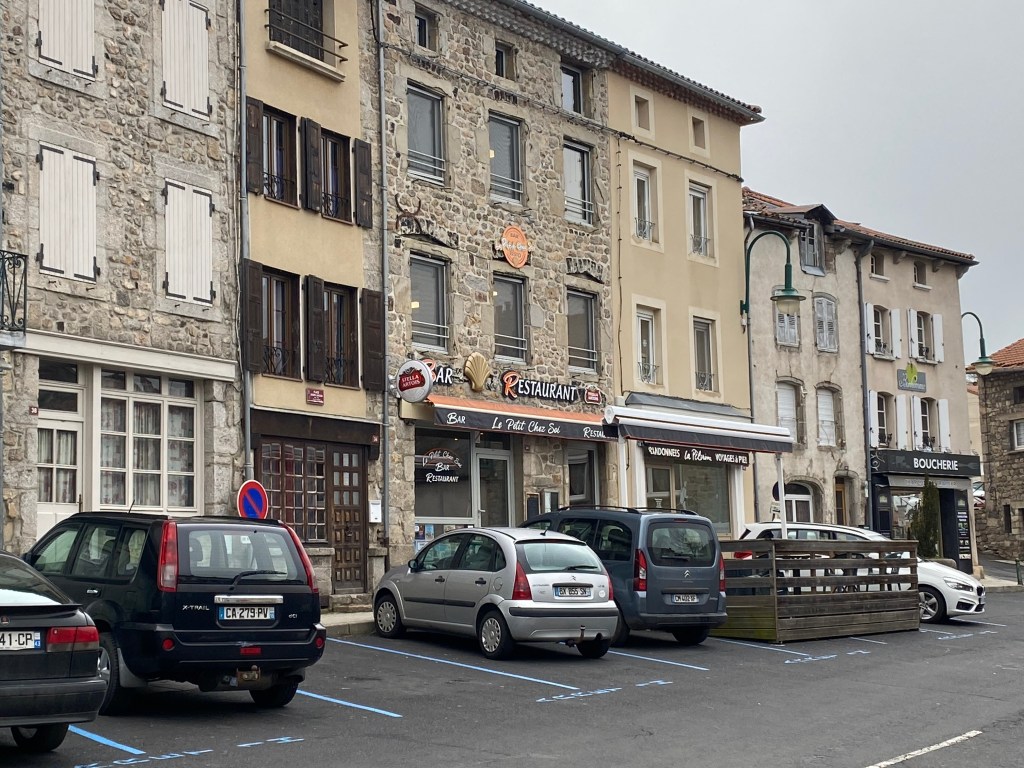
We eventually found our way to a small café (one of the restaurants that was full when I first arrived in town) and it had cleared out nicely. Le Petit Chez Soi was a sweet little restaurant and bar. So glad we stopped and gave them some business!
Another bit of information I learned about Saugues (once I was back in the states) is that it is known for woodworking. In particular, the craft of making “esclops” or clogs is associated with Saugues. This explains why I noticed clogs while walking in this region. I wondered why people decorated with them. Now I know!

Once we got back to the gîte, I had some time to rest and write in my journal. The accommodation was full for the night so we had a large gathering at the dinner table – several young walkers (one with a small dog) and two middle-aged ladies. Laure also joined us again and would be ending her journey the next day. She had only a limited amount of time to walk and so we would say good-bye to her in the morning.
Our hosts prepared an awesome dinner of squash soup, vegetable lasagna with salad and dessert. It was exceptional!
April 4 , 2023
The next morning, it was kind of chaotic getting ready to leave since there were so many people trying to exit at the same time.
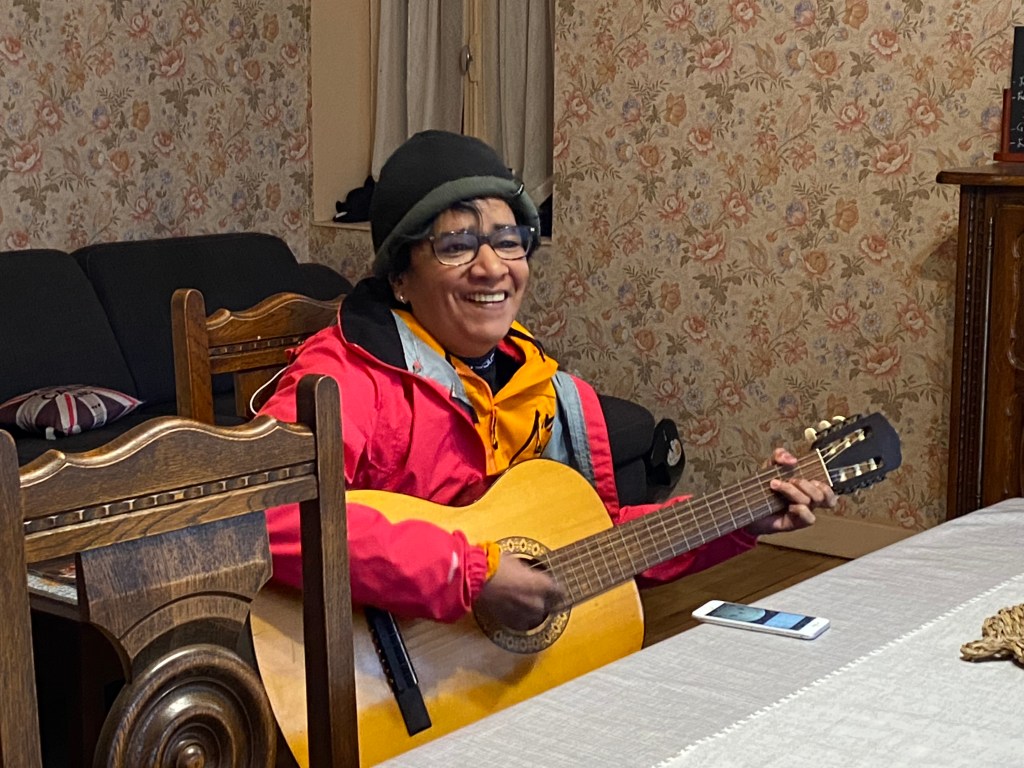
While we were waiting to take our turn in the hallway to don our packs, Laure picked up a guitar that was in the corner of the common room and proceeded to play and sing Bob Marley’s No Woman No Cry. It brought tears to my eyes for some very sentimental reasons. I had a nephew who passed away at the young age of 26 due to melanoma cancer. His favorite artist was Bob Marley so anytime I hear a Marley tune I am reminded of him. I shared with her the reason for my reaction to her singing and she was so touched. She also then shared with me her reason for this journey (which I will not divulge) but it was equally touching. What a beautiful person she is!
The young woman with the dog and another young man decided to travel together for a spell. We would see them again further along in the day.

The morning started off very chilly but as the day progressed the sun did warm things up a bit. We had a 15.5 kilometer walk today to get to our next destination. Some photos leaving town…
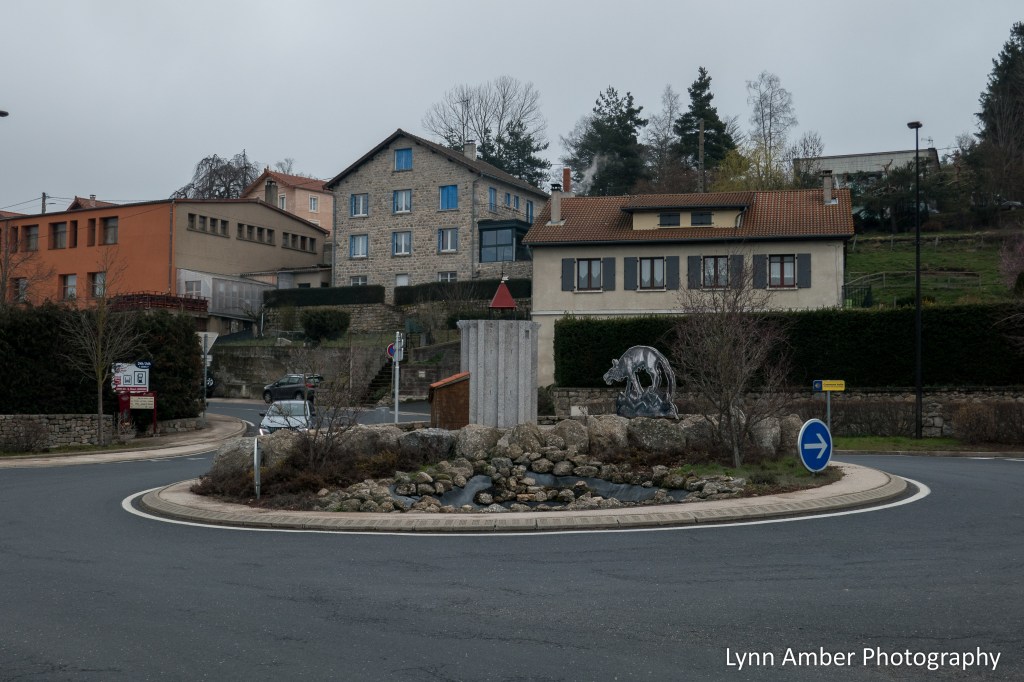
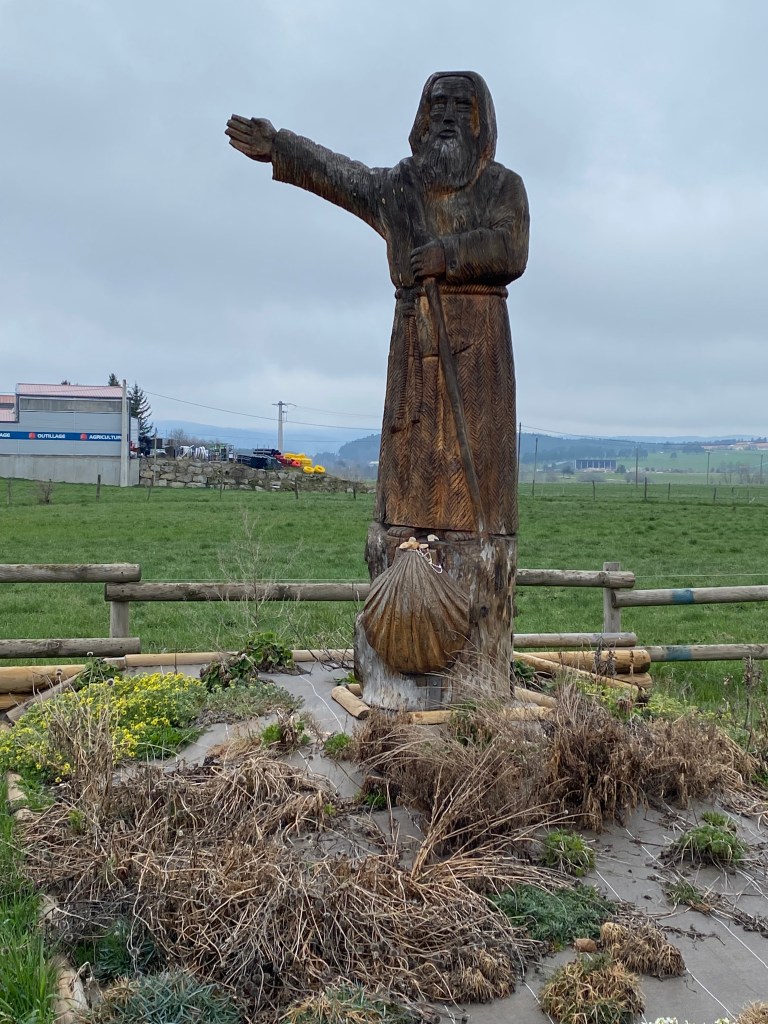
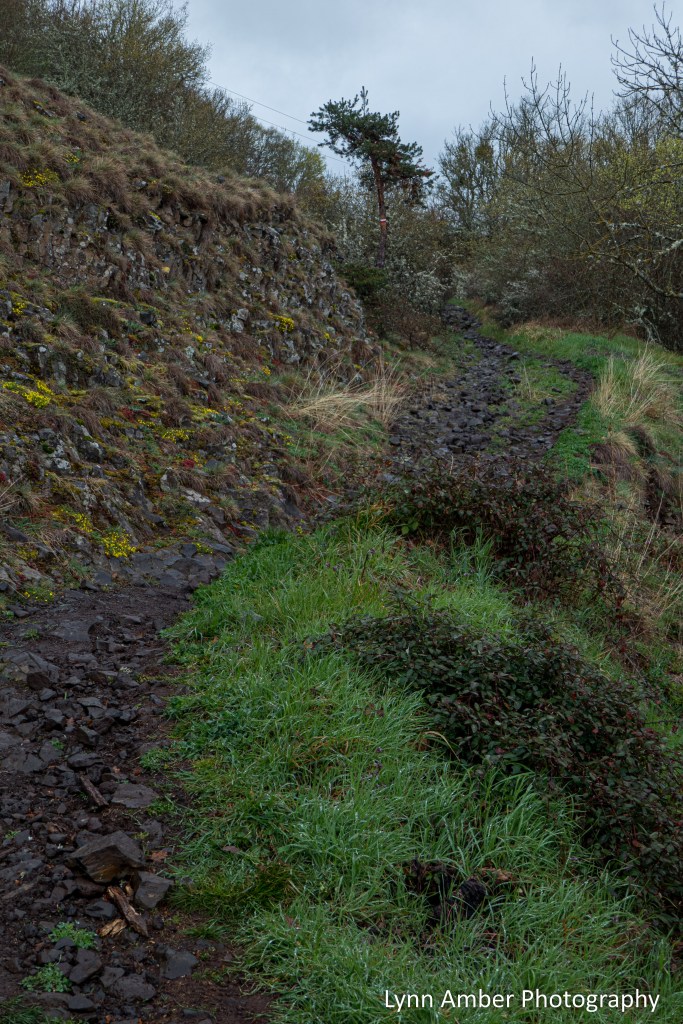
Most of the walk today is through the countryside – a combination of paved back-country roads and dirt paths. The way passes by some interesting sights too!
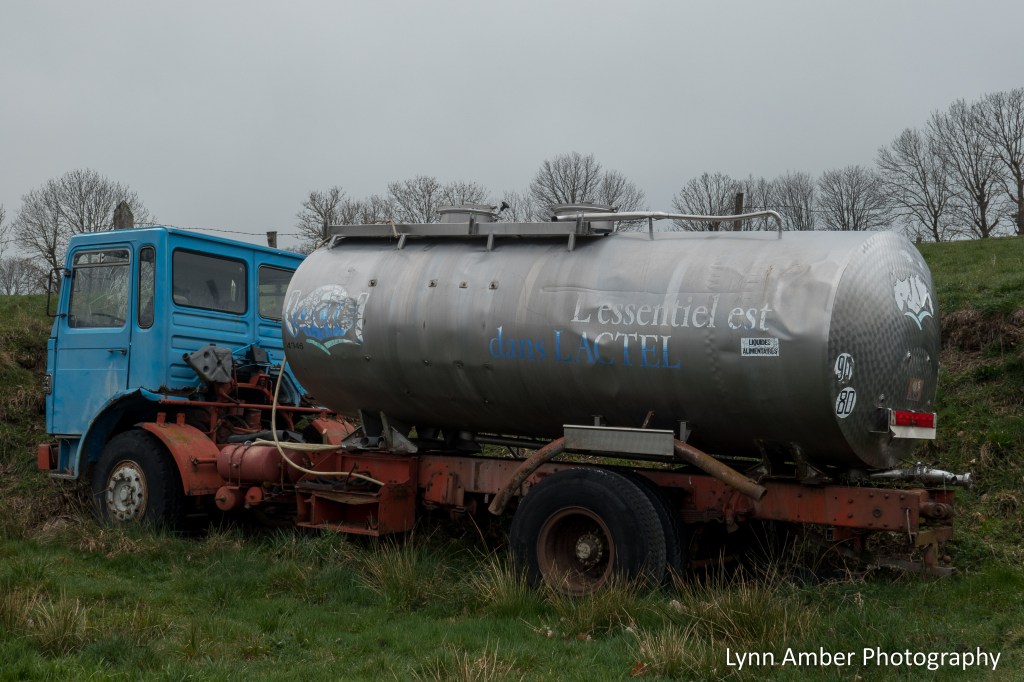
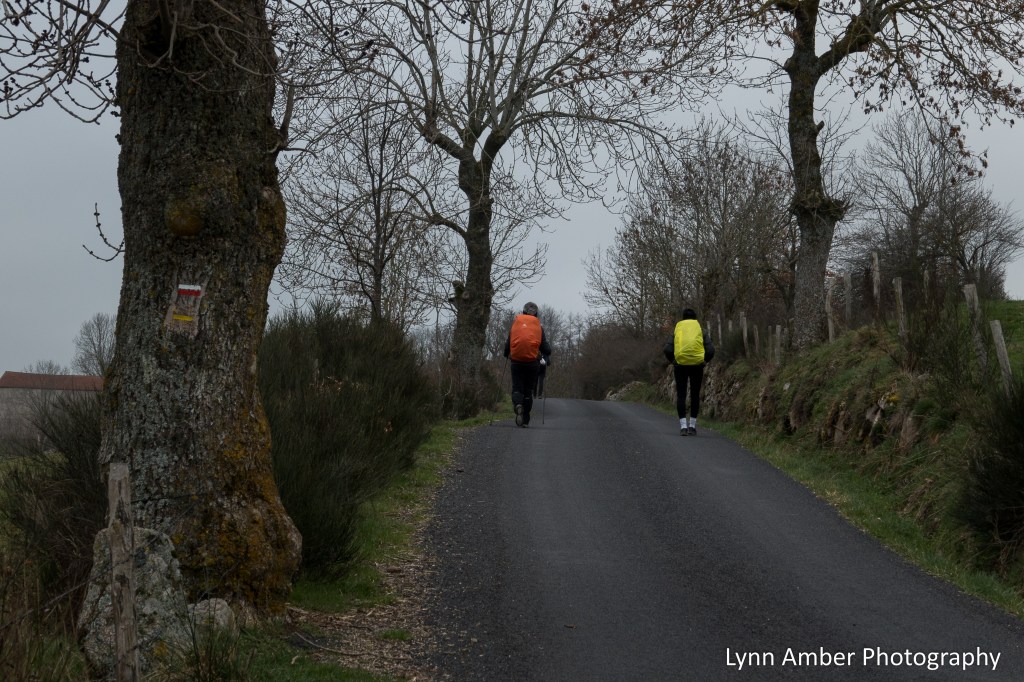
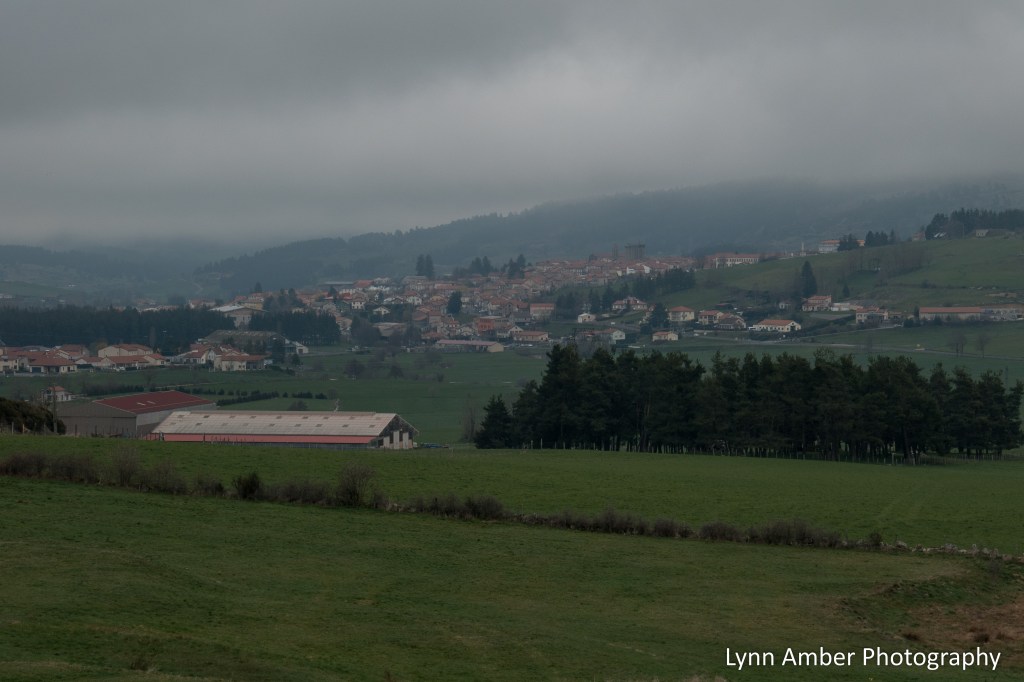
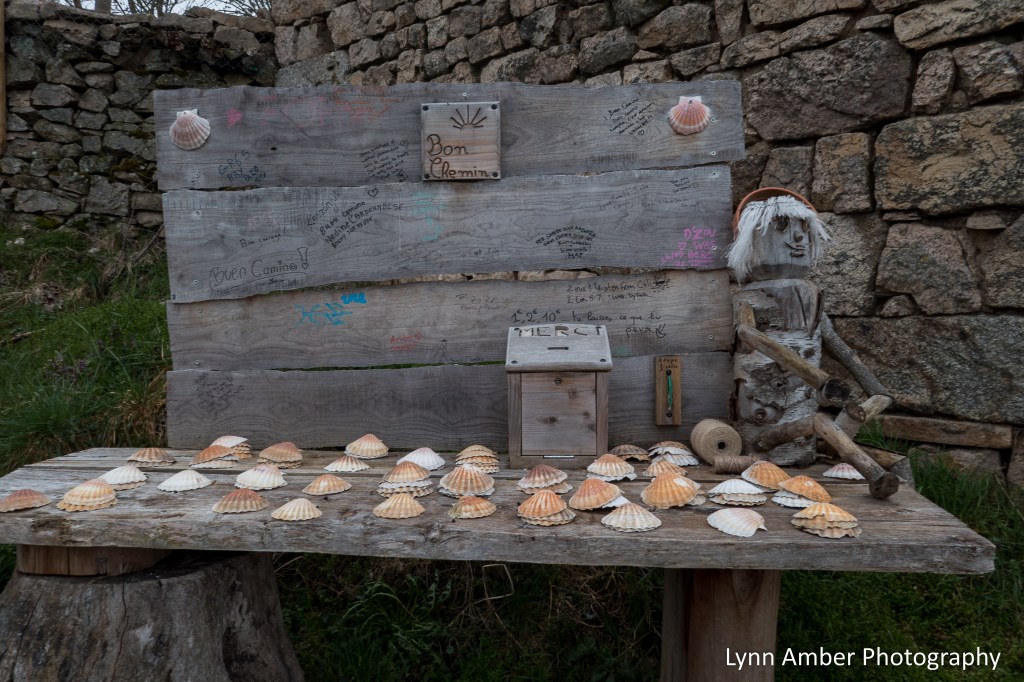
The landscape here is harsh with granite outcroppings, stream-filled meadows and groves of Scots Pine trees. One of the main enterprises in this region was the cutting of granite stone for construction of many of the dwellings. This route traversed through farmland with a few scattered small villages. Often, there would be impromptu “pilgrim” messages along the trail.
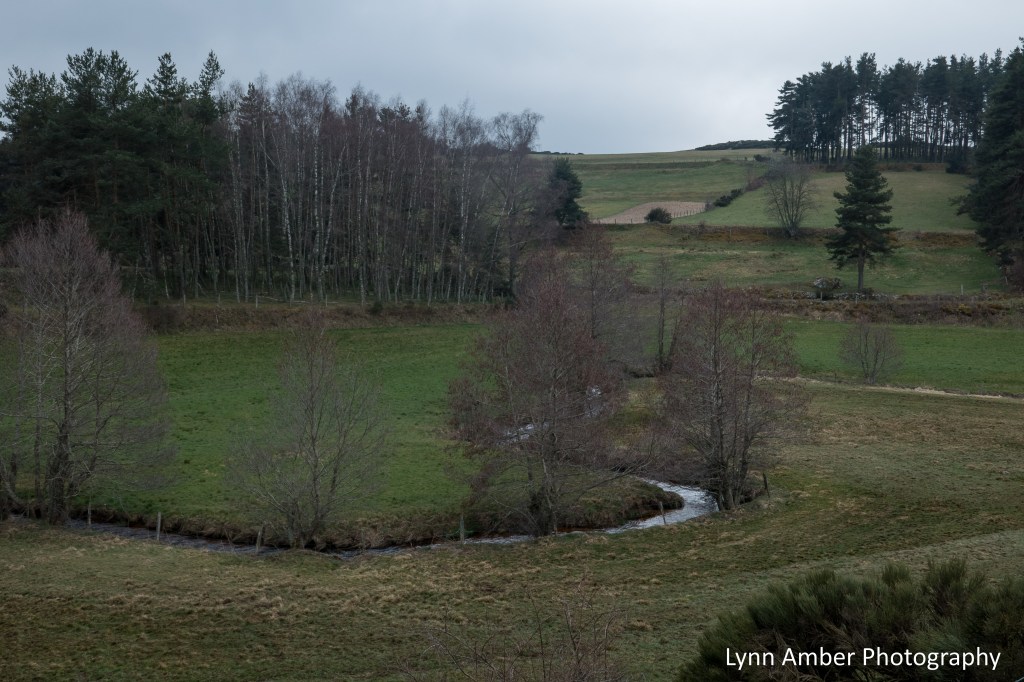
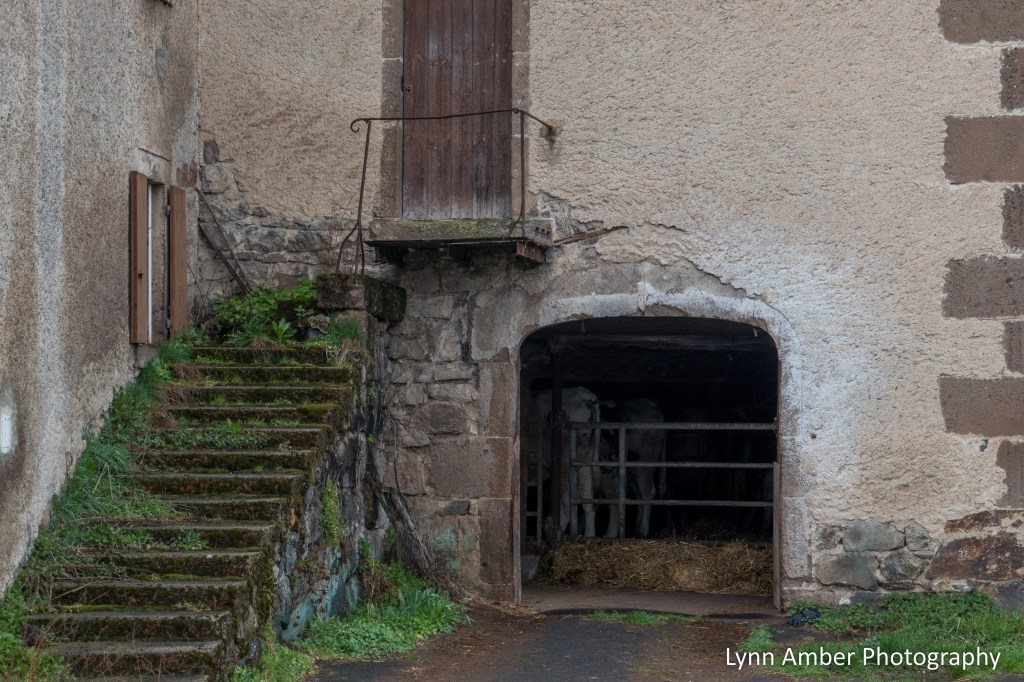
Just opposite this meadow view, there was an old farm – check out the granite corner stones in the wall of that barn!
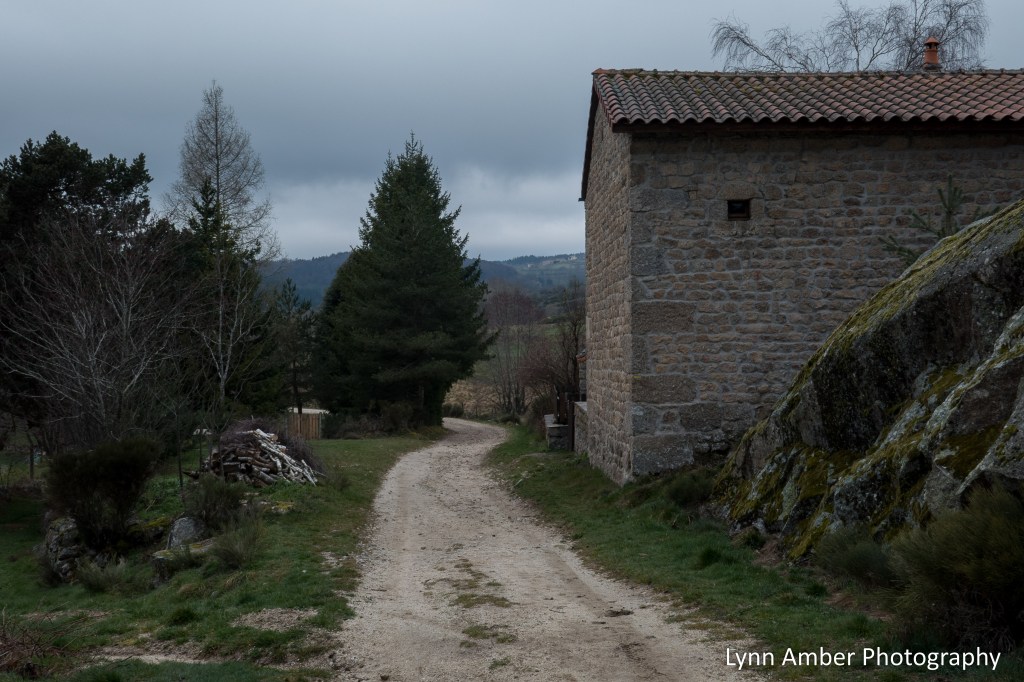
On the other side of that barn, there was a stone stairway leading up the hill and the ever-present “Camino” shell at its base.

In a short distance, the small hamlet of La Clauze came into view. The most prominent feature of this town is the ancient tower that still stands as a reminder of the feudal castle that once stood here.
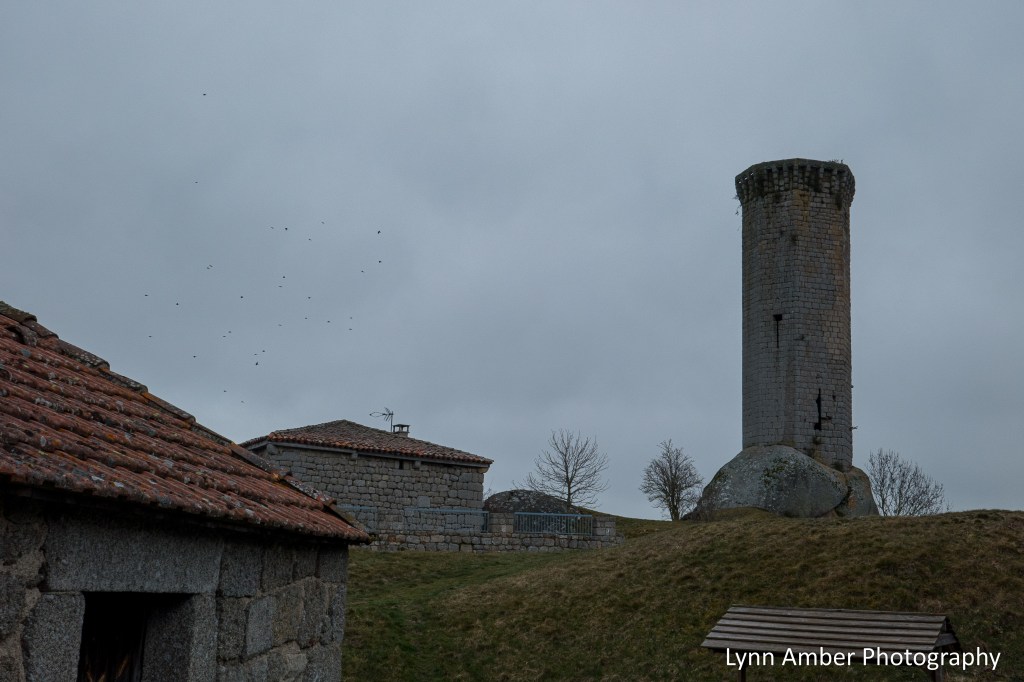

It was here in La Clauze that I ran into the young man and woman who had the dog. I did not write down their names in my journal – so that is the only way to identify them!! They were wandering around the tower when I arrived there. Near the tower there was a small picnic table and I took off my pack and had a snack before moving on.

Eventually I came to a place where a sign indicated I was entering the area known as Chanaleilles.
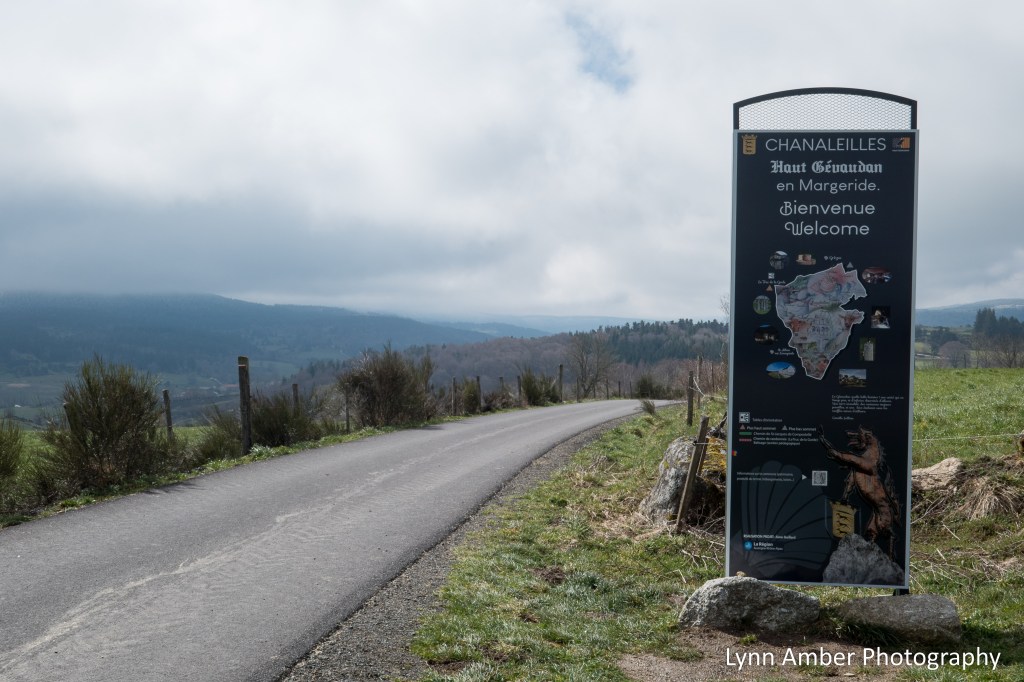
Soon after passing by this point, the small village of Le Falzet. I saw a sign that indicated a farm where pilgrims could stop and picnic and, if desired, get a beverage or snack. La Ferme aux Fromages is operated by Daniel and Murielle Delcros and it was by far the highlight of the day. They make 5 different types of cheese here and sell to local restaurants and gîtes.
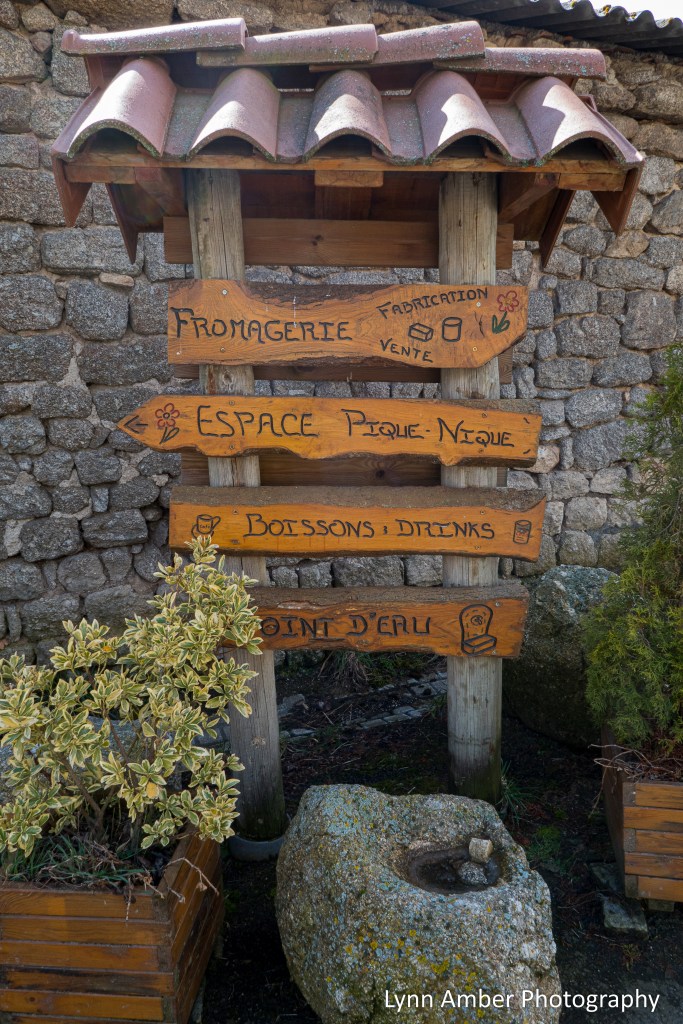
The farmhouse complex was absolutely breathtaking – the buildings and architecture. I had a nice cup of tea and ate my packed lunch at one of the picnic tables. I was joined by a French couple who spoke some English and we had a nice conversation. At another table, there was a large Australian group and the atmosphere was quite festive.
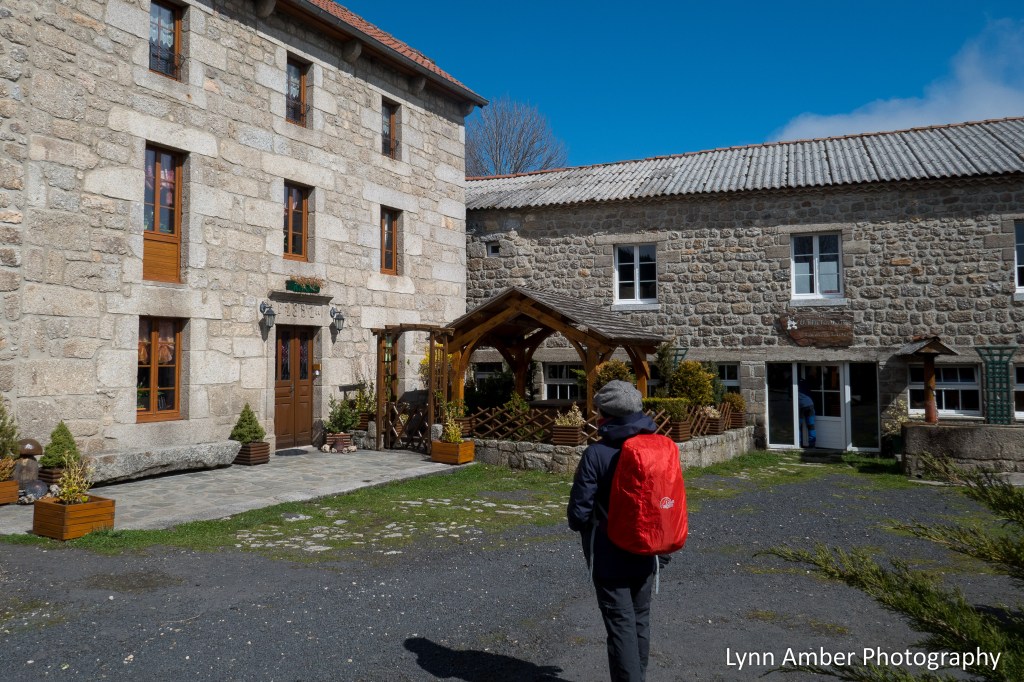
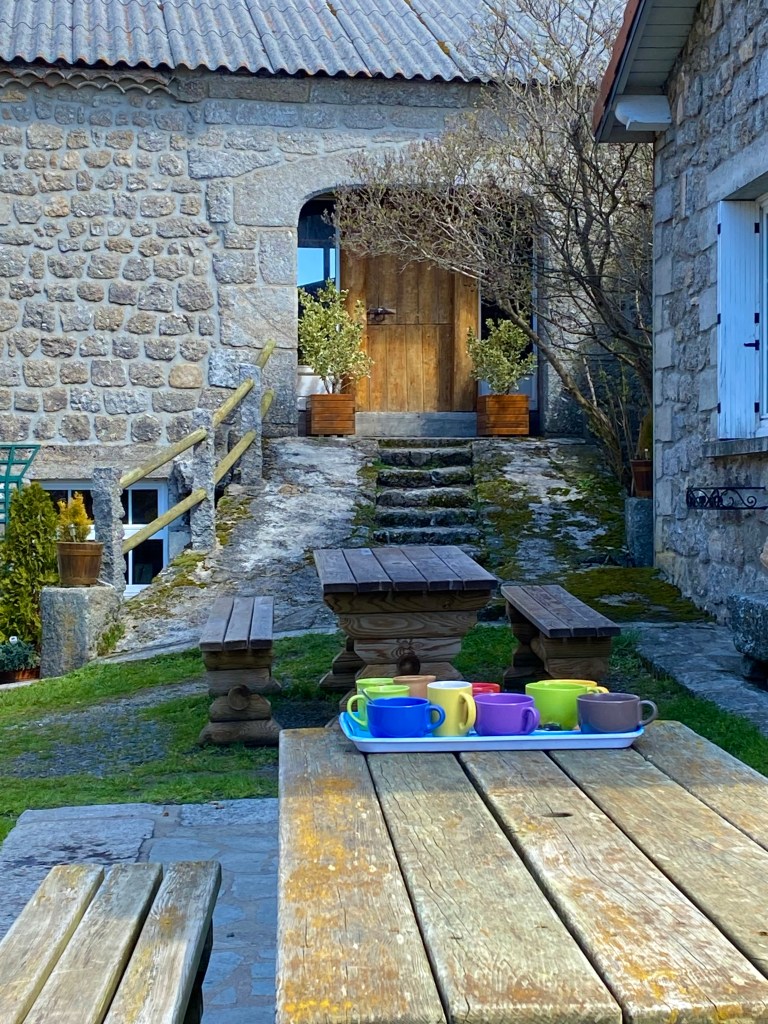
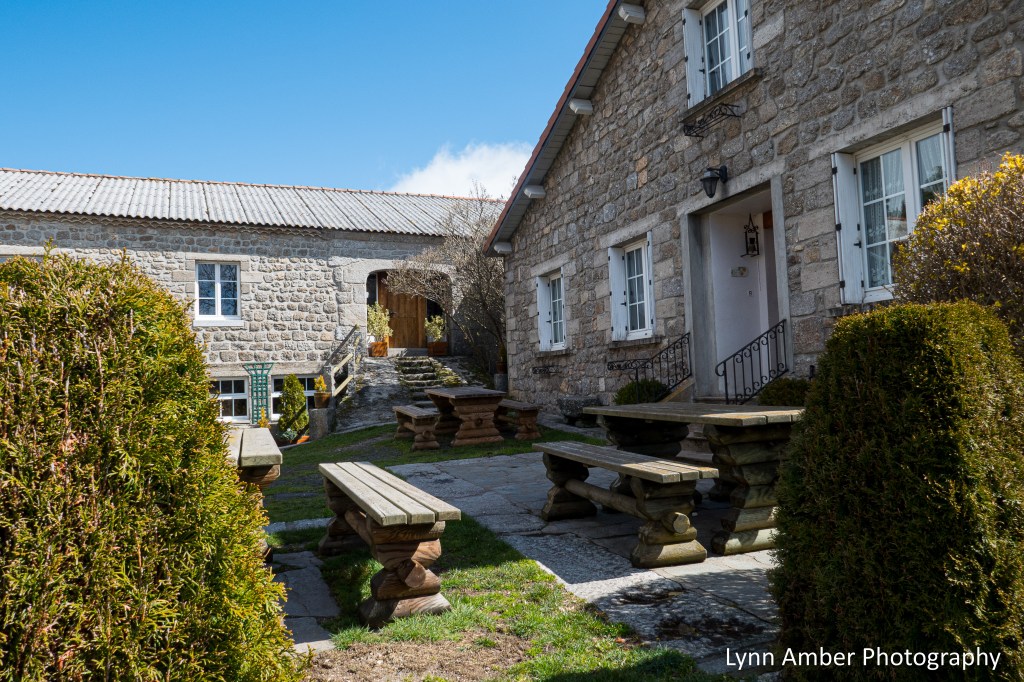
The second floor of the structure in the background is a large open area for gatherings – I’m guessing a great place to have a wedding!?
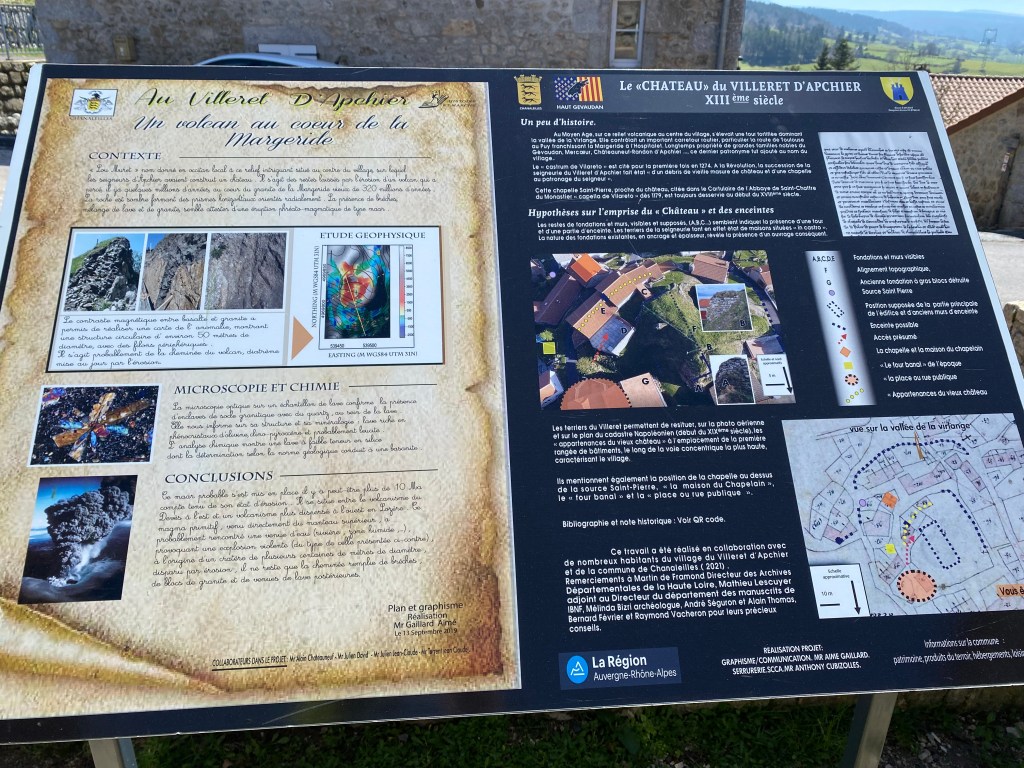
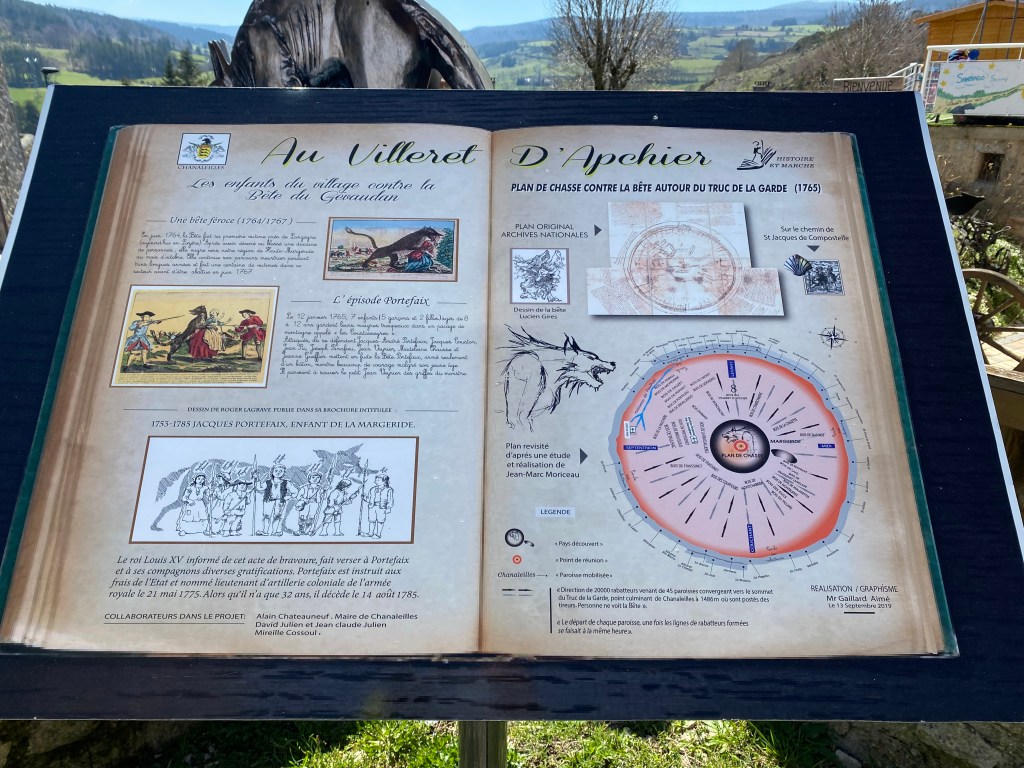
Leaving the farm, the path passes by the village and through the countryside to the next little village – Le Villeret d’Apchier. It had a small park with some interpretive signs describing the geology and history of the area.
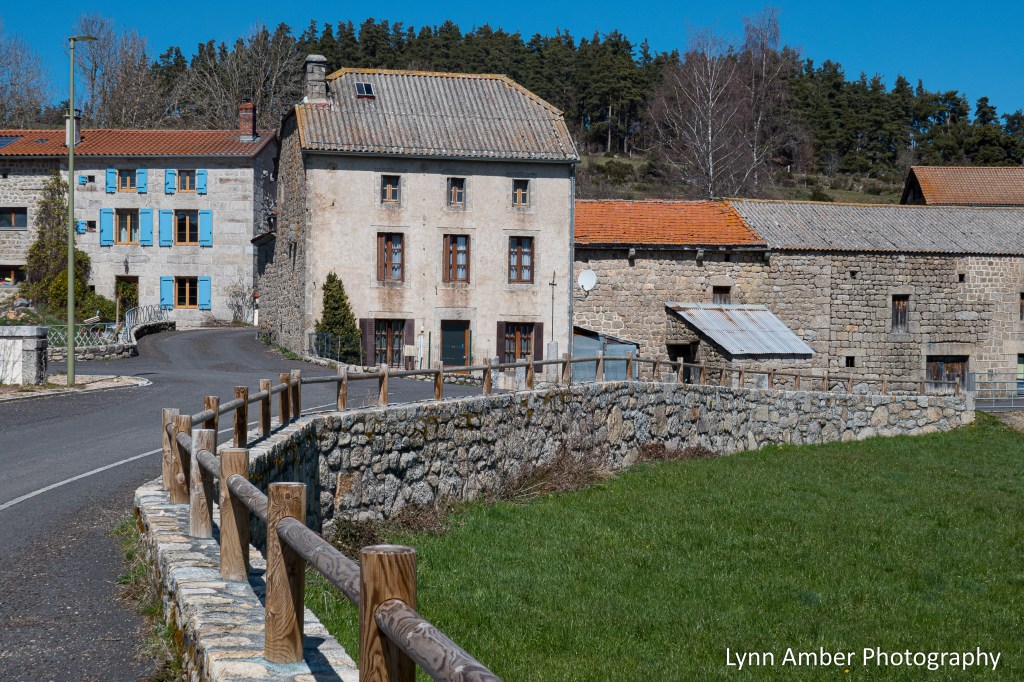
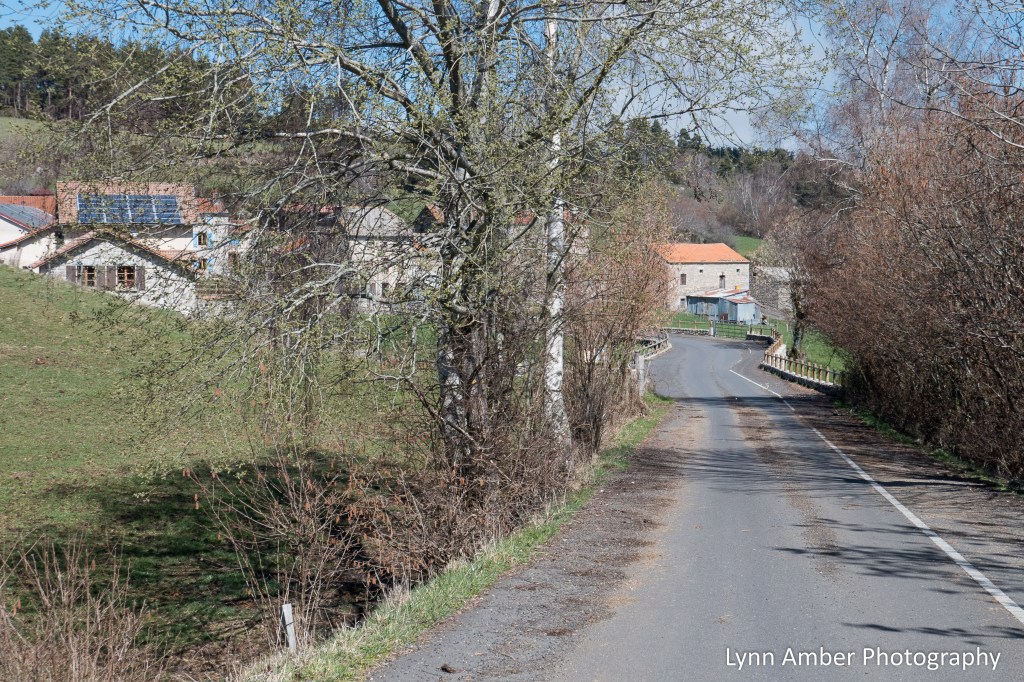
Along the way, you will often find restrooms for the pilgrims. I took a photo of the one below as an example. This was one of the nicer ones. Some are more rustic. Unfortunately, this early in the season some of these were not open yet. But, it is handy that these accommodations exist. In the guides, these are well-marked.

Below are the interpretive signs in the park in Le Villeret d’Apchier.
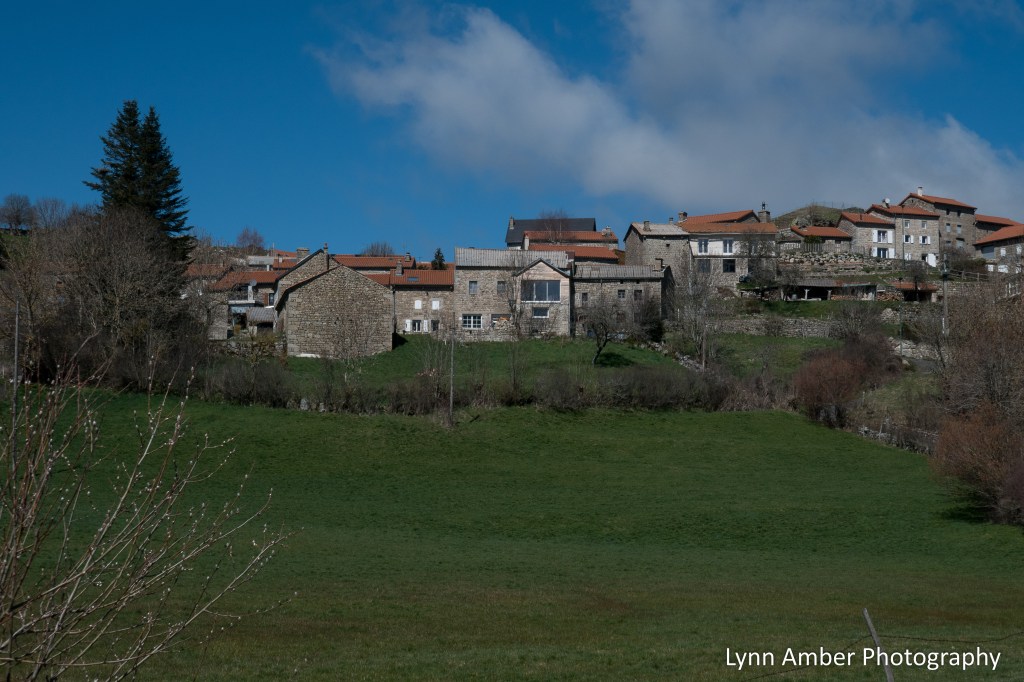
As I passed through Le Villeret d’Apchier, I turned around to get a view back towards the town. It’s always a good idea to stop and look back the way you came! A different perspective!
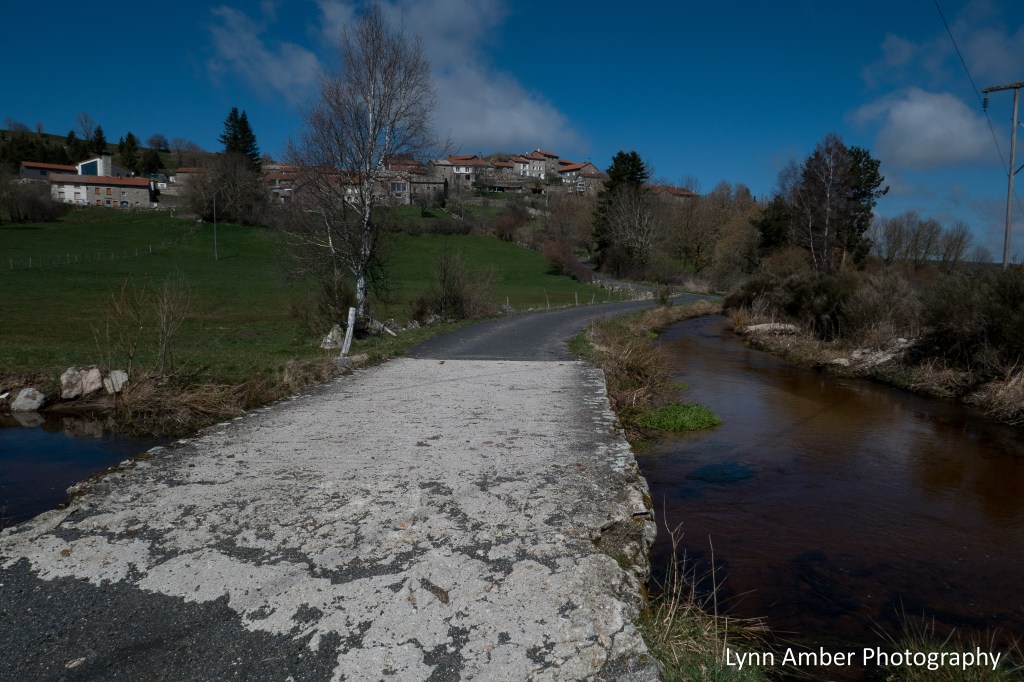
The rest of the walk this day was sunny and peaceful with farms and open land.
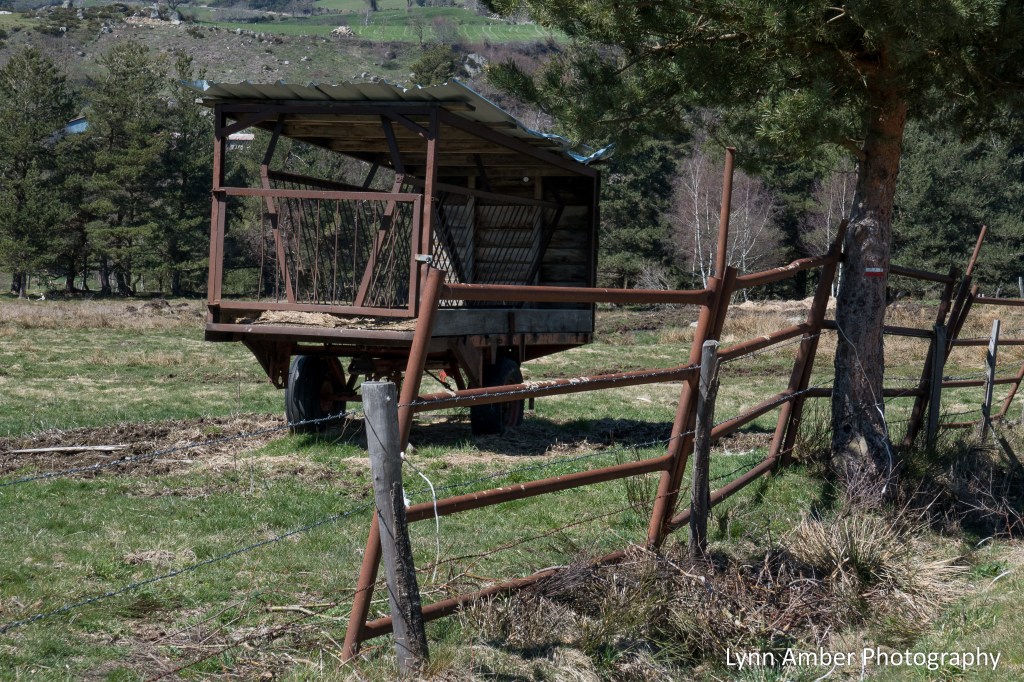
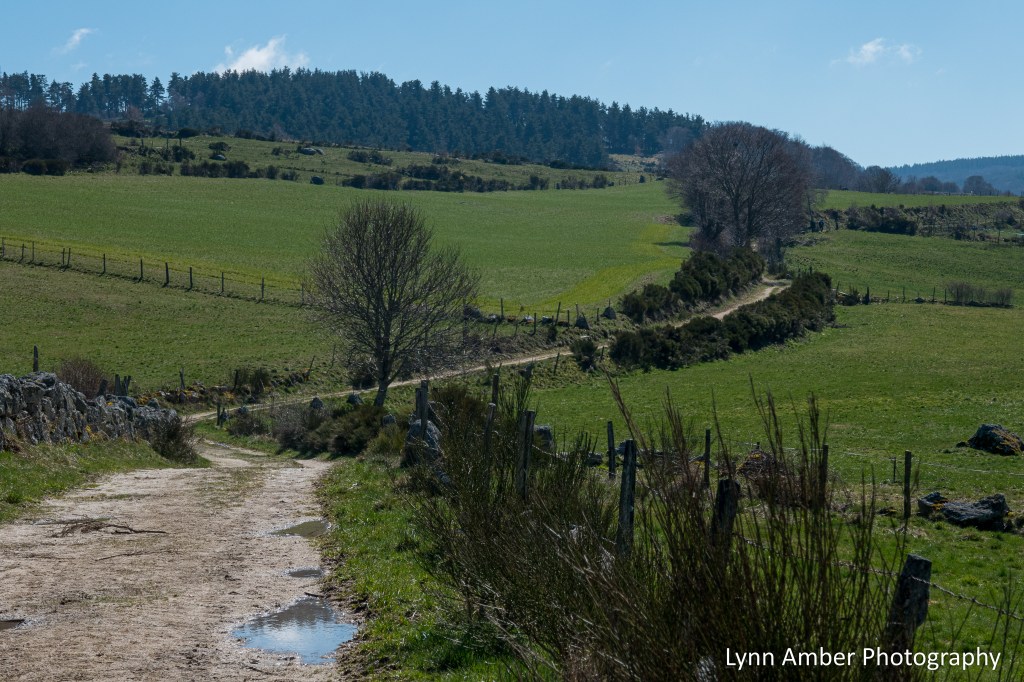
As I was getting close to our destination for the evening, I stopped to look at my guidebook. Our gîte for this night was not right on the GR65. It appeared we would be taking a slight detour into the town of Chanaleilles. I was hoping for some signs and because I was looking – I saw one that pointed in the direction we needed to go. In the guidebook, there are directions that state “à Contaldès (repère A) prendre à droite sur 400m”. But, it is not obvious where the Contaldès crossroad is! Because my sister-in-law was somewhere behind me on the trail, I was concerned she might miss this turn-off so I improvised with a little sign in the middle of the GR65 in the gravel! 🙂
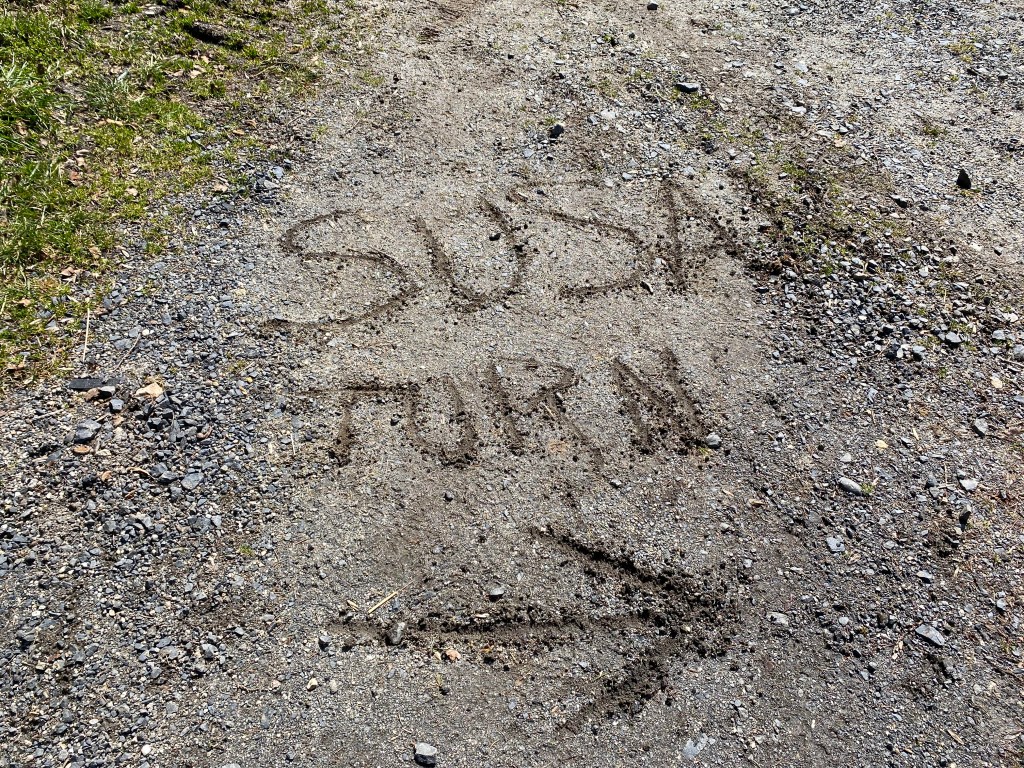
I made the right hand turn and walked into the town of Chanaleilles. It was a little confusing as to where the accommodation was located and the map pointed to a small café that was closed. As I was wandering around trying to find someone, another pilgrim appeared also looking for the same place – Gîte du Pont. And, much to my surprise – I met the first fellow American on the trail – Thomas from Miami. Together, we found the gîte and connected with our host, Evelyn. We learned that this was the first night her gîte was open for the season and she was expecting more guests than she had planned for due to other places ahead on the trail being full. She was concerned that she did not have enough food to feed everyone. Thomas and I assured her that whatever she had would be appreciated and not to worry – we could manage.
Next time… our evening in the Gîte du Pont! And journey to Saint Alban-sur-Limagnole. Stay tuned… 🙂
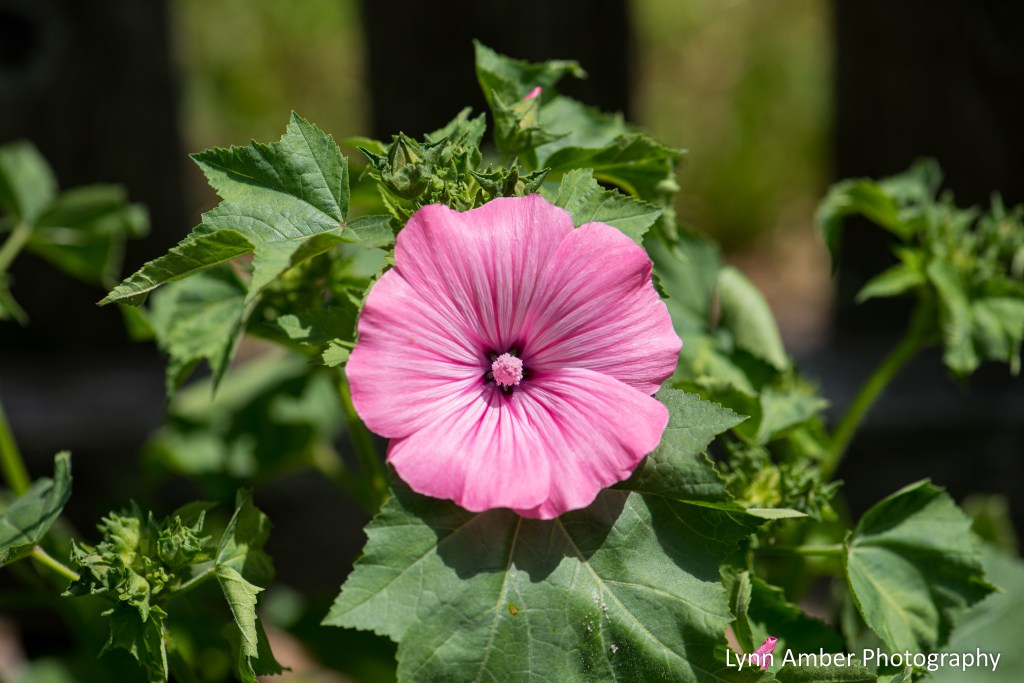
Lavatera after the Rain
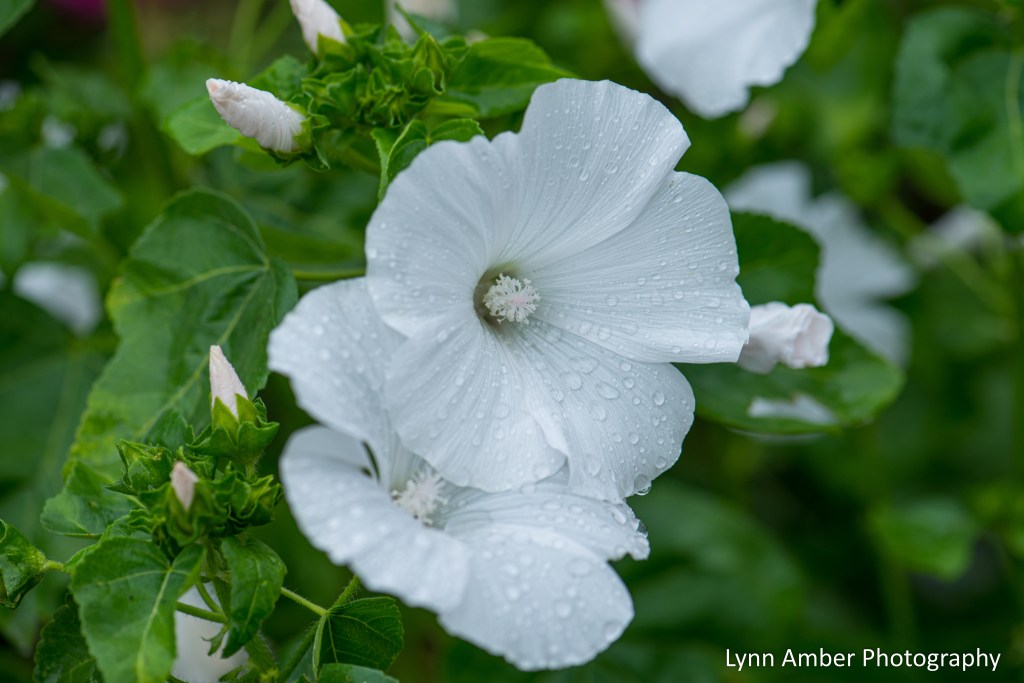
It was another soggy morning here in Vermont but that’s okay. It gives me the opportunity to photograph raindrops on my flowers! I’ve been able to keep the Japanese beetles at bay for now. For some reason, they love the white Lavatera flowers and leave the pink ones alone!
Lavatera – Tree Mallow

I love testing out new plants for the garden. I planted a section along my picket fence with a grouping of annuals and the Lavatera is finally starting to bloom. What a pleasant surprise! It makes a nice back of the border specimen with the fence as its backdrop. I bought the plants in a 4-pack and it appears I have two pinks and two whites. The dreaded Japanese beetles have discovered them but so far they are not impacted too much.
Summer Phlox

A staple of the mid-summer garden, my phlox has begun to bloom and looks pretty good despite all the rain we’ve had in the past month. I’ve still lots to do to bring the garden back from neglect but I’m making progress!
Le Puy Camino – via Podiensis: Monistrol d’Allier to Saugues
April 3, 2023
As mentioned in the previous Camino post, we got a slight jumpstart to our walk today thanks to Andre. He dropped us off at the trailhead leading to the Chapelle de la Madeleine. It was a steep 3.7km climb from the trailhead up to the village of Montaure.

Built within the overhang of a grotto on the side of the mountain, the chapel is dated to the 17th century. It is described as a “troglodyte oratory” – a fancy way of saying chapel in a cave! The chapel has been historically considered an important stopover for pilgrims along the Camino de Santiago. One reference I found refers to these pilgrims as “jacquaires” – referencing Saint Jacques. The chapel is named after Saint Madeleine who lived during the turbulent times of the French Revolution. She was a staunch advocate for the education of girls and founded the Society of the Sacred Heart. Through this organization, she established schools for the poor in addition to boarding schools for well-to-do women. Her organization was recognized by the pope in 1826.

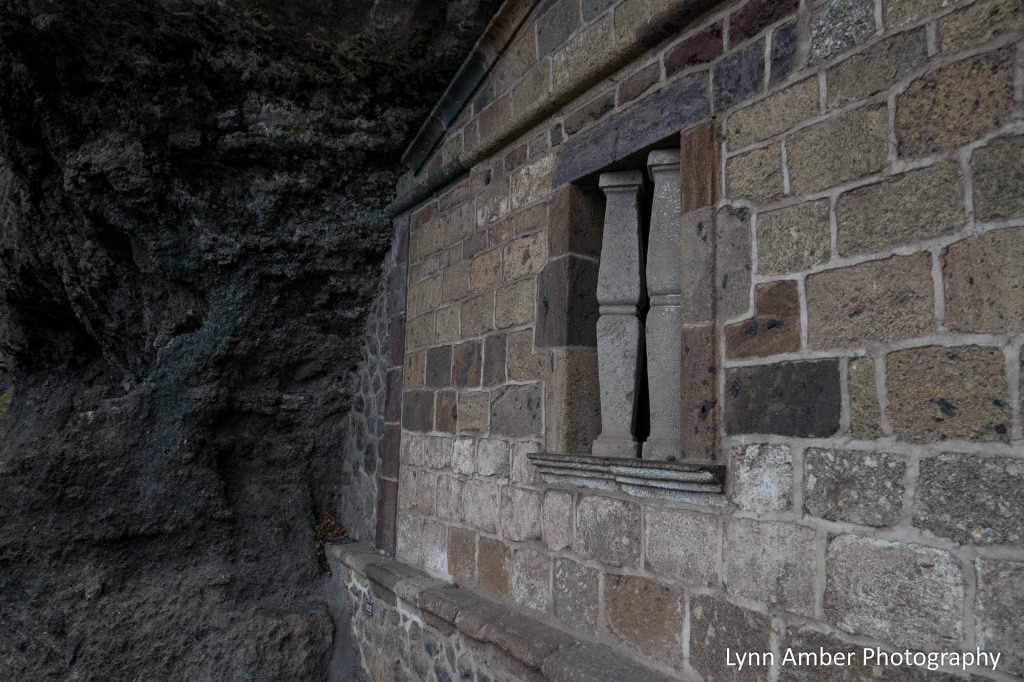
The chapel is not open to the public but I was able to hold my camera up to one of the window openings and capture a shot of the interior of the building lit only with natural light.

Leaving the chapel, we ascended the steep trail and had some great views to the valley and Monistrol d’Allier below us.

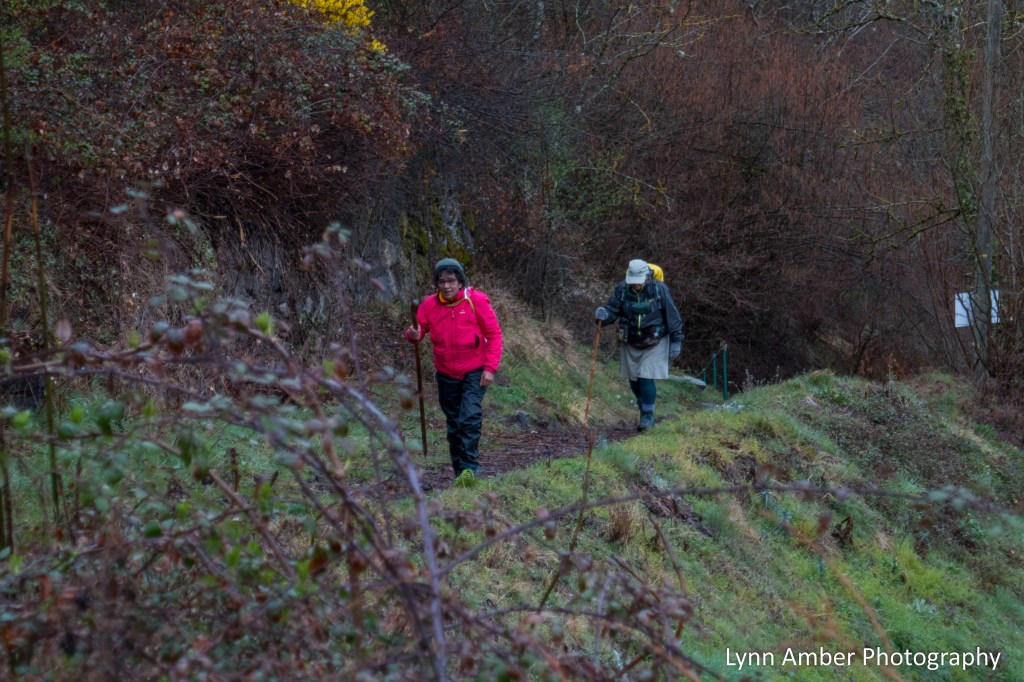

There’s a small village just above the Chapelle de Saint Madeleine called Escluzels. It’s really not more than a cluster of houses scattered about a couple of small streets with a village fountain near the center of town.
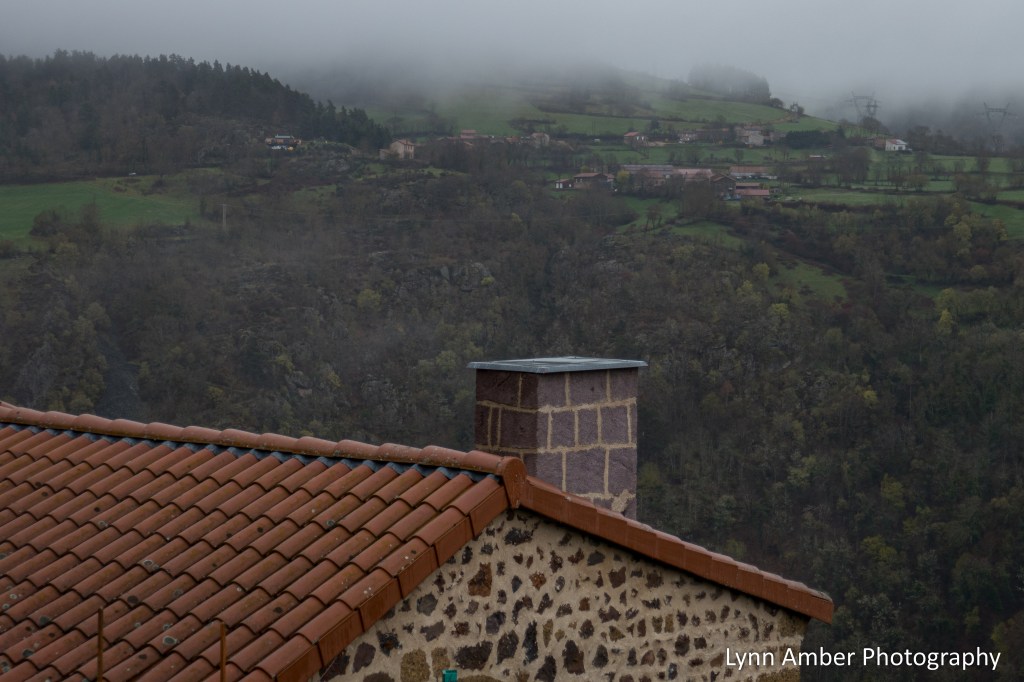
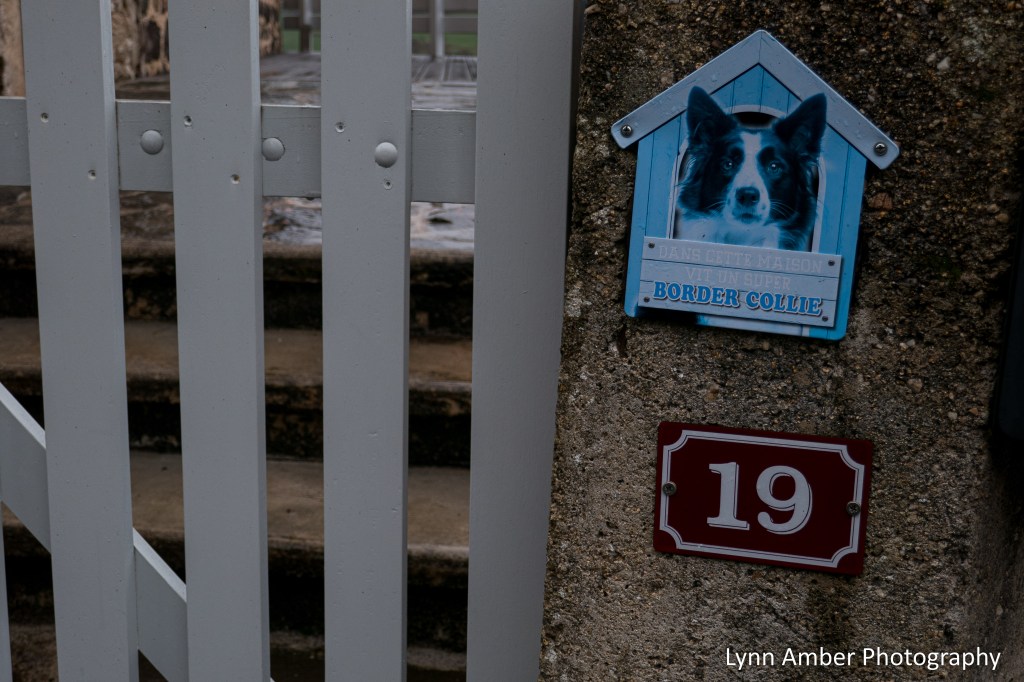


The trail leaves Escluzels and climbs steadily through a series of switchbacks through a semi-forested hillside until reaching the tiny cluster of houses known as Montaure.

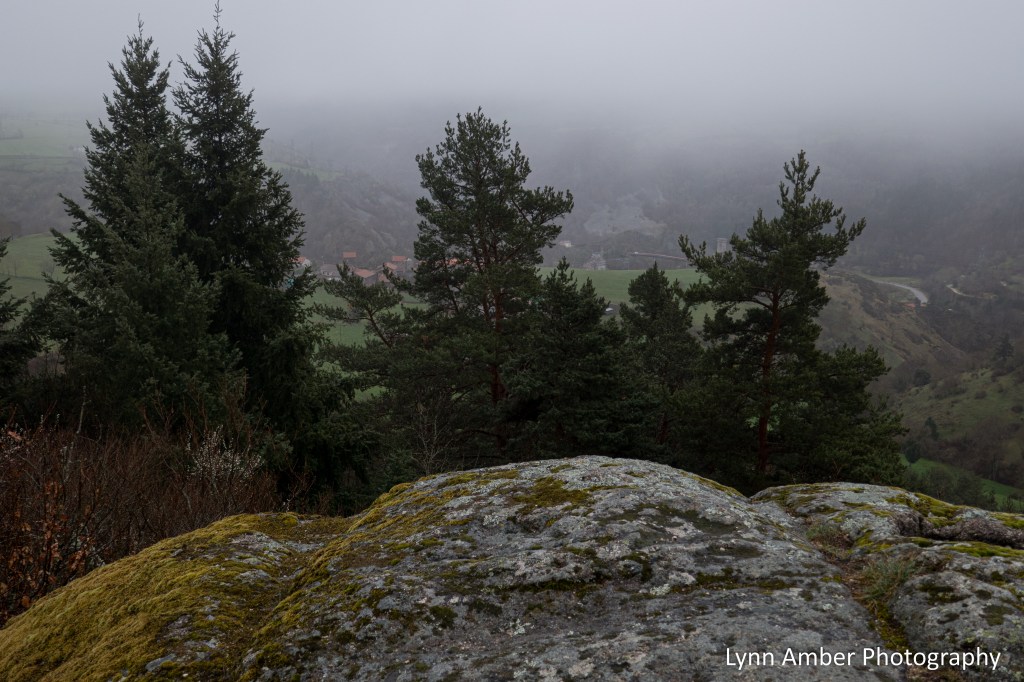
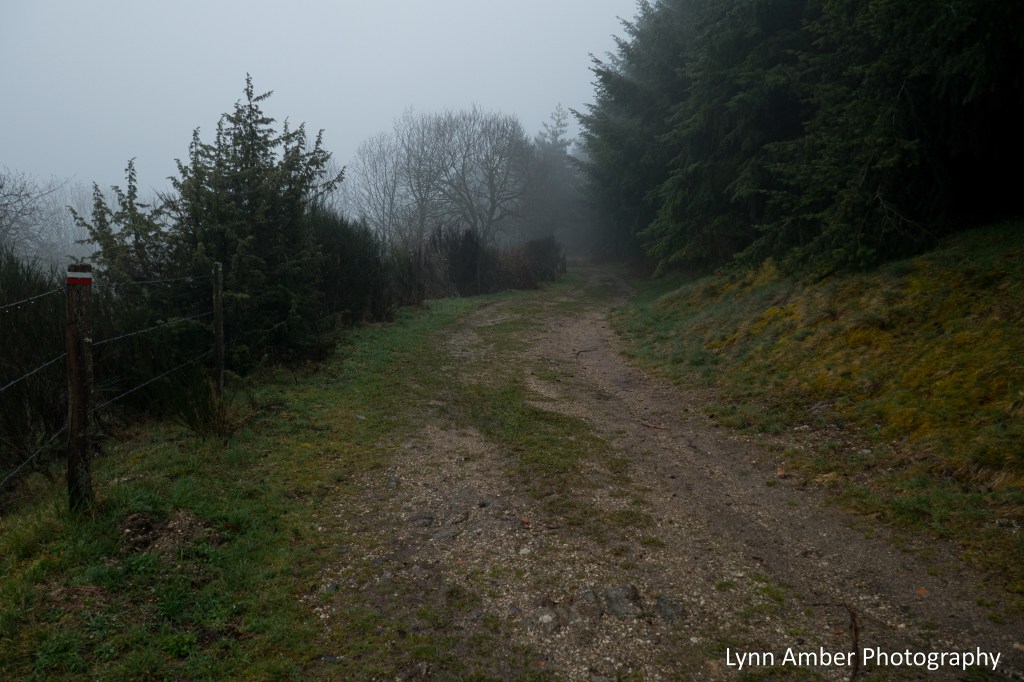
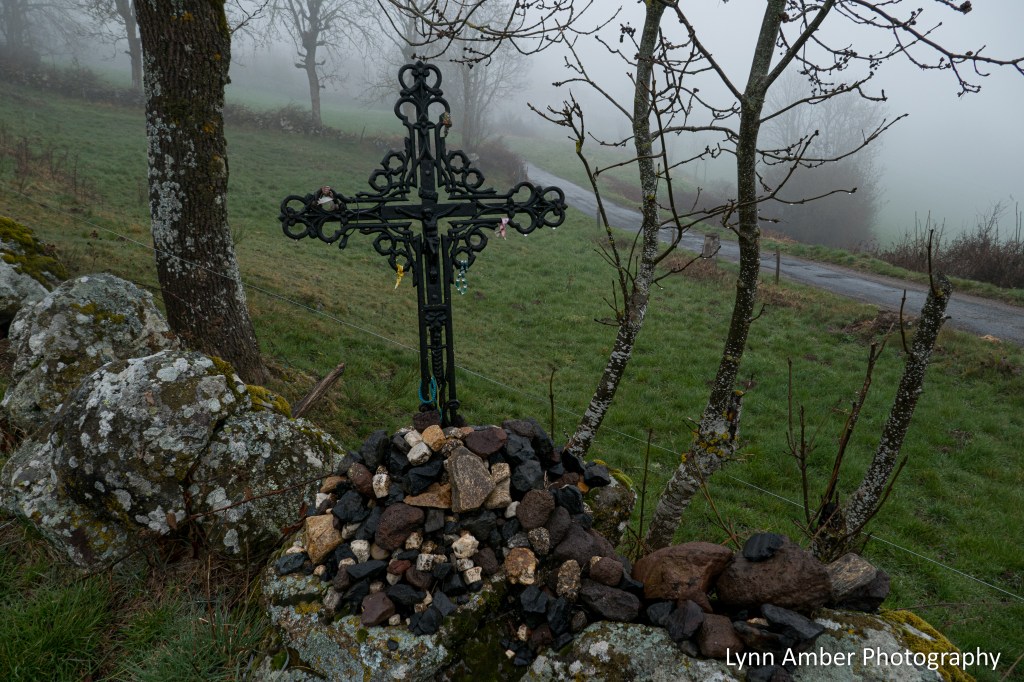
The trail follows a dirt road through the countryside and past some small farms before reaching Roziers and the small village of Le Vernet.
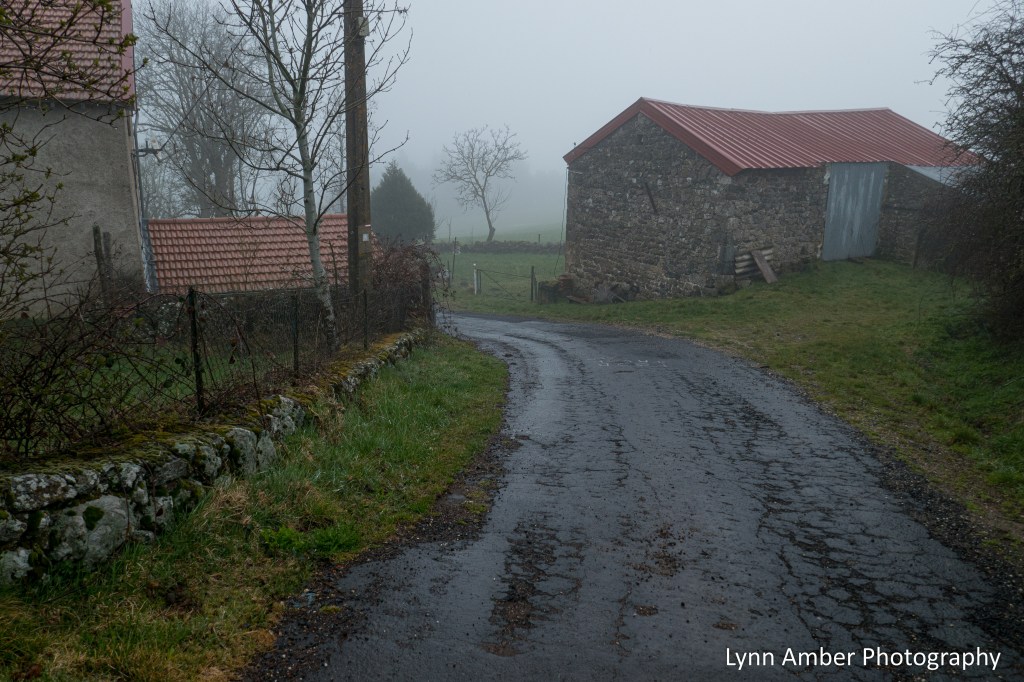
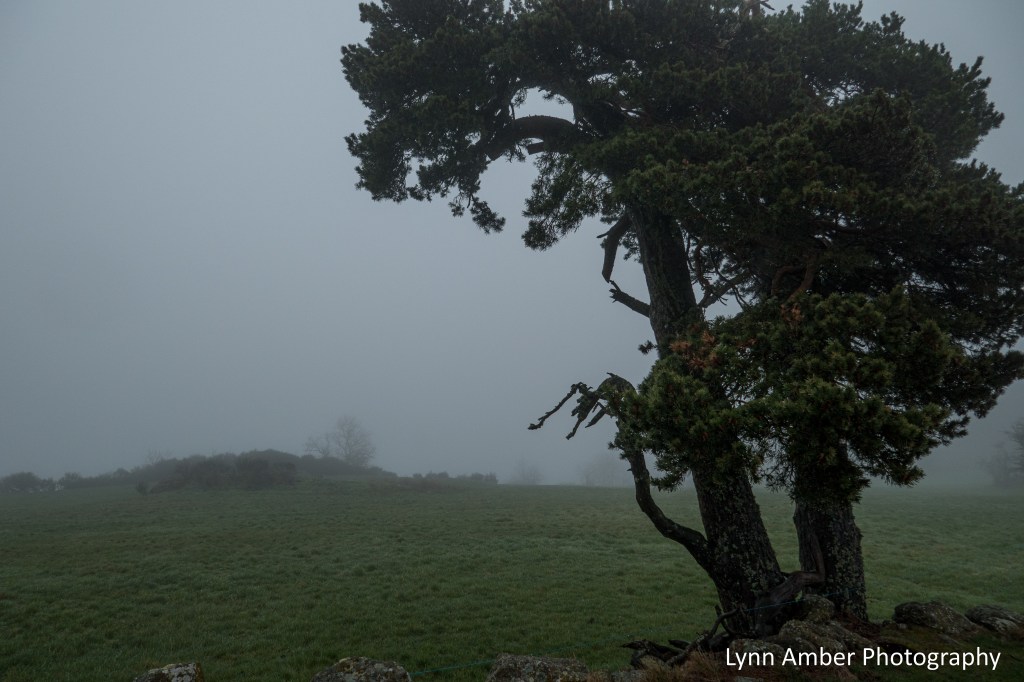
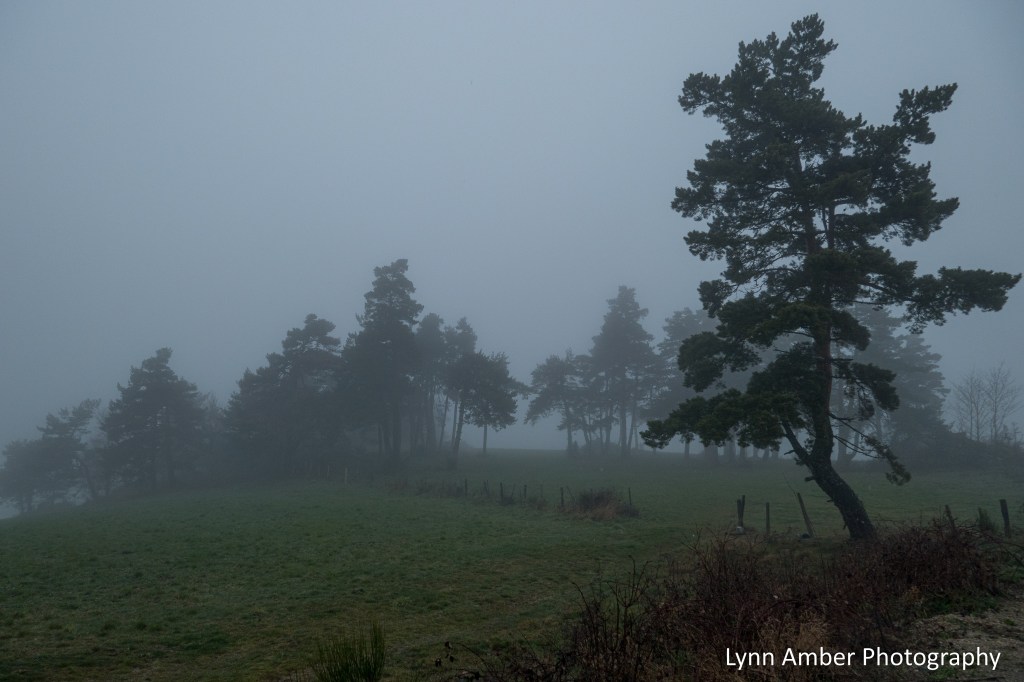
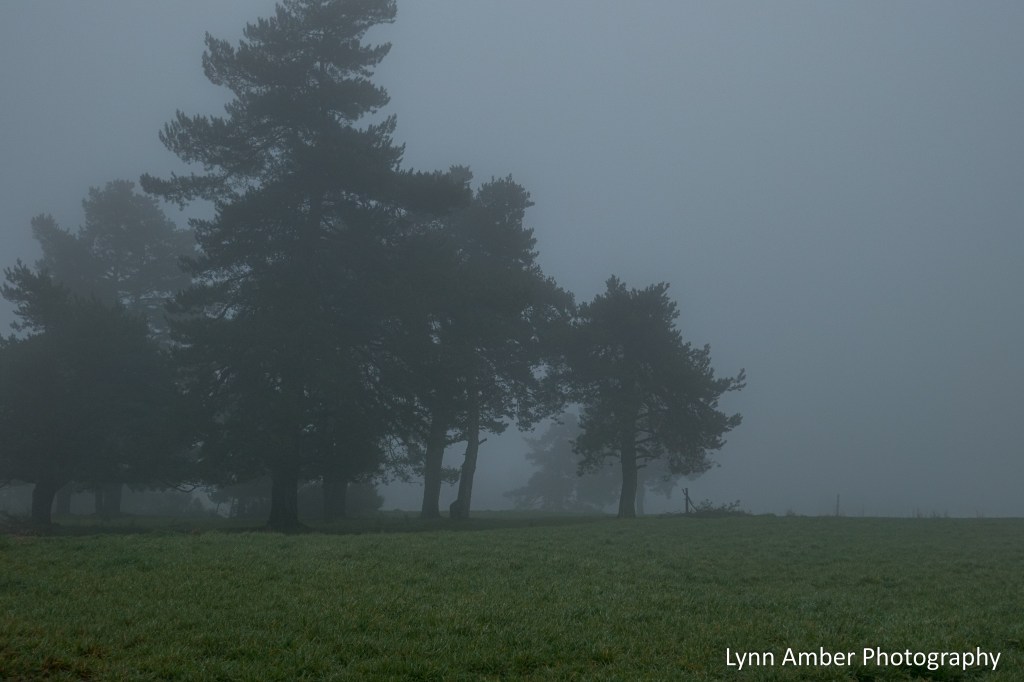
As I was walking through this foggy, misty landscape, I wondered what scenery I was missing in the distance and was somewhat dismayed that I was not able to enjoy the long-range view. But, as I continued, I realized just how quiet and peaceful the atmosphere was and the mist became a blanket that enveloped me and gave me comfort. There is beauty in the fog.
I stopped for a snack and a break at a trailside picnic table and some other pilgrims offered to snap my picture. So – a rare photo of me along the trail!

There are always little things along the way that catch my eye. I got a kick out of this statue of a rooster on the stone pillar and also loved the bright blue shutters that really brightened up this scene.


Nearing Le Vernet, the trail veered left past this picnic area – which would have been appealing if the weather was better. There was also a café advertised in this village called the Buvette La Coquille – but sadly it was not open. 😦
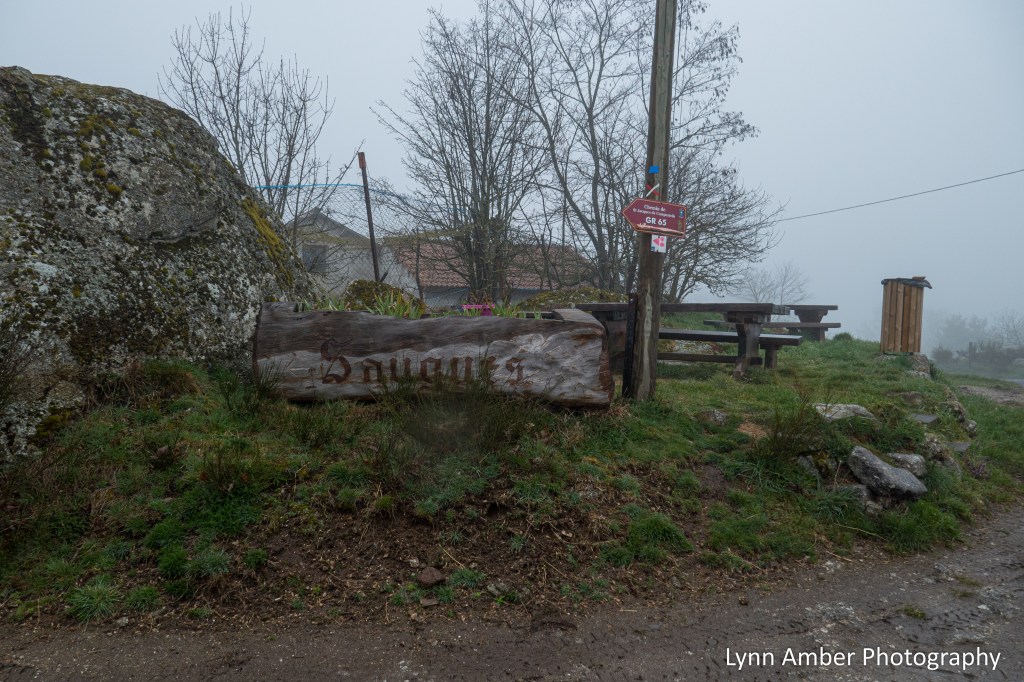
Past Le Vernet, the route turned into a single-track trail once again before entering the settlement of Rognac.
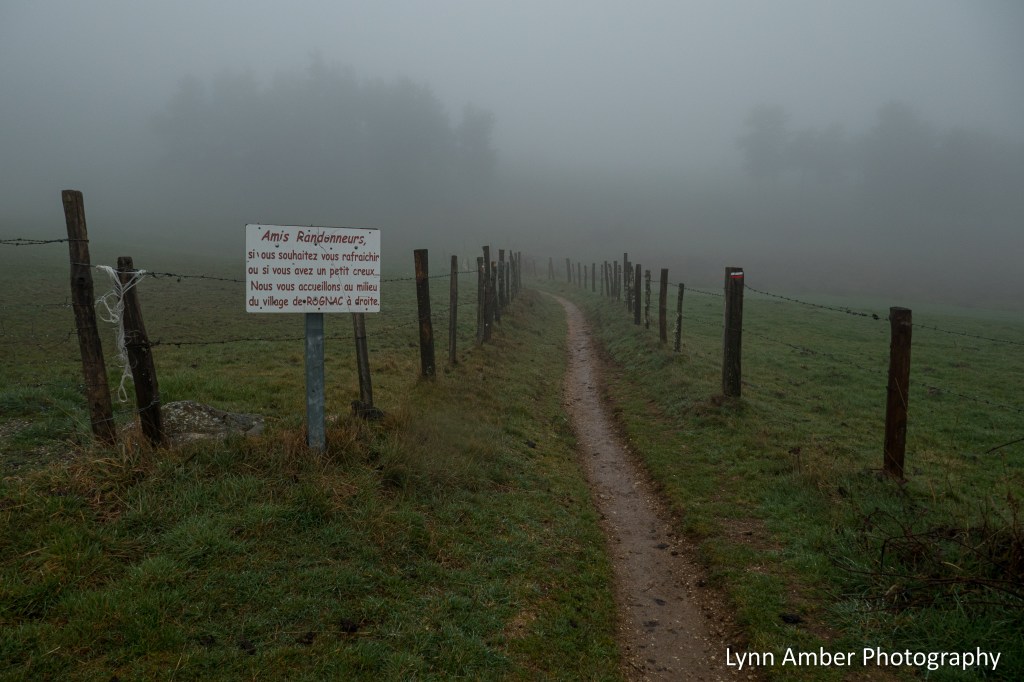

Rognac is the last village before taking the descent into Saugues. There were some small farms along the way. I was particularly taken with this small estate.

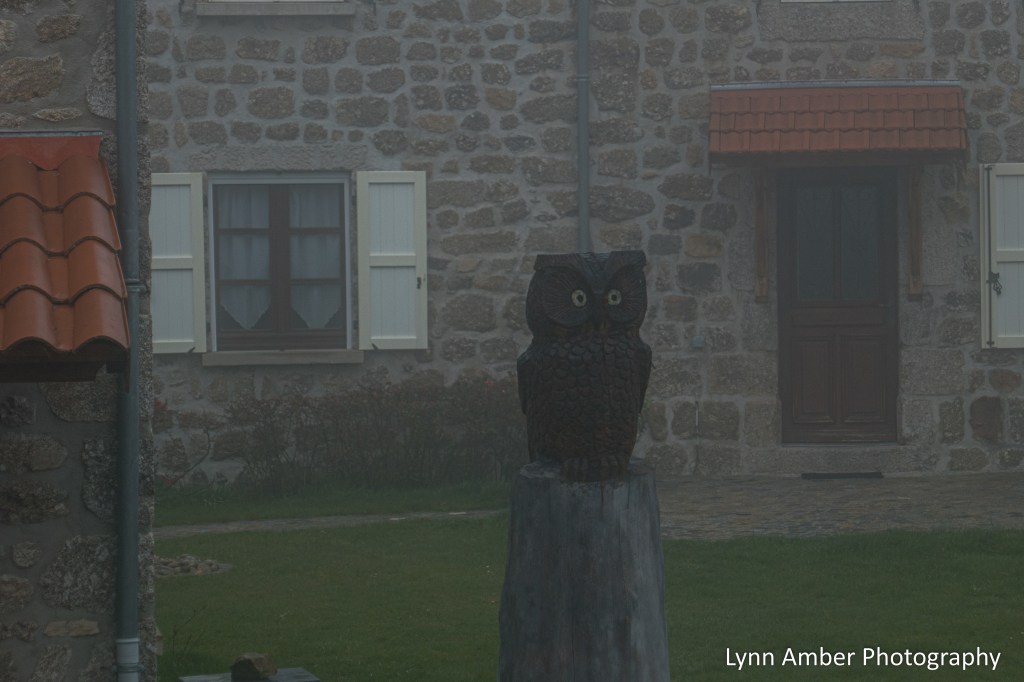
My maternal uncle, Uncle Roland, was enamored with owls – his “totem” as I like to say. Along the Way, owl representations always caught my eye. I like to believe it meant that he was watching over me from above. The estate above had a carved owl in their yard that took on an eerie ambiance in the mist. I loved it!

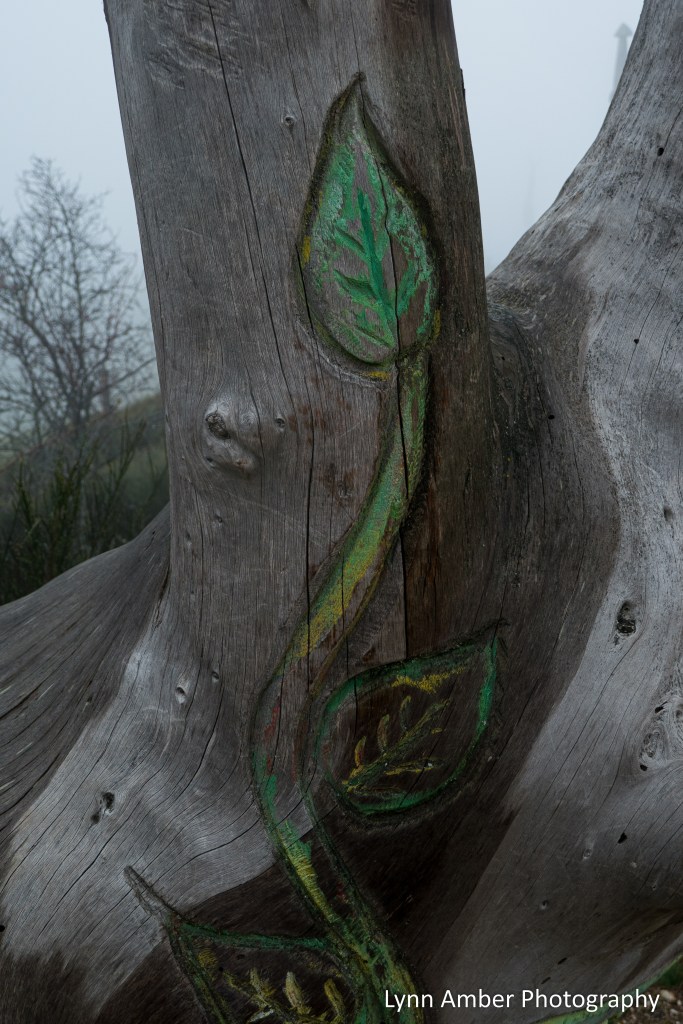
Just before reaching the intersection with the D589 roadway, there is a grouping of eccentric wooden sculptures that appeared out of the mist – giving them an air of mystery and intrigue – “Le Chemin des Statues de Bois”


From these wooden sculptures, it was a relatively short walk into the village of Saugues. I arrived in Saugues pretty early – around 1pm – and could not check into the gîte until 3pm. So, I wandered around town looking for a small café to get out of the weather and enjoy a hot cup of tea. I could not believe how busy the town was with traffic and people. Unfortunately, it was Monday and many stores and restaurants close in France on Monday. So, the restaurants that were open were full since it was lunchtime. 😦
I found a small market, bought some food and went about looking for the gîte hoping they would allow me to arrive a tad early. We had reservations at Gîte d’étape Le Par’ici. It is operated by Andre’s daughter and her partner. They welcomed me early and I settled in with my normal routine – shower and change of clothes. They had a really nice communal space for dining and relaxing. As it turned out, Barbara indicated that they intended to be full for the night! I relaxed for awhile in the dining room and ate my lunch and they kindly brewed me a nice hot cup of tea!

Next time – our travels around town, dinner in the gîte, new friends and old – and the trek to Chanaleilles…
Sunflowers
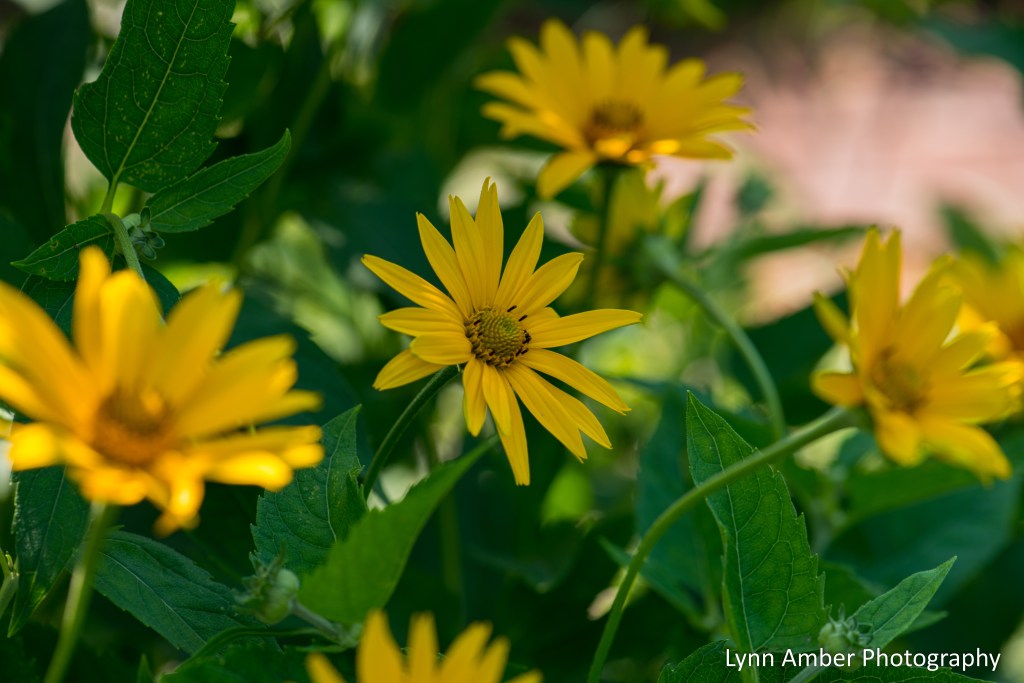
With all the rain we’ve had in Vermont over the past month, I thought I would post something with the word “sun” in its name!! 🙂 Sunflowers hold a special place in my heart and they are putting on quite a show in my garden despite the lack of “sun”! They brighten up even the dreariest of days!

Le Puy Camino – via Podiensis: Saint Privat d’Allier to Monistrol d’Allier
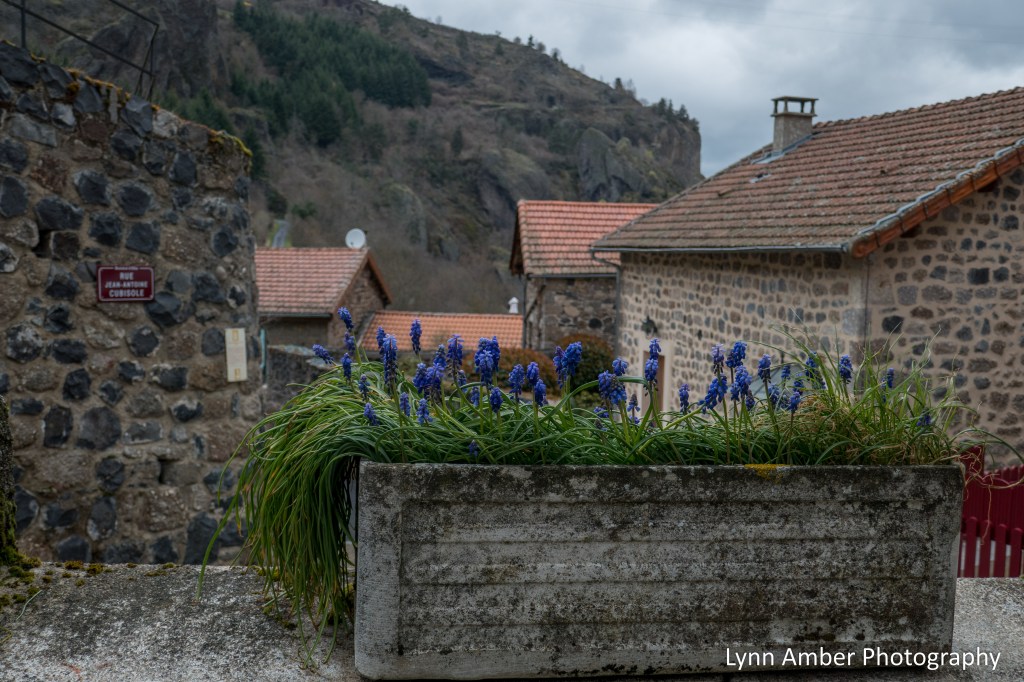
April 2, 2023
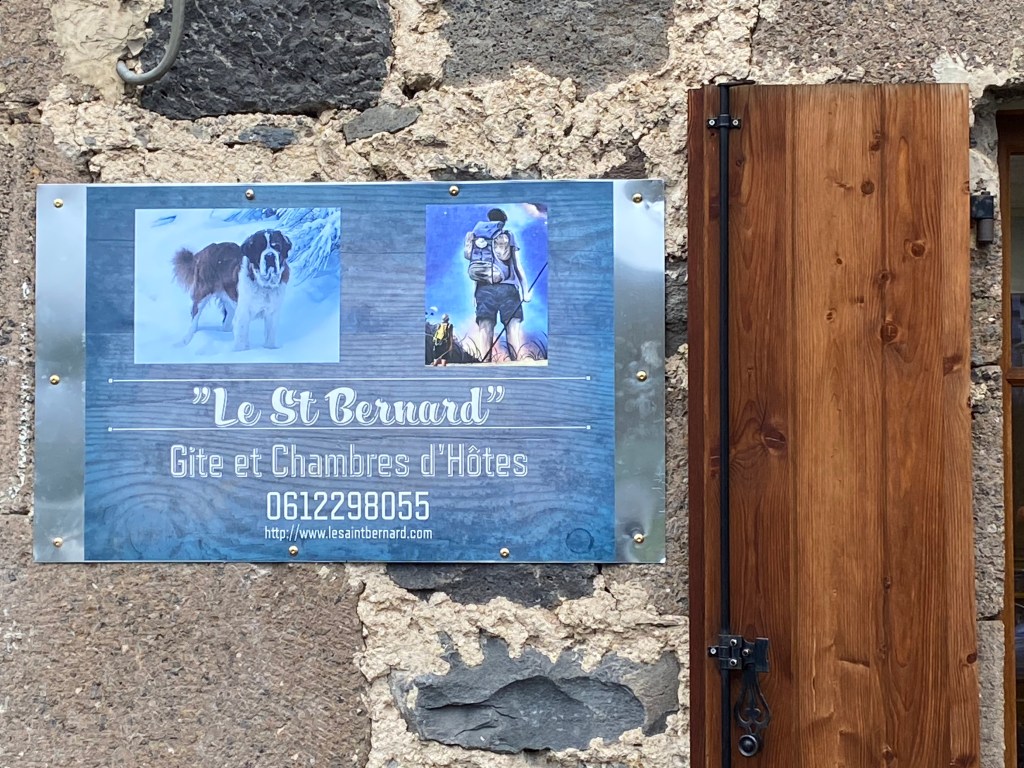
Yesterday, after arriving on the edge of town in Saint-Privat, I followed directions to our accommodations – Chambre d’hôtes Le Saint-Bernard. I confess I chose this lodging because of the name! I used to have a Saint Bernard many years ago! Our hosts were Sabine and Patrick. Sabine greeted me at the door. There were a couple of other guests who had arrived before me getting checked in as well.
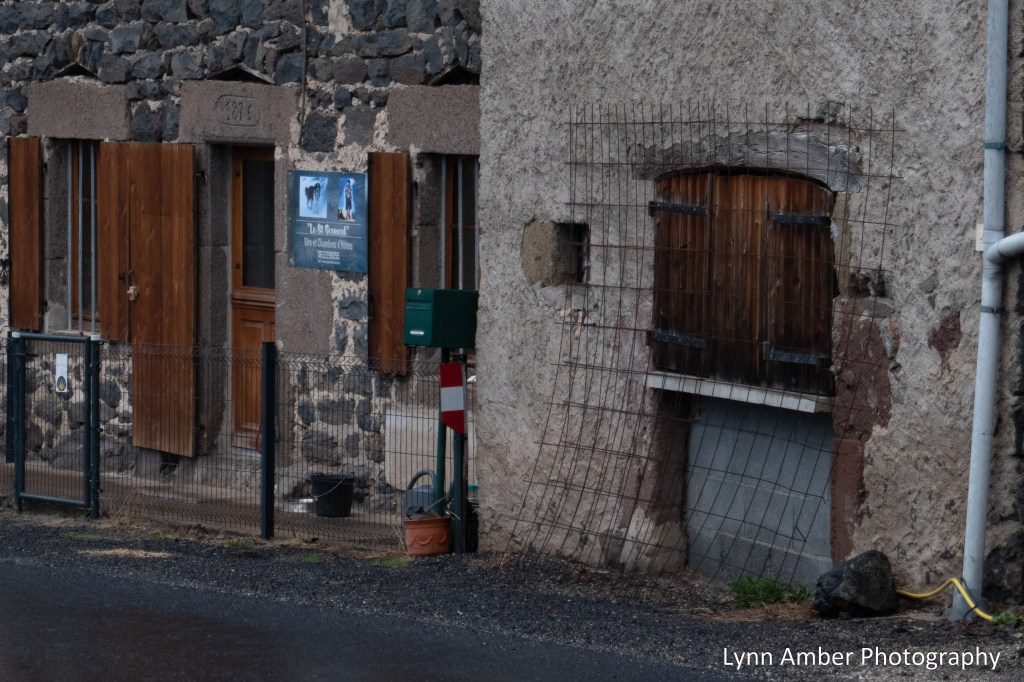
If you will recall, we had made changes to our original plan and altered our stays for the first few days. We had left a voicemail message with La Malle Postale that we would be stopping in Saint-Privat this night and NOT Montbonnet. I asked our hostess if our bag had arrived and, to my dismay, it had not arrived with the other luggage that was being transported by some of the other guests. It was difficult to convey the problem of lost luggage due to the language barrier but, with the help of Google Translate, and another guest who spoke some English, Sabine was able to understand the dilemma. She called the gîte in Montbonnet where we had originally planned to stay and determined that they had dropped our bag there. So, they had not received our voicemail about the change. 😦
After much discussion and waiting around, Sabine offered to go to Montbonnet and retrieve our bag. Keep in mind, even though it was a 15 kilometer walk to Saint-Privat, it was a much shorter driving distance back to Montbonnet. We were eternally grateful to her for this kindness. When we finally got in touch with La Malle Postale, we learned the hard way just how to make changes to our reservations so that they could adjust their schedule. It was necessary to call them prior to 6pm the night before and always best to get an actual person on the phone!
At 45 euros each (that included lodging, dinner and breakfast), this “hébergement” was truly a gem. Dinner that evening was a typical regional meal of Sausage and – wait for it! – Green Lentils. In addition, Patrick served us some local apple wine along with a Liqueur Vervienne du Valey – a locally distilled product described as “an ancestral recipe blending local verbena with a savoury mix of plants, and spices.” It was delicious!
After dinner, Sabine helped us arrange lodging in Monistrol d’Allier for the next night and we retired for the evening – well-fed and content.

Before leaving in the morning, I asked our hosts if there really was a Saint Bernard on site. I got my answer!
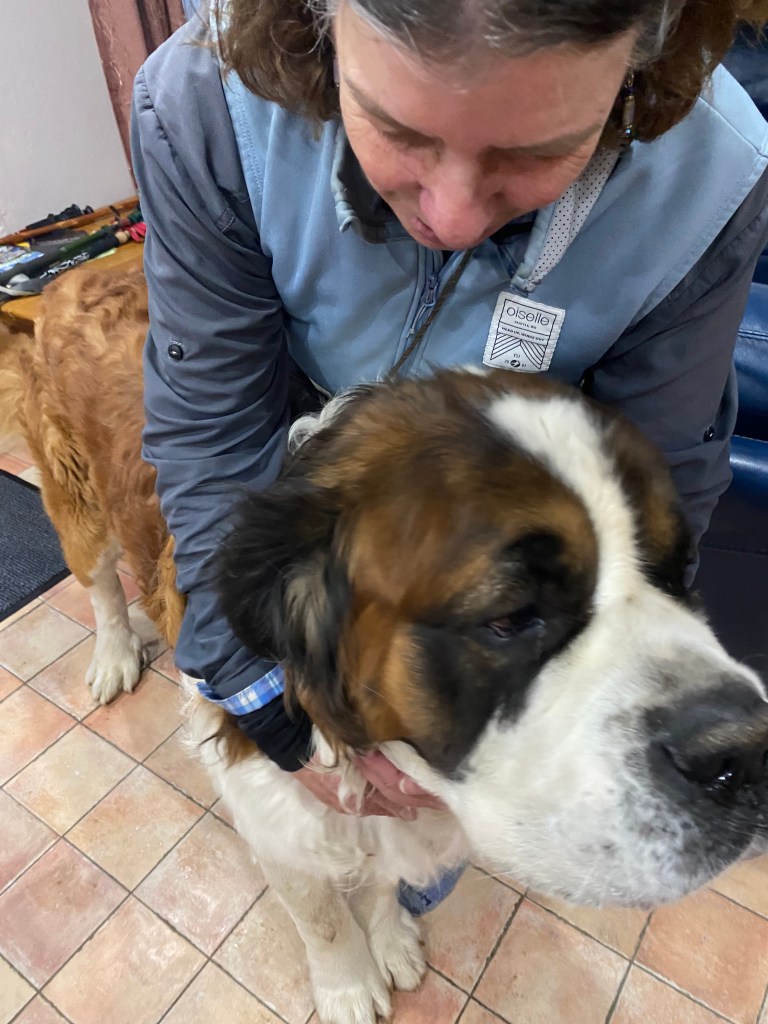
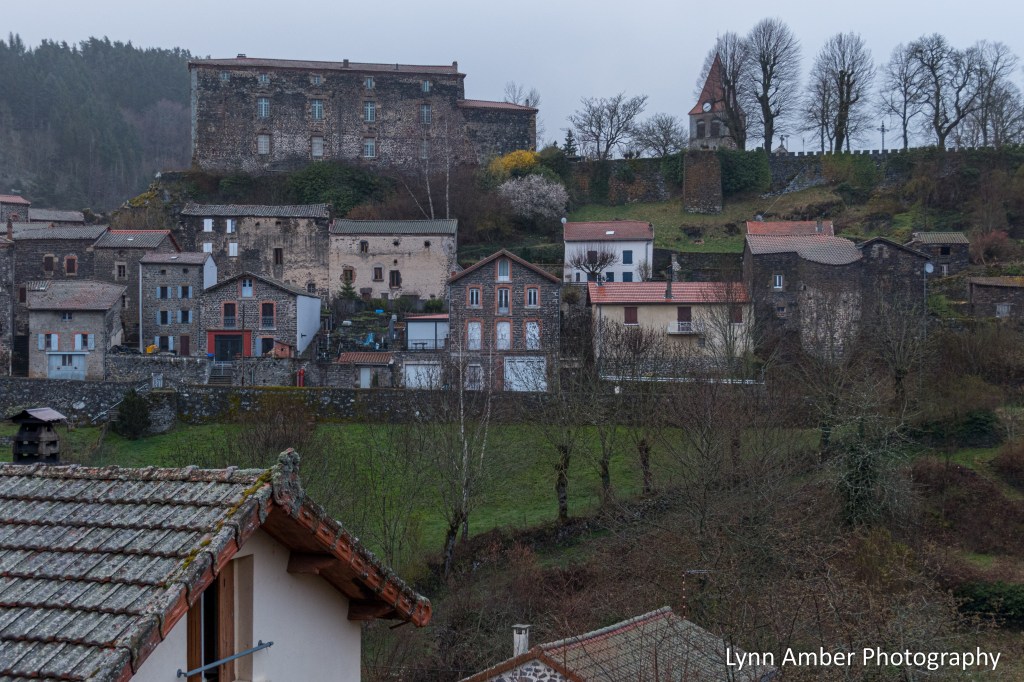
We had a very short walk to Monistrol so we spent some time exploring the small village of Saint-Privat in the morning before heading out on the trail.
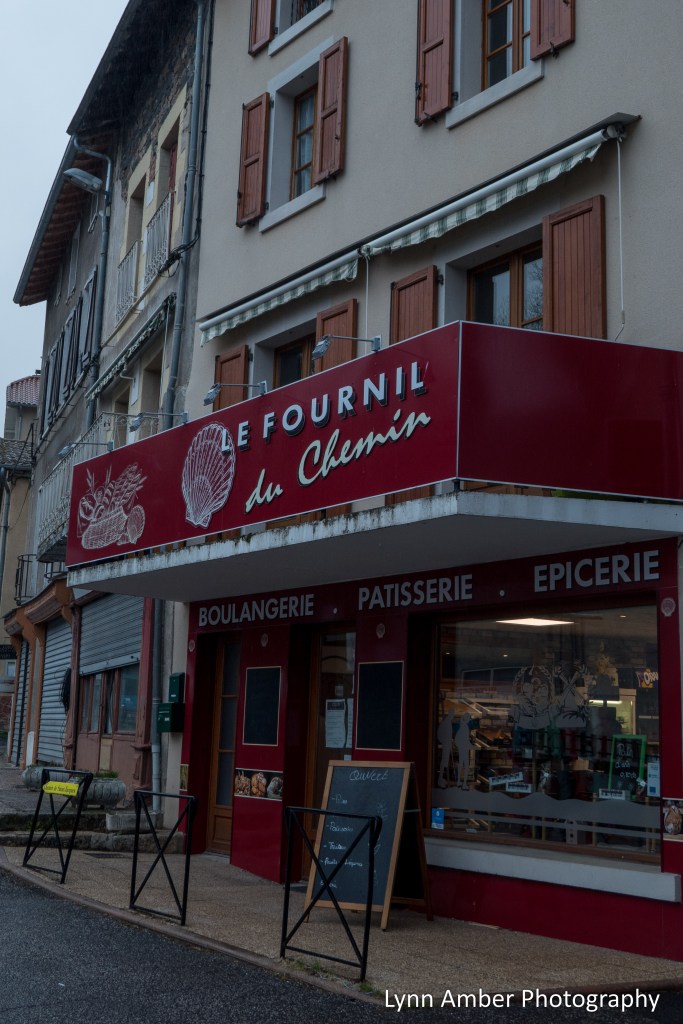
We stopped in at the local “epicerie” for some lunch items on our way to find the church.
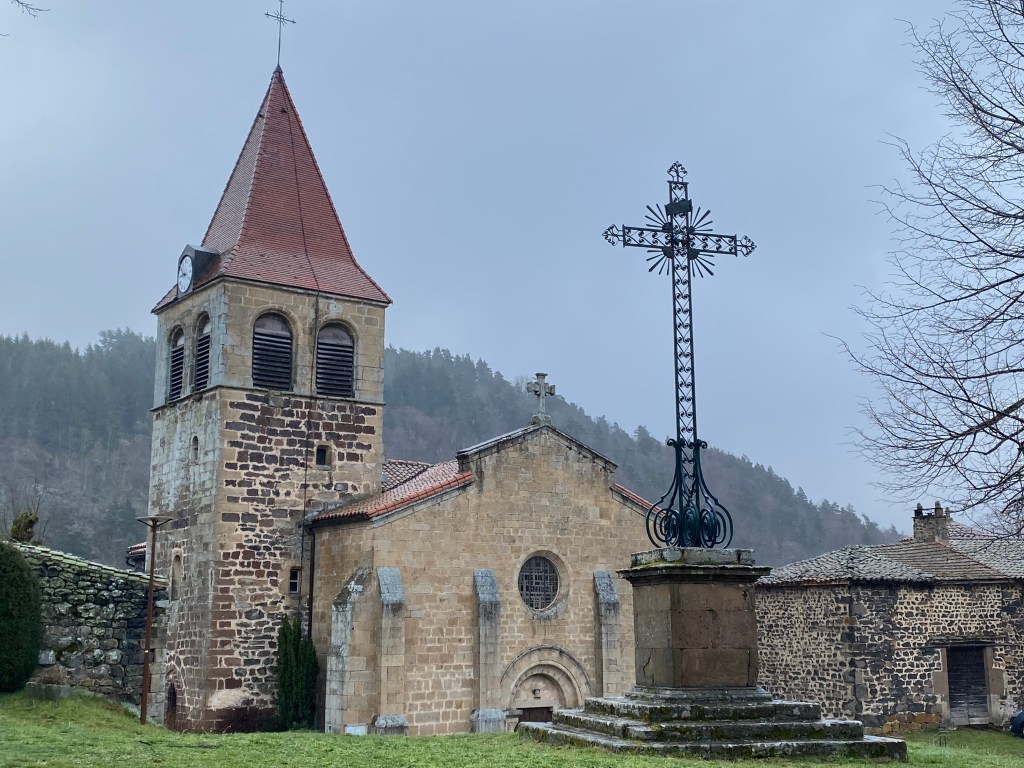
It was a misty, rainy day which gave everything a mystical air. Unfortunately, the church was closed. It was built in the 12th-13th centuries and has been added on to over the years. We found that often times the churches were not open along the Way – especially this time in the season. Also, most of the Catholic churches in these small villages did not have mass daily or even weekly. The priests rotated around to the different churches so it was important to know in advance where and when mass would be conducted throughout the region.
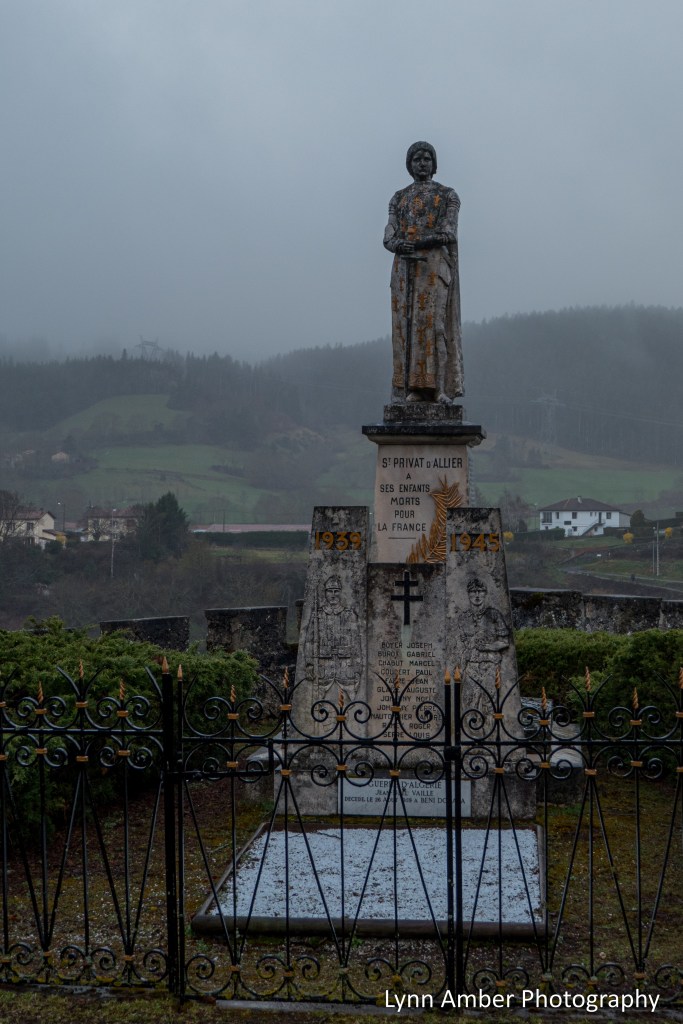
There is a memorial on the grounds of the church honoring the soldiers who died in the World Wars. I was particularly attracted to these war memorials along the Way. It really hit home to me just how hard it must have been to have two incredibly destructive wars fought on your own soil in your towns and villages.
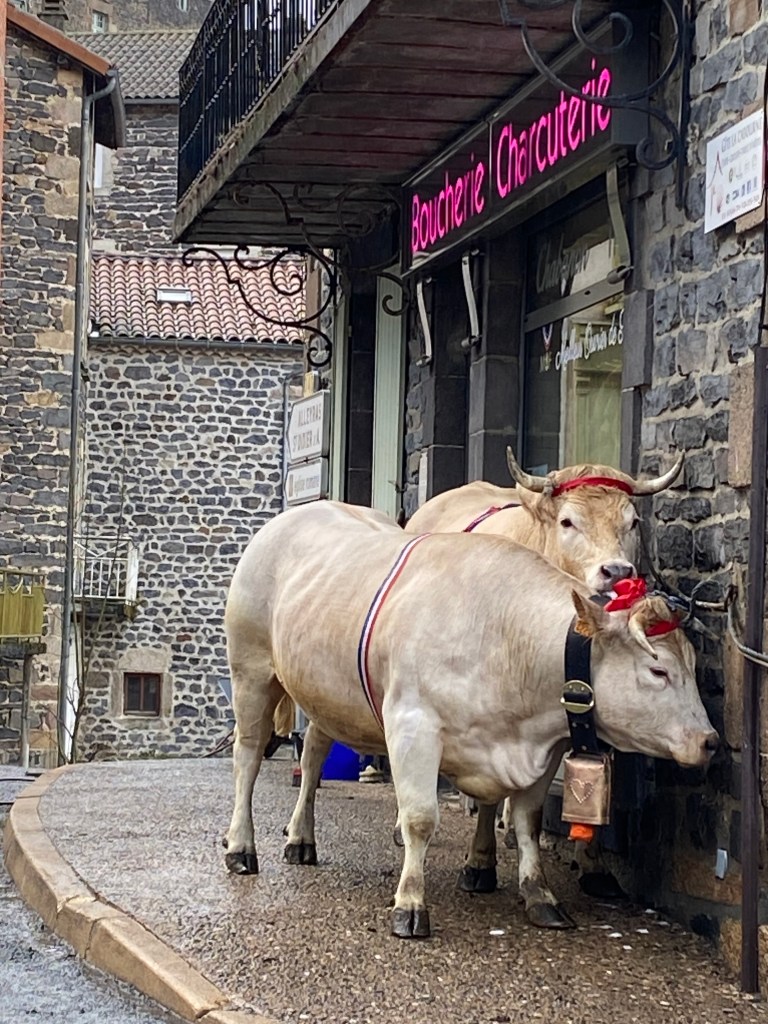
On our way back down to the center of town from the church, we witnessed some cows being dropped off at the local butcher. Many small villages have their own butcher shop/delicatessen – called “Boucherie / Charcuterie” – or some version of that. It was interesting to watch this process. Two cows were unloaded off a trailer and tied up outside the “boucherie”. They were actually rather ornately decked out with bells and adornments. Although I knew their ultimate fate, I felt like they were being somehow honored for their service – if that makes sense? I learned from some French folks later on that this particular butcher shop is very well revered in France as one of the best.
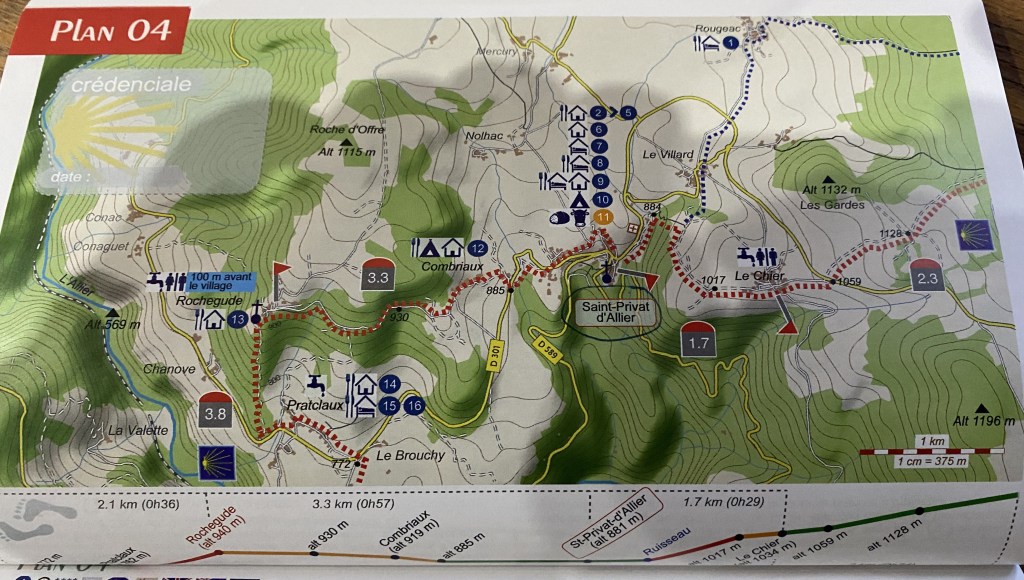
We finished our tour of Saint-Privat and headed out of town towards Monistrol d’Allier. It was a soggy day and we were warned that the trail leading past Rochegude would be treacherous due to the rainy weather. Although I was curious to see the remains of the 13th century castle in this tiny village, we both decided it best to take a detour along the D103 road. This early into our trip we did not want any accidents on slippery trails! You can see on the map below how we followed the D103 until it intersected again with the GR65 near Pratclaux – avoiding the steep descent from Rochegude.
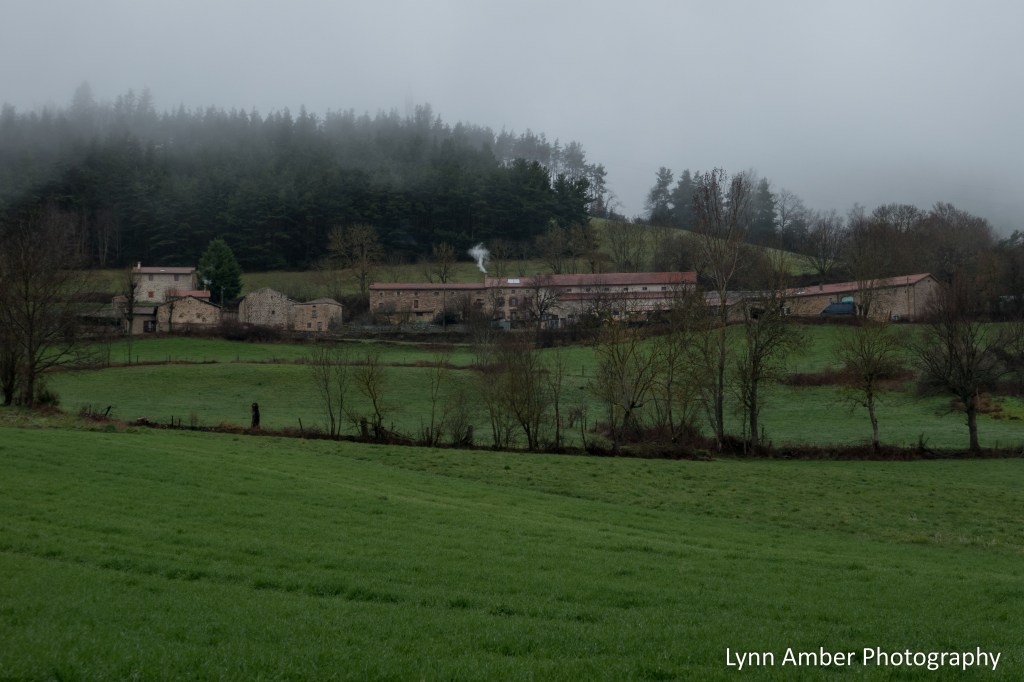
The scenery was lush and green along the way – with some spring flowers starting to color the landscape!
It was a short, steep rocky path down into the town of Monistrol d’Allier.
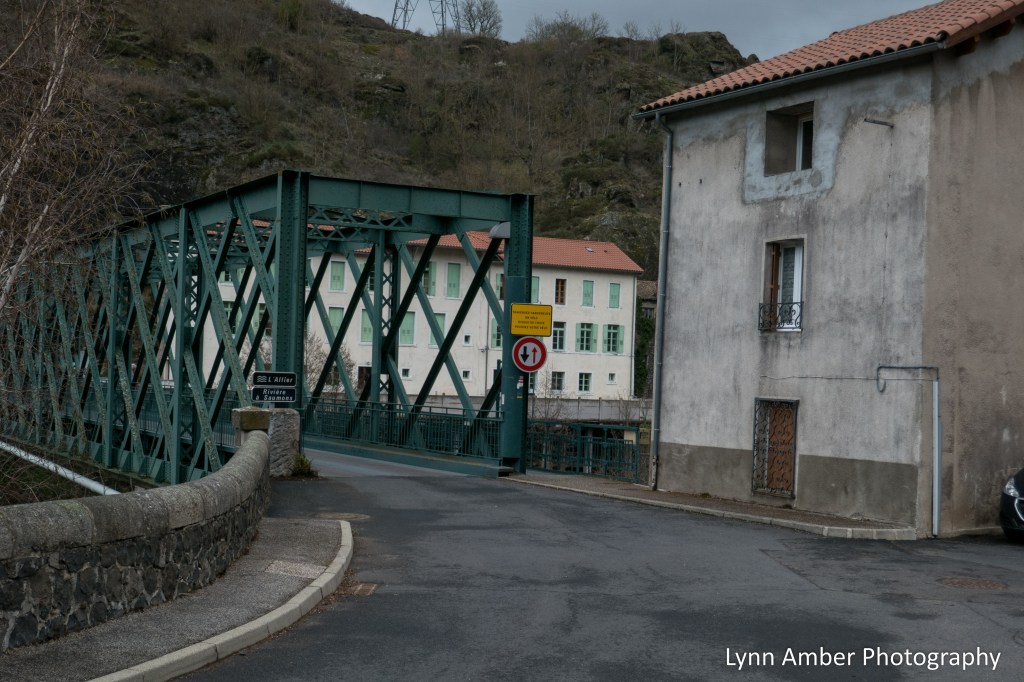
Our gîte was located directly across the Allier River next to the Pont Eiffel and was aptly named Gîte du Pont Eiffel!
Gustave Eiffel, a reknowned French civil engineer, built this bridge along with many other railroad bridges across France. He is probably best known for his design of the Eiffel Tower for the Universal Exposition of 1889 in Paris. His company was also involved in the design and construction of the Statue of Liberty – a gift from the French government to the United States. Cool history!
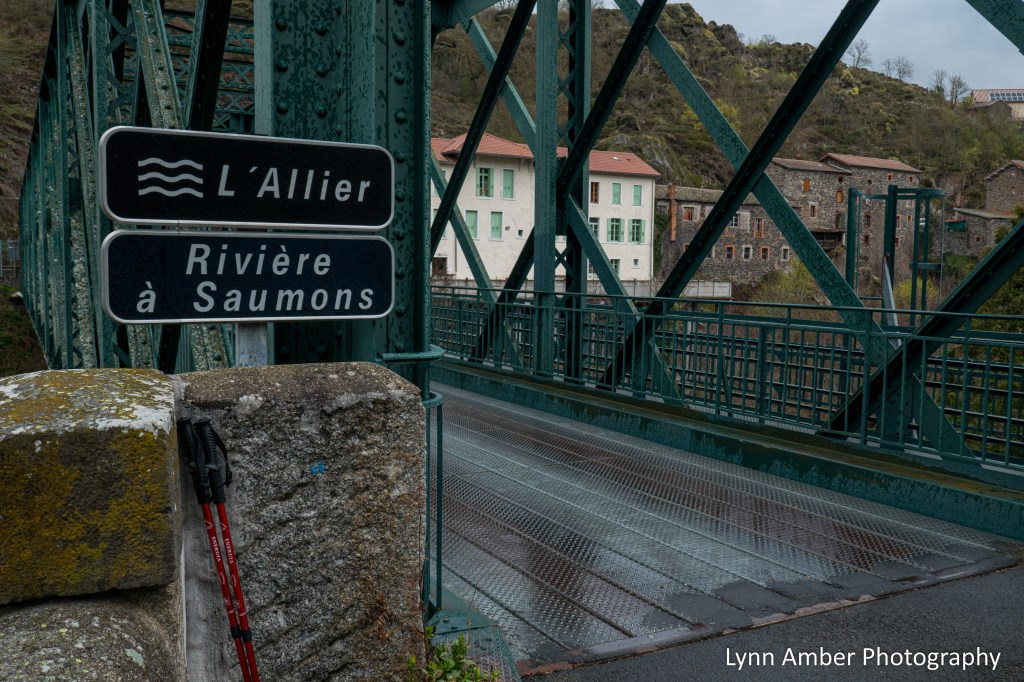
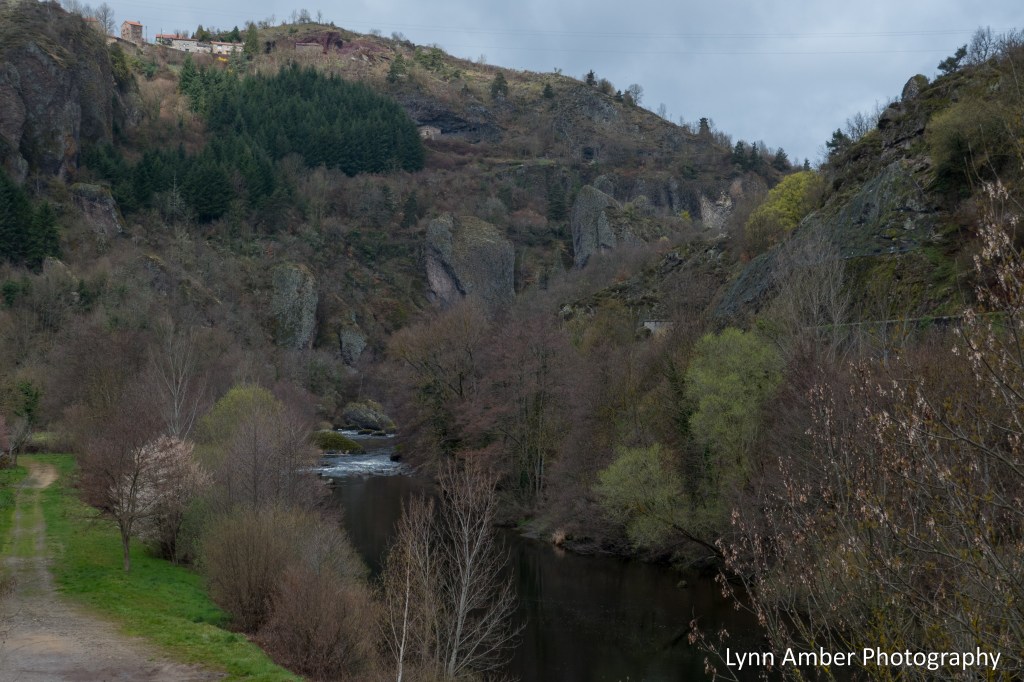
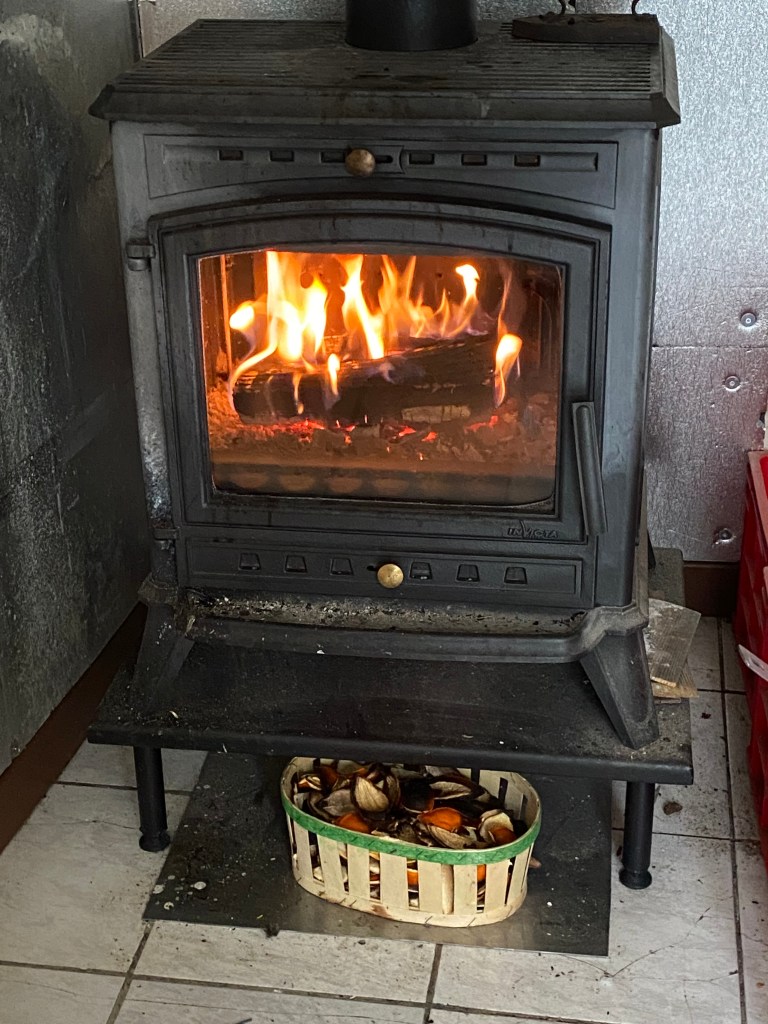
I checked in at the gîte with our host Andre as soon as I reached the village. He offered me some tea and a place to sit in the kitchen to eat my lunch of yogurt, apple and chocolate éclair (that I had brought with me from Saint-Privat). With my appetite fully satiated, Andre showed me to my room up some very winding narrow steps to the third floor. He also instructed me on the use of the shower – which was actually very high tech! It even had a setting to play music! I asked about handwashing some clothes and he set me up with a tub, some detergent and strung up a clothesline above the woodstove so they would dry! 🙂
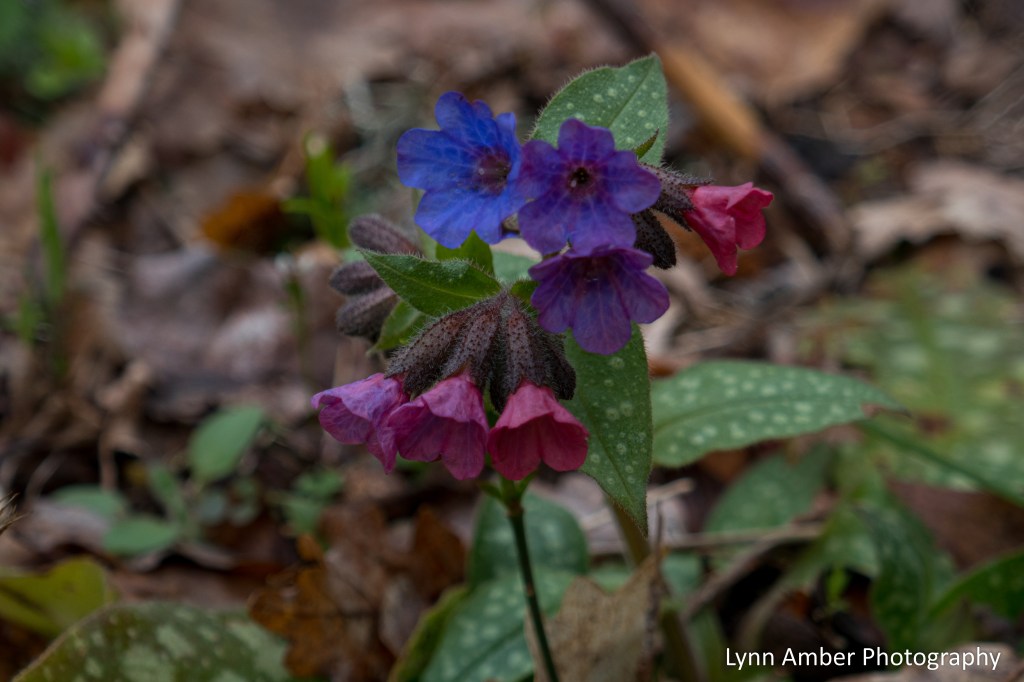
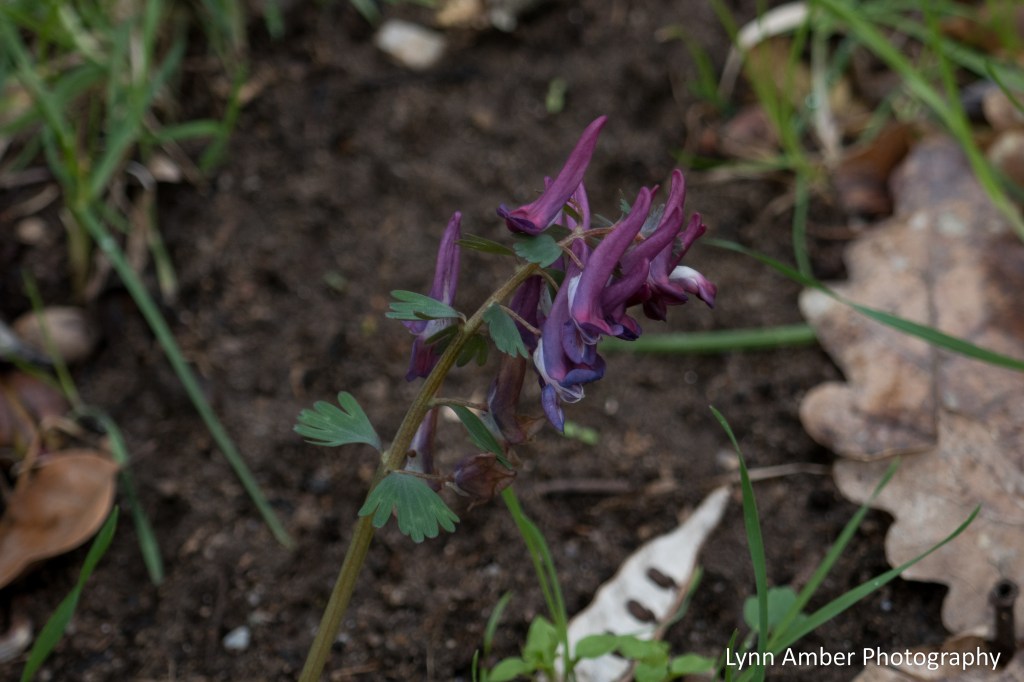
Once my clothes were hung to dry and my shower complete, I still had some time in the afternoon to explore the town. I discovered a trail that traversed down along the river and decided to start there. It was a peaceful and relaxing walk and the bonus was finding some spring wildflowers blooming!!
After exploring the river, I wandered around the town admiring the old stone buildings, narrow streets, doorways and flowers. The church was closed – something we have been finding a good bit along our journey.
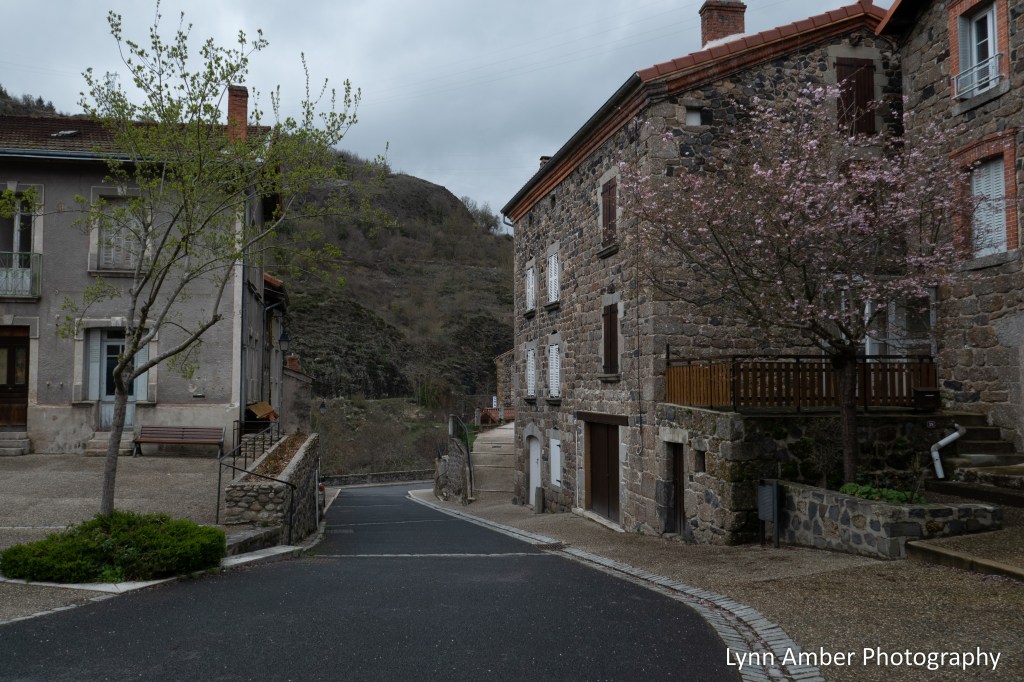
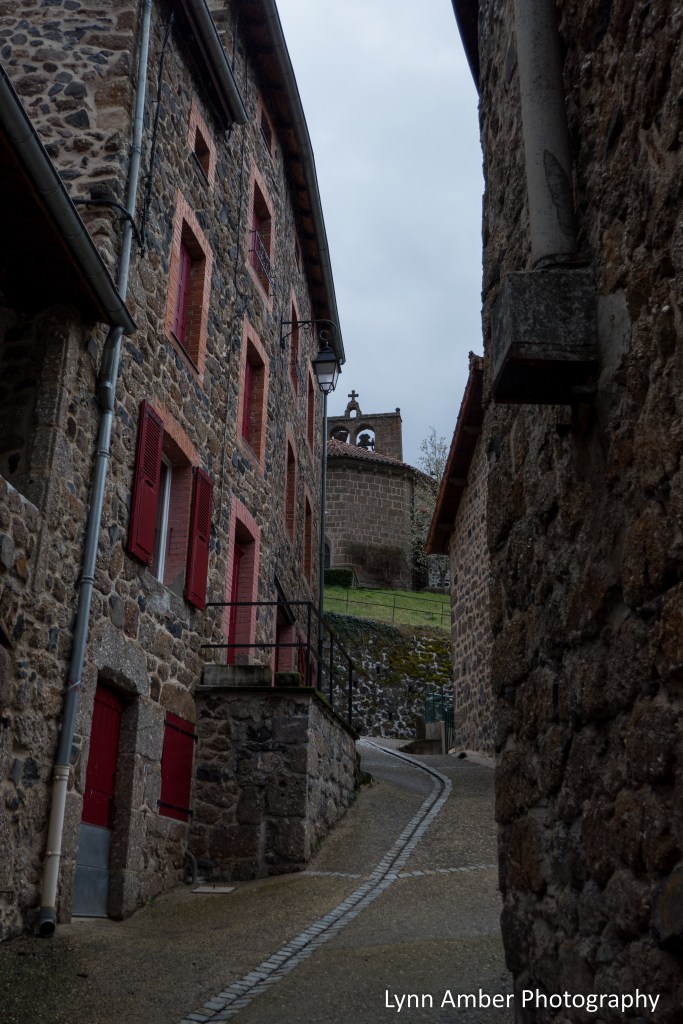
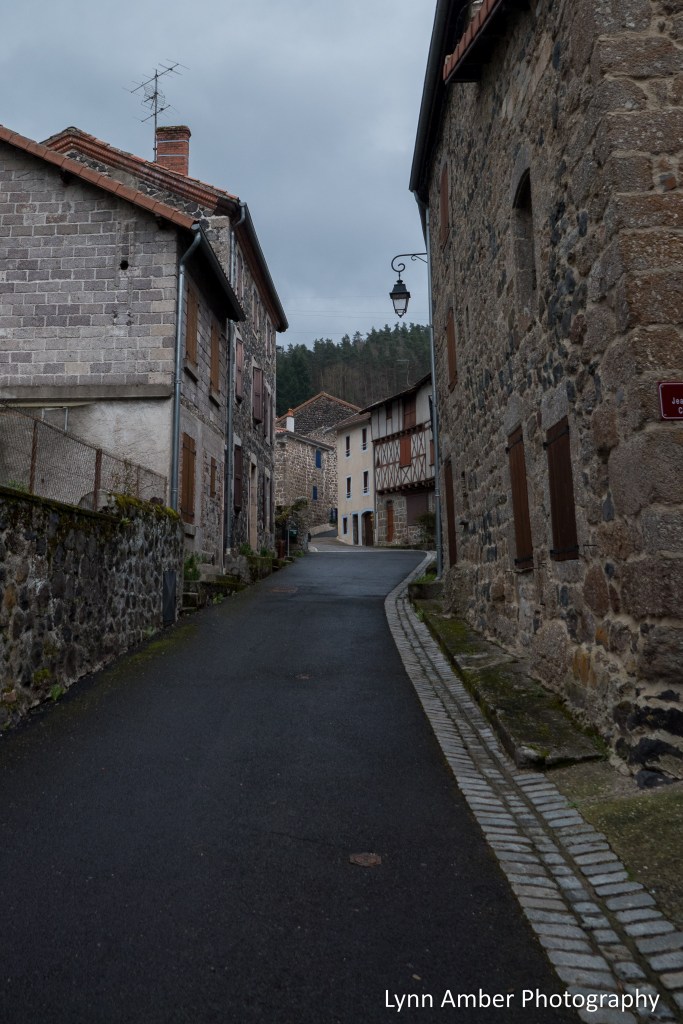
One thing that really stood out for me in France was the way shutters were utilized. They were on all the buildings. At night, everyone closed up their shutters and secured their homes. It was a habit that we got used to performing in all our accommodations. Was it for protection? To keep the light out for sleeping? Keep the bugs out? Warmth in the cooler months? I’m not sure why but shutters in France are not just decorative like they are in the States. They serve a function. And, the French do not use screens in their windows – at least in the region where we were walking. They will often hang very light lace or sheer curtains across the opening to discourage bugs and afford some privacy – but no screens. Often times, I would walk by homes with their windows wide open to the fresh air.
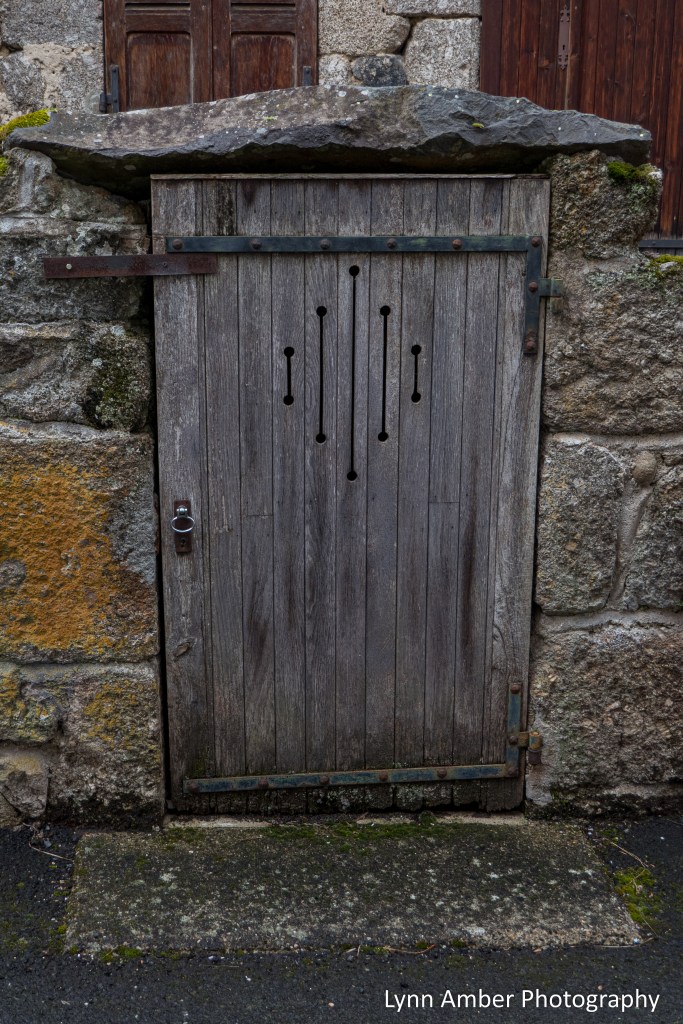
Gated entrances are common in the villages we passed through. I loved taking pictures of the many types of doors and gates. Check out that hefty stone lintel above the door!
Back at the gîte, I reconnected with Susan and we encountered two other women who were staying for the night. They were solo hikers who had also just met. We were reunited once again with Laure from our first night out and we were introduced to Martina who was just starting her walk. Martina spoke a little English and she informed us that she had recently retired and was walking from Le Puy all the way to Santiago de Compostela! A very impressive goal!
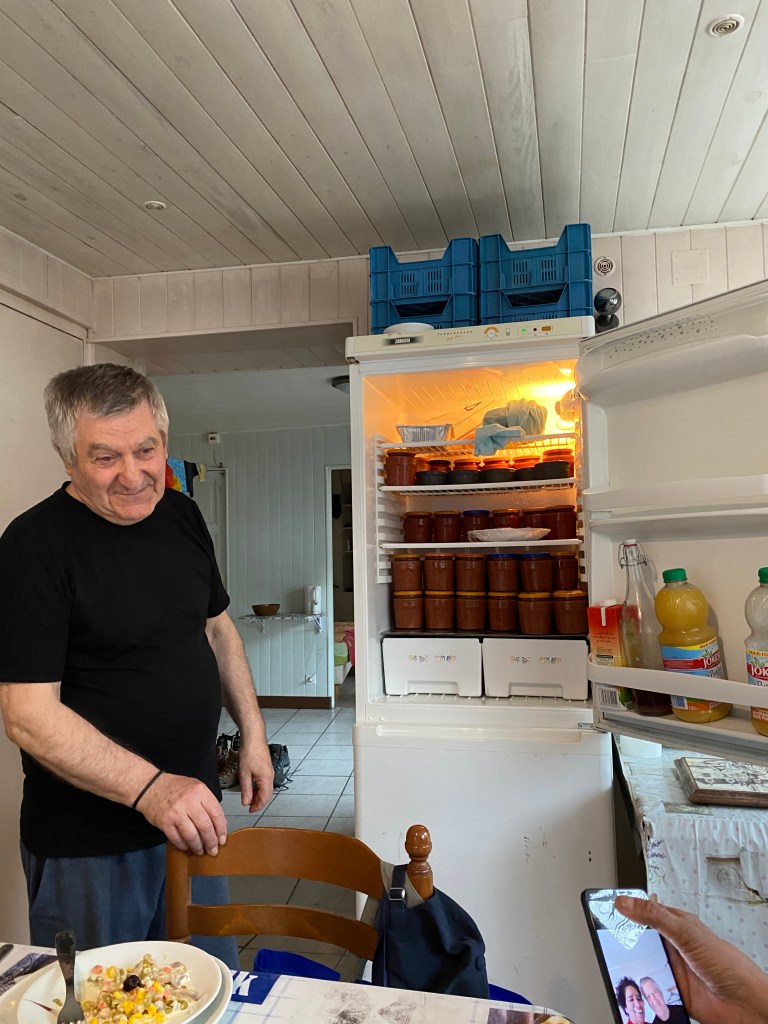
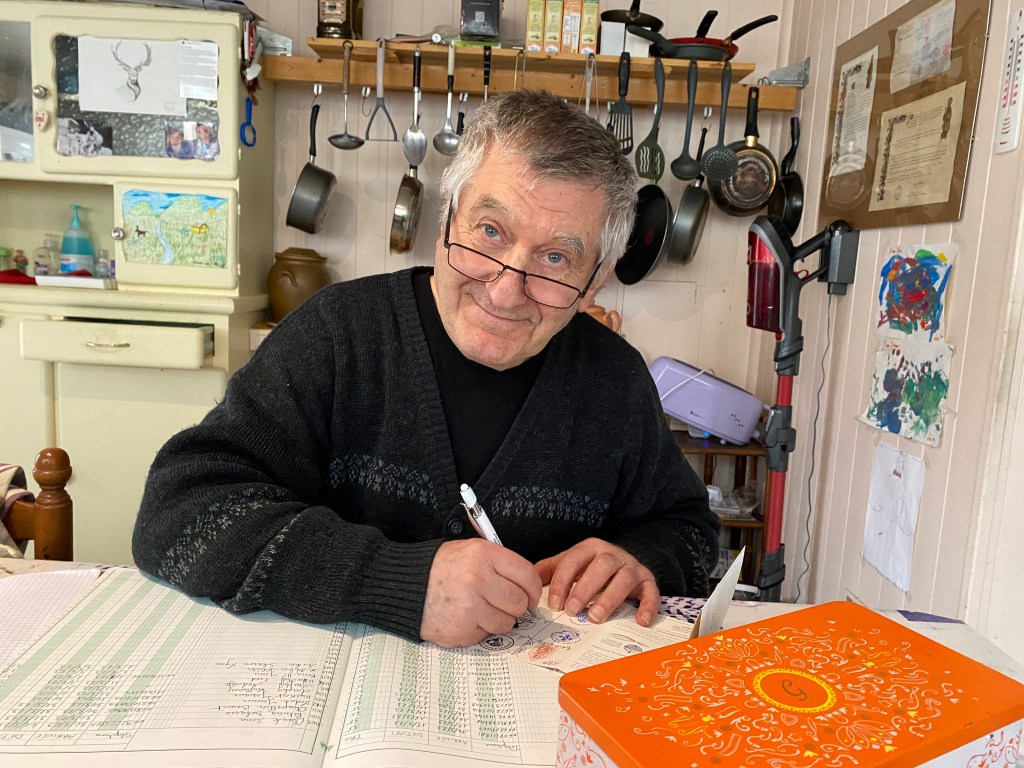
Andre cooked us up a great spaghetti dinner and proved to be a wonderful host and a terrific storyteller. He did not speak English so Martina did her best to translate his animated narrative. Sometimes I’m not sure we got all the story quite right! But, one tale was memorable. He told us how he was instrumental in playing matchmaker for a young couple who had met each other while staying at his gîte several years ago. He keeps meticulous records of everyone who stays with him including contact information when possible. Due to his visitor log, he was able to reconnect these two young people after they had lost touch with each other. One of them contacted him years after their pilgrimage and asked for the contact information he had on the other. I believe he said they ended up getting married and all because of the records he kept!
After dinner, Andre stamped our credentials and logged us into this record book.
Factoring in all the places we stayed during our 6-week walk, I do believe that I had one of the best night’s sleep right here in Andre’s humble, welcoming home.
The next morning after breakfast we took some photographs out by the bridge. We never did see Martina again. I wonder if she made it to Santiago…I hope so.
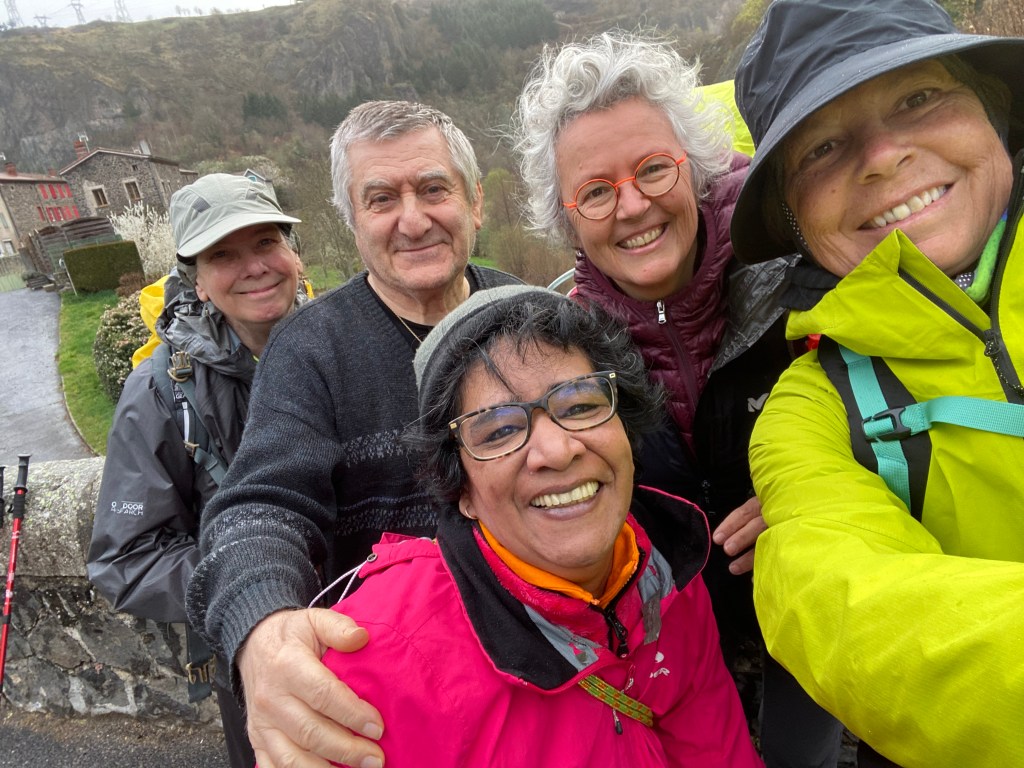
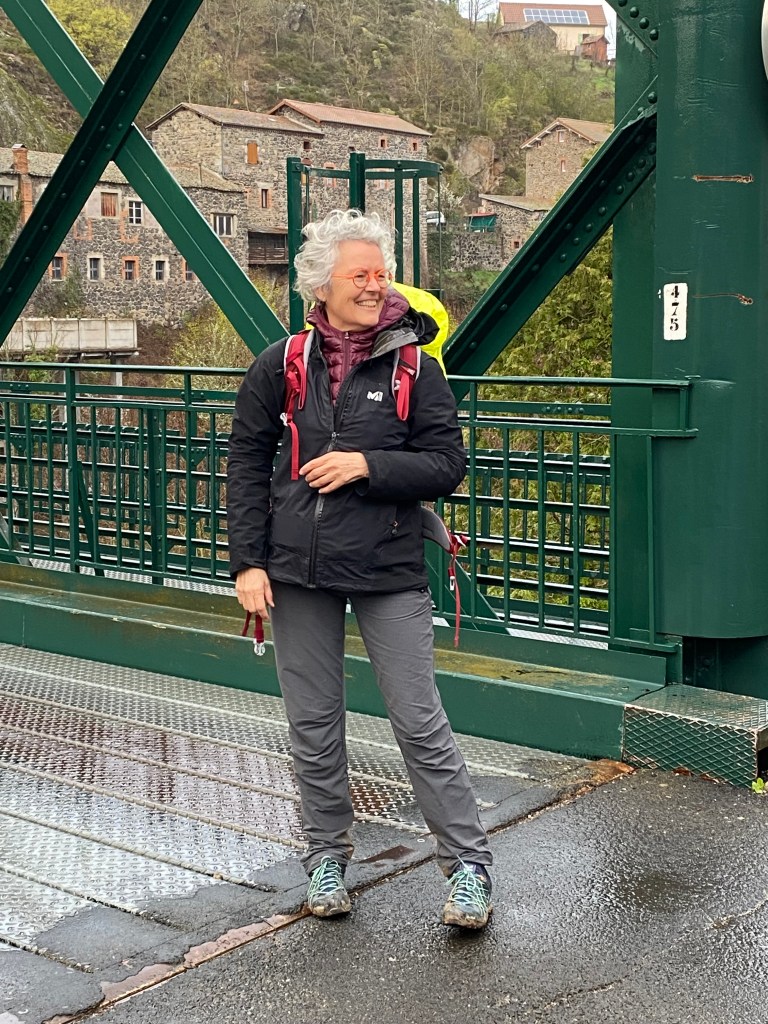
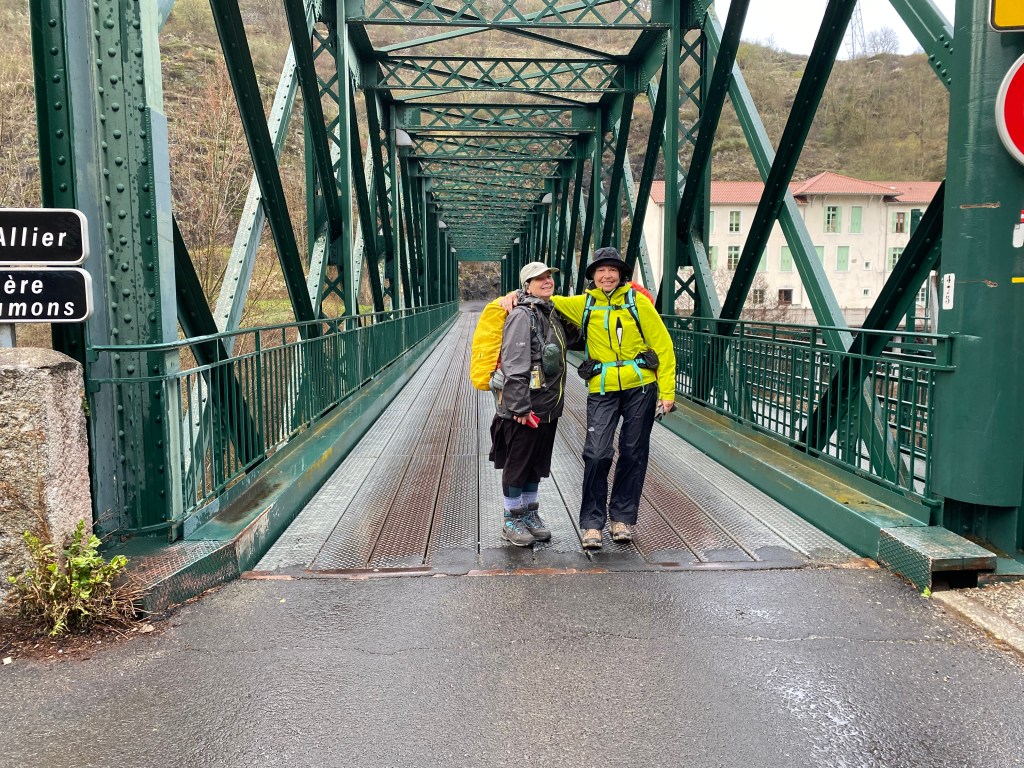
So, we cheated just a little bit on this morning. Laure’s knee was bothering her and Andre, super nice host that he was, offered to give her a ride to the trailhead near the Chapelle de la Madeleine. It would cut off about 3/4 of a mile of the steep climb out of town. He had room for two more and Susan and I did not hesitate to accept his invitation! 🙂
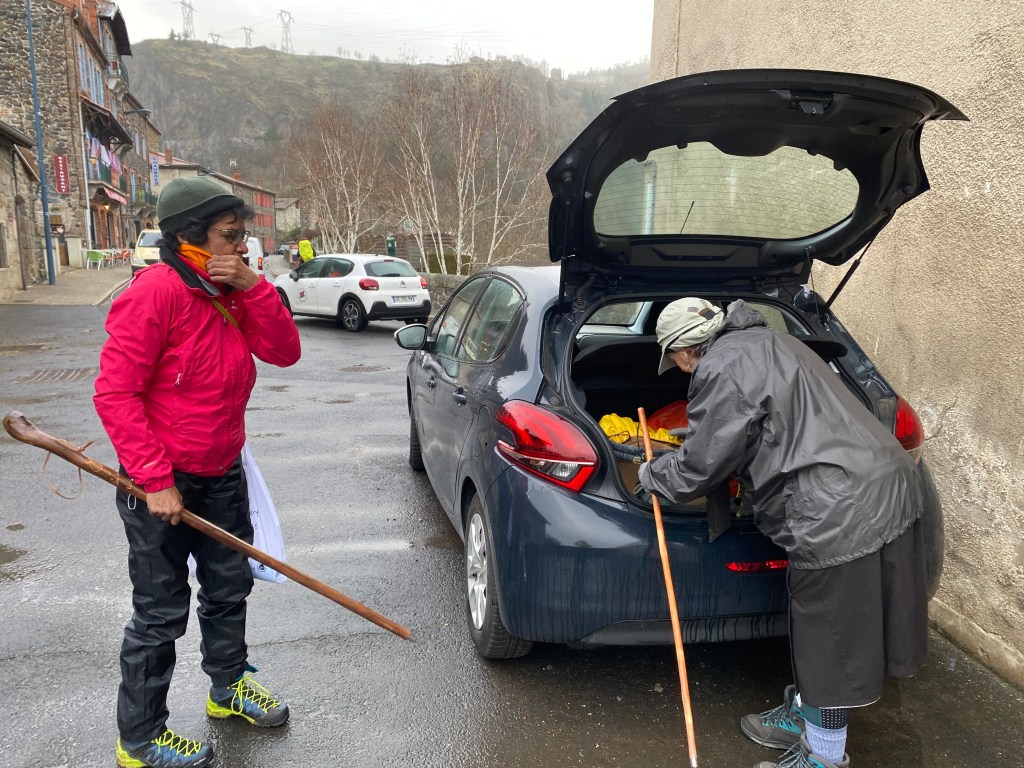
Our next stop would be the town of Saugues – a 12 kilometer walk from Monistrol. Andre was also instrumental in securing us accommodations there because, as luck would have it, his daughter and her partner operate at gîte in Saugues! A nice surprise!
4th of July Parade
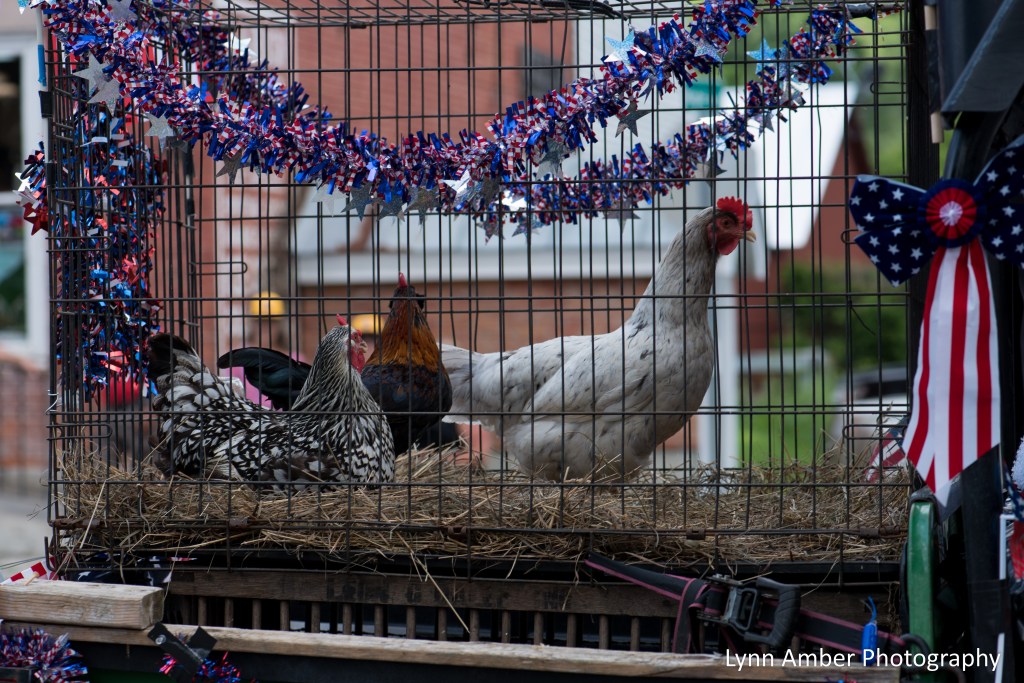
Who doesn’t like a parade? And, there’s nothing quite like a small (really small!) town parade on the 4th of July. If they were giving out prizes for “most original” float, my vote would have been for the chickens! They rule!
A couple of other runners-up:



Le Puy Camino – via Podiensis: Tallode to Saint-Privat d’Allier
April 1, 2023
Our second day on the walk and we woke feeling refreshed and ready to go. We had reservations for an accommodation in Montbonnet but, since our 12km walk yesterday went well, we decided that it was too close and opted to change our plans. One day completed and we were already making alternations! 🙂
This is when the use of a luggage transport company can complicate life. We decided to walk to Saint-Privat-d’Allier instead of stopping in Montbonnet and I confirmed with our reservation in Saint-Privat that we could arrive a day early. We could not talk directly to the luggage transfer company but left them a message that our luggage drop had changed – hoping for the best!
The day started out with a mix of sun and clouds and continued in that fashion throughout the afternoon.
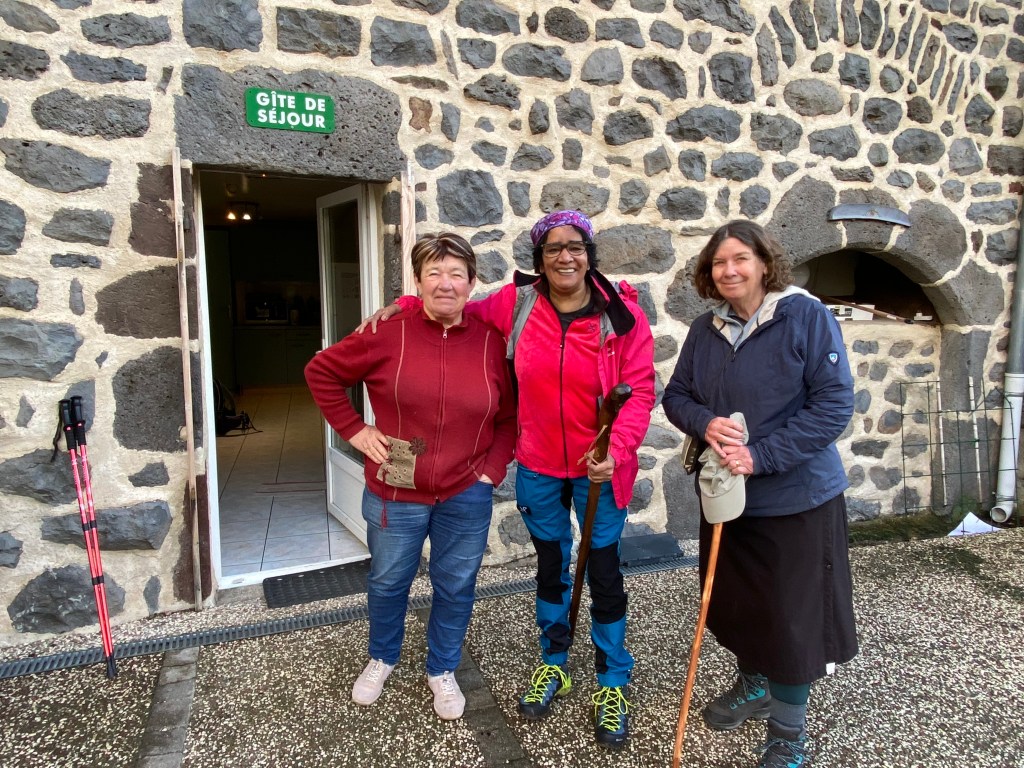
The night before, we shared a room with Laure and she was to become our new friend along the Way. We crossed paths with her many times over the next two weeks.
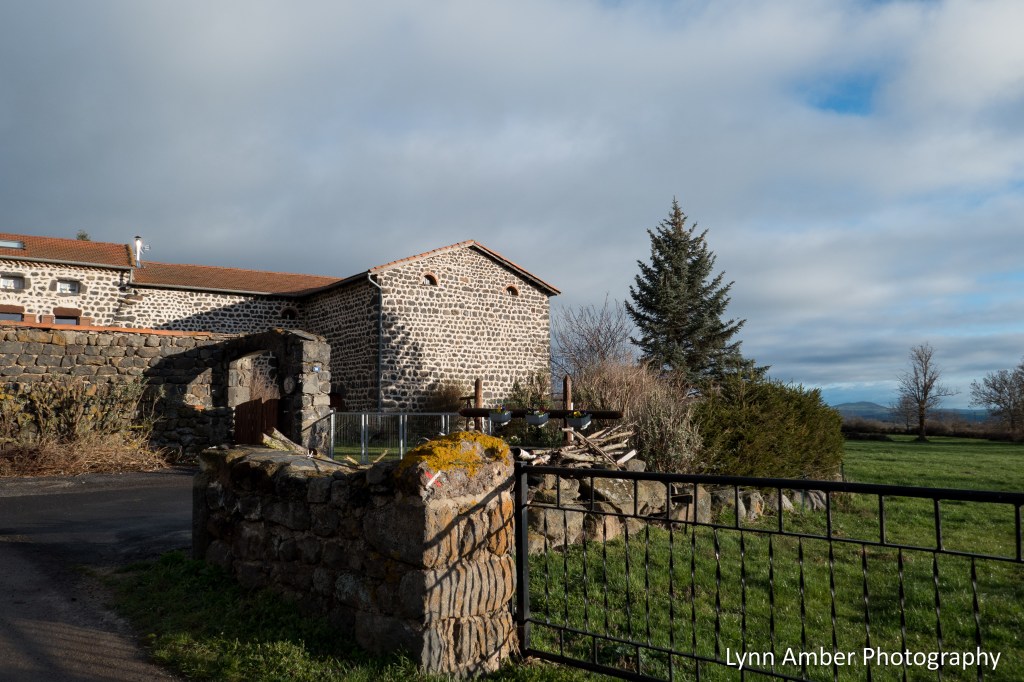
After leaving the gîte, we backtracked the short distance to the GR65 and set our course towards Montbonnet. The early morning walk was characterized by ominous-looking clouds interspersed with radiant sunshine that made for some dramatic landscapes. What I remember most about the walk between Tallode and Montbonnet are the freshly plowed farm fields and the livestock. The GR65 traversed mostly dirt and paved country roads heading towards Montbonnet – so fairly easy walking.
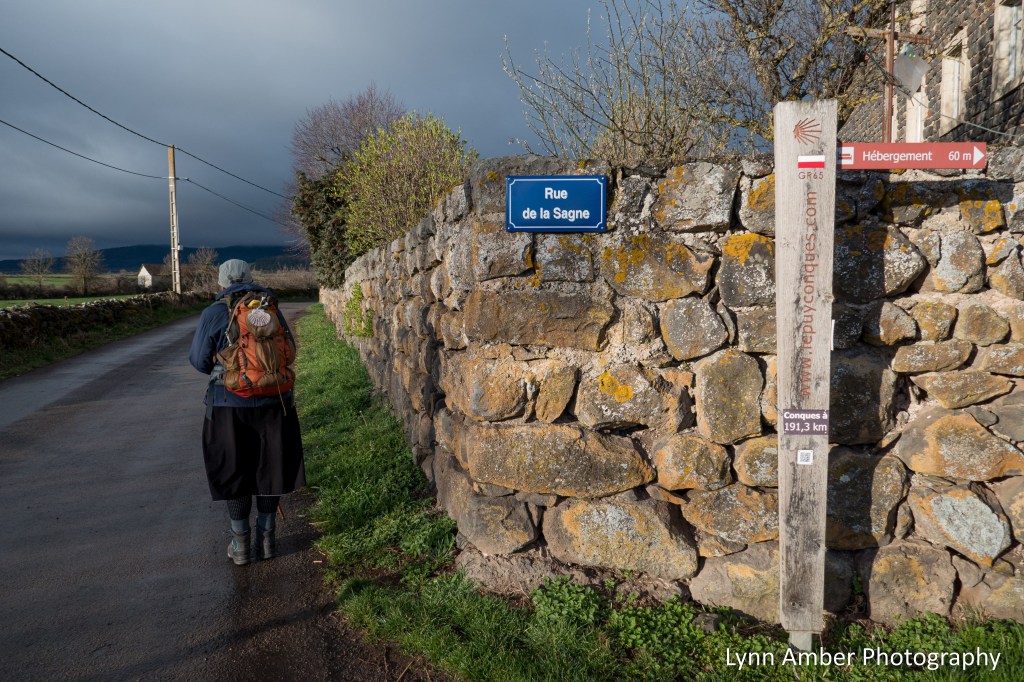

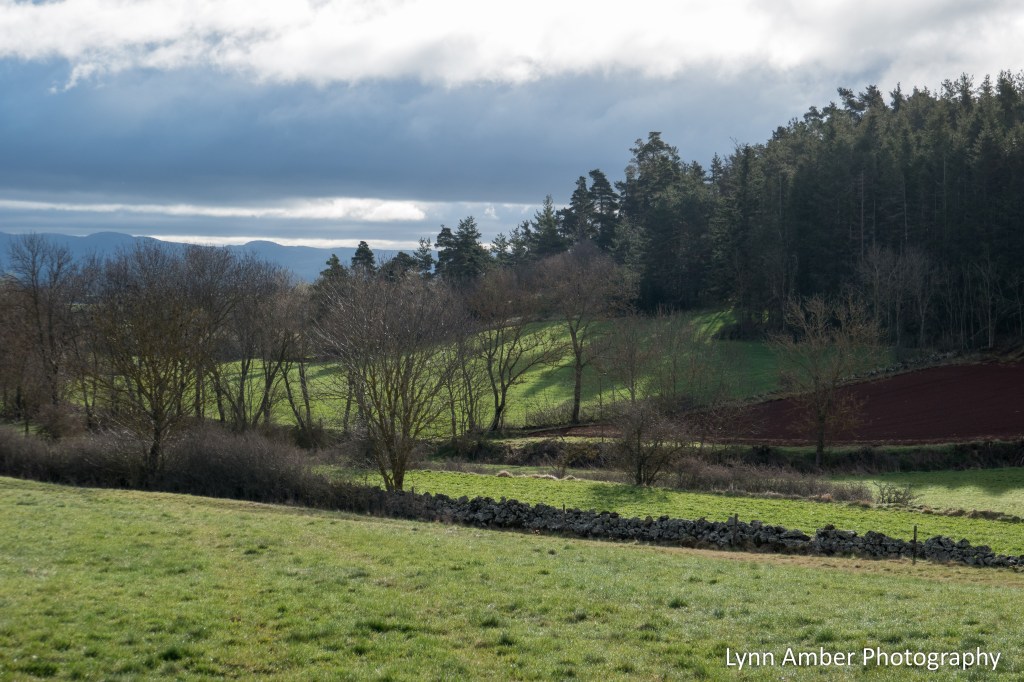
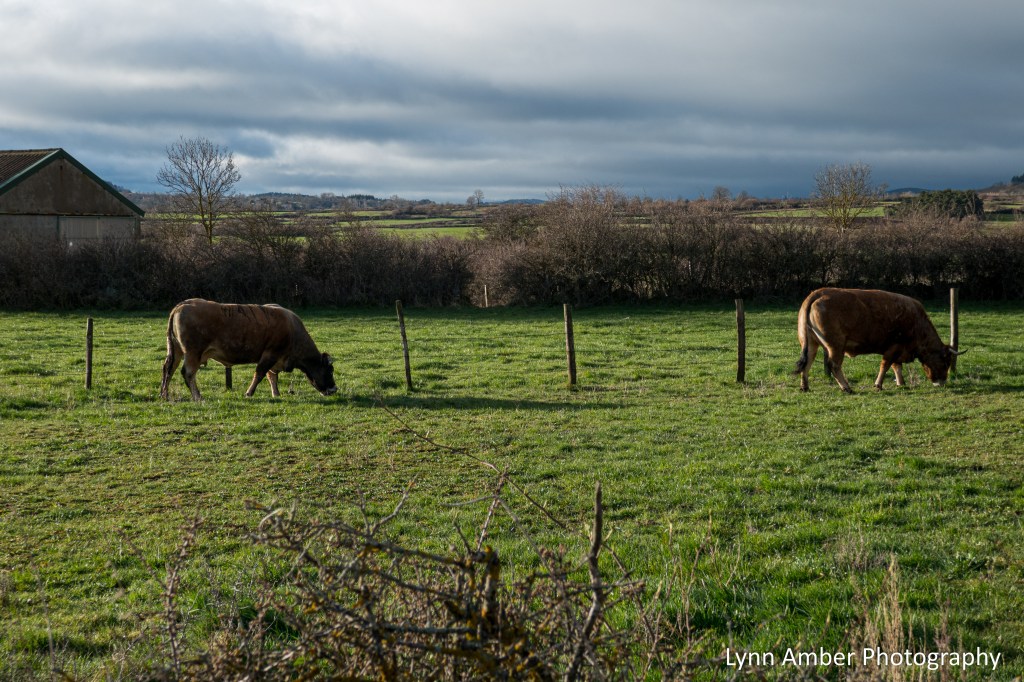
A short distance from Tallode, there is a variant or alternate route that detours through the small hamlet of Bains. We chose to stay on the main GR65 and continue towards the small town of Ramousroucle.
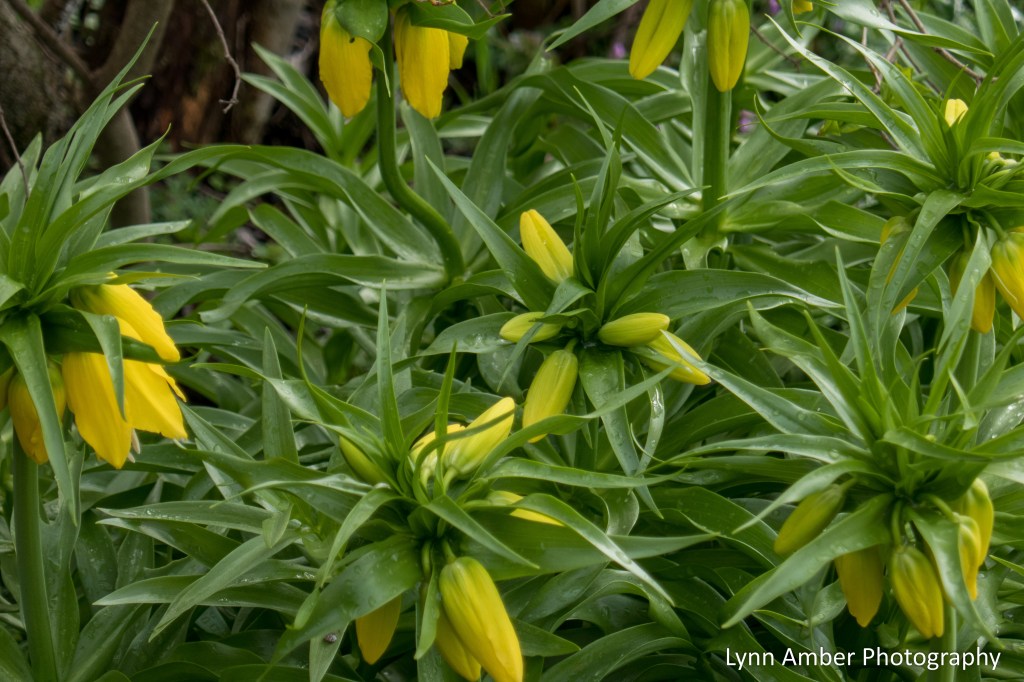
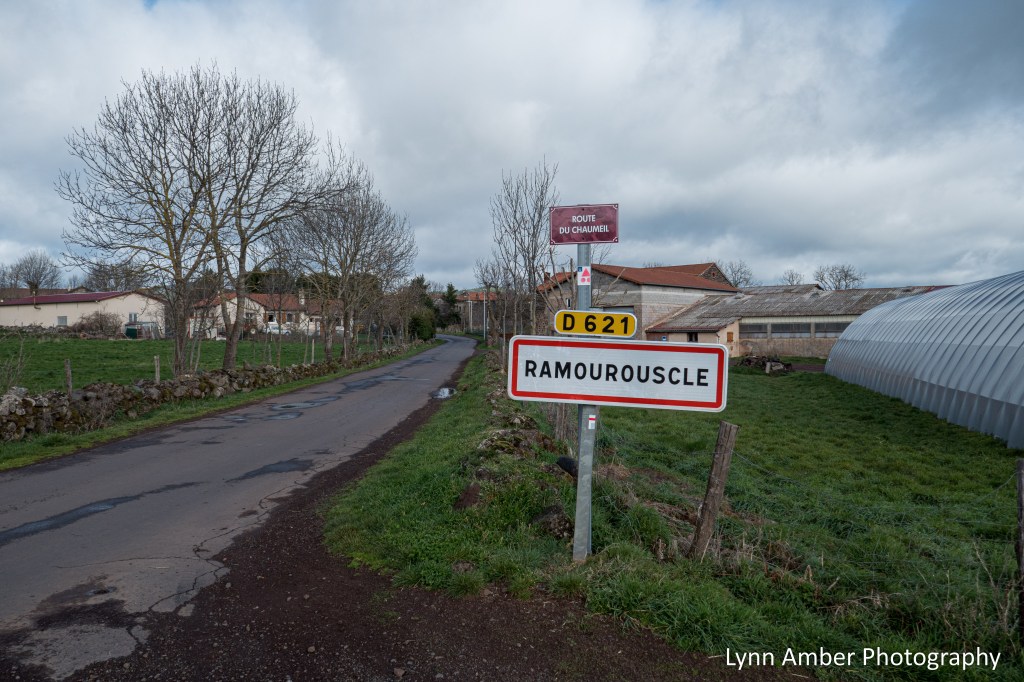
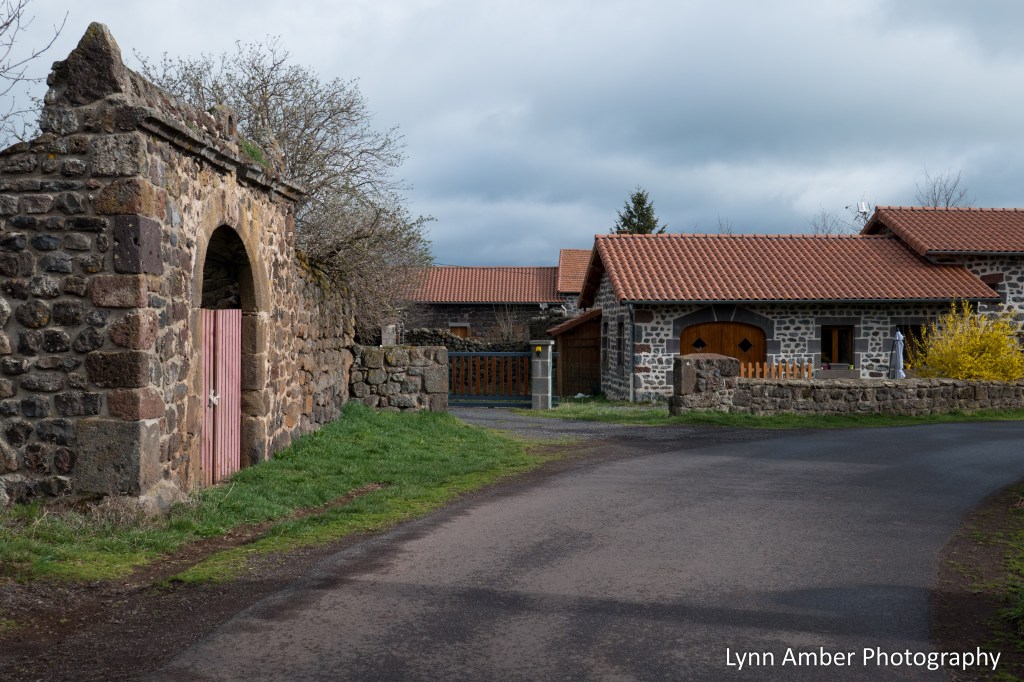
After walking about 6 kilometers, we came upon the sign announcing our arrival in the village of Ramourouscle. The architecture of the village is typical of many in this region with stone and tile predominating.
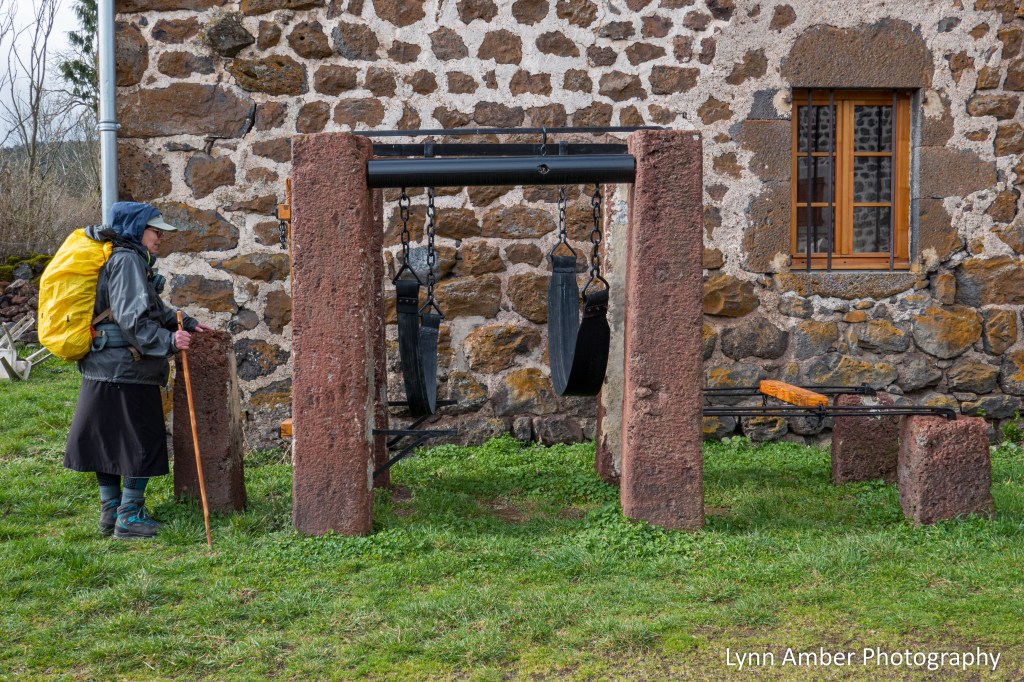
In the village we noticed the above device and wondered purpose it might have served. I was pretty sure it involved farm animals. After doing some research, I discovered that this is a “travail à ferrer” – a means of containing large animals for “shoeing”. We saw examples of these structures several times along the Way.
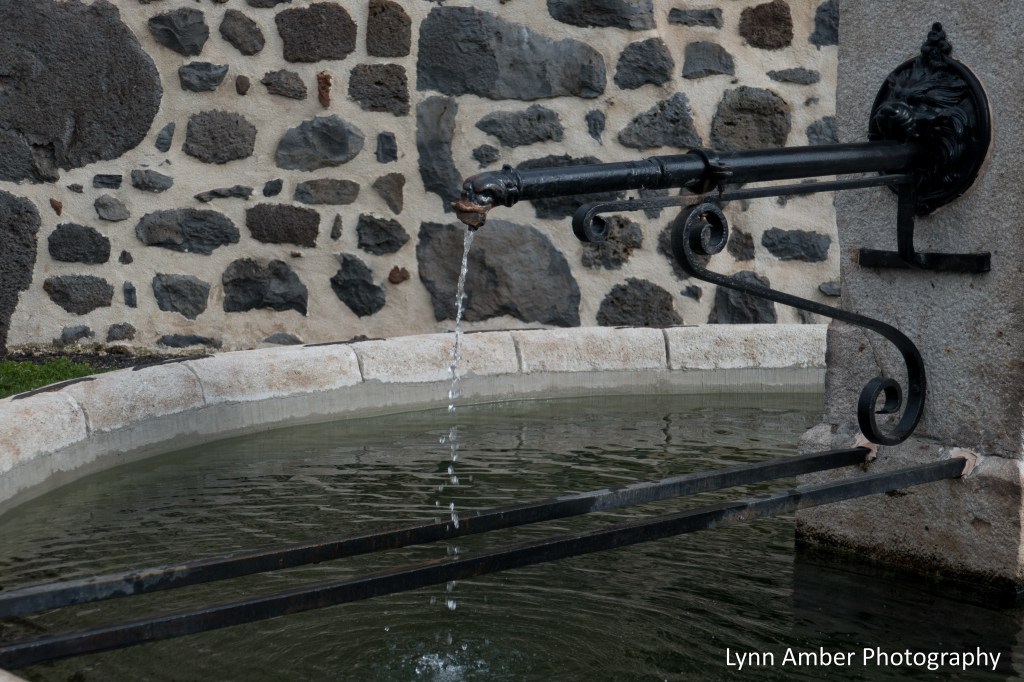
In many villages, old fountains still exist as a reminder of times past. In most cases today, these are marked as non-potable. I love the ironwork on this one!
Just before entering the town of Montbonnet, the GR65 passes by a beautiful 11th century chapel called the Chapelle Saint-Roch. It deserved a closer look and I took the time to wander around the outside and inside of this Romanesque chapel. It was built by the Montlaur family who were barons of Montbonnet. Originally dedicated to Saint James, it later became associated with Saint Roch. Legend has it that Saint Roch was born with a red birthmark on his chest in the image of a cross. He was born in 1295 into a wealthy family whose father was the governor of Montpellier. Aa a young man, after his parents death, he renounced his wealth, gave his money to the poor and refused to take over the reigns of the governorship in his fathers place. He embarked on the life of a pilgrim traveling to Italy to visit all the holy places along the way.
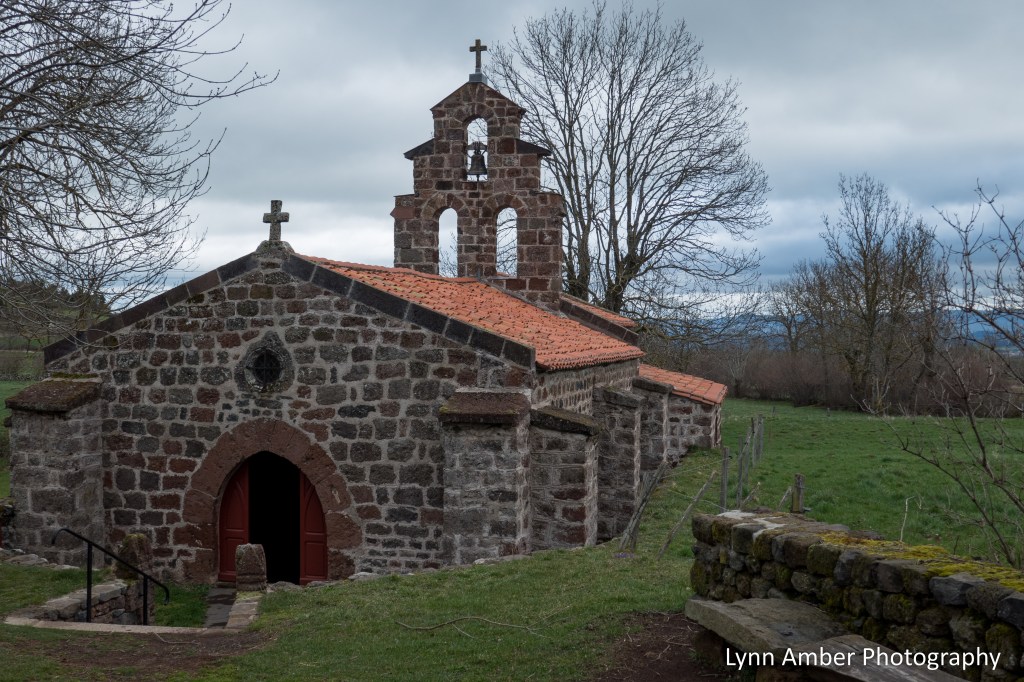
While tending to people stricken with the plague, he himself succumbed to the disease and stole away to the forest to isolate himself from others. It is said that a dog from a neighboring farm found him and brought him food and nursed his wounds. He is known as the patron saint of dogs and dog owners and knee problems – as well as the patron saint of invalids. Statues often depict him with a dog at his side and his pilgrim garb hiked up to show his plague-scarred “bubo” on his thigh. He is often thought of today as a patron saint of pilgrims along with Saint James.
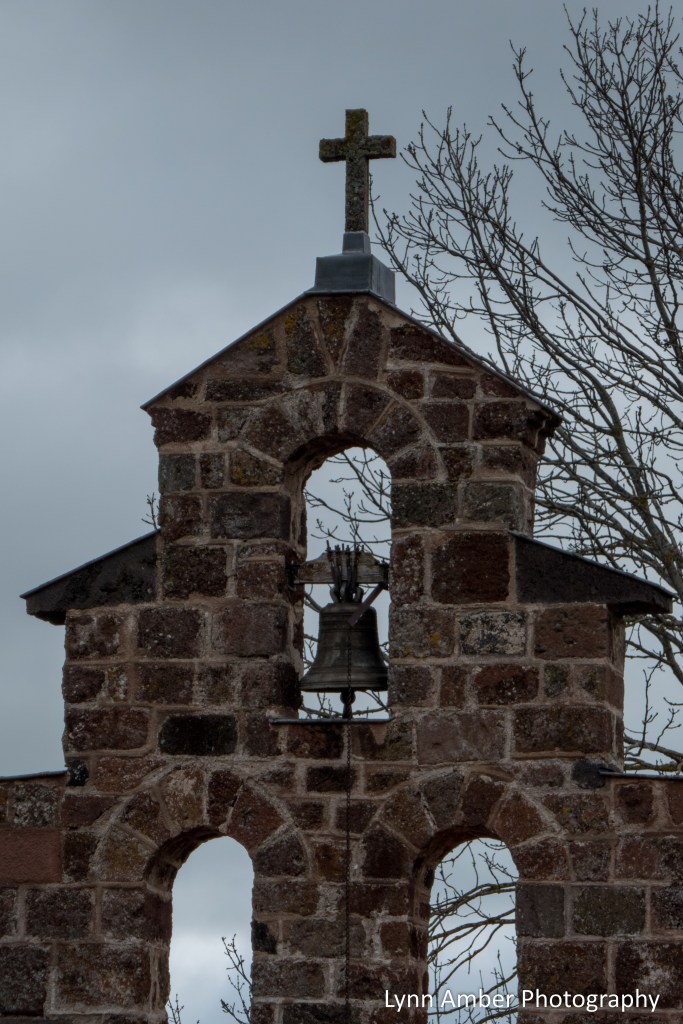
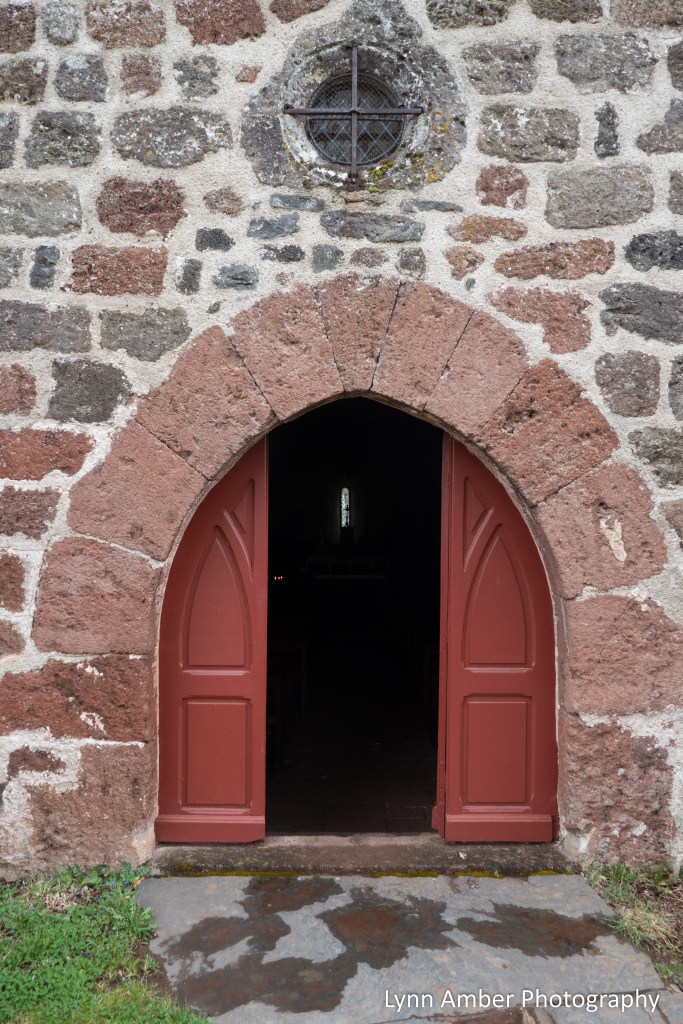
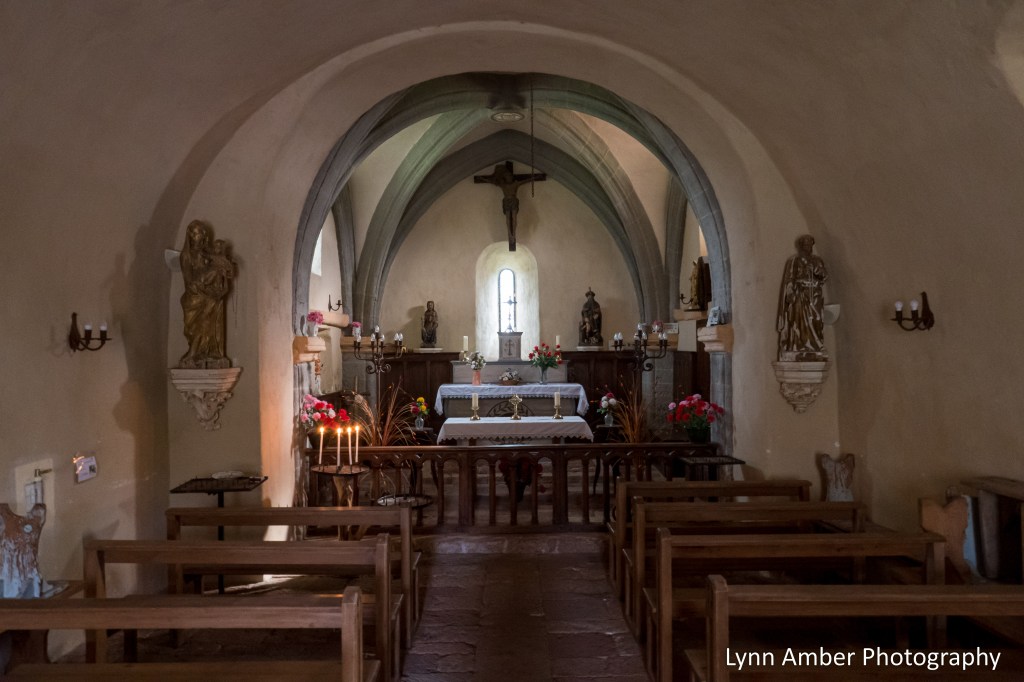
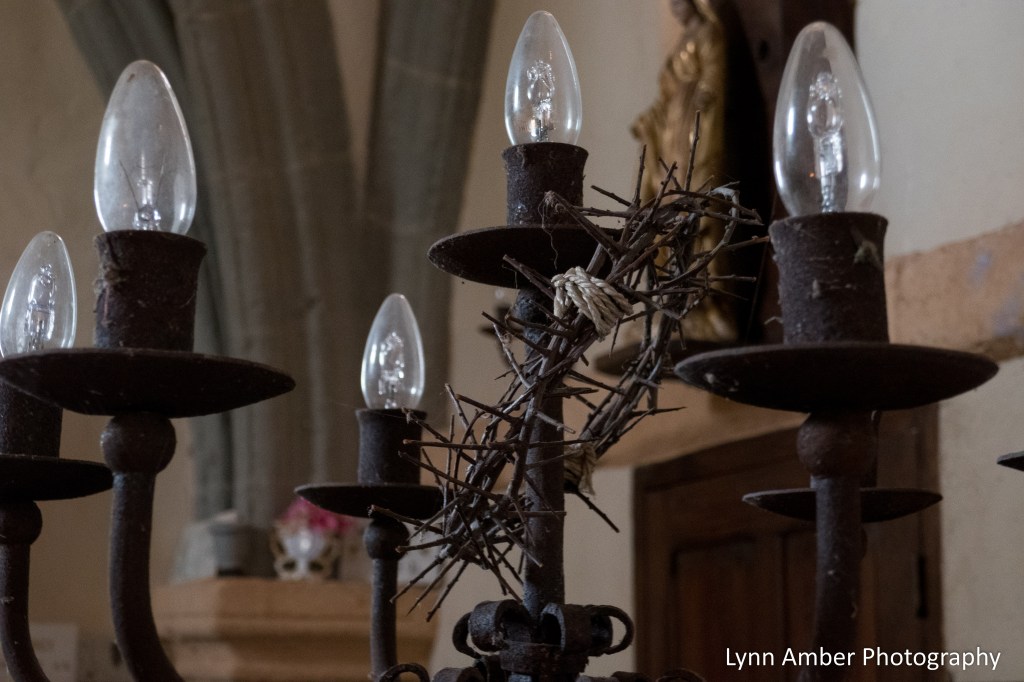
I noticed an interesting adornment on one of the candelabras and was wondering why it was placed here. It was a crown of thorns. Perhaps the upcoming religious holiday of “Pâques” or Easter as we know it in the United States had something to do with this symbolic gesture.
Before leaving the chapel, we encountered two local women – mother (Helene) and daughter (Fanny) – who volunteer their time to help maintain the chapel. If I’m remembering correctly, Helene mentioned that her grandfather was a stone mason and was involved in the restorative stone work surrounding the church. There was a great degree of pride exhibited by these women towards their duty to keep this beautiful chapel open and available to pilgrims.
It was a short walk into the village of Montbonnet from the chapel. We found a nice café open where we enjoyed a fantastic lunch for a grand total of 5 euros!
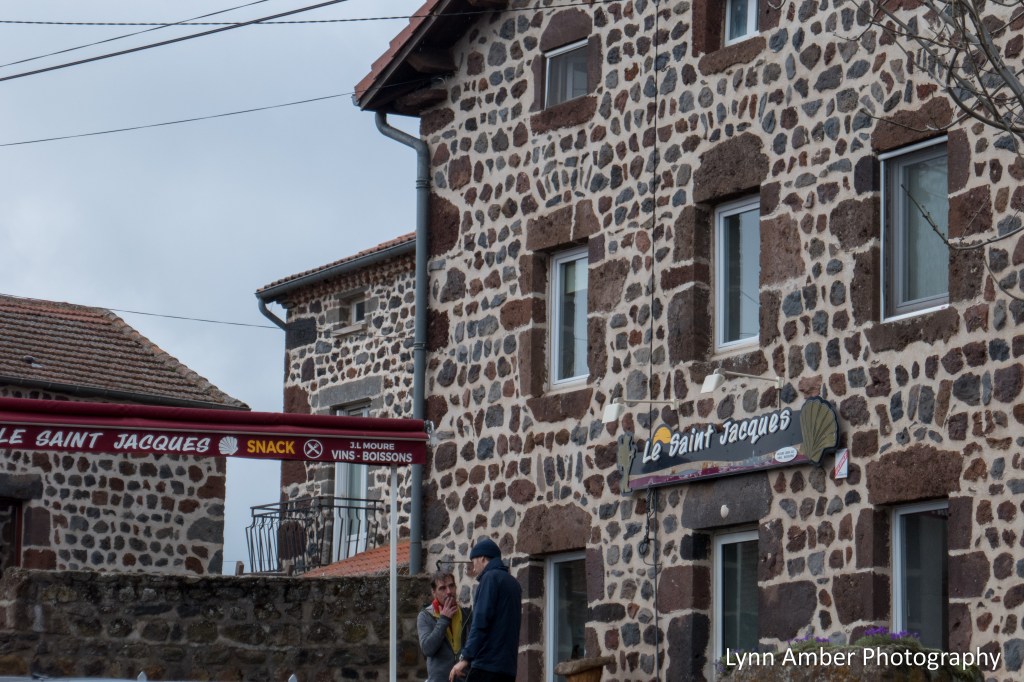
In regards to the gentlemen smoking outside the café, I must say that one of my observations along the Way was the amount of people who smoke in France. It was commonplace among locals and pilgrims. It surprised me and I’m still puzzled by it. I realize we still have many folks in the United States who choose to smoke but it’s not something I see every day like I did in France.
Planning Tip: Montbonnet is often a first night stay for those striking out from Le-Puy-en-Velay. There are several accommodations and services here. One thing I discovered deep into our walk is that many Camino guides key in on the same towns when suggesting stops. During busier times in the season, if you can alter your walking distances so that you are not ending the day in these more popular spots, you will have better luck getting accommodations.
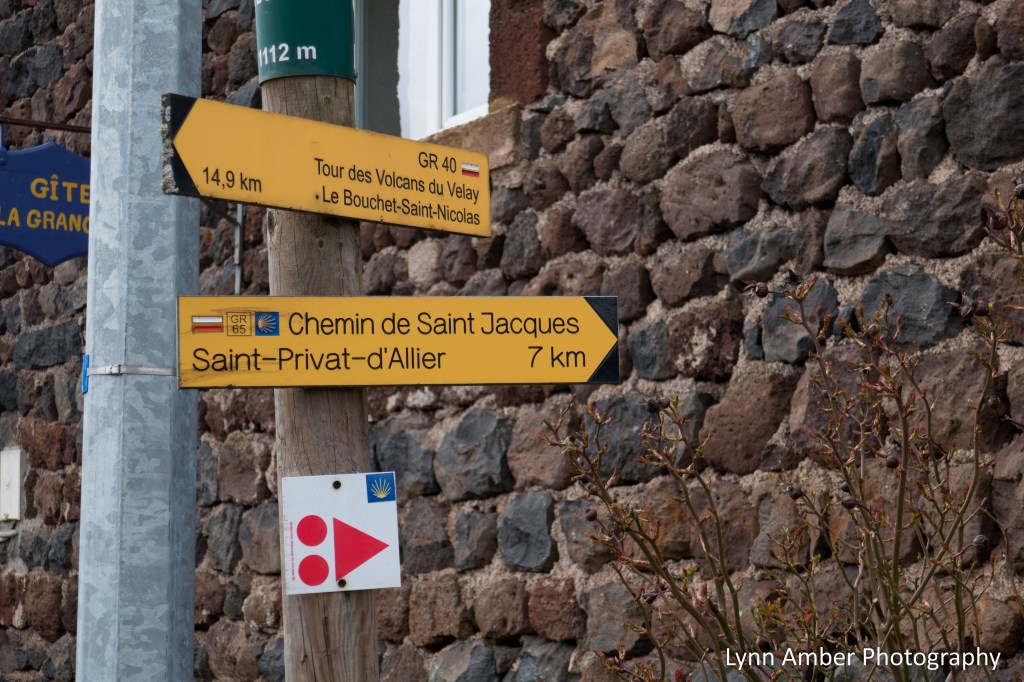
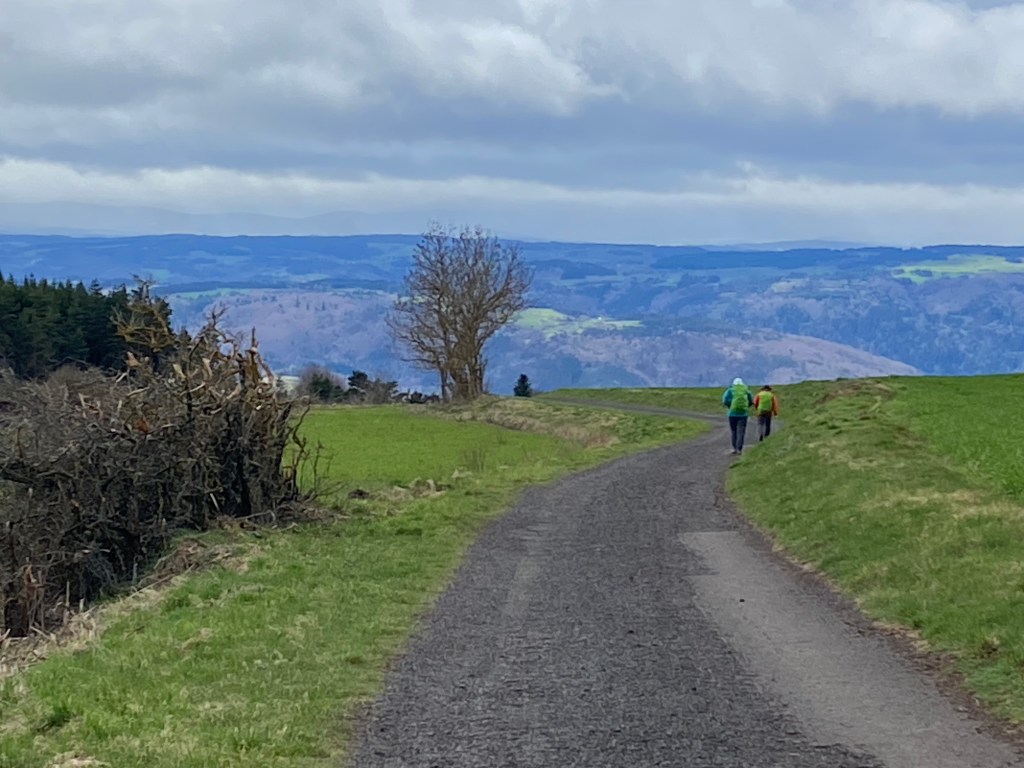
Susan and I split up after lunch since we walk at different paces and I continued on to Saint-Privat-d’Allier ahead of her. It was a beautiful walk – climbing a moderate grade up out of Montbonnet and transitioning into more of a “trail” that wound through some forest land.
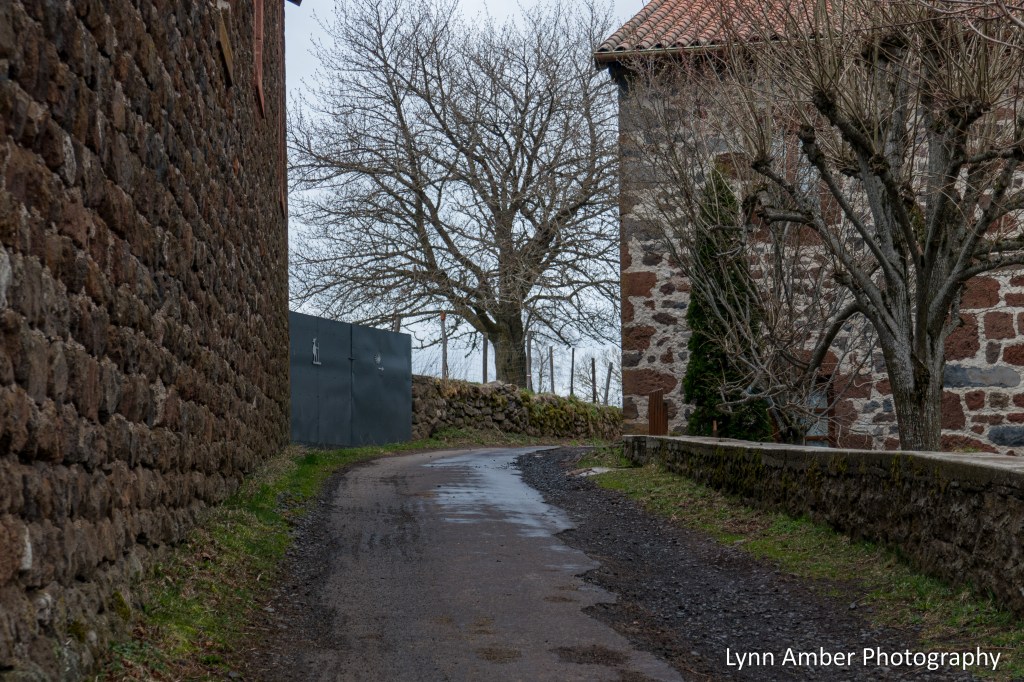
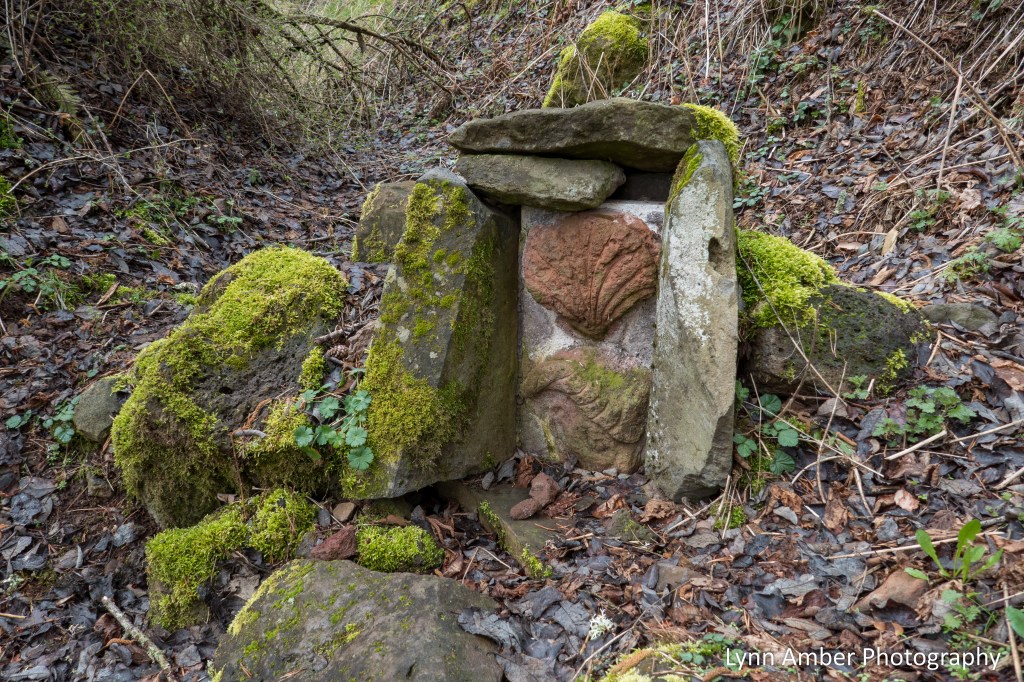
As the trail started to enter a forested area, I found this little spot off the trail where a spring bubbled up out of the ground. There was a pilgrim marker here. I’m thinking at one time this was a source of water for pilgrims.
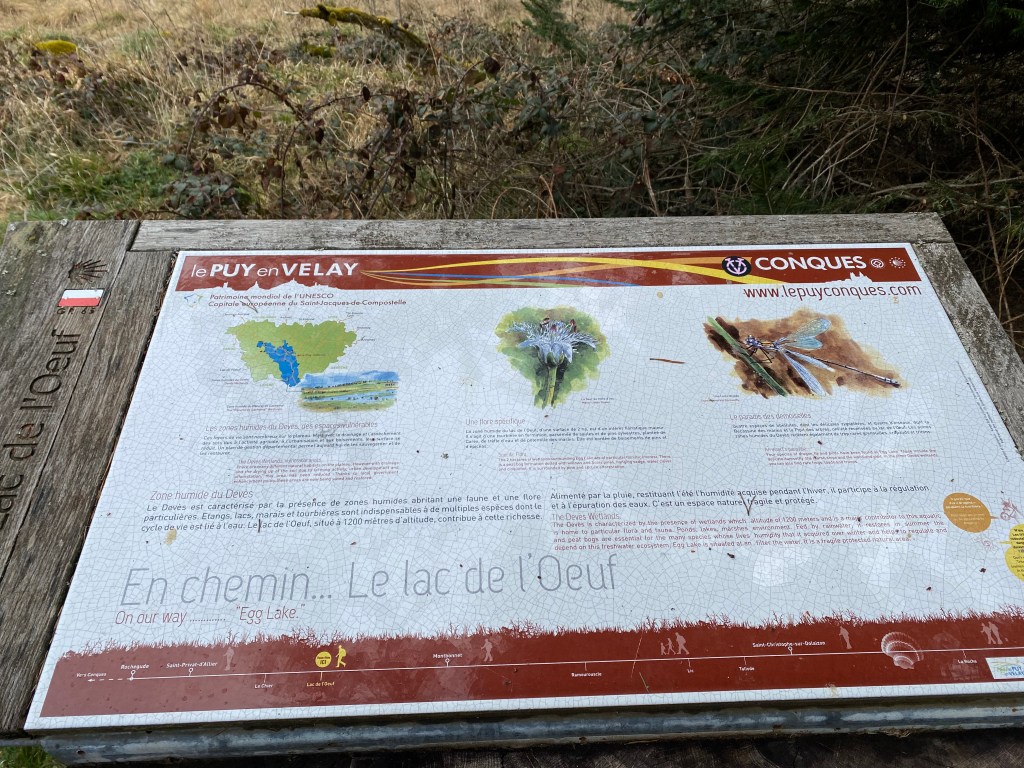
Up on this high plateau, there is a wetland area know as Le Lac de l’Oeuf. It was once much larger but due to agricultural activity and development has been significantly reduced from its former size. An effort to restore it is in progress as denotes this interpretive sign.
Coming out of the woods onto the high plateau affords a view of the town of Le Chier. Oddly enough, I read where this unfortunate name means “to take a dump.” Many people have speculated that the town was named as such to reflect the rich “aroma” of the surrounding agricultural dairy farming activity. Okay – makes sense, I guess! 🙂

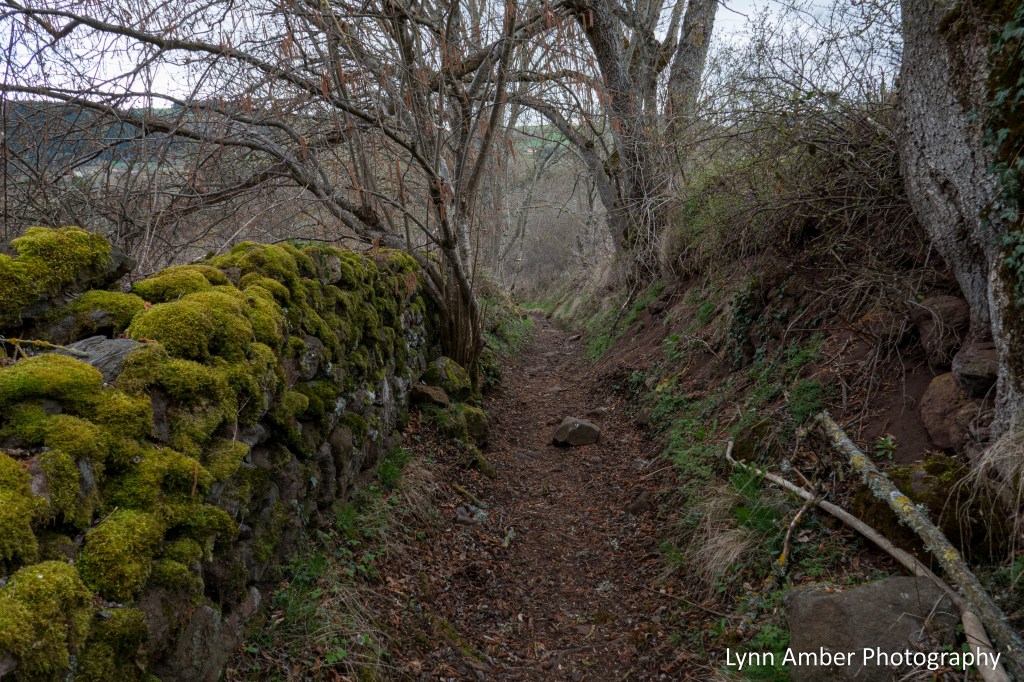
After the village of Le Chier, I started the somewhat steep descent into Saint-Privat-d’Allier. The dirt road turned into more of a path as it descended through another forested area.
As I approached the outskirts of Saint-Privat, I crossed over a sweet little stream with an adorable little stone cottage nestled in the woods. Sweet spot!
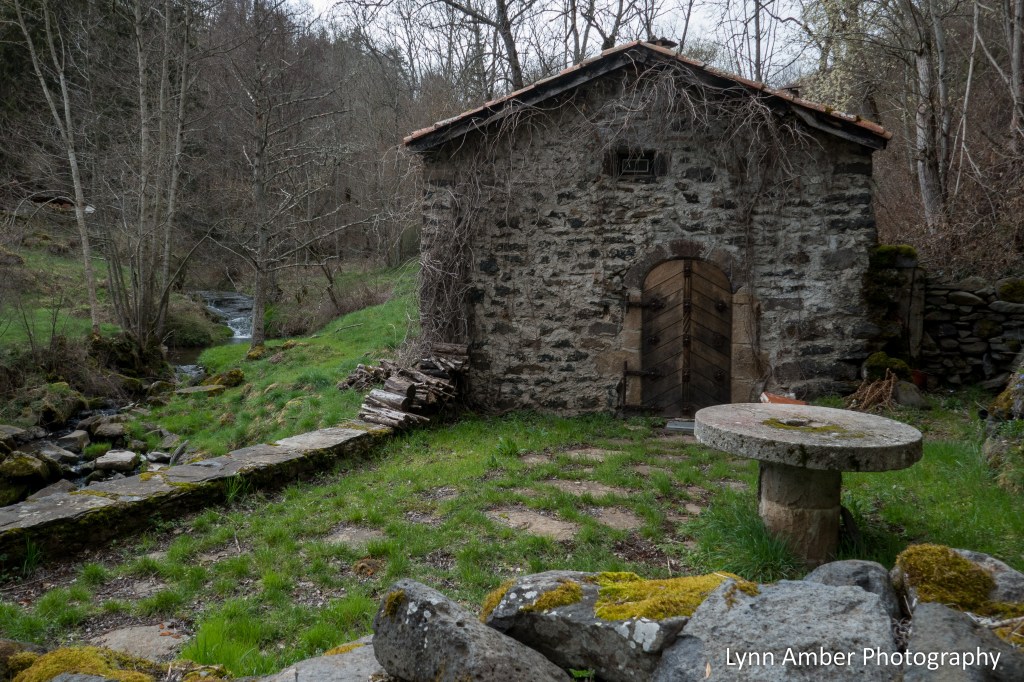
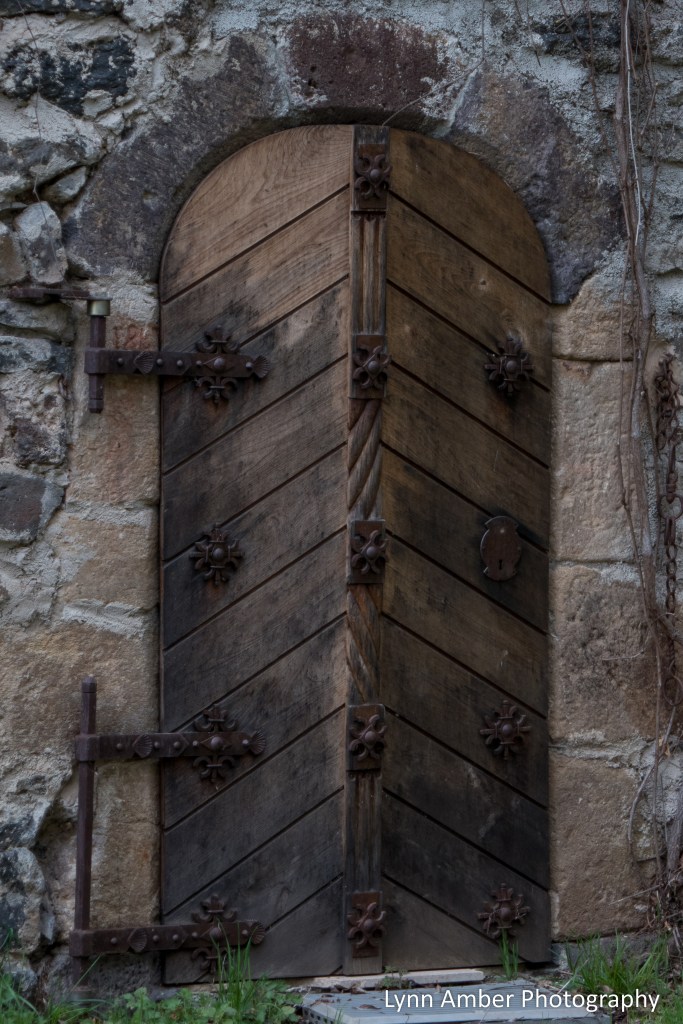
I was particularly taken with the ornate door! I was able to find a reference to this place as the Moulin de Pique-Meule – an old mill. One of several found along this stream due to a source of water for the mills.
Further along the trail, as you enter the town, is the old farm that was part of the mill. I captured a photo of the one side of the extended building.
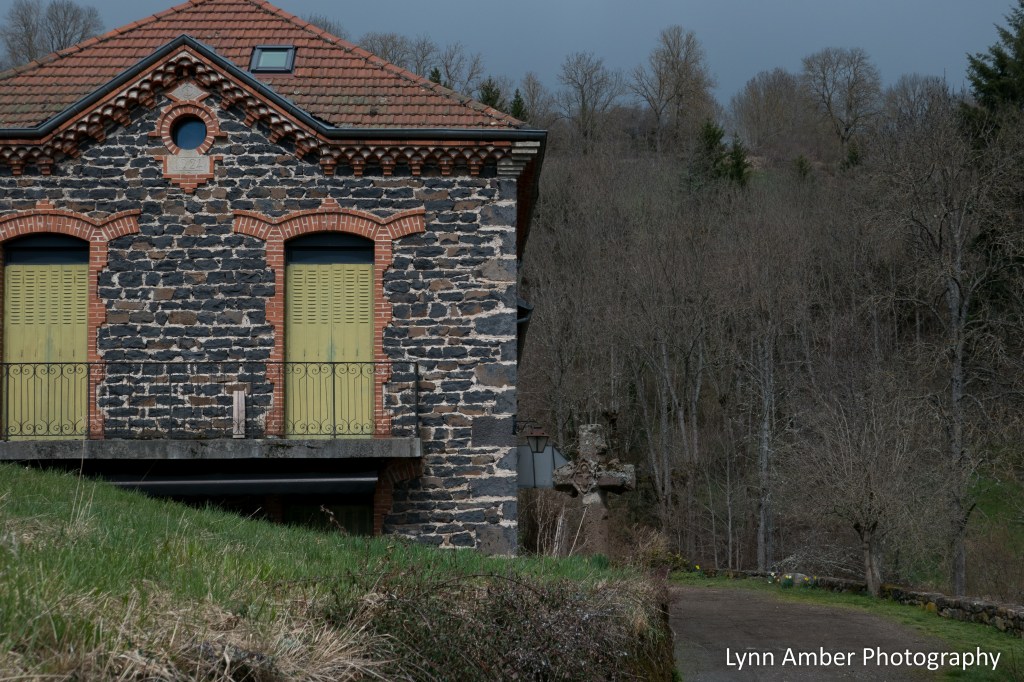
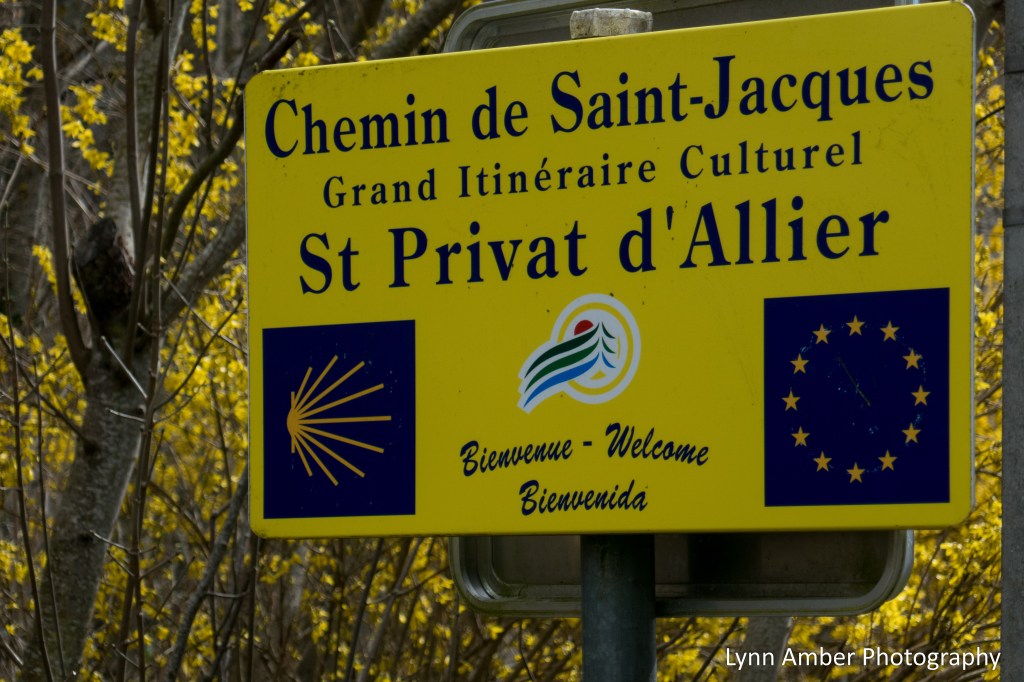
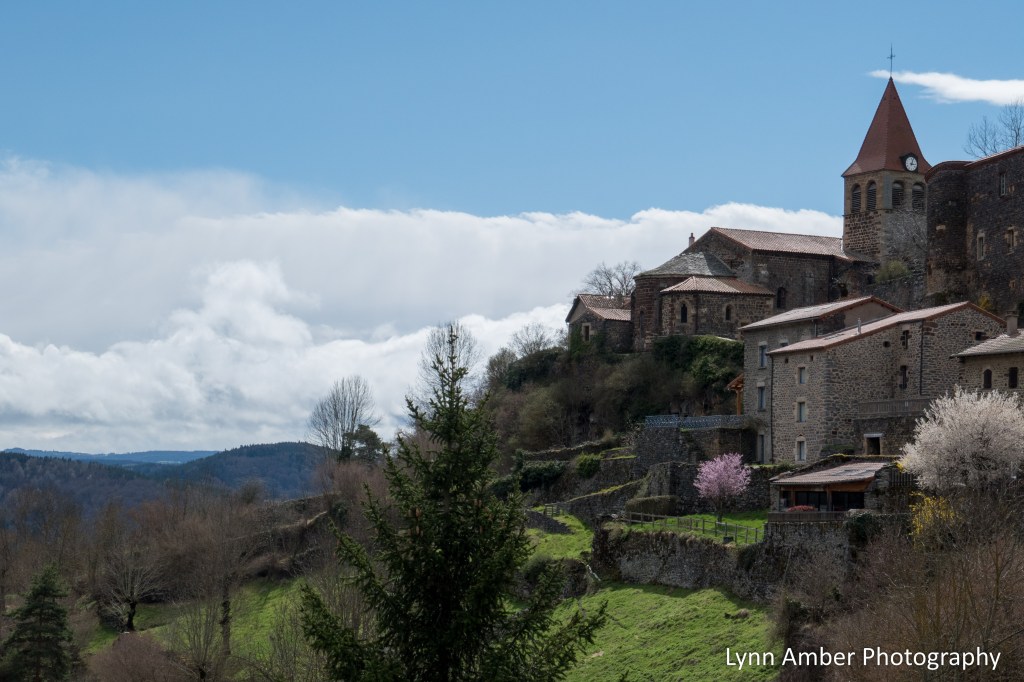
And I’ve arrived!! It was a 15 kilometer day and a glorious walk with so many interesting sights along the way. My first view of Saint-Privat-d’Allier as I rounded the corner and exited the woods was spectacular. I could not wait to explore this town. But first, I needed to find our accommodations – aptly named Chambre d’hôtes Le Saint-Bernard – as you will see later on!
Le Puy Camino – via Podiensis: On The Way

March 31, 2023
Finally, our departure day arrived! We are walking the Camino de Santiago – Via Podiensis, which is the route along the GR65 from Le Puy-en-Velay to Saint-Jean-Pied-de-Port in the Pyrenees. It’s a walking distance of 748.9 kilometers. The GR65 is one part of the extensive Grand Randonnée network of long-distance walking paths that exist across Europe. It is known by many names – The Way of Saint James, The Chemin de Saint-Jacques-de-Compostelle, Via Podiensis, The Le Puy Route and The French Way. Most pilgrims take anywhere from 4 to 6 weeks to walk this section of the Camino de Santiago to its destination in Saint-Jean-Pied-de-Port. We will be on the trail for 6 weeks. Technically, the GR65 starts in Geneva, Switzerland and ends in Roncevalles (Roncevaux), Spain. But, many people who complete just this section only walk the route between Le Puy-en-Velay and Saint-Jean-Pied-de-Port. And, that is our plan.
On our departure day, we woke up to a weather forecast that was predicting mostly cloudy skies with some showers likely and highs in the mid-50’s. I guess my raingear was going to be put to the test on the very first day!
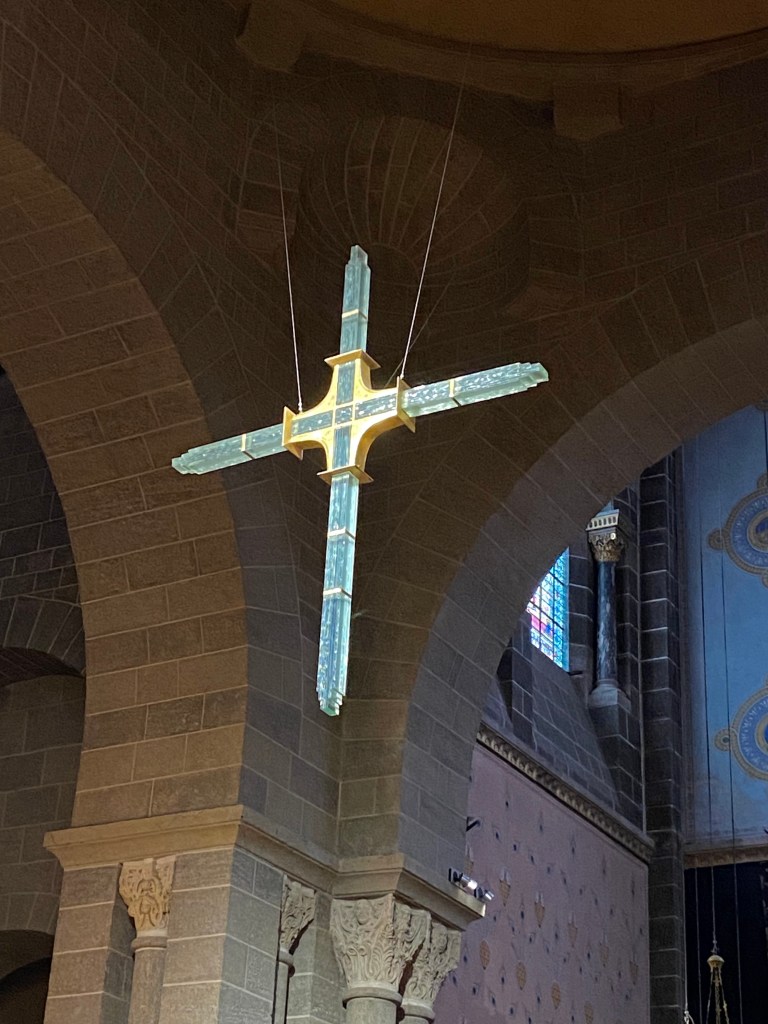
The first order of business (after our breakfast at the hostel) was to pack up and arrive at the Cathédrale Notre–Dame for the pilgrim mass and blessing. The Cathédrale Notre–Dame du Puy has historically been the starting point for one of the most important pilgrim routes to Santiago de Compostela and, as such, is one of many UNESCO World Heritage Sites along the Way. The existing church was built over several centuries starting in the 11th century. It is considered a sanctuary for the Black Madonna and now houses a replica of the original. Apparently, the original Black Madonna was a statue of the Virgin Mary and Jesus sculpted from ebony. It was destroyed during the French Revolution and the current statue replaced it.
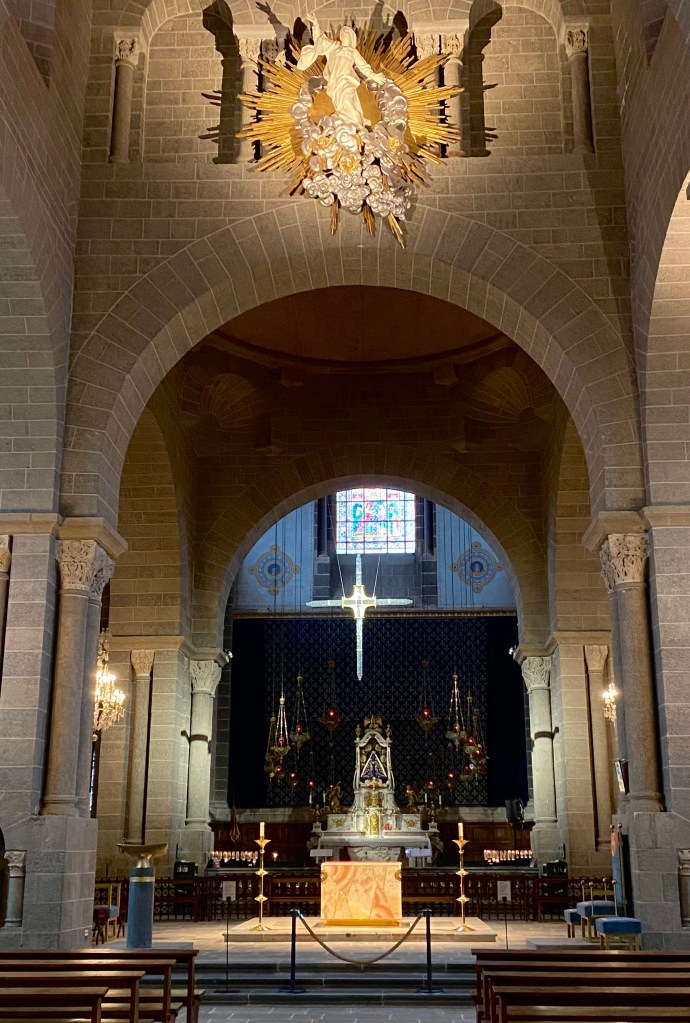
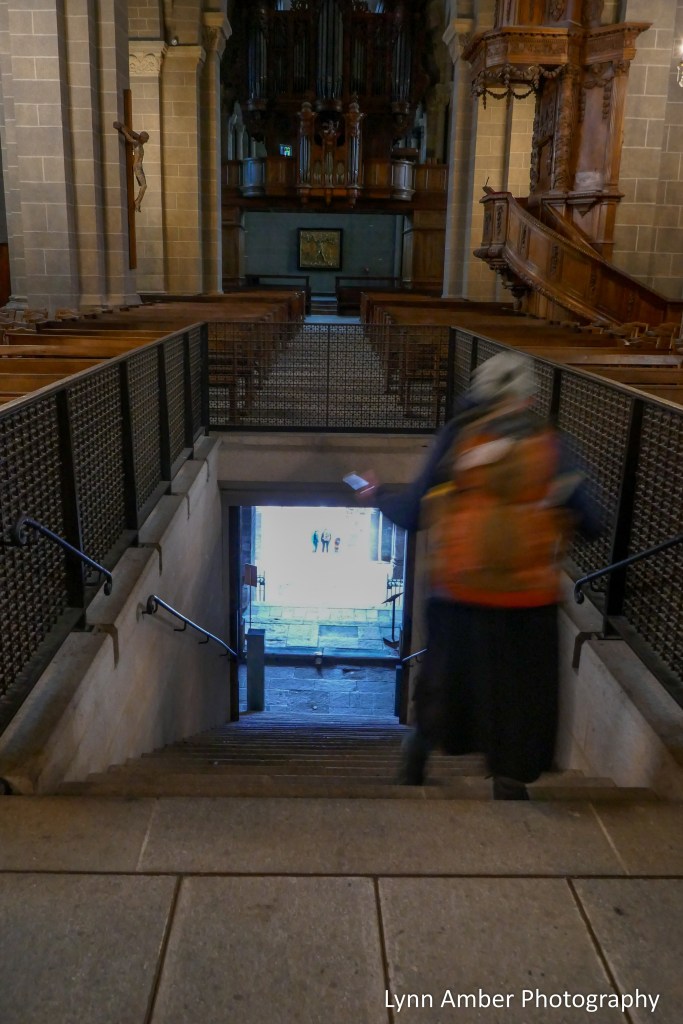
After the mass and the blessing by the priest, we got our pilgrim credential stamped and followed the tradition of many before us. The floor of the cathedral opens up and a hidden stairway descends to the outside of the church high above the town. This is the traditional starting point of the Via Podiensis. We were taking our time with donning our packs and getting ready to exit the church. Everyone else had left, and when we approached the hidden stairwell, they were getting ready to close it back up! I believe we were the last to leave via this opening in the church floor! My sister-in-law, Susan, in motion below!

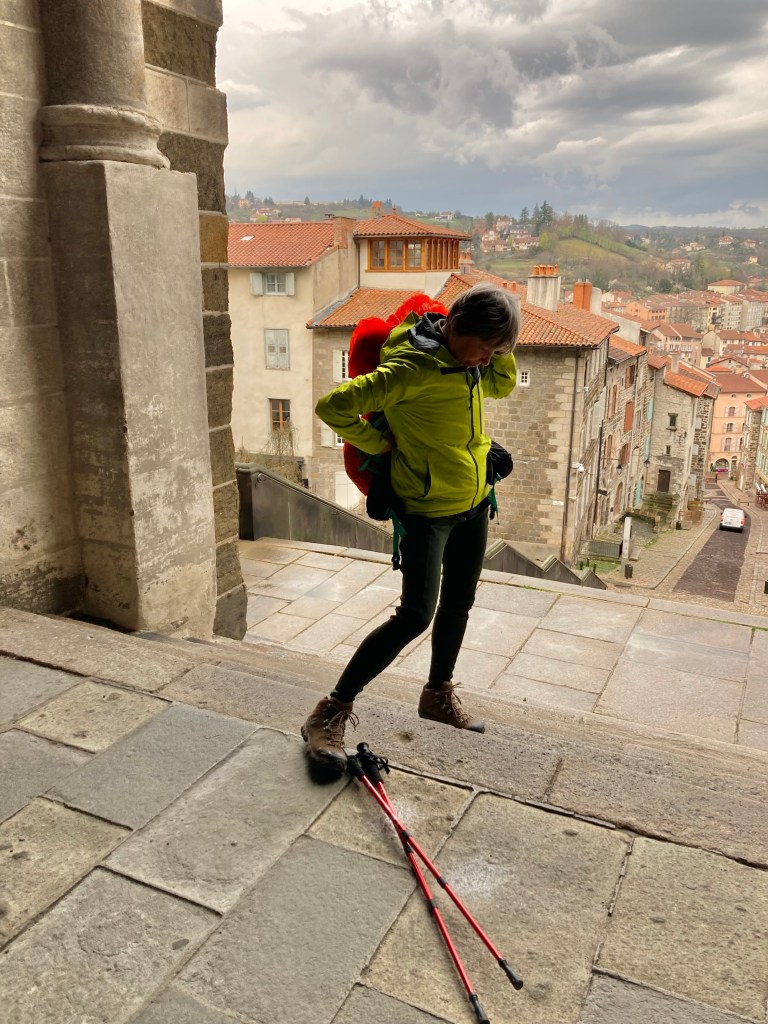
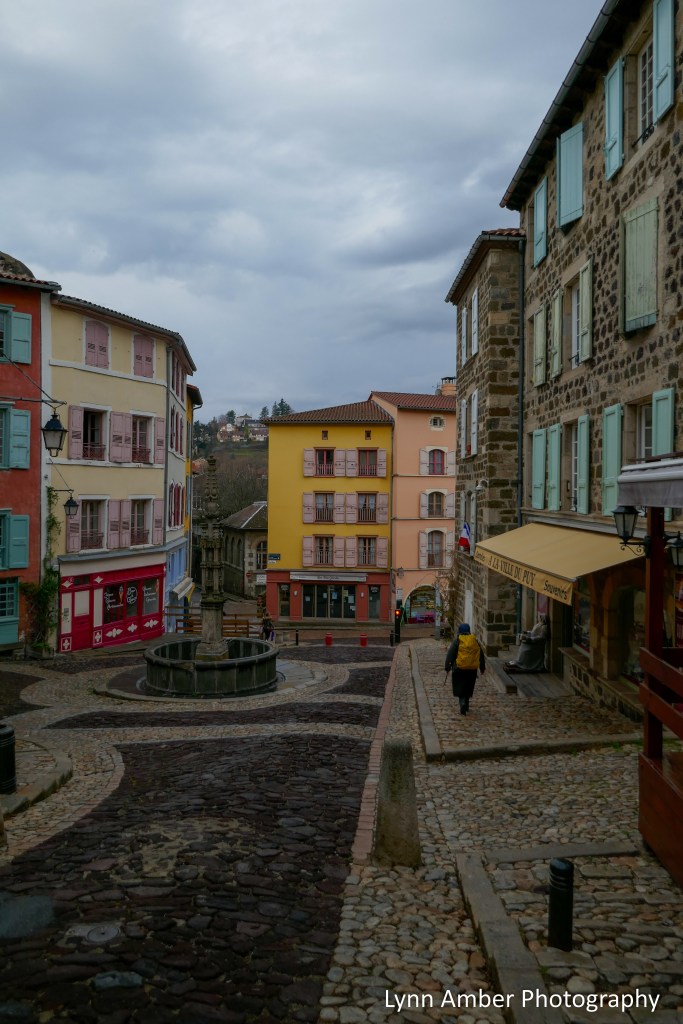
Descending the steep stairs from the cathedral, we walk along the cobblestone street of Rue des Tables past the “Fontaine et Place des Tables” – a historical landmark. The colorful buildings and shutters are a welcome sight on this dreary, cloudy day!
As I passed the Fontaine et Place des Tables, I could not resist one last look back at the Cathédrale Notre–Dame.

Since we chose to start our walk with a few short distance days, we were not in a hurry to leave Le Puy and decided to enjoy a relaxing start to our adventure at Le P’tit Creux café where we indulged in an excellent quiche breakfast and extra coffee to fuel our walk!
The route in town is marked by gold-colored metal “shells” imbedded in the sidewalks. Follow the “shells” to navigate through the maze of streets and up onto the plateau outside of town.
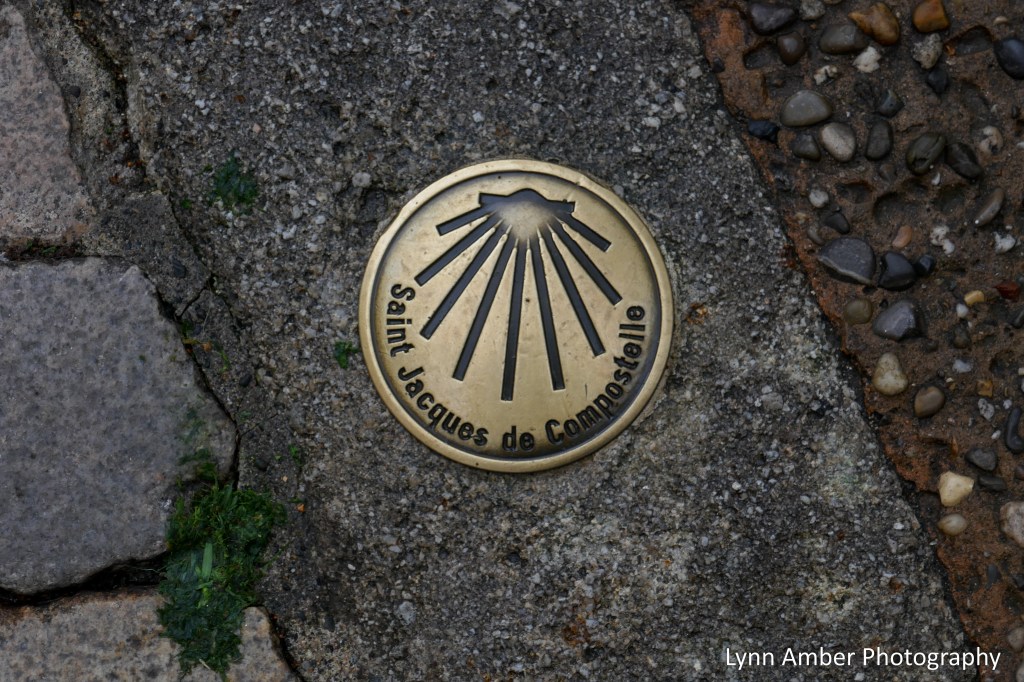
For those who are intending to walk all the way to Santiago de Compostella from Le Puy, there is this daunting signage on the street in Le Puy!

As we climbed the steep walk up out of Le Puy-en-Velay, I glanced back and snapped this photo of the city.
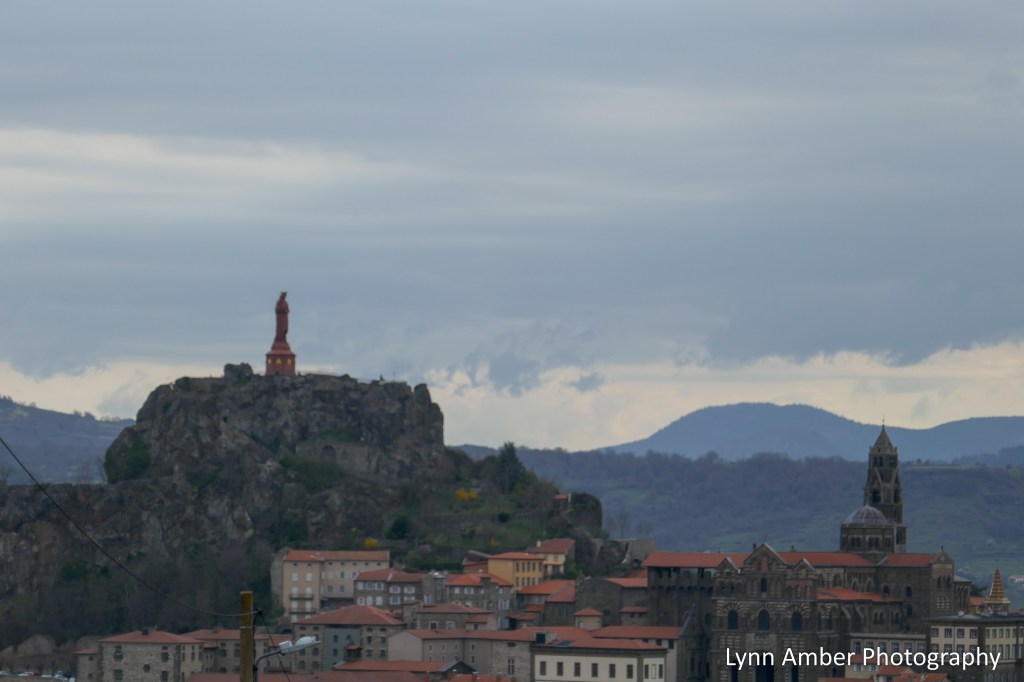
It paid off waiting until a little later in the morning to depart – as the air cleared up a bit and we enjoyed some blue skies. The walk starts off on the highland area known as the Massif Central in south-central France. Characterized by high plateaus and mountains, it is crisscrossed with numerous walking paths that traverse open grasslands and forests edged with dry stone walls. The path just outside of town on top of the plateau consists of a narrow gravel road for fairly easy walking interspersed with dirt trails with mild grades.


According to an interpretive sign just outside of Le Puy, we were entering an area known as The Devès and the valley of Dolaizon. The Devès is described as the largest basalt plateau in France. The soil of this area was created through volcanic activity and resulted in the fertility that allows for the production of the famous Puy “green lentils” that I mentioned in a previous post. They were referred to as “the caviar of the poor.”
Along the route in this area, there are small stone structures called chibottes. Laid with dry stone construction, they served as temporary shelters for shepherds in the 18th and 19th centuries. I kept looking for any sign of these shelters but never saw one. Later on, I did come across some similar structures – so stay tuned!
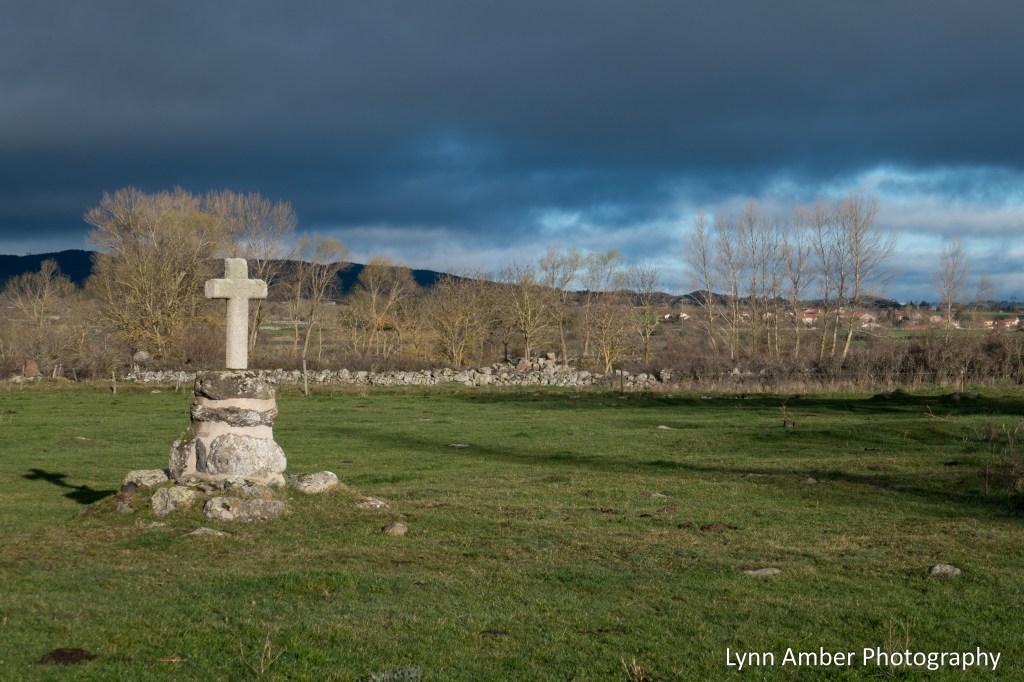
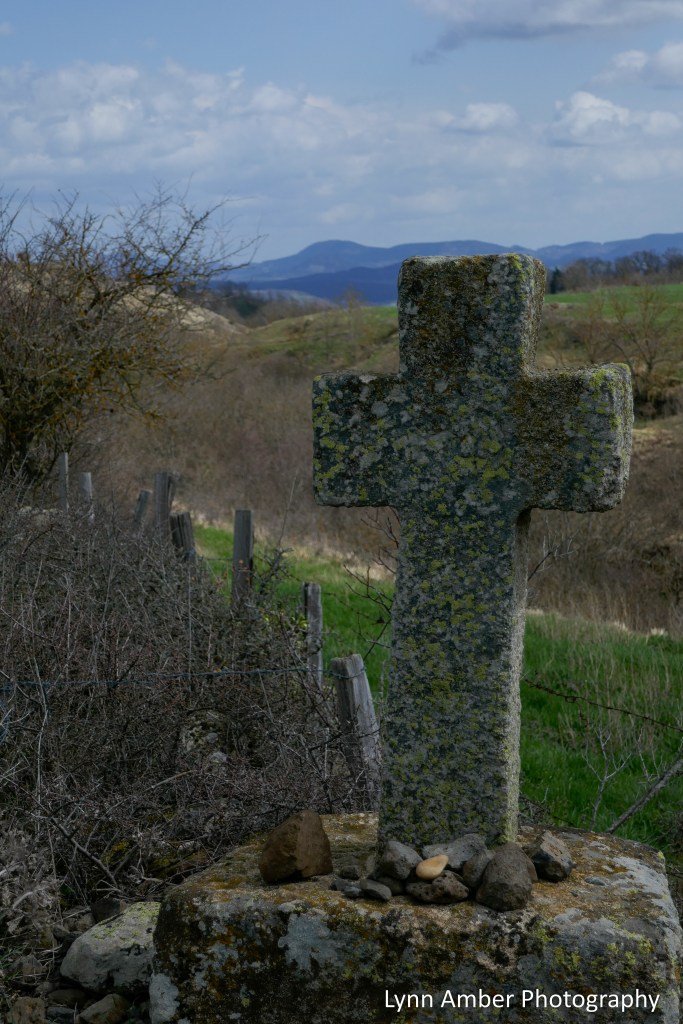
Another typical sight all along the Chemin are crosses of all sizes and made of many types of materials. I have so many photographs of crosses! Yikes! They were usually a good indicator that you were on the correct path!
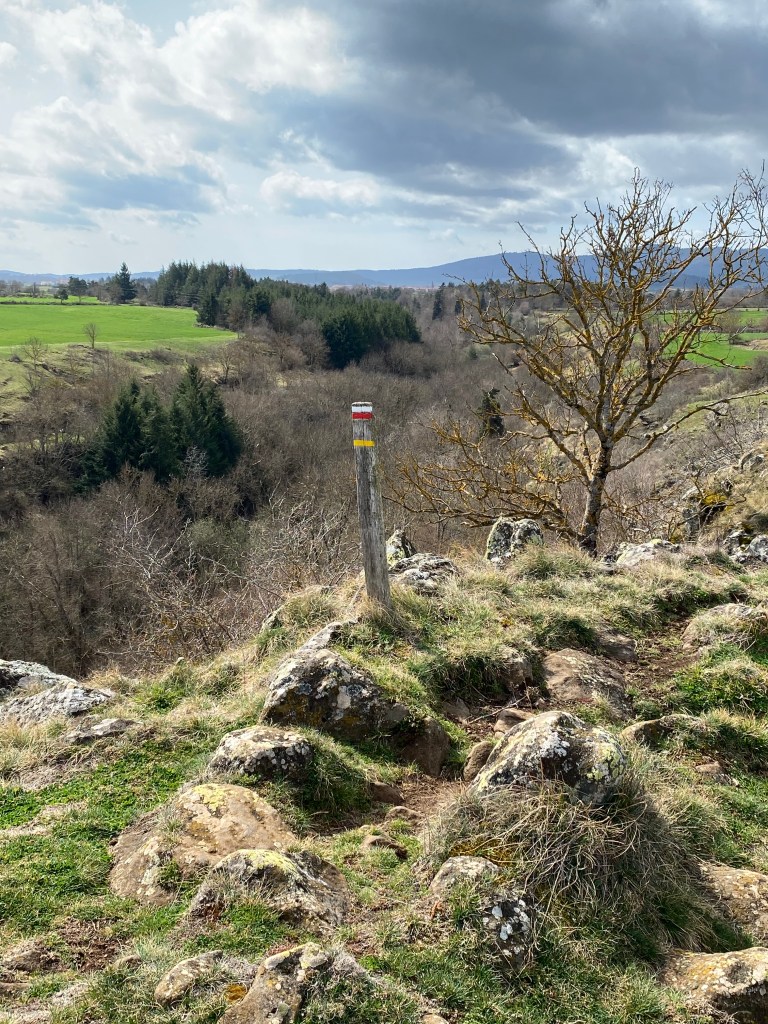
But, most important, are the red and white stripped markers that identify the GR65. These are carefully placed regularly along the Chemin to guide walkers. Planning Tip: Always look for these marks when there is a juncture or split on the trail. It is not always obvious which way to go when you come to a “Y” or cross trail. See the yellow mark below the red and white one?? There are many other “local” trails that crisscross the GR65 and, occasionally, variant trails offering an alternate route.
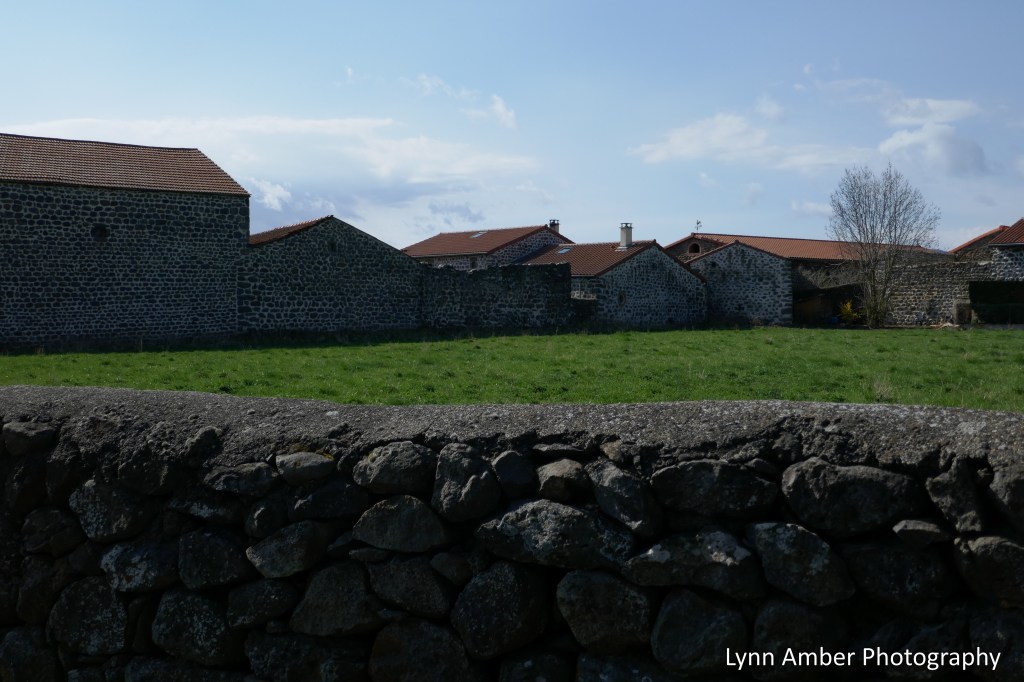
There are many small clusters of houses and outbuildings that we pass through each day – sort of extended family farms in many cases – or small settlements. The photograph below illustrates just such a settlement outside of Le Puy.
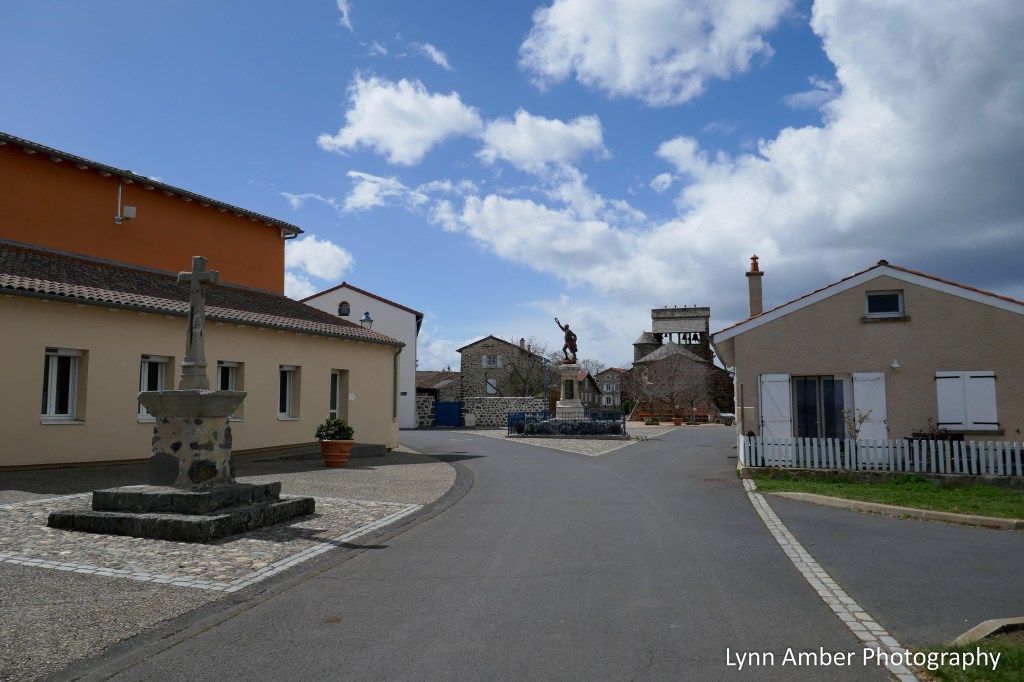
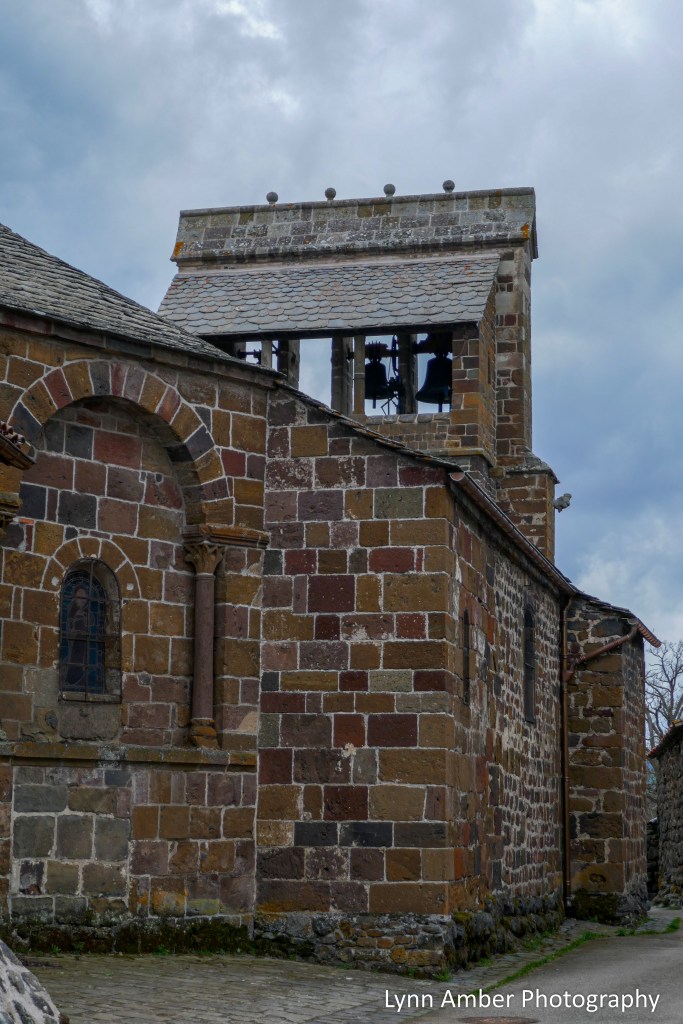
The first actual town we encountered on Day 1 was Saint-Christophe-sur-Dolaison. Barely more than a crossroads, it had a picturesque Romanesque church built in the 12th century of – what else? – pink basalt.


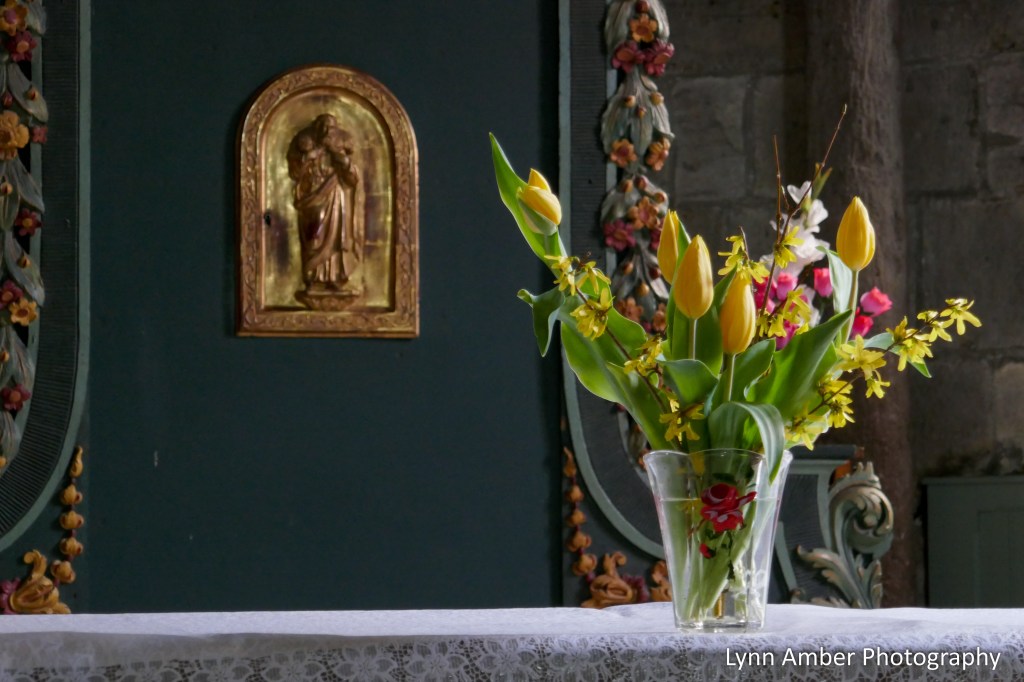
Along the way, I tried to take the time to enter each of the churches and immerse myself in the beauty of the interior architecture unique to each church. In most cases, local parishioners volunteered their time to the upkeep of the buildings, including the addition of fresh flowers.
The other outstanding and memorable sensory experience that I enjoyed along the entire walk was the sound of church bells throughout the countryside marking the passage of each hour. Whenever I hear a church bell now, it brings back fond memories of the French countryside.
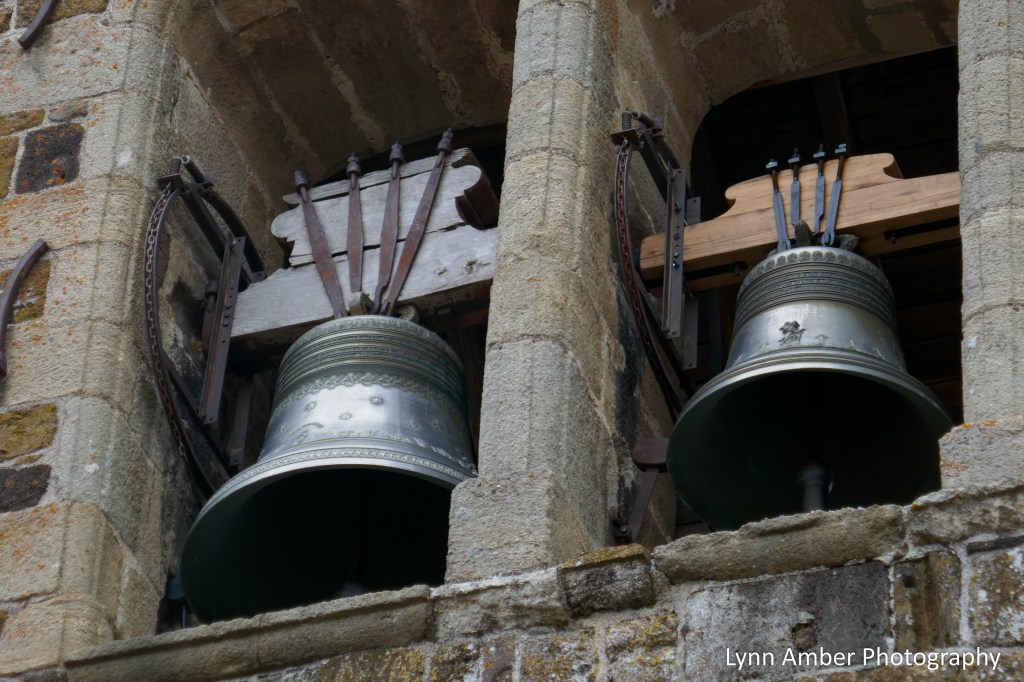
It was in Saint-Christophe where I visited my very first French cemetery. I have never experienced a cemetery quite like the ones I encountered in Southern France. As with churches, I tried to visit each cemetery I passed. I have relatives who immigrated from France back in the 17th or 18th century – with the last name Buffett. I’ve never been able to identify the specific region where they lived in France and I wandered through many of these cemeteries looking at the names on the headstones in search of a Buffett! Planning Tip: All cemeteries in France are required to have potable water on site and available to visitors. So, you can always count on being able to replenish a water bottle along the Way at a cemetery.

Our first day on the trail was characterized by easy to moderate hiking difficulty, open countryside, stone walls and plowed fields waiting for spring seeds to emerge. I even noticed some spring wildflowers starting to grace the sides of the trail. Stinking hellebore – Helleborus foetidus – was covering the banks along the trail throughout the day.

I love all the unique signs that are posted to guide and encourage pilgrims!

After leaving Saint Christophe, we were a short distance away from our destination on the first day – the small village of Tallode.
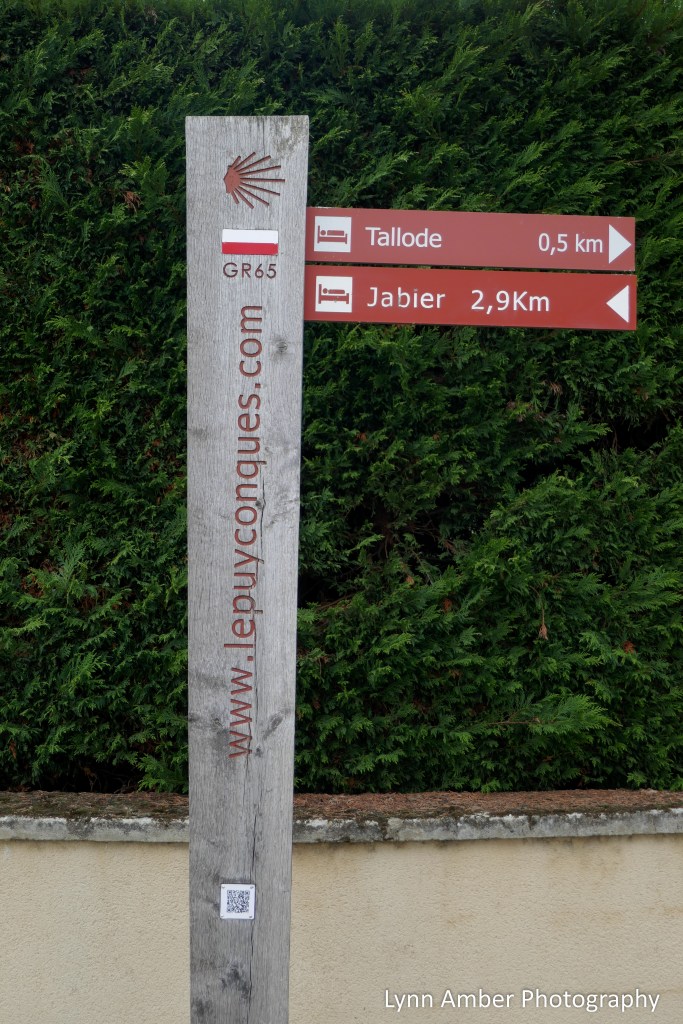
Our first night, we had made reservations at the Gîte d’étape La Maison Vielle. Nicole was a great hostess serving us a delicious meal of locally raised Lamb and (you guessed it!) Green Lentils. We shared a room with one other French women who was hiking on her own named Laure. We would cross paths with her many times over the next two weeks. And, there were two other women who joined us that night from Germany.
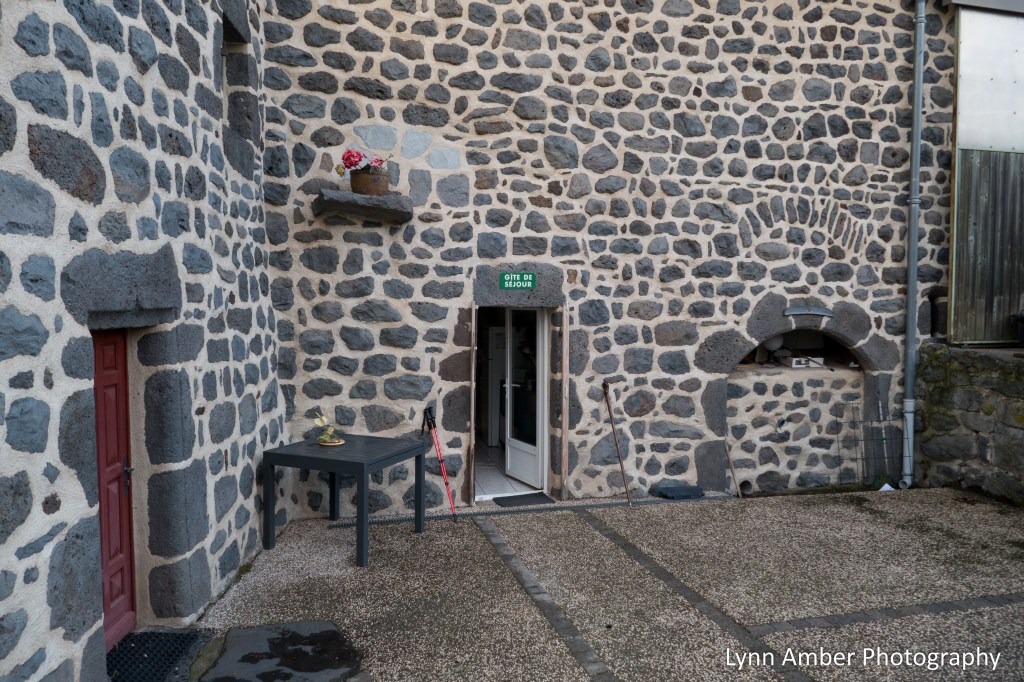
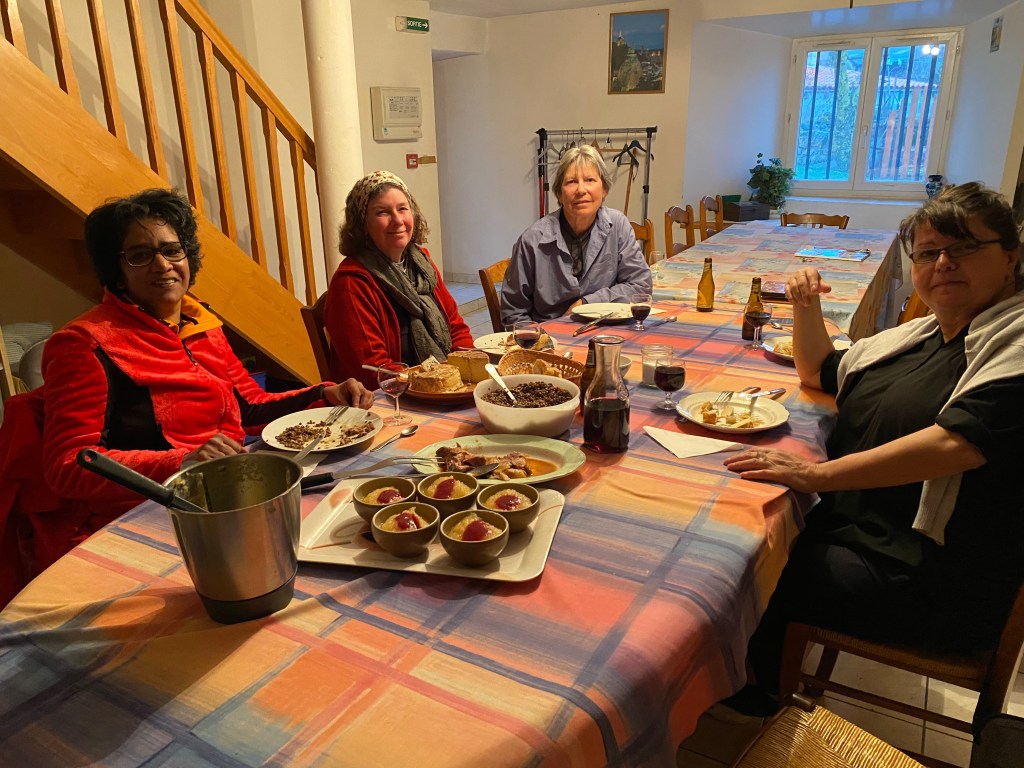
It was a memorable first day and we collapsed into bed that night tired but happy! 12.2 kilometers under our belt – and many, many more to go! 🙂

