Lynn Amber - Travel & Photography
sharing my thoughts through words and images
Le Puy Camino – via Podiensis: Arzacq-Arraziguet to Pomps
May 6, 2023
We said farewell to our wonderful accommodations in Arzacq and, once again, we’re on foot!! We did not leave town without savoring some delicious pastries first. Sustenance for the walk!
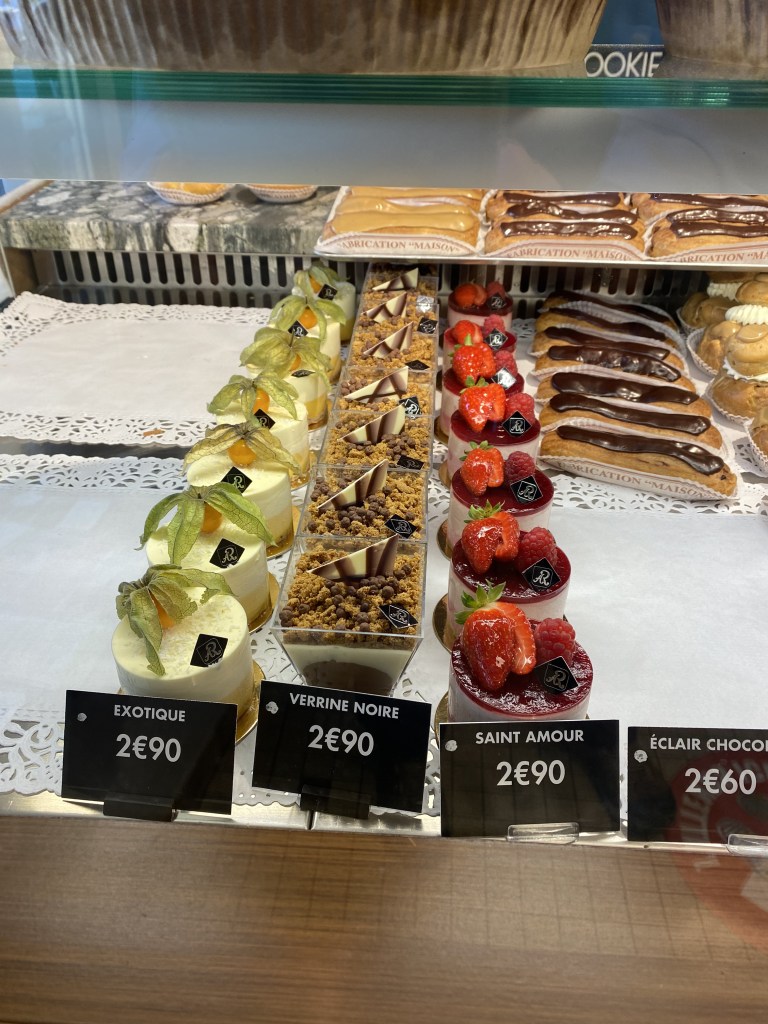
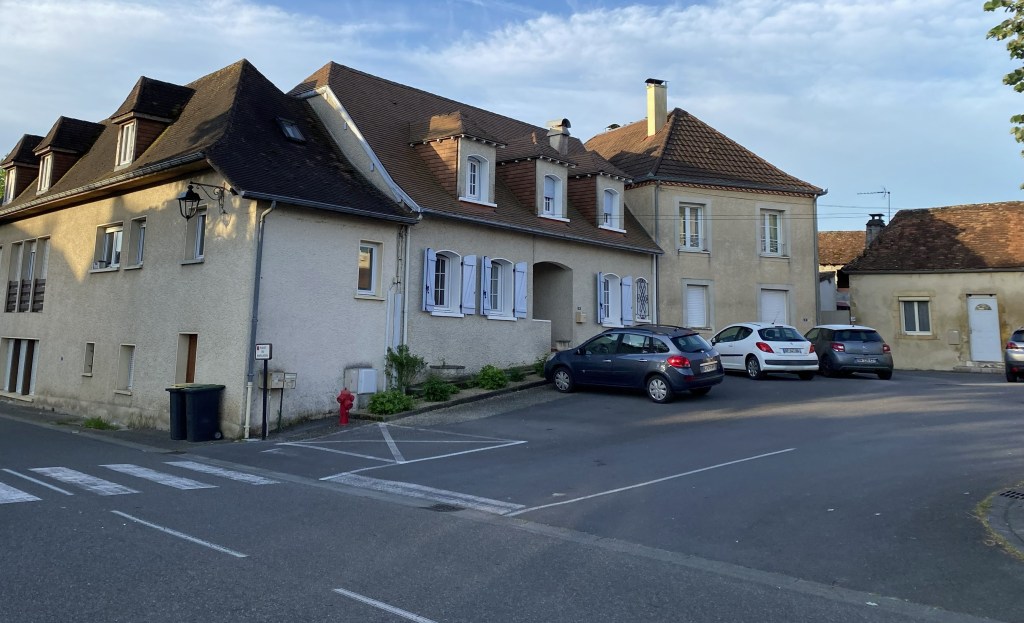
Arzacq-Arraziguet is a small village with two main squares and is a classic example of what was once a medieval market town. The Boulangerie Reinaldo was just around the corner from our last night lodging on the Place de Marcadieu. After indulging in a pastry pick-me-up, the GR 65 took us past the Place de la République – one of the other main squares.
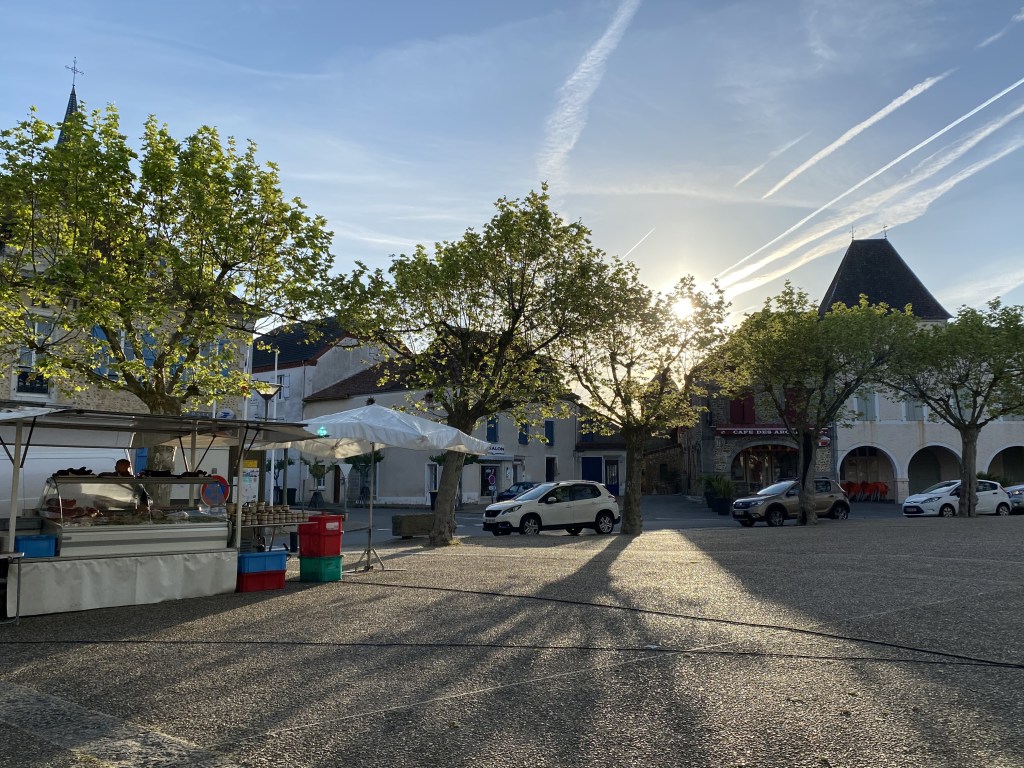
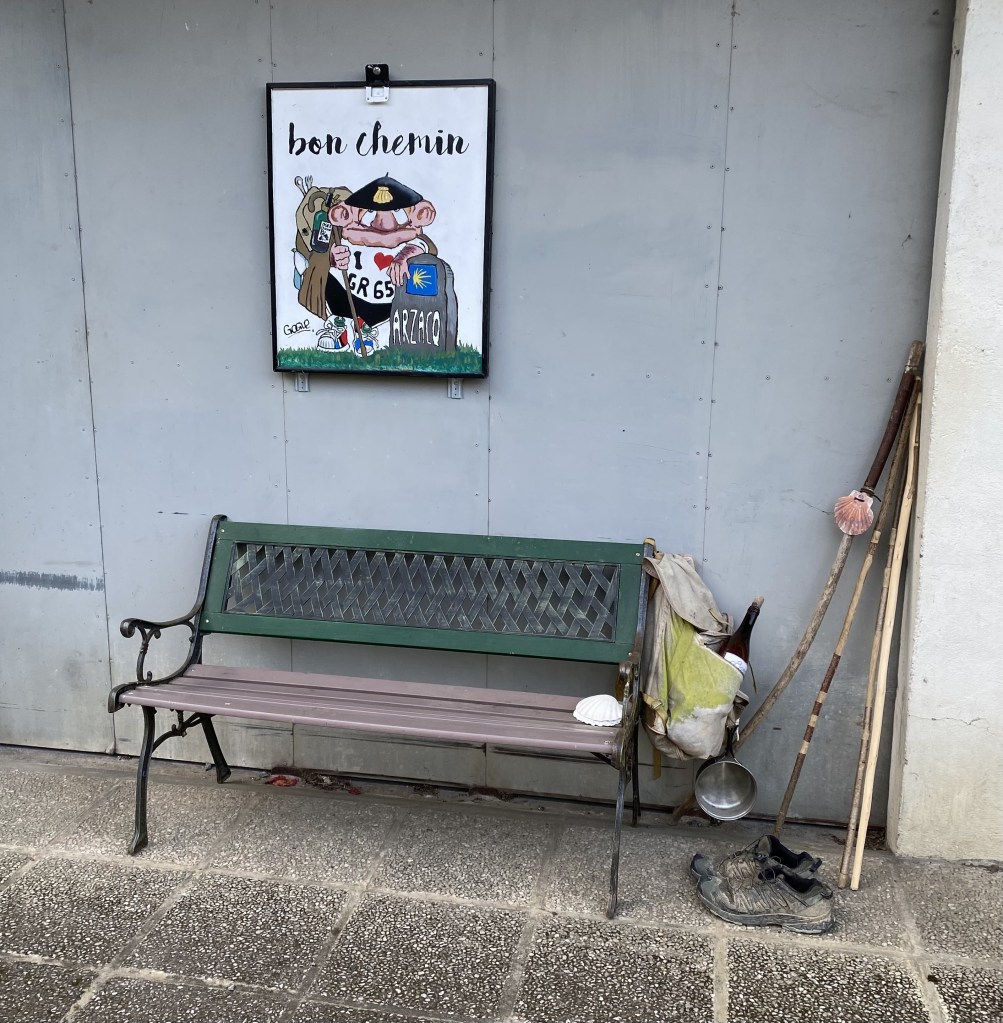
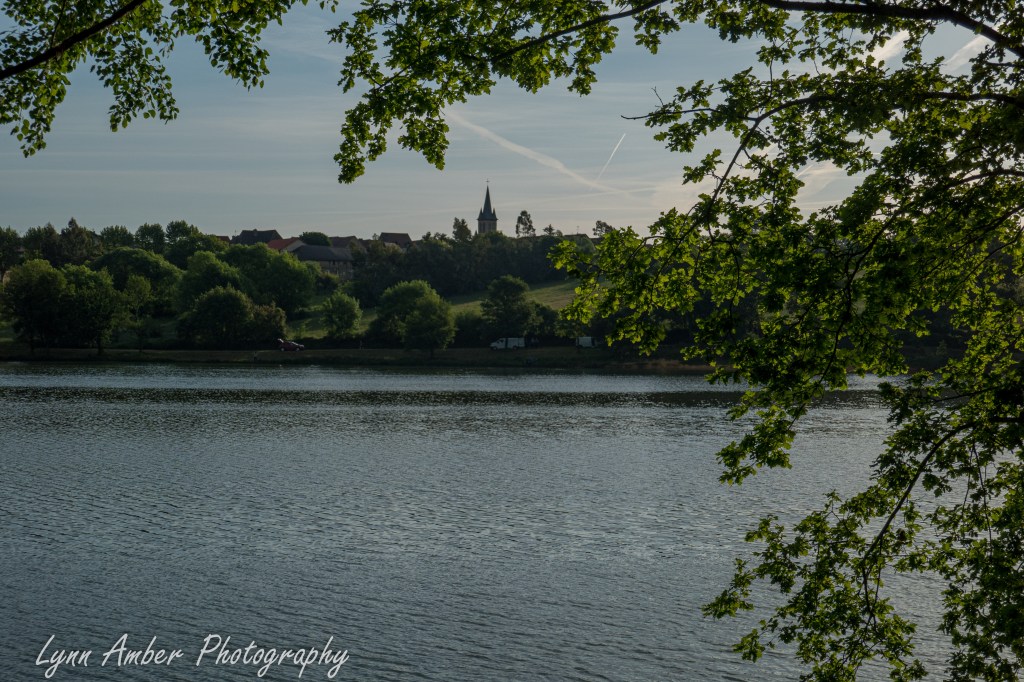
On the edge of town is the Lac d’Arzacq and the GR 65 follows the coastline of the lake before veering off into the countryside.
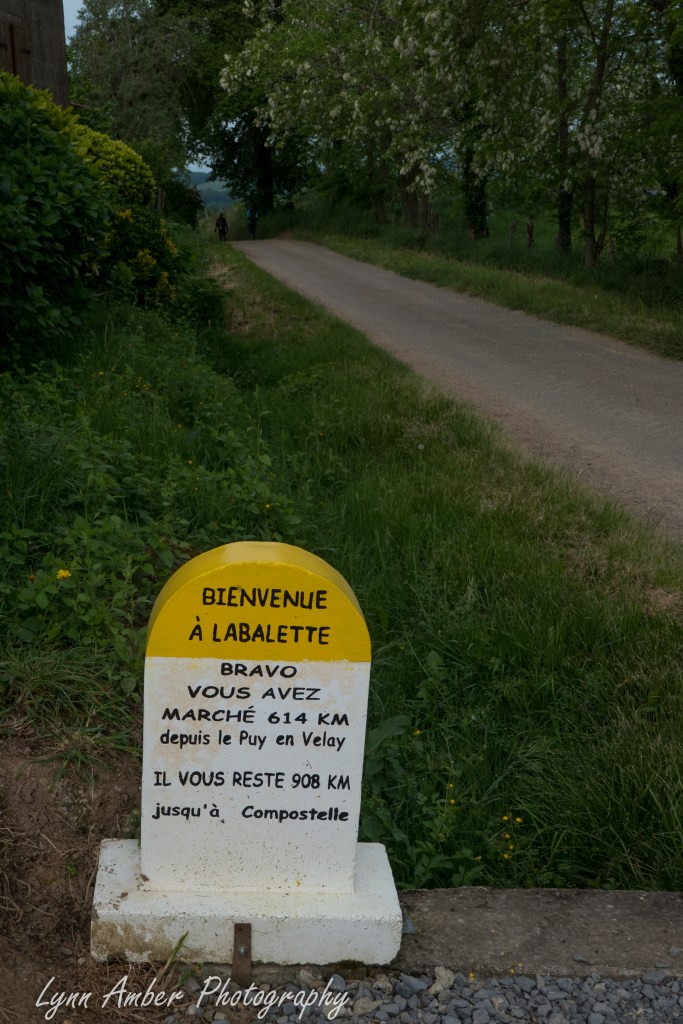
A short walking distance from Arzacq is the small village of Labalette. The mile marker below welcomed me to the village and recorded distance from Le Puy en Velay and distance to Santiago de Compostela. Wow – I’ve completed 614 kilometers since leaving Le Puy. Pretty cool to see it in writing. 🙂
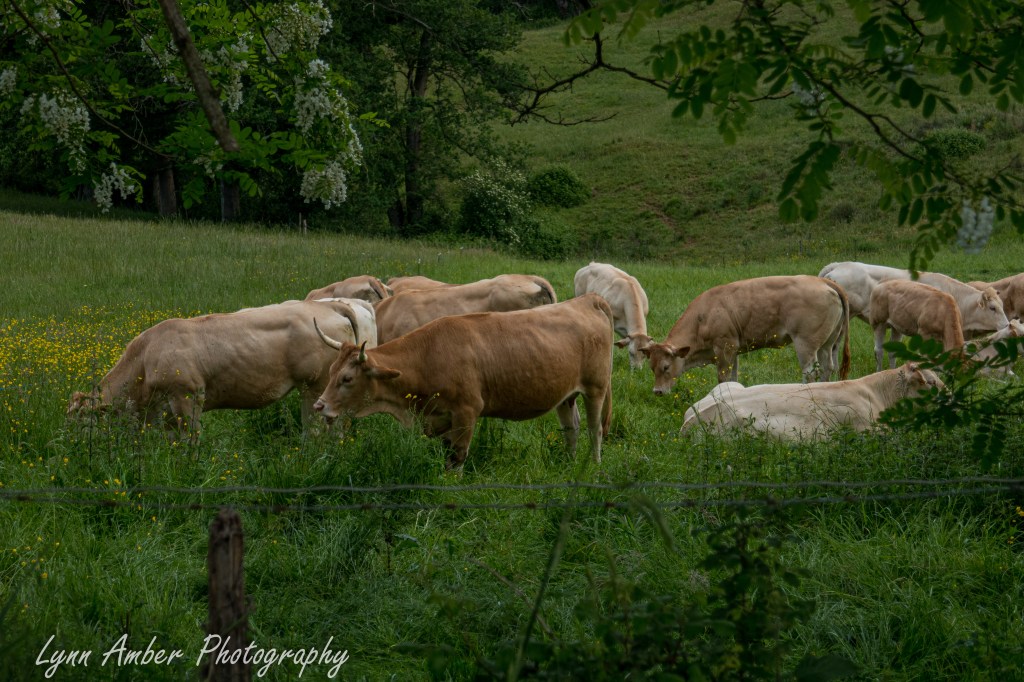
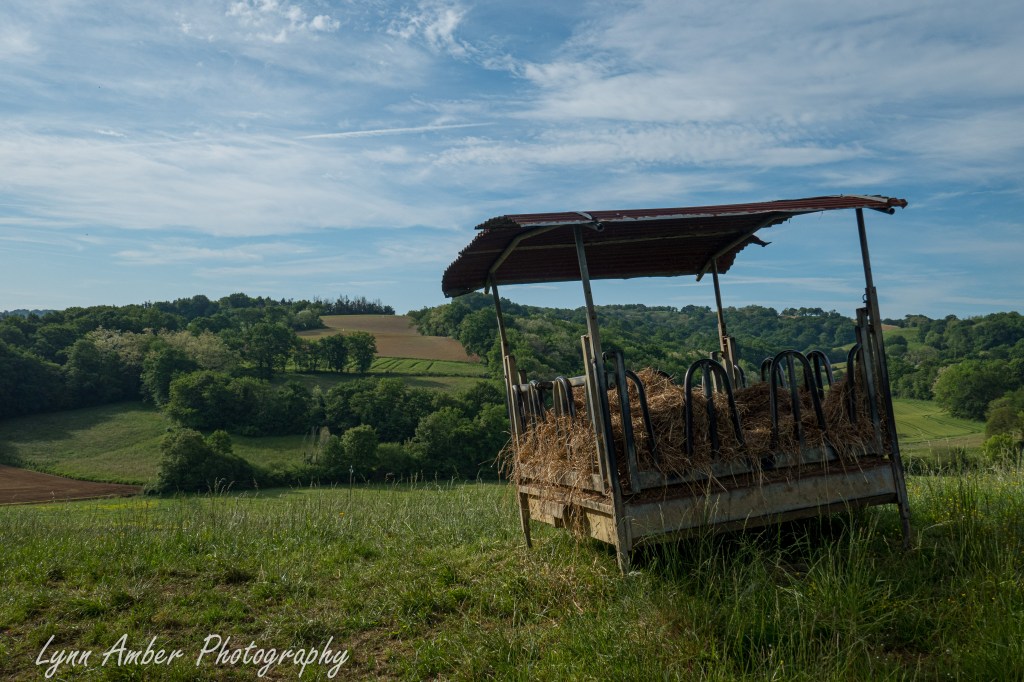
Today’s walk takes me through a beautiful pastoral landscape with stunning views across valleys and towards the Pyrenees.
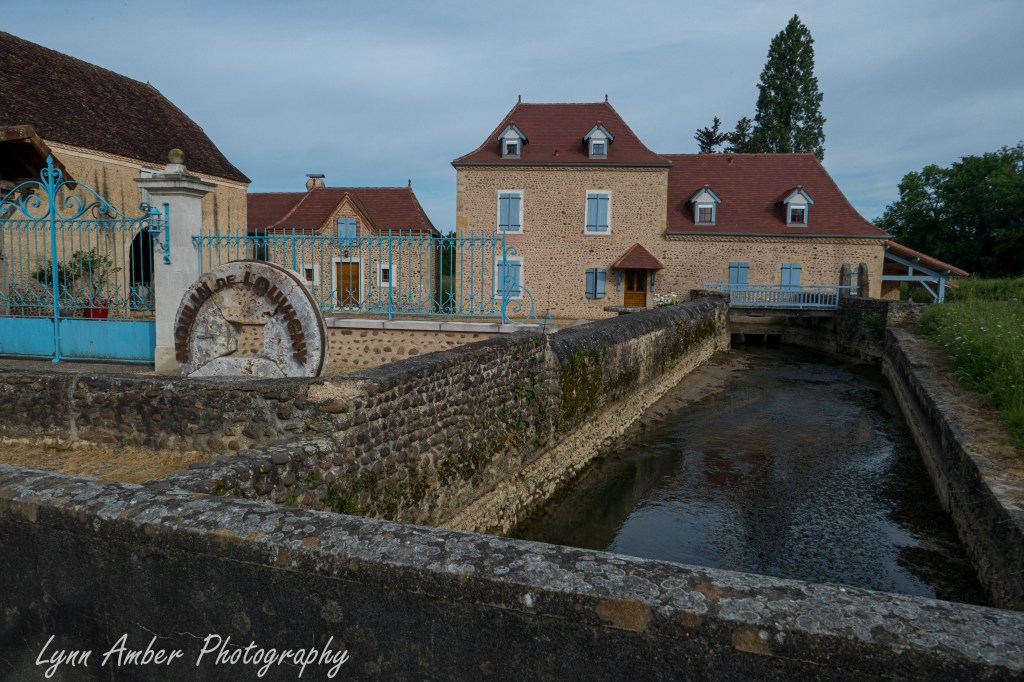
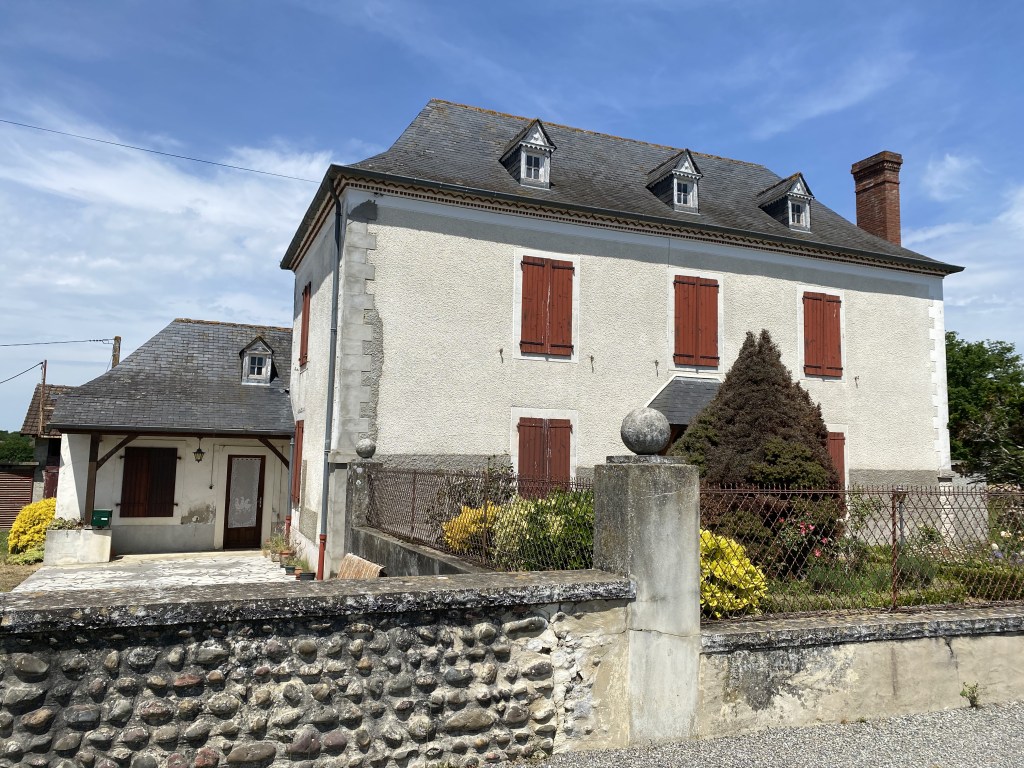
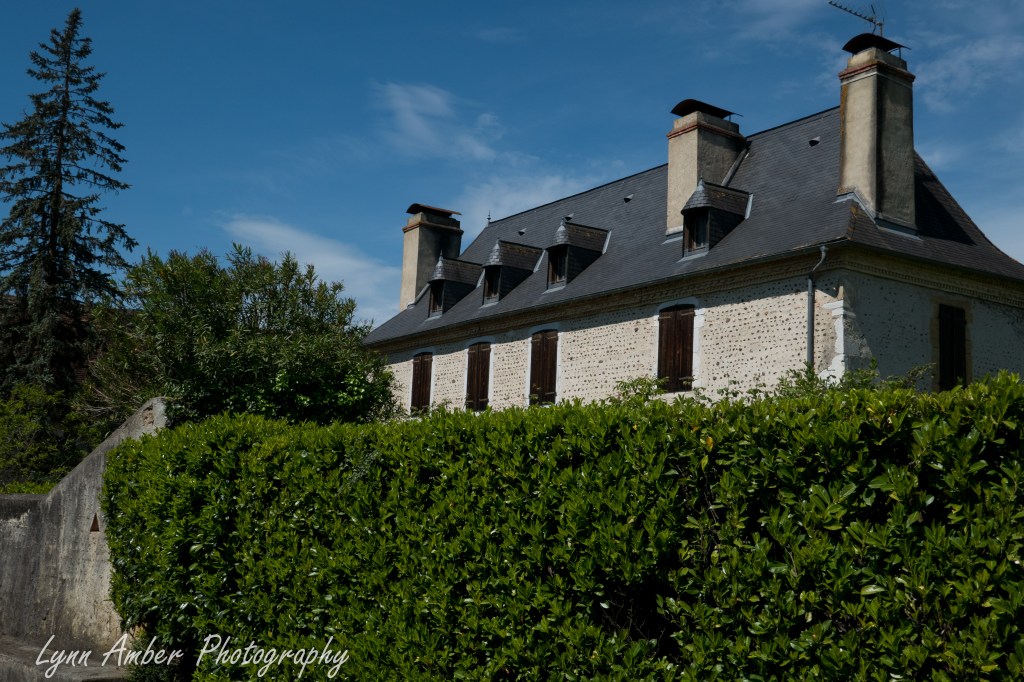
Sitting along the GR 65 pilgrim route, the Moulin de Louvigny is an historic 18th century water mill. I read that this is privately owned now. The architecture is what really caught my eye. The building walls are constructed with small stones and plaster/stucco. It looks so ancient and I’m seeing an abundance of this type of structure in this part of France.
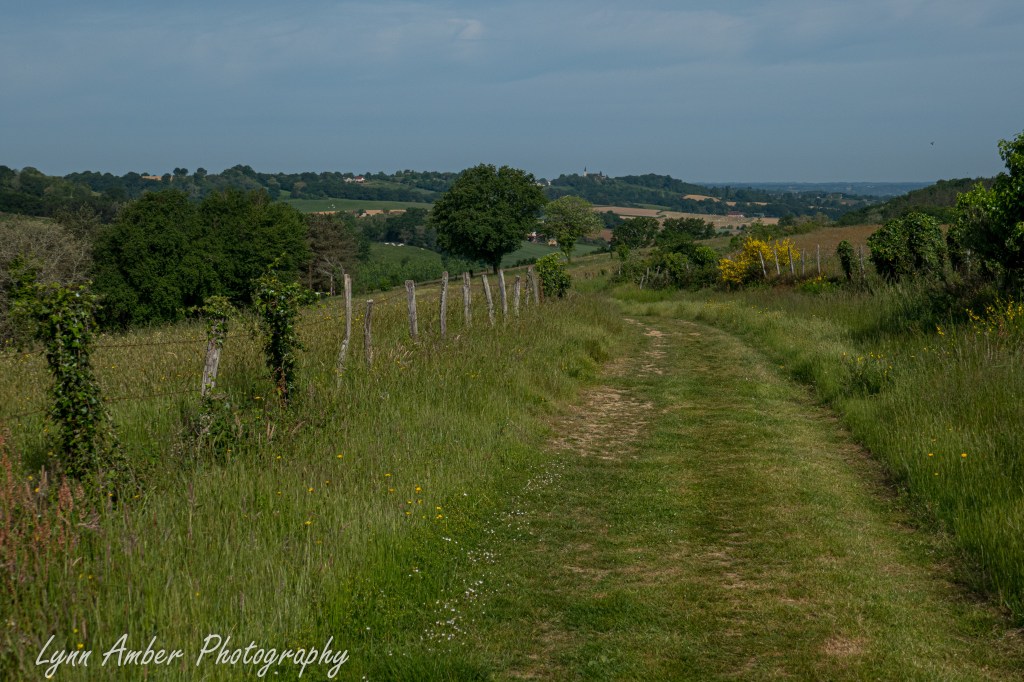
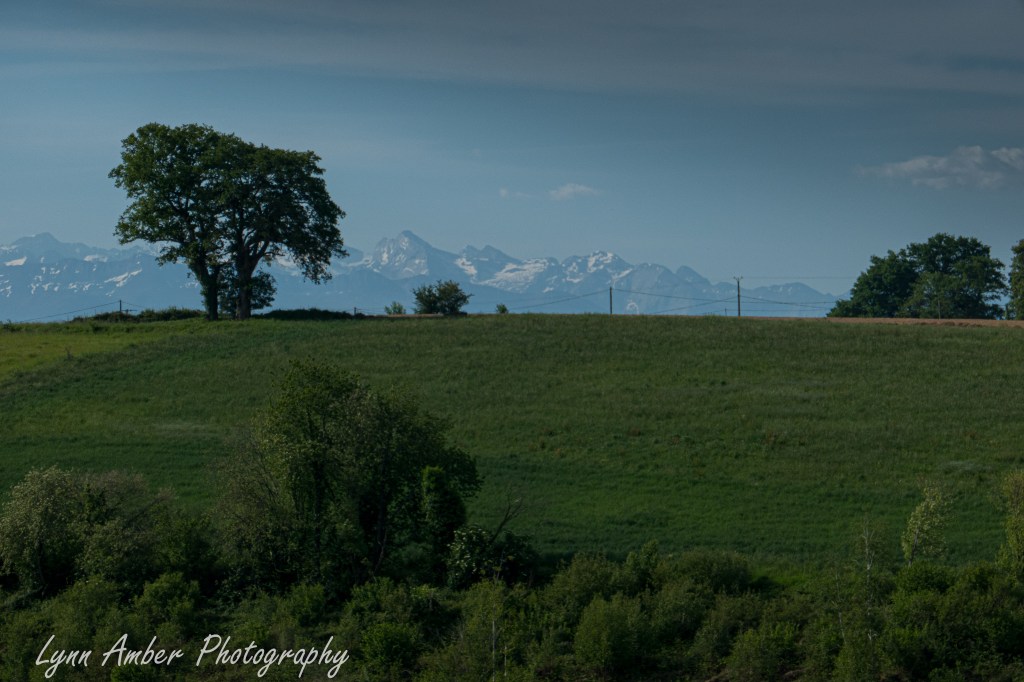
I love that I’m now seeing far-reaching views of the Pyrenees. Although, in some ways, it is bittersweet because I know now that the end of this camino journey is in sight. One day at a time, I try not to think about that now!
Passing through the small hamlet of Fichous-Riumayou, I stopped at the Église paroissiale Saint-Girons. This catholic church dates to the 12th century. In the 5th-century, Girons d’Hagetmau migrated from Northern Africa and became a missionary to south-western France after being commissioned by Pope Liberius in Rome. He suffered persecution at the hands of anti-Christian groups and was martyred and beheaded around 400AD. His legacy lives on in with the presence of this name in towns, churches and monuments throughout this region.
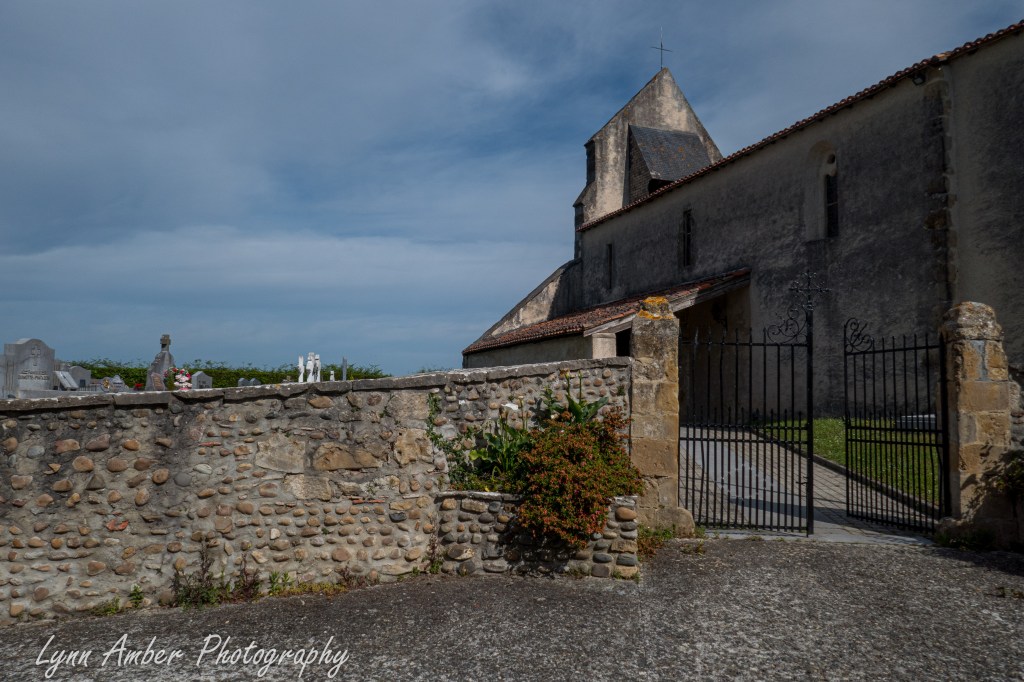
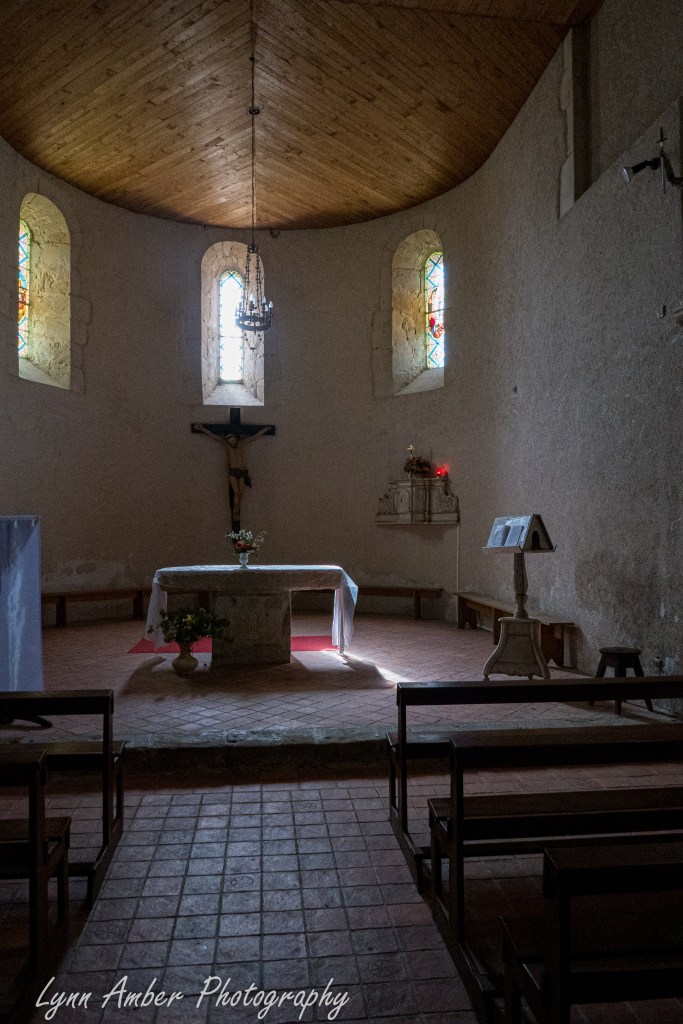
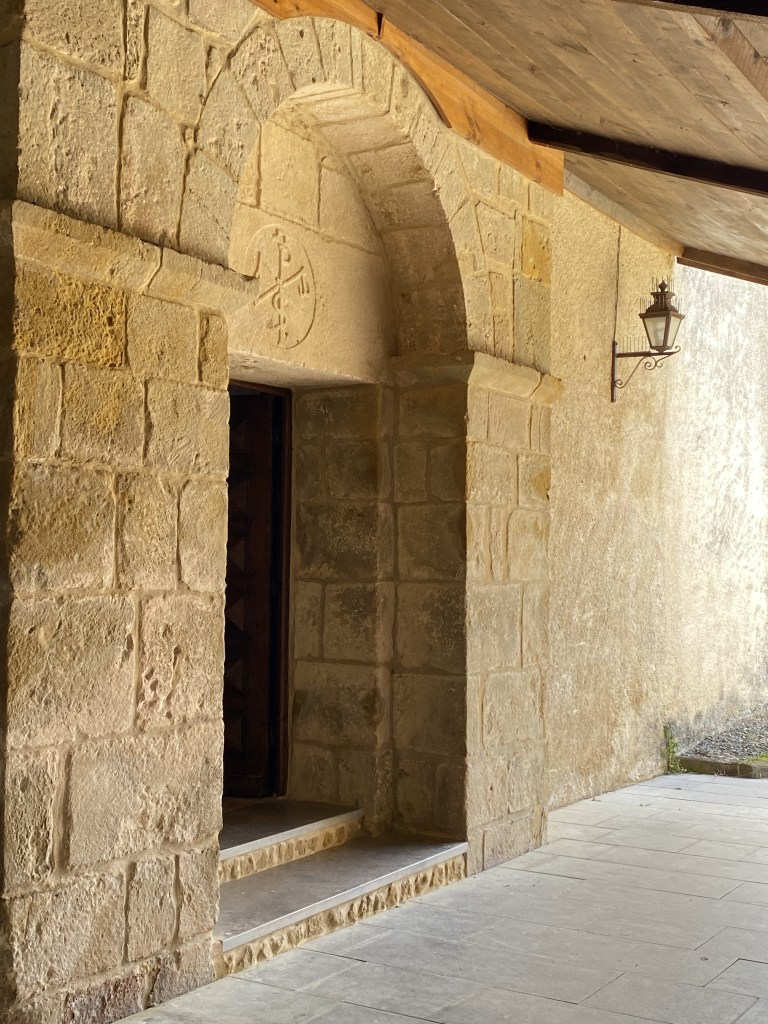
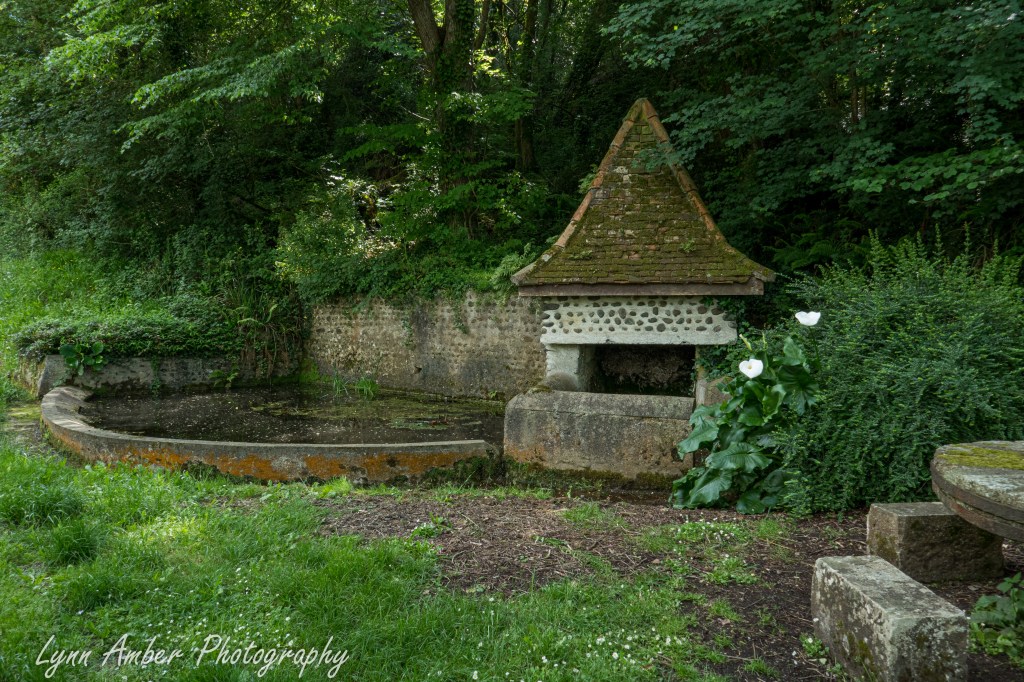
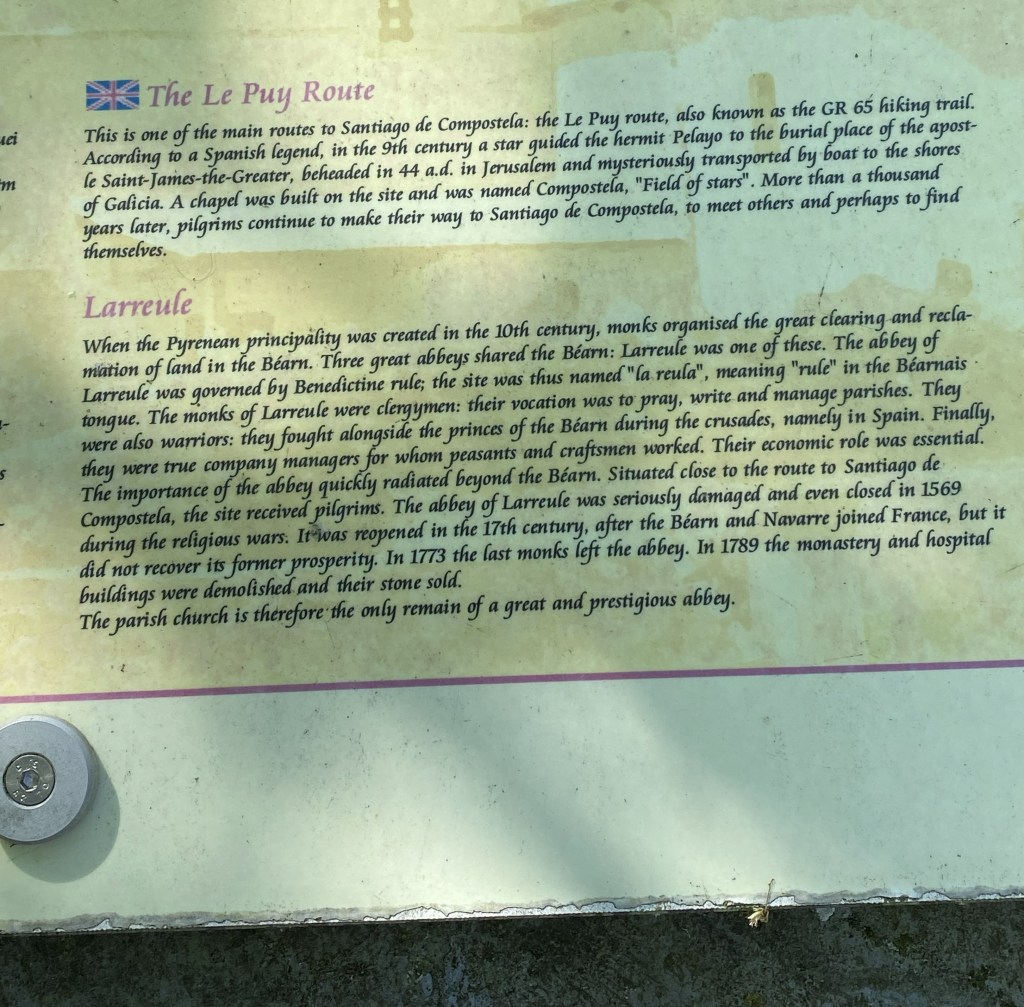
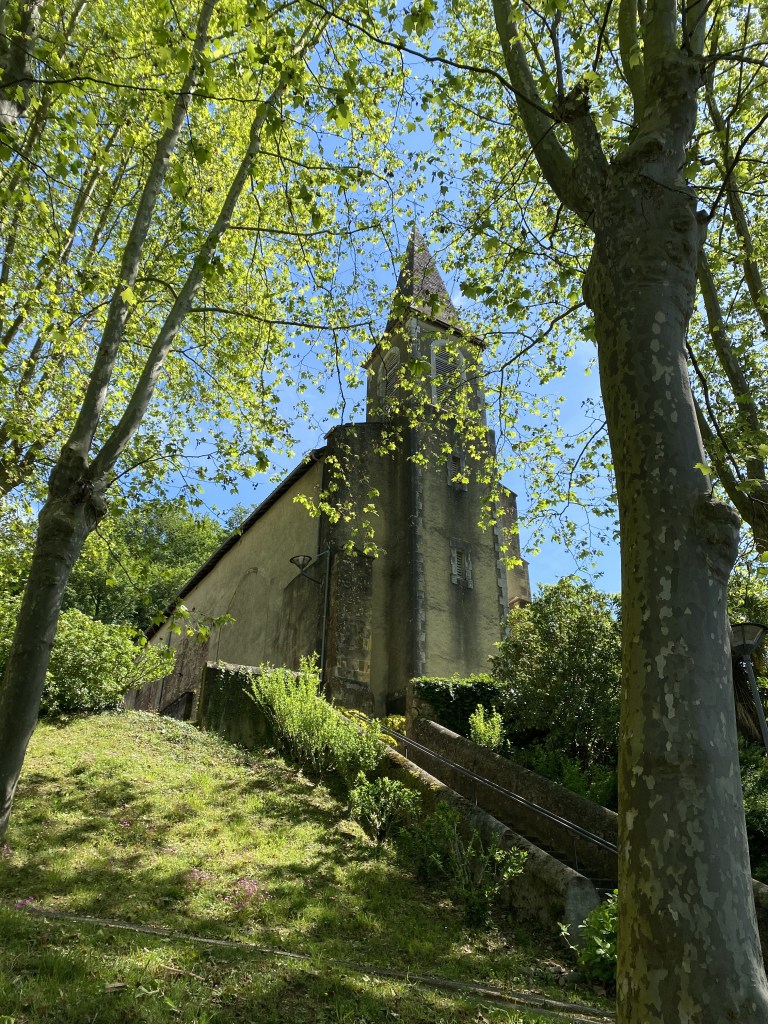
In the village of Larreule, the Église Saint Pierre is a prominent, hillside church flanked by tall sycamore trees.
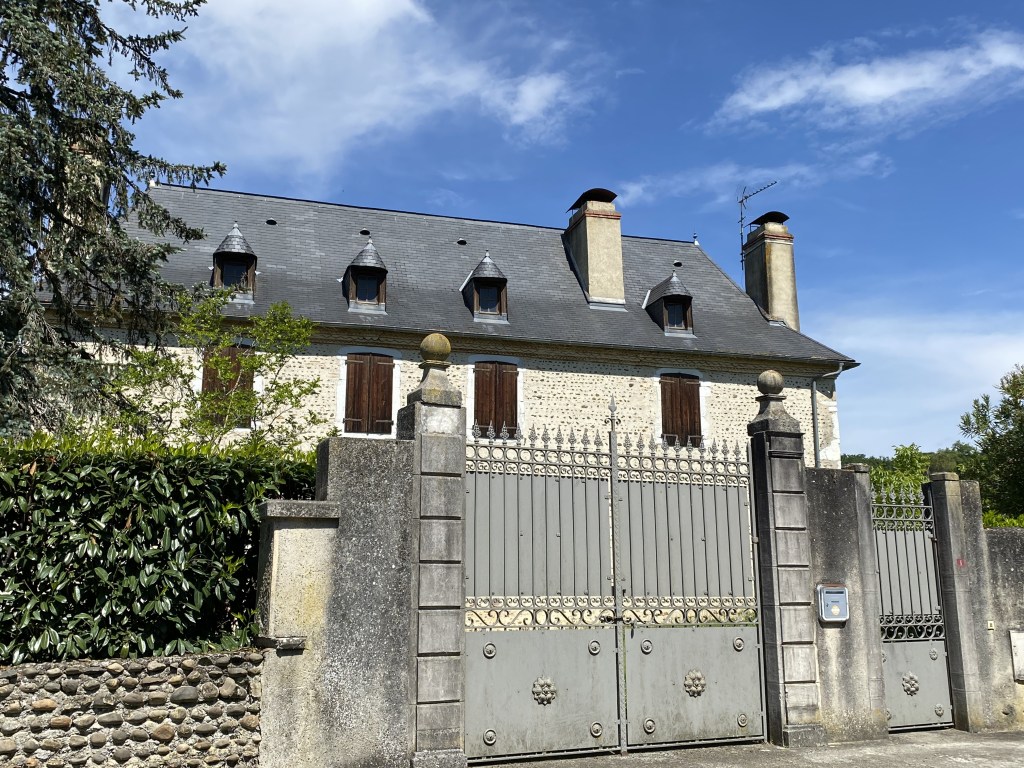
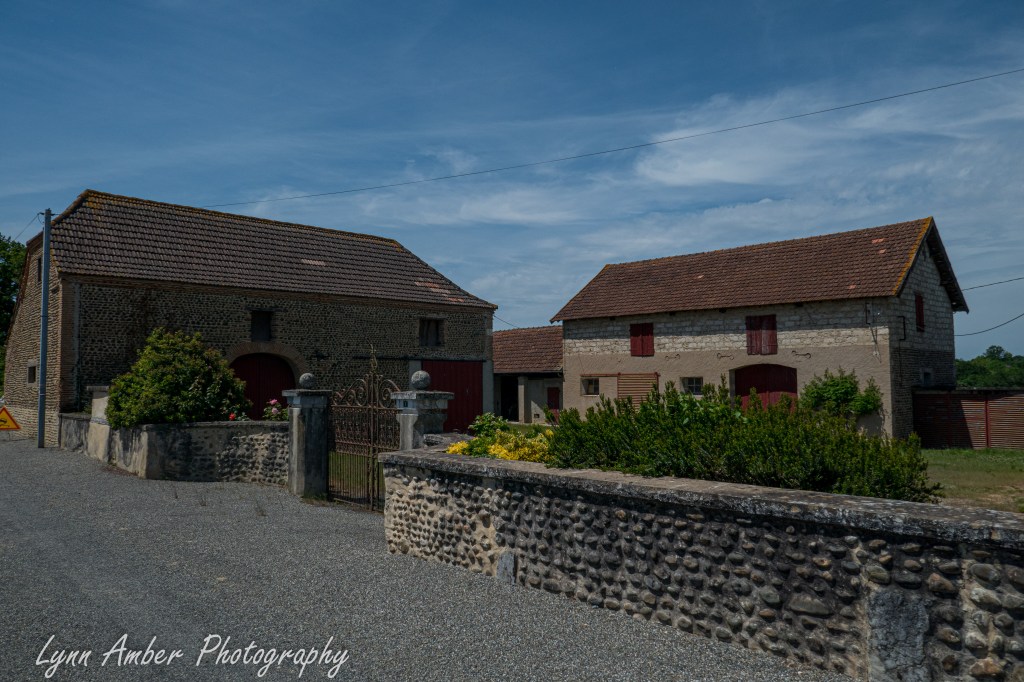
I captured some more architecture photographs on this section because I was captivated by the use of natural, local materials.
Another rustic wayside rest area invited me to pause and reflect on the message given at an impromptu “altar.”
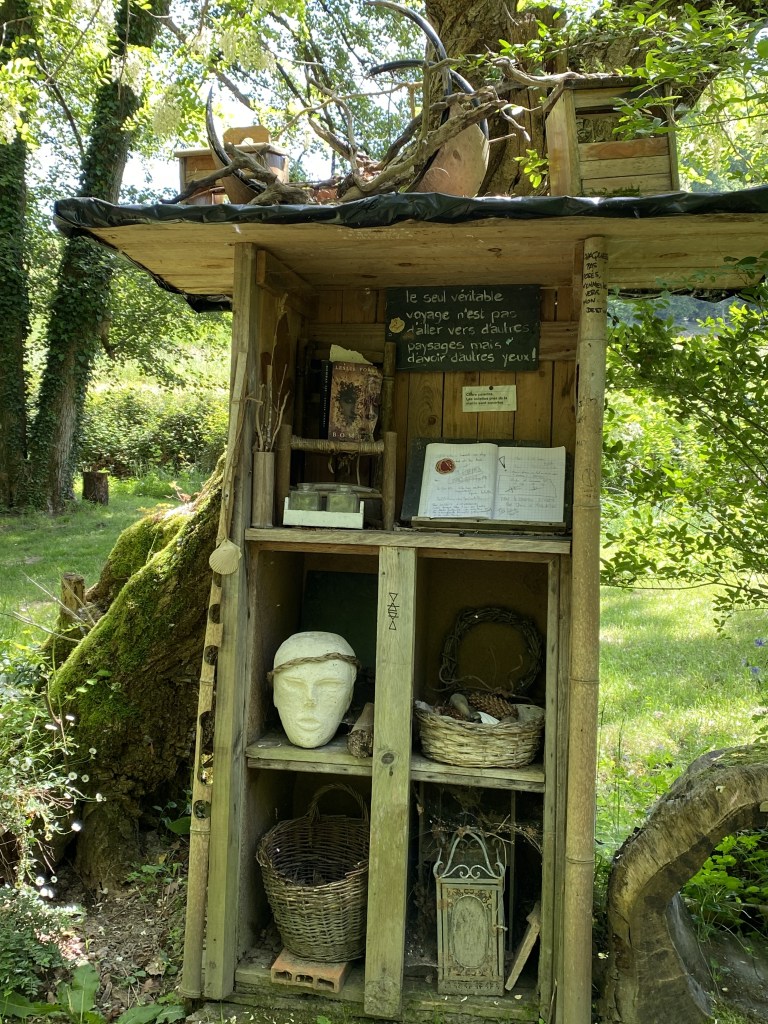
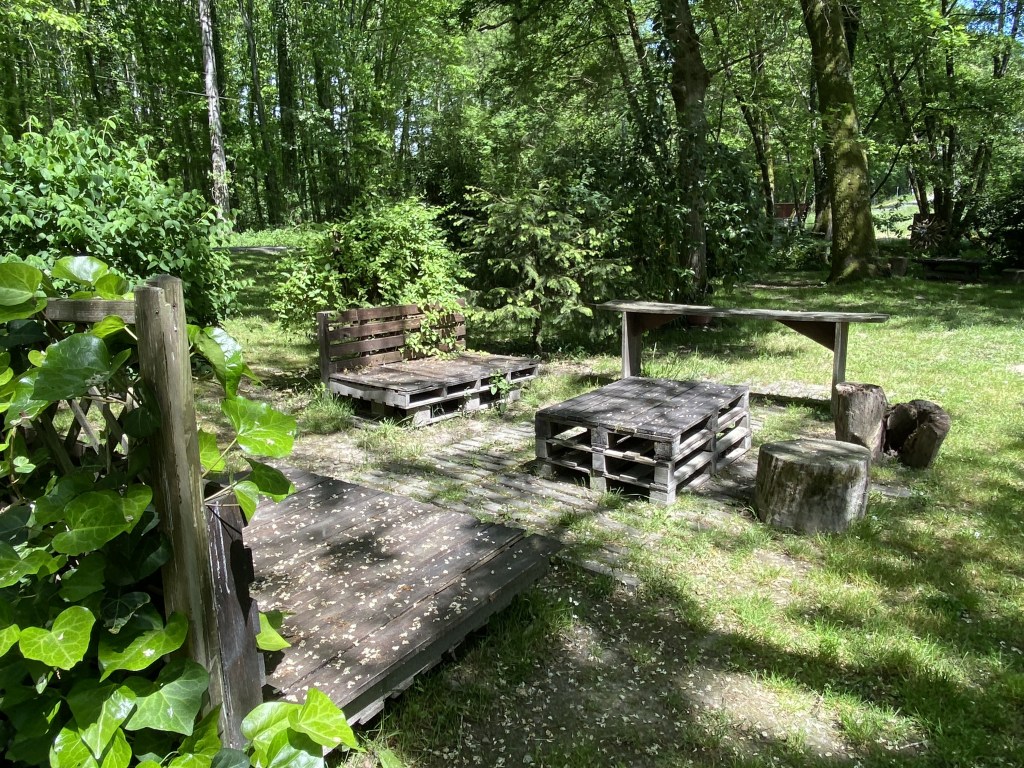
The message on the chalk board translates loosely to: “The only true journey is not to go to other landscapes but to have other eyes.”
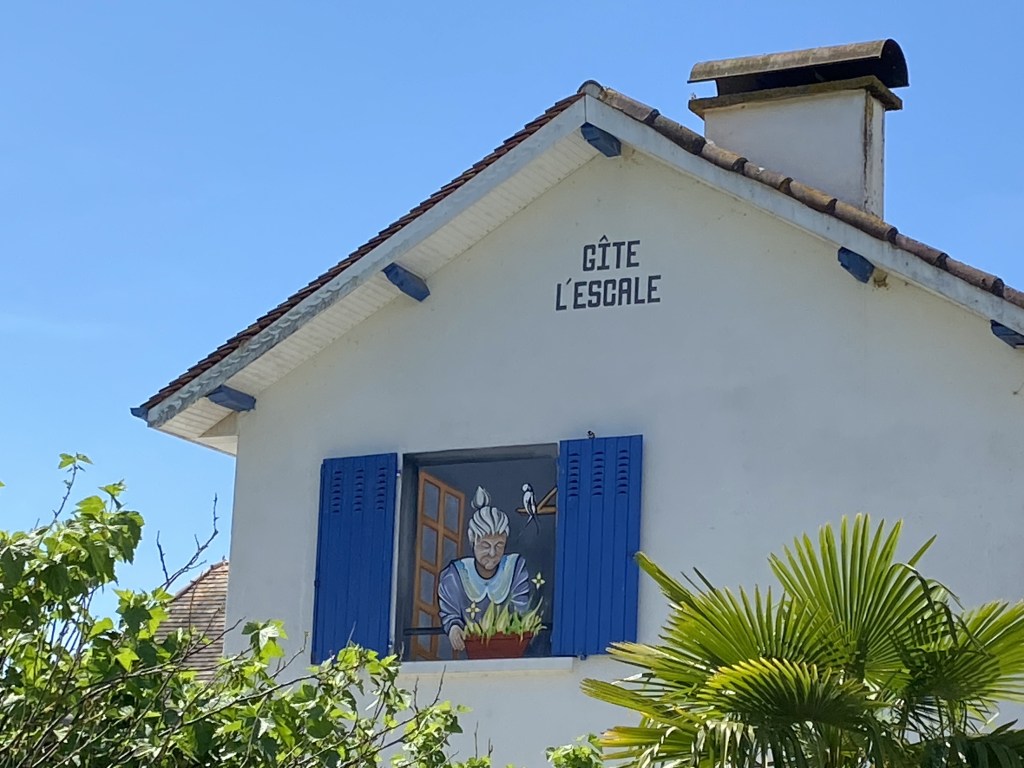
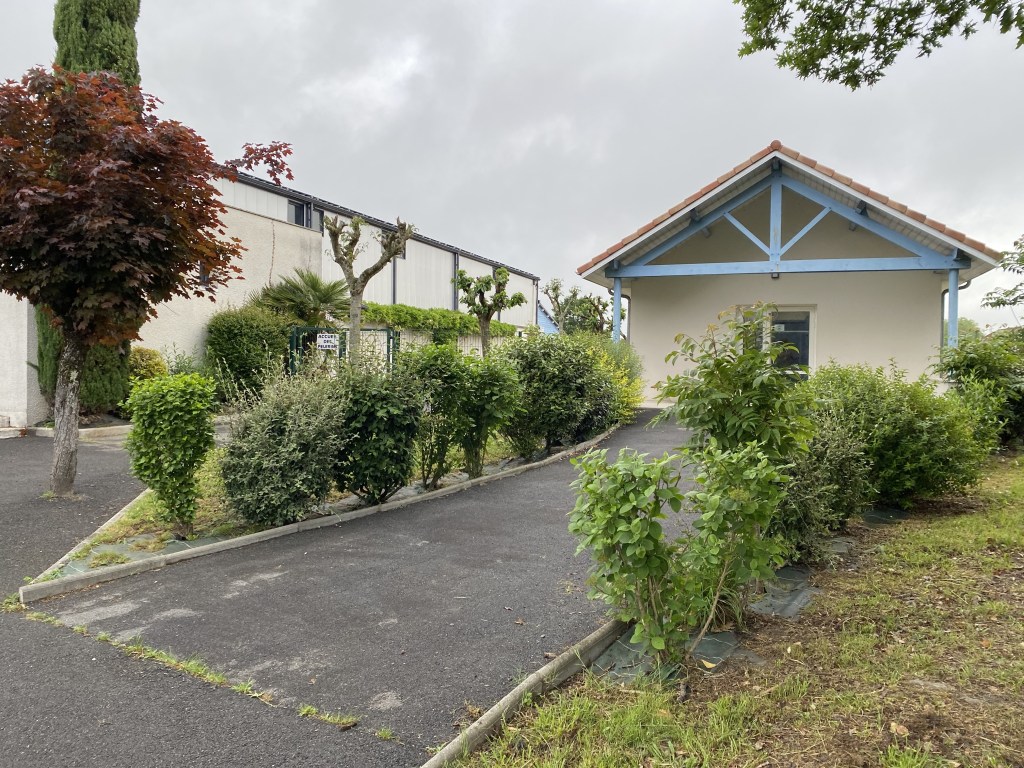
Finally, after a long 23km day of walking, I arrived at our accommodation in Pomps. It was a hot, breezy, hilly day of trekking but it really felt good to be walking again after two days off. I reserved two spots in the Gîte d’étape communal La Halte Pompoise. This accommodation was the largest dormitory-style lodging we have stayed in – with 12 beds in our room. At 37 euros for a bed with demi-pension (dinner and breakfast) it was adequate for the cost. We met up with Gebhard here, who was a German pilgrim we had shared accommodations with earlier in the journey. At dinner, I noted in my journal that we shared conversation with a French fellow from Brittany and an Italian guy. While it seemed that many of the pilgrims on the Via Podiensis were French, we did encounter people from all over the world and it was indeed refreshing to have such a multi-cultural experience.