Lynn Amber - Travel & Photography
sharing my thoughts through words and images
Timothy Lake Journal – More Wildflowers!
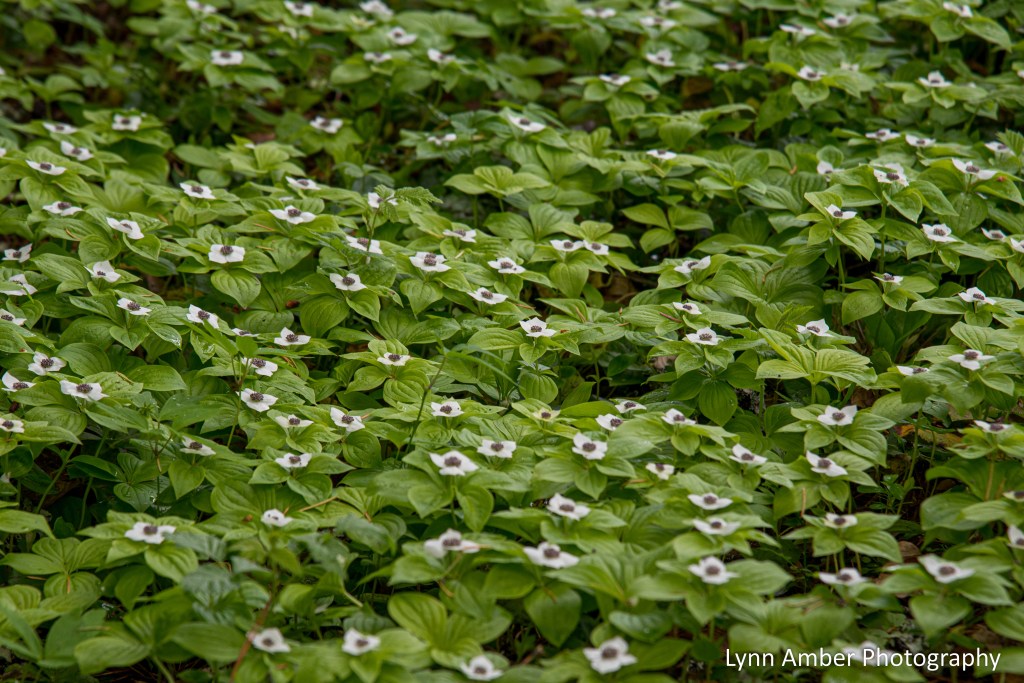
As soon as this beautiful groundcover dogwood started to emerge I felt a kinship to this plant. It is so very similar to Cornus canadensis – which I love – or is it Cornus canadensis? Here in the Pacific Northwest I’ve come across massive displays in the forest and along the lake.
Apparently, Cornus x unalaschkensis is thought to be a cross between Cornus canadensis and Cornus suecica. The species can be hard to distinguish and since I’m no botanist I’m not going to guess which one this is! I did look up the range for Cornus x unalaschkensis and it does appear to be present in the Timothy Lake region of the Mt. Hood National Forest.
Whichever species it is – it is lovely as a carpet on the forest floor!
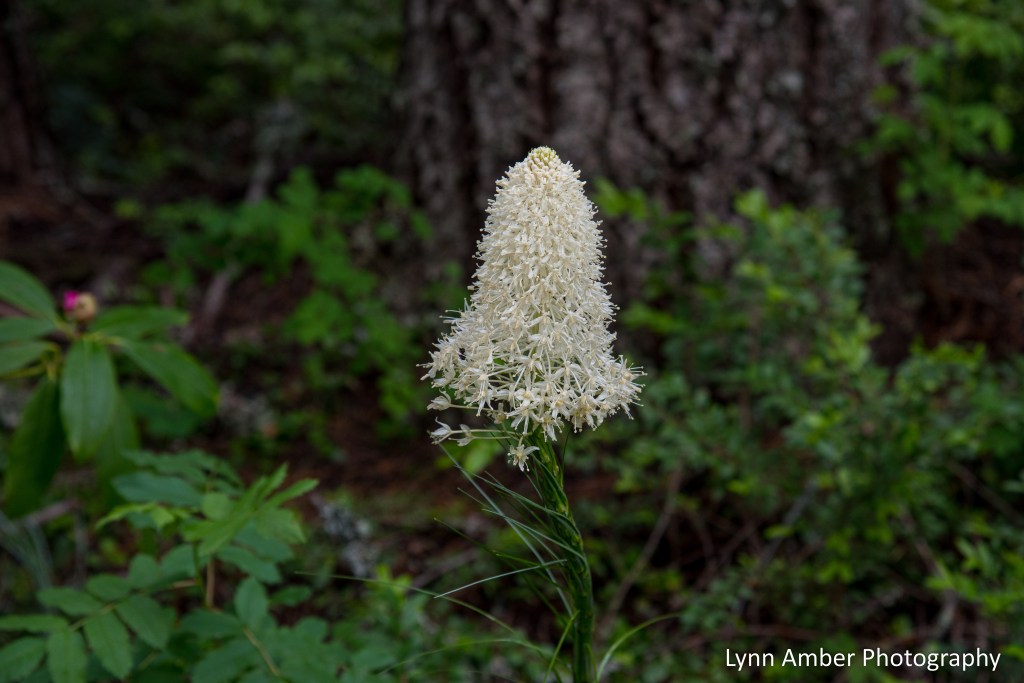
Bear grass is a plant that I am not at all familiar with and discovered growing en mass on the forest floor in the Mt. Hood National Forest. It gets its name due to the fact that bears like to munch on the tender, young flower stems. It has also been observed that grizzly bears will use the grassy parts in their dens!
The plant is fire-resistant and drought-tolerant – needing occasional burns for renewed growth. Another common name for this plant is Indian Basket Grass. Native Americans used this plant in basket-making and also roasted the roots as a source of food.

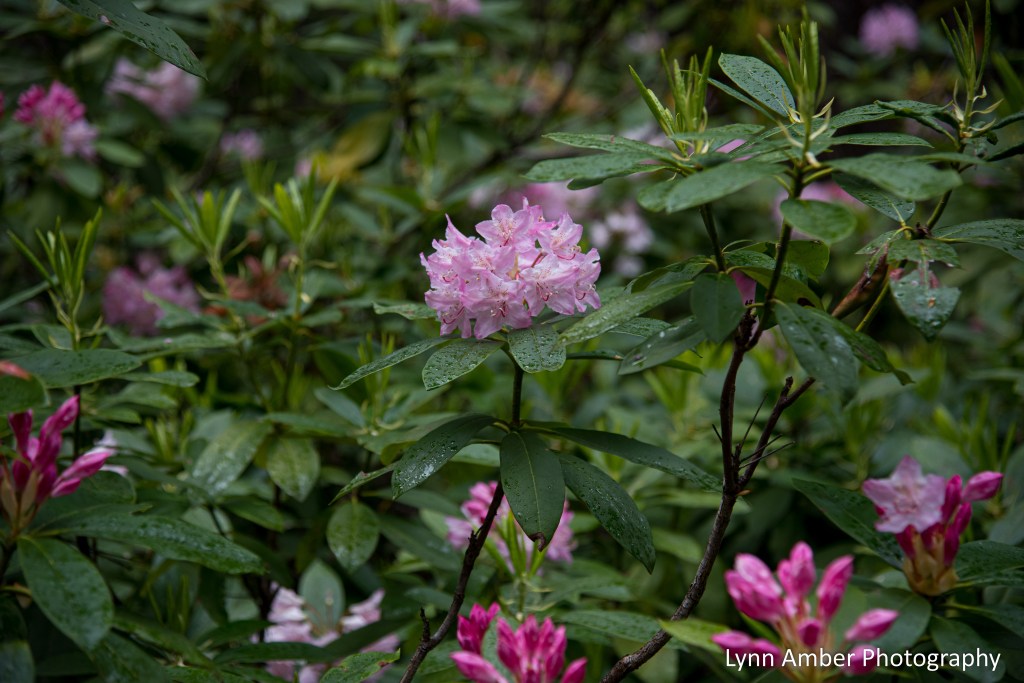
And, of course, the Pacific Rhododendron is at its peak right now!!
Timothy Lake changes its appearance on a daily basis and sometimes multiple times throughout the day. On a recent walk along the shoreline, the peacefulness of this scene caught my eye!

 Lynn Amber - Travel & Photography
Hey, Lynn! Frank & I are traveling in Alaska now, and really enjoying all the flora – similar to your posts. I never saw Devils Club before – YOW. Also Poison parsnip appears to be everywhere. Went on a muskeg hike in Petersburg with a naturalist and it was such a wonder! Thanks for your posts & photos – you are an artist!
Ciao! Maria
LikeLiked by 1 person
Alaska is still on our bucket list! I’m sure you had a great visit!
LikeLike