Lynn Amber - Travel & Photography
sharing my thoughts through words and images
Panama Canal Cruise Day 12

February 7, 2024 Puerto Vallarta
It seems our favorite breakfast spot before an excursion tour has been The Local – good food, convenient to our stateroom and the meeting place for the excursions – and friendly, fast service!


Our tour started with a short bus trip outside of the city of Puerto Vallarta to a tequila distillery called Hacienda Doña Engracia. The current business is run by the descendants of Señor Jesus Ramirez who started crafting tequila in 1927 from 100% of the Blue Agave plant found in the mountainous region of Jalisco near Puerto Vallarta. His granddaughter, Engracia married into a French family who had immigrated to Mexico many years before and, with her husband Carlos Gerald, now runs the family business. Their tequila recipes have been passed down through the generations.

We were given a short tour of the facility that included a little history of the tequila distilling process and then escorted to the tasting room where we sampled at least 6 different tequila recipes!


The Blue Agave plant can take up to ten years to mature and produce a piña bulb that can then be used to make tequila. Once the plant has matured, it is harvested and the leaves are removed to leave the piña bulb. Nowadays, the piña bulb is baked in brick-lined ovens. Once baked, the bulb is shredded so that the juice can be extracted. Distillers now use mechanical shredders for this purpose, but traditionally this was accomplished using a stone wheel.

The juice extracted from the piña bulb is called mosoto. It then needs to go through a fermentation process and is placed in wooden barrels along with yeast. The fermentation process can last anywhere from 2 – 12 days.
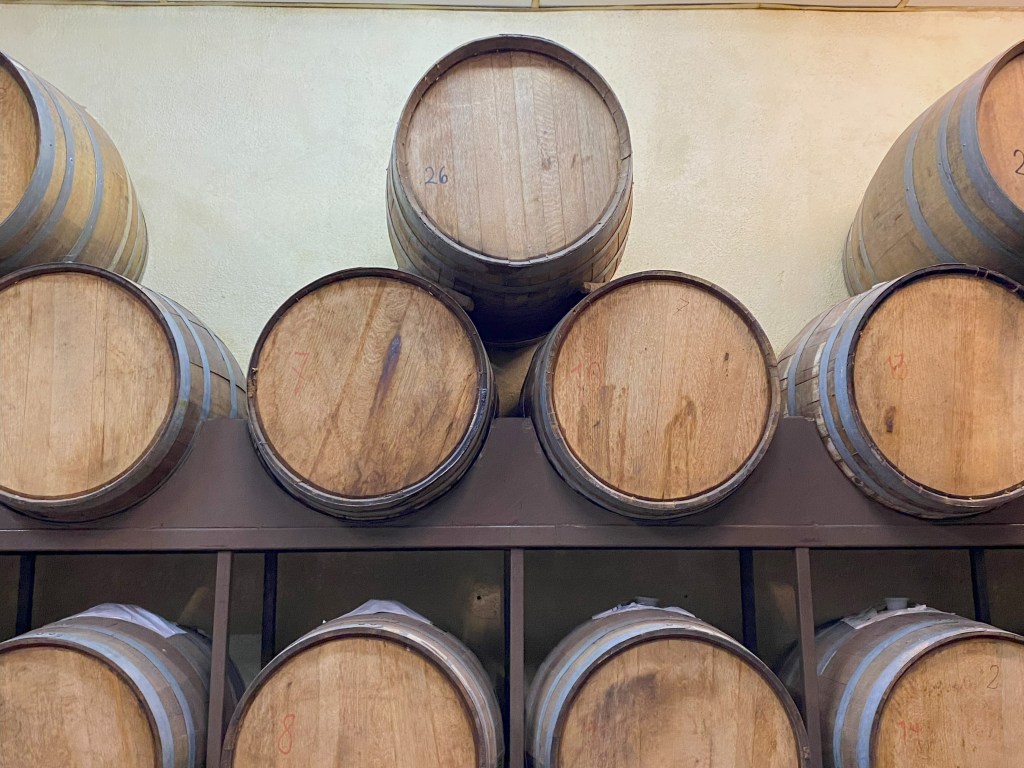
After the fermentation process is complete, the tequila usually goes through two distilling processes that increases the alcohol content and clarifies the liquid. The tequila is then aged for 2-3 weeks before it is ready for consumption and sale.

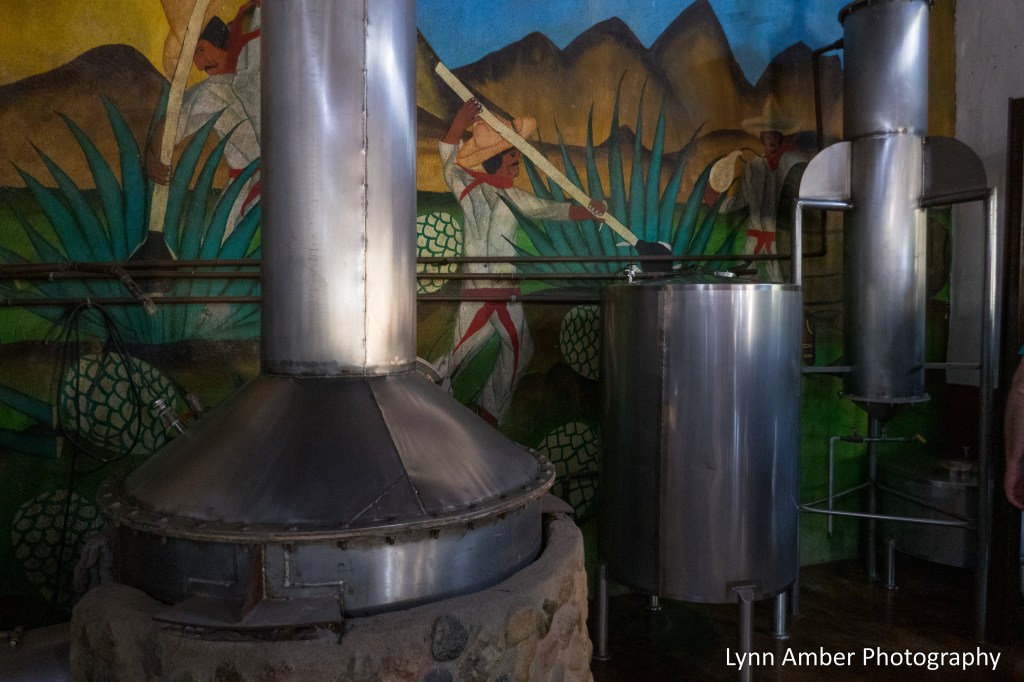
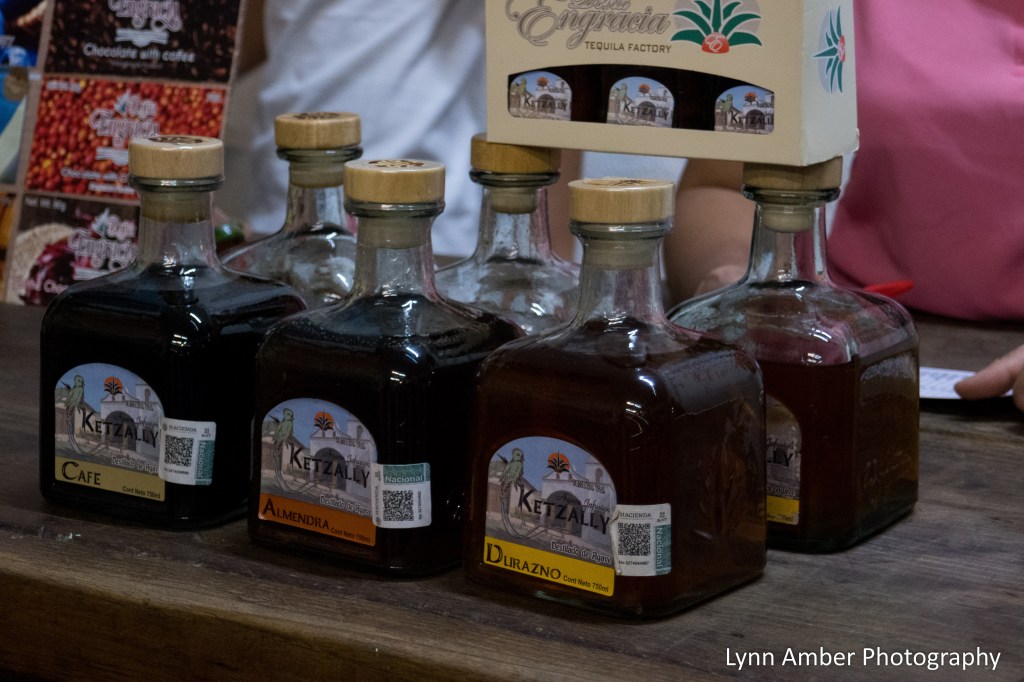
After we got the low down on how tequila was produced, it was time for the tasting! I’ve really had very little experience with “hard liquor” so I was somewhat apprehensive to do too much of this tasting – but I was pleasantly surprised by the flavor and it was quite good! There are different types of tequila – from less expensive to more pricey depending on the level of processing, I guess, and additives – and we enjoyed a taste of them all. The tasting samples were very generous I might add! I had to start requesting “just a little.” 🙂

What we needed after all that tequila tasting was some food!! This tour came with lunch and we were treated to authentic Mexican tacos. We also had the option to purchase drinks and, while I declined because I was still not feeling very chipper, Mom and Vicki indulged in margaritas that came in a painted clay container that they could keep as a memento.


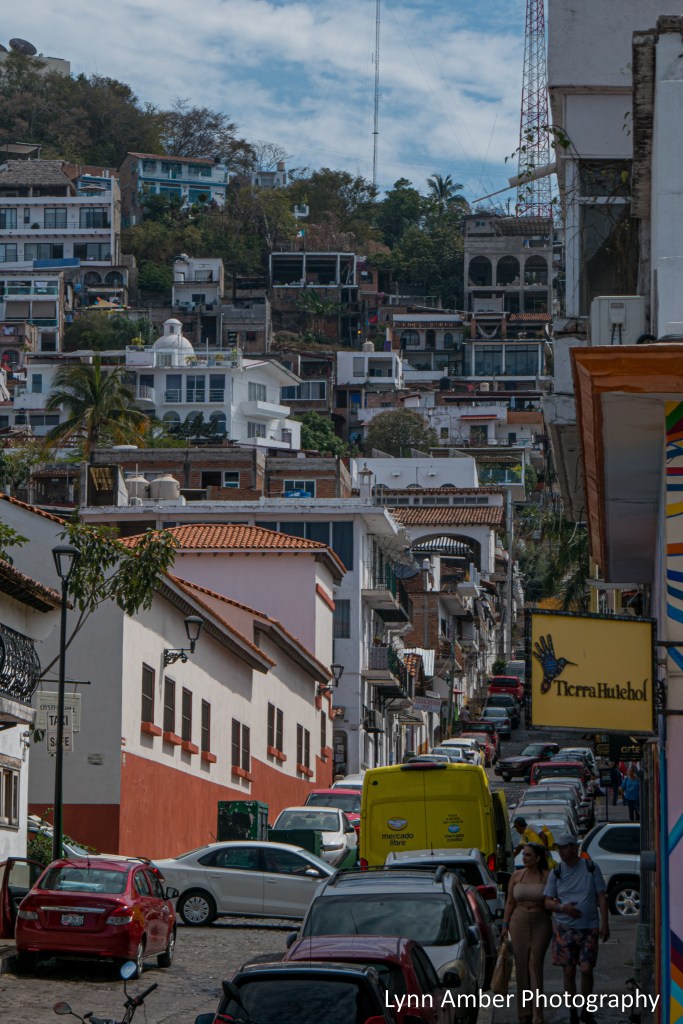
We drove into the heart of Puerto Vallarta after visiting the tequila factory and had an opportunity to visity a small “touristy” shopping area and then walk along the seaside promenade and explore some on our own.

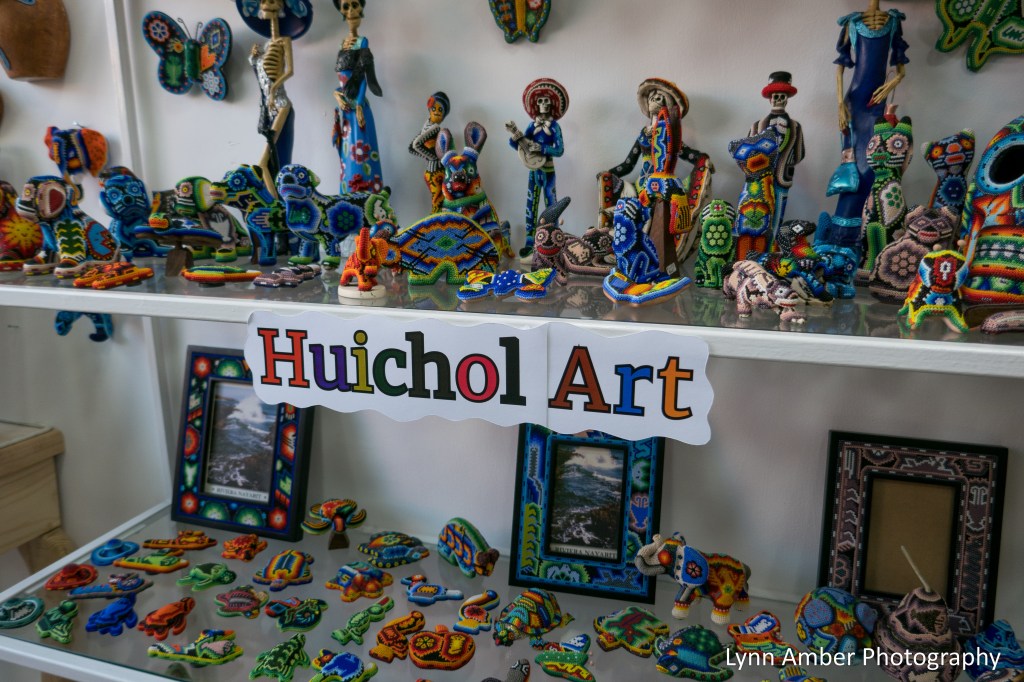
One shop sold beaded Huichol Art. The indigenous Huichol people live in the surrounding Sierra Madre Mountains and call several Mexican states their home. They have a long history of bead-making and their craft is considered of very good quality and value.
There was another shop that sold hand-crafted sheepskin leather products and I could not resist purchasing a small leather purse to add to my souvenir collection!

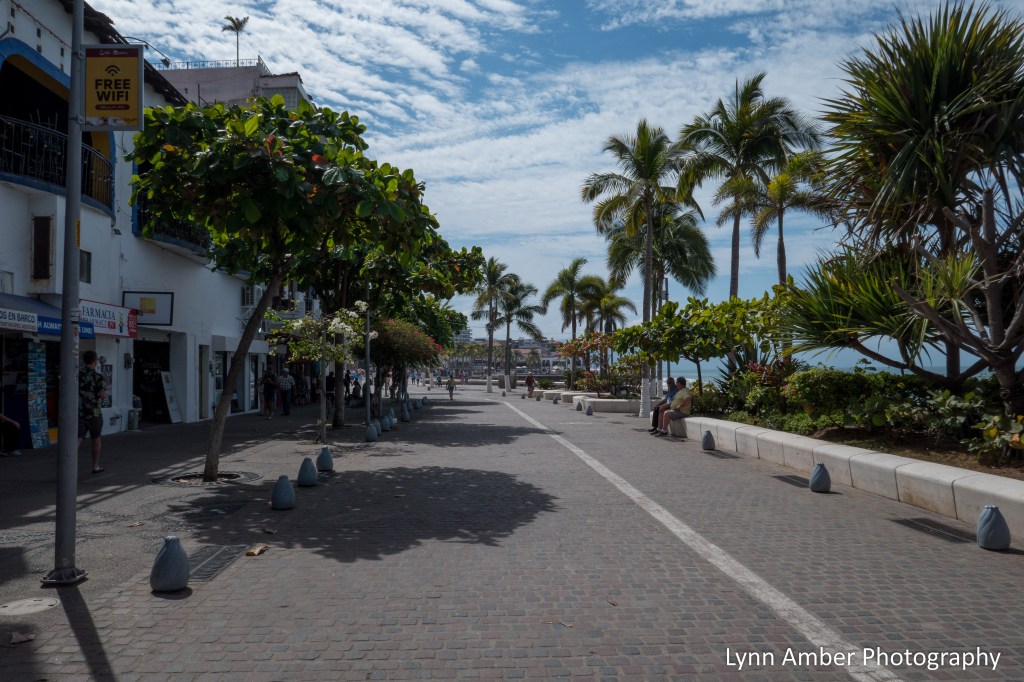
We boarded the tour bus at the shopping mall and headed to the seaside promenade for some unguided walking along the coast. It was really pretty along the beach and there were a number of interesting sculptures along the walkway.



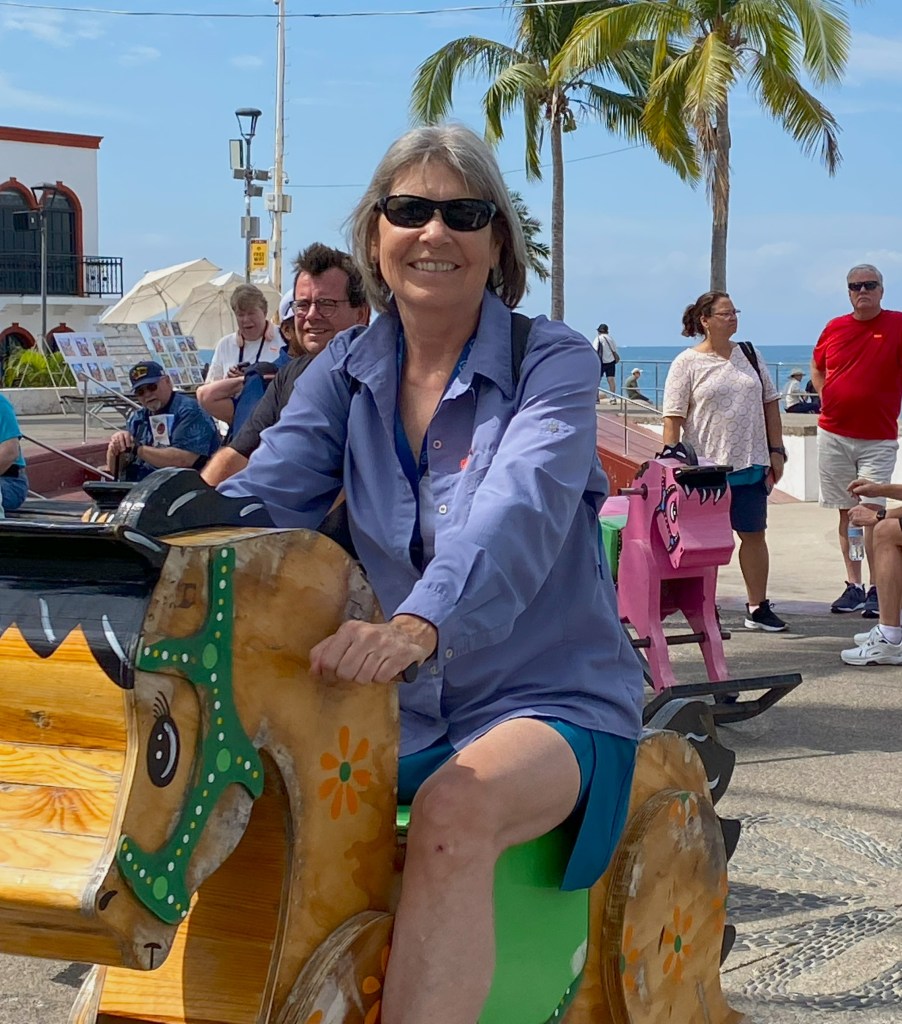
At one park area along the promenade, there were a number of “rocking horses”. It was a rite of passage for all tourists to take a ride!
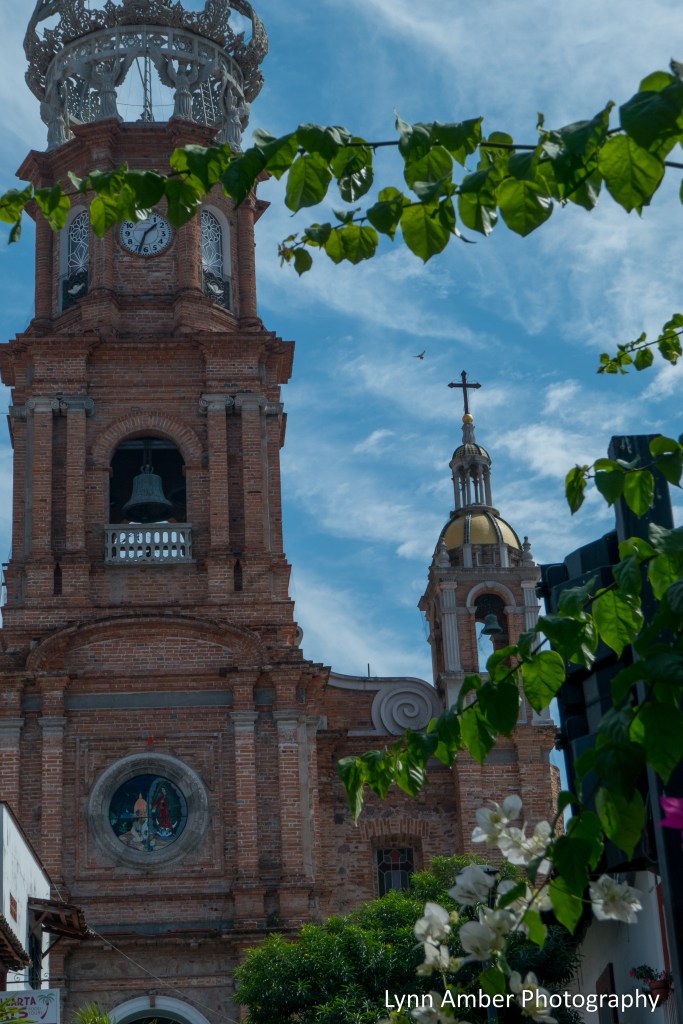
From the promenade, it was a short walk to the Parroquia de Nuestra Señora de Guadalupe – the Church of Our Lady of Guadalupe. This church was built in the 1930’s on the original foundation of a chapel that was dedicated to Our Lady of Guadalupe. It is a beautiful church with its unique “crown” tower and is said to reflect the vibe of Puerto Vallarta in regards to its architecture which does not follow any one style but is a combination of different ones including neoclassicism.



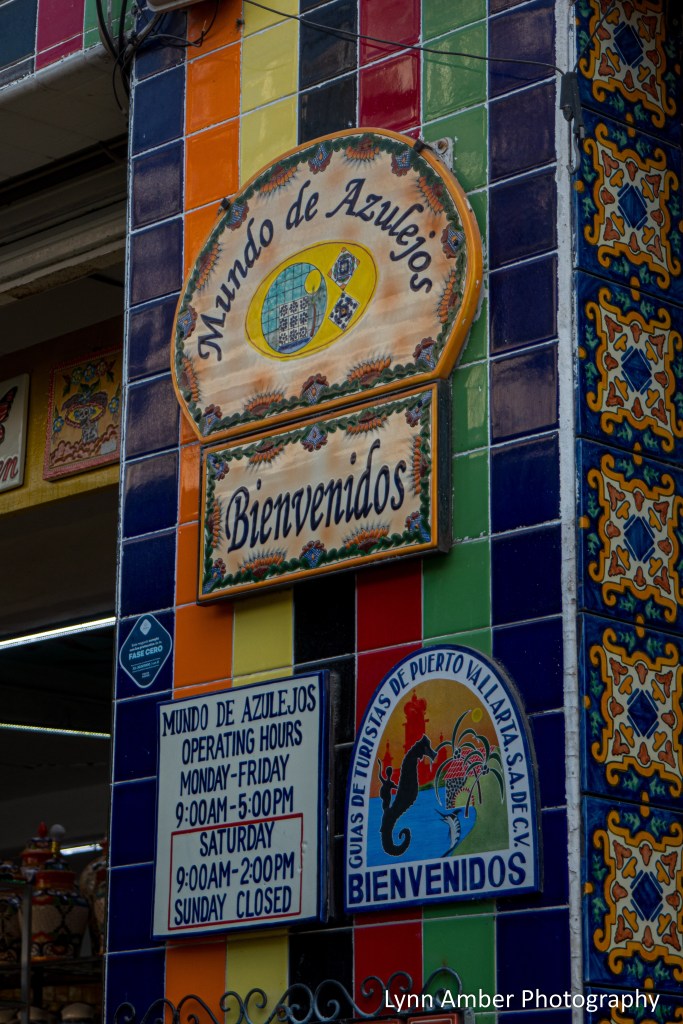
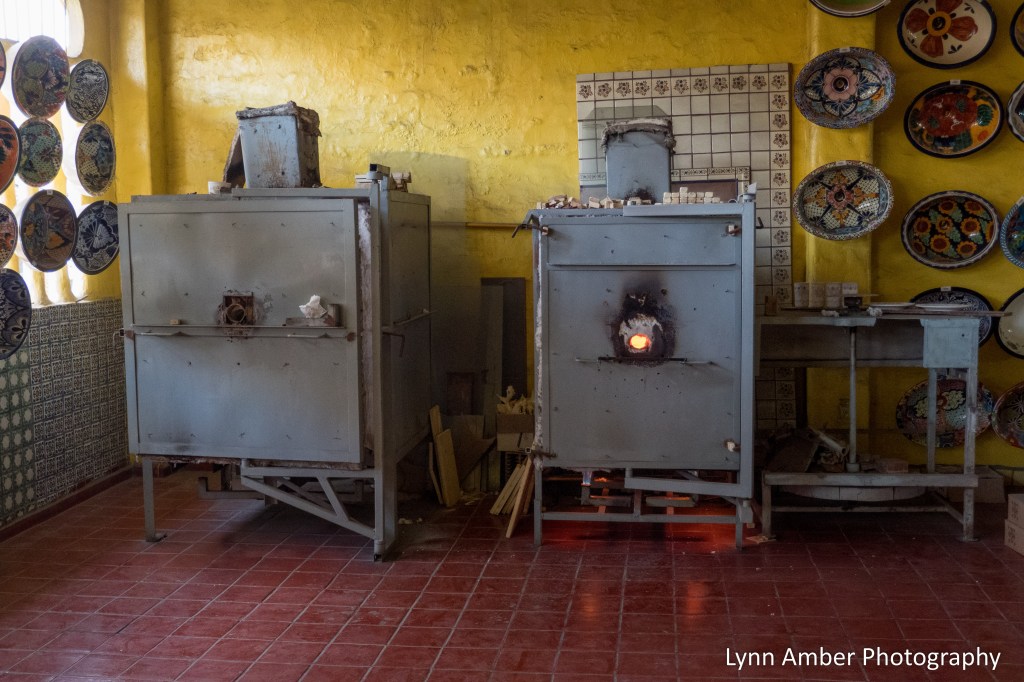
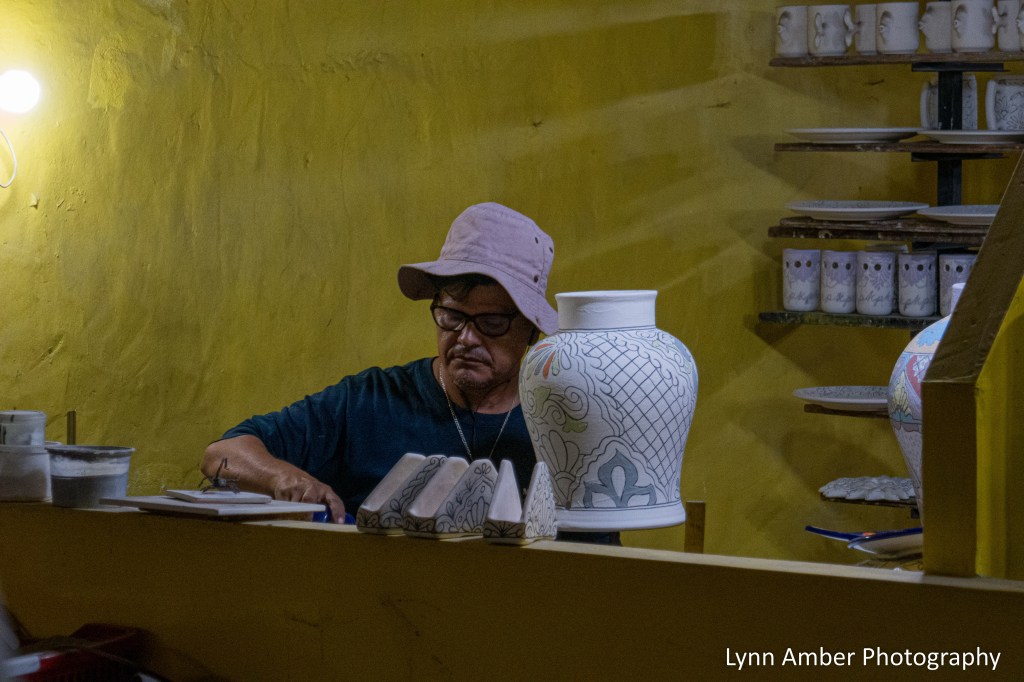
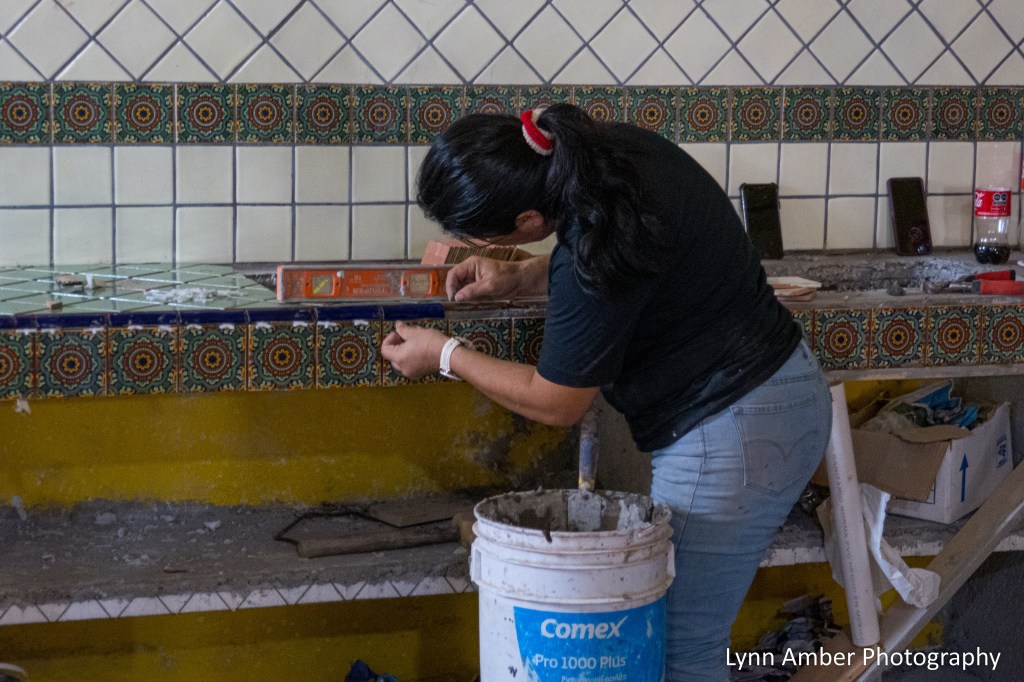
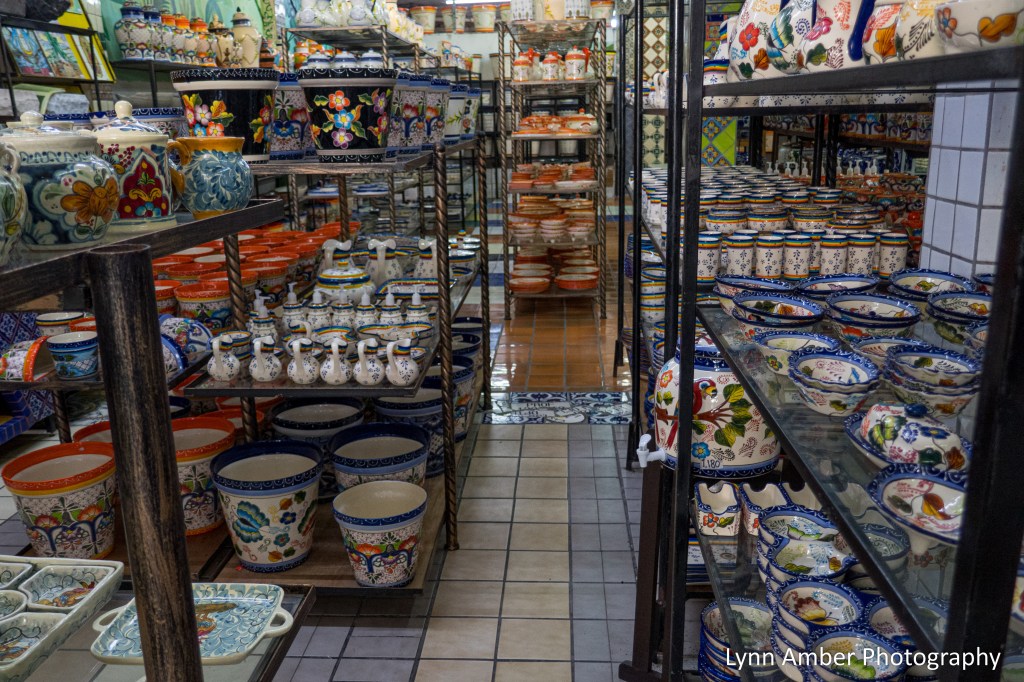
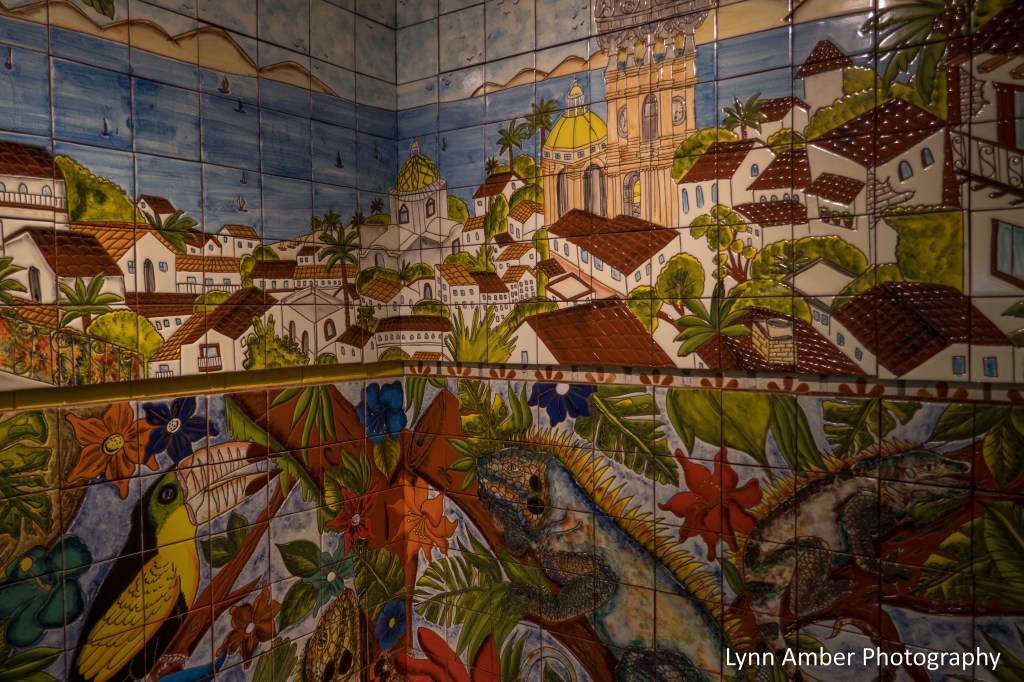
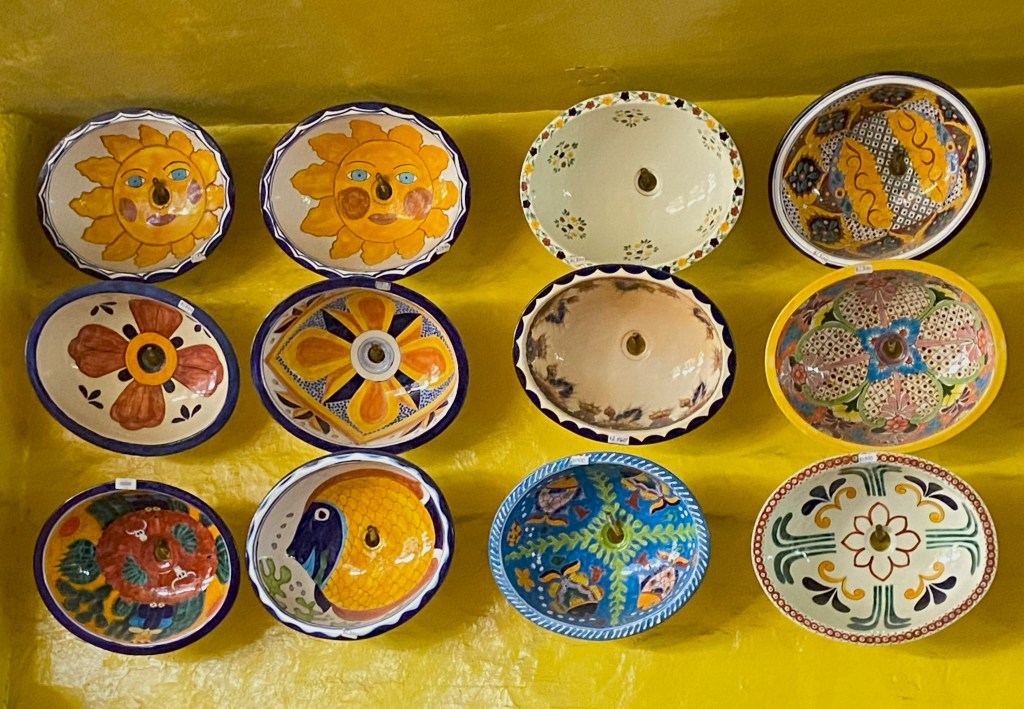
Our final stop on the tour of Puerto Vallarta was to a local tile factory and store called Mundo de Azulejos. They are a family-run shop that crafts and sells Talavera pottery. Talavera pottery originated in a region in Spain called Talavera de la Reina and was brought to Mexico by the Spanish. The pottery is made by mixing minerals with different clays. It was originally produced in the Mexican State of Puebla due to the abundance of high quality clay found naturally there. What a feast for the eyes to view the many ways this pottery is crafted with each piece a marvel of artistic work. According to their website, this shop ships internationally and claims to have some of its pieces in the Vatican and the White House!
I did allow myself to indulge in several small tiles that I hope to use in some artistic way. I was concerned about how to travel with them in my small carry-on luggage but the staff wrapped them up into a small, insulated package and I managed to stuff them into my carry-on bag. Interesting though – going through airport security my bag was pulled aside and searched. I guess the package looked somewhat suspicious going through the x-ray machine! 🙂

As we traveled back to the ship, I was able to grab some photographs from the bus – just random scenes and a look at what was the home of Richard Burton and Elizabeth Taylor.


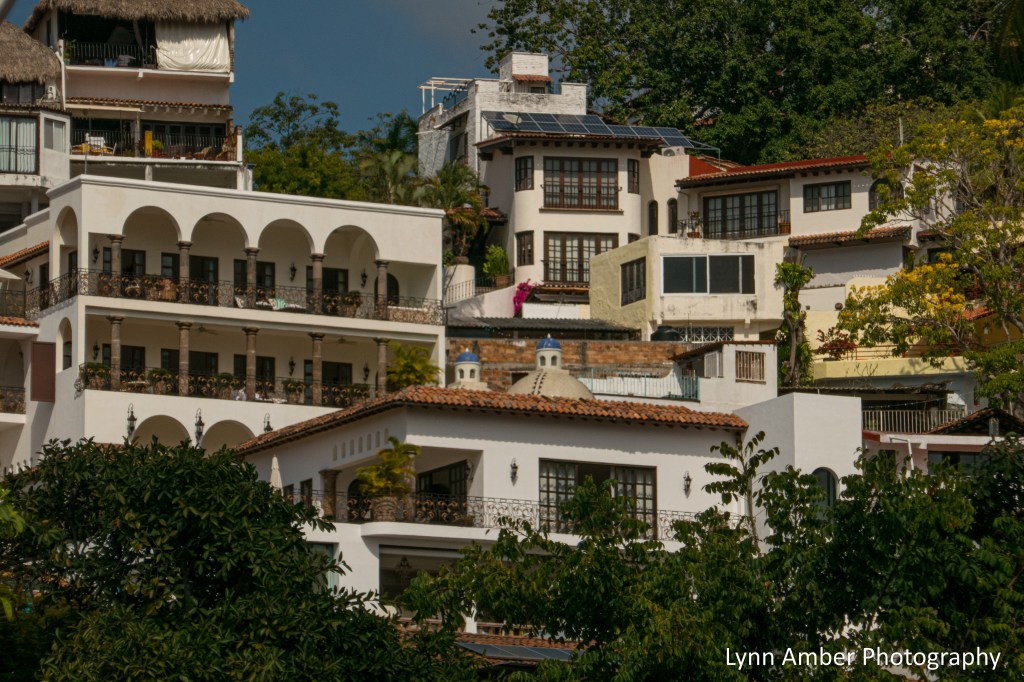
This was by far my favorite tour excursion of the trip and Puerto Vallarta is my favorite city so far. It’s location with the Sierra Madre Mountains as a backdrop and seemingly vibrant community makes it very appealing. I can see why this city is such a popular tourist destination.
It was a busy day and once again by the end of the day my cough/laryngitis/sore throat affliction had come back on me. I opted out of dinner and any nighttime entertainment and tried to get some rest in the stateroom. But, I ended up feeling so bad that I called the onboard medical center and went to see the doctor there. I felt like after several days it might be time for some medical intervention. The doctor ran some tests to rule out covid, flu, and strep throat – all of these tests came back negative. He was concerned that it was a bacterial infection of some sort and prescribed for me a 5-day course of antibiotics, some prednisone to reduce the swelling in my throat and larynx, Mucinex to help with congestion and some throat lozenges. I started the meds right away hoping that they would kick in and not prevent me from our tour the next day in Mazatlán. The bill was a whopping $842.00 which was a shock but fortunately our cruise included medical insurance and, while I had to pay this up front, I did get a total refund once I got home and submitted the paperwork.
 Lynn Amber - Travel & Photography
I love your photographs, especially the rose window (stained glass circular window above the door). So much amazing art!.I am guessing you have fully recovered by now and am glad you were able to get medical attention. No fun to be sick away from home. ~S.
>
LikeLiked by 1 person
Yes – all recovered! But, it did follow me home and took several days to really get over what ever it was that I had contracted. Thank goodness for antibiotics because as soon as I started taking them I noticed an improvement. 🙂
LikeLike