Lynn Amber - Travel & Photography
sharing my thoughts through words and images
Cinque Terre Hiking Trip – Day 3

October 14, 2025 – Day 3 – Monterosso to Vernazza
The third day along the Cinque Terre coastline we completed our first hike within the national park. The agenda for the day included a ferry ride from Porto Venere to Monterosso – the northern most village in the Cinque Terre – where we would begin our hike to Vernazza. This would be a more challenging hiking day with some significant elevation gain and we would get an introduction to the many “steps” that criss-cross these hills and were used by villagers back before modern transportation came to the area.
Our day started with a mini-van ride to Porto Venere where we caught the ferry to Monterosso. The boat ride would take us along the entire Cinque Terre coastline and past all five of the small villages nestled along the shore at the base of the steep terrain. As we left the harbor in Porto Venere and headed out to the Ligurian Sea, we passed by the Church of San Pietro all aglow in the morning light.
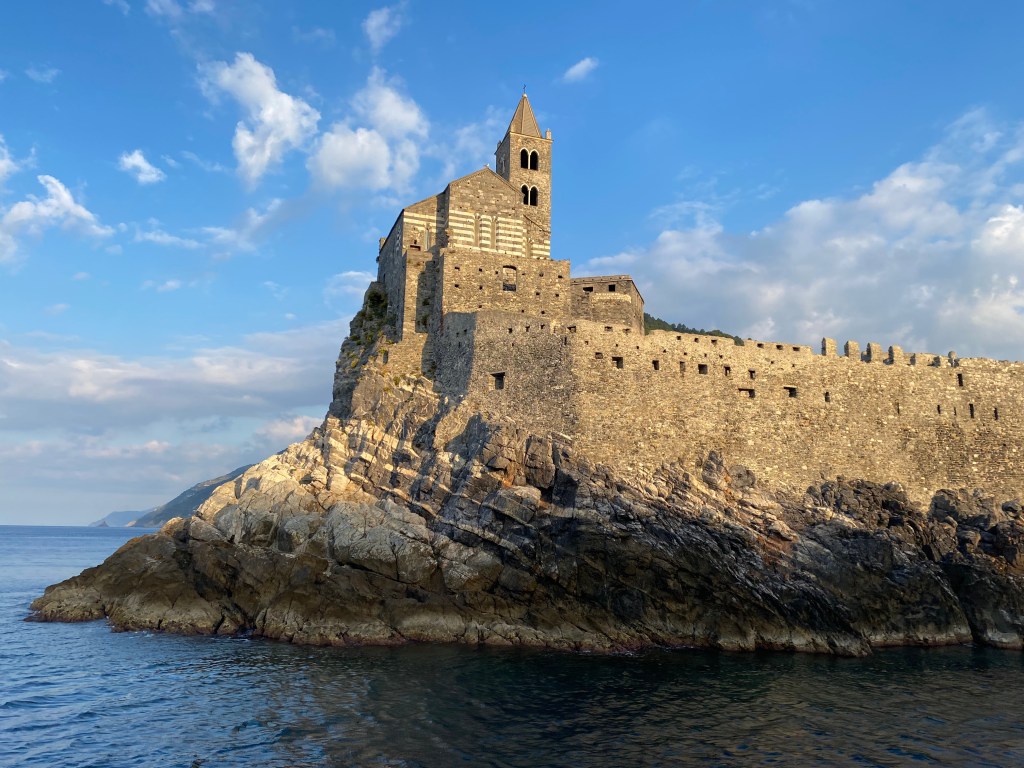
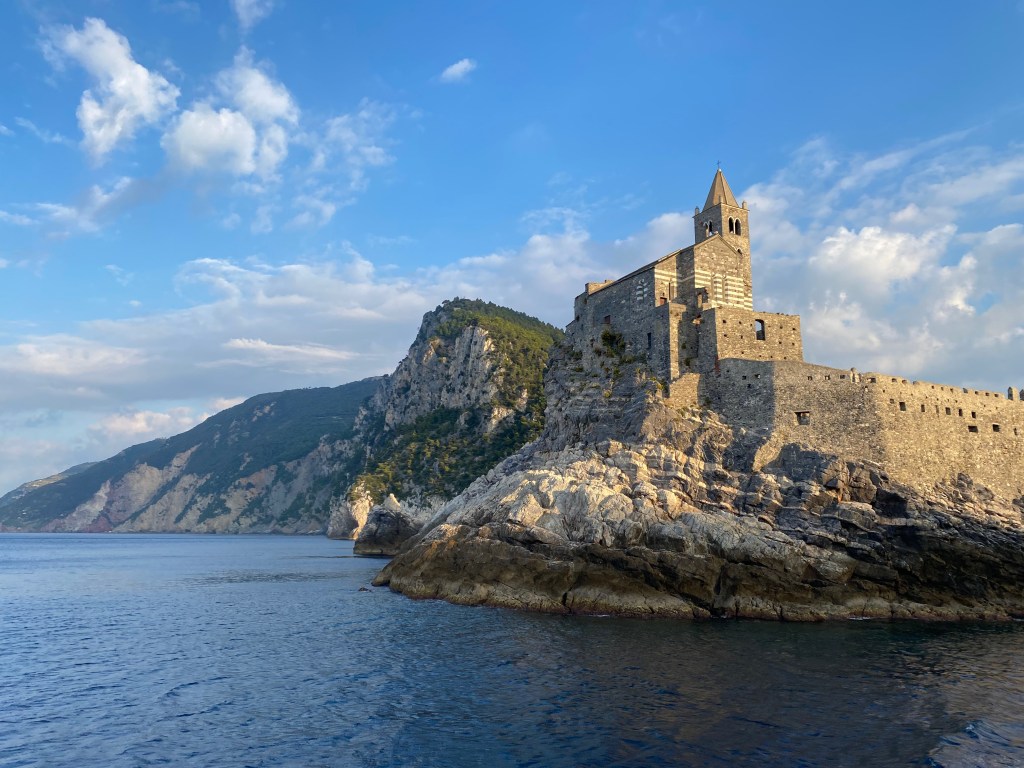
It was a beautiful day for a ferry ride. The sea was calm and the sun was bright and warmed of us even though there was a chill in the air on the water.


From the water, we got a really good view of the landscape of the Cinque Terre and an understanding of the steep terrain and what lies ahead for us as we traverse this landscape on foot!
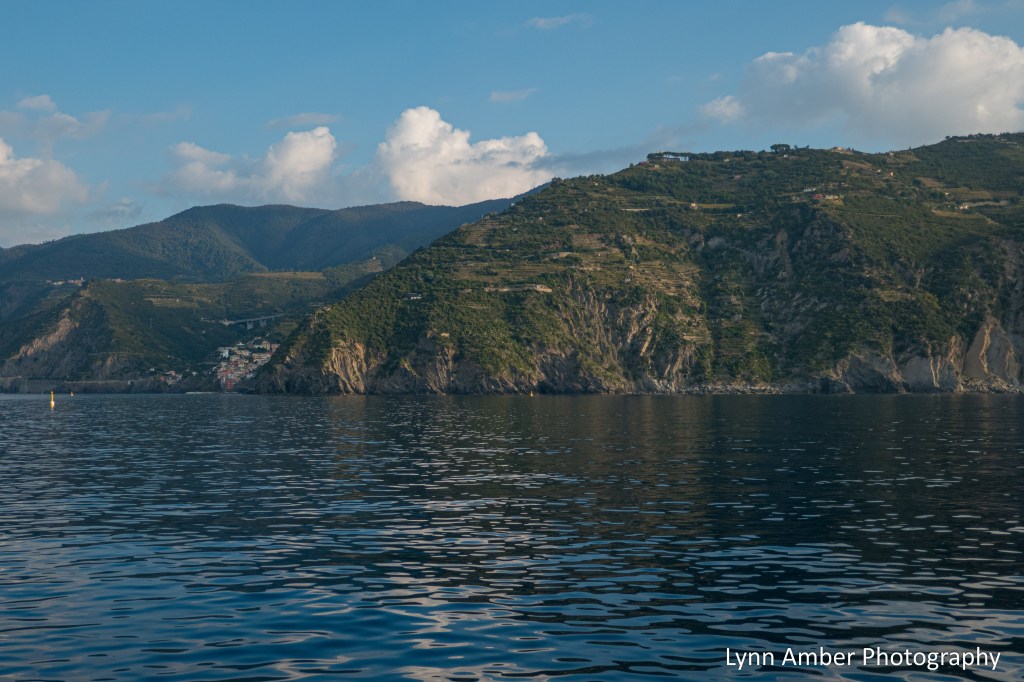
The ferry ride to Monterosso is about an hour long and we would be making one stop along the way to drop off and pick up passengers in Riomaggiore – the first village we come to on the coast. We will be back here on foot at the end of the day to catch the ferry back to Porto Venere.

Riomaggiore is one of the easiest villages to dock the ferry since they built a barrier to create a calm breakwater area between the shore and the sea. In some of the other villages, when the sea is rough the ferry cannot dock. Leaving Riomaggiore, we continued up the coast and passed by the village of Manarola.
In the photograph below, you can see Manarola in the bottom right hand corner. On the ridge up and to the left is Manarola’s sister village, Volastra. Each village along the Cinque Terre has a sister village up on higher ground. These villages had a reciprocal relationship – helping each other out with goods and services during a time when the villages were more isolated without roads or public transportation. In a couple of days, we would be hiking from Manarola to Corniglia via Volastra.
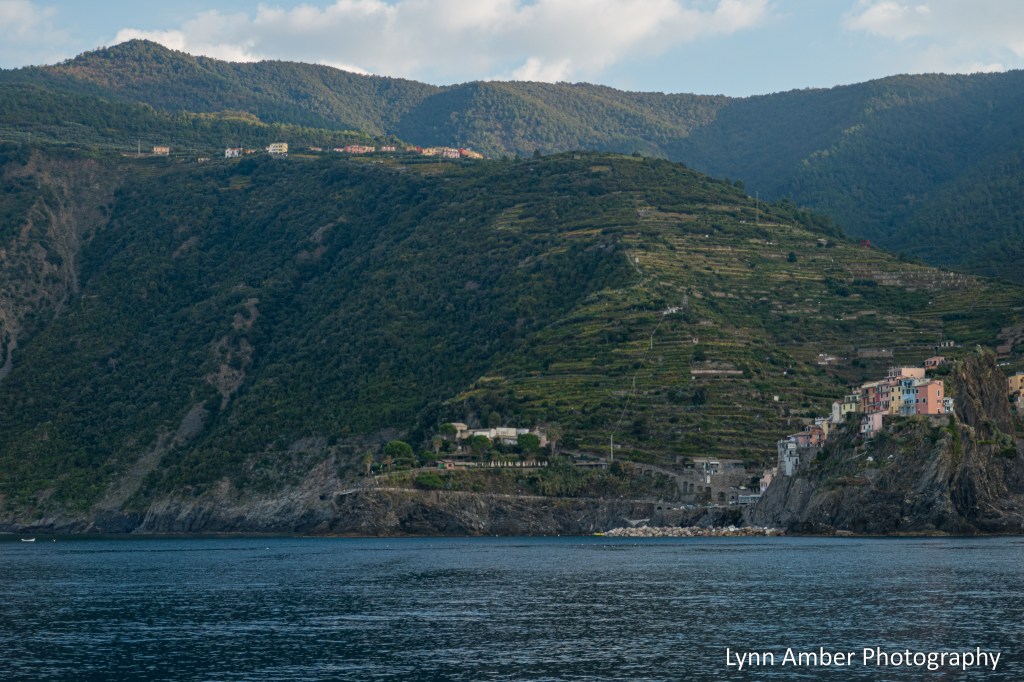

The next village we passed on our boat ride north is the tiny hamlet of Corniglia. Corniglia is the smallest and least visited village along the Cinque Terre and is the only village that is not directly on the water. One of the things that contributes to it being less travelled is the accessibility of the train station. It sits below the village and demands a descent or ascent of 385 steps depending on whether you are leaving or arriving by train.
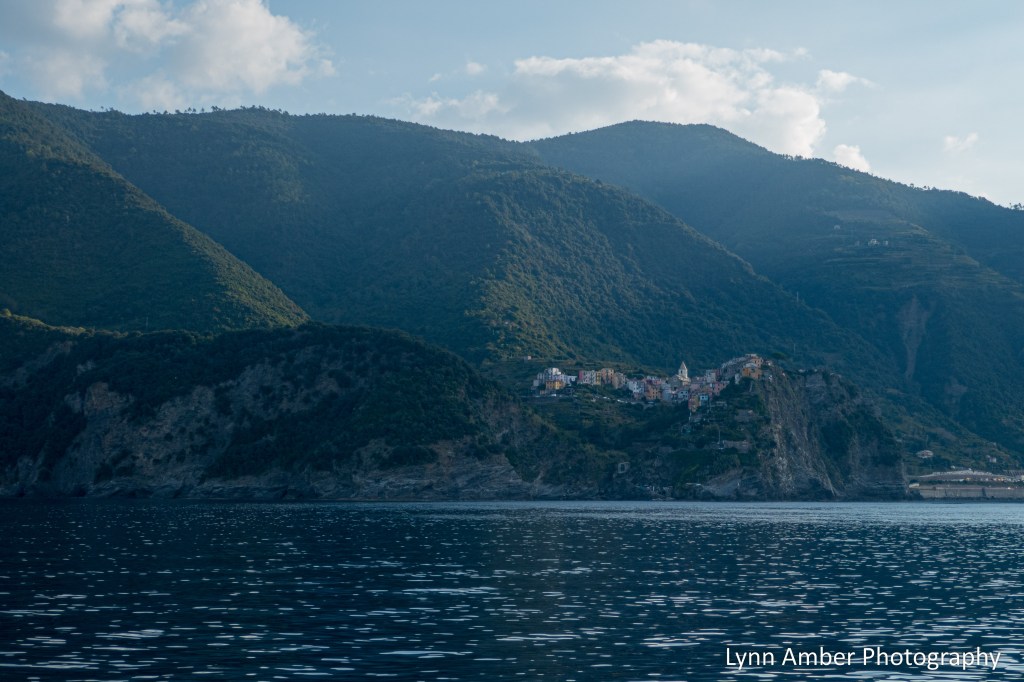
Moving north we can barely see the buildings that comprise the town of Vernazza. This would be our hiking destination today via the trail from Monterosso. The harbor is very protected and secluded from the sea. It is one the prettiest villages and we will get a better view of the busy harbor area from our walk.
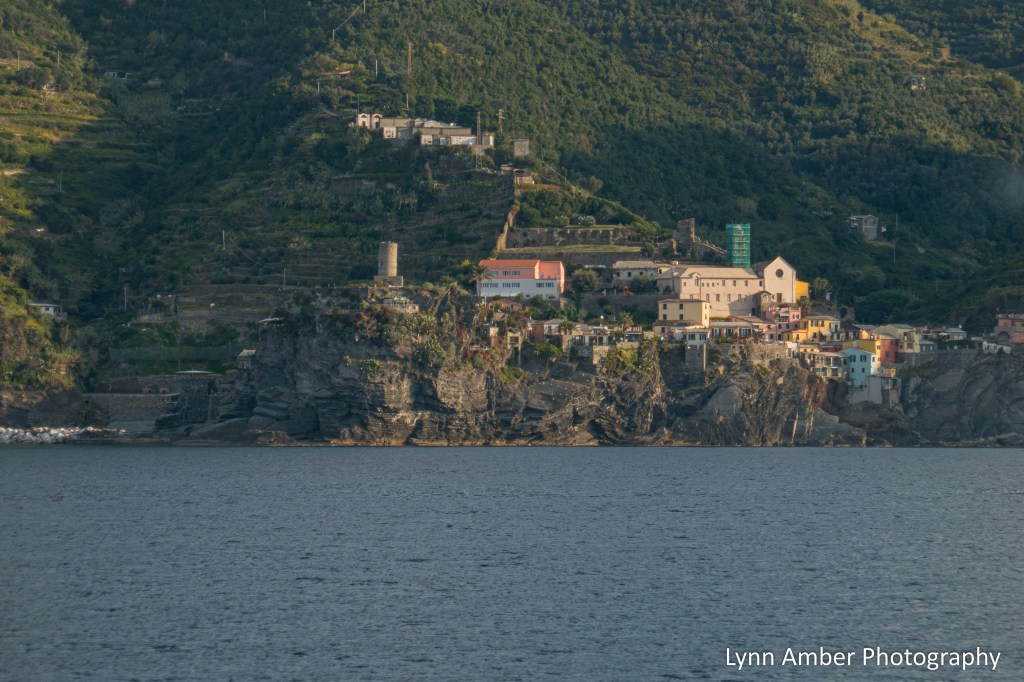
And, finally, a short distance from Vernazza is the busy town of Monterosso. Possibly the liveliest of the five towns, Monterosso al Mare has two sections – a new town and an old town. It also does have some flat seaside beaches. The ferry docked and we disembarked. We had some time before our hiking guide Boris would arrive to start our walk. He lives in Genova and travels each day to meet us. His train was delayed this morning. So, we wandered around the old town area for a spell and made sure to hit the public restrooms before we departed on the hike. Public restrooms are more abundant in Europe, often have an attendant present and cost around one euro to use. Always be sure to have some coins with you when you travel! The alternative is to enjoy a meal or snack at a local cafe or restaurant which then entitles you to use their restroom. This also contributes to the local economy!


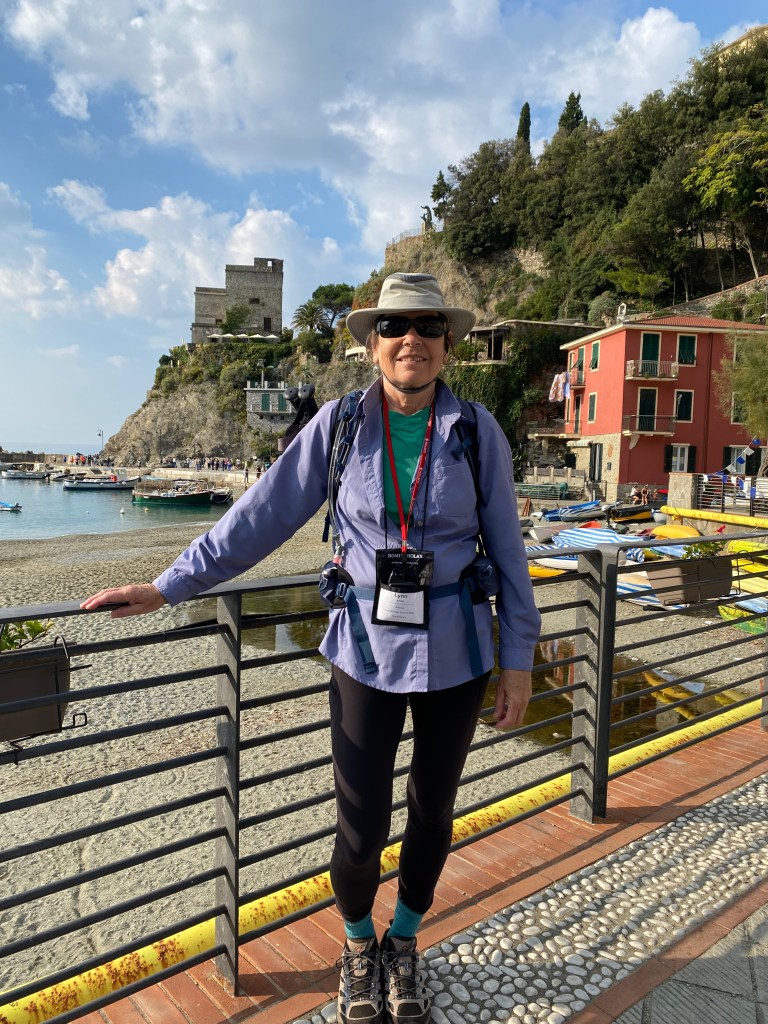
The town was crowded with people but we managed to walk some of the narrow side streets and visit one of the churches.
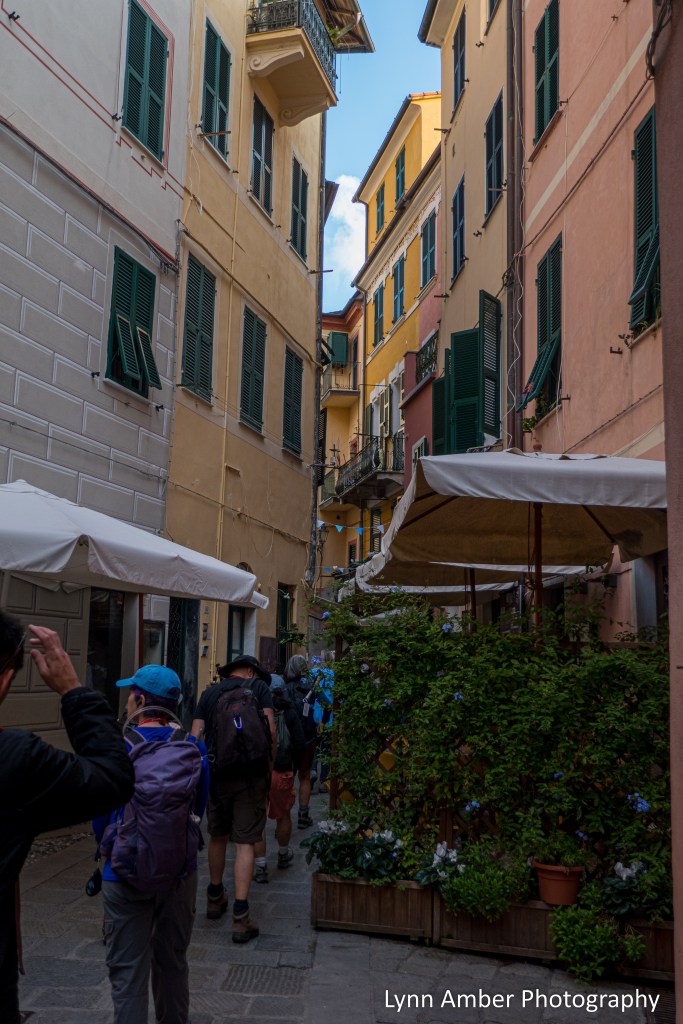

The Church of Saint John the Baptist was of the same architectural type as we’ve seen in Porto Venere – with the black and white façade.


Love the potted flowers and, of course, I’ve been smitten with shutters and ancient doorways ever since my Camino in Southern France!


There was a cute artsy wall near the public bathrooms and I just had to take a photo! Octopus are common in the waters off the coast of the Cinque Terre.

Well, Boris finally arrived and it was time to start our hike. Today’s hike would be more challenging than yesterday’s jaunt around Palmaria Island. Boris and Leonardo rated our hike today as moderately challenging. We would be hiking about 2.5 miles – which does not seem like much – but the initial ascent involved a steep climb with 700+ stone steps. Our total elevation gain/loss today would be 1200′. We would encounter terrain that alternated between steps, cobblestones, dirt and rocks and, at times, it would be a narrow trail. Toward the conclusion of our hike, the descent into Vernazza would be steep with many more rocky steps!
Our guides were very organized. Boris always led the way and provided commentary on the history and culture of the area via those handy wireless transmitter/receiver communication devices. Leonardo always brought up the rear helping those in the group who had a slower pace. The hike started off fairly tame with a promenade high on the cliff above the sea. After climbing the 700+ rock steps, we had a stretch of tame ups and downs before our ultimate steep downhill into Vernazza. It was a breathtaking hike along the coast with dramatic views of the Ligurian Sea.


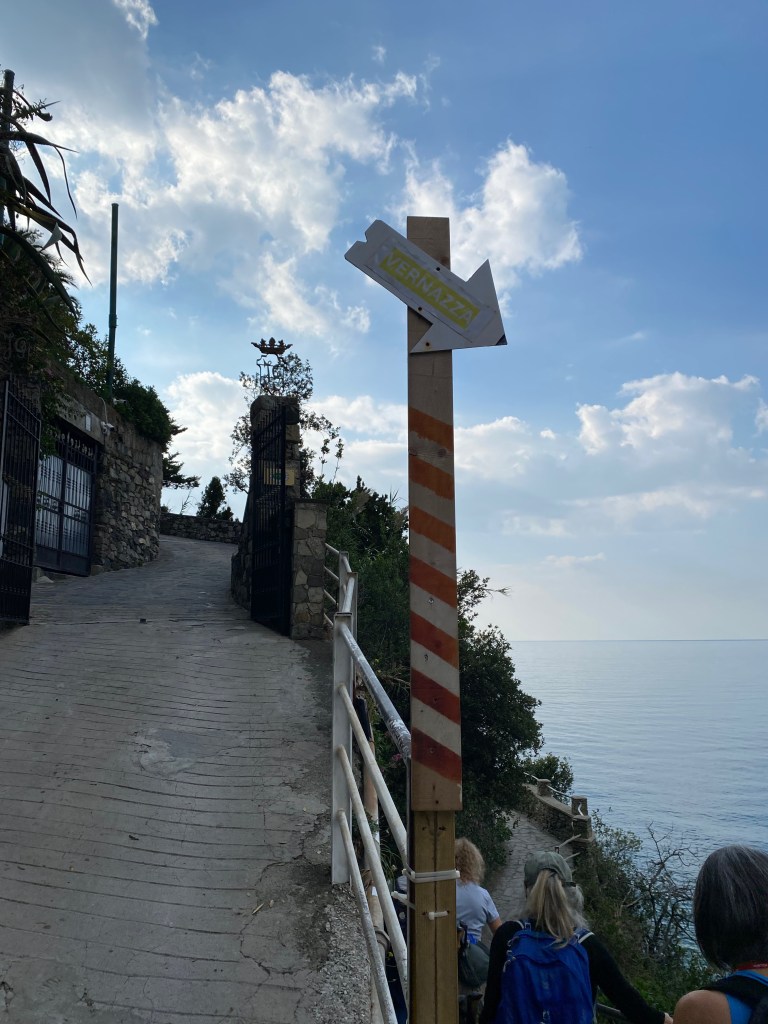

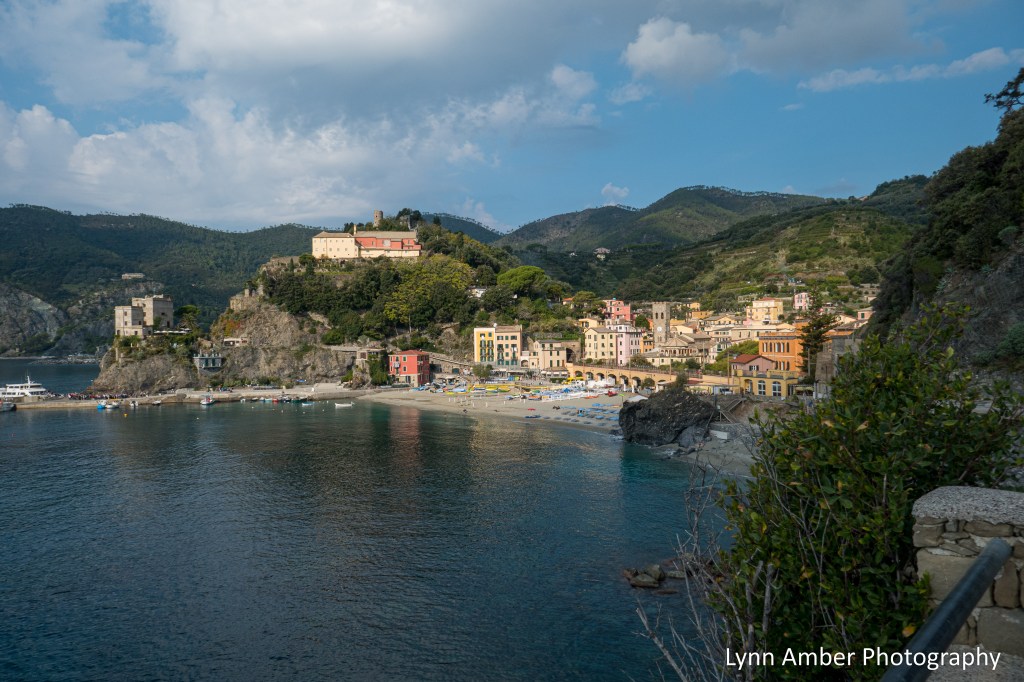

I only managed to grab one photo that represents the steep stairs that we climbed. Multiply this by about 35 and it gives you an idea of the initial ascent.

The pace that Boris set for the group was just right and most of the group adapted well to this pace. We stopped at strategic spots along the way for breaks – usually places with enough room for us to get off the trail and not block other hikers or places of interest.
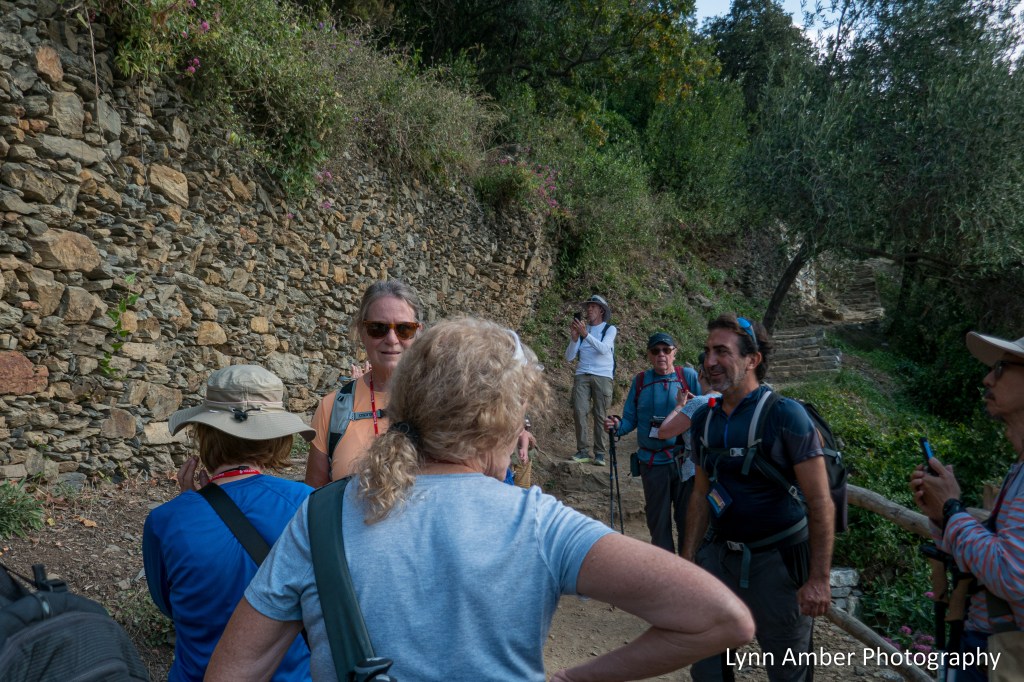
Above, Boris is explaining the history of the stone walls that were built to terrace the hillside. These walls were tall and built to created level areas for vineyards, gardens and olive trees.
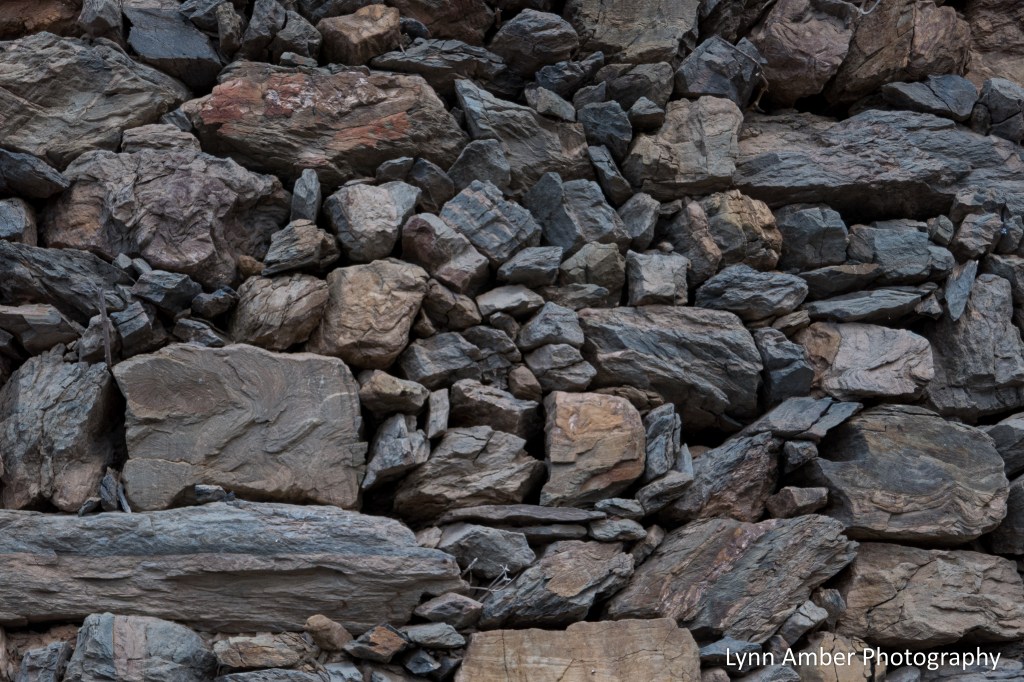
Many of the trails we were walking on were the ancient paths used by the farmers to move about this difficult landscape. In the photograph below, the stone “steps” worked into the wall were used by locals to move from one level to the next. All the labor of transporting the grapes and harvest was done by hand.

In much of the area we walked through, the terraces were overgrown and the walls were in a state of disrepair. When public transportation came to the area in the way of rail and road, the local population had more access to the larger towns like La Spezia and their way of life shifted. The tough life of subsistence agriculture was abandoned and many of the farms became overgrown. When the area was designated a national park in 1999 as a means to protect the cultural and historical aspects of the area, the work began to restore many of the walls and abandoned buildings. Below, one such restoration project is underway by the national park. The stone used for the construction project arrives on scene in large plastic “bags” suspended from helicopters!
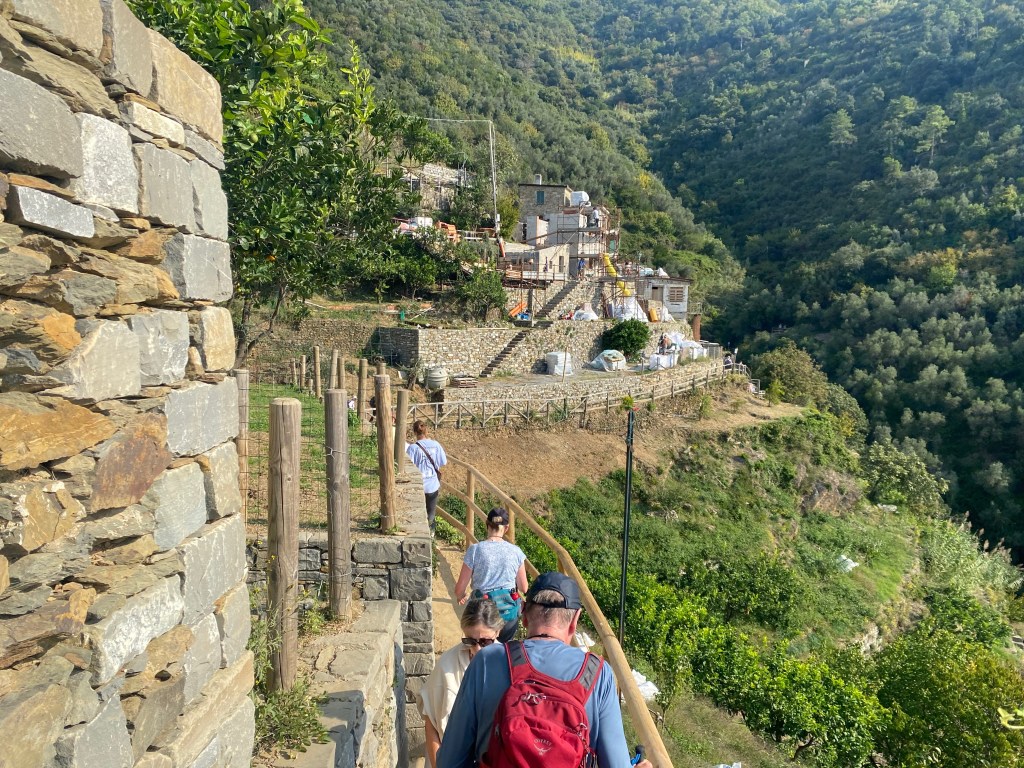
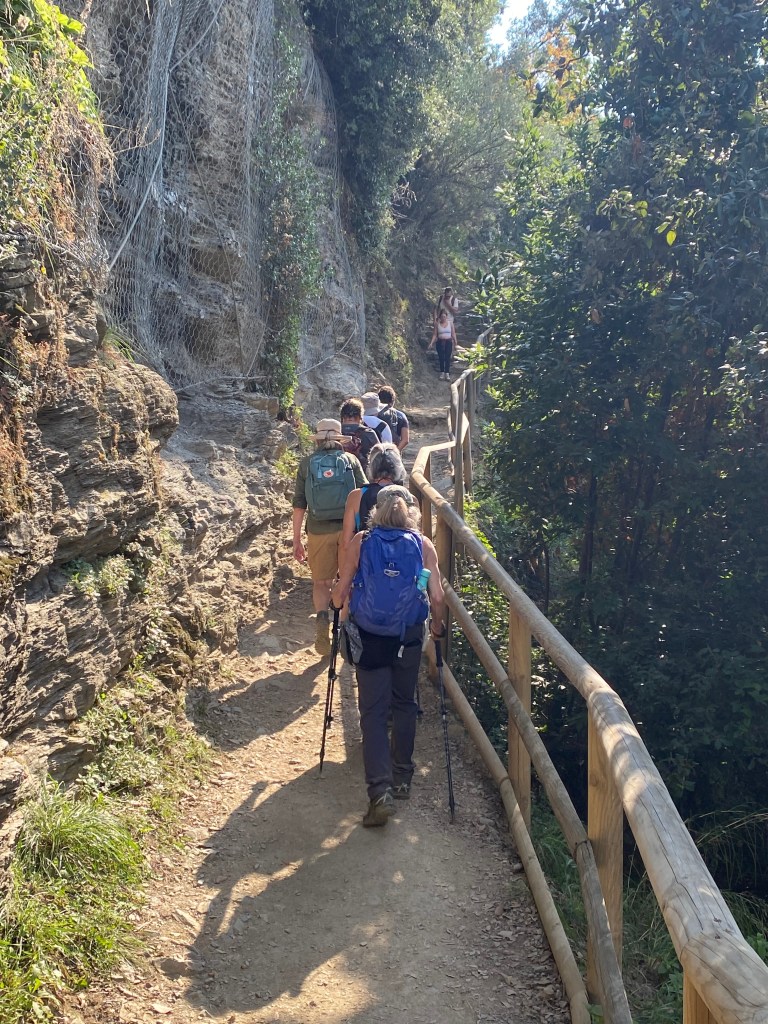
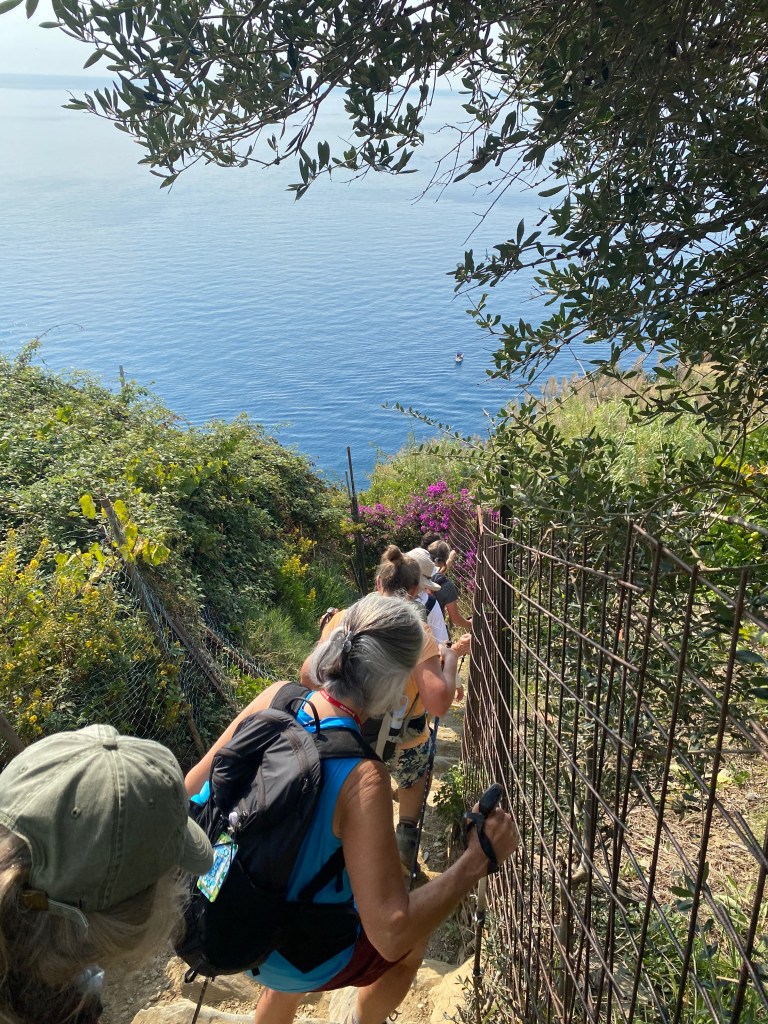
Some more hiking photographs:
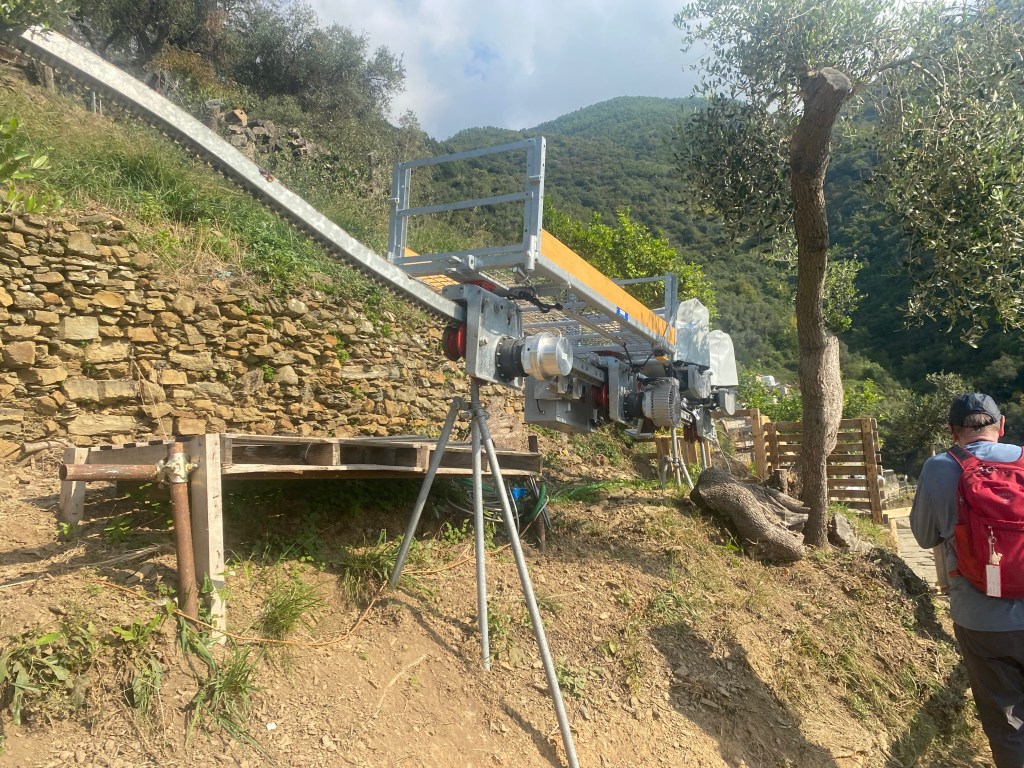
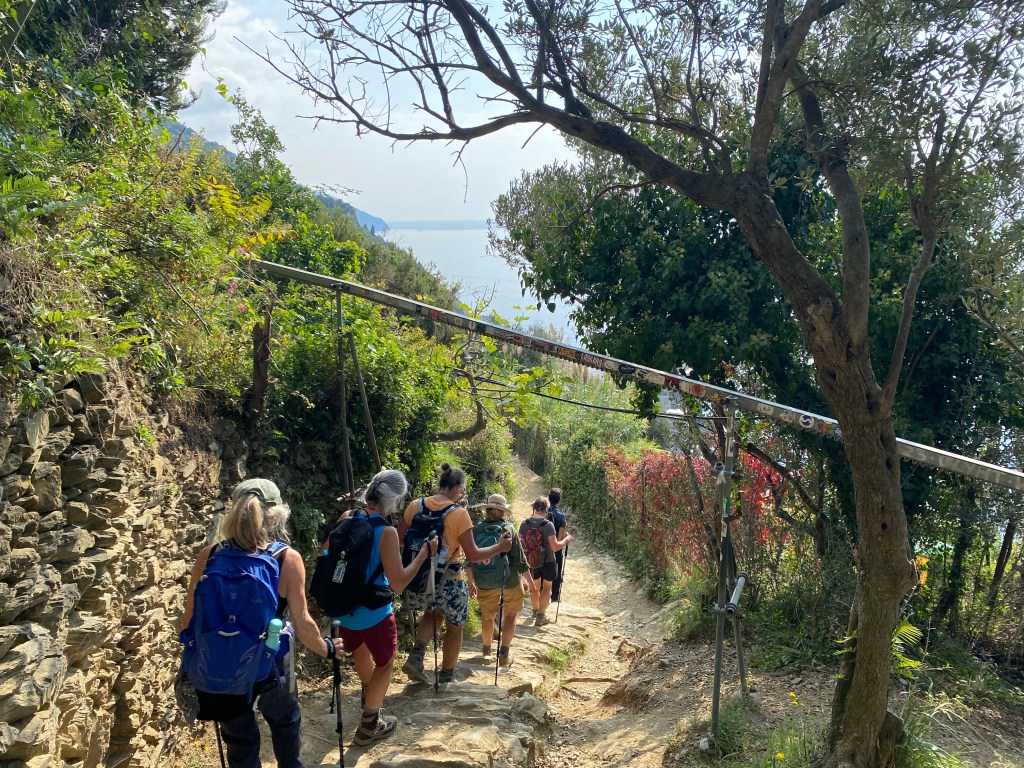
We kept coming across this interesting “rail” system that criss-crossed the trail. In an effort to modernize the harvest of the grapes, this system was developed to transport grapes. Much easier than moving the harvest by foot!
Boris has been leading groups on this trail for 13 years and has designed “hiking breaks” that also serve as scenic overlooks. As we rounded a corner where we finally got a peek of Vernazza, the view was incredibly picturesque. The picture illustrates perfectly the reason why the view of Vernazza and its harbor from the ferry is obscured.

Heading down into Vernazza:
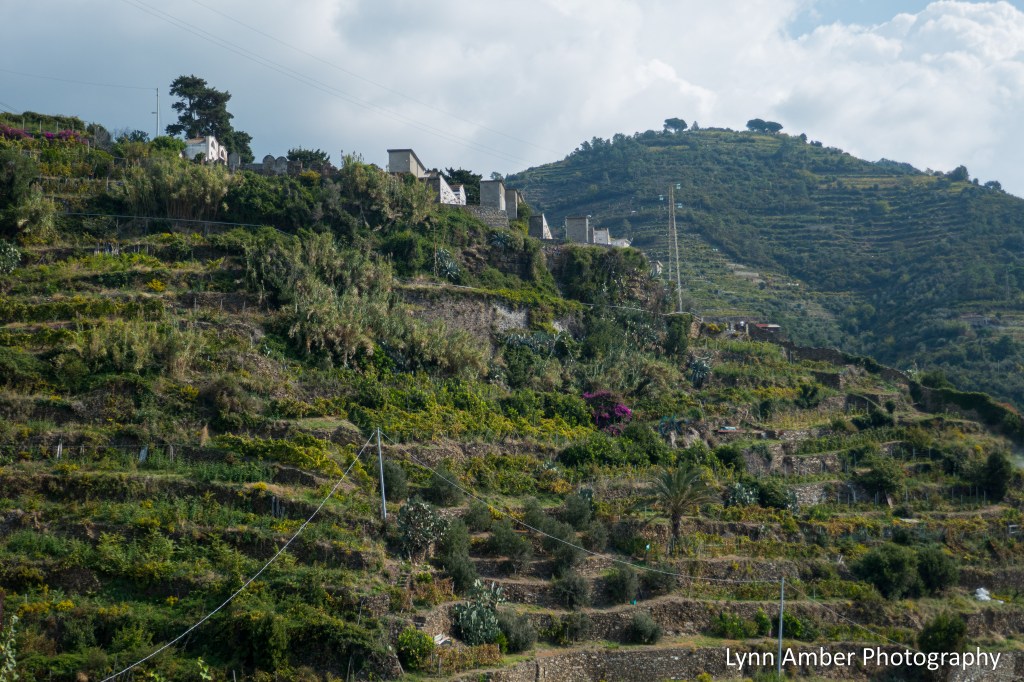
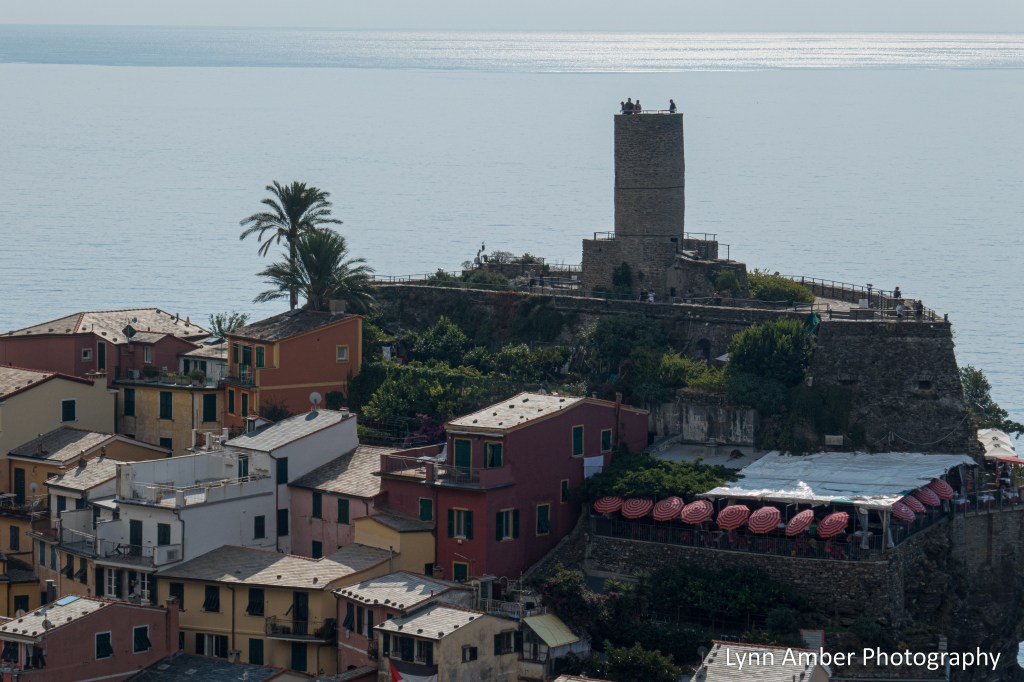

As we dropped down into Vernazza, there were some great opportunities for photographs!
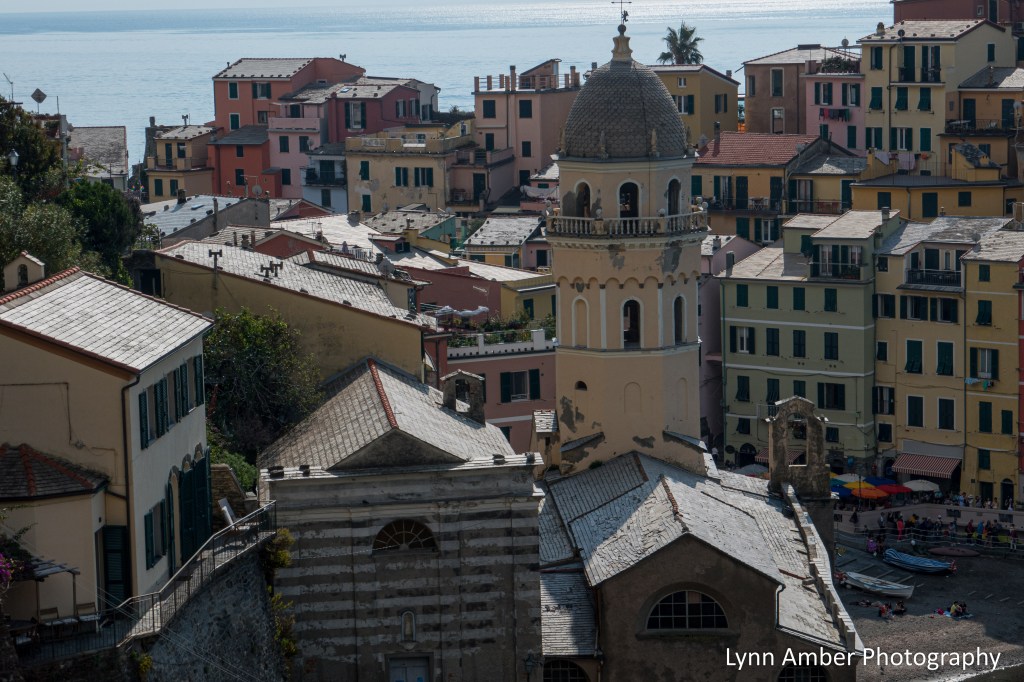

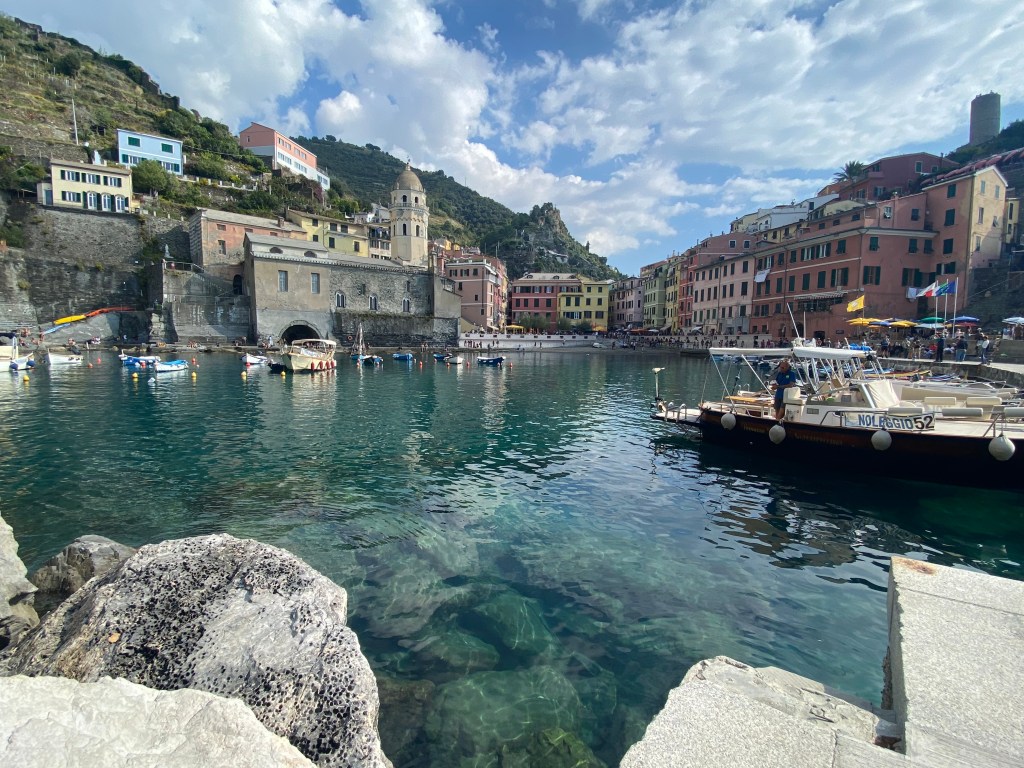
The boats above represent the traditional boats used for fishing and transporting of goods. Gozzos were small wooden boats mostly used for fishing. Leudos were somewhat larger boats used for transporting goods such as barrels of wine. The boats were small because there were no harbors back in the day. Boats had to be lowered down into the water via a “crane-like” device. Today, many of these reproductions of the traditional boats are used for tours.

Once we got to Vernazza, we were on our own for exploring and eating lunch. I joined a couple of fun ladies from Washington State for lunch and a walk-about. We grabbed some foccacia to-go, a nice cold beer and headed to the harbor to eat alongside the water. It was a glorious, sunny day with good company. I am thankful for these two best friends from the west coast for “adopting” me and letting me hang out with them today!
The province of Liguria is famous for its unique version of foccacia. The word comes from the Latin focacias translating to “hearth bread” and – let me tell you – it’s nothing like the foccacia here in the states. Here in Liguria, it is mouth-watering good with many scrumptious embellishments. I became obsessed with sampling it in various places throughout the week!

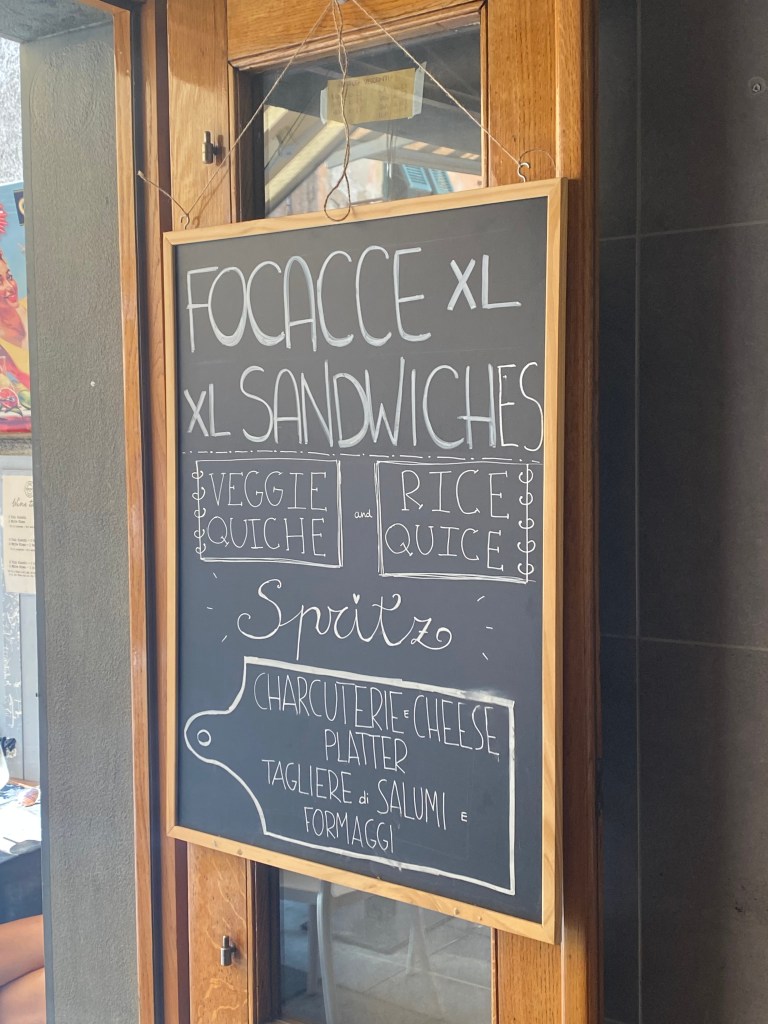
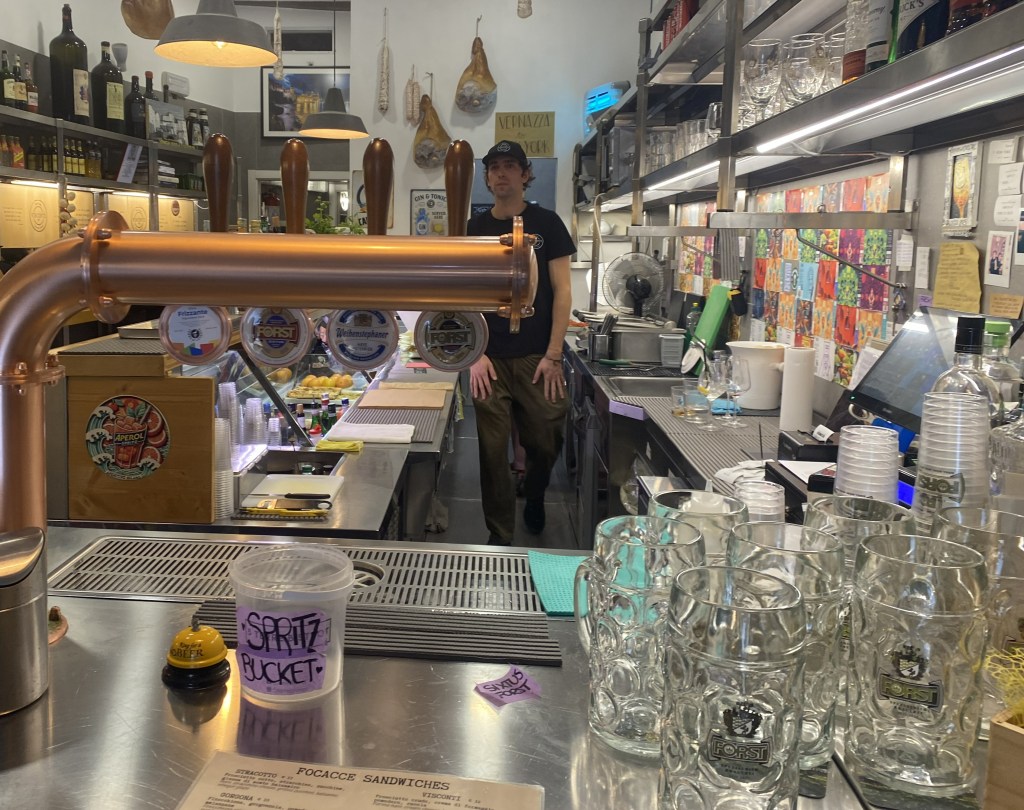
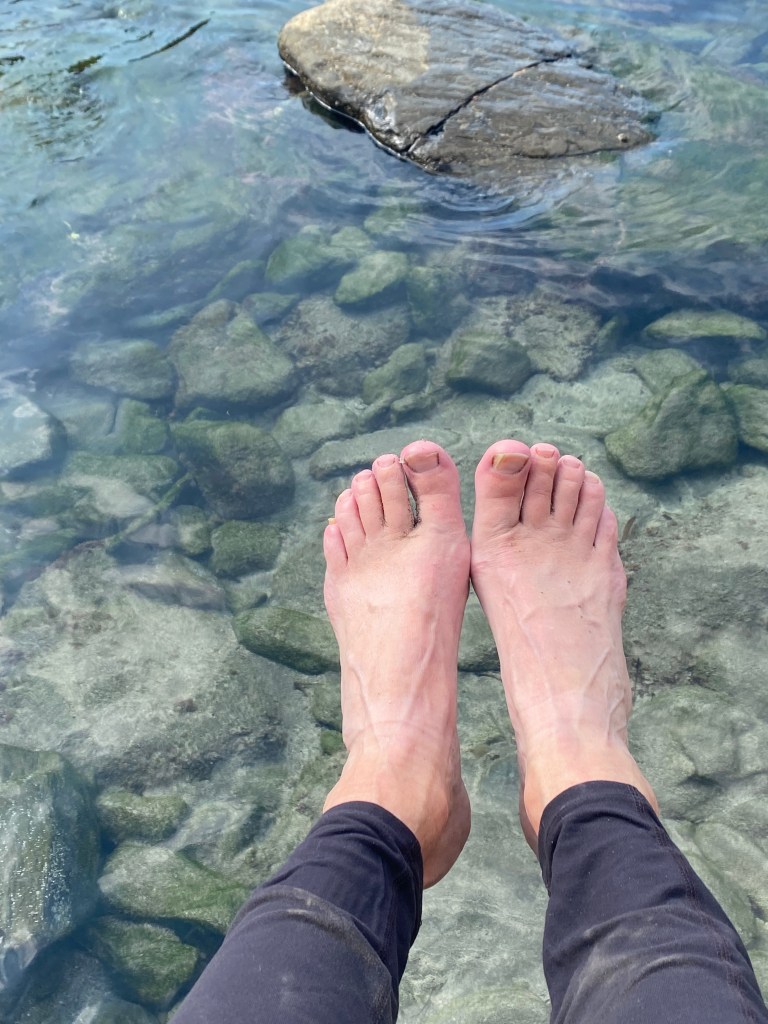
We sat on a wall above the water and ate our lunch in total bliss! I could not resist taking my boots off and dipping my hot, sweaty feet in the water.

We strolled around the harbor after lunch and it was the most photogenic area! Most online pictures of Vernazza look exactly like the ones I snapped! Colorful and lively!
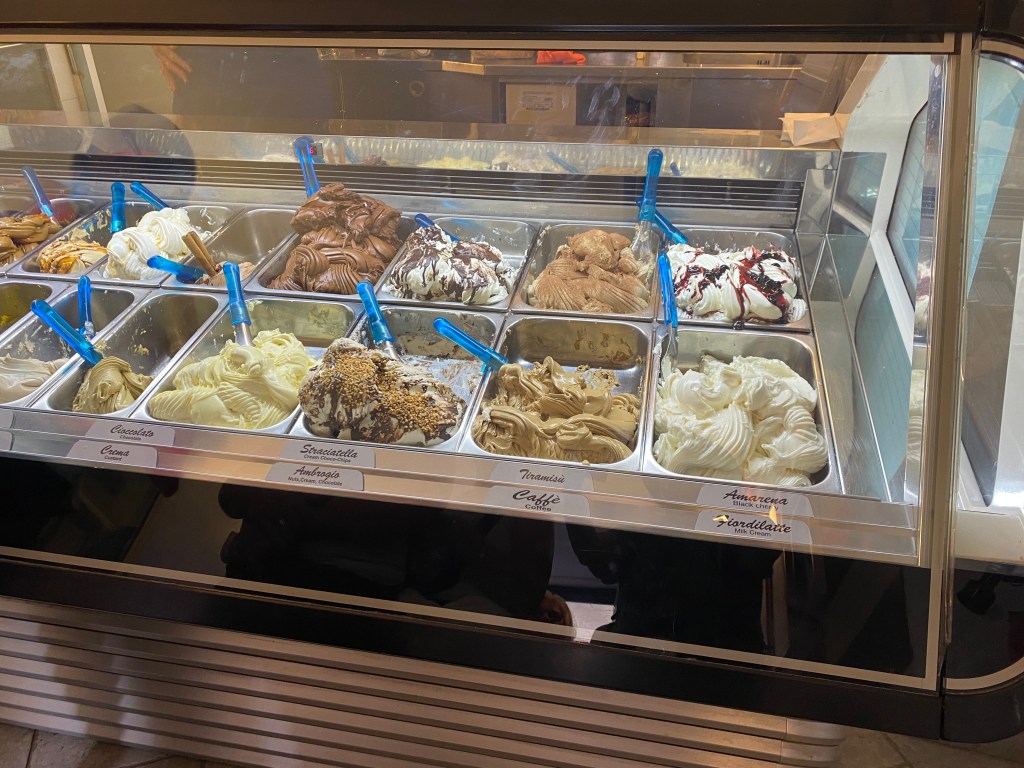
We had some time before our rendezvous with the rest of the group so we stopped by – what else! – a gelato shop!!
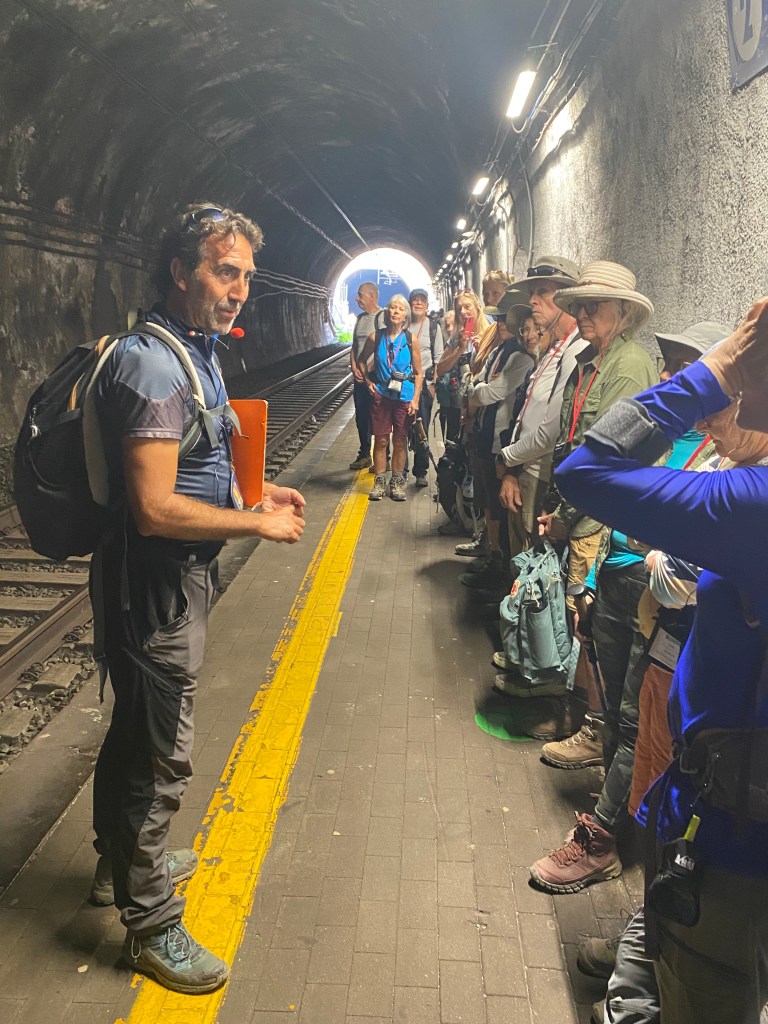
It was time to connect with the group and head to the train station that would transport us down the line to Riomaggiore. Boris lined us up along the tracks and gave us a pretty good lecture about guarding our belongings against pickpockets while on the train and when loading and unloading.
The train ride to Riomaggiore was short and the train was very crowded. It was a bit nerve-wracking with the crowded aisles to make sure we exited the train without being left behind!! Once in Riomaggiore we had to make our way from the train terminal to the ferry docks across town.
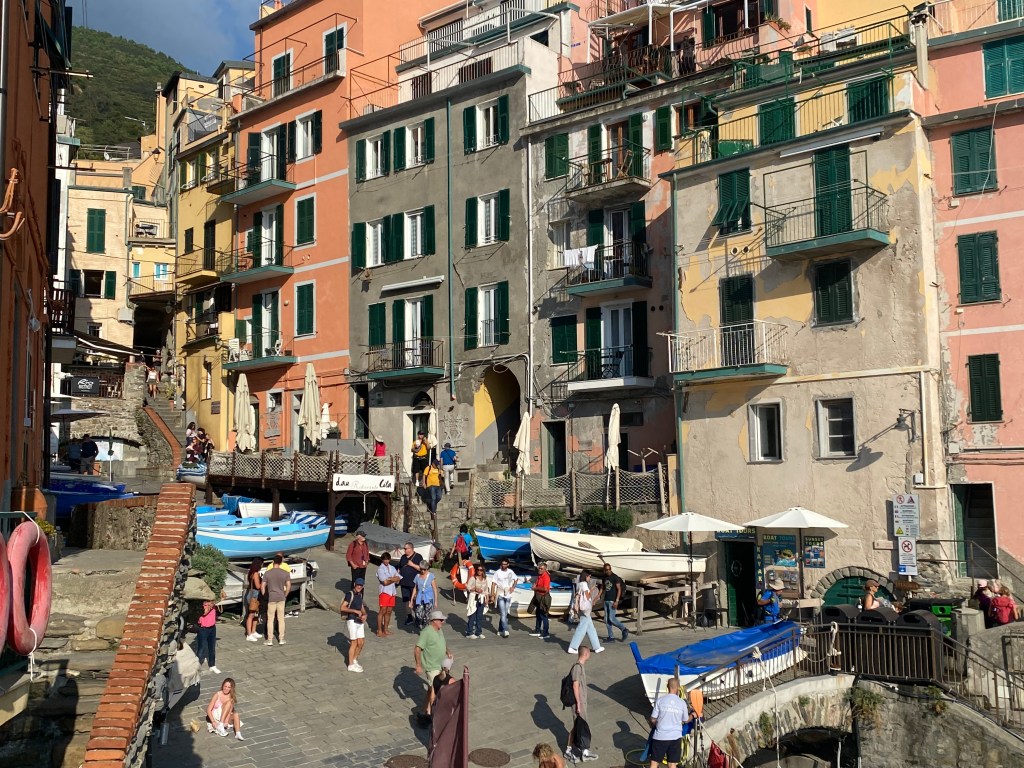

The main street in Riomaggiore is actually a “covered canal” that has a stream underneath that flows out to the sea (in the foreground of the photograph above). This is true of the main street in Vernazza as well. The town got its name from this stream called “Rio Maggiore” or “Major River.”

It was a perfect day. We arrived back at our hotel in time to freshen up and return to Porto Venere for dinner at the Ristorante La Marina. Once settled back in the hotel for the evening, I did not have any trouble falling asleep!
 Lynn Amber - Travel & Photography