Lynn Amber - Travel & Photography
sharing my thoughts through words and images
Panama Canal Cruise Day 6

February 1, 2024
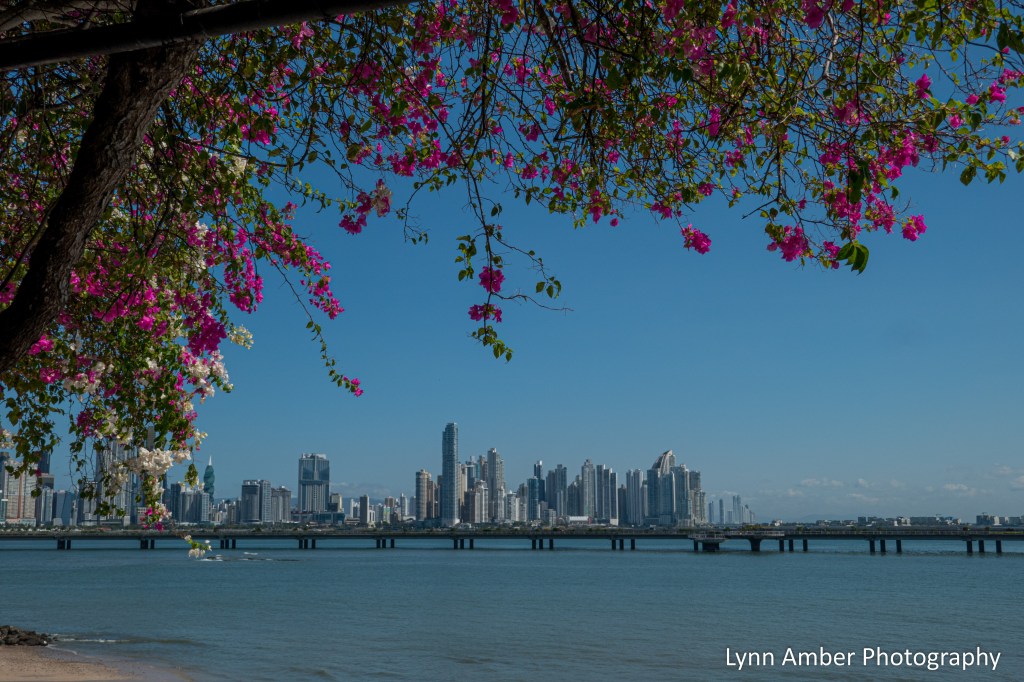
When we were coming through the canal the day before, I was surprised to see the high rise buildings of Panama City in the background. I had no idea that it was such a modern and large city.
I read that two-fifths of the population of Panama live within the metropolitan area of the city. Today, Panama City is a major financial center for both Central and South America and relies heavily on canal traffic to support its economy.
My sister and I had to meet our tour group at 7:30am in the Bliss Theater so we had breakfast in The Local as it is the most convenient spot to our stateroom. Our excursion today is titled “Highlights of Panama City” and we will spend most of the 4 hour tour in Casco Viejo (Colonial Panama City) and Panama Viejo (the original Old City).
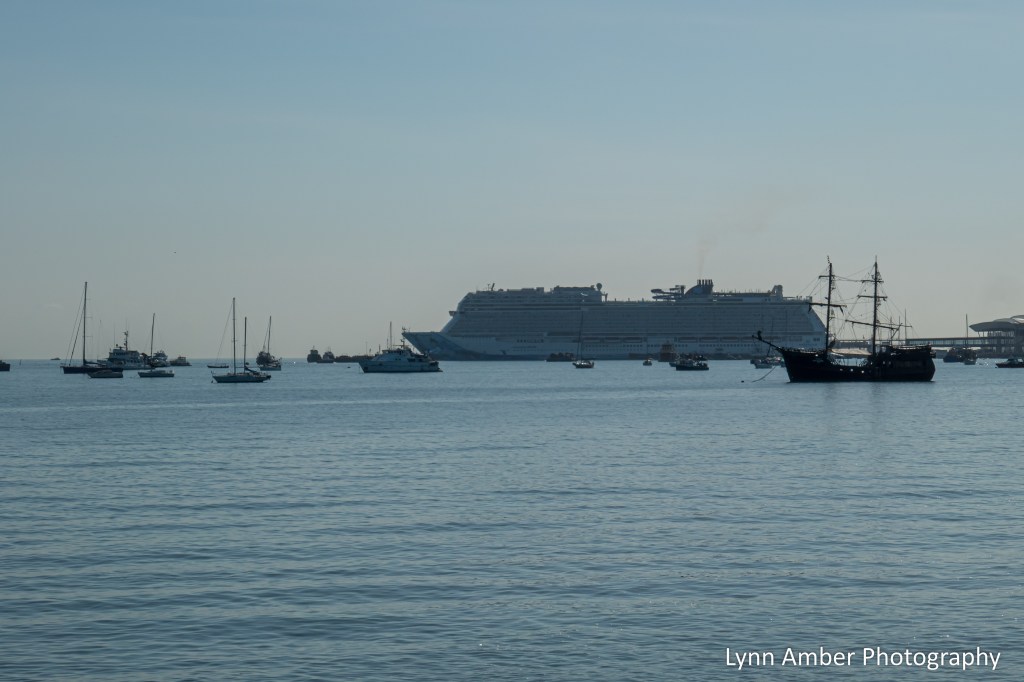
Our first stop after boarding our tour bus was a wide, tree-lined avenue that offered up fantastic views of the city skyline and the Gulf of Panama. It was a very impressive sight!

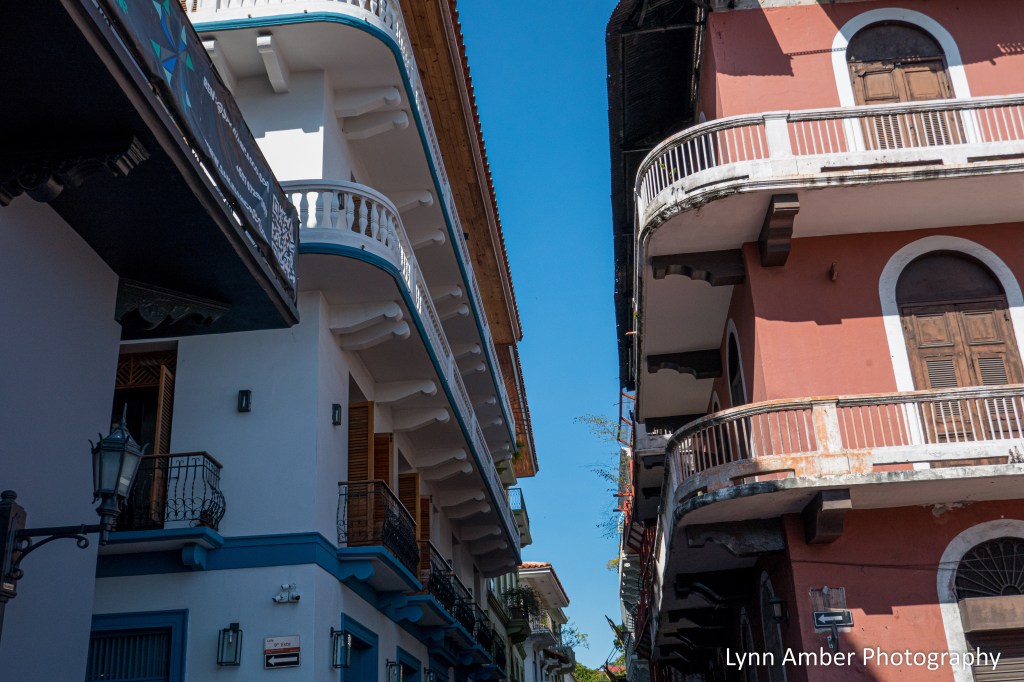
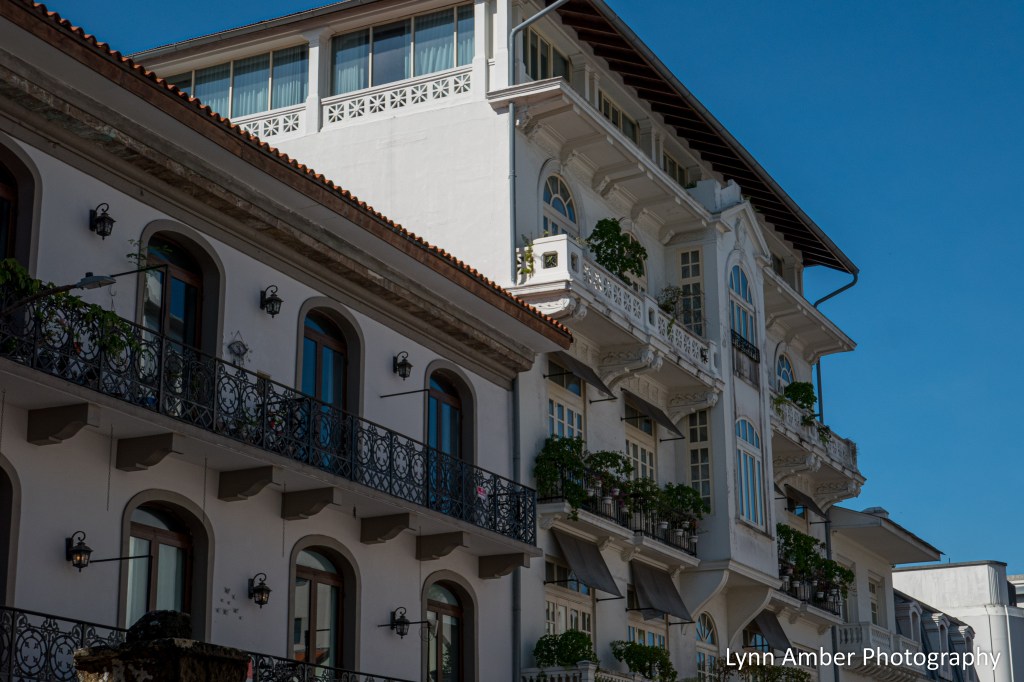
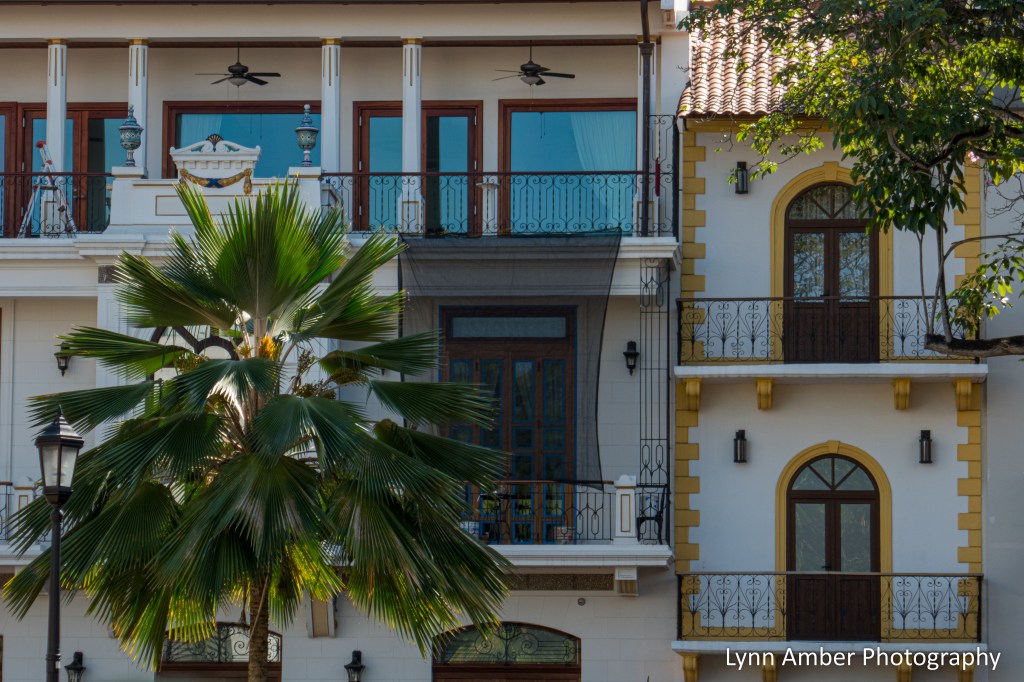
We started our day with a walking tour of Colonial Panama – Casco Viejo – Old Town – Historic District. It is known by many names! Casco Viejo was established in 1674 after the original city (Panama Viejo) was destroyed by pirates. There is a decidedly French influence in the architecture of Colonial Panama due to the French presence here during their attempt to build a canal back in the 1880’s. The beautiful French-style balconies mingle with the Spanish architecture creating a look that is very much like New Orleans.
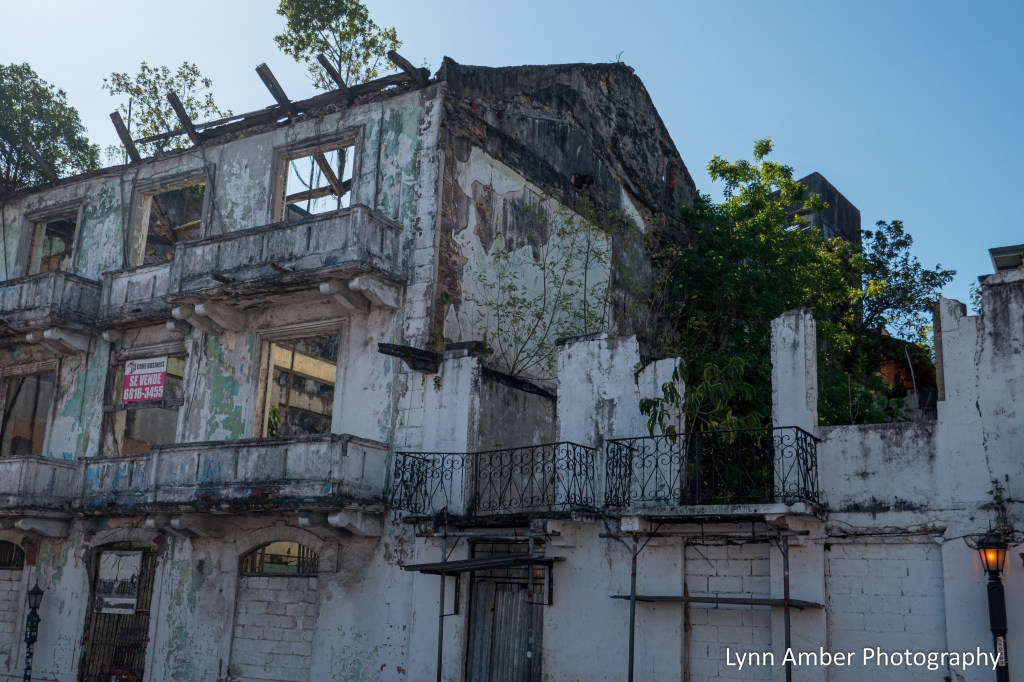
Casco Viejo had, for many years, descended into a devastating slum and many of the historic buildings were in a state of disrepair. In 1997, the walled city of Casco Viejo was awarded the distinction of being named a UNESCO World Heritage Site. Money started to pour in and it has become one of the most successful revitalization projects in Panama and the Americas in general. The French and Spanish Colonial buildings are being restored to their former glory and it has become a premier tourist destination. Today, there is still evidence of buildings in need of repair alongside remarkably renovated architectural wonders.
As we were ambling along the streets of Casco Viejo, I learned a valuable lesson! 🙂 I was taking photographs as I walked and my eye caught this whimsical frog signage. I snapped the photo and, then unbelievably, this darned fire hydrant along the sidewalk just jumped right out in front of me and down I went on the pavement! I landed on my right knee and hand but, thankfully, suffered nothing but a bruised ego. It was a wake up call to STOP walking before taking a picture and be aware of what is in front of me! 🙂

I was particularly taken with all the plant-infused and decorative balconies in this walled city. Examples below:



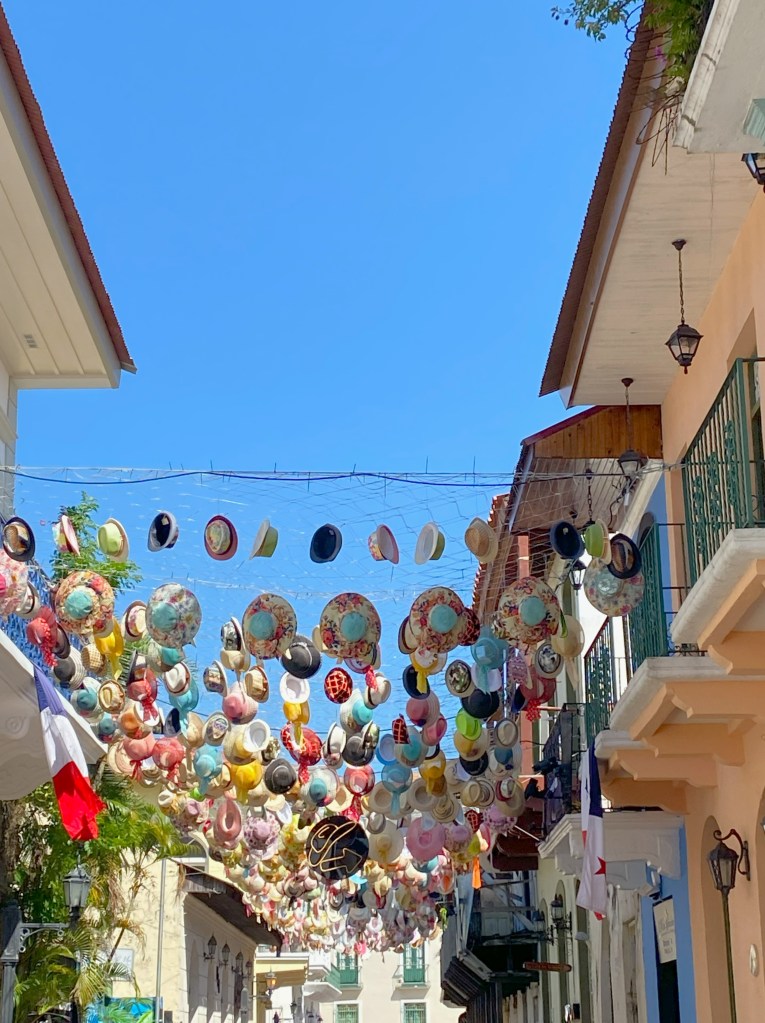

We passed by the Plaza Herrera on our way to one of the churches in the city. Tomás de Herrera was briefly the President of The Free State of the Isthmus in 1840. Panama declared independence from Columbia for a short period of time – 13 months – before rejoining Columbia until 1903.

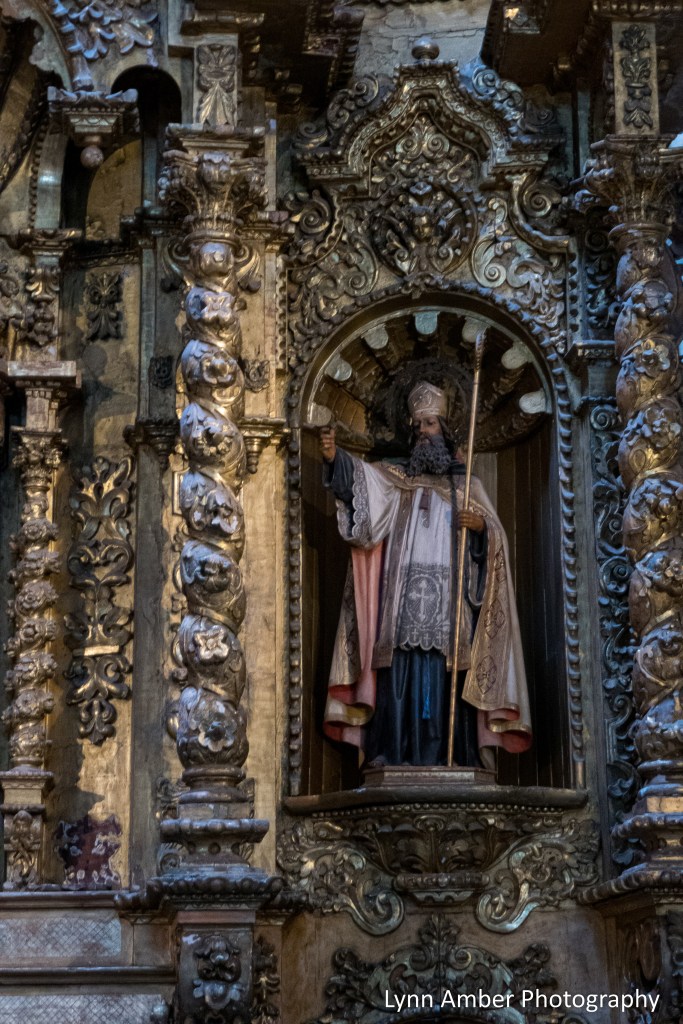
Our next stop on our tour was the famous Iglesia San Jose – Church of Saint Joseph. Built in 1673, it is known for its massive golden altar that is carved in wood and painted with gold flakes. It was reportedly salvaged from a church in Panama Viejo when pirates destroyed that Old City.

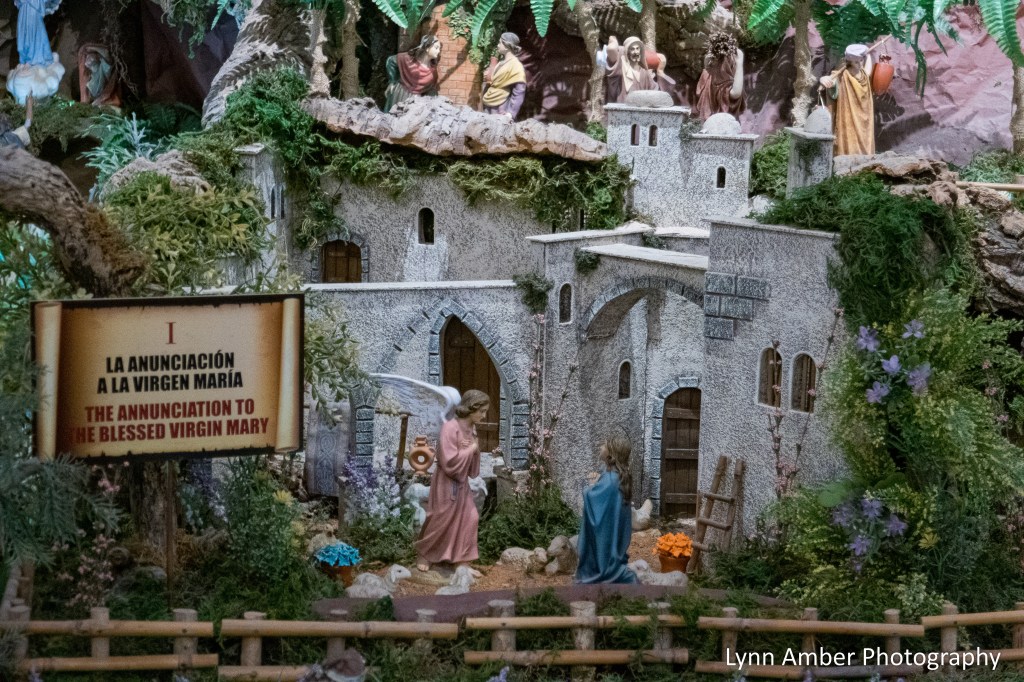
There were two other interesting attractions at the Church of Saint Joseph. In a side room off the main church, there was a beautiful, expansive nativity scene. The artistic detail in the display is impressive.
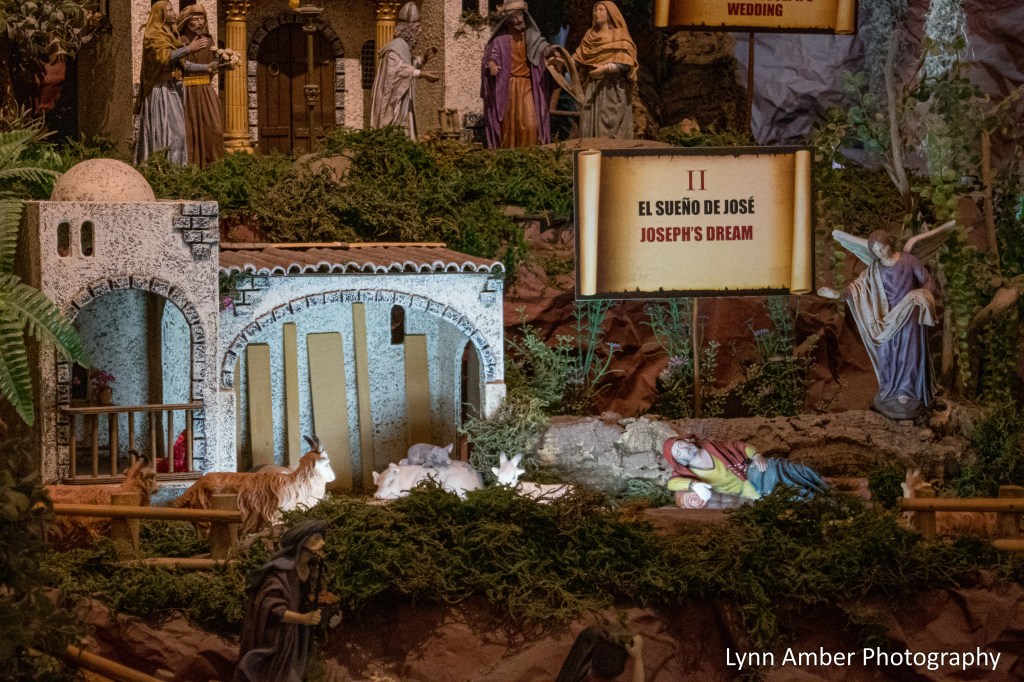
Also, in the same room, there are some wooden statues dating to the 1700’s that I read are representations of the disciples along with some other artifacts.


As we exited via the church, there was a side altar with a statue of the much-loved Saint Eduvigis or Saint Hedwig. Panamanians pray to this saint when they are faced with housing needs and seek her help. When their prayers are answered, they return to this altar and place miniature houses at her feet.


After leaving the church, our next stop was to visit some shops so we could pick up some souvenirs and use the restroom facilities. Along the same block, I was intrigued by this very old structure and took some pictures so I could research it later on. This historic landmark is the Iglesia de la Compañía de Jesús – Church of the Society of Jesus. The Jesuits are a religious order whose focus is education and missionary work. This order was originally established in the Old City in the 1500’s but later moved to Casco Viejo when the Old City was destroyed. This building dates to the 1700’s.


There have been several attempts to rebuild the ruins over the years but they never came to fruition. Most recently in 2018, the luxury hotel – Hotel La Compañía – purchased the whole block and the Panama Tourism Authority gave them the rights to the ancient ruin with the provision that they restore the building and create a public garden.


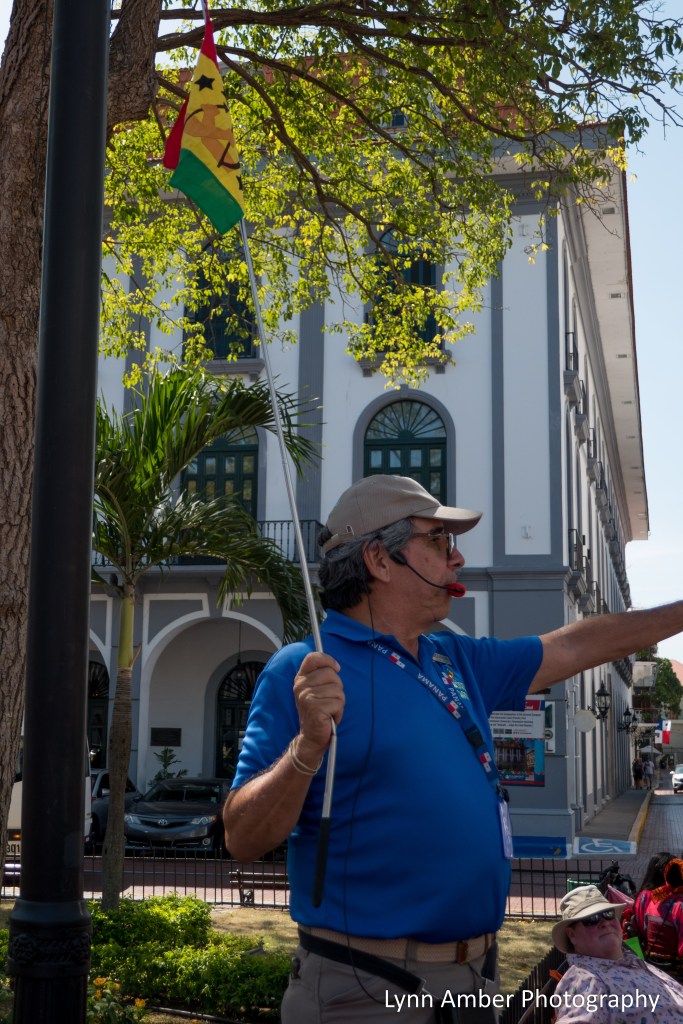
Our tour guide gave us some time to wander around on our own and pointed us in the direction of a walkway that would take us past the Plaza de Francia with a memorial to France’s role in the construction of the Panama Canal.


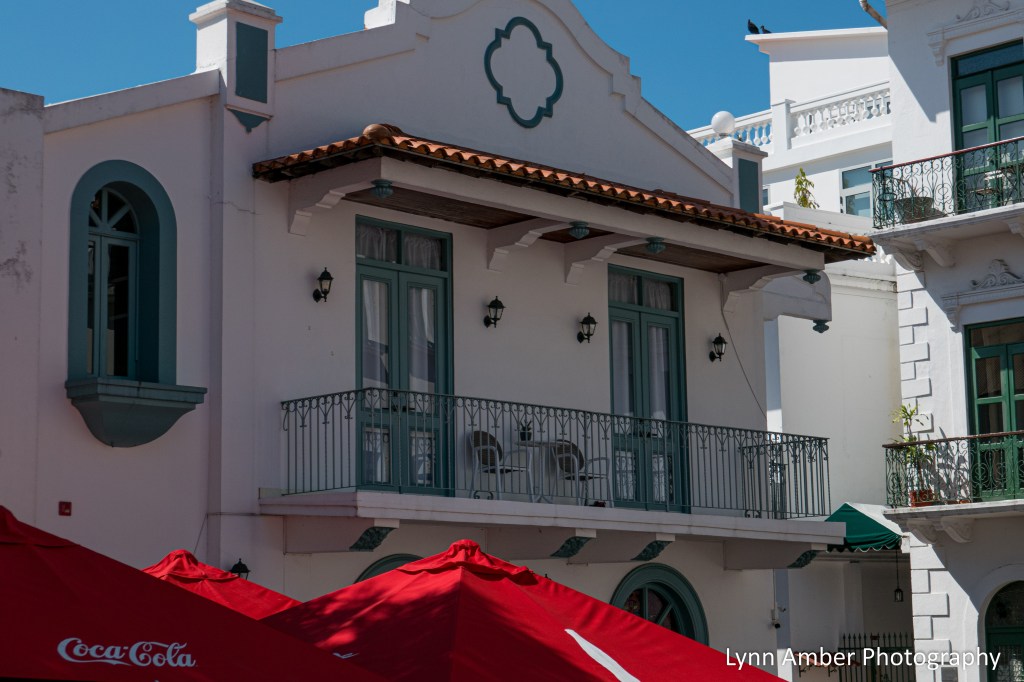

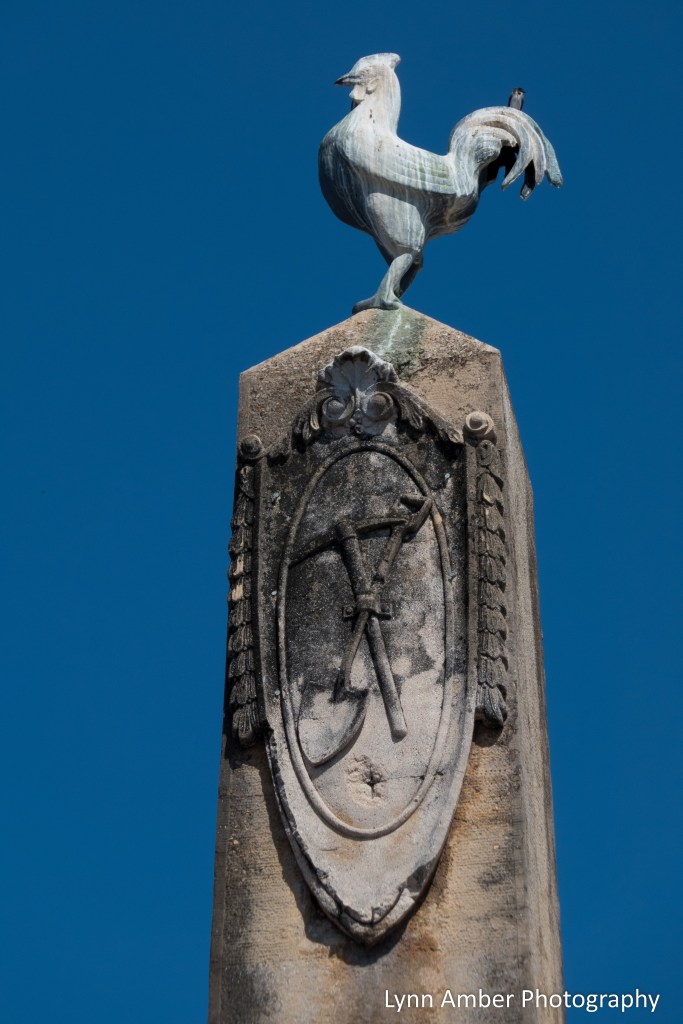

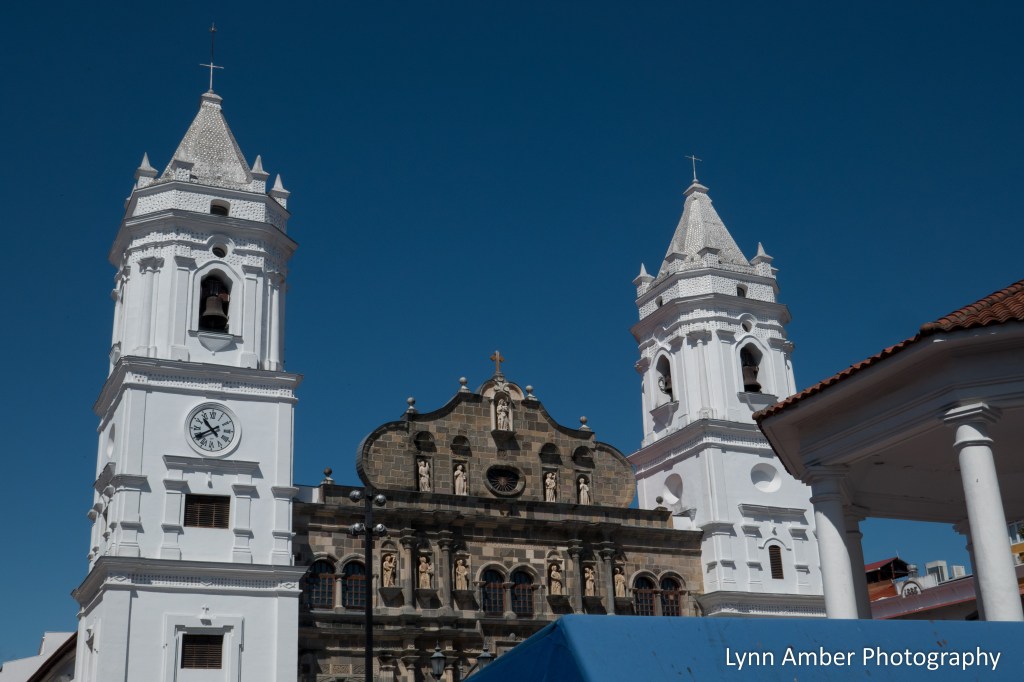
We were to rendezvous with our tour guide in Independence Square after taking our self-guided walking tour. The square is anchored by an enormous church – the Metropolitan Cathedral Basilica of Santa Maria the Ancient.

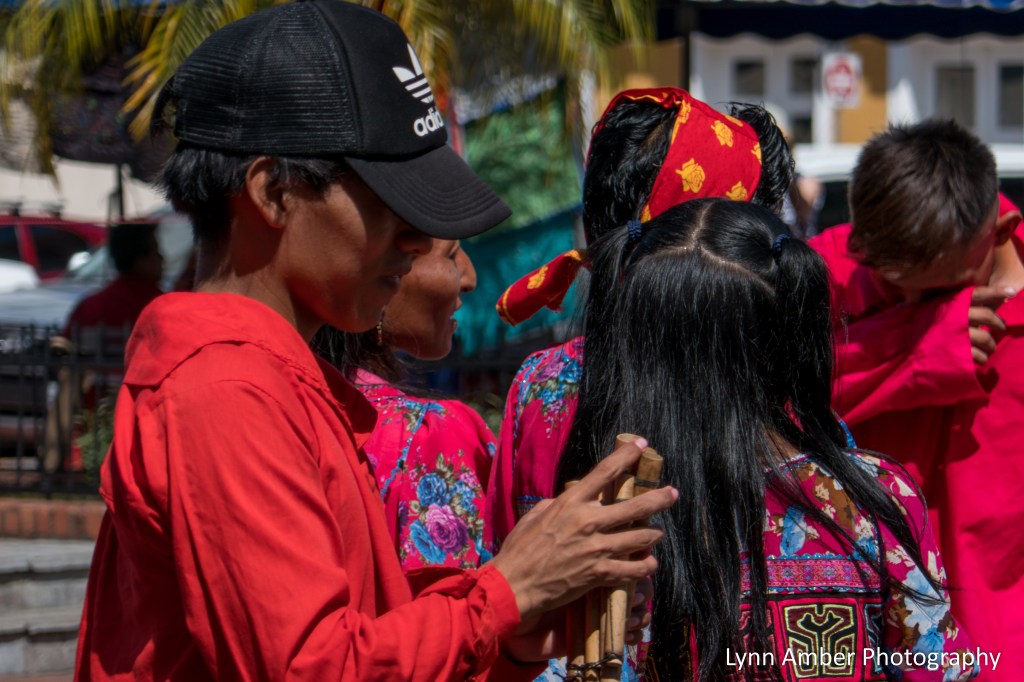
There were a group of indigenous youth who were performing a dance routine in the square and playing what looked and sounded like a type of recorder.


We left Casco Viejo and boarded the bus for a ride to the other side of the modern city and our visit to the ruins of Panama Viejo. We drove right through the heart of the “new city” – quite amazing to see these tall high rises up close.
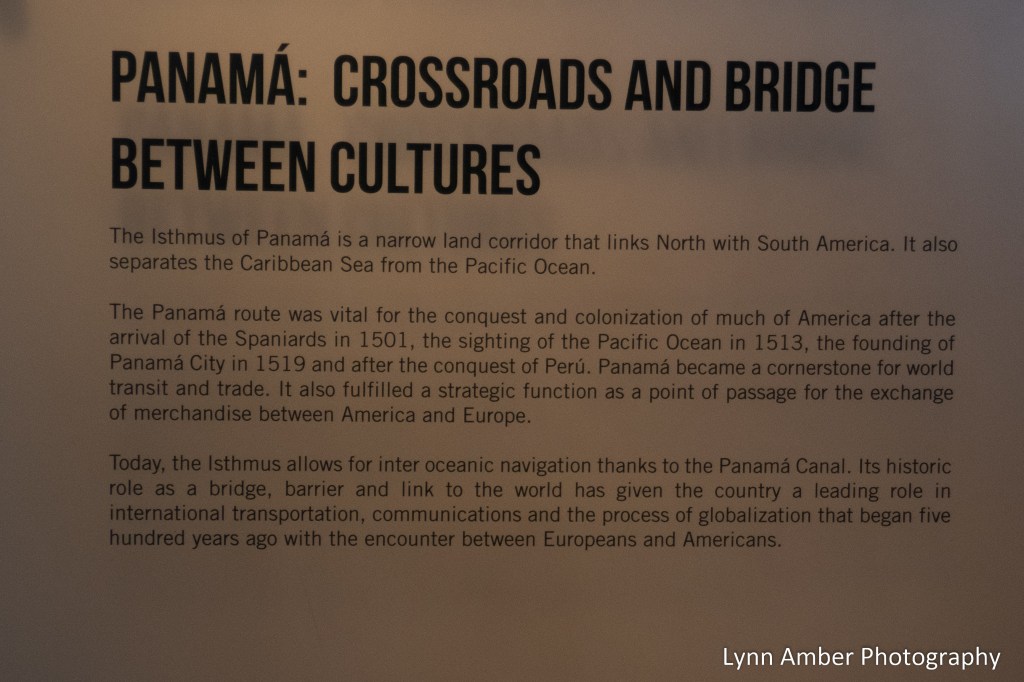
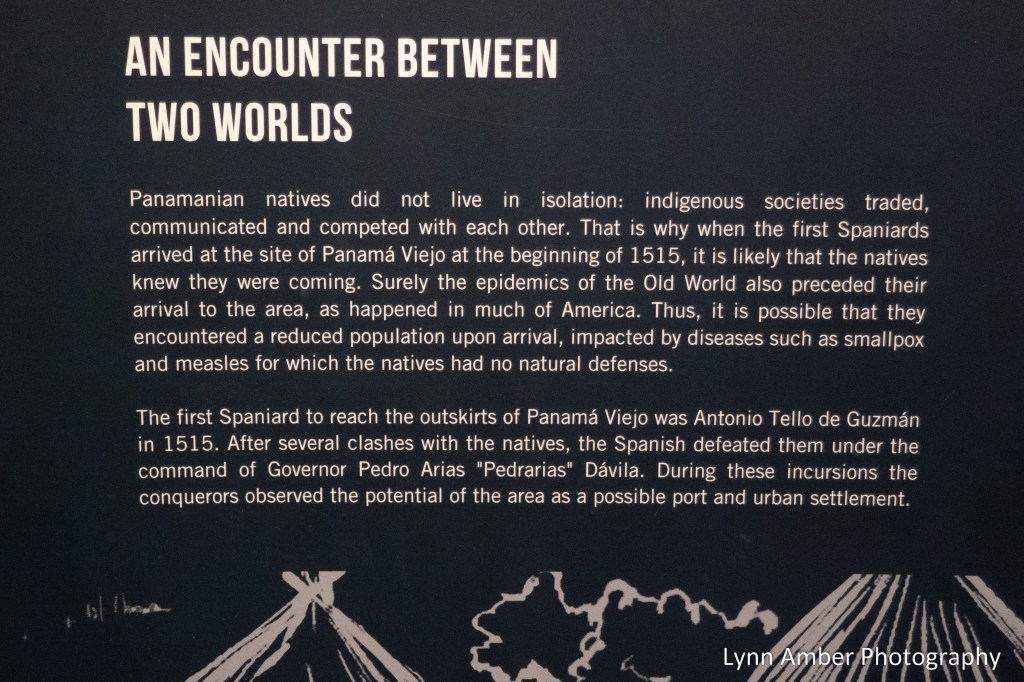
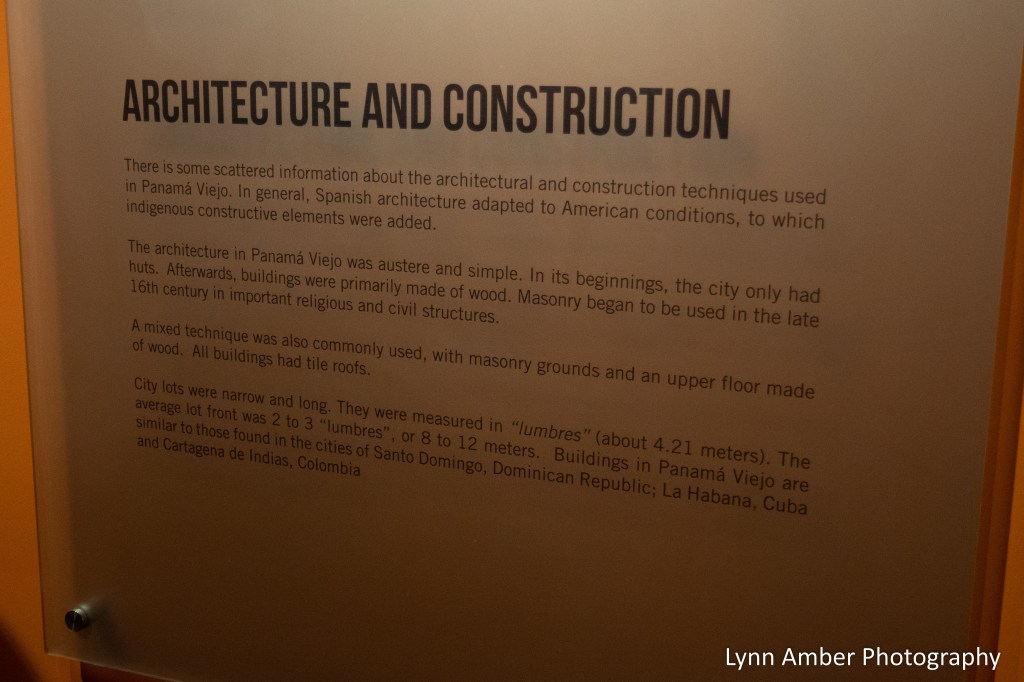
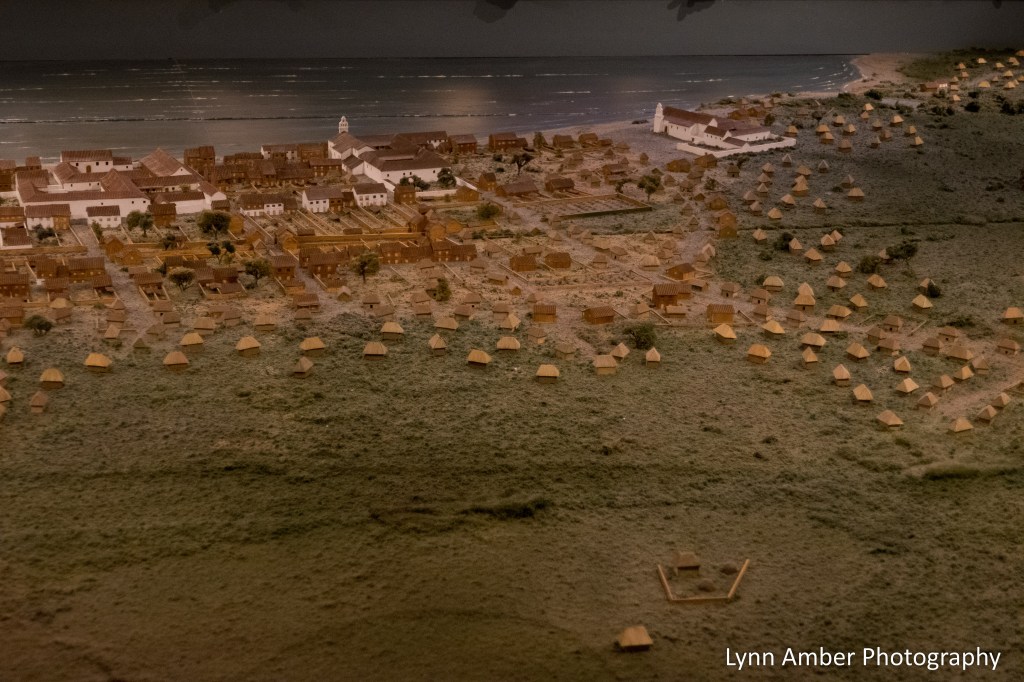
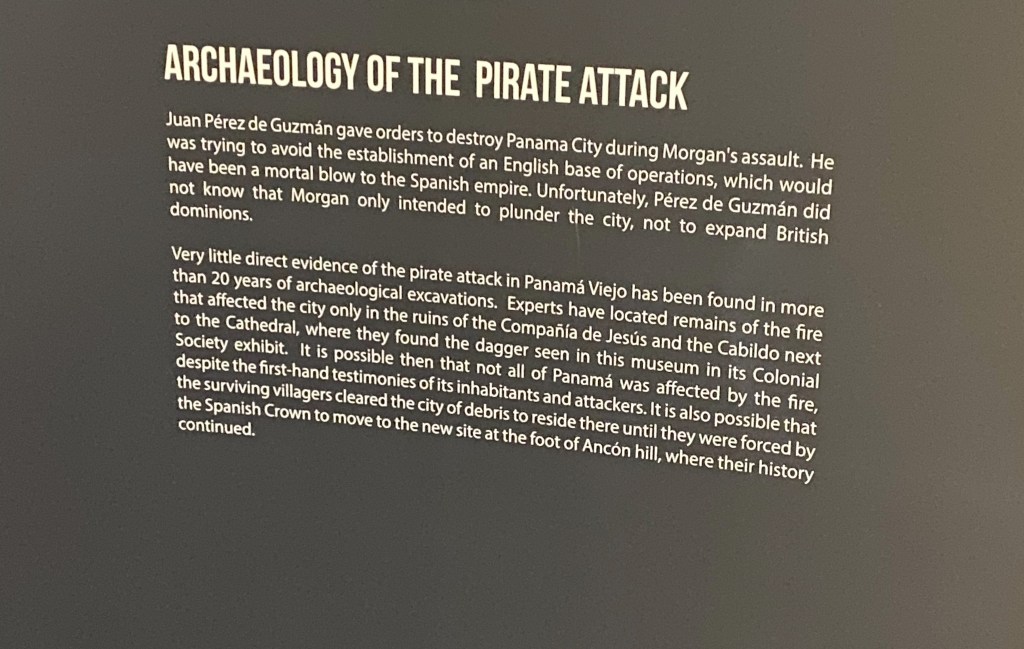
Panama Viejo is the original Spanish settlement in Panama that dates to the early 1500’s and was the first capital of Panama. The town survived for over 150 years until it suffered destruction at the hands of a pirate attack in 1671. The people decided not to rebuild on this site and instead moved the town to the location of Casco Viejo – where it could be better fortified against invasion. Little remains of the original buildings except some old ruins but there is a fantastic museum on site that captures the period and offers insight into both the indigenous population and the Spanish influence. It is evident from the ruins that the town was built with a clear, planned outline similar to many European towns.
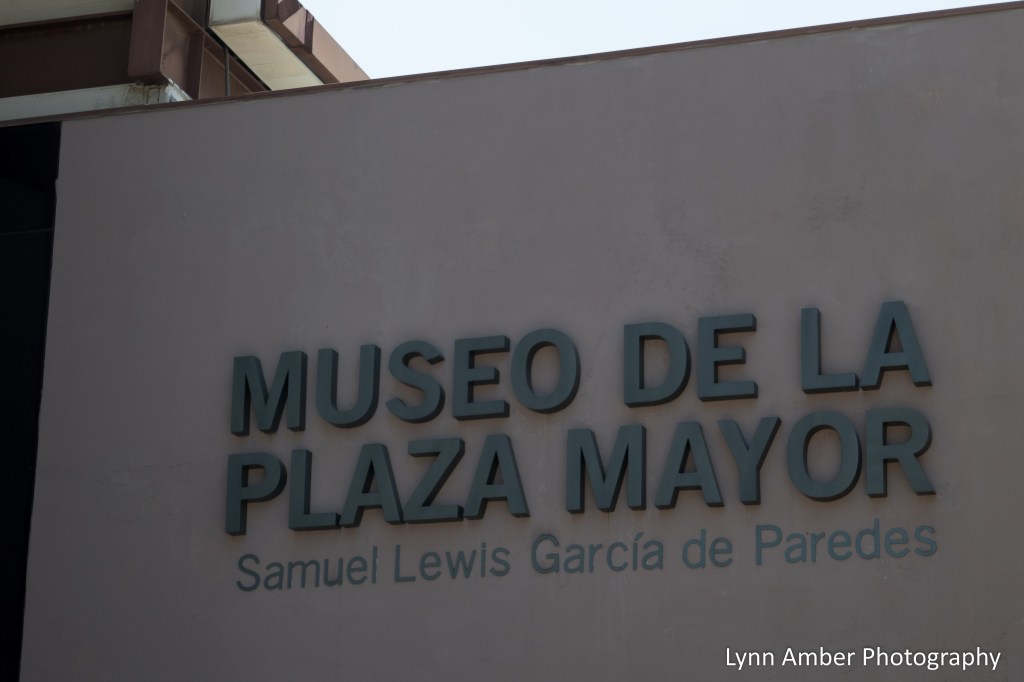
Some interesting information in the exhibit hall:

We walked the grounds of the architectural site after visiting the museum. I was struck by the backdrop to the ruins. Everywhere you looked the ruins framed the modern city in the background. I thought the imagery striking.


All in all, it was a really great introduction to Panama City and the history of the area. We arrived back at the ship in time for a late lunch and relaxed for the afternoon. We enjoyed a light dinner before watching 2 shows that evening in the Bliss Theater – Michael Lindon was the first performer who sang songs as he recounted his life story – and – a fantastic performance by a Beatle’s tribute band who played songs from the Abbey Road era.
 Lynn Amber - Travel & Photography
I also liked the Casco Viejo, where there are now many boutique hotels, which is where I would look to stay if I were to return.
LikeLiked by 1 person
I agree! I was thinking as I wrote the post that I would definitely stay in this part of the city if I ever found myself there again.
LikeLike