Lynn Amber - Travel & Photography
sharing my thoughts through words and images
Panama Canal Cruise Day 5

January 31, 2024
Today is the day!!! The Panama Canal Transit! We left Cartagena and traveled overnight to the entrance to the Panama Canal. I was up early and watched from our balcony doors as we neared land in the wee hours of the morning. I could see land and lights and we started passing some container ships coming from the canal.

The Panama Canal is a 51-mile man-made waterway that connects the Atlantic Ocean and the Pacific Ocean across the Isthmus of Panama. Originally, the construction was started by France in 1881 but a lack of investors and problems with worker shortages due to disease caused them to abandon the project. In 1904, the United States took over the project as well as control of the area surrounding the canal by purchasing the rights from the French for a sum of 40 million. The Panama Canal is considered one of the most difficult engineering accomplishments ever completed.
Difficulties in coming to an agreement with Columbia (who controlled the area at the time) were solved when Panama declared independence from Columbia in 1903 and we supported Panama to further our own interests. A treaty was signed between Panama and the United States that stated the U.S. would control the canal indefinitely. The canal opened for business in 1914. Relations with Panama were still strained over the years as many Panamanians were upset about the original Hay–Bunau-Varilla Treaty. In 1977, the United States entered into new treaties with Panama called the Torrijos–Carter Treaties in honor of President Carter and the Commander of the Panama National Guard, Omar Torrijos. Under this agreement, from 1977 until 1999, the canal was operated jointly by the United States and Panama. In 1999, the operation of the canal was turned over to Panama and is now managed by the Panama Canal Authority.
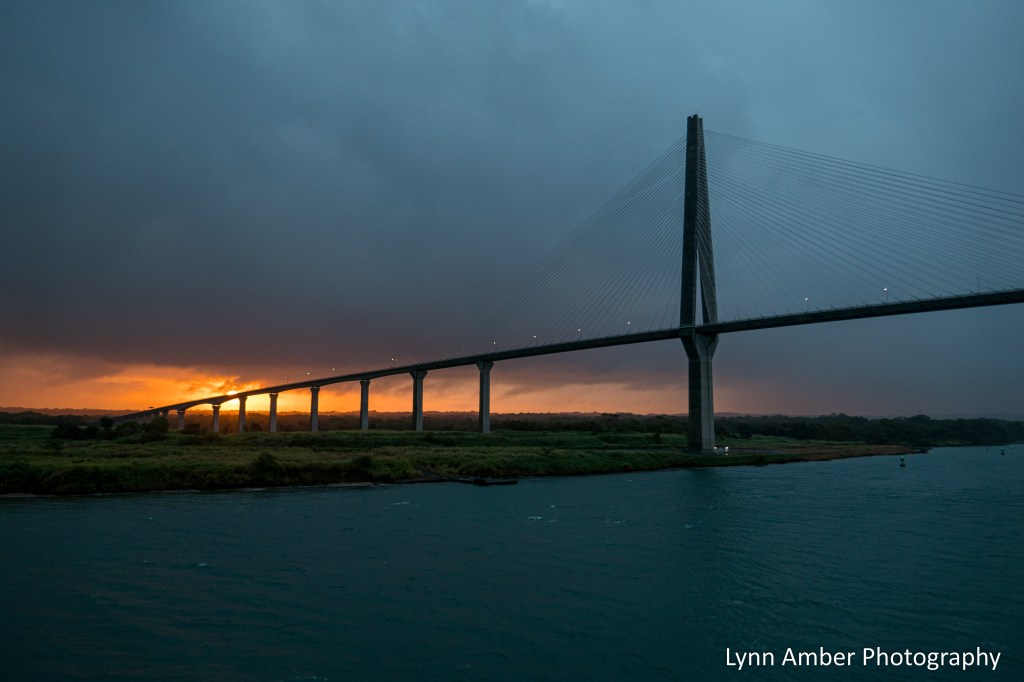
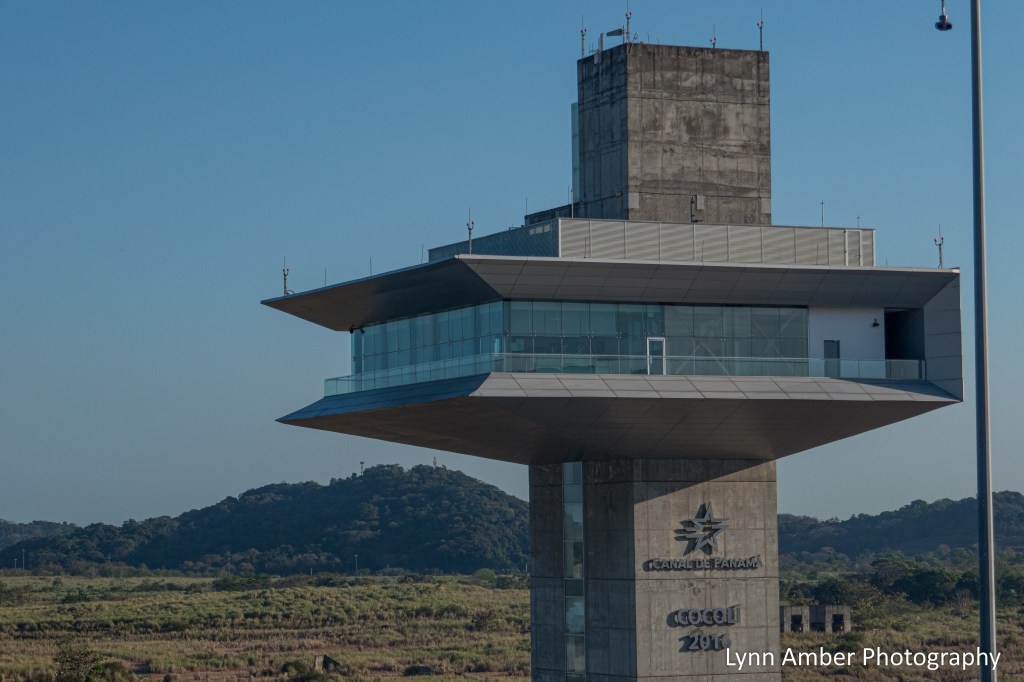
In 2016, an expansion of the canal included locks that could handle larger ships. The channels were longer, wider and deeper. They were built parallel to the existing Gatun and Miraflores Locks. We navigated through the 2016 Agua Clara and Cocoli Locks. The older Gatun and Miraflores Locks are still in use as well. It was interesting to learn how the tolls are assessed for passenger cruise ships. In a talk given on board the ship, we were informed that cruise ships pay a per-person charge based on the number of permanent “beds” on the ship. It is actually quite costly and can be as much as 1/2 million dollars.


It was overcast as we approached the first set of locks and there was a threat of rain but it never really materialized. For the transit, the open area at the bow of the ship was made accessible so that passengers could get an outdoor front-row seat to the passage. Lucky for us, the doorway to the bow was on Deck 8 right at the end of our stateroom corridor! We had a short walk to the bow and were able to get up close enough to the railing so as to get photographs unimpeded by people. They had some chairs set up under temporary canopies and also provided coffee and other drinks. That was a good thing because we did not have time to get breakfast before the start of the transit! At the very least I needed some coffee!!
As we came to the first lock, we could watch as the gate opened up that would allow us to enter. It was about 7:30am when we gained access to the first lock.
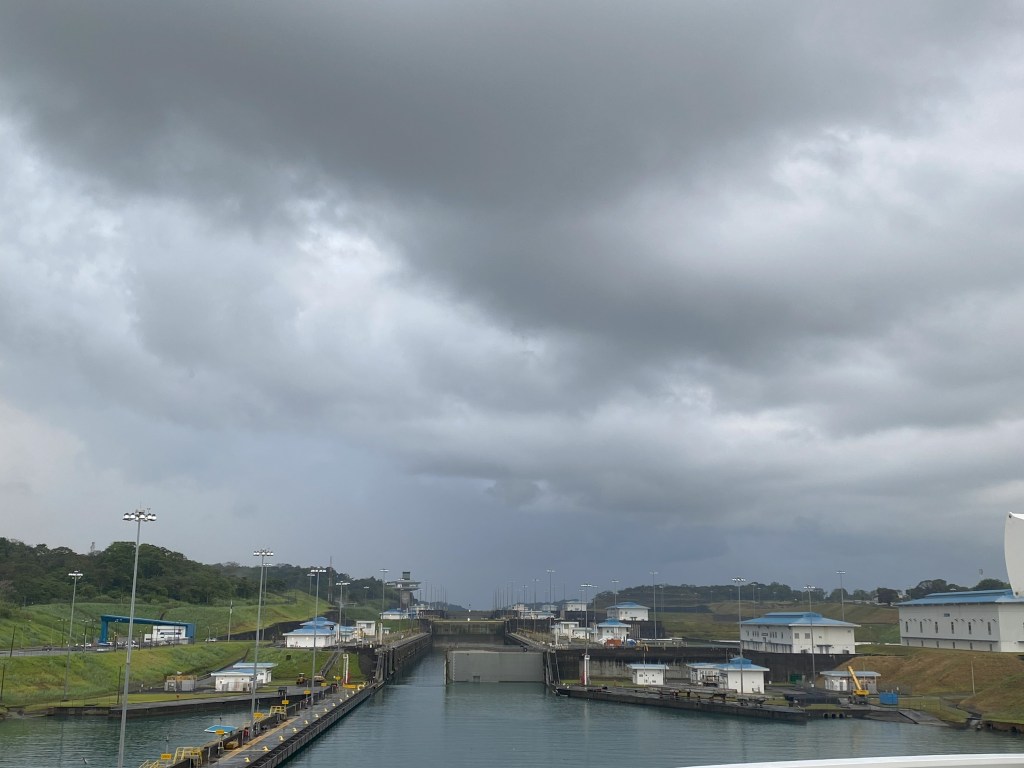
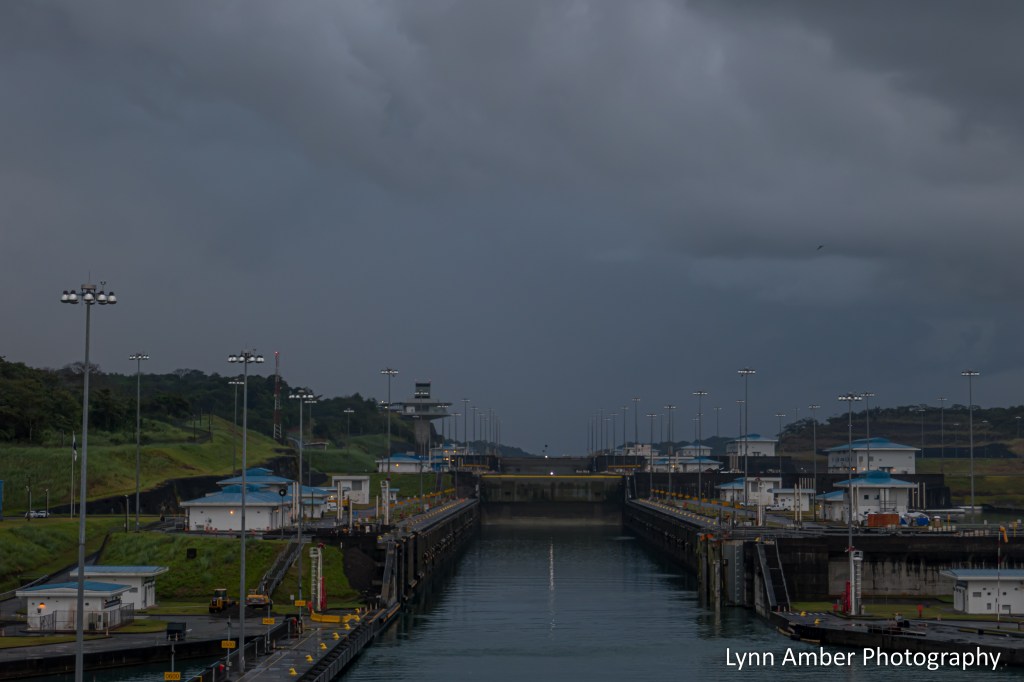
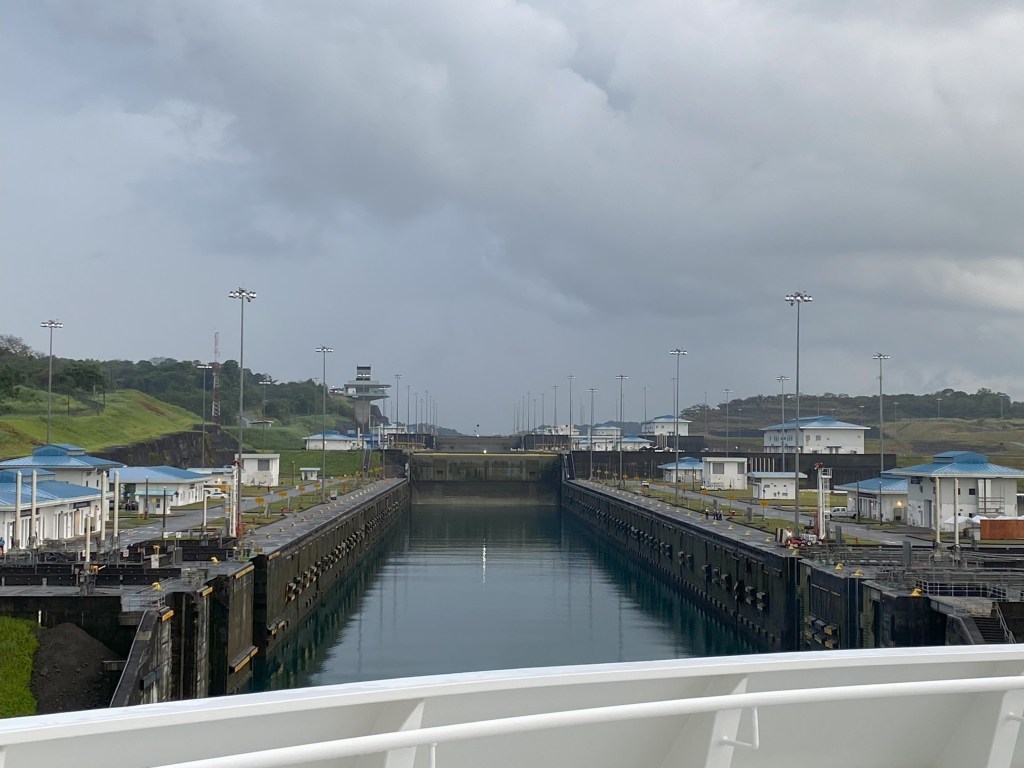
There were quite a few passengers who converged on the bow of the ship for the morning transit through the Agua Clara Locks. Once we were securely in one of the locks, the back gate closes and we sit there as the lock fills with water and raises the ship to the level of the next lock. How this equilibrium is met was a topic of conversation with fellow passengers at the bow railing. We were standing next to an Australian gentleman and an American man who we enjoyed chatting with throughout the transit. We all had our theories on how this engineering feat is accomplished!
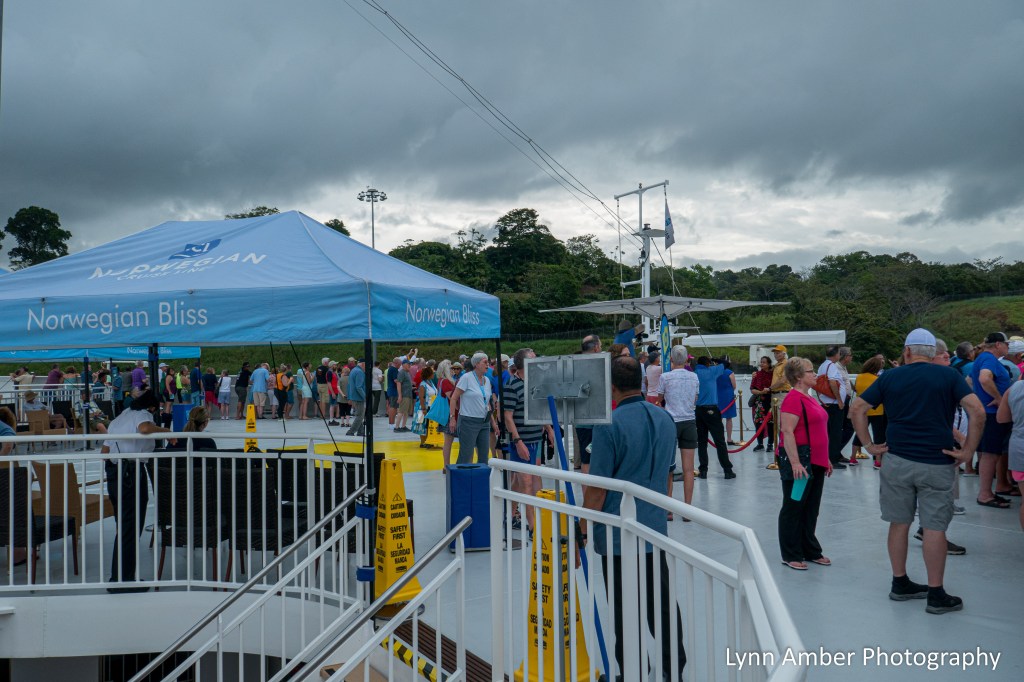
It took somewhere around 45 minutes from the time we entered a lock to get to the point where we moved onto the next lock. The gate behind us had to close, the water level had to rise to a certain point level with the next lock, then the forward gate would open and we would move forward into the next lock.
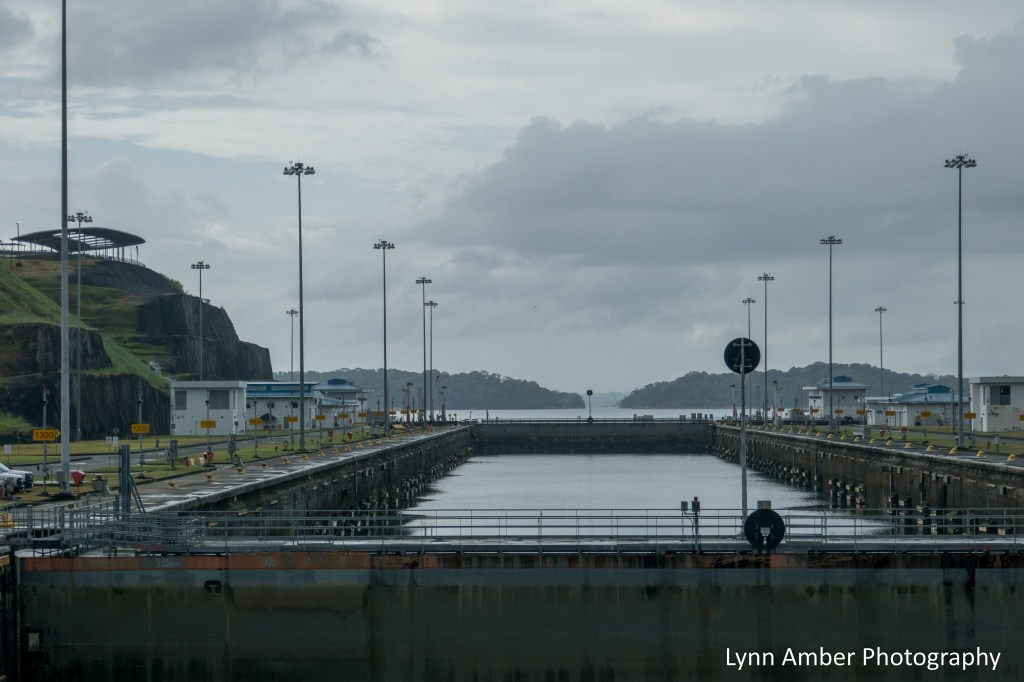
When we were sitting in the second lock, we could finally see the third lock and Gatun Lake in the distance. The ships captain informed us that once we were in the lake we would find a spot to anchor and wait for the go ahead to proceed to the Cocoli Locks. The main reason for the wait is due to a bridge on the other side of the Cocoli Locks that is not high enough for the Norwegian Bliss to pass under unless it is low tide. So – timing is everything!!

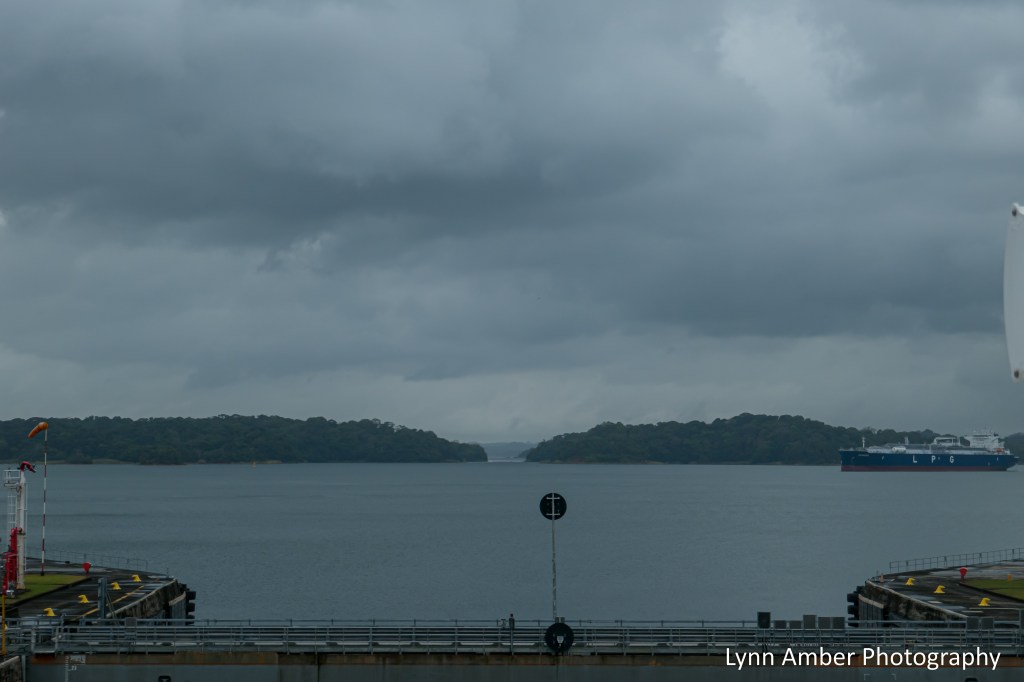
At 10:00am, we were through the Agua Clara Locks and in Gatun Lake!! It was a 2.5 hour transit through the first set of locks and we did not miss one minute of it!!


Above – passing into Gatun Lake!! So exciting!!
Gatun Lake is an artificial lake completed in 1912. At the time it was built, it was the largest artificial lake in the world and the Gatun Dam was the largest dam in the world. The Chagres River and several other smaller waterways were dammed to create the lake which would hold water necessary for the locks to operate. It also aids in maintaining adequate water levels in the Gaillard Cut – a route that was blasted through the mountains to the west of the lake – that connects the lake to the western most locks. The level of the lake alternates between 82 and 85 feet above sea level.
The ship started through Gatun Lake and somewhere in the lake, where there was ample room, we stopped and anchored until 3pm. Finally, it was time to take a break from the bow of the ship and get some breakfast!! Since it would be several hours before we got under way again, we enjoyed some activities while we waited. After breakfast, I went to the fitness center for a workout.

I also walked around The Waterfront taking pictures of the lake and shoreline before meeting up with my sister for a line dancing class in the Atrium.
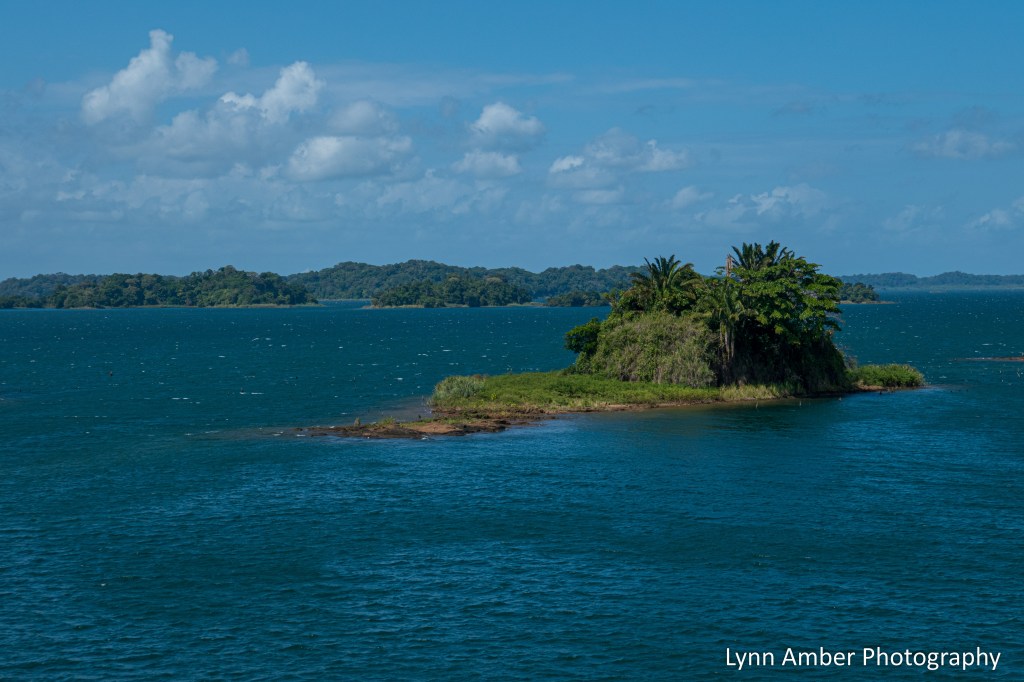
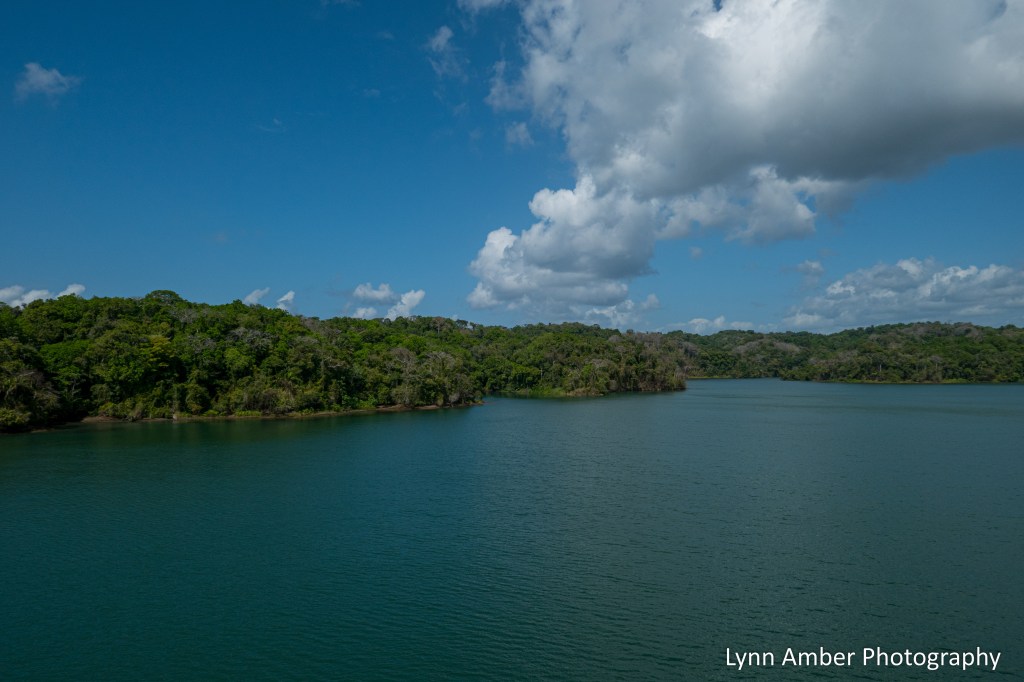
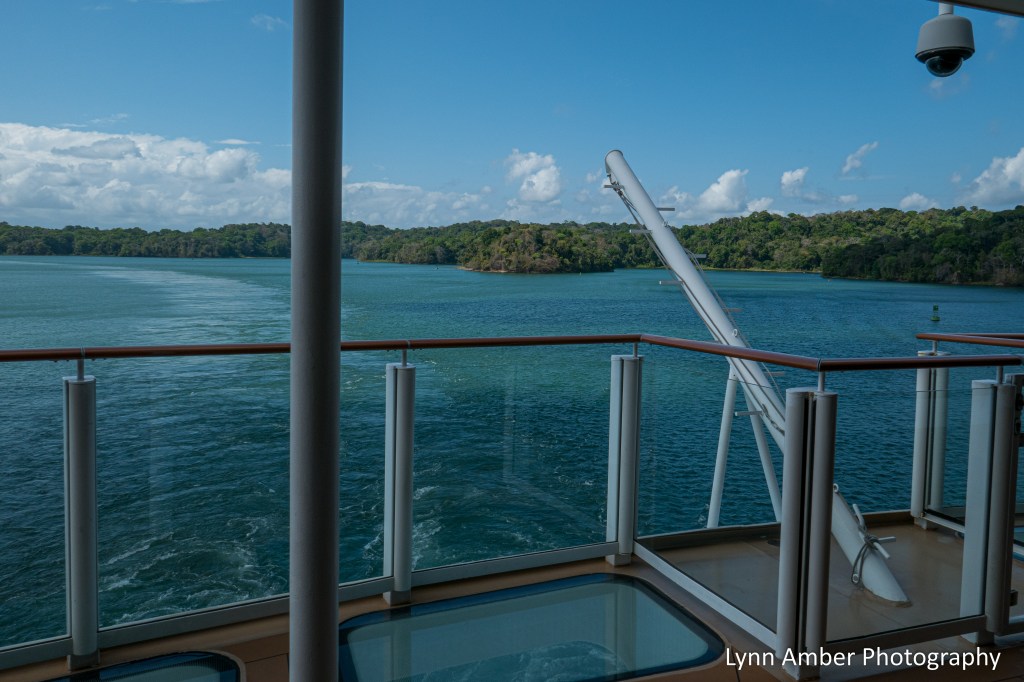
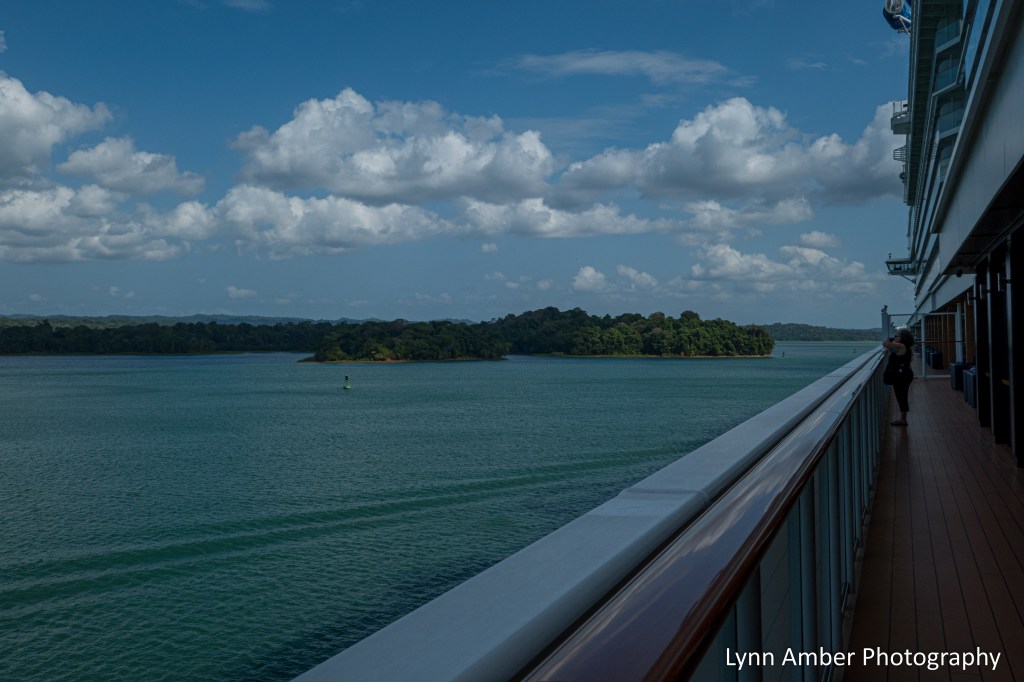

We also fit in Happy Hour at The Cavern and sat outside to enjoy a drink before we would headed back to our stateroom to enjoy the ride towards the western locks.
At around 3:00pm, we got under way and before too long we came to some industrial activity. We were about to enter the Gaillard Cut – also known as the Culebra Cut and the Gamboa Passage – or simply, “the passage.” It is a narrow channel that connects the lake to the Cocoli Locks.


Here we picked up some “tug boats” that would accompany us through the cut. We decided to hang out on our stateroom balcony and enjoy the ride through the passage from there.
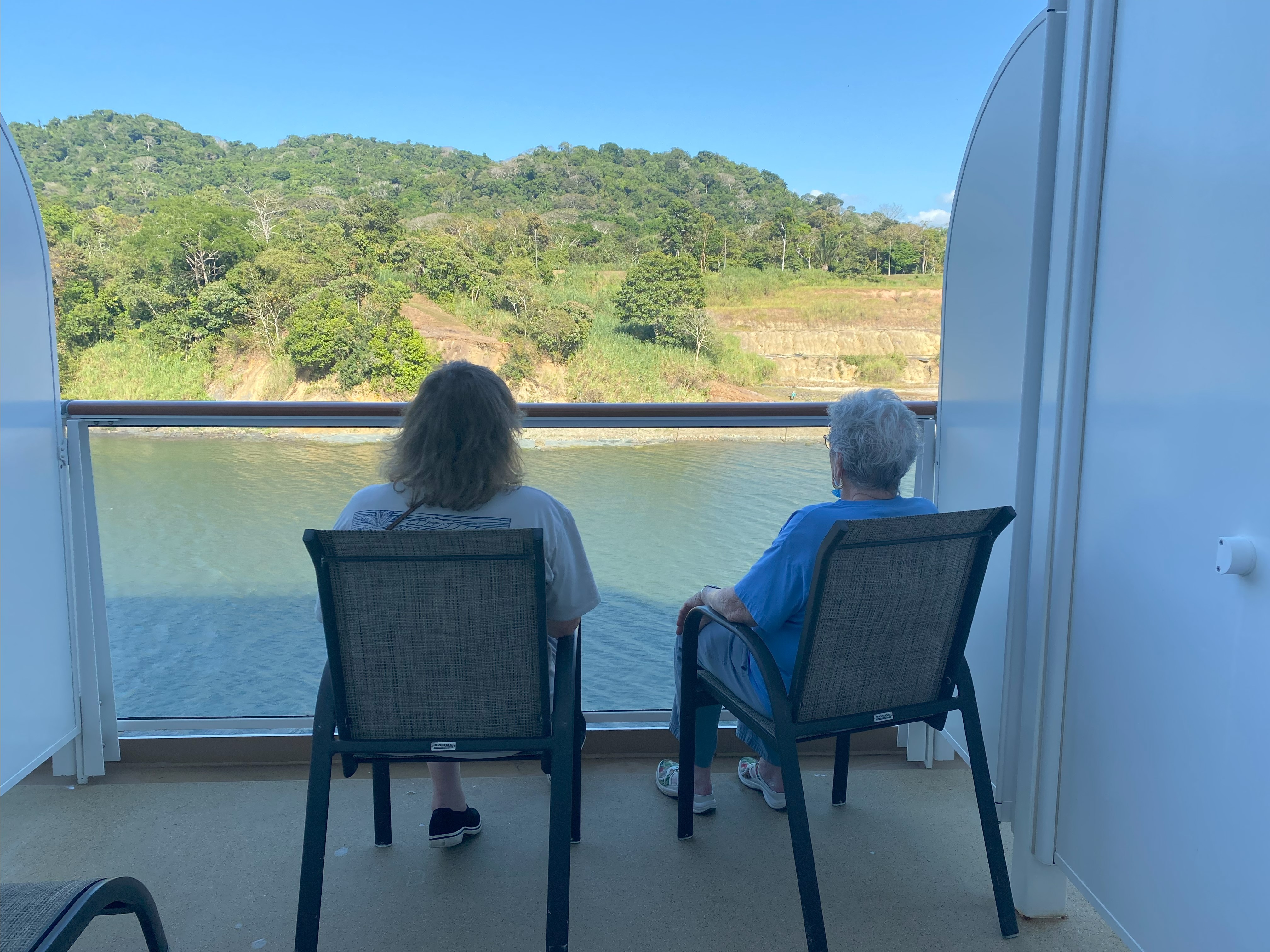

It was a nice relaxing cruise through the narrow channel and we were even on the shady side of the ship – a bonus!! There was not much activity along the shoreline and it appeared to be fairly undeveloped except for access roads for canal maintenance.
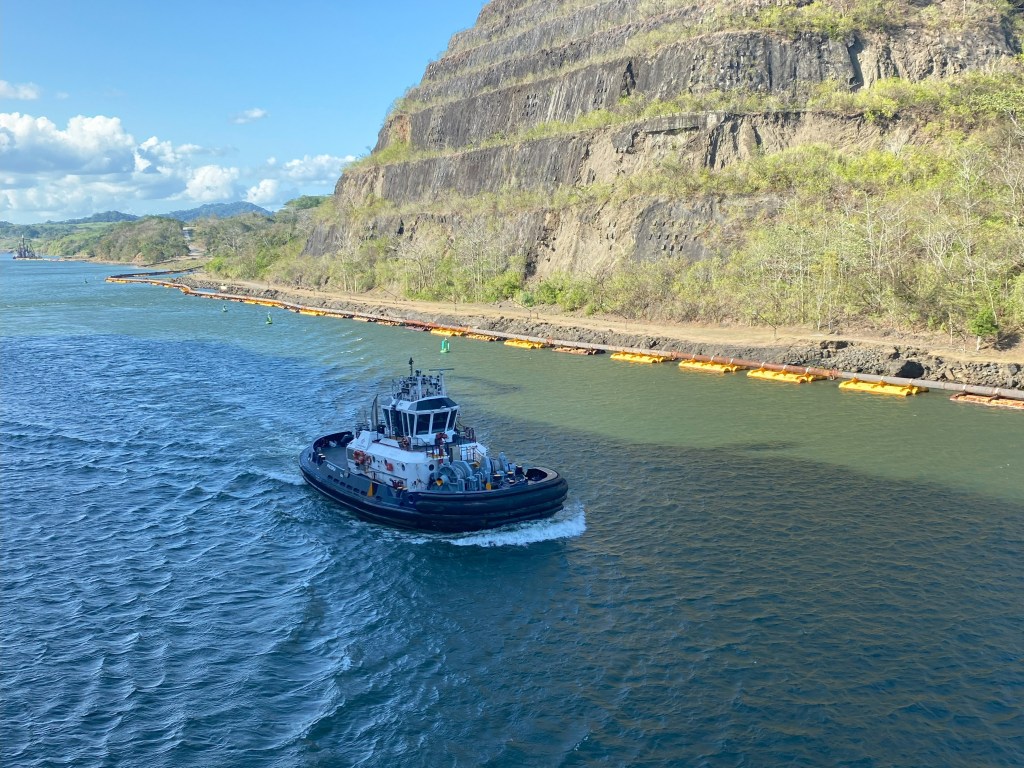
I went to the bow briefly so I could get a better photograph that showed the width of the channel. You can see how narrow it is!
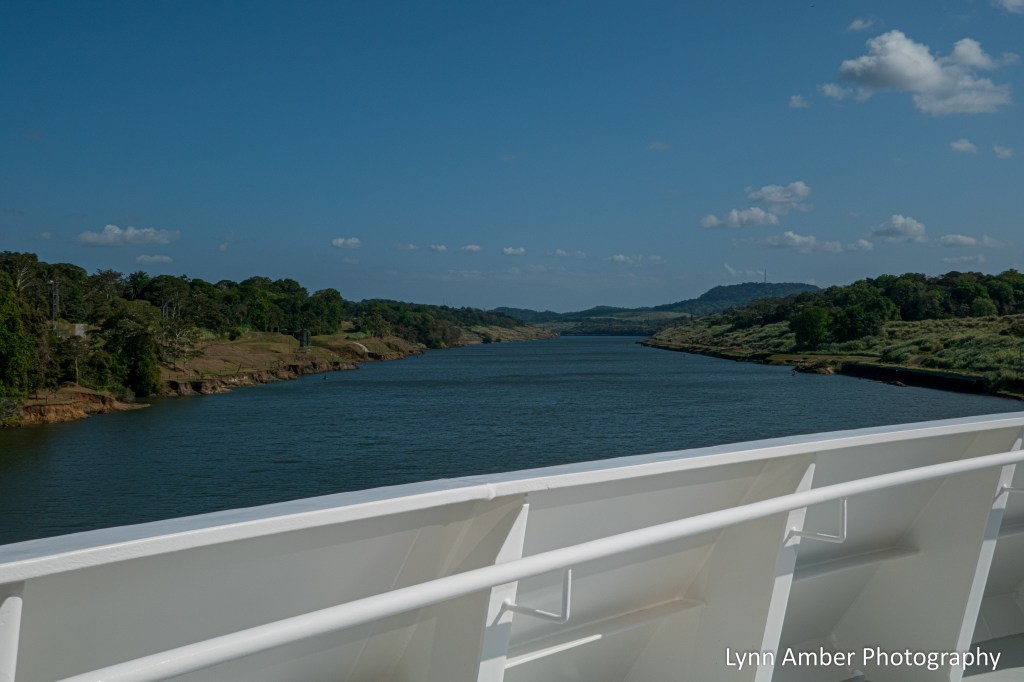
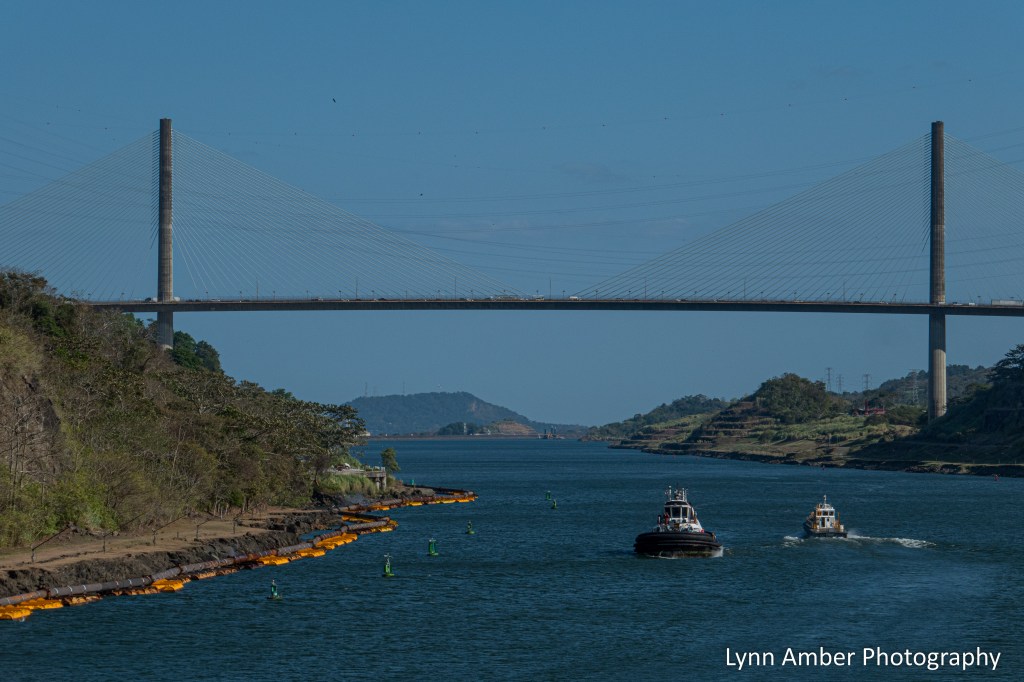
After passing under this bridge, we realized we would be approaching the Cocoli Locks and decided to go back out to the bow for the transit through these locks. The channel opened up and we came to some Panama Canal Authority buildings and I was fascinated by a barge that was doing work to bring up material from the channel. I speculated as to the purpose of the work – maybe something like a dredging apparatus?
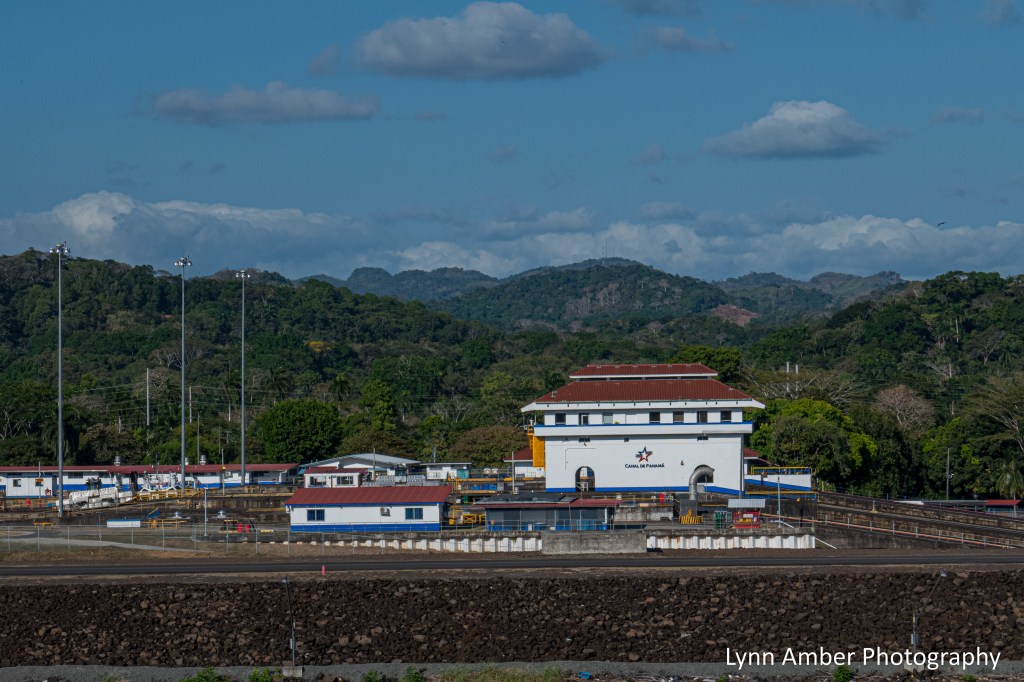
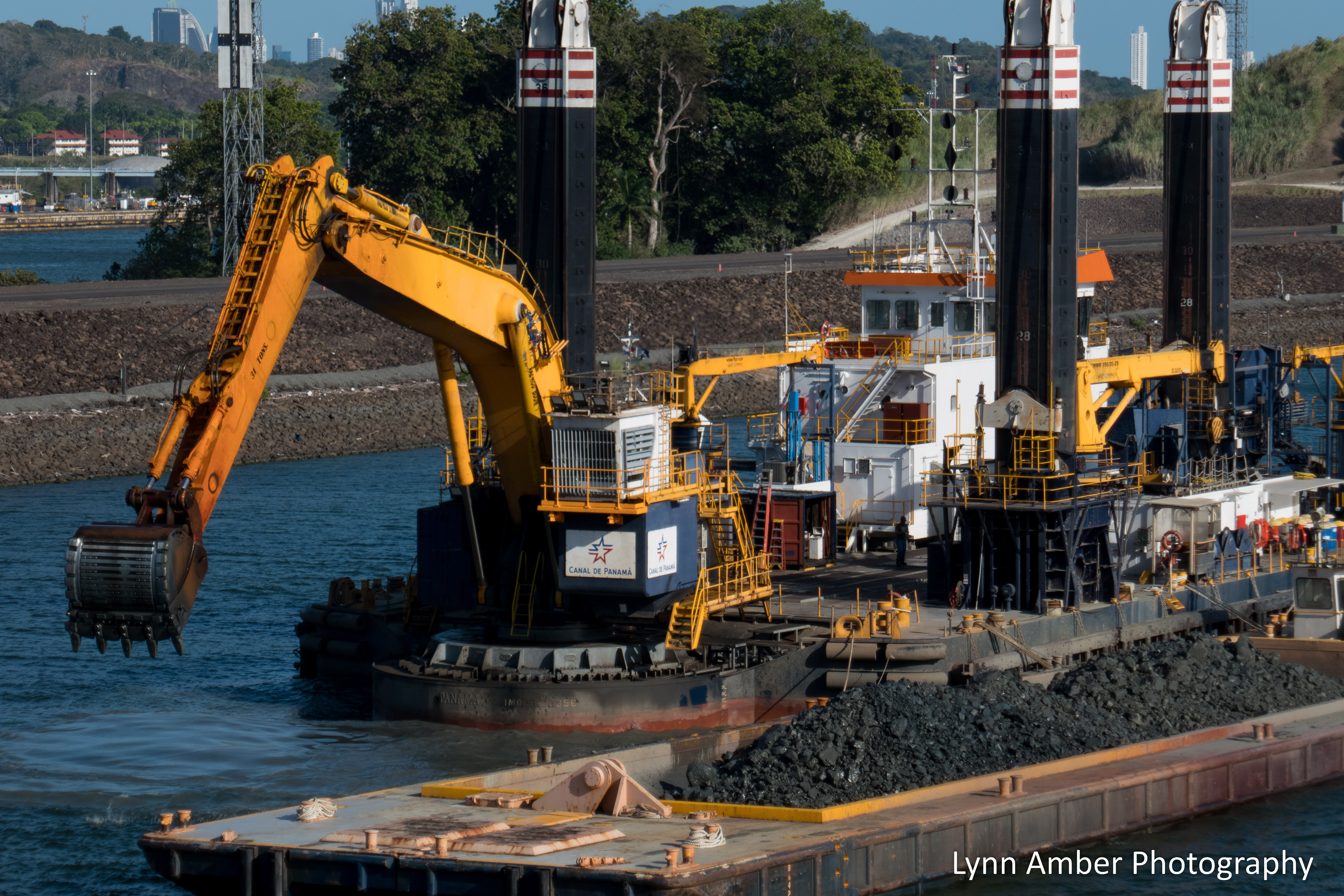
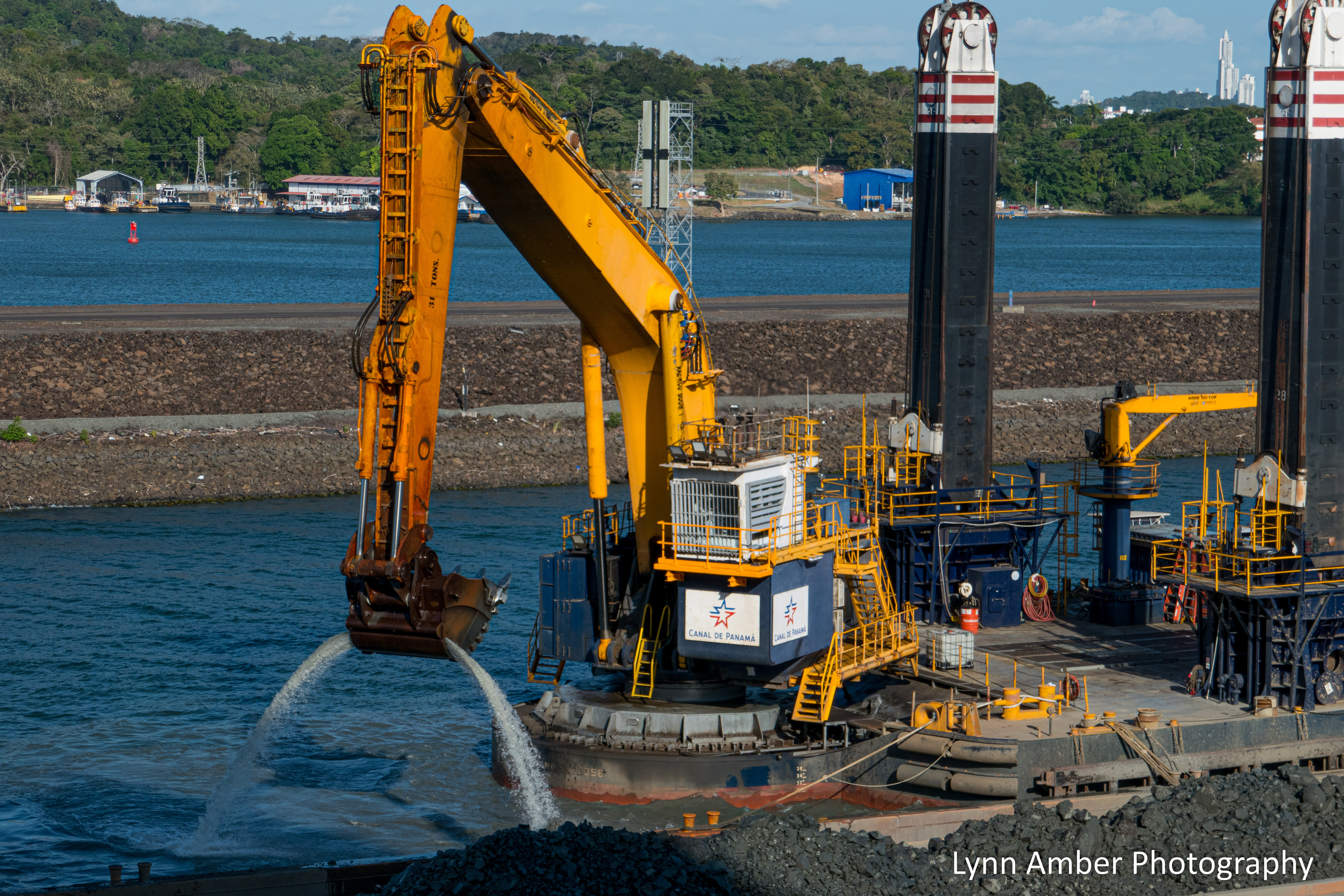
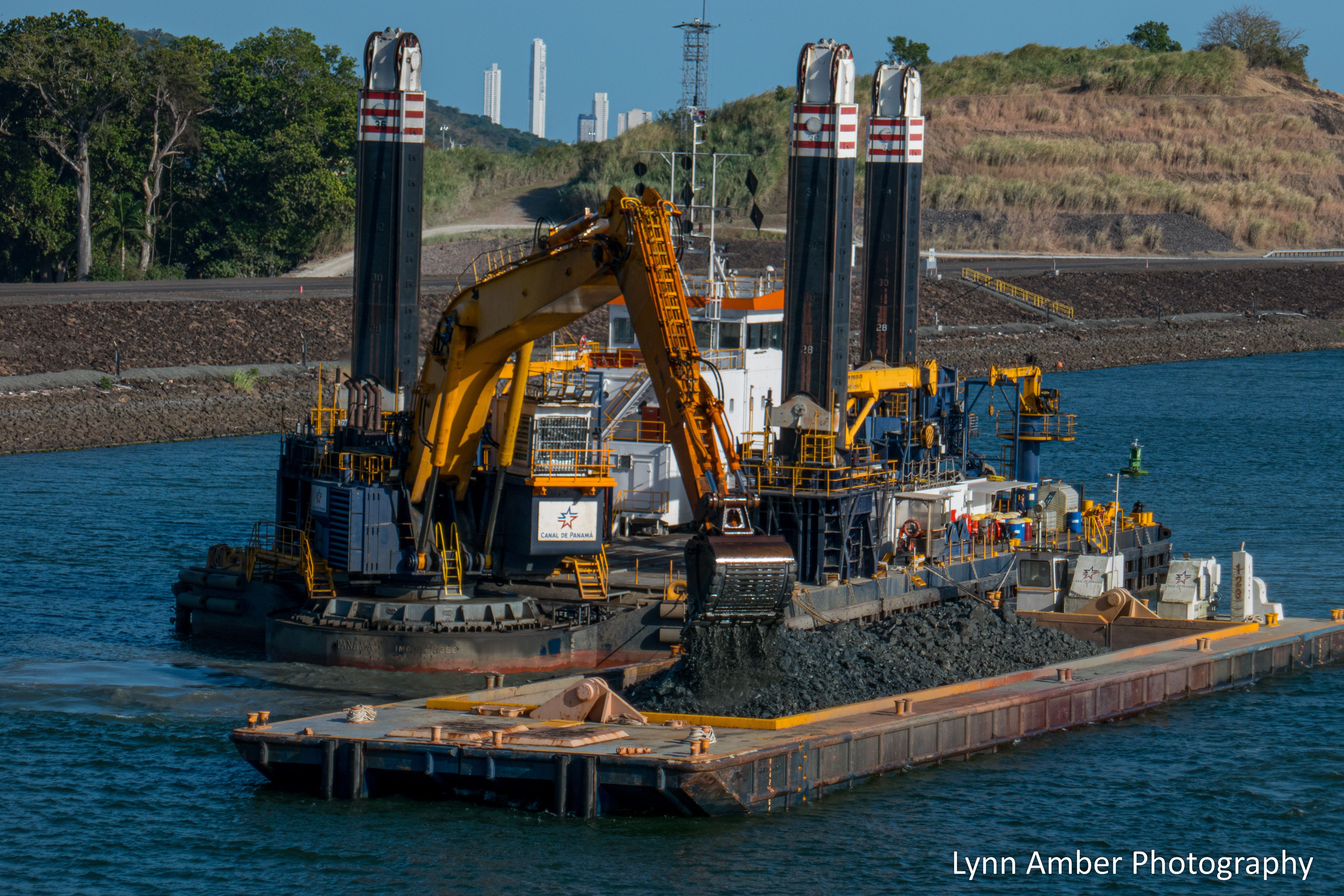
At about 4:30pm, we started into the first lock in the Cocoli Lock system. It would take us until 7:00pm to reach the Gulf of Panama.

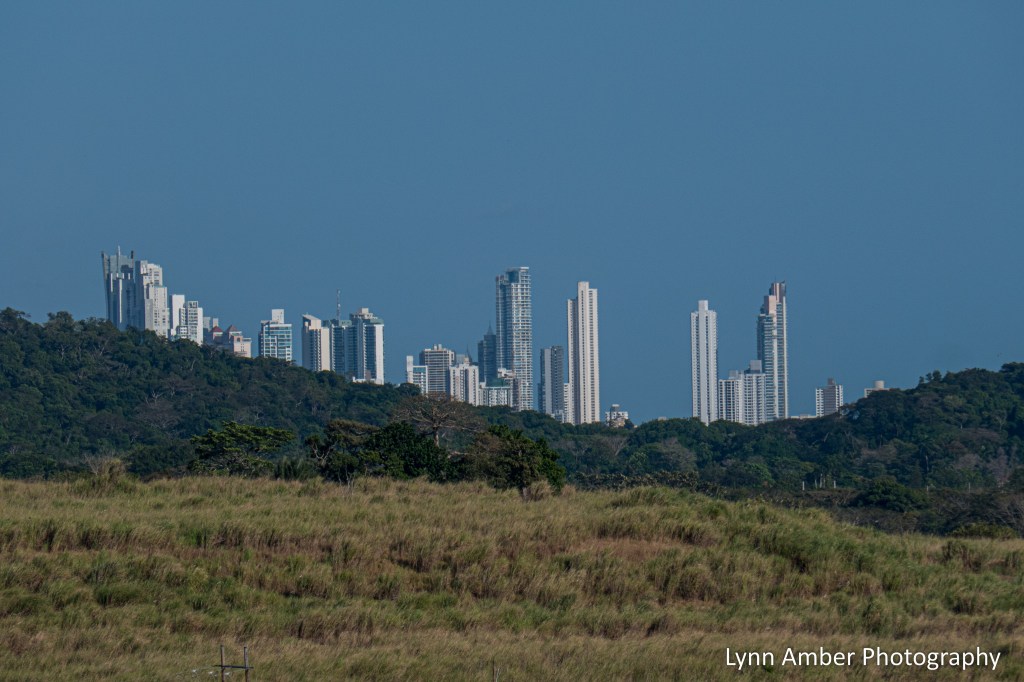


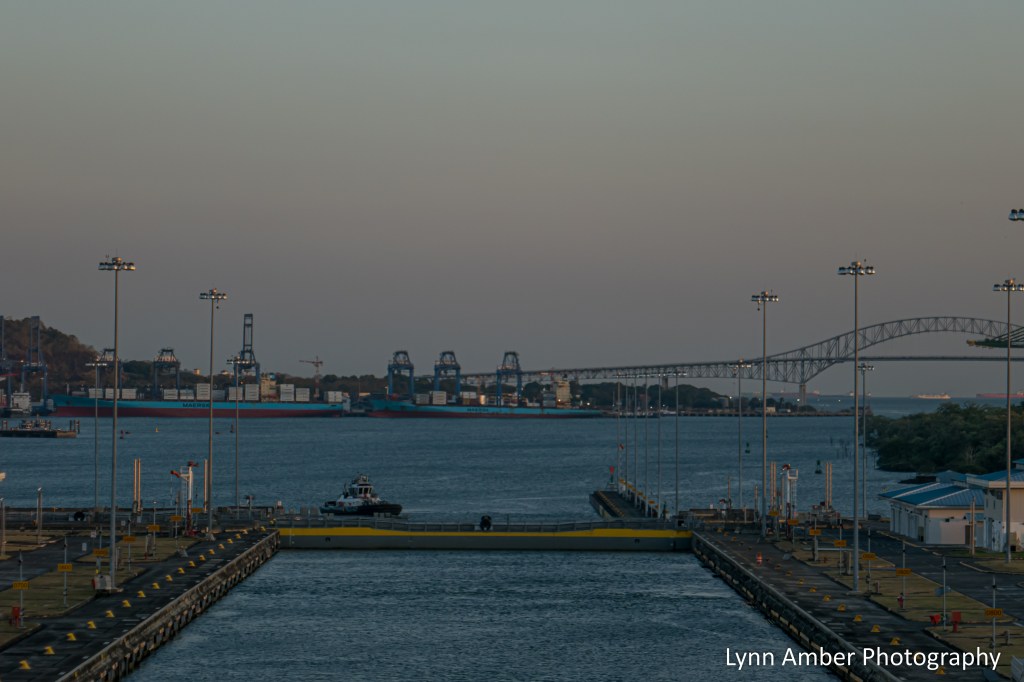
We were on the bow waiting for the passage into the Gulf of Panama – but it seemed to be taking a little longer than expected. We heard a commotion and people cheering off to our left along the railing and wandered over to see what was happening. From the side of the ship, we could see that there was a problem. Apparently, a piece of the dock had broken loose and was floating in the water in the lock. This must present a danger to the ship and canal staff on shore were trying to retrieve it. It was quite entertaining to watch and more and more staff were summoned to get this piece of debris out of the water! You can see that it is getting to be nighttime! I was surprised to see the tug boat in front of our ship in the lock!
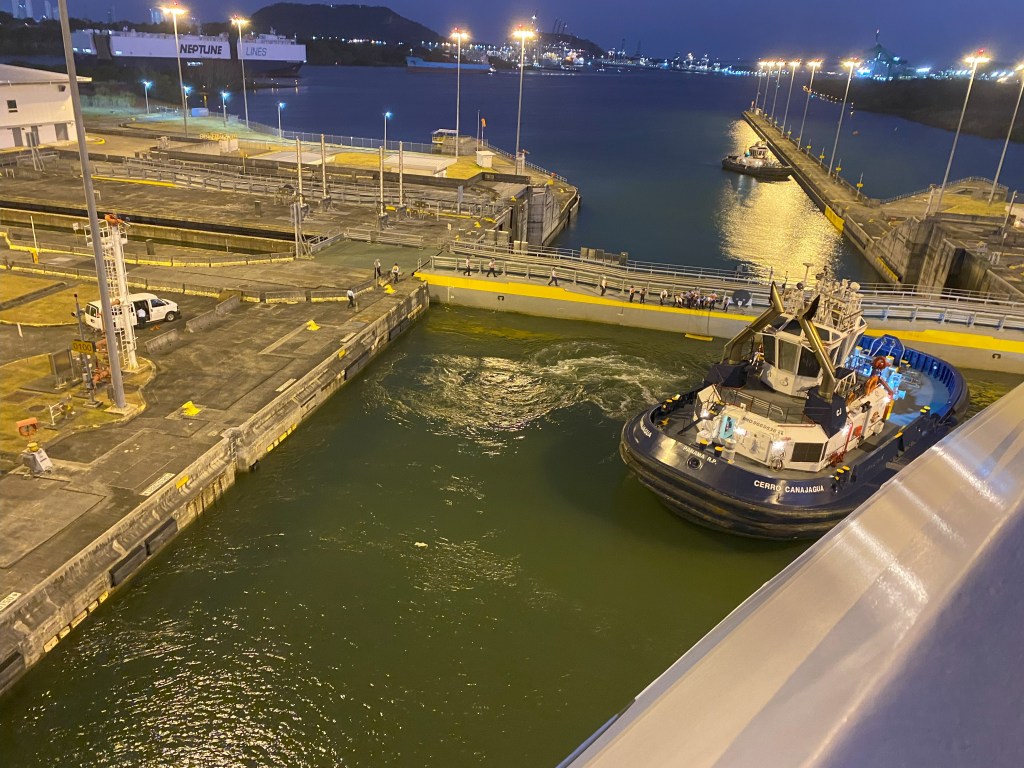

It was a busy day and we were tired and hungry by the time we passed the final set of locks. We opted to go to the Taste restaurant for dinner – one of the complimentary dining establishments. The next day we would be doing our Panama City excursion and it would be an early day.
I’m ending this post with just the canal transit – as it got quite lengthy – and I have recently been traveling again in the Airstream and have been absent from the blog for a while. Next time – Panama City…
 Lynn Amber - Travel & Photography
I loved the photo of the Atlantic Bridge. I saw it being built from the ferry crossing the canal. I think it was a French company that was leading the construction consortium, so the French will have achieved something in the end.
LikeLiked by 1 person
I was so lucky to get that picture of the bridge with the sunrise. Perfect timing. And I looked up the construction of the bridge. I did not know that it was recently constructed (2019). And yes the Vinci Construction company worked on the bridge – a firm headquartered near Paris. Indeed – the French had many significant influences in the region.
LikeLiked by 1 person
And the bridge must have put an end to the traffic of small ferries crossing the Panama Canal’s big ships.
LikeLiked by 1 person