Lynn Amber - Travel & Photography
sharing my thoughts through words and images
Le Puy Camino – via Podiensis: On The Way

March 31, 2023
Finally, our departure day arrived! We are walking the Camino de Santiago – Via Podiensis, which is the route along the GR65 from Le Puy-en-Velay to Saint-Jean-Pied-de-Port in the Pyrenees. It’s a walking distance of 748.9 kilometers. The GR65 is one part of the extensive Grand Randonnée network of long-distance walking paths that exist across Europe. It is known by many names – The Way of Saint James, The Chemin de Saint-Jacques-de-Compostelle, Via Podiensis, The Le Puy Route and The French Way. Most pilgrims take anywhere from 4 to 6 weeks to walk this section of the Camino de Santiago to its destination in Saint-Jean-Pied-de-Port. We will be on the trail for 6 weeks. Technically, the GR65 starts in Geneva, Switzerland and ends in Roncevalles (Roncevaux), Spain. But, many people who complete just this section only walk the route between Le Puy-en-Velay and Saint-Jean-Pied-de-Port. And, that is our plan.
On our departure day, we woke up to a weather forecast that was predicting mostly cloudy skies with some showers likely and highs in the mid-50’s. I guess my raingear was going to be put to the test on the very first day!
The first order of business (after our breakfast at the hostel) was to pack up and arrive at the Cathédrale Notre–Dame for the pilgrim mass and blessing. The Cathédrale Notre–Dame du Puy has historically been the starting point for one of the most important pilgrim routes to Santiago de Compostela and, as such, is one of many UNESCO World Heritage Sites along the Way. The existing church was built over several centuries starting in the 11th century. It is considered a sanctuary for the Black Madonna and now houses a replica of the original. Apparently, the original Black Madonna was a statue of the Virgin Mary and Jesus sculpted from ebony. It was destroyed during the French Revolution and the current statue replaced it.
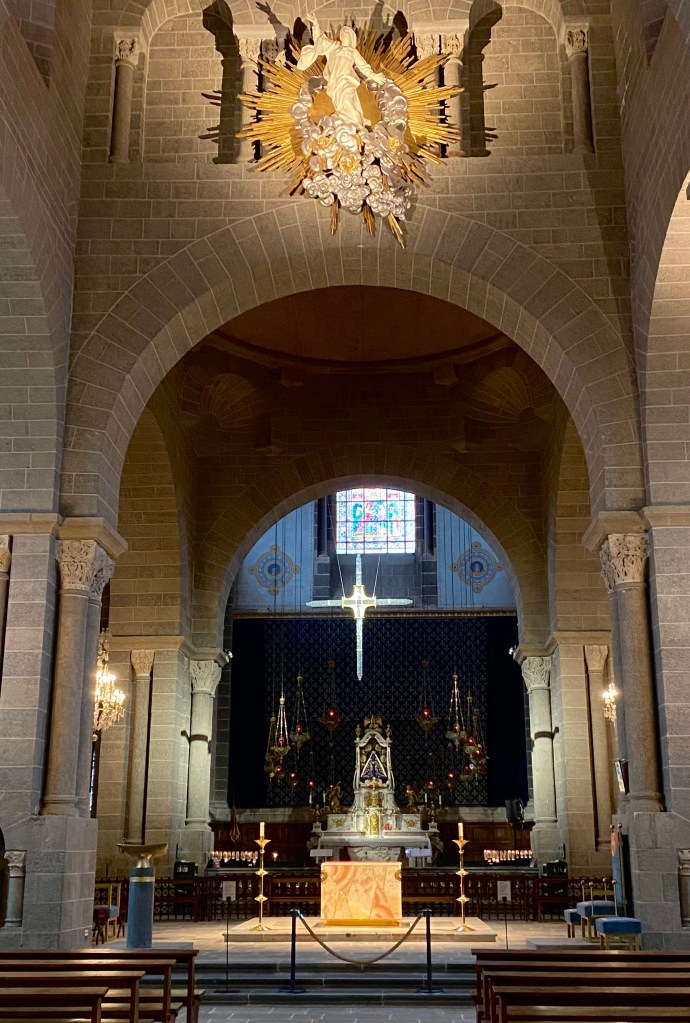
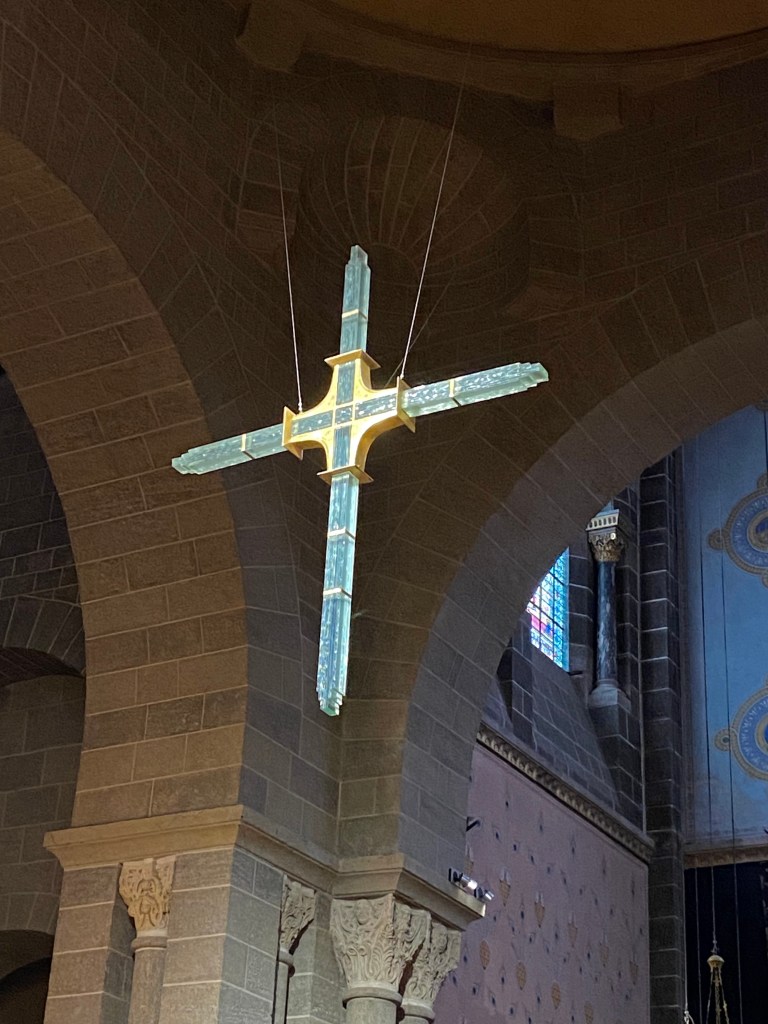
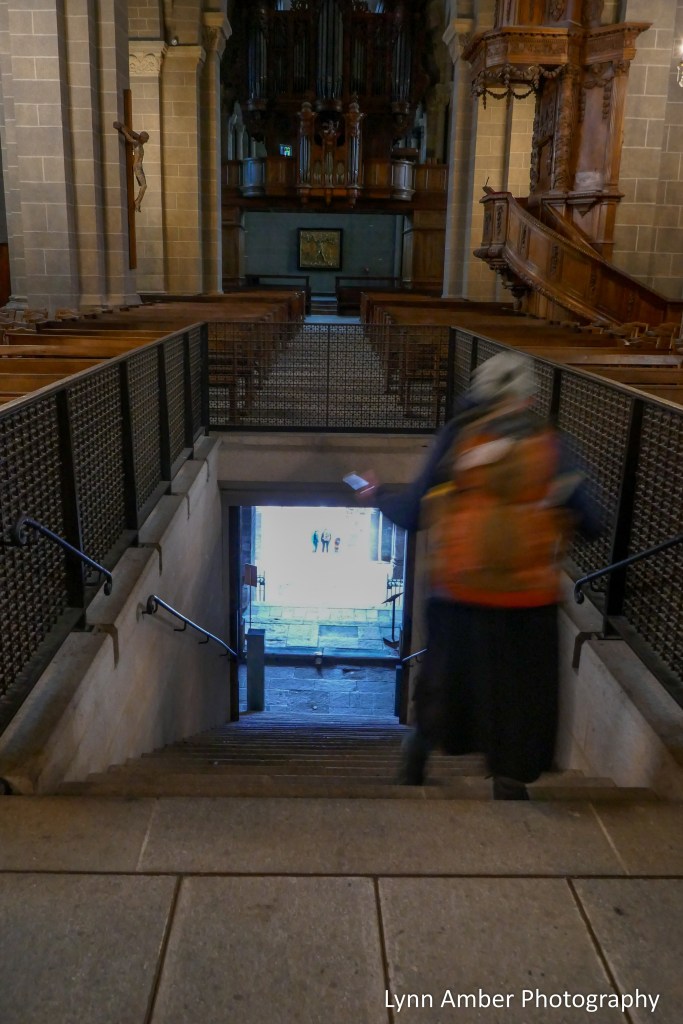
After the mass and the blessing by the priest, we got our pilgrim credential stamped and followed the tradition of many before us. The floor of the cathedral opens up and a hidden stairway descends to the outside of the church high above the town. This is the traditional starting point of the Via Podiensis. We were taking our time with donning our packs and getting ready to exit the church. Everyone else had left, and when we approached the hidden stairwell, they were getting ready to close it back up! I believe we were the last to leave via this opening in the church floor! My sister-in-law, Susan, in motion below!

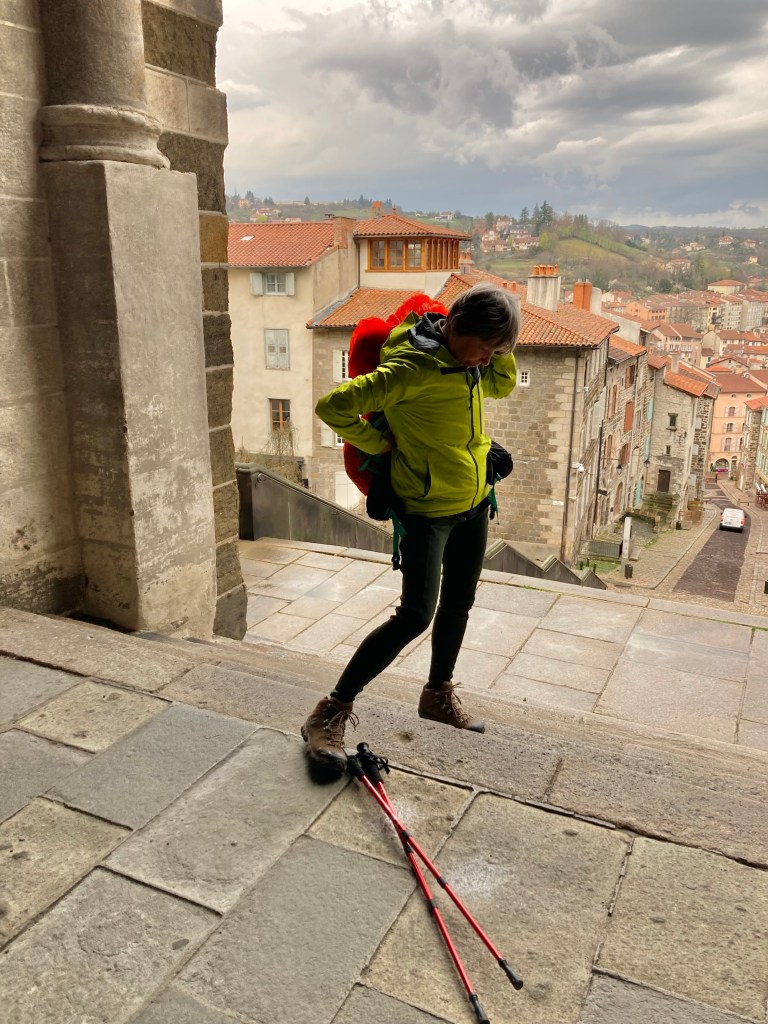
Descending the steep stairs from the cathedral, we walk along the cobblestone street of Rue des Tables past the “Fontaine et Place des Tables” – a historical landmark. The colorful buildings and shutters are a welcome sight on this dreary, cloudy day!
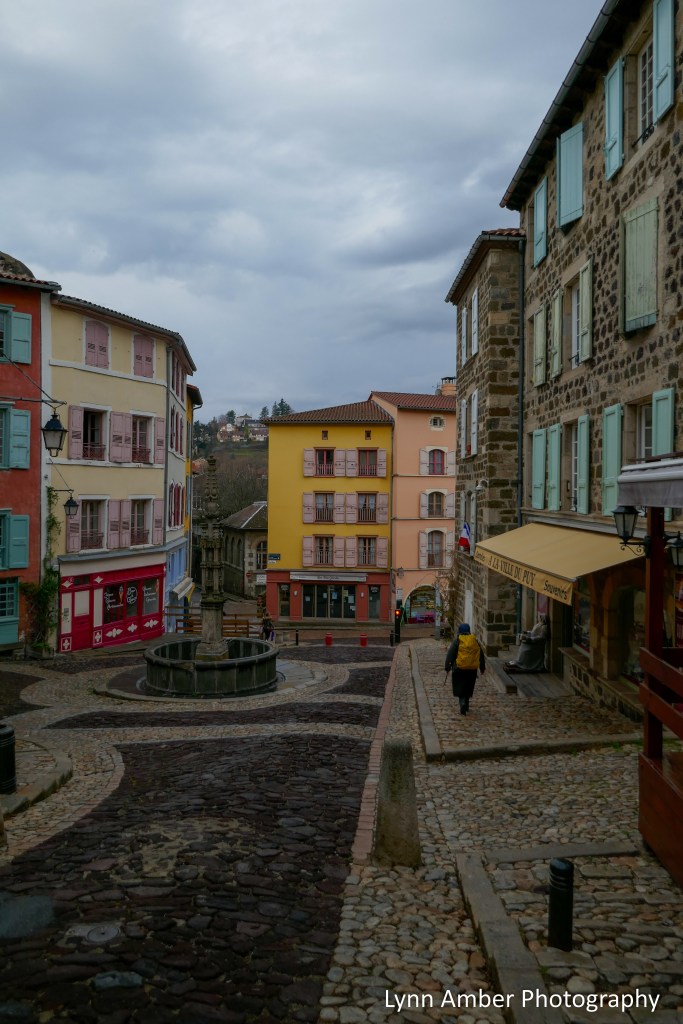
As I passed the Fontaine et Place des Tables, I could not resist one last look back at the Cathédrale Notre–Dame.

Since we chose to start our walk with a few short distance days, we were not in a hurry to leave Le Puy and decided to enjoy a relaxing start to our adventure at Le P’tit Creux café where we indulged in an excellent quiche breakfast and extra coffee to fuel our walk!
The route in town is marked by gold-colored metal “shells” imbedded in the sidewalks. Follow the “shells” to navigate through the maze of streets and up onto the plateau outside of town.
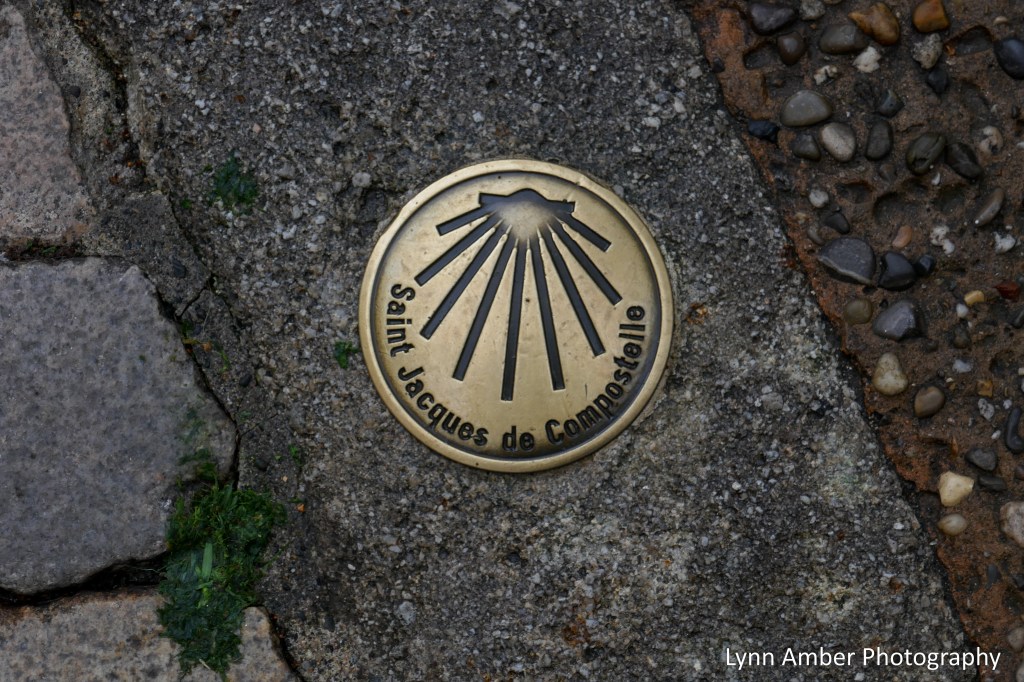
For those who are intending to walk all the way to Santiago de Compostella from Le Puy, there is this daunting signage on the street in Le Puy!

As we climbed the steep walk up out of Le Puy-en-Velay, I glanced back and snapped this photo of the city.
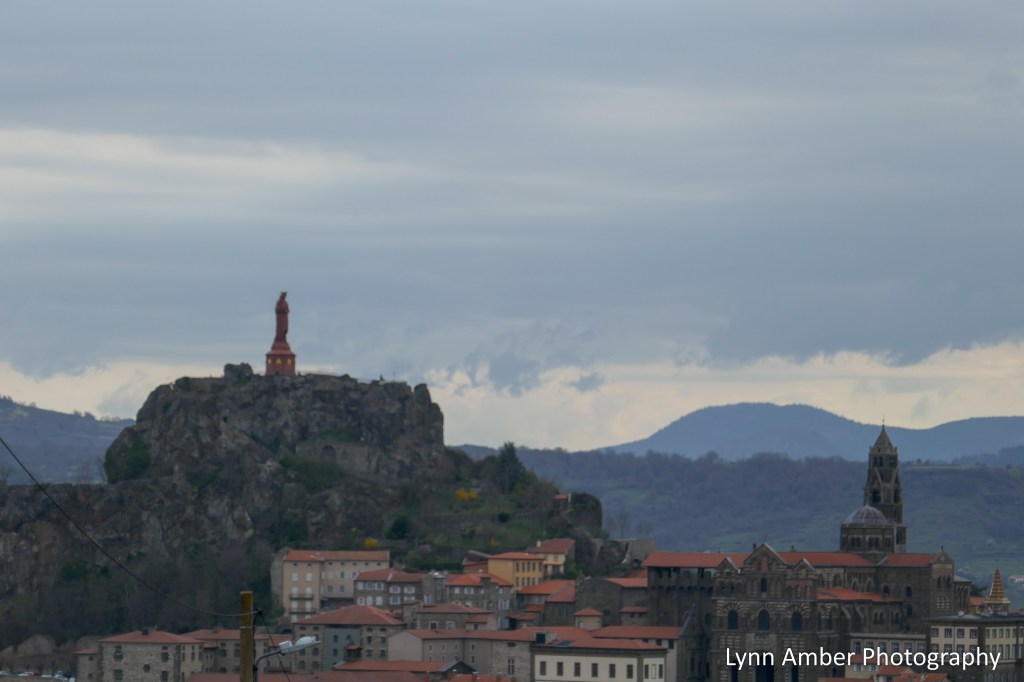
It paid off waiting until a little later in the morning to depart – as the air cleared up a bit and we enjoyed some blue skies. The walk starts off on the highland area known as the Massif Central in south-central France. Characterized by high plateaus and mountains, it is crisscrossed with numerous walking paths that traverse open grasslands and forests edged with dry stone walls. The path just outside of town on top of the plateau consists of a narrow gravel road for fairly easy walking interspersed with dirt trails with mild grades.


According to an interpretive sign just outside of Le Puy, we were entering an area known as The Devès and the valley of Dolaizon. The Devès is described as the largest basalt plateau in France. The soil of this area was created through volcanic activity and resulted in the fertility that allows for the production of the famous Puy “green lentils” that I mentioned in a previous post. They were referred to as “the caviar of the poor.”
Along the route in this area, there are small stone structures called chibottes. Laid with dry stone construction, they served as temporary shelters for shepherds in the 18th and 19th centuries. I kept looking for any sign of these shelters but never saw one. Later on, I did come across some similar structures – so stay tuned!
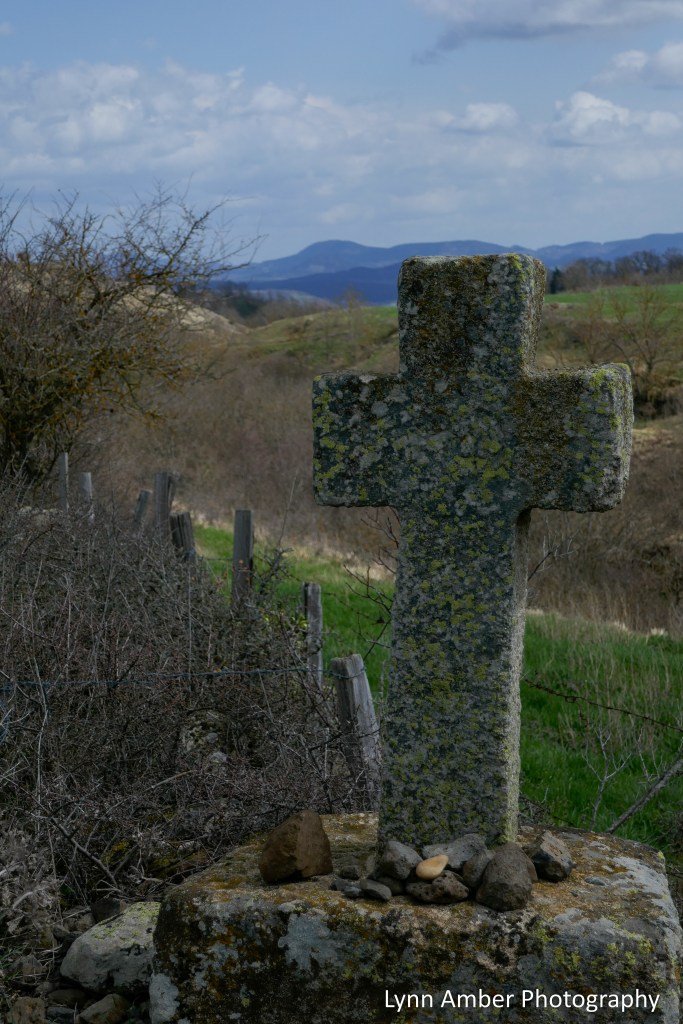
Another typical sight all along the Chemin are crosses of all sizes and made of many types of materials. I have so many photographs of crosses! Yikes! They were usually a good indicator that you were on the correct path!
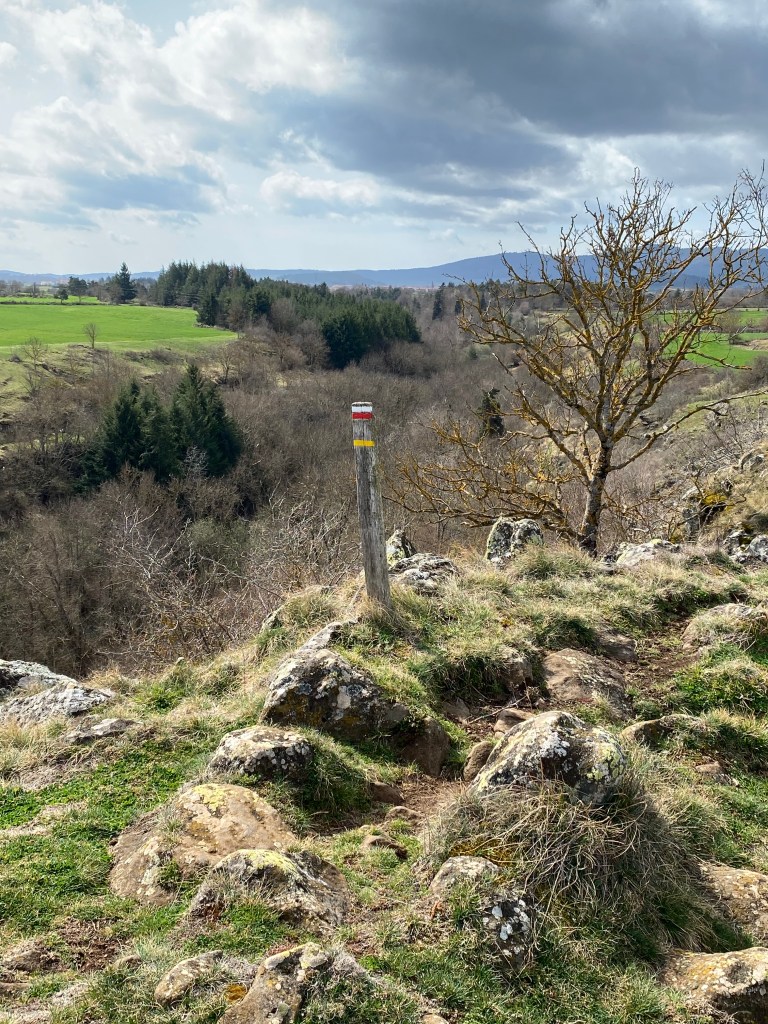
But, most important, are the red and white stripped markers that identify the GR65. These are carefully placed regularly along the Chemin to guide walkers. Planning Tip: Always look for these marks when there is a juncture or split on the trail. It is not always obvious which way to go when you come to a “Y” or cross trail. See the yellow mark below the red and white one?? There are many other “local” trails that crisscross the GR65 and, occasionally, variant trails offering an alternate route.
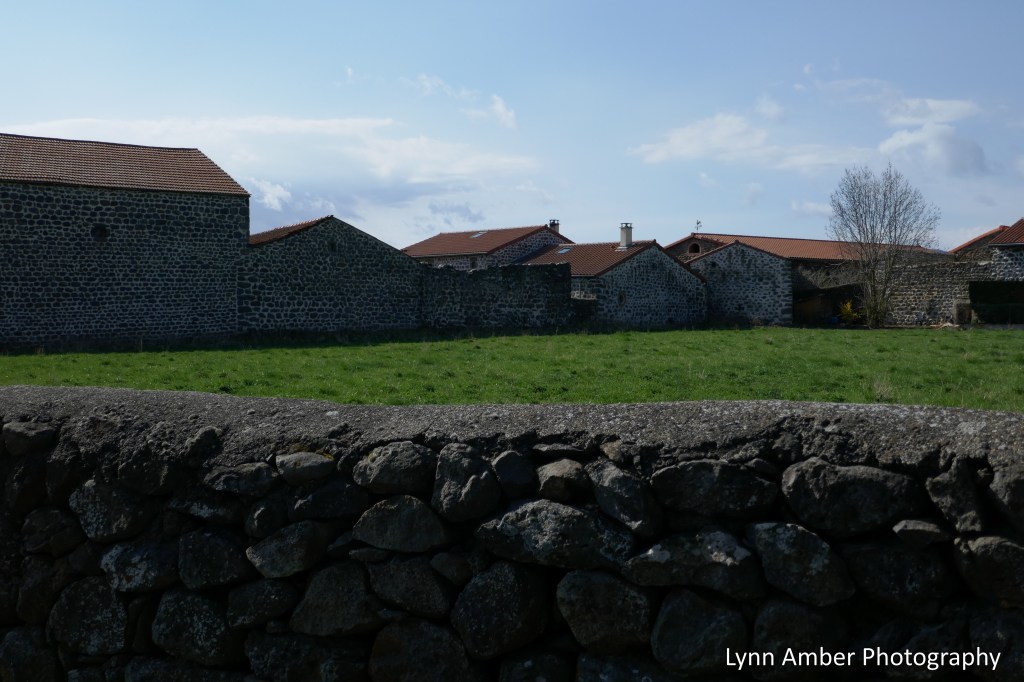
There are many small clusters of houses and outbuildings that we pass through each day – sort of extended family farms in many cases – or small settlements. The photograph below illustrates just such a settlement outside of Le Puy.
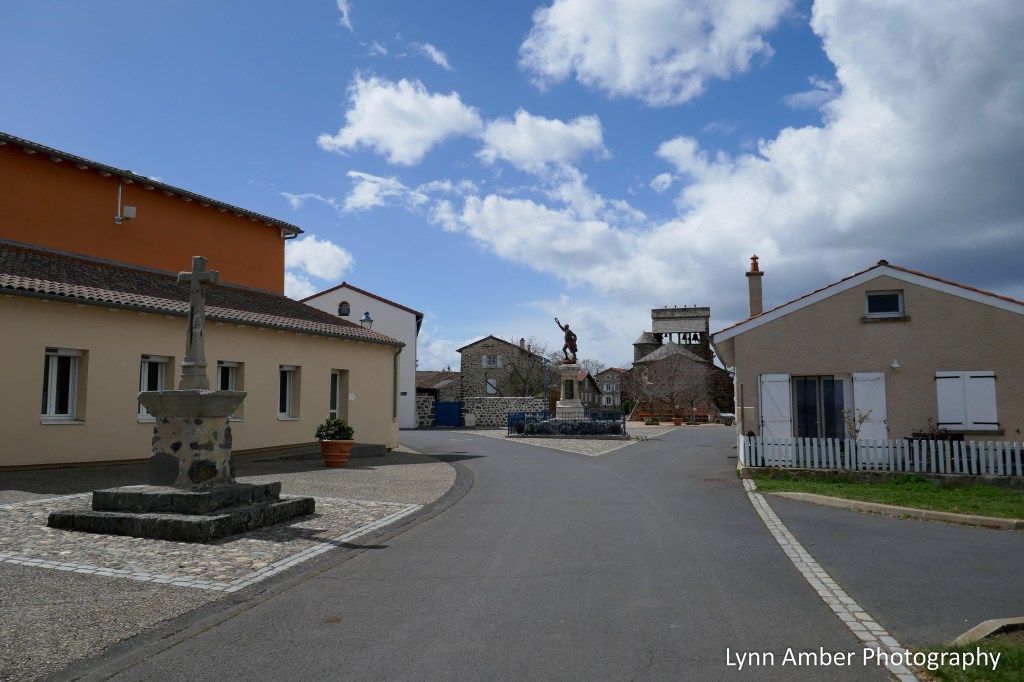
The first actual town we encountered on Day 1 was Saint-Christophe-sur-Dolaison. Barely more than a crossroads, it had a picturesque Romanesque church built in the 12th century of – what else? – pink basalt.

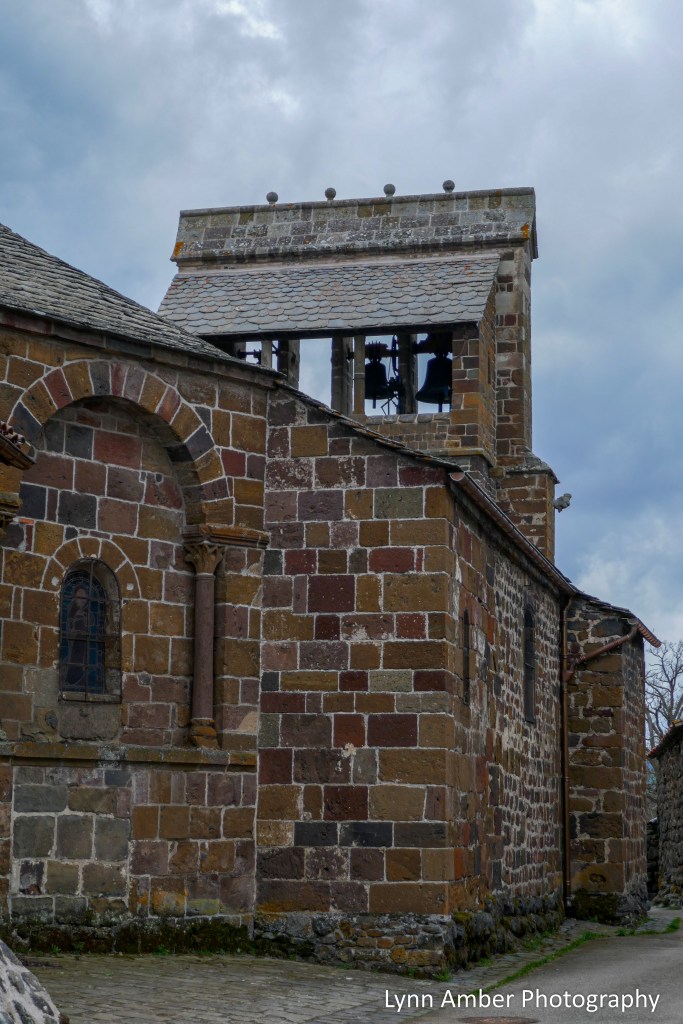

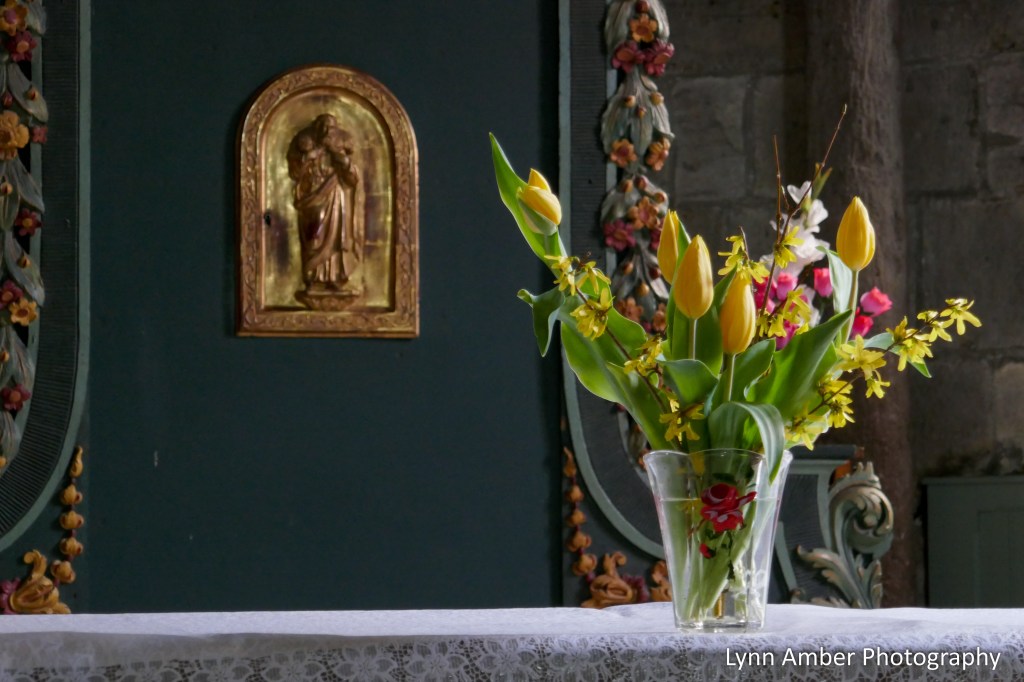
Along the way, I tried to take the time to enter each of the churches and immerse myself in the beauty of the interior architecture unique to each church. In most cases, local parishioners volunteered their time to the upkeep of the buildings, including the addition of fresh flowers.
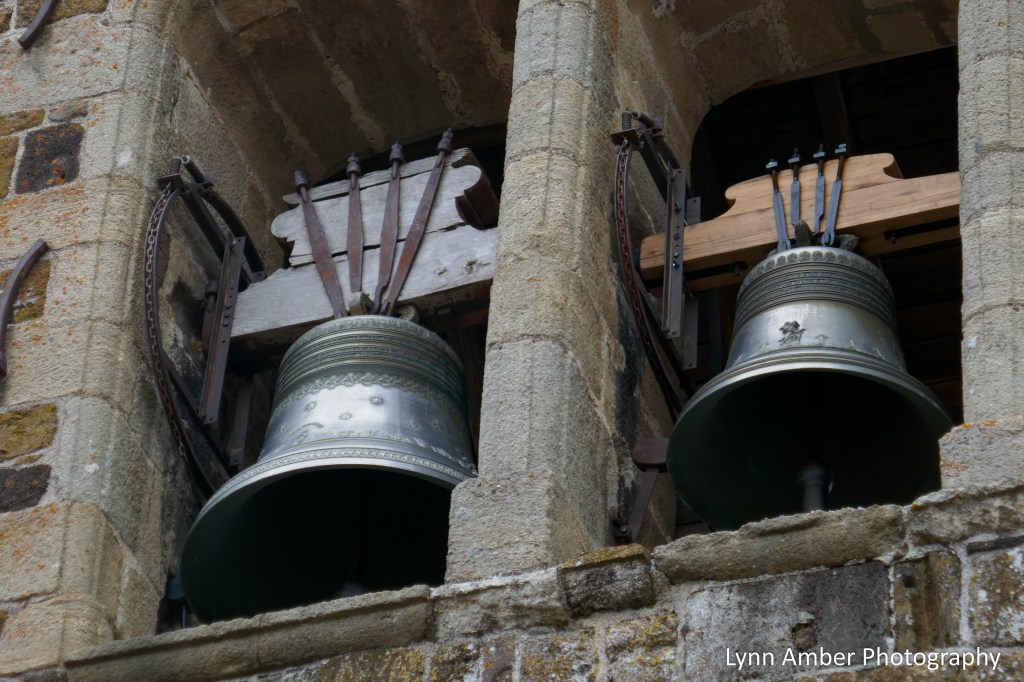
The other outstanding and memorable sensory experience that I enjoyed along the entire walk was the sound of church bells throughout the countryside marking the passage of each hour. Whenever I hear a church bell now, it brings back fond memories of the French countryside.
It was in Saint-Christophe where I visited my very first French cemetery. I have never experienced a cemetery quite like the ones I encountered in Southern France. As with churches, I tried to visit each cemetery I passed. I have relatives who immigrated from France back in the 17th or 18th century – with the last name Buffett. I’ve never been able to identify the specific region where they lived in France and I wandered through many of these cemeteries looking at the names on the headstones in search of a Buffett! Planning Tip: All cemeteries in France are required to have potable water on site and available to visitors. So, you can always count on being able to replenish a water bottle along the Way at a cemetery.

Our first day on the trail was characterized by easy to moderate hiking difficulty, open countryside, stone walls and plowed fields waiting for spring seeds to emerge. I even noticed some spring wildflowers starting to grace the sides of the trail. Stinking hellebore – Helleborus foetidus – was covering the banks along the trail throughout the day.

I love all the unique signs that are posted to guide and encourage pilgrims!

After leaving Saint Christophe, we were a short distance away from our destination on the first day – the small village of Tallode.
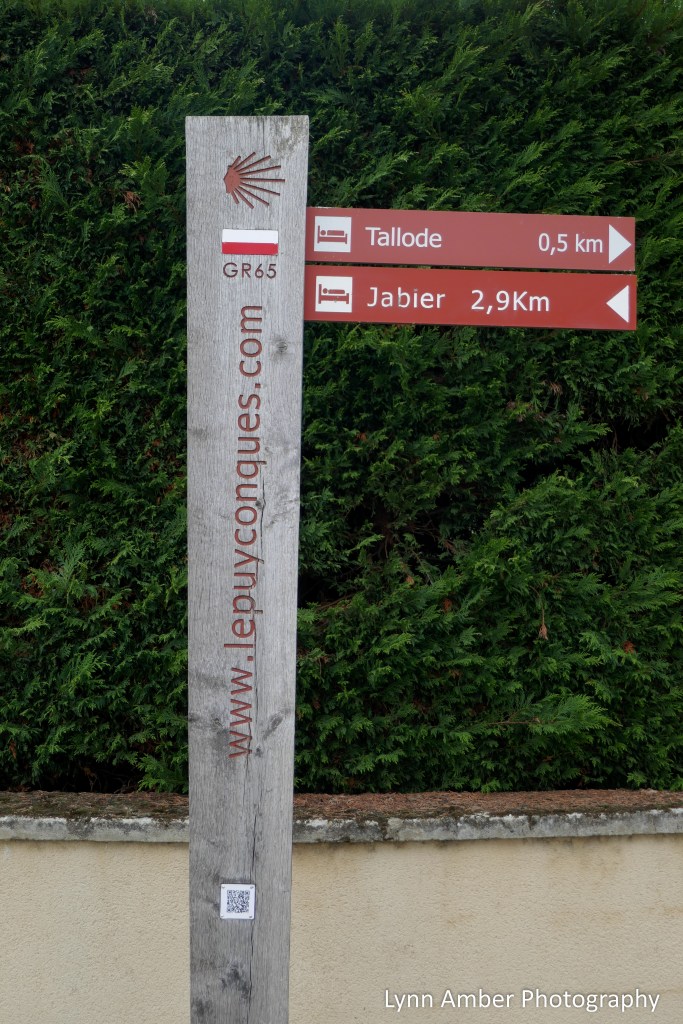
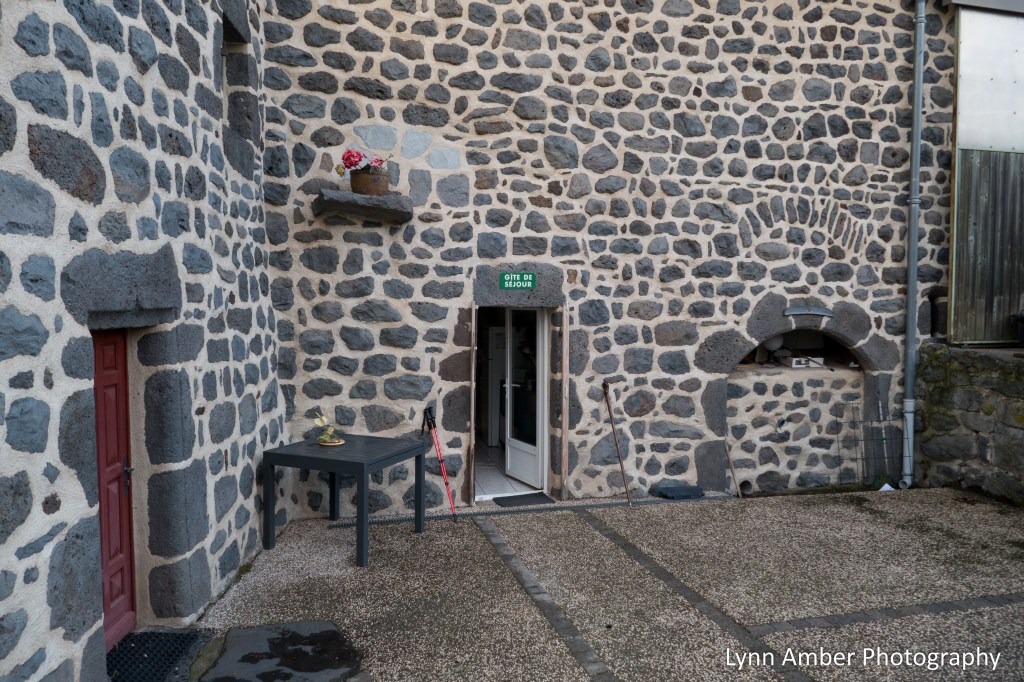
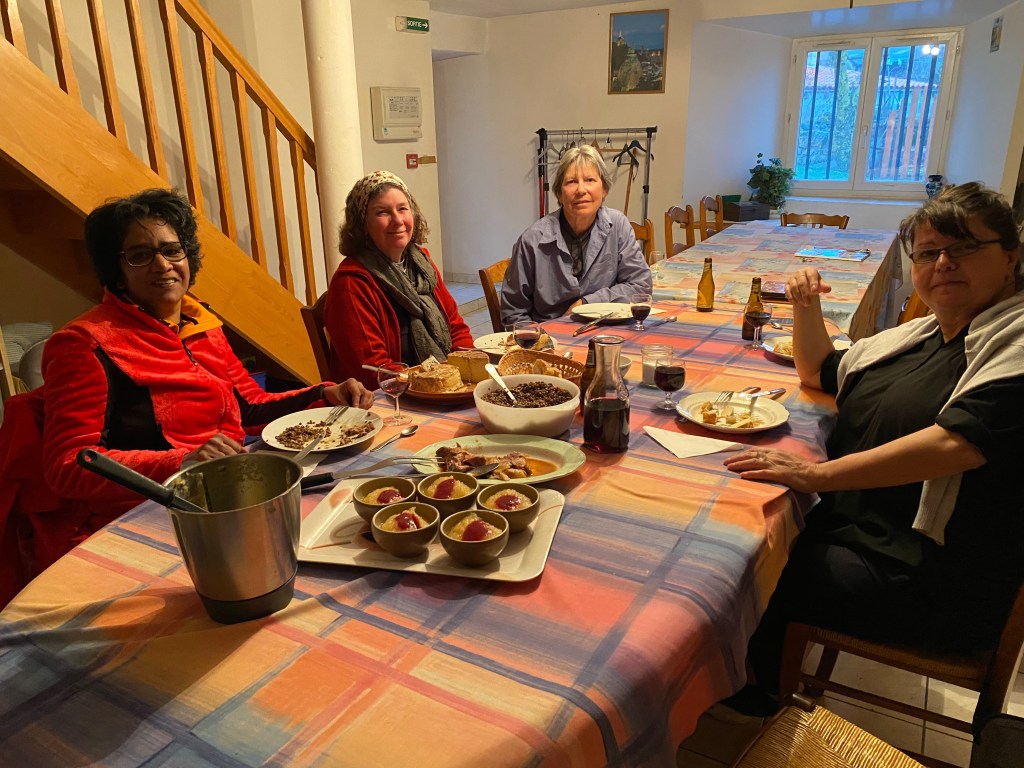
Our first night, we had made reservations at the Gîte d’étape La Maison Vielle. Nicole was a great hostess serving us a delicious meal of locally raised Lamb and (you guessed it!) Green Lentils. We shared a room with one other French women who was hiking on her own named Laure. We would cross paths with her many times over the next two weeks. And, there were two other women who joined us that night from Germany.
It was a memorable first day and we collapsed into bed that night tired but happy! 12.2 kilometers under our belt – and many, many more to go! 🙂
 Lynn Amber - Travel & Photography
Great Beginnings!
Stewart
LikeLiked by 2 people
I’m glad I waited until the trip was over to start posting here. It’s sort of like I’m doing the walk all over again!!
LikeLiked by 1 person